Transcript
Speaker: I don't know whether a collapse will come and get me and hurt me or take my life before a natural death. The future is is unknowable in that sense. And so it's just, you know, while I'm alive, love it more.
Speaker: race scal end Hey, this is Katie and you're tuned into Riskillians, a podcast about living closer to the ground so we don't have quite so far to fall when, well, things get a bit wild in the world like they are at the moment.
Speaker: I am once again recording in Luchawita, Tasmania, where I am loving the fat patty melons and patchy internet coverage, which Some of our favourite camping experiences have been black holes of phone signal, leaving us free to walk and read and stare at the trees and engage in weird behaviour like trying to remember a poem and recite it into the campfire. Such is the wholesome void left by not being on Reddit.
Speaker: So after spending a couple of days in one of these gloriously remote locations last week, We begrudgingly had to drive back out of the forest and into the valley and hear our phones start jumping and jiving with notifications, and I picked mine up and I saw something very exciting indeed.
Speaker: I can't remember if I've told you this before, but we share our half-acre property with Jordan's parents. They live in the cottage, which was already on site, and we live in a half-built tiny house. And it all works beautifully because they are wonderful, special humans, and consolidating with our family just makes so much sense.
Speaker: One of the benefits of sharing land in this way is that there are people around to look after the garden and the animals were wear-away being van life whores. And just before we left on this trip, one of our hens, Octavia, went broody. She started sitting on a huge clutch of eggs. We have this rooster, Hector, who's a Belgian Duclay. It's a whole other story about how we ended up with such a runty bantam as our stud rooster.
Speaker: But ultimately, like, he's tiny. It's definitely not the best choice to breed from him if you want dual-purpose egg layers and meat birds, because he is about the size of a shoe. So that is why when Octavia started sitting on her clutch, we really didn't hold much hope that the eggs would amount to anything.
Speaker: Given that Hector basically needs a stepladder to summit the hens, Surely fertilization is anatomically impossible? But anyway, we left on our trip with Octavia halfway through her brooding process. I have to say, my heart has been eggshell fragile these past couple of weeks, feeling a kind of preemptive grief for Octavia because of my predictions that her investment would turn out to be futile. All of those days sitting in the dark, fasting, waiting for the pip and the chip of a minuscule beak that may never arrive.
Speaker: So I'd mark the dates in my diary and Octavia's due date came and went and I prepared myself to send Kelly, Jord's mum, a text message asking her to take the unhatched eggs away and just shut it down.
Speaker: But this was when we were out of phone reception. So when we drove back down that road and our phones started pinging and a picture came through of a ball of fluff with little beady eyes bundled up next to her mum,
Speaker: I nearly died. Jord and i both definitely cried. And after we calmed down a bit, we acknowledged, okay, one chick would surely be it. That's just a freak fertilization event.
Speaker: But the next day, more videos came through from Kelly. Two chicks! The next day there were four, then six, now there's seven, who knows how many more tomorrow, and they just keep hatching.
Speaker: We've been watching the videos that she sends us over and over again of the chicks eating scrambled eggs and goat's yogurt porridge dancing in their slop. Our rooster Hector looks on, clucking softly, probably saying, I told you so, motherfuckers. And Octavia, the knowing mother, holds her red comb high, the keeper of faith, the bringer of life. And there's nothing like new life to melt away your cynicism. Whether it's a fluffy little chick or a freshly sprouted seed in the soil or your own newborn baby who's probably not as cute as you think they are, but that's love goggles for you.
Speaker: And you know what's really interesting? When I interviewed Professor Jem Bendel, who is today's guest, he's the guy that many of us will associate with breaking the ice on the topic of societal collapse, coming out in 2018 in his viral paper Deep Adaptation to deliver an assessment of the planetary situation observant. far more broken than anyone cared to admit, beyond repair in fact.
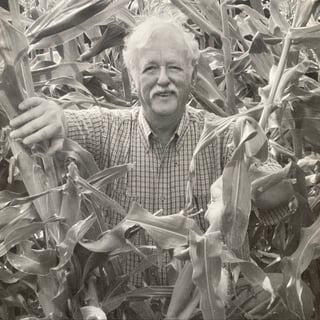
Speaker: So what was almost as unexpected as Octavia's eggs hatching was when Jem told me that he and his partner are contemplating having kids. I am deeply honoured to bring you this conversation with Jem Bendell who said that he rarely agrees to podcasts these days, but he was keen to speak a little more personally about his life in Bali, his experiments with organic farming, his foray into music as a 48-year-old, and, as you discover, a blossoming desire to nurture life whatever its duration, whatever the future brings.
Speaker: If you haven't come across Jem's work, I highly recommend his Deep Adaptation paper, which is available freely online, his 2023 book Breaking Together, which you can also just download from his website, and listening to other podcasts with him too, in which he speaks pointedly and poignantly about our predicament, as a compliment to this heart-to-heart.
Speaker: Thank you to the magnificent crew of humans who support Reskillians on Patreon. You are my sole source of funding and perhaps most importantly, you egg me on. I could not lay and hatch these episodes without your warmth and enthusiasm. Big thanks to new patron Katie.
Speaker: If you want to throw Riskilliance a few bucks for its production and get to hang out with a clutch of kindred listeners, head to patreon.com forward slash riskilliance. Okay, Chooks, here's Professor Jem Bendel on nurturing life in the end times.
Speaker: Welcome, Jem. i' am really excited to see where this conversation takes us today. yeah thanks for the invite. So I'm wondering what is happening around you there in Bali, on the land, in the season.
Speaker: are there seasons? I've never actually been. Wow, I thought every Australian had to go to Bali. It's sort of a right passage, isn't it? To get drunk on the beach somewhere? um Me, here, seasons, yeah, we we have weird seasons. um They're not as regular as they used to be. So at the moment, we're probably coming to the end and an early end of the wet season.
Speaker: And it was very wet. Yeah. yeah And so that last, that started, I guess, what October last year. And that's pretty normal. But yeah, the seasons have been a bit weird the last few years.
Speaker: Okay. So you're really noticing that because you're intimately involved with the land, working the land and farming. So I'm i'm sure it makes a huge impact on what you're producing. Yeah.
Speaker: It's funny, before before I became involved in organic farming, I was actually quite happy when we were having an unusually dry wet season because it just meant more sunny days, more fun. It meant I could hop on my scooter, go and see people without worrying about getting drenched. And now now I realize actually droughts are really bad.
Speaker: So yeah, it shift shifted my way of looking at the weather. Yeah, there's nothing like those fundamental imperatives to give you you know empathy and solidarity with food producers, but also up the stakes personally.
Speaker: Actually, the biggest impact on me was that I felt a bit more alienation from my friends because none of them are involved in farming. They're involved, many of them, in tourism or sort of wellness, that kind of stuff.
Speaker: And they they just didn't know. Also because you know most of us foreigners here are relatively well-off in comparison to sort of the average Indonesian. And so...
Speaker: food prices at the market going up 20% because of the drought. They'd all be Instagramming nonsense about climate change being a hoax. And and I realized what a total bubble that they live in, insulated because of they their spending power, the fact that life is basically living in a cafe with friends.
Speaker: and and i And I thought, well, that's a big part of my life too. But now i've now I'm experiencing working in the farming sector. It's just like it's it's not it's not a discussion point, like whether it's happening or not. It totally is happening and has been happening for the last few years.
Speaker: with real impacts on yields and quality of production and therefore difficulties in selling the produce. Yeah, so so actually there was, i even wrote about it on my blog, about this sort of weird schism between reality and the kind of sort of life that people lead if they're in a you a sort of a culture that talks to itself through Instagram about being ever more beautiful and spiritual than well. So actually... The biggest impact was this sense of a bit of alienation from me and the the people i I still hang out with, but hung out with even more back then.
Speaker: m Yeah, interesting. I mean, it's a huge pivot from academia to agriculture. Did you have a pre-existing proclivity for for growing food or did you just jump right in?
Speaker: I had no real thought about it, knowledge of it before. it came about because a guy I was working with as a research assistant for a two-year research project I did, which one of one output of which was a book, Breaking Together, about societal collapse.
Speaker: So he and I got to know each other very well because he worked with me on that project. And we were talking about what is it that we could do to try and improve our own resilience rather than just be aware of it and not do anything about it, which felt a bit stupid. So...
Speaker: he persuaded me that um it would be a good idea to open on an organic farm where the sales of produce would cover the cost of running the farm, wouldn't likely make a profit, but then we could launch a school, an organic farming school on the back of that. And that made a lot of sense because it kind of combined our values with our awareness of the situation. So like let's help...
Speaker: people here with the modalities for growing food without being dependent on supply chains, for example, artificial fertilizer. um So it would just create a little bit more for food security and we would be part of that effort.
Speaker: So that was the idea. um So I knew nothing about farming. I didn't know how to check the figures. i didn't know anything because I chose not to buy the land, but only lease it for 15 years. That brought the price down a lot.
Speaker: ah The cost of employees here is a lot, lot cheaper than in the West. So it was ah reasonable risk to take. That was, what, three years ago. so no, I went into it completely blind.
Speaker: And it was the idea of some kind of ethical way of mobilizing my concern about the future. don't if you're hearing, there's a big, big rainstorm just come through now. I can hear that. It's beautiful.
Speaker: Yeah, that that exercise of running through, ah how doing a bit of an audit of one's resilience and ways that we could or should align with our values and our ethics. You know, that kind of stock take does happen frequently in many households, I imagine, but we get stuck at so many real and varied obligations and beliefs.
Speaker: And I'm wondering what it took for you to up stumps from the UK to Bali to dive into this completely unknown space in service of being of service and aligning with all that you know about not even the future, what is already here and your own resilience and meaning in life. Like what did it actually take for you to make that leap?
Speaker: An unprecedented global pandemic. What happened was I was, I came to Bali, I'd been here before, I came in the end of 2019 because I'd already decided to take a year off university as a full professor in in in the University of Cumbria.
Speaker: to give more attention to um people responding to my work on what's called deep adaptation. So this idea that societies... that That framework is for people who think that our modern societies are either already fracturing or will do um or are likely to.
Speaker: When I mean fracturing, I mean, can't be put back together again. So what another word for it is societal collapse. So that that took off and I realized I really wanted to give my time to that and develop something called the Deep Adaptation Forum. So, yeah, I came here because I knew I loved i loved it. I had friends here.
Speaker: But crucially, it was cheap compared to living in the UK or Spain was my other option. It was a lot cheaper. And because I was going to have a year of not earning money, it made sense. Also, it made sense to be here um because...
Speaker: It is kind of like a unique opportunity if i yeah I might go back to the university, I thought, after the year. And the other thing is I didn't have kids and i my partner at the time was willing to come.
Speaker: So I had that freedom. What happened was COVID struck and my partner and I had a conversation about, well, If it's a real a real killer, like as bad as the plague, then we we don't really want to go on public transport and travel for a day back to the UK.
Speaker: So we'll stay here. And if it's so bad in terms of knock-on effects, it's going to collapse the global economy and every country or community will be depending on their own local energy and food and such like.
Speaker: Then we'd rather be here in Bali as well, with more production and and no nasty winter to get through. so So we decided to stay. yeah a lot of people left Bali, obviously tourism and the economy therefore collapsed, but we decided to stay. And then, so that kind of locked us in here for for two years. it would have been challenging to try and leave Indonesia in that time with all the travel restrictions and so on.
Speaker: And because of that, that's what happened. thats Then I realized that, okay, i I want to move ahead with my life and changing my life away from this sort of globetrotting, international influencing intellectual I wanted to move away from that. So living in Bali makes sense. I'm here. I have friends here. I have a nice life here.
Speaker: at the time, I didn't know whether things would open up again, whether life would get back to normal. So then I just, yeah, psychologically, emotionally, I just made the commitment to Bali then. And then what it was it? Three years ago. So January 23, after about eight months of looking, we decided on the land.
Speaker: So it was sort of gradually gradually but also forced upon me because of COVID-19. And what has been the reality of organic farming versus what you may have expected? i mean, have you been able to cover costs?
Speaker: So, yeah, what I expected was that we would have a ah really good market of the so-called conscious community, the wellness community, the spiritual community here in Bali, because a lot of people come here for eco-spirituality, for healing, for wellness, for yoga and so on. And there are so many restaurants and resorts that cater for that audience, that visitor economy.
Speaker: Yeah, we we found out, excuse my French, they're full of shit.
Speaker: They don't care, most of them. Like a handful. I could count them on, like yeah three or four people I know who are owner entrepreneurs of these places who do care and who are trying.
Speaker: But during the COVID era, it was, oh, well, they didn't have any money. That's understandable. And then since the opening up, they're all massively booming, opening new restaurants, too busy. And this isn't a priority.
Speaker: They're selling wellness in the form of fresh cold pressed juice green juices. and they're just buying that stuff from your regular supplier or from the local, the traditional market.
Speaker: Therefore, not only has a little bit of chemical residue in the the flesh, but also has a lot of chemical residue on the plant. You can see it sometimes. There's a level of heartbreak there that Also, so many and my friends think that that when they're going to one of these restaurants that tells them they're conscious raw vegan, for example, that's one of the favorite phrases, um that somehow that therefore there would be no or less chemicals.
Speaker: And I say, well, they don't tell you it's organic anywhere. They don't mention regenerative farming. They mention none of that. They just put a bit of bamboo out front and maybe print the menu on brown paper and...
Speaker: have a few healing crystals here and there and and and tell you it's raw vegan and therefore it must be perfect. so man So that has meant that the original idea that it would be easy to sell if we cracked production didn't turn out that way.
Speaker: We actually find it easier to simply sell it to the local market. So it means that ah because we're we're not managing to get regular purchase from the ethical so-called ethical restaurants and resorts.
Speaker: So it means we are producing healthy organic food for local people um who just don't even know that it's organic. And we also now consume more of our own food.
Speaker: Originally we were trying to create it as a viable a commercially viable farm and we've given up on that idea in the past year. It means that yeah we we and our friends have a lot of great produce.
Speaker: um The other challenge was on the production side. So when you have more variable weather, so for example, not just a wet season, but a lot of the last wet season last year was with no real sun at all for two months, the the plants become more stressed. It's more difficult for them.
Speaker: I don't mean emotionally stressed, who knows, but more difficult for them. So you'll end up with papaya fruits with lots of blemishes on them, or maybe some holes from fruit fly at just one end. so you can't sell that.
Speaker: So I think we couldn't sell about 80% of our papayas because we had this strange weather. It didn't mean we didn't have amazing tasty papayas, but they weren't immaculate. And...
Speaker: That's another odd thing, which is that the the person who has the papaya juice or the papaya salad will never see the papaya. But still, the traders and the chefs want the perfect papaya. And that notion of perfection, of blemish-free and bite-free, comes from the the chemical norm in farming.
Speaker: So, yeah, we we had we had some issues in with weird weather. if you're If you're a chemical farmer, which is what people were doing, they were just chucking extra fertilizer and various pesticides on the plants to help them through some strange weather.
Speaker: And yeah we couldn't do that. But it also meant that I got to the point where I realized that, oh, I don't want to be teaching... balllet we've We've taught quite a lot of Balinese farmers organic methods. um And we do that with the organic farmers themselves who in Bali, who are Balinese, who know it. So we work with them to then spread their ideas and skills and bring our own knowledge to it as well. But we thought, what's the point of teaching these people organic farming when they can't secure a premium in the market and they're also going to suffer more losses when they have strange weather or a pest outbreak?
Speaker: So I don't blame at all the farmers here for using chemicals because the rest of the food supply chain is not treating them with respect and and and not seeing these issues as their own problem and working in partnership to solve them.
Speaker: So, yeah, it's been ah it's been an eye-opener. It means i yeah I lose money every month on the farm. We've had to reduce our activities quite a bit. And it's put me in a situation now where I think, okay,
Speaker: Why am I doing it? And also my original intention, which was to try and develop some more resilience for myself in accordance with my values. And so when I say resilience, because I see the future becoming much more difficult in terms of just relying on industrial consumer systems.
Speaker: what What should I be doing? So yes, that question... that you said that we often ask ourselves, it's it's it's coming up again for me. But also now, three years later, there's a new question, which is also just earning some money. So... um So it was actually quite a privilege of mine, three, well, it began four years ago thinking about this and trying to look for what to do, but it was quite a privilege of having some money in the bank, having some capital and living in a place where I'm comparatively rich compared to normal people, Indonesians who live here.
Speaker: And so now it's I'm in a slightly different situation where I need to also just think in a more ordinary way about also my my my bills. What's happened is I've actually gone back to being a focused on being that public intellectual. And I've created a metacrisis initiative on the back of my my blog because I've got an international following on these issues.
Speaker: And so we're meeting once a month in a salon. And we also now have a peer mentoring system. And so people can... upgrade from just a subscriber to a paid member of that initiative and 250 people have done so and so that i'm focusing on on that which isn't very collapse ready is it really to do an online business but but you know i have to make sure i can pay my bills before i then do some kind of new resilience adventure
Speaker: Yeah, it seems like one of those ah illuminating and excruciating experiences when we're actually living into some of the the things that we've thought about or theorized in the past and then it it really comes home. How are you going to make a right livelihood? What do you feel good about? What what weaves together the things you care about whilst also keeping food on the table. um Yeah, I find that a really interesting question that's surfacing for you, especially, Gem, given all that you have have written on the topic of um of collapse and and also how refreshing it is for you to be sharing your personal journey through these times. I think that
Speaker: One of the biggest reasons I was excited to speak with you besides your vast body of work is just that fascination with you experimenting with your day-to-day existence and some of these questions, which are really, like you say, ordinary questions in extraordinary times.
Speaker: Yeah, well, I'm happy you you reached out to have this this chat. Yes, many people who would reach out to me want to talk about the latest climate science and data or psychological coping mechanisms or, you know, that kind of stuff. And then that means I have to be up to date on rather depressing information.
Speaker: But when you invited me to come on and chat, I thought, oh, well, I don't have to update myself on all the very latest science and data in order to talk to you Katie. Yeah, we we just go by um storytelling and subjectivity here in Riskillian's land. and It all flies.
Speaker: So on the the income front, I suppose one one reason that this this always comes up for me, and I think this is something really deep um that I can only start to put words to as a more, you know, widely read adult type person, but I've always...
Speaker: resisted taking on debt or pursuing a kind of conventional career that I think instinctively I realized I saw the traps that were laid there, you know. um It does make it quite hard to earn an income that doesn't feel like it's going to tether me to this kind of growth model of my own, you know, at my own scale that's then obviously writ large in the world? Like is that where your're where you're at now? How do you make just enough money without relinquishing any of the freedom?
Speaker: So, yeah, i walked away from a a job for life. i mean, when you become a professor, it's a full professor in a university in the UK. That's something that um but I don't know who walks away from it. you Normally, you just try and get a professorship at another university. So, yeah, i I'm now at a stage where I would...
Speaker: It would be awful if I had to go ever go full-time back in academia because of, yeah, who I've become. um i really i really want the freedom to follow my curiosity and work out how to express myself and also make the positive contribution in the way that I i assess it day to day.
Speaker: So when you're in a an organizational structure, then yeah, it's very if difficult to do that, even as an academic, because it became very administrative, a lot of business development, a lot of restrictions in in how you could inquire and teach and express yourself.
Speaker: So, ah yeah I am pleased that I've managed to design a life that I seem happy with where my outgoings are quite low.
Speaker: My partner, she's Indonesian, and also her expectations are similar to mine, so I'm not feeling any pressure from that side, which is great.
Speaker: If... I managed to start earning money um more than the basics. That will be great, but I don't need to.
Speaker: Yes, more money would be wonderful. i um really got into music um and it doesn't cost anything to play guitar to your friends or in front of ah a group, say for kirtan or a cacao ceremony, that kind of thing.
Speaker: But it does cost money to get into a studio and record. and I've produced and released eight songs now and it actually costs quite a bit of money um if you're going to do it properly. And so um I've stopped that because that's, yeah, that's a bit of a luxury.
Speaker: But I will be going back to that if I if i did have more money. I'd love to hear more about the music piece because a kind of basic revelation I've had recently is how much of a consumer of entertainment I've become rather than a creator I write and I produce this podcast, but in terms of sitting around with friends and making our own fun and making some noise and and harmonising, that's just not something that I'm naturally drawn to doing nor have the chops for. Like I feel really self-conscious in that space and I think it's part of the culture that I've been raised in where we don't ah we don't let someone kind of take take the floor and tell a story and that's ah a delicious form of community entertainment anymore. So what has it been like for you to venture into that realm of being making noise and and being a little more poetic and ah songful rather than so intellectual.
Speaker: Yeah, it's back to COVID again because the people i knew as friends here in 2020, 21, 22, when we were a bit isolated in Bali, most of them were musicians and they had a very relaxed attitude to it they in the sense that they were encouraging me I remember I went to the beach once with a couple of amazing musician friends. At the time, I didn't know how amazing they were at music. music I couldn't play the guitar then, and I said, oh, well, I did tit learn a song a long time ago.
Speaker: And they they were really happy and excited to see me have a go. And they then said, oh you've got a good voice. And I always used to think, oh, people are just being polite. But then I kept hearing that from people. And then um a woman ah at the end of a meditation retreat, I co-organized. She then came came up and said, oh, your voice during the kirtan was amazing.
Speaker: I said, oh, thank you. And ah part of me was just thinking, okay, does she like me? Why is she saying this? um But she said, oh, I'm a music teacher and I'm a voice coach and this, that and the other. And I recognize it. And and I finally began to accept that I could sing. It took, you know, I was, but how ah well, I'm 53 now. So this was, yeah, was it? Five years ago.
Speaker: five five la So what, 48 years old and finally, okay, maybe I can sing. Yeah. So that was, it took all that time. So you're right. The culture that I would lived in in Britain was like, and my own story of self was that I had to be really good at something to to do it, even for myself, let alone share it with anyone.
Speaker: The songwriting started, so I had, I was really sick in bed in July 2020, the end of July 21, going to August 21.
Speaker: it it was covered i had just watched ah bo burnham's uh thing inside and and i was just had high fever the longest worst i've had forever like five days and i got bored and at that time i only knew about one or two songs to play so i just decided writing my own and decided to write I was just lying in bed, write my own song, and and lyrics came. and But it was for me to have fun because I was bored. And I remember calling up my friend saying, so I've got a really cool chorus, so how do I write a verse for that musically? What's the structure? And he said, well, one option is just double the chord progression so you stay longer on each chord. That's the most simple trick. So there go. That's what I did. And that was... um
Speaker: That my first song, Something's Needling Me. um So it was just a comedy song about how everyone was getting so angry about COVID, whether they supported government policy or not. Everyone was just getting a little bit crazy.
Speaker: And um so comedy rock. But it was for me to enjoy myself. And then I played it to other people. And it was fun. They liked it. And so then... So yeah, and my music writing's changed since then, but it's still very much if I've got an emotion that's a bit sticky, sadness or anxiety or or a better emotion than that that's whizzed me um for a while,
Speaker: I know that I could pick up the guitar and explore that emotion. Like, how does it, is there a chord that sort of resonates for me with that emotion?
Speaker: Is there a phrase? And if I have a phrase, is there a a melody for how I would sing that phrase? And it's just, that it begins just like that. And then I explore the the emotion.
Speaker: I haven't been writing to perform, if that if if you see what I mean. And then the decision to then play it to other people and then realise that people quite like it and then the fun of learning how to co-produce music in a studio, that that yeah, that all came later. e Yeah, I'm wondering, Jem, if this is typical for you and who you know yourself to be, especially based on past approaches to life.
Speaker: Or is this experimentation, trying new things, learning to play, writing songs as ah an adult, which is not a time when a lot of people want to try and risk failure at something. Is this part of living at the 11th hour, you know, with everything you know about how precarious the situation is? Do you feel to be a different person with that knowledge kind of embedded in your body? And does that allow you to be looser and freer in your in your day-to-day, in the way you live your life?
Speaker: Absolutely. And it it kind of works both ways. So because I had some time in Bali where I started going to things like the improv theatre, authentic relating circles, breath work, various different experiences i'd never had before,
Speaker: What that did for me is help me realise that I don't need the status and security of being a professor and this kind of self-belief of that.
Speaker: And I don't need to worry about, oh, if I get old and I don't, well, when I get old rather, if I don't have those, that form of income, that self-belief, that status,
Speaker: then I'll be vulnerable. I might feel lonely, a failure. So I realized that, no, actually, I don't need any of that. There's a joyful way to live without much money or any status where you're just showing up and meeting people of all ages and connecting and having fun.
Speaker: So that was really helpful because that was happening at the time of me also becoming aware that we're in the 11th hour. And then once I was in the 11th hour... That then meant, well, why would I be doing stuff that I don't really believe in?
Speaker: Now, it didn't mean I just wanted to do the hedonist stuff of having fun in improv theatre or music or whatever. It meant also that I wanted to use my skills and my expertise, my experience, the knowledge I have, the people I know, ah the following I had. I wanted to use all that in the most meaningful ways because of the sense of being in the 11th hour. So, yeah, that's completely shaped my last... um seven years.
Speaker: And we're so skillful at forgetting, falling back into that amnesiac state of living more on autopilot of how do you remind yourself that this is actually happening and these, you know life is happening now and the present is is the place to be and to inhabit that that spirit of knowingness and aliveness. Because, you know, I find myself, I can hear something just absolutely terrible and vow to to never never be on Instagram again and waste my precious minutes and then the next the next minute I am there. So what are some practices that you have, Jem, to keep yourself accountable to that?
Speaker: Yeah. Yeah, I am not so good at that either. um Particularly with all the upsetting and very urgent-seeming news of the world coming through our devices all the time.
Speaker: ah Even if we choose not to be on Instagram, our friends will send us through Messenger or Telegram or whatever messages about what's happening, and that will suck us back in again, won't it? So how do i umm I suppose at at ah at um as a very deep level, I kind of know it's all okay. Like even if I screw up, even if I fall away from living life in full presence with an open heart, um
Speaker: I still know it's at some deep level it's all okay. And that's what some people call us faith. And for me, I quite like to leave at that level of of because the more words we put on it, we're just borrowing from different fascinating wisdom traditions, spiritual traditions, religions, but we're still just borrowing from those to try and explain things which are perhaps inexplicable. So I just have, and I guess I'm quite lucky, ah no matter how shit things are, how scared I might feel and in the moment, how overwhelmed I might feel in the moment, underneath it all there's a sense that ultimately it's all okay.
Speaker: I could go into various different philosophies that i I have around that, but it just seems like blah, blah. Then m but on top of that, how do i bring myself back to presence, gratitude, joy, positivity, creativity?
Speaker: um Because it's, yeah, obviously a I'm not always like that. I find music... and ah participating in or leading ceremonial devotional music, it does it, it basically does it for me. It brings me back to that sense of wonder, mystery, gratitude.
Speaker: oh I should really keep in mind what's most important in life Yeah, so that would be either kirtan, which is like chanting mantras together, or it would be a cacao ceremony, which is often sort of eco-spirituality songs sung together with a nice cup of organic cacao, something called the Dances of Universal Peace. So that's a form of circle dance where we're all together and we move in circle with simple dance moves and we sing songs or mantras from different religious spiritual traditions from around the world.
Speaker: that um those those Those activities really do help center me, ground me, open my heart again. Apart from that, meditation doesn't really do it for me. um i need to be i need to force myself into a situation where...
Speaker: I then do it. And so I'm lucky. I've i've organized 17 meditation weekends at a Buddhist temple um since, I think was the first one, December 2020. So I do that with a friend of mine, Vasudev. We co-organize it. And it's just friends of friends, it's word of mouth, how people find out about it and come on it. The money goes to the temple and it's it's very it's very easy to organize. And so it's ah I designed it because I didn't want to have to do a full 10-day Vipassana waking up at 4 or 5 in the morning.
Speaker: I wanted something more nourishing and that would just fit in my weekends. I don't know who I'd be if I didn't have those. It's like every three months where you're completely offline, you hand in your phone, and we also sing kirtan together. Otherwise, we're in silence and in meditation.
Speaker: And we then also walk through the forest. And it's just a way of thinking, oh yeah, wow, why has isn't it wonderful being alive? I don't know whether the collapse will come and get me and hurt me or take my life before a natural death. The future is is unknowable in that sense. And so it's just, you know, while I'm alive, love it more.
Speaker: e And do your family think you've just completely gone off the rails? I don't ask any of my friends or family to see the world the way I do.
Speaker: Definitely want my partner to look a bit more at my analysis and talk to me about it before we make any decisions, for example, about starting a family.
Speaker: But yeah, um again, i wouldn't i'm not I'm not forcing this on people. When I first produced the Deep Adaptation paper, and my first speech I gave, the first interviews I gave, I said, I wouldn't take anyone's word for it. If this is true, the conclusion that I've come to which is that know Back then, the the idea of the and and inevitable breakdown of societies that we live in, and like all societies around the world, because of climate change and ecological overshoot, then it changes everything in terms of what you are planning for, what you are valuing working on and doing in the moment. So, yeah, I wouldn't take anyone's word for it, so don't take my word for it. Read it and investigate it for yourself. and you will also have options about how to frame it so for example you could conclude that okay this analysis is valid but it's best framed as a slow breakdown and we don't know how long it will be and we don't know what we can save and okay if that's your way of framing it great and at the time i wasn't framing it that way but now i think i'm
Speaker: I am more open to the idea that we we just we don't know how quickly this is we don't know how quickly this is going to go. i mean, we could have a multi-bread basket failure later this year, which would but then lead to export bans of grains, and therefore certain countries would be in a terrible situation because they depend on imports for the majority of the calories of their population.
Speaker: could happen this year, but it might not happen for 10, 20 years. So i'm I'm a little bit more in that kind of, I don't know exactly where and when, despite the data, observational data on what's happening and with the climate being as bad or worse than what I was believing would happen in 2018 when I published the deep adaptation paper. So,
Speaker: You know, the world's scientists in climate have now finally publicly agreed a consensus that the world is heating at 0.35 Celsius per decade, and which is double the previous rate, so as climate change is accelerating.
Speaker: But they're just sort of playing catch-up with what people who've been looking at the data have known for the last three years and what I thought was inevitable in 2018 because of the the way that we were losing our carbon sinks and that so much of so much of the impact of of of humans on the environment was being moderated by the environment, but we were weakening the capacity of the environment to moderate our impacts. And also back then in 2018, we had the very first evidence that sea level rise, the the rate of rise was increasing. So not just sea level rise happening, but it's speeding up.
Speaker: And that was an in indicator of the whole system because it could only be speeding up if the water was warming and therefore if it's therefore the whole system is warming for water to expand.
Speaker: So the amount of runoff from on-land ice was not enough to explain it. So it was an early indicator that climate change, the whole system that was changing at a faster rate.
Speaker: That's agreed now. But even though like science has caught up with what I was saying, like consensus science, I mean, many many individual scientists agree with me and they agreed with me privately back in 2018.
Speaker: But they couldn't speak out about that because of the way science is done and you need to have a certain level of confidence and agreement. But yeah, the science has caught up with what I was thinking. But for me, I'm now more in the sense of, well, I just don't know how fast things are going to break.
Speaker: um I know that they're already breaking for many people in many places. and That's the big issue with with my book. I talk about how I realize that collapse isn't some some future dramatic event all over suddenly.
Speaker: It's an unfolding, creeping process of collapse, and we can see it already happening around us. Yeah, I can't help but pick up on your... reference to potentially starting a family. i mean, it's it's extremely interesting to canvas people for their childbearing opinions, especially as someone of childbearing age who has often looked at a little bit askance, like, where is your offspring? And I'm really in maybe three or four or five different minds about um procreating in this in this climate. Like, are you are you thinking that that is something that you'd be
Speaker: moved to do, Jen? Yes. And that's new for me. And um there is this shift in me for the last few years. I don't know if you know, like the deep adaptation framework I offered as a conversational framework where we ask ourselves questions.
Speaker: Like, ah what is it that you most value you want to keep? What is it you should let go of or it make things worse? um What could we bring back to help things, help us? What do we mean need to make peace with? Because we can't change it.
Speaker: um And then in my book, I introduced a fifth question, which is how can we reclaim some more power to have more options as things break? But i've been I've been realizing that there's there's a There's something that happened in me and happens in so many people because of their waking up to societal collapse, which is a return to the heart, to love and to creativity and also...
Speaker: to nurturing life. And so I never really cared about pets. And yet I was rescuing pets here in Bali and they'd become a big part of my life. And I realized that other people were doing the same and having the same story. with And so my also my creativity around music, it was always this sort of Oh, because I don't have a story anymore of progress and about if I do X, I'll achieve Y. And this will this will help me and society move forward because I don't have that story anymore.
Speaker: I was just being a little bit nicer to myself and to other living beings and a bit more creative. So one way of talking about it is nurturing life and becoming more nurturant.
Speaker: And they're like, okay, so what was my big fear around children? It was that they wouldn't live necessarily as long an easy life as I have.
Speaker: But that's applying the values that I no longer have. So the question becomes, you know, if I have a child and the child only lives to 10 or only lives to 20 before war, disease, famine or something ends their life, what why why does that mean that that life shouldn't have happened?
Speaker: It doesn't mean that. And of course, I can't know that future, but it's a very valid thing to think about because of the trends and what's happening in the world. So the other question becomes then, well, okay, how much how much pain am I going to have because of greater attachments to try to trying to achieve a more sustainable outcome for longer because I've got a kid like that.
Speaker: Well, pain aversion isn't a way to live lovingly and nurturantly, creatively. So that's not an argument against it either. So another question becomes, okay, I have clearly valued my freedom, which comes about from having cut back massively on what I spend.
Speaker: Okay, a child would cost a lot of money, particularly in certain countries, not others, much less here. But so many poor people in Indonesia have kids.
Speaker: So is that really a reason? And like, could my sense of freedom and attention to what's important in life include being a father?
Speaker: ah Why would it not? So, yeah, my mind has changed on that to the degree where now it's a very scary thought. I'm still in the realm of it being, oh, God. like How am I going to feel about this? How is it going to change my life? How am I going to feel about it given what I know about how societies are fracturing and we don't know how fast and the implications and whether it's going to hit here in Indonesia quick or not?
Speaker: But it's certainly not a just a, oh, I'm definitely not having kids because I know I'm aware of societal collapse. And yeah, my initial reaction was, yeah, in the past, it was a kind of a subconscious thing until 2017, 2018. And then it became very conscious, oh, I'm definitely not having kids. And now I know why I wasn't having kids. Oh, it was because my subconscious intuition about the state of the planet.
Speaker: and But now that's changed. um It doesn't mean I can have children. you know It doesn't mean it will happen doesn't mean that we're rushing it. I've got to that point where I'm open to the idea. and I'm also about to publish an article a on regeneration as a sixth R of the Deep Adaptation Framework which is basically inviting us all to ask the question what or whom am I nurturing as part of my love of life and life with a big L and a simpler way of putting it is just how am I nurturing life right now it could be like it could be by rescuing another kitten I mean that'd be a lot easier
Speaker: Yeah, I'm thinking of the pond that we put in our garden and it has definitely attracted a capital L life in the form of frogs and snakes and the snakes made love and they're making more snakes and it's all life.
Speaker: m So thanks for sharing those those personal reflections. that I really appreciate that candour and letting us in on the on the thought process.
Speaker: Yeah, I know other people have been through this thought process. The woman who wrote the book Generation Dread, I think, explored this maybe in her blog. I haven't read it. Maybe I should look at it.
Speaker: So, Jim, one of your core messages has been that getting real about just how bad things are, as unsettling as that is, is pretty much the foundation for integrity and courage and much more workable than this false hope, the hopium that we're often delivered.
Speaker: Are you able to say a little bit more about how being really honest with ourselves and and staring collapse in the face can actually be a bit of a springboard rather than just a doom spiral?
Speaker: It's pretty obvious once you realize that um a lot of the stories about the future ah just ways of of not waking up to the wonder and fragility and gift of life. It's almost like the story of a better tomorrow is deliberately designed by ah incumbent power to ah keep us working hard, consuming and and not really thinking and not really coming together to change societies. So some people who look at as these things as historians and sociologists
Speaker: have said to me, Jem, I think maybe your work is the most counter hegemonic thing out there. And that's maybe why you were attacked so much and even quite sophisticatedly so attacked with character assassination. Because if everyone starts waking up to, um wow, like everything might fall apart tomorrow, then people will question everything.
Speaker: And I can see there are valid arguments for why we don't want people doing that. But then all all those valid arguments come from a place of some form of narcissism, as if, well, it's good enough for me to know this, but not for the little people.
Speaker: I've seen a lot of people change. I've changed because of dropping the sort of what you called hopium, which would just tranquilize me.
Speaker: But... It also depends. So some people can react to analysis of the fracturing of society um in ways that aren't that good for them or other people.
Speaker: It depends on how they're supported to process it. So some people will react with a form of ego defense rather than ego transcendence. they will They will accept a simple story of who to blame,
Speaker: whether that's a billionaire or a poor person in a small boat. They they will try and fortify their own life more to try and last longer. Also,
Speaker: they might enter some kind of numbing, which is then potentially a form of depression because they won't, like any one of us, we won't like feeling these feelings of deep grief, anticipatory grief, not just fear and anxiety, but dread.
Speaker: And so it can be numbed. And if you numb that, you can numb all your emotions and sort of live a sort of a ah sort of ah a quieter humdrum life with a very limited emotional palette and just being worried about feeling anything.
Speaker: So that can happen. and And of course, that can happen from any kind of traumatic experience. And so waking up to collapse could be a traumatic experience. It depends on on how we help people, which is why I wasn't shouting from the rooftops going on mainstream television talking about collapse, I was focused on helping people who came across my work or this topic to then be supported to integrate this awareness into their lives in a way that would be pro-social and and helpful for themselves.
Speaker: um Since it's become more widespread, this idea of society's fucked, then i do wonder about whether... whether we're really doing enough, those those of us who know that it can be a spiritual invitation, it can be an invitation to heart-opening love, to creativity, to nurturing life.
Speaker: But maybe those of us who know that we could do more because otherwise, as people wake up and get scared, they'll just ah become racist, basically, which is what we see happening.
Speaker: And what would that more look like? I know a lot of people listening would be on the open-hearted end of the spectrum and really reckoning with this deeply. So what might that what forms might that action take?
Speaker: Well, we all have to some extent limited means. And if we get busy as activists, it can actually have a negative impact on the quality of our personal relations.
Speaker: um So I'd always be careful about my initial impulse, which is do more. like but Absolutely. Okay, okay. I must write more. I must analyze more. I must create an collapse aware interfaith initiative to revolutionize the world's religion so we're all kinder to each other through religious structures. You know like you could you could come up with any number of projects.
Speaker: Yeah. And I'm always careful about it. like I just came up with a project there. I riffed on one. But it's very possible to do that. And and a big part of my psyche is to invent projects.
Speaker: So i'm i'm I'm cautious about that now. It's like, okay, how do we help people be more open-hearted and kind in their responses to this, effectively, an existential terror?
Speaker: No matter how we frame it, it basically plugs into that. First up, being kinder to ourselves so that we can show up in our interpersonal relationships, more present, more kind.
Speaker: um That has to start there. And I know it's sort of a bit trite and we've heard all that before. And it also sounds a bit self-involved, like look after yourself first, put your gas mask, oxygen mask on first you can help help your person next to you and then start thinking about what next.
Speaker: But I realize it's true because otherwise burnout is just around the corner. Kind of forms of alienation are just around the corner, like where we just get annoyed our friends, family and the human race. And that that doesn't help us or them. So I go back to what i said earlier, when one of my realizations was was a bit of a alienation from my friendship group here and the culture here in Bali of the international people involved in wellness and conscious living.
Speaker: when I realized that it was a bit of a fraud in terms of where the food was coming from and therefore the real values of the businesses that were providing the venues for us all to display our consciousness. um If I had a little bit more time, I breathed a bit deeper, if i looked after my own state of heart and mind a bit more,
Speaker: then i might have been a bit more emotionally resourced to have conversations with people about this rather than avoiding the topic because I'd get angry. And maybe that would have helped more. So so yeah whatever we choose to do, whether it's an organic farm school or a project in in a church to address collapse or an interfaith initiative or creating a dance circle, whatever it is, we've got to look ah look at our own way of showing up.
Speaker: Yeah, you can't really do much before that's tended. You've spoken about the the silver linings or the magic of the meta crisis and within that a real sense of guilt that we can feel and an awareness that that can be really insensitive to those already in the kind of throes of collapse and far less lucky than we are. So I wanted to ask you what what you do see as some of those personal opportunities and silver linings that as well as the the ways that you can highlight those and speak about those sensitively?
Speaker: So, again, i I'm still not sort of preaching from the rooftops about this stuff, right? I rarely do podcasts. I don't court mass media, even when I had my book out.
Speaker: I still see my role at the moment as I've chosen that role to communicate with people who are already curious, who've already started down this path of collapse awareness.
Speaker: or metacrisis acknowledgement. um And so because of that, it's a bit easier talk about, don't just be down about it.
Speaker: Don't just limit your horizons. Look for the opportunities in terms of personal transformation, community transformation and beyond. It's okay. It's much easier to to have those conversations with people who are already looking at this.
Speaker: I certainly don't talk to my friends here who are not environmentalists and haven't wanted to talk to me about it and say, hey, I'm bringing you the good news of collapse, bro. um I've never done that.
Speaker: perhaps ah And I actually think one or two of my friends might not be able to cope. So I don't know if I – I don't see a responsibility for me to – to kind of shake them out of that at all.
Speaker: So how does that mesh with what I said earlier about the, because the story of collapse is becoming more widespread and then it's leading to, opportunistic media and politicians blaming whoever they want to blame and creating division and anger and racism and so on. I don't know. i haven't i haven't haven't got an answer to that at the moment. like Like, should I be now talking more about collapse in and how the only way to respond is a more loving way? Otherwise, we just speed up collapse.
Speaker: Like, yeah, maybe talking to you about this now then just talking about in the way I just did, maybe maybe that's it. Maybe I should experiment with some friends here. Maybe if I chilled out about trying to work hard at the on on influencing people that I don't know, then i might work out how to connect with more people I do know on this topic.
Speaker: Well, I mean, there's so much that we bring to a conversation besides words. And I even feel that in preparation for this one, i had so many kind of pointy questions and anticipatory feelings about what what might arise. And actually, they're your delivery of of your stories and words and the calmness and i don't know I can sense some kind of nervous system regulation happening there and my own participation and co-regulation with that which that's beyond a statistic that you can share that moves me to action it's like I'm actually just experiencing um a settling in
Speaker: in the presence of of the conversation that we're having. And that in itself, I guess we don't really account for those wider boundary effects of how we show up. Yeah. um Thank you.
Speaker: i Yeah, i I wonder how I show up on my interviews, speeches, conversations with people I know. I i don't know.
Speaker: i think what I might do is have another chat with my partner about these issues. and see where we get to.
Speaker: Well, just to to round out the Convo Gem, um before I jumped on the call, I treated myself to a big spoonful of Tasmanian honeycomb, which was like the chewiest, most floral and oozy form of hedonism today. And I wondered what simple pleasures you relish.
Speaker: Simple pleasures. ah Okay. and One thought that came to mind is when I bought a lease on a house, I decided I don't need a swimming pool.
Speaker: It's a waste of money and energy and chlorine or whatever. So I have a place with no swimming pool. But a couple of years ago, a hotel opened about 300, 400 metres from me, and they let me just use their swimming pool. So hi i'm um one of my pleasures is it's an open-air swimming pool, and that when it stops raining, because we've had a rainy season, quite a serious one,
Speaker: is to just go and have a have a swim. And i feel I feel lucky that I've chosen to live in a place. You know, I'm British. this is This is quite an important thing, you know, the sun out and blue po pool water and a warm pool that, you know, it didn't have to get on a bus and travel half an hour to get to in the cold. So, yeah, it's it's ah that for me is a real treat. I don't know how simple it is. Otherwise, um discovering...
Speaker: How gorgeous steamed pumpkin is from my farm. Yeah, I could have steamed pumpkin just on its own once a day, just maybe a bit of Himalayan salt. Maybe after a swim, bit of a refeed. Yeah. yeah So, Gem, you mentioned some online offerings or maybe an online offering, singular, things that you're doing in the upcoming weeks and months. What would you direct people towards if they want to engage with you in your work?
Speaker: So, yeah, my my name is Jen Bendell, and so jenbandell.com is my website where then there's links to everything. One of those is the Metacrisis Initiative where people are coming together to talk about whatever's happening in the world so they're themed every month. But also then there's a peer mentoring where groups of 10 people work together over six months to help people.
Speaker: each other integrate their awareness of meta crisis and collapse in a positive way in their lives um also on my website you can even buy some oracle cards which I had great fun making over the last 18 months actually that was one of my practices because it was like just pick a card from a friend's pack once a day and reflect on it So I ended up deciding to do a pack which doesn't pretend that the future is rosy. It's called Resilient Life.
Speaker: Because a lot of these packs are all, you can do it. and like And I just thought I'd have a little one that was a little bit more yeah informed by my collapse awareness. sounds That means, yeah, rather than buy a book, just get some Oracle cards. and the retreats The retreats we run, the next one's May the 8th to the 11th.
Speaker: We don't encourage people to come from abroad for those, so so we don't advertise those. So if you happen to be in Bali in the first half of May, then please get in touch and come to our meditation and kirtan retreat at the largest Buddhist temple on the island. We're very lucky we get to have the temple to ourselves.
Speaker: m Brilliant, Gem. Well, it's such a pleasure to speak with you today and i hope you enjoy that rain and the melodies and whatever else is enriching your life over there at Sound. Yeah, thank you. I've just realised maybe I don't put links to my music on my website. Oh, I'd better check that because also it's fun to know people can listen to my music. but um yeah It's definitely findable, discoverable through your Instagram page. Yeah, the name of the band is like a folk mantra band. It's Barefoot Stars.
Speaker: So that's also on YouTube with some videos. Great. Yeah, I'll link everyone to the goodness in the show notes as always. And, yeah, thank you so much for your time.
Speaker: Cheers. Thanks for the conversation. You've got me thinking about some things.
Speaker: That was Professor Jem Bendell. Take a gander in the Linkypoos for all the goodness, and I'll meet you right back here in a fortnight.