Transcript
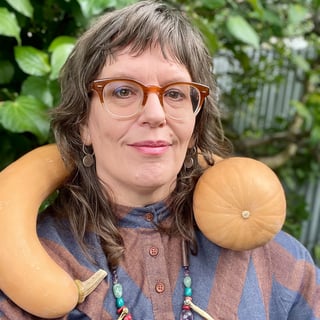
Speaker: race scal end Hey, this is Katie and you're listening to Riskillians, where we're tuning into the beauty without turning away from the train wreck.
Speaker: Beautiful things this week include the bottle brush blooming in our garden like big red pipe cleaners, finding elderflowers the size of dinner plates down by the creek, and watching three baby blackbirds hatch from tiny blue eggs in a nest in the crook of our apple tree.
Speaker: I don't care that blackbirds are a pest or that they scratch up our garden beds. New life is good life. Even if this new life looks like a bowl of sentient gnocchi, I wonder what the season holds for you.
Speaker: Tis the season to be hosting visitors, that's for sure. We have a fair few friends and family coming to our place over Christmas. And it can be quite stressful getting everything ready for people to arrive. There's the basic hosting etiquette like washing the sheets and shooing the pigeons out of the spare room.
Speaker: Then there's this extra layer of expectation that we place on ourselves. Well, I'll to speak for myself here. The expectation that everything has to be perfect, that my guests must under no circumstances feel the slightest twinge of discomfort or be put out in any way. And to achieve this, I've got to recreate their lifestyle and camouflage ours. I've got to buy the right brand of tea, quilted toilet paper and wine because guests love wine, even if it gives us a migraine. hide the drying rabbit skins, put the buckets of rotting seaweed behind the shed, and panic when I remember that we don't even fucking have wine glasses.
Speaker: At Meliodora, Sue Dennett and David Holmgren's home and where I used to live, I noticed that guests are treated more like participants, enfolded into the household culture in an easeful and unapologetic way.
Speaker: Nobody's rolling out the red carpet for you. You're kicking off your shoes, laying down on the floor and doing yoga nidra, which is the Meliodora pre-lunch ritual. And whether or not you think it's weird, it's just what's happening.
Speaker: I love the way David and Sue invite you into their world, a world of seasonal food and Japanese futons and bushwees and one rule to rule them all, never checking your phone at the table unless you want it chucked into the composting toilet.
Speaker: There are many wonderful benefits to being welcomed in this way, in a real way rather than a red carpet kind of way. One is that it's a lot less stressful for the host.
Speaker: Two is that nobody really likes being fussed over anyway. And three is that the role modeling potential is huge. This is what I'm telling myself as I debate how freaky to be this Christmas.
Speaker: How to find the balance between making guests feel comfortable without concealing who we really are and missing the opportunity to i don't know, showcase a different way of doing things. This could look like having a campfire and sharing stories rather than watching Love Actually for the 17th time.
Speaker: Or giving handmade rather than store-bought gifts. Or going dumpster diving with the cousins. Or not being ashamed of your composting toilet, or in our case, lack of running water.
Speaker: Or serving feral rabbit rather than farmed turkey. Or offering gratitude before the meal, even if your grandpa's grumbling that the food's getting cold. Or inviting your relatives to come on a foraging mission for roadside fruits.
Speaker: Or leaving your home in its natural state, not breaking yourself trying to whip it into shape. Because the greatest gift you can give anyone is letting go of perfectionism and offering them permission to do the same.
Speaker: So, Santa, please bring me the courage to be my best feral self this festive season. If that's your aspiration too, I'd love to hear how you go. Send me an email, katie at katie.com.au.
Speaker: So today, we are hanging out with a woman I met when Jord and I were travelling for the New Peasants tour, and she instantly won my heart with her stories of swapping Hollywood for a simple life on the land, choosing freedom over security every single time,
Speaker: even as a woman in her 50s. Her name is Lisa Potterson. She's a horse listener, advocate, and author with a voice like maple syrup who speaks up for life itself.
Speaker: We do talk about horses in this interview, but as you'll discover, Lisa's message is about so much more than equines. It's really about how we listen deeply to the earth how we can be agents of liberation for both the more than human world and our own wild souls.
Speaker: And yeah, we do discuss interspecies telepathy. There's also a lot of wisdom in this convo for people looking to share land or pursue non-ownership options.
Speaker: And just in Reskillian's news, I'm hosting a Patreon meetup on the 18th of December so that we can all get to know each other a little bit better and network in the least icky and most authentic sense of the word.
Speaker: So the details are on Patreon. And I'm also going to be piloting live panels with podcast guests starting in the new year where you can ask all of the questions that I forgot to ask during the interview and dig into the finer details of the themes that emerge from the podcast, like living without money, for instance, or starting a bush school, or growing community, or whatever else you're jazzed about.
Speaker: I'm really pumped for more listener-inclusive hangouts for the sake of solidarity and clarity and the unpredictable magic of Zoom Room Relating. Here is the lovely Lisa Potterson on horses and everything.
Speaker: Enjoy.
Speaker: Where I am, I'm in Tenerfield, New South Wales, and it's a little bit higher elevation from the coast, about, I'd say, 1,000 meters above sea level.
Speaker: And yeah kind of similar to you, we' we're in spring. It's a warm day. it's we had a little bit of rain this morning, so everything got ah a tiny sprinkle.
Speaker: And I've got these fruit trees all around my little tiny house. I live in two shipping containers that we've converted into a tiny house. And um there's probably 20 different fruit trees all in ah ah very happy to start growing again. The nectarines are looking like they're going to be amazing and the peaches and olives and but hazelnuts and apples and pear and, um,
Speaker: And I've got this i' got this garlic factory growing around my house. Well, we call it the garlic factory because I got a friend who has an organic garlic farm. And her and her husband gave me a big bag as they were harvesting. And I put all of the the cloves in. And I thought, oh, nothing's going to happen. i did my best. you know I followed the instructions. And now there's just this unbelievably beautiful a crop in between all the fruit trees.
Speaker: Um, so yeah, this, it's a really nice time of year and, uh, um, it feels good. And I, I also feel the momentum and the excitement in the air.
Speaker: Yeah. Beautiful. The garlic factory will keep you well all through winter. I'm sure. Yeah, well, that's what I was thinking because it's good medicine. I love garlic. I get accused of having garlic breath from time to time, but, you know, i I'm on my own a lot of the time, so hopefully I don't smoke anyone out. But, yeah.
Speaker: I think it's good for fending off not only vampires but fuckwits. So you emulate that garlic goodness, girl. As long as you give it to everyone that you're with and nobody notices, it's just the yeah the freshies, you know, the new blood, and they're like, whoa. Yeah.
Speaker: Yeah, it definitely know feels like a rebirth happening with this spring, you know, and the winters can be quite cold here. So it's it's just nice to be able to swim in the river again and, you know, immerse in the waters and have baths outside. And it's just, yeah, it's such a beautiful time of year.
Speaker: Yeah, you mentioned spending quite a bit of time on your own what What does fill your days? What are you largely up to? I'm sure it's quite a diverse spread, but if you can offer a glimpse into your life for the listener, that would be beautiful.
Speaker: Honestly, i would say ah large portion of my day is spent in service of the horses and in service of the land, a custodian of this land that I'm living on and caring for people in my life.
Speaker: And then the rest is is creating. So I'd say, i don't know if I could give a rough percentage, 75% in service and creating or You know, different at different times it vacillates. I try to do as much creating as I possibly can, but everybody needs their, everybody has their needs. We've got seven horses here and they're all individuals and they all have their little, um you know, routines and the land needs to be taken care of and watered and manure picked up. And, you know, it's just, and once that's taken care of, then I can relax and create
Speaker: I love that ratio. And at the moment I am pulling back on the reins of my enthusiasm because i don't know if the podcast listeners know this, but I am a rabid equine fangirl and have always been horse girl, could recite every single anatomical point on the horse and so we are going to be talking about horses today but I think that like so many beautiful subjects and interests that we all hold dear horses connect to the whole you know it's an it's analogy it's a representation of of the whole suite of things that we're interested in on this podcast and
Speaker: you know, they connect to to life itself. Obviously, they are life itself. So that's where we're heading today. But i'm I'm just easing up on that enthusiasm for a minute, because I really love to hear more about how you got to where you are. And I understand a little bit of your backstory, but not a lot. And so this is a great unfolding for me too. How is the life that you're living now different to the one that perhaps your family and culture might have expected from you?
Speaker: it's radically, radically different ah from where i was born and how I grew up. I grew up in Los Angeles, California, which is a beautiful, beautiful place. um it's It's such a long story how I got here. I'll try to make it brief.
Speaker: It's been a process. It's been a process of letting go, i think, and moving towards what I know is my path and to the best of my ability, being fearless and surrendering that let's say rewind to let's say rewind to
Speaker: working in the film business in my early 20s and um making a really good living and having fun and making commercials. i was doing production and um design and animation as a producer mostly and um loved it And it got to a certain point when i was driving around Los Angeles and there was so much traffic everywhere.
Speaker: And it started bothering me that I was in my car so much of the time. And I thought, geez, you know I don't want to spend my life stuck on the 405. So that was sort of the beginning of me thinking, this is this is not for me. Also, i have to say that where I came from,
Speaker: was a pretty well-off area. ah you guys might've heard about, you know, the Pacific Palisades, especially it was on the radar because it recently burned down. um But that's where I went to high school. So there was something about growing up in that area that I guess I felt like it was a little bit more of superficial and that, you know, people, it was more about looking good ah whether you know it meant how you personally looked or how your life looked or how your car looked or how your family looked or how your whatever looked from the outside.
Speaker: ah Look, it's a total generalization, but l LA you know has that story. It's Hollywood. it it It's about how creating a scene. it's it's It's not the depth of the feeling experience of living it. It's it's acting, you know, let's say just as a vast generalization.
Speaker: i also grew up spending a lot of time going to the mountains. and There's a place called Mammoth Mountain, which is in the Sierra Nevadas, and that's about five hours northeast of Los Angeles. and my family is a big skiing family so I spent a lot of time in the mountains and I loved being in nature whether on skis or even on bikes or on horses or walking or whatever just traveling through the natural world that feeling that um nature gives us and um
Speaker: I think I just, when i when I had the opportunity to come to Australia, i just decided to give it a go. Of course, it never goes to plan. But instead of going back to what I knew, i decided to keep going forward towards what I really wanted to create in my life.
Speaker: And even, you know, i had a relationship that I moved to Australia for And it didn't exactly um go the way that I was hoping. But um after that dissolved, I thought, what do I really, really want? What's really, really pulling me? And I just, I really just wanted to have a horse and live in Byron. That was just like, I thought that was just such a dream. it it just takes following your excitement and trusting that that excitement is leading you
Speaker: And where you need to go, because whatever you're enthusiastic about is, you know, it's calling your heart. And that's a unique signature for you. And, you know, for me, at least, i needed to trust that and follow it.
Speaker: And I've ended up living the kind of life that I want to live. um And it continues to unfold. However, um I've had to make the compromise of not spending time with my family of origin and my parents and my brother and sister and and my old friends that I deeply, deeply care about because they're all in, you know, most of them are in California. So, you know, there's sometimes a trade-off. When you make one choice, then you don't make another, you know? So I feel like if I don't if i don't follow through with what my heart is telling me to do, I'll sort of slowly die inside. i know that sounds a bit extreme, but it feels like that, you know? And so i'm like, no, I've got to go this path and whatever it takes, I've got to i've got to stay true to myself, you know?
Speaker: the interview I released this week with a woman named Laura Jean, she made this beautiful comment that was, you know, she works with clients as a business coach and a nutritionist and a nutritionist. And she asks the question, what's the worst that can happen in terms of people pursuing something that feels a bit risky, something that feels a bit edgy and Her belief is the worst thing that can possibly happen is that we don't be ourselves, that we're not showing up in the world as ourselves and living into that. And as you say, that that can that can necessitate compromise or trade-offs in service of being exactly that person who we are.
Speaker: one of the plethora of reasons that I was interested to speak with you, Lisa, is that I hope you don't mind me saying so, but you're you're a woman doing this independently on your own without owning the land that you're living on. And that to me feels really exciting and it opens up possibilities for people who don't fit the the the husband and wife duo. So I wonder if you can speak about just the way that you've claimed that, that life way for yourself.
Speaker: ah That's, um that's so cool that you see that because yeah, it's true. You know, it's a lot easier when you have that support either from a partner or you have financial support or, you know, you're set up in a certain way that,
Speaker: you feel that secure sense of security. and um the one thing, well, there's three things I want to mention. One is um i think that for me, there's always been a dance between wanting to have the security, but also really desiring freedom.
Speaker: And so there's this dance between security and freedom. And if I had to pick one, it would be freedom. And what do the horses represent? You know, freedom. And so that that also impacts the way that i ah play with horses and and commune with the horses is that I want them to be as free as possible as often as possible. So the game that I play is using less and less and less gear. And as I removed all the gear, I saw the truth in the relationship that I had with the horse.
Speaker: Because it's one thing to have a bridle on and to be able to ride. It's another to take the bridle off and walk on the ground and see if the horse comes with you or wants to be around you. And so, yeah, that has been an exploration in itself.
Speaker: Well, the other aspect that I wanted to mention that came to mind when you were speaking was 30, I remember my
Speaker: I was about to get married in my early 30s. And she said, oh, honey, don't don't do the horse thing. Just get married and get a good job and you know, make a lot of money and then you can do the horses. And I remember thinking,
Speaker: na especially when that relationship didn't work out. And I was like, oh, okay, now what am I going to do? I'm going to do horses. Because that was, it was like, i'm I'm now the right age.
Speaker: My body is fit. I'm healthy. I'm active. You kind of have to do it when you're when it's happening. you know, at that time, i couldn't have waited and made a lot of money, let's say, I mean, I could have, I guess, and you know, maybe moved to Sydney, worked in the film, has done a completely different track.
Speaker: But it was like, I was 30, was healthy, I was riding, I was fit. That was my thing. And that was what I was going to do. And if I waited, everything would have been different. You know, you change as you get older, you don't have that same kind of fearlessness and strengthen your body. And, you know, if you unfortunately hit the deck, if you're riding, you don't bounce as well when you're older, you know, you you need to do that stuff when you're young. So I was like, no way I'm doing that now.
Speaker: And I did. The g good thing is when you don't have anything to lose, you don't have anything to lose. You know, so it's like, you're kind of free. there was a crash, at a financial crash in 08.
Speaker: And I remember thinking, well, it barely affects me because there's nothing, there's not, there's, there's, there's nothing to take. So it's like, if you're healthy and you're fit and you feel good in your body and you have beautiful people around and you have food that you can eat and, you know, fresh air to breathe and all the basics, um, you're kind of set.
Speaker: All the other stuff is just scenery. as far as not owning the land, I always thought i needed the land. I needed the land. i needed to figure out a way to buy the land. How am I going to buy the land? i want to offer the retreats. I want to have the herd of horses. And then what happened when I came here is there was a woman who had set up the land in the most beautiful way And it was all perfect for the horses. She had basically built her childhood dream. And her childhood dream was close enough to my my childhood dream that it was already built.
Speaker: And then the blessing that's happened is when we built this tiny house here is, ah for instance, now she's out of town, she's traveling, she's gone to Sydney for a few weeks to go visit with her daughters, and I'm managing the farm. And that gives her freedom to go and enjoy life and travel And if she wants to go for a road trip out to the Kimberley, she can, because I said, you're free. i'm happy to manage the land. And conversely, I just went to Byron, and she managed the land here and took care of the horses beautifully.
Speaker: So we have a really, really good situation. And, you know, honestly, even if I had all the money in the world and I bought the most beautiful property and it was all set up perfectly, i would still need somebody to manage the horses and feed them and keep an eye on them and take care of the place. And and so i would need a me, you know what I mean? i would need I would need that. And the way it is now, it's just, it's ideal. And the reality is i didn't need to buy it in order to have that life. And quite honestly, do you really own the land? You know, does anybody really own the land? When you look at it from the the broader perspective, really we're all custodians.
Speaker: So at least that's how I see it. And i don't have kids, so it's not like I'm oh you know thinking, who can who can I leave my land to? Ideally, I mean, maybe someday I'll be able to set something up and set up ah a sanctuary for horses and create a fund for them and have it be a place that people can come and visit. That would be a dream.
Speaker: But um at the moment, that this is working really, really beautiful for everybody, the horses, the humans, all the plants that are here and the land. And that's what matters, I think, is that it's win, win, win all the way around. And and there's no there's nobody that loses out. And I think if one person loses out, everyone loses. And here, in this situation we've created, it's really working.
Speaker: e Yeah. and I receive emails all the time from people who are making great leaps of faith and quitting jobs and pursuing exchange arrangements in relationship, as you describe, and also people asking, well, how how is that possible? What kind of examples are there out there? So I'd love to get really clear on what the relationship is there. Lisa, like are do you pay a nominal amount? Like do you do you pay rent or are you working... in reciprocity and what are the nuts and bolts in that and then I suppose the other piece that people often say is security into older age like what am I going to do when I retire what if I'm kicked out on my ass when I'm not fit to work like what do you have to say about those things oh look I get it I totally get it and these are things that I've thought too you know I don't want to be 70 and um
Speaker: and um on my ass somewhere, you know, unable to get by or in in poverty because, you know, that's a fear. But quite honestly, I try not to worry about what hasn't happened yet.
Speaker: And I'm trying to focus on something like that and then try to focus on more what I want to create rather than the possibilities of things going haywire which, you know, of course is possible. But in terms of the logistics of how we have arranged things here, um the woman who had the land, she is very forward thinking. And she realized that she wanted, instead of investing in some stock or gold or Bitcoin or whatever, she wanted to invest in life here.
Speaker: and um hard, you know, real, real things that are going to become useful if ah things get a little bit more crazy. So the way that we worked it is she decided instead of investing in in stocks, let's say, she invested in land and she said, okay,
Speaker: Let's say i I put the money up for the tiny house and you can help me design it, which we did together. And then you pay rent and we agreed on an amount. And that's just the way we work it out. So ah if she goes out of town, that is, that's, there's no charge there. It's just, I pay rent. I look after the place because then I go out of town and we just see it as it works out in the wash.
Speaker: You know, like there's no ah tit for tat. There's no, I did this for you and you need to do that for me. It's just um rent is rent and that's clear. And that keeps ticking over for her. And that seems fair to me as well. And then I don't feel beholden to her. Like I need to work five hours a week or whatever. That can get a little bit messy. i think, I think it's good to keep it clean and just say, here's your Whatever you agree on an amount, at least that's what's worked here. And then um when we travel, that's just our relationship. It's really trusting. And we're both very strong women and um we've had our conflict and we're really proud of ourselves because we, ah we repaired every time and it kept getting better and better. And the more we had conflict and then we repaired, the deeper and the more trust was created. So it's been, let's say, um a little over two, two and a half years, something like that. And it's just gone from strength to to strength.
Speaker: And that's that's how we've set it up, like nuts and bolts wise. I don't know. are there any details that I missed? No, that's perfect. Thanks for sharing that. It sounds so gloriously unusually functional and the idea of strong women supporting each other gives me chills of of hope and i hope that people listening can feel, you know, i'm I'm calling this an unusually functional relationship, but i see I see more and more that these opportunities are out there and it's that willingness, as you say, to
Speaker: to go deeper and repair and and commit that maybe makes all the difference in having that open-heartedness. So it's really valuable to share those nuts and bolts with people and I'm really grateful that you're willing to go there with us.
Speaker: I'd love to took about horses and first of all, just as a primer, if you can articulate the difference between I don't know, status quo, horsemanship, horsepersonship, and what you do. Like, what's the difference between what I see as, you know, the way to horse? You chuck it on saddle, you put in the bit and take the reins and off you gallop. That's not really how you're approaching working with horses, is it?
Speaker: No. And that's the thing too. We all start somewhere. We all start with, well, at least in the past, we started with the traditional approach, which is exactly what you described. Yeah. And that's how I started as a kid. You know, you chuck the saddle on and throw the bit in the mouth and go for a ride.
Speaker: I was riding like that up until, let's say, my late 20s. And then i got Bob and i could not find a bit that seemed like it was comfortable in his mouth. And I kept trying all these different bits. And I'm like, it doesn't seem right. It doesn't he it doesn't seem comfortable. and finally, i um I called this man who was the a senior representative of Nevzorov Hot Ecole, which is like this Russian, there's a guy named Alexander Nevzorov, and he was, you can find him on YouTube, but he's he's just this maestro. He's amazing, amazing horseman. And back in the day, he was like, you know, the best in the world. And I'm like...
Speaker: Okay, I'm going to talk to the guy who represents Nebsarov and see what he says. Because Nebsarov works with horses with nothing, like no bridle, no saddle, no nothing. At the most, he'll have ah a small rope around the neck called a cordeo, which doesn't control a horse, but it's meant to give them signals you know, with a slight amount of pressure or, you know, just a little pressure on the neck or, know, a cue basically, but by no means can truck can control a horse. So I called this guy named Michael Bevilacqua and I'm like, Michael, i I want to get rid of the bit. I mean, what what's the first, how do I start? And he says, just get yourself a bitless bridle. He goes, there's ah there's a guy named Dr. Cook and he makes these bitless bridles and and give it a try and see. I think they're made pretty well. And and he's written a book called Metal in the Mouth. He's done a lot of research And he's shown all of the damage that bits cause ah to horses. You can imagine, you know, we don't think about it. Like if you're not a horse person, you don't think about it because it's just the way things are done. That's the tradition. But when you put a piece of metal in someone's mouth and then pull on it to control them, when you look at it, it's controlled through pain, essentially. And so this ah was was just taking the bit out of the mouth. And getting a bitless bridle was the start.
Speaker: And amazingly, i will say just as a side note, Dr. Robert Cook was an absolute legend. And he recently passed away like within the last month.
Speaker: And he is also in the book. And I reached out to him and he couldn't have been more wonderful. you know i so I told him he was in the book. I shared it. And he's like, yes, go you know support the horses. And do you need any more diagrams? And you can use this. And I love what you're doing. And can you edit this article for me? And he died. I think he was 94. And he didn't stop um being an activist, honestly.
Speaker: It chokes me up a little bit. He's such a beautiful man. but um Yeah. So he passed away just recently and, and, you know, he didn't stop standing for horses.
Speaker: So, um, yeah, that was, I would say that's a really great place to start if someone's interested. And what happens is you need to have a lot more trust because you stop controlling through the bit and the bit does cause pain, you know, and maybe people will say, no, it doesn't, if it's used properly, but you know,
Speaker: My feeling is if you need a bit to control your horse, you shouldn't be using it. A lot of the devices that have been used are, um you know, there's there's horseshoes.
Speaker: um They've been put on horses' hooves to help them to travel longer distances. And that was all, you know, that was started in the Bronze Age when horses were needed for transportation and they didn't want their hooves to wear out or they were taking them into war.
Speaker: So, you know, they used whatever they needed to to survive back in the day, but things have changed so dramatically now. So spurs, whips, martingales, bits, you know, all the devices, there's their saddleries full of them. And it's all different kinds of gear that um can control horses where I guess where i'm where I found my fascination was, and I mentioned it before, is the more that i removed the gear, starting with the bit and then progressing from there, the more I saw the individual who I was working with, who I was playing with, who I was engaging with and communing with. And that became the fascination because that, I met the individual and that relationship with that individual horse deepened. And it was so deep and so captivating that um I never wanted to go back.
Speaker: and And you look at the racing industry as well. And you know, it's like, it's kind of barbaric and these are sentient beings. They're not our slave. You know, that they didn't they didn't raise their hand say, I want to do a dressage test this morning. that You know, they can get trained and conditioned to do it, um but it's um it's a real ethical and moral kind of question, I think.
Speaker: Absolutely. And the parallels blow my mind as someone who's ridden horses without a second thought for the implications of the the control and domination paradigm of horse riding and being part of that, I immediately think of all of the ways that humans are controlling and dominating and enslaving other species for our own gain without a second thought because there's ah a long historical legacy
Speaker: to so many, you know, whether it's agriculture and food or entertainment, like horse riding and racing. But to me, it just, it's like a wake up, this gong in my head, just ringing with something really profound about the human experience as we know it and the experience of the more than humans who have been our instruments for for so for so long and without consent. and And then the biggest kind of landing point in this for me is that
Speaker: how many of us have a bit in our mouth and how many of us are ah shackled by debt or our cultural beliefs or expectations or the system that is so predicated on vast disparities and a slave class still to this day.
Speaker: And so I feel like, Lisa, your storytelling around what it means to deeply connect with and cooperate with a sentient creature, a beautiful horse that symbolises freedom, even though we've we've put a saddle and a bridle on it. I think to me it's just astounding. And i wonder if you draw these connections in yourself as well.
Speaker: 100%. Back in the day when I started this, I was probably a bit more angry. i didn't want to become a slave to the system. It was just you know a bit of fuck that.
Speaker: I don't want to be a cog in this system. I also left the US because ah Bush had just sent more troops to Iraq. And i thought, i don't I don't subscribe to this. I, that part of it was the warmongering of the U s which, you know,
Speaker: continues. this This idea that gets planted in the minds of people that there's a certain path, which is you go to school, you get good grades, you you know go to university, you get a good job, you marry someone nice, you have two kids, you buy a house, and then you do the same thing with your kids. And it's just like, I don't see that for my life. I just...
Speaker: i did want I did want to get married and have the you know ponies in the backyards and the kids, and but it didn't go that way for me. So that's why you know the horses have really become my family and I'm very protective of their freedom. um Initially, when I started sort of awakening to this idea, I said, I'm not riding anymore. And I also stopped eating animals. I became a vegan and I didn't want to harm any animals. I didn't want to be a part of that. Just like I left the U S cause I didn't want to be a part of, um i didn't politically, I just didn't, i I didn't feel good about what was happening and i didn't didn't want to be a part of it. um
Speaker: So I kind of stepped outside of it and thought, no, what do I want to create? And I wanted to create You know, like where we are now, it is a kind of a sanctuary. And um i want everybody to feel at peace and I want everybody to feel like their needs are met, myself included, and that we're seen and we're respected and we're considered and we're cared for. and I think, you know including the land, including the water, You know, the other thing that was killing me was, you know, in the Northern Rivers, so hard to find a place to live where someone wasn't getting murdered. Like either it was the poor cows that, you know, were getting raised for the the industry.
Speaker: or it was you know the trees like especially in the northern rivers they grow a lot of macadamias and then they were getting sprayed with this like super toxic chemical and I investigated that further because I was living for a little while in an area that had macadamia farms on all sides and um talked to the farm managers about what they were spraying and one of them said they were spraying ah dioxin and or dioxin. It was some derivative of Agent Orange. When i researched it at the time, I thought, are you kidding me? And then in the middle of that maca farm was a water catchment area.
Speaker: And I just was like, oh my Lord, not only that, these poor trees were planted in rows that it's like, you know, a jail for, for, for trees, you know, it's like you will be in a row and you will grow like this and we will poison everything else. And, you know, we will harvest all of your seeds. And it's just, it all just felt so um challenging to find a place where life was supported and pro you know like there's there's ah confessions of a an economic hitman john perkins john perkins uh mentioned in in that book um that there is a pro-death culture where a dead whale is worth more than a live whale a
Speaker: tree that's cut down is milled and worth more than a live, gorgeous tree. You know, and it goes, you just keep going with it. And i really want to live in a pro-life culture where all of the life is is cared for. and so that's why I spend so much of my time nurturing what we have here, because I i can only start where I'm at. The good thing is that you don't need to ride to actually enjoy the pinnacle of, of goodness, ah of being around horses, all you have to do is sit with them or stand with them and be quiet and listen and just open your heart.
Speaker: And that's the amazing part is because you think, oh, riding so inaccessible, it takes years and it takes money and it takes this and it takes that. And all these circumstances need to be right. And So you can do it, but really you can just come and sit with a healthy herd who wants to tune in and it's it's, it can be completely life-changing for people, myself included. So, you know, you can sit with them, you can go for a walk with them. And these really simple things can be a gateway to having this amazing experience with horses
Speaker: without any um kind of infringement on their sovereignty and autonomy and and being respectful to them and um and yeah, sharing space with them. It's really, a really beautiful experience. what What is it about horses? Why are they so healing and shamanic and what do they teach us about ourselves?
Speaker: That's what the book is about.
Speaker: Give us a piece of so Yeah, so um that's the the the thing. That's the money. That's the that's the golden ticket. um We think we're training horses. And it's been in my experience that they're truly training us. They're teaching us how to be better humans. And it depends how deeply you want to listen because they're reflecting back to us constantly we're being.
Speaker: And if we're willing to really look at that and take it on, then, you know, how deep do you want to go? And for everyone, it's different. Well, I definitely feel like it's just, it's such a potent thread, this this mirroring that horses offer us. And, you know, you just gave us a ah little tantalising morsel about just the depths that we can go to in that listening space and that reflective togetherness with with our horse kin. And so I wonder if you could expand upon that, like ah the kind of things that horses reflect back to us, whether that's, you know, misalignments in our inner world or simple scattiness of mind, like what what can we see or tune into if we're prepared to listen to that feedback from a horse?
Speaker: So it's really simple and it's really basic. Like it's not woo-woo at all. People think, oh, it's so woo-woo. It's not woo-woo. Basically horses are prey animal pray prey animals and they can sense if our respiration is high, if our heartbeat goes up, if something is a little bit like they need to be on alert.
Speaker: Okay. So they're looking, most of the time they're they're in a peaceful state. So they're chilling. um But if they need to run, then they're gonna run.
Speaker: um Sometimes they'll fight of course, but that's not as common. And that's in certain circumstances. But they've got heightened instinct to tune into what's going on with someone. So when you walk up to them, they scan you and they do a reading. And what they're looking for is coherence. So if you're chilled, let's say you're you're walking up to them and you're you know looking relaxed and your heart rate is high or your breathing is is ah erratic,
Speaker: they're going to be on edge because it doesn't match. It's incoherent. It's incongruent. And it's not safe. You're not safe.
Speaker: So they're going to be like, I'm out of here because you're something's not right with you. So they're looking for congruence. So as long as you are authentic, for instance, I'll give you a story. It's really simple story. I did write about it in the book, but I found it interesting was one day I was really sad and I went into the paddock, you know, at sunset and I used to go for a walk at sunset. had this beautiful view where I was and I walked up to my horse, Bob, and I was putting on sort of a smile and like a happy energy and like, Hey, Bob, how's it going?
Speaker: And he looked at me and he was just like, what's wrong with you? You know, he didn't say that, but he got had that sort of, you know, what's wrong with you? And he walked away.
Speaker: and of course, then I started sobbing. i was like, you know Even my horse is having, you know, he doesn't even want to be with And then as soon as I started sobbing and i was congruent, so I was showing the emotion that was actually inside as well as outside. He went, oh, you're safe again. And then he came back and he stood with me and we had this really beautiful moment together.
Speaker: But it was really interesting to me that he didn't want to be around me when I was inauthentic. So I think that's a big part of it is that they are showing us the truth about what's going us on inside of ourselves.
Speaker: And they're training us to be authentic. And I think that's really the key. Like if we go back to what we were speaking about earlier about, you know, how do we take this path and, and, How do we have that courage and how do we step away and step outside of that system and and follow our our true destiny?
Speaker: And a lot of ah what I do with horses is is helping me to, and I think it helps a lot of people, to tap into that authenticity because they reveal when things are off.
Speaker: So and until you are real They don't want anything to do with you. So you just keep getting these um reflections and it's a bit of a feedback loop. And the more you spend time with them, the more feedback you get.
Speaker: And it's like a compass. And you mentioned early in the conversation, you said the word telepathy and I'm like, damn, I need to hear more about this. What is an experience of horse-human communication that you could share with us? And is communication, interspecies communication, a skill that we can all develop or are you specially ordained with this this superpower?
Speaker: That's funny. i asked the people who were my mentors that same question because I thought, you know, do I need to have some sort of gift or can anyone do it? And the good news is Katie, anybody can do it.
Speaker: And it's very, very simple. Um, you, I mean, there's people that teach this. There is a woman in the book named Marta Williams, and she specializes in just that intuitive communication. And she has a book called learning their language. So you could check out that book as well.
Speaker: um If you're interested in learning horse human or, or, you know, learning how to communicate with any animal really, but um you basically create a channel between yourself and that other being, and it's an equal channel. So you can send a message and they can,
Speaker: send a message back to you. And there is no higher or lower. It's just you you sort of get yourself into a still, present, quiet space.
Speaker: And you envision that being that you want to connect with. It could be a photograph. It could be you're just envisioning that being. It could be a dog that you know really well. It could be alive. It could be deceased. Um, and as long as you've got sort of a ah feeling of them and you can imagine them in your mind's eye, you can connect with them. And, um, the easier part is sending a message.
Speaker: So obviously you can tell them how you feel if you had a pet that you loved. You can imagine them in your mind's eye and send them so much love and gratitude for all the things that they did. Absolutely, sending is the easier part.
Speaker: Receiving is a more advanced process because what you have to do is at least what Marta says, and I think there's quite a lot of truth to this, is that it takes practice. It's like exercising a muscle.
Speaker: So ideally, get pictures of all your friends' animals. And so they know their animals really well. and you practice and you take the first picture and you say, okay, whatever this dog, you know, you have a set of questions like, um, do you like to, you know, what's your favorite food and you know, what's your favorite outdoor? Do you like the beach? Do you like swimming? do you like whatever you you just create a list of questions and you tune into that animal and you ask all those questions, whatever you've created. And then you write the first thought that comes to your mind, whatever that is. It could be you see the color red, you know, and you're like I don't know, no words came to mind, but I saw the color red. You write that down and don't judge it.
Speaker: Just like running writing, you know, when you just let yourself just stream of consciousness, just write and don't judge it. And then what you do is you go back to your friend who had that animal, who has that animal, and you see what your accuracy level was.
Speaker: So you can get the answers. Oh yeah, my dog loves swimming and you know her favorite food is chicken and whatever it is. you know And then you do that, let's say on 60 to 70 animals and pretty soon you tune that muscle and you get, it's it so it's not really that scientific, it's it's your you're tuning And you're you're realizing you get a certain feeling in your body when you get the message back. so that's how you start to train yourself to receive information from animals.
Speaker: And in the in the book, there's a story of Marta. And she said there was one horse that was um some people had come to her. And they said he was really acting up when they took him to horse shows. He was bucking and he wouldn't do the jumps and la la la. And they came to her and they're like, help us out. We can't figure out. He's perfect at home. He does all of everything, you know, the whole routine. We take him to the horse show and he's a maniac.
Speaker: And um so Marta tuned into him. Well, she said, all I saw was the image of a little gray cat. And so she went back to the people and she said, look, your horse didn't want to talk to me, but I did see an image of a little gray cat.
Speaker: And the people said, oh my God, that's, you know, Fred. And Fred lives in the barn and he's the barn cat and they're best friends. And oh, geez, we should take Fred to the horse shows because that's probably what the problem is. um Our horse is missing his friend. And so he's he's upset.
Speaker: And so what they did is they started taking the cat to the show and the problem was solved. So you can't really second guess the message that you're getting. It might sound crazy at the time, but once you start trusting that message, because you've done it enough times to go, okay, I'll just take this on board and see where it leads. Then um you start to get these really unusual and interesting messages from the animals. And they're completely um like what you wouldn't, what you wouldn't imagine. It's like at a left field sometimes, but completely accurate.
Speaker: I definitely have had that experience where... you know, speaking with Mother Nature, like she's got a hell of a sense of humour. It's not solemn and serious all round. It's like the mirth and the the joy that's in in the field, like in the life force. I think it's easy to forget that that's that's life, you know. There's so much irreverence and and silliness.
Speaker: i was just thinking like, you know, a lot of the conversation – it's it's It's like about trusting yourself. And that is another chapter in the book is trusting the way life unfolds, you know, trusting yourself, trusting the information you receive, trusting your gut, trusting your instinct, following that through to the best of your ability. And, you know, I think that's what horses do. And I think that's what they teach us as well. And to be authentic about it, not to, you know, fit in and you know, do the superficial thing and look, dress in the, you know, the cute clothes and the, nice car and a pretty house and everything looks great and you're miserable kind of story.
Speaker: So they're looking for that congruence and that's that's what um I found they they're training me to do. Absolutely, yeah, they're definitely self-help maestros and i i want to really understand what happens when you take the approach of liberation with with these creatures and with ourselves. Like,
Speaker: liberation in taking off the saddle, taking off the bridle, taking off the spurs. And I suppose for people listening, we we all might have that question. Well, if you don't control the horse, won't it run away from you? What's in it for the horse to keep engaging with you if you don't have these tools of of control? oh because Katie, you would know this because you're such a gorgeous human. When you when you are really loving And you are really beautiful, like happy inside and in gratitude. And i want to say high vibe. I know that's sort of an old fashioned term, but you're you're on a in a good place. You've worked on yourself, your pleasure to be around. You take account accountability for yourself and, you know, even if you make mistakes, you acknowledge them and you're just beautiful to be around, you're fair, you're fun, then of course it's a pleasure to be around you. People wanna be around you, dogs wanna be around you.
Speaker: you're you're Being human is an amazing thing. And and the better you can sort of, or I guess I should say that the higher you go in yourself, like the more you raise yourself, um the more they wanna be around you. And the more real you are and the more caring you are and the more safe they feel around you. So it's, it's i'm I mean, look, i'm I'm not saying I'm there, um but I'm saying it's a practice.
Speaker: And then the horse just wants to be around you because you care for them. and you know, you're you're a beautiful, safe, kind, fair, loving person.
Speaker: So you're giving out all this energy that makes them want to be around you. And so that's, I think how they're lifting us up is that they're saying, you know, work on yourself and you, and then you practice and you do your best and then you fall over and then you get up and you keep, you know, lifting yourself up. And, and when you come in contact with horses and they choose to be around you, it's the highest compliment.
Speaker: So especially if they walk with you, it's just so beautiful. You're free. They could be anywhere else. They could run off and they choose to walk with you or they choose to stand with you. or So, yeah, I think that's their um their role is to help us work on ourself.
Speaker: And that's really the message from all the people that I've spoken to all of the, you know, they're all specialists. They've spent their lives devoted to horses. They're the best in the world. i was thinking, you know, i need to talk to these people because how do I become better at being around horses and being a better horse person? And the message is I could distill it down to three words, work on yourself. And when you work on yourself, then you see, you see if the horse wants to be around you. And if you take, you take the bridle off and the horse runs off.
Speaker: Okay. You know, that's not the end of the world. So why are you so worried about it? You know, it's like they run off. It doesn't, it doesn't mean anything in a sense.
Speaker: Um, it just means they prefer to be elsewhere, but you don't have to take it personally. And then, you you know, it becomes all the more sweeter when they finally do walk with you or do sit with you or do, you know choose to be um in in commune with you.
Speaker: o yeah Just, just to wrap it all together, you have this splendiferous quote or a phrase that I've read from you and you spoke about how to be the human of your horse's wildest dreams. And I just felt the the flip that you like I saw what you did there you know flipping that script and that expectation that it's not about us getting the horse to be the horse of our wildest dreams but how can we be those people as you say that the horse wants to commune with and I feel like we can expand that to the entire planet. Like how can we be the humans in service of life, as you say, that ah pro-life culture, not the death cult of capitalism. yeah And i I just wonder if you have anything to say on that topic, Lisa, like how we how we can really be in service. You've already spoken about consciously giving your time in service, in service of the horses, in service of the people around you, in service of the land. And
Speaker: I mean, what would it mean to be absolutely delightful custodial humans, not dominating fuckwits?
Speaker: um Well, yeah, for everyone, it's different. i think it's oh just, it's been an interesting conversation for me because I realized, you know, it's really thinking deeply about your essence, about, you know, why you're here.
Speaker: And what you want to do with your very precious life. And you're very, you know, you're so gifted to be in a human body right now at this sort of transformational time on the on the planet and in the universe.
Speaker: And what do you want to do with it? And the horses are almost like tuning forks and they're helping us to evolve, I think. And also part of that is that they're connected to the land. you know, they're eating on the land and they're under the stars 24 seven.
Speaker: And they're, um even their manure becomes fertilizer. Like they're a perfect cycle. And when you look at them on the horizon, they're the midway between heaven and earth.
Speaker: They're sitting on that midway line on the horizon. And, That's how it feels around horses. So if we can reconnect with the elements and all the celestial bodies and you know spend time at the sunrise and um in contemplation and the sunset and and be on the land, even if there's horses, there's no horses. If you need to go to a park, just, you know, whatever, you need to go out into the backyard. um If you have a pot plant, you know, like wherever you need to start. And that's why it is, i i really feel it is connected like ah what you are doing with, you know permaculture and, you know, where you guys are coming from. There's such a, there's such a and parallel because my experience, they reconnect us to the natural world. and you always have to go outside to be with them. So that's the first step, you know, you're in nature and um and it it changes you, it relaxes you. you can You can find yourself in a state of more peacefulness and more calm and you're you know out of traffic. Like I said, I didn't want to spend my whole life sitting on the 405 and breathing in those toxic fumes and yeah, just even going on a walk.
Speaker: that's That's such a beautiful thing to be able to do. So whatever wherever plate wherever you can start, um whether it's through meditation, through having a walk, through eating beautiful food, through doing some sort of personal work, through making amends in your relationships, improving your relationships, deepening your relationships, you know just becoming the kind of person that you want to be that you you know you know in your heart is what you were put here to do I feel like the horses are are supporting us to do that because the the the more humans that are compassionate and kind and loving and in service and care of everyone else and everything else in their realm, the better everything's going to get.
Speaker: And you know initially, like in the old days, I was teaching people how to ride horses and, and it got really boring for me. Um, and now it's, I realize it's more about us.
Speaker: Um, you know, just how can we raise ourself up? And that's what I want to offer in the retreats is, you know, what the modalities that I've found help people to, um get out of the muck and, um, into their, you know, radiant self and, uh,
Speaker: That's a whole other conversation as a well, Katie, because that goes into the month long healing programs that I've been involved with for almost two decades now. So I'm kind of merging the two. But there's really simple modalities that are free.
Speaker: you know, like I'm saying, you know, just go out wherever you can and watch the sunrise. Just look up at the stars and just connect. Just just realize that you're a part of that. You're you're made of stardust. you know Maybe that sounds crazy, but you know where do you think we came from? It's hard to say in just a conversation, and I think that's why I needed to write about it and process it all and all the principles the horses were gifting to us and go in more detail with all the stories.
Speaker: and and And so that's really what the book is about. And I can't wait to ship it in February. o Oh, Lisa, i'm I'm so surprised that I could ask you any coherent questions because I've been in a reverie of your dulcet voice and all of these amazing, wise offerings that you've you've given us in this conversation. And where can people find you and where can they check out your book?
Speaker: Yeah, sure. It's um it's just the website. which is one o n E with W I T H horses.com. One with horses.com and everything's there. And there's, you know, ah stuff on the book, there's stuff on the retreats.
Speaker: There's, um, I'm just starting to write articles for magazines that are getting published and, uh, that's going up on the website and it's slowly building, getting momentum and, Yeah, thank you so much for combining equine equiinene care and earth care in this conversation and scratching my horsey itch and indulging me. And i wonder how many other lapsed horse lovers will come out of the woodwork for this episode. But, yeah, you've you've been so generous with your time and I'm just really, really stoked we could connect in this way and I'm excited to release this into the world.
Speaker: Thanks, Katie. Thanks for having me. It really, it was fun and lovely to speak with you and i appreciate it as well. And i hope we can do it again sometime.
Speaker: That was Lisa Patterson, whose work you'll find linked in the show notes. And all my gratitude to everyone on Patreon for sponsoring the podcast. I'll catch you all in a couple of weeks time.