Transcript
Speaker: Oh, AC and Efras, I know I ask a lot of you. i ask for your time, and then i have the gall to ask for ratings and reviews. Haven't seen any of those in a while. Not shaming you, but shaming you.
Speaker: I mean, what an asshole. I ask you to then check out Pitch Club at welcometopitchclub.substack.com so you can get better at landing stories. It's the thing I wish I had when I was... 30 years old and just starting the freelance, and was so frustrated and bitter and resentful not knowing how to do anything.
Speaker: Hence Pitch Club. Pitches ranging from agent queries to feature stories and off-the-cuff unhinged essay pitches and more. Forever free. You read a little, you listen a little.
Speaker: If you stick around long enough, you're going to learn a lot. Welcome to pitchclub.substack.com. Come, come. i just spiderwebbed and that's you're now inside my brain and i apologize for letting you
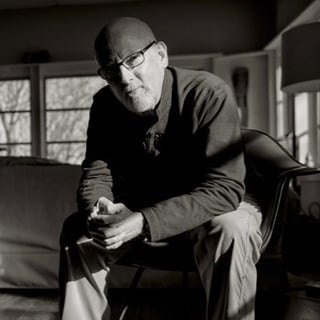
Speaker: in podcast the show where i talk to tellers of true tales about the true tales they tell today we've got a bit of a curveball maybe even a backdoor slider a knuckleball even i don't know not really it's dan john who is something of a Swiss Army knife of wisdom and kindness and strength and conditioning and generosity. He's been a longtime strength coach and a master communicator of how to get real life strong and even strong for performance in your sport. Not influencer flash in the pan strong.
Speaker: The kind of strong that allows you to maybe fill out your shirt and carry all the groceries in one go and shovel the driveway without leaving yourself in traction for four days. I've recommended his books many times on the show and in newsletters.
Speaker: And his approach to strength very much rhymes with writing and the practice of writing. So that's a big reason why I wanted to invite him on to talk it out. You can visit danjohnuniversity.com to learn more about him and to buy some of his books like Easy Strength Omni Book, Easy Strength for Fat Loss, his two armor building formula books, and his latest, The Fitness Forge, master coaching tools that build real Strength.
Speaker: The real crux of easy strength is that it echoes what ah Percy Seredy, the Australian running coach, had his runners do in the 1950s. And it's an approachable system that doesn't feel like you're doesn't feel like you've been put through a wood chipper. I spent most of my 30s training like I was a juiced up bodybuilder.
Speaker: I was not juiced up, but I did draw inspiration from the likes of Branch Warren and Ronnie Coleman. And that sort of balls to the wall training intensity, you know, hobbling around most days with that deep bone ache.
Speaker: As I've aged, training in that matter is unfeasible and, well, fucking stupid. Plus, easy strength is awesome for running, and I'm doing quite a lot of that these days. Show notes of this episode more at brendanamero.com. There you can read hot blogs and find out what episodes from the backlog you didn't know you were missing.
Speaker: And to sign up for my two very important newsletters, Pitch Club, which is at welcome to pitchclub.substack.com and Rage Against the Algorithm, which is at rageagainstthealgorithm.beehive.com. Or you can just use the embed forms at brendanamare.com.
Speaker: Hey, hey. And if you're feeling real generous, there's also patreon.com slash cnfpod in case you want to chip in and get access to the Flash 52 sessions and one-on-one calls with me. I'll even turn my camera off if you don't want to see my ugly mug.
Speaker: So Dan John has been a champion discus thrower, coming up on the coattails of the great throwers of the 70s, guys like Brian Oldfield and Mac Wilkins and Peter Schmock.
Speaker: His lifting approach has always been geared around utility, not necessarily aesthetics by and large. He's written many books like Mass Made Simple, 40 Years with a Whistle, Can You Go, Never Let Go, and several others. ah Many of them are just available on The Big A. Others are available as PDFs through his website. and That's again, danjohnuniversity.com.
Speaker: They imbue a sense of possibility, know, that things are achievable and that little and often over the long haul is doable and repeatable. If you're into fads, Dan's not for you. And he often injects so much personal anecdote and wisdom from a life of nearly 70 years into his work on the podcast.
Speaker: And he's been lifting for like 55 years or even like even pushing 60. So it's kind of kind of crazy. he He lives it and has lived it and continues to live it.
Speaker: And you can listen to him every week on his Dan John University podcast where he answers listener questions every week. And ah oftentimes, sometimes it is ah repeat repeat questions as people kind of onboard or or some OG people just need to hear hear him articulate things again and again because i'm just hearing those things over and over again um is very centering. And in some ways, he's very centering for me as well. like Even hearing him talk through something as simple as his daily pirate map, which is basically just a collection of these almost non-negotiable daily habits, a collection of like, don't know, five to 10 things. And merely hearing him talk through that like defrags my computer, if that makes any sense. like It just boils things down to very simple aesthetic that it feels doable. And like, oh, yeah, if you kind of lock into those core habits and do that day after day after day, week after week, month after month, like good things are going to happen to you.
Speaker: In any case, in this conversation, we talk about parasocial relationships, Marvel Comics and Greek heroes, the spiderweb effect of his brain, the open culture thing he's into, little and often over the long haul, the secret, being a slave to habits, parallels between lifting and writing, collecting the links, getting small, easy wins out of the way, inspiration being for amateurs, having skin in the game, and community making us great.
Speaker: You'll find Dan at CoachDanJohn on Instagram. And of course, visit danjohnuniversity.com to see if his books or his inner circle is right for you. He also puts a lot of really just good tutorials on YouTube, like how to do double kettlebell clean and barbell clean and press.
Speaker: And it's something very simple, like 30 second videos. And he shows you that technique. And i was like oh it's really helped me a lot. Hope you'll stick around for a parting shot on a job versus career. But now let's get into it. Here's Dan John.
Speaker: Riff.
Speaker: This is the question of my life. What do you doing? Look at yourself. Look at what you're doing. Definitely louder than whatever dumb fuck question is that you want to ask. This is going to have to interest somebody somewhere other than me.
Speaker: Well, hearing you talk about, know, say when we're we're done with this, you're going to, you know, go for a walk and everything. And it's one of those things like, I've listened to the show forever. And I know, you know, your adherence to walking and specifically of late, you know, making sure you get your 10,000 steps a day over the long haul. You know, I've listened to the show for a while. I've read a lot of your books and I hear we are talking for the very first time and kind of me digitally meeting ourselves. But it's like that parasocial interaction. Like I kind of like know a lot about you, even though we've never met. It's really bizarre, right? Yeah.
Speaker: Well, yeah I mean, like people know when I say I'm going out front because of that, my video opening, they know exactly what I'm talking about. Even though that's a bit dated, we don't have those cars anymore, but yeah.
Speaker: Yeah. And I love ah the fact that you are a really prolific writer on top of all the the leadership leadership you do in the yeah know weight training and strength training communities and whatnot. I really wanted to get a sense of the discussions around books being so formative to you early on. But just, you know, writing is important to you. Communicating is important. But yeah what are some of those you know seminal texts that ah that you revisit that are that that really do foster you know a lot of the yeah your curricula? Yeah. This isn't meant to impress you by any means or to act like I'm cool, but I am rereading the Iliad right now.
Speaker: ah i read Again, it started online. i read an article about someone, the the the author wrote a book ah of Marvel, you know, the movie, Marvel movies. Mm-hmm. and how they were anti-Hitler before anti-Hitler was cool. And Captain America punches Hitler in the face on the cover of the first Captain America.
Speaker: And then this author, i and um I want to say it's Meineke or Weineke, and I apologize for spacing on it. The whole book is about how Marvel movies and comics have kept the tradition of the Greek hero alive. Well, I read this, of course. And while I'm reading it, you know, the movie Odyssey is coming out this summer. So my weightlifting group is talking about the Odyssey course. That means I have to rewatch Troy, which I did, which also means that, you know, i find myself all of a sudden finding myself rereading the stories of Theseus and Perseus. And I'm like, so in 2004 for my Christmas present, my daughter bought me, Kelly, 2004, it's 22 years ago, this really nice copy of the Iliad and the Odyssey. And I read it then. And so here I am 22 years later. of course, the Iliad's a little bit older. ah Yeah, i I don't have an original, by the way, just, so you know, a little disappointed myself. that's That's kind of how I read, if you don't mind.
Speaker: i let the spider web kind of happen. You know, sometimes I'll be reading somebody on some something and someone will why are reading that? I'll be like well, okay. So this the book I'm listening to right now, the Richard Osman one, we're looking for something to watch one night. I think it's on Netflix, but it's got...
Speaker: Oh, it's got a real great cast. The guy who was Gandhi, Pierce Brosnan, I mean, is a knock-em-out cast, Thursday Murder Club. So we watched this show and I'm like, this is pretty good. Find out there's five books in this series.
Speaker: Read them all. Turns out he's got another book. One of my big philosophies of being a coach is throwers throw, jumpers jump, you know, sprint or sprint. And when you get away from that, you you kind of get yourself in some trouble.
Speaker: Well, readers read. And very often... as as a reader, our conversation this morning in the gym, today's leg day, okay? I just got done with my legs.
Speaker: And our conversation today was about Dune because the trailer for the third one came out, the part three. And of course, the online geekdom of, you know, all things sci-fi hates it already because it's, you know, it combines, I've already lost myself. I liked Dune, the first book, didn't didn't like the others.
Speaker: But that to me is what I want to be in a lifting community to. I want people who are well read. i don't want, well, I gotta be, I don't, I, you know, I don't want racists. I don't want crazy people. I don't want, you know, I want to be in a community of people who talk about books and movie adaptions to books, and, you know, and I enjoy the process. And to me, ah I guess there might be a better word than spider webbing, but that's how my brain So you you read this, which gets you excited to read that.
Speaker: Earl Nightingale, the great speaker, used to talk about, you you know you're a writer is when you're not finished, when you haven't even finished a book or an article and you're already thinking about the next one. And i always thought that there was a touch of genius in that.
Speaker: Because as you're getting to towards the end of a project, you're already thinking about what's next. And of course, and if you read success people, i would i would put like Tony Robbins especially on that list.
Speaker: there's ah There's some others, obviously. you know I know Napoleon Hill and Carnegie and all of them. But one of the things that's very common in that thing is, you know, is if you have this area your life successful, it's really easy to have the other areas of your life successful. And I find the same with writing projects. As I write, I write.
Speaker: and i And all of a sudden, that reticulating activator system, I i think that's what it's called. you start to your Your brain starts to see Achilles everywhere. You start to see Hector. you pride The other day I went on a a little rant about Peter O'Toole only winning ah an honorary Academy Award because I think in his speech in Ratatouille, you know, the cartoon. Oh, yeah. One of my favorites.
Speaker: I mean, Lawrence Olivier. Lawrence of Olivier. Lawrence of Arabia. Sorry about that. I mean, pretty damn good, you know. And then, of course, the other one was my favorite year.
Speaker: where, oh, and I got to tell you, as much as Troy's not a good movie, he as Priam was amazing. See how that all worked? I just spiderwebbed, and that's you now inside my brain. And I apologize for letting you in. Well, it also gets to the the thing that you that you often talk about, about knitting, about you know various other elements of your life that creates a that creates a hole, and that hole creates its own momentum. like I think of your writing in Easy Strength,
Speaker: like easy strength alone or easy strength or fat loss alone, like just the strength part, like that's one slice of that pie, but you do need to incorporate every other little element in, but all those little elements add to a big hole. And if you subtract one or you neglect one, especially as you get older, it it all kind of crumbles in that sense. And so I love this idea of braiding all these kinds of things together and when they're braided, ah be it community, be it writing, or be it in this case of Easy Strength or Fat Loss or something, like then the magic can happen.
Speaker: I agree. And you know, if you read, there's a place online called open culture and I like it a lot because very often they'll have references to writers talking about the art of writing. I think Stephen King's book on writing, if you're a big Stephen King fan, you you might yell at me, but I think it's his best work.
Speaker: It's awesome. Yeah, it's great. He discusses, well, the auto, the, where he gets hit by the drunk driver, that section, where he came up, where he got the idea, Carrie, where he came up for the idea, Carrie, I was listening to him read it on, i was driving.
Speaker: I had to pull over. It um impacted me that much. Of course, Stephen King has a great list of things. Oh, Hemingway, of course, has a wonderful list, you know. And one of the things you start to pick up when you read the great writers discussing writing is it's very much like talking about an athlete preparing for competition. They take care of the things that, you know, discipline's not this magic.
Speaker: <unk> It's not a light switch that you can just flick on. And I got to tell you, I think right flicking on the writer switch inside your brain, this is where I write This this is my computer. This is where I write now.
Speaker: But, you know, you open that Word document and there's nothing there, you know, and four or five, six, seven, maybe a year later, it's so packed that you need someone to edit it just to get rid of the extra stuff.
Speaker: But to go from blank to a couple, I don't know, at least a hundred couple hundred pages, if not a thousand, is such a leap, you know? And you do it just the same way you get strong. Bit by bit, Brothers Karamazov.
Speaker: Little and often over the long haul is what my coach told me in college. And if there's a secret to writing, the secret, there's no secret. You know, it's... It's the same way of getting strong in the weight room or, you know, being ah an outstanding distance runner.
Speaker: I mean, people who think you just go to the track and start cranking out laps probably have never cranked out a lap in their life because running one lap if you're untrained is, it's pretty long ways. Yeah. Well, I love you bringing up the little and often over the long haul. Yeah, and it's such a great ethic to live by and so many other in in the arts and lifting too. So in what way has has that ethos you know allowed you to keep momentum in in your writing and not get overwhelmed by the bigness of a project?
Speaker: Yeah. And well, he said two things at that meeting. And I think Anybody who wants to be successful, and that includes being a good parent, good neighbor, good spouse, good child.
Speaker: The other thing he said was, make yourself a slave to good habits. And, you know, I joke in some of my books about do you know how i quit smoking? i don't know if you know this story. No.
Speaker: Yeah. I never started. Yeah. It's a joke. Ha ha. We all laugh. But there's such a truth there. That's, that's hard. So I never had to overcome one of the most difficult habits to break.
Speaker: But, you know, I tend to, there's a look I have, like at evening performances for music, I tend to wear suit and tie. Formals, i I have a tuxedo, wear a tuxedo. For my training, I tend to wear tuxedo.
Speaker: These crew cut shirts and these particular pants. I am a slave to good habits. I have a basket in my bathroom over there with all the little things I'm supposed to do. you know, it's got my sunscreen moisturizer on. It's got my little, um my hair person tells me to put, it's called,
Speaker: tea tree oil or something like that on my hair. It's all in the one basket and I pull them out one at a time. I never want to think about what I'm doing. I just pull things out. And then when I pulled everything out, I put it all back in the basket and I look this lovely.
Speaker: So there you go. That's ah you don't just roll out of bed and look like this. Okay. But little, so it's twins. It's twin. Okay. Is little and often over the long haul. Um,
Speaker: If you want to get strong, i would rather see you lift three days a week for five years than try to sneak it all into six weeks. If you want to lean out, you know, I you know i was an athlete for a long time, and i decided a couple of years back it was time to be a grandfather and not ah an athlete anymore. So I decided on a pound a month.
Speaker: for as long as I can do it. And I tell you, it's the most boring. Nobody wants to do a quarter pound a week. it It doesn't even measure on most home scales. But if you do it for four years, that's 48 pounds, and that doesn't come back on because your body has consistently adapted to it. Well, if you want to be a great discus thrower, Coach Monsenade, he said, lift weights three days a week, throw the discus four days a week for the next eight years. And I've never had an athlete, ever, that's folded in his arms and said, eight years. That sounds good.
Speaker: I'm with you, Coach. Let's walk this together. Now they want the secret. And the secret is, little and often over the long haul. And I know there's prodigies in every field, but even when you study it, that doesn't always work. i mean, I think Mozart gets thrown out as a prodigy a lot. You could probably say Yo-Yo Ma might be, you know, again, Itzhak Perriman, the violinist, maybe, because, you know, he was on like the Ed Sullivan show. One of the things people forget, though, was he also was one of the last people to ever get polio.
Speaker: So part of his story is this is what he could do. But in writing, maybe there's people who are like maybe a Dylan Thomas, maybe. I know if you ever heard of Bill Shakespeare. He's a big deal. A couple of years ago. Heard of him. Yeah. Yeah. A little bit. i mean, clearly there are people who are outliers for the volume of things. I'm sure you could throw Susan Collins in there too. Cause you know, the volume, you know, um,
Speaker: But most people I know who get into writing or even reading, The prodigy is the ability to do the work. the The secret is there is no secret. Yeah.
Speaker: Yeah. To do the to do the work, a lot of people, I've heard i've heard the the phrase, like they want to be the noun without doing the verb. So they want to be a writer without doing the writing. You know, what for you, what are the the, maybe the routines you have in in place so you can knock out a few hundred words on a given morning?
Speaker: ah I wasn't expecting this, but yeah, let me show you. So... so So one of the things oh, we're not, we're not a video, are we?
Speaker: No, no. Yeah. It shows video, but only records audio. Okay. Then I will just explain. So one of the things I do, I'm a big fan of manila envelopes, you know, those big manila envelopes. And one of the things I did, this is a teacher and I do this as a writer is if I have an idea, one of the first things I do this one, in fact, this is an older one, but this, this one is entitled Dave Davis. Okay. And then ah i Xeroxed off everything I ever could find out about Dave Davis and how he recommended strength training for throwing. And then what I do after that, I might, well, back then I talked to Brian Oldfield, who knew Brian's no longer with us, but I talked to about Dave Davis. I got some insights about Dave Davis. And then I had a chance to talk to Al Furebac, the great shot putter, who knew Dave Davis. And just, you only had one or two things, but it was great.
Speaker: And then I start making notes and then all of a sudden I'll find this and then I'll take a piece of paper of a program. Bish Dolagevich's program was a very Dave Davis. And all of a sudden, I'm sorry, folks, for the the the throwing and weightlifting references, but this is just the example. But all of a sudden, this manila envelope begins to get a little life of its own. I'll have little scribbled notes, which sometimes I have to rewrite because I scribbled it. And then i have to make sure I write it clearer so I understand what it is. And then if I find things, I'll print them off and put them in there.
Speaker: And before you know it, you know, you might have six, seven pieces of, i mean, all kinds of pieces of paper from backs of envelopes to maybe a napkin from a party. I mean, and you throw these things together.
Speaker: You take them apart and you will just see, you'll just see the links and the connections start to happen. You'll, and, and the course that's, I wrote a thing for my college students years ago called collecting the links. And the idea you start to, to link these things together. And before you know it, ah you could probably write, I could probably write the body of an article doing this method, even if there's 50 things I want to say, 50 points. So we're looking at somewhere between 75 200 paragraphs.
Speaker: two hundred paragraphs And then you you write them down. And if you if you're smart, you you re-juggle that. And then all of a sudden a story leaps out, there's your introduction. And then you look it over and you conclude, you know trying to tie it all together with ah some something simple. That's the system I use, pretty simple.
Speaker: um it does i mean I have a master's in history. So I think a lot of that that research and collection was trained for me. I was taught how to do that. But the idea, ah the biggest thing, this might be missed by some people, is try to keep things in one place as best you can.
Speaker: You can have the messiest desk in the world, but the things you're writing on, try to keep them at least in in one folder or one you know one shelf you know or one card tabletop. Try your best to keep everything so you can touch things. That that really helps me the most. And then, of course, the other thing that really helps is I love at the the the new way to say this is N equals one. But I love doing it doing experiments. I love trying out a stupid idea and then share if <unk> a lot of ideas, you know, we won't talk about bad ideas, but sharing it with a few people. And then, you know, all of a sudden you have you have the story of the experiment.
Speaker: You have, you know, the, this, this workout, the story, of how it came to be the results, how happy people were. Here's what we think is the best way to do it. Try it out.
Speaker: And that is a, that's a magazine article and that's a online article. That's a that's five blog posts. Yeah. Yeah. What do you find people most resonate with, with your work?
Speaker: This is the feedback I get. I give people solutions for their problems. i'm ah I'm a bit of a problem solver. I like solving problems. it's ah It comes to me.
Speaker: I enjoy it. So most of my clients now, most of the people I work with, I'm not working at the college level anymore, which is really different. But most of people I interact with online and are over 40 years old. Very often they have a couple kids at the house, full-time jobs. They got to mow the lawn. They got to you know shovel the snow. their washers and their dryers break and they want someone that's not going to tell you nothing worse than you go online and so there's a 21 year old guy with six pack abs. If you're 21, you don't have six packs. That's on you, bro. That's you know, they're already on drugs and they you know they put makeup on and
Speaker: there's a thing now called looks Maxine. My grandson was telling me about it. You know I'm just this guy, you know, I'm, I'm almost 69 and I understand what it's like to be busy. You know, I've had to work extra jobs to get my kids through school. You know, my audience likes the fact that I respect that what they can do is the best that they can do for right now. And if they had this magical experience,
Speaker: sudden $50 million dollar pot show up where they, and then they could hire a cook and a personal trainer and have their own home gym. And I have a sauna a hot tub, but you know, all these other tools and, and you know, um daily massage and you have all kinds of high tech chemicals and stuff.
Speaker: Yeah. Okay, good. You could look better on that. But you're trying to raise kids and you're trying to keep your life together and you're trying to pay for insurance. Here's a program. That's that's the most that's most positive feedback I get. And honestly, that's kind of knowing that I make a difference in people's lives.
Speaker: Our family mission statement is make a difference. The three words make a difference. my My daughters came up with that. We talked about this. This would be Oh, this would be right after 9-11. So this is 25 years ago. We had this family meeting. Tiffany, of blessed memory, she's no longer with us. She saw the second plane...
Speaker: go, she was in Manhattan and she saw the second plane go in. And I think it, uh, candidly as I can, I think it destroyed her life. I think it, the, the impact, I don't think she ever totally recovered.
Speaker: Um, and so my daughters and Tiffany and I discussed that it was, it was make, make a difference. My personal mission statement comes from Jesuit high school in Dallas, uh,
Speaker: be a man for others, you know, and I take those, I take those to heart. And so if I can use my platform that I kind of have here on the internet and and in the real world and make a difference and for for other people today, it's a rare day. I don't know. Don't donate money to somebody. And I just did it right before you got on and time treasure talents. I try to donate all three.
Speaker: But the other thing is, at the same time, it's real important that i I am the person that you can trust to get advice from. So I need to make sure that my waistline is where it needs to be. i go to the you know I go to the eye doctor every day. I go to the dentist yeah three times a year. Annual physical. donate blood. you know I try to be what I say you should do.
Speaker: yeah Does that make sense? Oh, for sure. Yeah. Yeah, 100%. And even just hearing you, anyone who's a regular listener to your show, you know, like it ah it crops up almost weekly or by week, like where you talk about those habits of seeing the eye doctor flossing, yeah yeah getting in your your walks and protein and veggies and all this stuff. And I don't know why this is, Dan, but every time I hear you talk about just those those very simple, basic habits and your pirate map, which is kind of like this daily set of habits, I'm
Speaker: I don't know why, but it it kind of it centers me in a way. It it like simplifies, and it takes the noise out. Even just for me, even though they're your habits, like it really centers me. I don't know if that's a feedback you get at all.
Speaker: So there's a couple of things I do that when people start, so one of my things is I think every day is a brick and you want to build your life brick by brick by brick. And if you do that long enough, you've got the Great Wall of China. The only thing you can see humans have ever done from outer space, okay? Yeah. And hopefully I'll live that long to build that. lin bri um But I'm a big believer that each day starts the night before. So before I go to bed, you know, I'm, I wake up to the coffee maker kicking off. i I don't use an alarm. I set my clothes out for the next day. And I always include a handkerchief. And that's an honor of my father because a gentleman always has a handkerchief. So when I work out, I have a handkerchief just in case,
Speaker: you make a spill or get a bloody nose. and I will be there for you, my friend. ah But the other thing I do is every night before but before i I, in my journal, I make a little tea. On the left side is my physical goals and my right side is my personal financial goals. And then I'll write down like,
Speaker: Every day, 10,000 steps. every that's That's a given. That's on the left side. Today was a leg workout. I wrote wrote down my basic plan. That can change. Things happen. you know i mean How old are you, Brendan? 45.
Speaker: forty five have you ever Have you woken up yet with an injury that you can't that you got from sleeping? Yes. yeah well it's Yeah. And for those of you who are not there yet, it is the strength. How did you hurt yourself? I slept eight hours. Oh. Neck, shoulder. Yeah. my My neck, shoulder, my back all hurt. Why? I don't.
Speaker: um So things change. And on the other side, I write down, for example, today I wrote down a podcast with you and some other things. But before I go to bed, i find that by having the coffee ready, the clothes out, and my kind of plan for the day, and I don't include phone calls and birthdays and all kinds of things, thank yous I got to say, and all kinds of odd things.
Speaker: that it quiets my brain down so I can sleep eight and a half hours at least every night. Well, after eight and a half hours of sleep, i wake up to a delicious cup of coffee. I shower. I do that little box I was telling you about. ah Well, and ah but i answer emails before I shower and all that. but So I have so much momentum by...
Speaker: 7.30 in the morning, that when that people show up to train with me at 9.30, I've already knocked out an article or two, or even chapter. ah They show up and, you know, maybe I'm not excited, but someone will mention movie or book or whatever. Mike, last night, was listening to Gregorian chants while looking at photos of Gothic architecture, because that's just kind of what happened last night.
Speaker: When he said that, i was inspired. So when I went in make breakfast this morning, I was listening to Albert King blues music. You know, i don't even ask me about that correlation. So don't. But, to you know, so here I am the middle of the day with you and I'm still excited. I'm still happy. I'm going to go for my walk. I got some.
Speaker: I think so much of being a ah good writer, a good student, a good this, a good. We just do that whole list. is getting getting those small easy wins out of the way it is so much easier to pick out a shirt at seven o'clock at night than it is at seven o'clock in the morning it's so much easier to wake up to coffee than to try to make it in the morning get get the look you know get those little wins out of the way and start your day yeah yeah Yeah, and then ah your newsletter today comes out Wandering Whites every Wednesday. You've been doing that for God knows how long. It's like 560-something emails at this point, I believe. However, do the math on that. I i can't, but it's been a while. um yeah But at the very end, you know you you wrote this thing that – because you were talking about nonlinear improvement and how improvement is rarely linear. And you know at the end, you're just improvement rarely looks the way you imagine it.
Speaker: Isn't that so true? like Even if just over the arc of, you say, your writing career or even your podcast experience, like if you go back and to listen to episode two, ah you you'll probably probably cringe. I do that with this one. I cringe.
Speaker: But that improvement, like it didn't look like the way you imagined it. It's so gradual. But then when you look back, you see the arc of it. You're like, oh, wow, I i have come quite a long ways, right? Yeah. And that's, that's the problem with the person on December 31st. Tell me how they're go to change your life the next day, because you're going change your life on January 1st, just because you stopped smoking at midnight stopped drinking at four zero in the morning, you know? Oh, today I'm going exercise, but I can't cause i'm so hung over. Okay. You just lost one day and there goes your resolution. Yeah.
Speaker: but Really. Sometimes the biggest improvements you can make are It literally, it's that bit by bit. It's the tiny, tiny improvements.
Speaker: And at the same time, if you have any system for monitoring, you can see where the chaos and confusion is impacting your long term. I do two little things every day. I weigh in every morning.
Speaker: And then I also take my waistline in centimeters. and neither of the So I weigh in at the upstairs bathroom. And then when i'm just before I shower, I do my waistline in centimeters. And I keep a note on them it's It's not much, except I have noticed even though my body weight has stalled, my waistline has been trending down at a rate that kind of surprises me.
Speaker: Well, what does that mean? Well, you know, if I was coaching me, I'd say that's really good that your lean body mass is staying up and your waistline is coming down. Of course, I don't coach me. So I i sit here and go, what's that all about?
Speaker: So I like what you're saying about it's it's not only is it the small almost unseen effect you know truthfully maybe the best improvement is we don't see it at all now as a track and field guy you know uh john powell used to always say yard by yard it's hard but inch by inch it's a cinch you know if you add an inch to your shot put every day well I don't think that's possible. I mean, I just don't, you know you would be, you'd be the world record holder within a season or two, you know? Yeah. ah
Speaker: But in adding an inch or adding, like, I'll just say, make it easy, but add a kilo to your lift. Yeah. you know, five five pounds a week, 10 pounds a week, you would be so freakishly strong, so fast that the human body couldn't support it. It's also the, I mean, you can take it and you can tie it back into any field. I mean, even something as simple as love, you know, you know, I sort of miss the way I used to crush.
Speaker: If you go back to my, my teen years, you know, i would get a crush on somebody and And, you know, without the experience, you know, i could never love somebody as much as somebody had a crush on in the eighth grade. Right. right You know, you can never, you can never do that.
Speaker: And yet, you know, I've got, I got two, I've got five grandchildren and two are still basically babies. Daisy will turn a year in just a few weeks. The second they pop their eyes and see them for the first time, you're, you're madly in love with them, you know?
Speaker: And when you're in relationship, You know, I always find it interesting when someone says, when you talk to somebody about getting, they're going to get married and and then they have these plans and it's like, you know, ah you know, humans plan, God laughs, you know, if, if you think love is going to improve geometrically, how could your heart hold it all in, in about six months, you know, and you'd become a stalker, wouldn't you? I can't live without Yeah.
Speaker: Yeah, it's, um you know, in this line of work, ah be it ah in the arts or even in strength training and everything, too, and being the way, you know, social media is, there's often a lot of, ah and I've experienced this, too, where you kind of look over your shoulder and sometimes you feel a little ah a little crummy in comparison. i I have, like, envy and jealousy hackles that Yeah, i'd like to think of much somewhat matured out of, but they're there. And ah it's very hard to get out of that comparison trap. And I wonder for you, Dan, and just in over the course of your career, too, and how you've seen the arc of the fitness industry and even even in your own writing, you know how you've managed to like, you know, try to outgrow those feelings and and not, you know, look over your shoulder and really kind of focus on, you know, your own race and your own making a difference.
Speaker: You know, I mean, I'd like to lie and tell you it doesn't bother me, but you know, I'll do podcasts for people and and we'll start talking and I'll read the comments because a lot of people don't monitor their comments and they're just cruel things. My biggest issue with this younger generation, they have no concept of history. And so they just think that if you found it online, it's always been around We're really a lot of things have always been around loaded carries. I mean, there were farmer walks before, obviously, because there were farmers. They're very recent. The bench press is extremely recent. The hardest thing for me, it's the barrier to entry in my field is very low.
Speaker: I mean, it's one step up from, I gotta be careful what I i'll say. To being being a plasma donor is, is there and I got a friend who does it all the time and have great respect for it, but the barrier to entry to being a plasma donor means you have to you know basically have an arm. you know ah yeah And again, i'm not being it's important, i'm just I'm just saying, the barrier to entry to being a brain surgeon These are both medical things.
Speaker: There's a vast jump, right? You know, it's kind of like, i don't know if you ever had to deal with high school poetry writing, where everything, they make Hallmark cards look sophisticated. The barrier to entry in writing high school poetry, a piece of paper and a pen, to selling a poem to New Yorker or...
Speaker: the The leap is enormous. So one of the things that I just have to constantly remind myself in a personal note is, because it's so easy to get into my field, you know, i got to tell you, there are, especially on the on the female side a fitness influencers, there are some absolutely movie star quality, beautiful women who give fitness advice. I mean, you know, truly stunning. And they're going to have a lot more followers than I am because I'm an ugly ass old man.
Speaker: So there you go. And I have, i have no in on i and I'm okay with that. So one of the things that helps me is just go, it's kind of like raising kids, you know, It's nine o'clock, they finally fallen asleep.
Speaker: You breathe out for the first time all day. You steel yourself because tomorrow's another day. and And I kind of have that, for me, it's that day in, day out, kind of just just do the work, which is actually pretty good for advice for any writer. You got to do the work.
Speaker: A number of my friends do that. Do you know, have you ever heard of Daily Pages? Yes. the Julia Cameron's yeah morning pages. Yeah. morning Morning pages. Sorry. Morning pages. I apologize.
Speaker: Where you just write for 20 minutes or three pages or whatever how it works out. A number of people I know who've started doing that have found that they've actually started really expanding their writing into a whole bunch of different ways. And of course, as a track and field coach, my first thing would be,
Speaker: Runners run, throwers throw, writers write. And just because you write three pages of, I don't know, psychopathic babble about wanting to kill your upstairs neighbor and you hate the neighborhood cat and all these kids and they're hippity-hoppity and whatever, that's fine. That's great. It's still writing and it's okay to write. And maybe every so often you'll get a gem. My professor, poetry professor at Utah State,
Speaker: ah Ken Brewer, who was just marvelous. He was a big believer in the same idea and then go in with a red pen later on and then just circle two words. And then you take those circled two words here and there, and then you write those down and see if that inspires anything.
Speaker: He started an entire series of it's it's not kind it was ah It's called Mongrel. It's about a dog who wanders around the cities, very much like the coyote thing here in the Southwest. you know It's just lovely. And a whole series of poems about a mongrel dog making observations on humans. It's just wonderful.
Speaker: There's another writer who did that with his lawnmower. It's a series of poems called Snapper. His lawnmower was a snapper and how it always failed. at help keptric and it and it tied back into life. It was,
Speaker: who knows what these, not to me, but I'm talking about it 30 years, 40 years later, you know, about these two poems I read whose inspiration were just funny. So writers write. Yeah. Well, you bring it up the morning pages. i had turned, i was turned on to those ah several years ago at this point, um but ah by Brian Koppelman and his podcast. And he's someone who interviewed you for your 300th podcast. Like, How did you guys get? I don't know him. I only know him through his podcast. And Brian Koppelman is one of the neatest people I know on this planet Earth.
Speaker: Folks, Brian Koppelman, we talk about lifting all the time. He's he's he's a marvelous writer. he's a He's got it together. Okay, move on. Sorry. Brian Koppelman. Yeah. Yeah, I just wanted to get a sense of yeah how you came to know each other and ah yeah it basically entrusted him to take the reins of your show for for an episode to interview you.
Speaker: He was a member of my inner circle. he like Like you, he was reading Wandering Weights. I'd say humbled, but that... That doesn't bode well for a discus thrower, right? We're not humbled.
Speaker: Sorry. But I am humbled about the number of readers I have that really aren't into the... Like, I have a lot of readers who don't weight lift.
Speaker: But they like the... the vision and the nutritional advice and the sleep advice and, you know, and, the you know, be a decent human advice. And Brian and I knitted at that level. And we talk, we talk quite a bit. in fact, we just texted each other not long ago Yeah.
Speaker: Yeah. Today. yeah Yeah. Well, yeah. The advice part and just the kind of the day to day grind of it all. It's like an armor building formula to like just the last, I don't know, 15 or 20 pages of it or some of my you know favorite part of that entire book. Like there's no workouts in that section. It's more of just kind of the the daily philosophy of getting up and having the good habits that in a good wireframe along your in your day.
Speaker: to enable you certain goals, and be it fitness or professional whatever, to take place, setting the conditions so you will have you know good day and good days add up to weeks and months and years. that i really was kind of a i don't know yeah it gained a new level of altitude, i felt, like at the end of that book.
Speaker: Yeah. And it's interesting because that's what those are the parts of the book that some people don't like. And that's usually when they figure out that this person just isn't there yet. And, you know, if, know, if I was talking about, you know, walking naked on the beach in Malibu and the babes were just, you know, hanging, that might appeal, but I would rather you come back to my book 20, 30 years later and go, Oh, man, why did I not listen to this at 16 versus not long ago? i was at an event. It was a fundraiser and a whole bunch of my former students were there. Now, their children are now either in college or graduates of college. So when I say former students, they had entire lives, raised kids and their kids are now in college.
Speaker: And anytime and you can ask Erica because she was there, students will say, you know, one time in high school, you said and I didn't really appreciate it, but it's like, you know, tooth I was asked to give a work a talk not long ago.
Speaker: it was a graduation prep speech, you know it wasn't graduation night, but it was the little, the last. And the the the principal said, do you have any advice for these guys? There's two things I'd like to tell them. I said, don't get into debt and don't get fat.
Speaker: the principal went, what I don't know. I mean, it was like one of those things where the principal wholeheartedly agreed with me, but knew we couldn't say those two sentences, but it's like,
Speaker: you know yeah I don't know how many high score reunions you've probably, your but you're sneaking up on your 30th? Getting close to it, yeah. Circle those two phrases, don't get don't get debt and don't get fat, and then go to your reunion and say, and just, you know, just... take oh god Keep the score. Keep score, yeah, keep score. But, I mean, how much a lot, I mean...
Speaker: how much of life can be simplified of, you know, if you get eight hours of sleep, nine hours of sleep every night for 10 years, you, you, you keep your calories at, you know, where they should be. You walk, i don't care. It doesn't have to be 10,000 steps.
Speaker: You know, in a 10 year period, you're doing okay. You're doing fine. You know, and if you, you know, you stay within your means and you, you know, you, you keep an eye on things, you'll you'll do well. why it You know, life can be pretty simple. And that's and that's another thing you pick up when you when the more books you read is that very often the wisdom that pours out, you know, I've got a copy of Gilgamesh in here, the Epic of Gilgamesh. mean, we're talking 6,000 at least years ago where the old wife tells Gilgamesh, look at the child that is holding your hands.
Speaker: These things alone are the concern of men. That's six, 8,000 year old wisdom. And it's still true when I'm with my granddaughters and my, and my granddaughters look like my daughters. It freaks me out. we will You know, I just, you know, there's a moment of where time stops, you know, you know, these are in theology, we call them eternal moments. These are moments that,
Speaker: they're one moment, but seems that the changes live forever. You know, the second you became a parent, you know, the first child, you became a parent forever. You know, when you were born, you were born, you know, got another end of this, but you know, these everlasting moments that happen and i want to be prepared when they come that I can enjoy them.
Speaker: So, you know, I have a legacy behind me. I wrote a I've written two books for my daughters, you know, just so that they have a little little bit of me in their pocket well after I'm gone.
Speaker: Yeah. That's ah from dad to grad, right? they you and That one's for Kelly. And the other one was a handwritten one for Lindsay. I hope she doesn't listen to this, but I've been told that I'd i'd always favored Kelly, which isn't true, but this is true.
Speaker: So I hand wrote one copy book called Your Father's Legacy, where I talk about all kinds of things. Yes, all kinds of things. Yeah. Yeah. Well, and i think ah a kind of a theme we're alluding to throughout really the the the breadth of our conversation, too, is it's a little note I made from Armour Building Formula 2, I think. I kind of scribbled Pat here of notes. but of let time let time do its work.
Speaker: And be it for fitness or be it for writing a book, just writing 250 words day, 200 words a day, you're going to have a thousand words a week and you do the math. But yeah, but that's letting time do its work. And it really applies to really across anything, assuming you've got some time, let it do its thing. Yeah. I think so. agree with you.
Speaker: you know My first track meet, with the high school discus, I threw in the 60s. I don't think I broke. I think it was like 68 feet, 68.
Speaker: sixty eight I didn't say 168. said 68. That was my freshman year, first meet. My senior year, I threw 170. I improved 102 feet. This isn't like, oh, how wonderful I am. this My point is, given a couple of years and consistent training and doing the things you're supposed to do, you can throw the discus pretty far.
Speaker: Yeah. It doesn't happen. You know, sometimes I'll work with dads at discus camps. They'll show up and say, well, you helped my son. Okay. They take one throw. What does he need to work on? Literally everything. Every single same thing, single thing he does is wrong. Wrong. R W O N G. Okay. I spelled it wrong. Okay. She missed the joke. um
Speaker: um But if you give me a couple of weeks with this kid, You won't recognize them, but I need the weeks. I need the days. I need the hours. I need the minutes. Yeah. And I would say one other thing, and i don't want to make I want to make sure we don't forget this, is that I was a poorly paid Catholic school teacher here in Utah. Put that phrase together and think and you know think how much money I was making.
Speaker: And I wrote an article for a fitness magazine, and they paid me a lot of money. And Tiffany said, stop writing articles about theology and history. Oh, okay. Write fitness articles.
Speaker: One thing that's really helped me as ah as a writer is that since probably 2006, probably the better part of 20 years, I make my, this house, this this office, this sauna, the cars, the flights, the food are paid by writing.
Speaker: And it's it's a great, it reminds me that you hear it a lot. And I don't know who said it first, Bruce. inspiration is for amateurs my inspiration is got a mortgage right my inspiration is you know this little war is driving gas prices up i gotta you know i gotta just put some gas in that car so i don't know where this fits in but uh do you have a lot of writers on this uh on your platform yes almost exclusively yeah
Speaker: So those of you who struggle with inspiration, it doesn't have to be financial. It can be anything. It be something as simple as, you know, you know that sometimes called the the better, the betting diet or the dare diet?
Speaker: If I don't lose 10 pounds in a month, I'll eat this can of Alpo and Alpo. You know that smell Alpo has? Oh, yeah. yeah Or if I don't, if I don't, if I don't write,
Speaker: a thousand pages in a month, I'm going to write a a check for a thousand. In fact, I would give you the check and you'll just mail it in to a group you're completely opposed to. um But I think sometimes you got to have as a writer some skin in the game.
Speaker: And I don't know what that means. Yeah. But for every listener. But for me, there was a time the skin in the game was paying for my daughter's high school.
Speaker: OK. For a while, skin in the game was, you know i had some trip tragic events happen, was getting back on my feet, you know. So whatever skin in the game means to you, gentle listener, that's what I mean. And it could be something like, if you don't write a thousand words, you have to call up that one sibling you hate. yeah that could be And that might be enough motivation for some of our listeners to to get a thousand words written, yeah. Yeah, for sure. it's a yeah yeah And that could be you know paying for a good editor. you know and And when you do have that skin in the game, suddenly you know your feet are held to the fire in a way that willpower just doesn't do it But yeah, when you're held accountable to somebody else and you don't want to let them down or like, oh, i spend $1,000 this editor, like... I'm going to get everything I can out of this. I'm not going to sleep in on that Sunday morning. I'm going to hammer out some screed and and get that into the hands of of a good coach and a good eye. So yeah, like whatever that skin is, however that skin may be defined, it's the if you can do it within your means, it's going to really elevate your game, be it a strength coach or or an editor, good editor.
Speaker: Yeah. Well, so I'm a big believer in something called intentional communities. So five days a week, uh, people literally from all over the world show up my house to work out with me five days a week.
Speaker: I'm, so I'm closer to 70 than I am to 20. Okay. Let's, you know, know, you know, and I got to tell you, my friend, you know, there are, day there are the great poem about Moses. The days are long, Lord, the day, uh, Moses, pardon me, Noah, the days are long, Lord, the days are long. Um,
Speaker: it's a great poem because it keeps flitting. It never finishes sentence after that. It keeps flitting to another problem on the arm. So, but I don't feel like working out every morning, but people are here.
Speaker: So I work out. On Saturday, we have a financial intentional community. And one of the things I strive to do before every meeting is no debt.
Speaker: But if funny I would get coming back to don't get fat, don't get debt. So no debt. And i have to take care of business. I have to take care of the the financial things. And then I have to read things like there's this week's assignment right there. And I have to have to think about things. Okay, okay. it doesn't It's not that I have this great self-discipline.
Speaker: I'm using the community to support me. If you have to pick up people on a carpool to get to work... you'll probably be a lot better about leaving the house on time. Community makes us great.
Speaker: And so if you can get yourself in a writer's community, we used to have a great thing here called writers at work here in Utah. I don't know if we still have it, but get yourself to take a two week camp, you know, where you you're expected to write five pages a day or 10 pages a day. Well, everybody else is doing it.
Speaker: Why aren't you? And anything that you can do where you get any kind of... we We humans are collective creatures. And anytime we can get shoulder to shoulder, good things happen, I think. Yeah. So that would be my biggest piece of advice, if you can, about any aspect of your life.
Speaker: I'm in the Murray Senior Center Walking Club. And part of the reason I walk 10,000 steps every day is because we record our steps. and And there are days where at nine o'clock at night, I will stroll in my neighborhood because I got to get that 500 or 1,000 steps in because I'm a community creature and I know it.
Speaker: and it And I think it drives me to to to to to better to better places. yeah You have your Eugene shirt on as we're talking. Yeah. when you think about being in a, even something as splintered as a track and field collegiate track and field team, I supported my teammates, you know, at our conference championships, even though, you know,
Speaker: You know, my best friend the team was Tarle Lindvigsmund, our 5,000-meter runner. The two of us got along great, you know, and it was just fabulous. I would support him. He'd come over.
Speaker: He would come over, and i would he would speak to me in Norwegian. I'd pretend to understand. It was a joke, you know. and it was just We just had great times. Think of those memories.
Speaker: Right there. Quick little nutshell memory right there. With that did being communal, even in an individual sport, raised us up. Yeah. Yeah, that's really well put, Dan. And in the spirit of being mindful of your time, ah I'll bring this ah conversation down for a landing. And what ah what I always love ending these conversations on is ah just asking the guests for a recommendation of some kind. It's just like anything you're finding cool or fun that you want to i recommend to listeners out there. and And as I say, it could be a brand of coffee or a certain brand of socks or a book, anything, ah anything that's bringing you a little bit of joy.
Speaker: Oh gosh. Okay. I have grand grandchildren, number one. But number two, it's going to sound kind of crazy, but I'm a big, I shop at Costco quite a bit. And the more I shop at Costco and look at lists of ingredients of things, the more I realize that I'm moving away from getting things online and I'm buying things in real time more and more.
Speaker: i And then finally, i to have grandchildren, shop local, you know, shop local. And then number three, I've been taking courses for a long time. But in the last couple of months, i've taken I've taken a fashion course and I've taken a gentleman's course.
Speaker: And got to tell you, It's just fascinating how all good education seems to loop around the same concepts. Number one is assess. If you're doing the fashion course, you take all your clothes and you put them out all over the house and look, you and you see what you got. You got five pairs of brown dress shoes, but you don't have any black dress shoes. Well, there's your gap. Number two is declutter.
Speaker: Five pairs of brown shoes way too many. And the third thing is you fold your arms together. And you look at the gaps and you march forth. And it's funny because if I was sitting you down as as one of my clients right now, first thing we do is assess. Second thing we do is declutter.
Speaker: we You know, maybe your fridge and your pantry first, but declutter, get get some of the nonsense out of your life, you know? The third thing is, okay, now let's go. It's just funny how Learning always seems to come around the same ideas. yeah By the way, if you think about the way I write, first, I throw all that stuff in one folder, ah declutter, assess, and go.
Speaker: don't know, just a thought. ah Yeah, I love it. yeah And so much of ah yeah of of your work and your body of work is ah so applicable to just life in general, not just not just fitness. And that's ah a big reason why i every every Thursday i i I eagerly look for the little notification that ah there's a new podcast there. And then your big ethos is ah is make a difference. And I know you' you've made a big difference in my life ever since I've been turned on to your work you know years ago. And I just commend you for everything that you've done. And ah Thank you from the bottom of my heart.
Speaker: and ah And thank you for carving out time to talk writing and fitness and really life on the show today. Well, it was a great voyage, Brendan. sorry We're speaking right after St. Patch. And I think sometimes St. Brendan gets lost. So, yeah, thank you. This has been great. And if anytime you want me back on real simple, anytime. Okay, you got it.
Speaker: Yes. Awesome. Wasn't that great? though I think it was a little different than maybe your more classic creative nonfiction podcast episodes, but I really loved it. I love that guy.
Speaker: He does make a difference, puts a lot out in the world, and I hope you go celebrate and pick up some of his books at danjohnuniversity.com. They're very... affordable and a lot of wisdom, not just great fitness advice. Good stuff. Make sure you're following ah the podcast. Subscribe at creative nonfiction podcast on Instagram.
Speaker: Welcome to pitch club.substack.com to sub up there. Platform for me is currency. I like to keep it all free, baby, and which kind of dovetails nicely into this parting shot about a job versus a career.
Speaker: I was talking with my lady wife the other day about how much of my labor is free labor. like I've been out of a job for a long time, but it doesn't mean I don't work. I feel like i work more than ever.
Speaker: ah But almost none of it is paid. This is a problem. In a capitalist society, man. My long game of all of this is the more I give away, the more value I offer, the platform will grow. And I can, in theory, leverage that for book contracts.
Speaker: I don't need that coveted and nebulous six-figure book advance. I mean, it's a nice-to-have, not necessarily a need-to-have, because for the most part, we live pretty frugally around these parts, except for the increased care of our elder dogs, who will bankrupt us.
Speaker: Looking at you, Kevin and Hank. And Lachlan's no angel. Mistakes were made, okay? Sometimes we make mistakes, and they're named Lachlan. We'd be retired early now if it wasn't for those mongrels.
Speaker: Love them to death, but moving on. So often we determine our worth by what we're able to earn. yeah This is also a product of capitalism, man.
Speaker: Even if we're um creative people and our living is based on that creativity, when you do 90% of your stuff unpaid in the hopes that you'll get paid in some indeterminate future, it can feel like a giant waste of time.
Speaker: Just the podcast, for example. I invest a lot in this ah money, but also time. It takes about 20 hours per week per episode of total labor for a one-hour episode.
Speaker: And that includes a lot of things, bid the marketing and promotion, the research and the reading, the interview itself, and of course... The editing and the packaging and the mastering, which the software does most of that stuff on its own, but I do have to meticulously edit a lot of things out to make sure it's a pleasant listening experience.
Speaker: So on most days, I feel like a loser poser piece of shit because I didn't earn a day's wage for all the labor. Goodwill doesn't pay for vet bills and cocaine.
Speaker: i don't do the podcast for money. I don't do pitch club for money. Though some people think I'm nuts for not charging for that. So i was telling Melanie how I need to get a job so I can actually pull in some money. And she's like, it's not like you're not working. The stuff you do is for your career. It's not a job.
Speaker: And she's right. But you want the career to pay you. And I have to believe it will. But belief doesn't afford cocaine. I don't want to have to go back to snorting Adderall.
Speaker: But in all seriousness, I just want to feel like I'm contributing to the household in a meaningful way. To which, know, Melanie says, i do. i mean, I do what you might consider the classic feminine roles. I'm deeply flawed in this manner, as Melanie will attest. But I do ah cook and clean and I run all the errands. I make appointments. I do some but not all of the laundry. i do the yard work, feed the hog. And more importantly, look the part, am I right? So I do contribute in ways that cut against the grain of your classic gender roles. It's just... I gots to make that paper. I mean, fuck, some paper.
Speaker: Plus my wife's job is killing her, and I think this is the crux of it. And I'd love nothing more than to give her the freedom she's afforded me for the last 15 or 20 years. yeah She'd get a new job quickly, for sure.
Speaker: But maybe she could not shoulder so much of the monetary pressure of keeping the household up and running, you know, and keeping the health insurance insuring our health. That's my dream. That's kind of my motivation for making more money, but it just it doesn't work, and I've been in limbo for a long time.
Speaker: So when I don't make any coin, I feel like a mooch, a deadbeat husband, like one of those loser guys that complains that the world is out to get him while the wife does all the work of managing and keeping the house.
Speaker: So yeah, that's the struggle of a job versus a career. But man, I sure as hell need a job up in this career. You know, it's time. i need a new book to cook, dude.
Speaker: Stay wild, CNFers, if you're hiring. And if you can't do interviews. See