Transcript
Speaker: Hello and welcome to Pursuit of Infinity, a podcast where we journey into the landscapes of consciousness and beyond, diving deep into the realms of psychedelics, metaphysics, and more.
Speaker: In today's episode, we welcome my teacher and master shaman, Maestro Hamilton Souther. Hamilton is a visionary entrepreneur, author, and shamanic guide known for his work with Amazonian plant medicine and spiritual practices.
Speaker: He is the founder of Blue Morpho, a retreat center in Peru that focuses on healing and personal transformation through ayahuasca and San Pedro ceremonies, as well as other traditional shamanic practices.
Speaker: He is also an educator of psychedelic facilitation through the Blue Morpho Academy. Hamilton combines his background in Western culture with indigenous Amazonian traditions, bridging the gap for people seeking spiritual growth, healing, and expanded consciousness.
Speaker: But before we get to the conversation, as always, you can visit our website, PursuitofInfinity.com, where you can listen to the podcast through our integrated media player if you'd prefer that over Spotify, Apple, Audible, or any other podcast platform.
Speaker: You can also find all the places you can follow us and you can reach out to us using our email form and our audio feature. give us a follow on Instagram at Pursuit of Infinity Pod and head over to our YouTube channel at youtube.com slash at Pursuit of Infinity, where we post all of our episodes and shorts.
Speaker: If you love the show and you wanna show us some support, please consider giving us a like, sub, and a five-star rating wherever you listen or watch. And leave us a comment or a review as these things really help to conquer these algorithms and spread our conversations far and wide.
Speaker: If you really love the show and you want to show us some extra support, visit our Patreon at patreon.com slash pursuit of infinity to become a patron. We appreciate each and every one of you. Thank you so much for listening and I hope you enjoy today's episode.
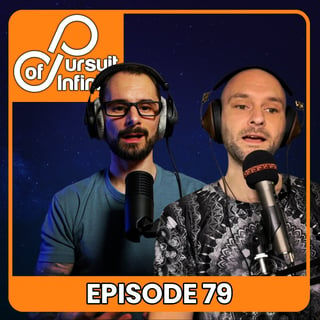
Speaker: Hello everyone, welcome to Pursuit of Infinity. I'm your host Josh and today we are live with Maestro Hamilton Souther. Hamilton, thank you so much for coming on the show today. Hey Josh, pleasure to be here and thank you so much for having me.
Speaker: So we've got a ton to talk about. You've been getting into a whole lot of new things, new projects, a lot of it mostly around ah you know the safety and education around psychedelics and plant medicines. That's a big theme for us on this show. We talk so much about psychedelics and plant medicines. And one of the things that I like to try to drive home is you know the safety aspect of these substances because With a platform like this, i think it's really important that people talk about how to do this in a safe way, because, you know, we've seen in the past when we've had renaissances in America and other countries, you know, regarding plant medicines, it's often been squashed by, you know, government and other powers because they were able to
Speaker: harness the immaturity of the movements themselves because they were not based in foundations of education. And that's where where you come in. And that's where I try to come in as well. I try on this show to really, you know, hit that home. So let's talk about the importance of education and harm reduction.
Speaker: I really appreciate that. you know First, I think it's important to understand the deep history of plant medicines. These are not new medicines. They might be new for Western developed societies to be rediscovering them after a time of prohibition, but there's archaeological and anthropological record that show that the visionary plant medicines have been around for thousands of years and maybe even longer.
Speaker: And so I think the first thing to understand is that the traditional cultures have a very clear path of how to utilize these safely and have worked out all the different forms of harm reduction. And I just feel so blessed that, you know, in my early 20s, I could be invited into an Amazonian plant medicine lineage, learn about ayahuasca, sonongo, the medicinal trees, ultimately about Huachuma San Pedro, cannabis, you know, and psilocybin mushrooms in this context of safety and integrity and ethics that really showed not only the merit of them, but why they should be accepted in our society.
Speaker: And they're very powerful transformational substances, but when used rightly, they're not dangerous. And when you properly pre-screen,
Speaker: so that you know whether the person's a candidate to use them or not, and you use them in proper dose in the right kind of ah setting, where the setting has been set up to make sure that it's safety's in mind. You can have incredible experiences with them.
Speaker: And I'm really also grateful, you know, I grew up in the, Reagan era years of the 1980s where everything was prohibition based and now we're seeing a younger generation coming in and accepting the idea of harm reduction and actually utilizing these ah for positive benefit and I'm you know grateful to see this happen after the last couple decades.
Speaker: Yeah, I always like to say that ah psychedelics are for anyone, but not for everyone. You know, the the anyone being literally for any person who wants to to take them, yet not for everyone because not every person in their current state, whether it be mental or physical, is quote unquote ready for the experience because it's really important that you bring a certain something to it. So in your view, what do you have to bring to the experience in order for it to be as positive, healing and beneficial as possible?
Speaker: First of all, you have to screen whether you're a candidate. And so, you know, depending on the plant medicine and the dose, you want to check for blood pressure and heart condition and predist it's predisposition to schizophrenia or bipolar disorder.
Speaker: you know and So there's a number of different things you want to screen for. And then you also want to understand if people are on any other kind of medication that can be contraindicated in today's day and age. It's incredible how many pharmaceutical medications people are prescribed and how many are contraindicated to other kinds of medications, including plant medicines.
Speaker: So first, you know learn about it and do the screening, talk to the right people. There's an incredible group that's about the interaction of psychedelics and pharmacists and the pharmacists helping the community learn what's safe and what's not. So I'm so grateful to them for coming forth and being advocates for psychedelics and plant medicines, you know, from, you know, coming from the the side of pharmacists.
Speaker: After that, the nature of your preparation is what you bring to it. you know What I always have shared with people now after thousands of ceremonies is that it's a very literal experience. It's not metaphorical, it's not mythological, it's not just made up. So what you show up with is what you're going to start to deal with or what's going to color your experience. And so I think the attitude that you have and ah your purpose for doing it is you know paramount. And all of that ultimately you know boils down into intention.
Speaker: And so you come to it with real intentionality and you understand that you're going to do something powerful and transformational, and that's the purpose for doing it. And, um, You know, I think it's important as well that you have ample rest beforehand. You've, depending on the kind of plant medicine prepared your diet accordingly, like ayahuasca has a lot of restrictions to, you know, a few days clean up before you you interact with that.
Speaker: think it's important that you haven't had a lot of other substances or a lot of alcohol use before these. So you want to have like a period of time of detox before going in. and I think that really amps up the quality of the experience that you have.
Speaker: And there are protocols for this. You know, ayahuasca can be anywhere from a week to a month, depending on the lineage. um Other plant medicines are just a couple days. And that is such a great trigger to get you to think about it and to really give some attention to what you're about to do so that you can get the most out of it Yeah, i could not agree more. The preparation aspect of it in terms of both physical, whether it be a diet or mental, you know, what you're bringing to it um in your current mental state, you bring up intention. Intention is like, to me, the most important part because intention, it covers so much. There are so many things that intention can mean. um And I believe that
Speaker: A lot of the reason why we've seen these movements not be as successful as we would have hoped in the past is because of the intention of the user.
Speaker: I don't know whether or not propaganda has a lot to do with that when it comes to the 60s and the 70s. I believe, you know, I'm kind of a conspiracy theorist, but so I do believe that there was a lot of like unintentional sort of brainwashing, maybe you call it, ah in terms of you know what was what was kind of projected to that community, ah both projected on them and to them.
Speaker: um But in terms of You know, say you've got your your mindset down, you've got your your physical body good to go. You're ready to to to embark on this journey.
Speaker: I think obviously the next most important thing is if you're going to do it yourself, that's one thing. But I think to seek out quality. qualified practitioner to help you through these experiences, whether it be um you know just a sitter and a coach or a guide, a facilitator who's going to go into the medicine with you and guide you through it. But there are very many levels to that type of of training. And I think it's it's super important that you seek out someone who is trained within these practices.
Speaker: Yeah, I couldn't agree more. they The nature of conspiracy or just agenda that came through in the 60s and 70s showed a period of time when there was a lot of civil unrest and there was a lot of use of the substances to be against a mainstream narrative that was being presented at that time.
Speaker: and I think what's really interesting and really important about the resurgence in this psychedelic renaissance is that people are doing this for mental health reasons. And they're doing it not in a counterculture, but actually saying to their culture, hey, in this culture, we've gotten sick and we want solutions.
Speaker: And I think that's a really important different message because it's about doing something really good for society and for individuals. And I think the most important thing is that somebody has the power of their own mental health in their hands.
Speaker: And right now there are a lot of people that are being prescribed substances that they have to, you know, they're being told they have to take them forever when we know from our traditional cultures that specific plant medicine ceremonies can actually help that.
Speaker: And you know maybe that person isn't going to have to take medication forever. And I just think knowing how, and especially in today's day and age, ah wield the plant medicines is incredibly important tool to have.
Speaker: So you know if something's going wrong that you can use a little psilocybin or a San Pedro ceremony or a little cannabis to be able to change the state of mind that you're in and understand how to do that safely.
Speaker: And I think it's also important to understand that many people come to these, you know, and they're not always in the quote right mindset because that's what they're wanting to heal. But that's where attitude really matters. So, you know, you have something to heal in your mind and you can be in a depressed place or it can be difficult and that's why you're coming to it. But you come with enthusiasm and you come with hope and you come in the the idea that these plant medicines can actually really help you get out of that dark place.
Speaker: And so you're already starting with a little bit of a support. there And you know in the nature of of getting someone who's trained to help you, that is the traditional way to do this.
Speaker: There have been plant medicine practitioners for thousands of years that have helped people in society. And they've gone through training and education to learn how to sit with the plant medicines, learn how to set up a safe space, understand the nature of dose, and how to be able to guide someone, prepare them, and integrate them through and after the experience.
Speaker: And I think that role is still necessary within the plant medicine space. And I also want everybody who wants to be able to do the ceremonies for themselves and have access to the plant medicines know how to be able to use them with that level of training and efficacy, have a safe home practice, and then if they can ultimately create a ripple effect by supporting and guiding others.
Speaker: And I think that point is so important that the training aspect of this is not just for a facilitator or someone who's looking to sit for others. The training aspect is for the user as well.
Speaker: um And this is this is why I would love to talk about the Blue Morpho Academy because full disclosure, I went through the Blue Morpho Academy through the sitter coach and facilitator trainings. And I did it for two reasons. One, because i never wanna have a person in my care you know, doing some sort of plant medicine be in any situation that is detrimental to their mental health or their physical health. That's number one for me is safety of others, but also the navigation of these experiences for myself, because as anybody who's taken a psychedelic knows, when you go into that realm,
Speaker: you you can't really make sense of it because there's no context that we've ever learned through our physicalist materialist paradigm that can map onto that.
Speaker: So I think it's very important to find some sort of community or some sort of education program that allows you to learn not just how to navigate the experience while you're in it, but also how to make sense of it when you come out of that experience.
Speaker: I was really you know lucky. I got guided in my early 20s to our lineage in the Amazon, got accepted and got to go through training. It was unheard of at that time. you know There was no place that we knew to be able to get plant medicine training.
Speaker: And as the years went by and I saw the psychedelic renaissance happening, I actually thought now's the time that people need access to this. And on the idea of safety, i was hearing about ceremonies happening where the leaders of the ceremony were unprepared for what would take place. And people thought they were in a safe place and ultimately found out they weren't. And I thought the first thing we need to do is empower everybody who goes to these ceremonies to know how to have their own safety and be able to provide that for themselves, not have to rely on somebody else to be able to provide that for them so that if there is some kind of fallibility or just even an emergency, someone would know what to do and be able to just sit through the experience and help guide others and, you know, navigate it in a safe and um ethical way.
Speaker: And as people are you know having these experiences, I wanted everybody to be able to learn what it's like to sit with the medicines and know the depth of what sits behind it.
Speaker: And when I got into the Amazon, to the point about navigation, i couldn't believe it when Julio and my other teachers would go in and have dominion over the altered state.
Speaker: So they would go in and they wouldn't just, quote, start tripping. They would go in in division and they would start to navigate. And they could do it with percussion, with different kinds of frequencies and sounds that they would create that are called Icaros or chants.
Speaker: They could do it through focused intention and ultimately wield the nature of the visions. And to me, that was fascinating. It was fascinating that there was something consistent about it and beyond the understanding of a hallucination.
Speaker: It wasn't just some kind of ghost of the mind. It was something concrete. and repetitive and that there was a way to navigate it and I wanted to be able to start sharing those teachings with others and so I created the academy to help people learn the first steps which is how to be a sitter how to sit with the medicines and how to find your own comfort and safety in the space and then in the second level training to learn how to navigate in the same kind of teachings and you know secrets of our lineage and start to open that up for people in the rest of the world
Speaker: Yeah, you know, it's interesting, like the you mentioned the the sitter coach as the level one, basically, and then the second level would be the facilitator. There is a massive difference between the two courses.
Speaker: I didn't really know what to expect after going through the sitter course, like what the facilitator course would be like, but really to break it down in the sit in simplest terms, like the the sitter coach course was...
Speaker: in my view, the way I took it was for you to sit for for others, with others being the focal point. And the facilitator course, you know, I was thinking maybe this is going to be just a deeper version of the sitter coach sitter coach course. But I was surprised because the facilitator course seemed to be all about me, all about the person taking ah the course and all about my relationship with the substances or the spirit of the substances themselves, which was super enlightening to me because that's really the main focus of um my research into this stuff because it seems that when you evolve your own ability to go in there and, as you say, navigate the experience, it only makes you a better facilitator for others when you get to that point.
Speaker: One of the really challenging things we faced in creating the course was to create a mechanism for an individual to be safe and to start working and learning to be with the medicines on their own.
Speaker: Typically, you're in the presence of other facilitators and people that are considered real masters and you apprentice under them. And we knew that that wouldn't be possible with people learning from all over the world. And so in level one, when you're learning as a sitter, it's about learning to sit with the medicines yourself and just learn to be okay. And through that experience, learn what it's like to sit for somebody else when they take the medicine.
Speaker: But that's one step before the real traditional practices kick in, even though that's what's expected from psychedelic assisted therapy in our culture, that the practitioners don't take the medicine with the people that they're supporting. In fact, in Colorado, it's illegal.
Speaker: So if you're a facilitator in Colorado with psilocybin, the facilitator gives psilocybin to the patient, the patient takes the psilocybin, and the facilitator by law cannot take psilocybin.
Speaker: And that's one step shy of the traditional role. In the traditional role, the master shamans or the medico-vegetalistas take plant medicine with the people that they're guiding so they can both go into vision together.
Speaker: So level one was teaching somebody how to learn to sit for themselves. And then level two, the facilitator training, was about developing the deep relationship with the plant medicine that allows you to learn how to navigate it. Because that's the skill that's going to be able to support your ability to navigate with somebody else.
Speaker: So before you could ever go in and be somebody's wingman, you have to first go in and learn how to how to navigate all of the different different forms of visionary landscapes that you could come into. And so that's why I organized it that way. And I really appreciate you saying that the second level really was, you know, a was impactful for you because that shows that you had you know learned already how to be able to be with the medicines. And now you are really ready to understand the deep relationship and the kind of skills that you develop to be able to navigate them.
Speaker: Some of it is intention oriented. Some is learning just emotional mod modulation. so you know You learn how to come back to center and calm down. Others goes all the way to the point of out-of-body experience or transcendent of physicality experience and learning how to relate to that higher dimensional space that we go into.
Speaker: and i And I just love hearing that that was what was really supportive for you. Yeah, it was fantastic. um And you know what you were saying brings to mind the difference between when you're sitting with someone who is sober and just sort of sitting with you and making sure that like you're safe and everything is cool and you can make it to the bathroom and back and all of that and then the difference between that and someone who is in the medicine with you.
Speaker: I'd love if you could talk about the difference between those two and the benefits of either really.
Speaker: Well, the difference is night and day. There are two different camps of theory and thought about it. And in the the sitter training,
Speaker: you really understand the role that the medicine plays for an individual. And it's really a kind of hands-off. You're supporting a person and understanding how to have the experience, but you're really just letting them have the experience, making sure they're safe, making sure their vitals are are good through the entirety of the experience. And if they need help, how to be able to talk with them, how to be able to change the energy and the environment that they're in to be able to support them through some of the more difficult experiences.
Speaker: when you go into the visionary facilitation for somebody, when you learn to drop into the medicine with them, i really, you know you go through onset and then you enter into vision and that's when the work really starts.
Speaker: You know, you trust that you've learned to set up the space around you in a safe way. But now, you know, you're going to go into that space and with intention and vision, invocation and awareness of the energies, you're going to start to modulate those energies yourself.
Speaker: And you're going to get deep into the collective form of consciousness and collective mind that is naturally created through these experiences with the people that you're working with.
Speaker: And um to me, that's where the arts really show up. We always considered these healing arts or visionary arts. and uh it's incredible you experience a hyper state of awareness and connection with everybody a heightened state of awareness with nature there's a shared form of mind and consciousness you become very aware and empathetic to the energies that other people are emitting and experiencing there's an awareness of a higher dimensional form of space or consciousness that you're in a kind of timelessness that
Speaker: allows for great time dilation. And then through the the nature of the energy that you work with, albeit percussion or chanting, singing, Icaros, or music that people play, and now some people use playlists to be able to almost DJ the experience, which is fascinating too. they They get directly involved in the experience that you're having.
Speaker: When people are purging or releasing negative energies, the facilitators are helping that to occur. They're providing protection the entirety of the time. They're interfacing with the rest of the visionary space on behalf of the individual.
Speaker: And they're able to communicate with the extraordinary energies that you can come into contact with through the experience. you know Now people are much more open about talking about energies or spirits or entities.
Speaker: You know, it's on different podcasts that talk about DMT experiences or psilocybin experiences where there's this awareness of another kind of intelligence or consciousness. and a beingness associated with it. And you learn how to interact with that directly and on behalf of others.
Speaker: And you know the stories that people tell are just incredible about what that experience is like. So you can see just from what I've already said how much there is to learn.
Speaker: And then there's the part about navigation, how you you learn to change the realms that you're in so that you can go from one different kind of visionary realm to another. i the idea of out-of-body travel or beyond body travel, where you can experience cosmic realms or cosmic vision, which gets talked about a lot, or the astral.
Speaker: And through that, you learn that those different visionary landscapes and the energies that can be found within them can provide specific kind of transformation or healing for the participants.
Speaker: And so that all gets taught in the academy as different kinds of medicines that you learn to work with. And I remember when Julio taught me the plant spirit medicine and the tree medicines, and then taught me about astral medicines, like where all of a sudden in your vision, you're in the presence of galaxies and amazing things happen. i remember I regained childhood memories that I had forgotten.
Speaker: I let go of depression in the presence of stars. Like who would have ever thought that those things were even possible? That wasn't taught to me when I was growing up going to school and all of a sudden I was sitting with this, you know, elder mystic who is showing me that inside these visionary realms there's all different kinds of energy and spirit-based medicines. And, you know, the facilitator training takes you through not only how to learn how to engage and interact with that, but how to wield them for yourself and others.
Speaker: Yeah, it seems unbelievable at first when you're just hearing this. um And I'd love for you to talk a little bit about how you train to interact with something that we can't even conceptualize in our physical mind. Is it something where you're you're interacting with this thing on a consciousness level?
Speaker: yeah To try to put it into a context for someone who doesn't have experience in this, you know think of like a really powerful dream where all of a sudden you're fully awake in the dream, like a lucid dream, and now not only awaken it, but you have full capacity to engage and interact, and that you could be there for hours at a time with your conscious mind intact.
Speaker: I think that's ah the hardest thing for people to understand about these altered states is that they're hyperlucid instead of a state like being you know drunk or on alcohol or something that actually diminishes your lucidity.
Speaker: These states are incredibly lucid states where you become very sensitive to energy and to frequency. And um Ultimately, you train it by going into these states with frequency. So for people who really train heavily and who really love it and dedicate their life to this, they average one to two ceremonies a week.
Speaker: And people who are you know have like a Western life and jobs maybe do you know two ceremonies a month and sit for others and support them and help them.
Speaker: you know And so then you think, like in my case, my training lasted 14 years. So if I had over 14 years worked with ayahuasca and other visionary plants on average of 150 times a year, pretty soon you amassed 2,000, 3,000 ceremonies worth of experience. And you know like anything that you learn in life that when you start, you know nothing about it, at the end, you you know are now really quite proficient And, you know, all of these things that seemed impossible to relate to are now just part of your normal everyday life.
Speaker: I'd like to take a moment to thank our sponsor for today's show. This podcast is partnered with Maestro Hamilton, Souther, and Blue Morpho. As many of you know, we talk about psychedelics quite a bit on this show. And if you'd like to take your personal practice or a facilitation practice to the next level, Hamilton is our master shaman.
Speaker: He's trained in traditional Amazonian lineage for more than 20 years. Now he's opening the doors to his plant medicine sitter and facilitator training. You'll receive eight weeks of material, a certification pathway, and a step-by-step lineage-based system you can go through at your own pace.
Speaker: As part of this offer, Hamilton has lowered tuition to support you in your mission of safe and seasoned psychedelic practice by providing quality education at a discounted rate.
Speaker: So by signing up through this show, you get a $2,000 discount along with more than in bonus material. plus an ongoing mentorship and integration support at your home practice.
Speaker: Maestro Hamilton backs this work with his full confidence and offers a 14-day money-back guarantee and a three-month safety guarantee. Flexible payment plans are available. Everything you need to know will be in the show notes below and a link to download his new album, which is called Music for Ceremony Ayahuasca Medicine Songs for Free.
Speaker: Perfect for dropping in or meditating. Thank you to Hamilton Souther and to Blue Morpho. And now let's get back to the show. I think for those who've dabbled in plant medicines, you know, it starts with learning how to go through onset and then being what we call in the medicine and landing.
Speaker: And then it starts with becoming aware that the plant medicines are aware of you and that you can be aware of them and communicate with them. And so, you know, everyone has talked about this, that they started talking with the mushrooms or they started communicating with the DMT. So it's like a natural thing that turns on and this communication begins.
Speaker: And then, you know, there's a ah moment, I think, for everybody sometime early in their training where a little bit of fear and maybe reaction to the experience just settles down.
Speaker: and somebody realizes they're deep in the experience and they're perfectly safe and fine. And when that happens, a kind of edginess goes away and you become inquisitive, you become curious about about what you can do and what's possible in that space. And to me, that's the moment that the training really begins.
Speaker: because now it's like a second childhood in there. It's like you can just start asking any question, you're able to get answers back, you can get downloads and awarenesses, you can test them out and see if they work, you start to interact with what you see in the vision, you learn to communicate with it. We call it a personal system of communication, meaning like you vibe it and understand it and you're getting downloads from it and awarenesses, and you can start to put two and two together with that.
Speaker: and that's really the point of going from sitting into facilitating is that sitting teaches you how to calm down so that you can really open up into the vision and start getting that you know curiosity going about how to interact with it and then through the course providing the guidance you know so that you know a sort of guard rails around what's possible what to watch out for how to be able to always maintain your safety so that as you're starting to interact with things that would otherwise be you know, very new for you, which could just be kaleidoscopic fractal and sacred geometry. It could be the presence of some greater intelligence. It could be the plant medicine itself.
Speaker: You have some you know guardrails about how to start that exploration. And you know, what I found was that within reason and within the nature of how we practice, you can always do that in a safe way. So, you know, you don't have to be scared that lurking around the corner is some demise that's about ready to befall you. But on the contrary, you're in a safe space to be able to explore it.
Speaker: And little by little, you can amass the skills so that you can do this for others. Yeah, absolutely. And I love that you you know you brought up the lucidity aspect of it. I think comparing it to a lucid dream is like perfect.
Speaker: And it's interesting, like everything does seem to get a bit clearer. Like for me, every time I take a psychedelic, I have to take my glasses off. You know, I have really bad eyes and I need glasses to function in this world. But when I'm under the influence of a psychedelic, I have to take them off because I feel like they stand in the way of like my true vision or something. It's weird. It's like I see better.
Speaker: without them under the influence of a psychedelic, which I think is like super interesting. And that clarity comes through in not just a physical way, but also a very visceral mental way.
Speaker: You can feel the energy of the people around you, the room, the music, you know, whatever happens to be going on around, which is why um in the level one course, the the sitter course, one of the main things I think it's actually one of the very first things we learn is how to set up the space because, you know, they say set and setting is, you know, those are the two most important things and setting being like the first thing you must master. You have to set up your space to be,
Speaker: um And this is where your art comes in, as you had said. This is where you get to um basically show and um exemplify who you are as a practitioner and what you want to get across in the types of ways that you heal people and that you help to facilitate take these experiences. So I'd love for you to talk a little bit about the setting in general and how to set that up.
Speaker: when you think of setting, the very first thing you want to do is ask yourself, am I allowed to do this here? Is this a place where this is allowed? You know, if it's allowed in your house, then yes.
Speaker: If it's allowed, you know, in a ah outdoor place, It is. You know, just, is this allowed? Because you don't want to worry about whether or not someone or something is going to come along in that time and disrupt the nature of this experience because it's just not allowed there.
Speaker: Right? So once you find that place of allowance, and if it's your own place and you give that permission, then it's allowed, right? So that's what's beautiful about this. Once you give that place of allowance, you know that that's a ah ah fertile place to have this experience. And then you just want to look around. If it's indoors, you want to just look around the space and think, OK, equilibrium changes when you're under the influence of this. The response to light changes.
Speaker: you know How do I make sure this place is safe like can it to like baby proofing a space. How do I make sure this space is safe so that if I fell over, I wouldn't like hit my head somewhere, you know, where I could get hurt if I slipped, you know, just like really basic, simple concepts around that. And then,
Speaker: Now I know it's a good space for an altered experience. Like maybe that means pushing the bed to the you know other side of the the room and creating more space in the floor. Maybe it means having the ceremony on the floor. A lot of different ceremonial houses, you just go right down to the floor so you don't even have a way to fall, right? Like you don't need furniture for this. You just put pillows on the ground and some mats on the floor and you get comfortable. And you know and then you want to think about, so once you set that up, and you're like okay, this is a ah great way. You want to think comfort.
Speaker: This is going to be a multi-hour experience. How can I stay comfortable during this? I really like it when people think of like making their nest or making their like super comfort space. And that has a kind of nurturing associated with it anyway. So they're already kind of building it in.
Speaker: i mean, I like a mat with a blanket and a warm and ah and a pillow, you know, and make sure that water's there, like just like some basic setups. I don't have to like get up and go try to find things and figure it all out. And I know I'm comfortable.
Speaker: And once we have comfort, you know I think about like you know temperature control and light control. You know, how are we going to manage that? Like ayahuasca is typically done in in the dark. So what does that look like? San Pedro, there are cultures that drink it by nighttime, but we drink it by day.
Speaker: in our lineage, we do it in the daytime. Typically, you could do it at night, but you'll stay up all night long. It's an all night experience. So what does that look like to be engaged, you know, with the amount of light there is with the experience? Maybe you want to have eye masks there that block out all the light for people, you know, if they're light sensitive with psilocybin or something.
Speaker: Once you have that figured out, um You know, you want to think like, what's the duration of the ceremony in food? What kind of food do you want to have food already prepared? You know, if it's going to be a longer experience and how that fits in Obviously, there's certain medicines, you know, after psilocybin, people are often really hungry. Cannabis produces usually increased appetite. So, you know, how do you want to manage that piece of it and have that ready to go and prepared? And you just see that we're systematically lining up everything. So once we go in,
Speaker: we don't even have to think about all of it. We have a good mental map for how it's all going to work, and then we can just go in and be in the experience. And then you want to think about what kind of you know supportive energy do you want there? do you want music or do you make music?
Speaker: you know Do you want it to be a collective experience? Is it a solo sit? you know Depending on that, you want to have that prepared so you know in the space that you're ready to go. Personally, i don't typically use music every now and then I will, but we usually make our own. So we have shakapas and rattles and drums and other percussion instruments, and they're set up and laid out so that they're easy to access when you need them.
Speaker: And then the space is set up and and ready to go. And I think the final thing is you know that if you're going to go into this experience, you can just shut the notifications off. You can shut off the digital devices. And you can just give you know a certain amount of time to the experience itself.
Speaker: And then you have a beautiful space that's all set up for this. You've thought through everything. On the safety side, I think it's really important that you understand two kinds of emergency safety plan.
Speaker: The first emergency safety plan is if I'm in the plant medicine space and something accident truly accidental happens, do I know how to address it and deal with it?
Speaker: You know, because some accidents can just happen. So, you know, if that occurred for any reason, do you know what to do? Like you can call 911, you know, it where's the you know closest emergency care center, et cetera. Like who is there to be able to support and help depending on where you are.
Speaker: And then I think the second one, which is much rarer and a lot of people don't think about it, is what happens if there's a natural disaster? during the time of your c going to navigate that? Because you might not be able to just call nine one one you might not be able to just have all the other um emergency able to support you because they may already be supporting others other forms of crisis so you know, do you know where you could go outside of your home if there was a need for any reason
Speaker: and find another safe space a place where you could just go sit down and just let the experience wear off and be okay. So you want to have that figured out and you want to map that out in your mind.
Speaker: And then you've covered all of the basis of the variables to be able to have the experience. And then you know you can just go into it and And lucky in my life, I was able to build our own lodge that's purpose-built for these kinds of experiences and also work out of you know retreat facilities and different boutique hotels and stuff in the world for this. And we just go through this same checklist that you know I just shared here on the podcast. And that has always served us very well.
Speaker: why I love ah the course because nobody would think about natural disasters. It just seems kind of like a ridiculous thing to to even think about. But it's so true, especially considering ah you know where you may be located in the world.
Speaker: um But you brought up a little bit ago, you had mentioned fear. And I'd love to talk a little bit about fear. Yeah. And I think fear really comes into play when you've had a few of these psychedelic experiences and you have gained this level of respect for them that presents itself as fear, because you understand and you know, in my opinion, it's twofold, two things. You know that Regardless of what you're going to experience, it is going to be powerful.
Speaker: It's going to be very powerful and profound. That is something that I think we we don't truly, before we go into the psychedelic experience and like before we go into our first one, We don't truly understand the degree to which that profundity ah can get.
Speaker: um So I think that's one thing. And then there's another thing that really always gets me, and it's this—and I'm not sure what is the like what the cause of this is. I think it might be— partially because of our just preconditioning, you know, coming up in a culture where these things are are demonized. But this thought when you're in there that as you're going through onset and it's starting to to build and build and build to get more and more powerful, there's oftentimes this feeling that you're going insane and that you're never going to come back again the same. And I think the latter is true. Like you are not going to come back from this experience the same. but it's not in the way that you think in that moment.
Speaker: Both of those lines of thinking are really important to this experience.
Speaker: I think if I could give the best advice I have to somebody interested in this, it's to ease their way in. And I didn't get that opportunity because I didn't have a mentor to help me. So my first psilocybin, which was my first psychedelic plant medicine ceremony, which was just more than I needed.
Speaker: And I spent a lot of time reeling in reacting to the fact that I was in this experience that I didn' was not really prepared for. And I look back on it now and I think to myself, man, I really wish somebody could have just shared with me, hey, plan out five to 10 ceremonies And you're going to start with a micro dose and you're going to work your way up to a macro dose.
Speaker: Would have been such a smarter way for me to experience these. I would have just started and gotten a feel for it, then started to feel what a little bit of my body just digesting it is. Just a little bit more, laying a little bit more foundation, you know, just increasing the dose little by little. And maybe by the fifth one, I'm ready for, you know, a couple of grams and I'm going to go for a full you know, two, three, four, five, six hour journey. I would have been ready for that. Instead, I just got the couple of grams and the six hour journey, which gave me that fear afterwards, right? And I remember that next morning, I sat there and I thought, I'm never gonna be the same again. I'm never gonna be the same again. And I wasn't, but in the best ways, you know, it just took me a while to integrate that.
Speaker: And so in understanding that, I think we need to first learn to ease our way in. The second is a practice that we teach, which is to learn to turn our fear off.
Speaker: As you go into this experience, especially during onset, your fear is gonna be triggered. And it's really hard to see through the lens, like sunglasses, of your fear to understand what is the medicine and what is your fear.
Speaker: And your fear dramatically colors the experience you're having. And so I found it actually took years to get to a point where I could completely turn my fear off and finally experience the plant medicine without that coloring at all.
Speaker: And I realized that it was like a different channel of a TV. It was like if you're on channel Fear 101, you see one experience. And if you're on No Fear At All channel, you get a completely different experience. And i I wish I had never thought that the one that included my fear was it because I realized that was the medicine plus my fear.
Speaker: and that had changed how I was experiencing. So we wanna teach you through our course to learn how to turn your fear off so that you can have a pure experience with the medicine. The medicine is there to help you and support you. It's not there to traumatize you and make this a worse experience.
Speaker: And so part of it is just understanding and learning how to do that. And, you know, I always say that we could have learned it in school, but they didn't teach it in kindergarten. Instead, they taught us how to become more fearing. And so, you know, they ramped up the competition, ramped up the consequence, ramped up, you know, the the negative outcomes of what could happen, you know, and then we take that mentality into the plant medicine and then we experience it.
Speaker: So first is just learning how to turn our fear off. The second is going through onset is a time of great adjustment in awareness. And what you're adjusting to first is a shift in mind.
Speaker: There's a natural shift in mind that takes place. And when that happens, our natural response to having our mind shifted is to think we're going crazy.
Speaker: So as we're going into a shift in mind, typically what we see is someone I'm going crazy, I'm going crazy. and This happened to me too many, many times when I first started and I wasn't going crazy at all.
Speaker: It was showing me what was off in my mind. right It was a naturally awakening form of experience. And I finally realized I wasn't losing my mind.
Speaker: I was losing the mind that was unhealthy, which is why I was taking the plant medicine in the first place. And as you go through this new vibration through onset, you become aware of the patterns, like hyper aware of the patterns that are not serving you.
Speaker: you know And that rooted fear is one of those patterns. And so I came to realize that that fear that I was experiencing needed to be turned off. I needed to trust the medicine.
Speaker: I was asking for an experience to not come back the same. I wanted to come back better. I wanted to come back healed from the experience, expanded with downloads and realizations.
Speaker: And I needed to learn to accept onset. And what we do is, as we're going through that onset, we encourage it So instead of putting the brakes on the experience, we know that on the other side of that mind is just this incredible state of awareness and openness and lucidity and the fear is off and our consciousness is open and the energy is flowing through us. And for those that have had this experience, they know what it's like when you move through onset, how great it gets. So we stay focused on that, knowing that, and we help others to find that encouragement to make it through that part, you know, that might want to put the brakes on and try to make that as gentle and as easy as possible.
Speaker: So small dose to start, get comfortable, set the intention to turn fear off from the very beginning, Know that you're getting past the mind and in its patterns that are, you know, rooted and blocked off, which is why you're doing this in the first place, encouraging the medicine to take you to that place of mental health.
Speaker: And all of those techniques really help. Yeah, just even the simple thing of understanding that the fear is like you can turn it off. And you don't realize that unless you have someone to show you and teach you that a lot of times. And I like the way that you put it in the course, you know, when you when you you compare fear to like a volume dial, you know? um You know, fear is going to come. It's just, it happens. Yeah.
Speaker: You can't necessarily, maybe you can, but I can't, just have no fear from the very beginning. Fear is just going to seep its way in. But you have to understand that it's not going to continuously go up and you can't do anything about it. You can grab hold of that dial and you can turn it down. You can stop it first and then you can turn it down all the way to off.
Speaker: And even the ability to just knowing you have that ability, I think is transformative to your personal experience within these these realms. I agree. I think that learning to turn fear off is probably or down and then off. And I like that. What you said is that, you know, I'm not free of fear. I experience fears all the time. I'll take my dog out, you know, here and walk in the morning at 5 a.m. m and a car goes by and I'm protective of him. I, you know, especially if he's off leash, I don't want anything to happen. And there will be that feeling, right? it's ah It's not that this is something that you just transcend. It's just something you learn to regulate.
Speaker: And we know how to have fear. We've been taught it. So it's not like you forget fear. i think the big question around fear is, is it rational for me to be fearing right now? And I would say 99% of the time for me, the answer is no.
Speaker: And the other 1% it is. And as soon as that 1% is over, it's not rational anymore. I need to have learned to turn it down because otherwise there's this like this echo of fear in my body that just doesn't stop.
Speaker: right? And one of the t about the plant medicines is t become aware of that and le it down little by little by little. by little It t of ceremonies to become ne the plant medicine experience. I fi completely comfortable with going into plant medicine And when I became that way, what I realized was really interesting was that I wasn't free of the feelings of fear because I had become so open. I was now impathing everybody else's fear that was in the room with me. I was now going to lead them. I'd have 20, 30, 40 people sitting with me that were now going to have this experience and I could feel their fear.
Speaker: And so once again, as soon as I was feeling their fear, it's it was like, OK, guys, let's turn it down, turn it down, turn it down, turn it down and get us to that place. And so I realized it wasn't about transcending fear. It wasn't like becoming superhuman in some way, but rather just learning this great skill, learning that dial, learning how to use it and turn it down and turn it off. And that if anything I've learned from the plant medicines that have helped me in my daily life, it was that one because that's what allows you to relax. That's what allows you to go through something that was scary or jolting, like when something weird happens on the freeway and you get a jolt of fear, you know, and you feel the adrenaline to finally then just tone it way down.
Speaker: And, you know, i also started to realize that society now continuously fears a lot. So just as you're interacting with media and interacting with the normal flow of society, there's a lot of that and we vibe off it. And so to have this understanding that we can do something to mellow that out again and truly relax again, i think is an incredible gift.
Speaker: yeah i agree you know the the fact that we are so inundated with technology all over us um you know we have this appendage essentially that we keep in our pockets you know um that's just a ball of technology it's all over the place you know i've been staring at a screen now you know going on 10 hours, you know um it's just the way it goes. Whether you're working or you're you know playing a video game, watching TV, it's just there's screens and technology all around us. And personally, you know with the advancement of technology, I think, it not to change the subject too much, but I do think these two things are related. The the relationship between the rise of AI and this new psychedelic renaissance,
Speaker: It just feels to me like the fact that they're both becoming so prominent at the same time is not just a coincidence. Do you feel that too? i don't I do not think it as a coincidence. you know i got known for plant medicine and I'm very grateful for that, but behind the scenes, I've been interested in technology since the origins of the internet.
Speaker: And so my passion was in this incredibly advancing technological realm and this advancing psychedelic plant medicine realm at the same time. And I've now gotten to spend a lot of time in Silicon Valley.
Speaker: i became co-founder of a stealth AI lab and ah also the creator of a platform that's going to go live next month. So stay tuned, we'll put you know a link to the the platform as it's going live and you get information about it. It's all about AI-generated content and the future of AI-based media.
Speaker: and what's going on inside the AIs and what's going on inside psychedelics are are related. It's not just one or the other. And I like to move at this point in my thinking, not just to humans are doing this, but Earth is doing this.
Speaker: Earth is the real reason everything's happened. Earth is why life has happened. Just nature, like Earth is why plants happened and now Earth is why humans happened. And Earth is also why humans created all this technology. And so I've thought of the plant medicines as a kind of like very early technology, very sophisticated.
Speaker: And then our Our natural ability that we evolved to have all the receptors in our brains for all of these different kinds of psychedelic and visionary compounds is you know really interesting to me. And that the reality behind the tech sector is that the people in in technology have been utilizing psychedelics and plant medicines you know since the 1950s when there were studies at Stanford University about this.
Speaker: Just because you know they became illegal, it didn't stop the use of them. But rather, when they became illegal, they went underground and people didn't talk about it anymore.
Speaker: So I'm lucky to be able to be in the space and to get to hear from certain pioneers that many of the technologies that we use were influenced by plant medicine and psychedelic ceremonies. And people to the day are still here utilizing them for greater creativity and scientific breakthrough. And I was just talking with a scientist recently that you know is very interested in rekindling the research about all of this, that Where does you know psychedelic compounds and visionary plant medicines tie into the scientific discoveries and the technologies that we're creating? And I think there's a huge overlap because of the unbridled unleashing of creativity that happens.
Speaker: When you think in new ways and you you know discover this new information and a new way of of relating to your environment, what comes through are these natural discoveries.
Speaker: And on the AI side of it, I think it's really interesting now because there's going to be a massive social change because of AI over time from work displacement to new advanced robotics that weren't possible before to robo cars everywhere instead of people driving and you know comments about like white collar workers 50 to 70% being displaced, et cetera. it just goes on and on the level of disrupts. And I think when that happens, who and what we are as people
Speaker: is just as important as who we were before. We just have a different role. And so I think lots of people are going to turn to plant medicines and psychedelics to better understand their place in the world, the opportunity that they provide for immediate awakening and a greater enhancement of awareness. People will turn to the arts and creativity and start to make more things again. and actually be more human and less cyborgic, less like appendage digital only interaction. And I think that it's a great opportunity at this period of time. And I i embrace both. I think that AI when positively used is one of the most powerful tools and tools of social change we've ever had. And I know that the plant medicines have been that way for thousands of years and I just champion that.
Speaker: Yeah, i could not agree more. I think the fear in AI, like the the when people talk about how it's going to be the end of us, um well, it might be the end of us in a way. But again, same way that you're not going to come out of a psychedelic experience the same. I don't think we're going to come out of this the same either, but I think it's going to be in all the right ways. um I kind of see like the massive fear.
Speaker: In AI, it just brings up this like archaic mindset that we're afraid of insane technological advancements. It feels like whenever there's an an advancement that is sort of like the future becomes unrecognizable, we tend to be really scared of it.
Speaker: um I think the same thing happened with the printing press, you know with the internet, with all of the the greatest technological advances that have ever you know come across our plates.
Speaker: It just seems like they induce fear. And to me, that's almost a good thing. When something induces fear in you, it it feels like there's some sort of a change ahead.
Speaker: And change is what you make it, in my opinion. When, you know, we talk about AI and whether or not it's going to be sentient or this or this and that. For now, it seems to me that the current models of AI are completely dependent upon the user, which is the human.
Speaker: um I don't,
Speaker: I foresee that there's going to be AI ah used in weaponry and in war, of course, because especially in like with the Western world, that seems to be the way that... tech It's like the the technological gate. you know The gatekeepers of technology seem to be weapons manufacturers and governments because they sort of maintain control over weapons when these advancements sort of leak down to the public. So I definitely see that happening, but ultimately i do think it's in the hands of the user itself. And as long as we can, ah
Speaker: raise our awareness to a degree that we are wise enough to use these technologies in a way that's not going to destroy us and is actually going to help mankind, to me, that's inevitable. I mean, maybe I'm an optimist, but to me, I just, I don't see it as a negative thing at all, really. You know, in our lab, we talk about benevolent superintelligence, not artificial superintelligence.
Speaker: So right there we put into the the name of what we're trying to understand as an idea of great benevolence. And one of the problems that I think a lot of people in our species have forgotten is that we're still the apex predator.
Speaker: and we need to learn to not predate on each other. And so there's a kind of inherent savagery in inside our societies right now that's really intense. And it goes all the way from individuals being products of companies instead of just the clients of those companies to AI drone manufacturers that want to create you know next extended versions of war.
Speaker: That being said, ai has been inside every single smartphone. Human dexterity of their thumb is not clean enough to be able to use the touch screens. And so there's been AI working behind the scenes for everybody since the first iPhone.
Speaker: It's been in our systems already for a very long period of time. It's just in the last years, they've become a consumer facing product. Most of the architecture and the theories and math that sits behind current AI was created in the 1950s and 1960s, and it actually just took 50, 60 years for the hardware to get potent enough and for there to be enough electricity and enough data centers and the advent of cloud computing to make all of this possible.
Speaker: And I think now more than ever in history, the people have to actually think to themselves, what is our role in this? And what are we doing about it?
Speaker: Because this is where our choice makes all the difference. And so if we choose benevolent AI, we'll have it. And if we choose to become part of an AI-based war machine, we're going to experience that. And I think it's right now very black and white, like the example of a knife.
Speaker: A knife is a neutral tool. It is not malevolent or benevolent, but we use them every single day to be able to prepare food, which is a great benevolent activity. And then some people use them to create harm.
Speaker: And so what we need to do now is focus on what benevolent intelligence looks like. and supporting everybody to have access to it, not just a small number of companies in the world, but that super intelligence have be an access point for the elevation of humanity. And some people might think of that as a utopian narrative, but I don't. I think of it as a potential inevitability that if we co-create it in this world, it becomes our future. And that's the future I want to pray to, and the future i would want to you know help me manifest.
Speaker: Very, very well said. And you know we're hitting an hour here and we had some technical difficulties in the beginning, so I don't want to keep you for too long. um But just to wrap up here, I'd love if you could just share everything that we've talked about today, summarize and share all the places people can find you if they want to join up in the academy or take a look at some of the AI initiatives that you have going on.
Speaker: Yeah, amazing. um So you know if you're interested in our courses and you know learning the power of these plant medicines and learning how to use them in a safe way we have an incredible offer for you know all of your listeners and so we'll just put that in the show notes but you get a huge discount off of the course and incredible bonuses so mentorship calls and uh
Speaker: a ceremonial archive so that you can learn how we hold ceremony and you have example of that, as well as a microdosing protocol. All of that is specific for everybody listening today and we would love to be able to get those bonuses for you as well as opportunities to come down to Peru at great discount to be able to experience our retreats and plant medicines with us and become part of our community. And right now we're in the beta testing phase of our platform and it's going to go live in mid-December. So in about one month and here in the show notes as well, we'll drop the link to that.
Speaker: Awesome. Hamilton, thank you so much for coming on the show today. appreciate you, man. Yeah, absolutely. Josh, thank you so much.