Transcript
Speaker: damn Weather's looking pretty good.
Speaker: i'm your host jeff stein aka a weird guy and with me is my talented but humble co-host al schul new york woodwork how are you doing al um doing wonderful jeff how about yourself oh not too bad enjoying bring early summer weather's looking pretty good Yeah, that's what's happened to us. We had spring and now today it's going to be in the 90s and tomorrow it'll be frost warning. So again, probably.
Speaker: Yeah, well, that's that's the weather. If you don't like it, wait five minutes. It'll do something else. That's right. What we got going on today, bud? Well, let's ah let's throw out a disclaimer and then we'll see what we can find to talk about.
Speaker: um Even though we pretend to be experts on the internet, I would like to point out that neither of us have any actual training and are just guys winging it in our shops and learning as we go.
Speaker: All advice provided is based on our personal experience and possibly inaccurate assumptions, and it's worth exactly what you pay for it. If listening to this show causes you to take out a loan to buy new and expensive digital tools, you may tell your spouse that it was our fault, but do so at your own risk.
Speaker: So our guest tonight hits the town wearing a 3D printed dress, creates custom masks using a computer controlled sewing machine, and has even given herself a tattoo using a CNC.
Speaker: Welcome to the show, Jess Nelson of Jess Makes. Hello. Thanks for having me. Good evening, ma'am. Good evening. Happy to have you.
Speaker: i was gonna I was just going to jump right in here, and I'm glad you brought it up in the in the intro. this You literally printed material to make a dress? This is 3D printed material.
Speaker: Yeah, I found ah on Thingiverse, there's a file called flat fabric. And yeah, you can download that, print it out. I did mess with it a little bit, trying to chop up the pieces so I can get the hem.
Speaker: like nice. right But I was overthinking things in order to get like a curve in the fabric. I just needed to scale it up by 10% and rose. And that's how I got it from just a square to curvy shapes.
Speaker: So by strip by scaling it up, you gave it room to flex. Is that kind of the like a ball in the socket? Because this is basically like chain mail, right? Exactly. like It's like Lego material. It can snap together as many times as you need it to.
Speaker: so cool. I mean, it looks a little insecure for a dress. you Well, to be to be fair, it looked like you did have some little bit of something on underneath it for a slip or something along those lines. Oh, yeah.
Speaker: I definitely couldn't sit down in it very comfortably. was a bit pokey. That is so cool. And I was i was scrolling your your Instagram and the last few days, obviously, but You are a prolific creator. There's nothing you haven't tried.
Speaker: is there anything like Is there anything you haven't tried? I'm a little bit all over the place. Yeah. yeah yeah In 2015, did Fab Academy. um which Which is what? that's That's a course through MIT based off of how to make almost anything.
Speaker: And that's where I got to really learn ah all the different kinds of making there are out there. Well, and I'm sorry, I got ahead of us here, Jeff.
Speaker: but yeah Why don't you introduce yourself and give us a little quick how you got here. Sure. Yeah, my name is Jess Nelson. I'm coming to you from Charleston, Illinois. um I've been in the Midwest for a long time.
Speaker: ah Yeah, I'm a maker. um i don't really like the term artist for some reason. That's just like like, yeah, I'm kind of an artist, but I jive with the term maker more.
Speaker: um I've been teaching and making things for 10 now. ten years now Are you a teacher, like an educator schools? Not currently. I did work for six years at the University of Illinois Urbana-Champaign Fabrication Laboratory.
Speaker: That's where I started off doing Fab Academy. So... so yeah So, yeah, I taught college classes. I taught summer camps. um And then, of course, we had open hours at the Fab Lab. So we weren't just for people at the university or also open to the community.
Speaker: And anyone could come in with an idea that they wanted to make. And our job was to show them how to use the tools and machines there to make their idea come to life. So you literally come, they come in with a napkin that they had a conversation with at the diner yesterday. And then you figure out, all right you want to use this material, this machine, this application. Exactly. Yep.
Speaker: We set them up, we train them on the machine. And then the best part is once they're confident in handling it, it we invite them to turn around and show the next person. um So it's really, it's really fun.
Speaker: Yeah. two Inspire the confidence in people that they can also do stuff. Sure. Sure. Great. There's there's no better way to narrow in exactly what you know about a machine than having to explain it to someone else.
Speaker: Mm hmm. That really that I mean, there's there's some good steps for learning things. I mean, first, somebody shows it to you and then second, they do it and you help.
Speaker: And then third, they do it. I mean, you do it and then they help. And then last, you do it on your own. But I'd say the fifth step is show somebody else how to do it, because that that that really makes you think about the what's and the why's and the how's.
Speaker: it if If you have to be able to share that with someone else, it really makes you think about what you're doing and why you're doing and what these steps are for. Exactly. When you have to explain it to someone else.
Speaker: and And it's a little bit of legacy, don't you think? Like if you can help somebody else become a creative, you're kind of leaving ah you're leaving the planet better than you found it, if you will. Definitely. Definitely.
Speaker: i had a I had a boss, we were talking a few minutes ago about, I used to live in the Midwest as well in Kansas, and I had a boss out there who I started minimum wage on a shovel in a ditch.
Speaker: And 15 years later, i was running a 10-man crew, i was an electronics technician, and his whole principle in the company was everybody should be teaching the man or woman under them to do their job better.
Speaker: Because if I teach you how to do my job and my guy teaches me how to do his job, the whole company and everybody moves up, you know, the, uh, uh, what's that? A tide raises all boats kind of thing.
Speaker: Um, and it's, it's been very interesting as a business owner myself to see how people don't understand that people are very much trained to, this is my job and nobody can do it better than me. And I don't want anybody to, cause if somebody can do it better than me, I might lose my job.
Speaker: you know, and that's not a good mentality to have. and Not a good spot. You close yourself off from learning new things if you do that. Yeah. You're limiting yourself. And again, back to your,
Speaker: but I don't even know where to go with your Instagram feed. It's just like, yoall Oh, she's done that. Yep. Uh-huh. Do you, do you get into projects? And then when you're done with them, like that's a done thing. I did neon.
Speaker: and I'm not interested in that anymore? No, I'll swing back around to it. Someone asked me recently, why do I make stuff? And my answer was to see if I can.
Speaker: um ah It's very satisfying to have an idea, execute it, and then is it going to turn out the way you expect? Am I going to fail and learn new things? Probably.
Speaker: um So it's a yeah it's all about the process and the journey of getting there. That's a great answer. best part Jeff, if you should make that to see if I can should be the episode title.
Speaker: No, that's a very good, simple. It's not complicated. You don't have to process things. I love it. I'm going to, I'm going to adopt that. Why do you do that? To see if I can. And it's okay to have lots of projects going at once. I have a gazillion ah things that I want to accomplish. yeah But ah you've got to be easy on yourself and be like, what do I actually have time for? And just break it into pieces.
Speaker: Chip away at things when you can. yeah What does your work what is your workspace look like? do you have a shop or are you working from home? Yeah. I work from home. My living room has ah large CNC machine, ah two lasers.
Speaker: I have another room with 3D printers, embroidery machine, soldering station. in your living room. ah Yeah. Yeah. I work from home.
Speaker: um Yeah. So, yeah, it's really great. it's It's like Fantasia in here. Instead of cleaning supplies, I have machines doing my bidding. Yeah, yeah, yeah. There I'm curious. I have a CNC machine in my living room. I'm just trying to figure out how to process that.
Speaker: Have a good dust dust collection system? Yeah, I bet. I'm super productive. I love it. I can do milling and also prep dinner at the same time because it's within 10 feet. Yeah.
Speaker: Okay, note to self, honey, I'm bringing the CNC in the house. Yeah, I don't have a sofa, I don't have a TV, but I have machines. That's awesome. entertain So So are you like watching like Survivor at 10 o'clock at night going, oh, I'm going to try this, and you just walk across the room and try something?
Speaker: Yeah. Uh, yeah. Yeah. When I, it is really nice when I have ideas, it's like, yeah, I could just walk over to the machine and try it out. I'll go get a snack, come back to it.
Speaker: Yeah. I mean, I literally, my shop is on my property, but I will be like watching TV or just relaxing in the house and go, Oh, I got to remember. And I have to make a note because I won't walk 30 feet, you know, across the yard.
Speaker: but But if I had a CNC in my living room, yeah Yeah, I think all all workspaces should have some sort of kitchen. Everyone needs fuel.
Speaker: um I've been to a lot of maker spaces and hacker spaces, and the kitchen is it just as important as the machines because people have got take care of themselves. Interesting, yeah.
Speaker: marks sp Mark Spagnolo, the wood whisperer, has got a pretty cool setup with a kitchen in his shop. And he's got, it's an old firehouse, like an old rural firehouse. And he's got like the clean side and then there's a kitchen break room and then the dirty side, the, the, the CNCs and the table saws and stuff like that. But all the lasers and printers and everything around in the clean room, which is what I've got to I've got to build a clean room because Hannibal, the CNC over here is just wrecking everything.
Speaker: It's, it's crazy. Even the computer here, I just replaced everything.
Speaker: Yeah, I could I could use a little bit more clean space in my shop, too. But I've got a small cabinet that I built to put my 3D printer into so I can just shut the doors on that cabinet and keep the sawdust out.
Speaker: I mean, I try to leave the doors like halfway open when it's running just to keep the the air from getting too hot in there. But, uh, you know, if I'm running a bandsaw or a CNC or something, I'm just going to go shut those doors. Well, the sawdust settles down, but it'd be nice to have like a separate area for that.
Speaker: Yeah. Yeah. What give us a, I mean, we're not, we're on video so we can see each other, but we're not, the the podcast doesn't release a video, but give us a quick shop tour of like What was your first digital tool? How's that? What got you into it?
Speaker: My first digital tool. um
Speaker: Gosh. but Does the sewing machine count? Is it computerized? by So ah first got involved with my fab lab, uh, volunteering.
Speaker: I helped fix a digital embroidery machine and, um, then it just kind of snowballed from there. I just started spending all my time there and, uh, Yeah.
Speaker: So probably a digital embroidery machine. Yeah. Yeah. Those things are, I've watched them. They're, they're, they look like things can go wrong real fast as fast as they're running. Yeah. You got your top thread and your bottom thread and everything needs to line up just right.
Speaker: Yeah. Yeah. And I'm sure they're just like a CNC machine. They do exactly what you tell them, even if it's wrong. Oh yeah. Yeah.
Speaker: Yeah, I suppose you need to have a decent amount of knowledge of sewing and some mechanical stuff as well as the digital side before you can get one of those things to work. Yeah, and I'm the kind of person that when things are broken, i want to open it up and look inside and see if I can figure out what the problem is and go from there. Yeah.
Speaker: Yeah. Cool. but So I see a... I see a laser behind you there. is everything Yeah, I have a Fox Alien diode laser. I got it a couple of years ago. It's discontinued now, but I like it. It's a very basic machine, kind of like Creality printers. They're just super basic.
Speaker: Well, the original ones. um Yeah, I have a Fox Alien Vasto XXL CNC machine here. It's ah pretty nice.
Speaker: ah like it. no Nice, nice. Is that like a Onefinity equivalent kind of machine? Yeah. right yeah It's ah lead screws. I got a spindle on it.
Speaker: Not a router. Yeah. No, not a router. Good. My router table's in the garage. Nice. You can't get dust collection on that one. ah No. not living Not living room level anyway. Yeah.
Speaker: Yeah, I try and do the really dirty stuff outside. Yeah, yeah. So you so you have ah you do have basically a dirty shop in the garage for like rough stuff, and then you have a creative shop in your house.
Speaker: Yeah. Really cool. I love this concept. I have ah an X-Tool F1. That's my newest laser. It's ah diode and infrared, which is really fun, satisfying to do marking on metal.
Speaker: It's not a ah powerful like fiber laser. I'm not going to be engraving coins or anything like that, but it has its own... ah like air purifier, a little filter, which is convenient. I don't have to put my hose in the window like I have to do for the diode. It's auxilium.
Speaker: Yeah. ah Now you said it was... All right. I have CO2 and fiber. What's infrared? Yeah. What's infrared? It's a laser.
Speaker: um It's a kind of laser. Show me the lasers. and It's the wavelength. Yeah. Does it come out of the diode or is it a separate?
Speaker: Yeah. You switch modes. Uh-huh. Okay. All right. it's ah it's ah It's a strange one. It's got, ah yeah, you have his it's dual laser. Interesting. What does it count? And UV will engrave what?
Speaker: Metal only? So the diode's more for like organic materials and wood and leather. And the infrared is more for metal marking okay That's what I generally use it for yeah so it's ah It's a cheaper way than fiber to do some metal engraving.
Speaker: Yes. At a much lighter level, you're not doing the the the depth of a coin, but you can still but put a logo on something. Yeah. I put a lot of memes on my silverware. Memes? Yes. Awesome.
Speaker: Oh, goodness.
Speaker: goodness Okay. Well, that's fun. i don't I wasn't expecting to learn a new laser today, but hey, these things happen. Yeah, they are general they are kind of newer. It's interesting seeing the manufacturers coming out with two-in-one.
Speaker: And then, yeah, they have like a a flying galvo by Raleigh is coming out soon. That's really interesting.
Speaker: Yeah, diodes. All kinds of stuff. Yeah, you can get like 50, 100-watt diodes now. which is unbelievable.
Speaker: Yeah, I don't know. i'm I'm sitting here with, what is it, four and a half watt diode. But, you know, I mean, I basically just use it to put my logo on things I've done on the CNC. That's That's all you need.
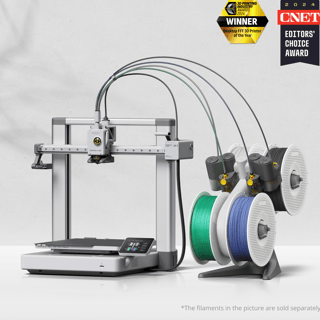
Speaker: Yeah. And I have, I love the bamboo printers. I have the A1 and a one Mini. um They're so awesome. It's so nice not to have to calibrate your E-steps when you switch to like TPU.
Speaker: Yeah, they just work. Yeah. and yeah I just turned, I believe, 4,000 hours on my X1. Wow. and i and And I bought it last summer.
Speaker: And I think I've got 4,000 hours on it. And i just I just run the hell out of it. I'm just downloading the entire internet and printing it. I don't want to know how many dollars worth of plastic I've used.
Speaker: I mean, i i just printed a 10-inch tall Yoshi the other day. Nice. yeah Why? Why? felt the need to do it.
Speaker: You know, i saw one. I saw one. It was cool. I printed it. I glued it together and now I've got a Yoshi. What am I going to do with the Yoshi? I, you know, I don't know, but I, you know, um I'm going to need more display cabinets apparently.
Speaker: I like it when something breaks. I'll go to Thingiverse and see if someone's designed it, like a piece for an Ikea furniture, ah screw cap, anything like that. And it's just like, oh, someone's all someone's had the same problem as me, and here's the solution.
Speaker: And they haven't, then it's time to start CAD. I was listening to, was it Making It last week or a couple of weekends ago? And um Dave Picciuto was saying he has like an old Norelco or Philco razor.
Speaker: like a hair trimmer, you know, or like a wall, Philco. And apparently there's plastic parts and in these all these things. And somebody has taken the time and designed, maybe it was Philips released them.
Speaker: So if if you buy a Philips razor and it breaks, you can go and download a file and print the piece to fix the razor instead of throwing it away. Oh yeah, that's awesome.
Speaker: Yeah, I think it was a couple episodes back, but yeah, that was good. that That's impressive that a company would do that. I mean, it seems to make so much more sense to support your customers. i mean I mean, there's a point where you want your product to break so they'll buy another one.
Speaker: But I mean, you who says they're going to want to buy another one of yours if it broke the first time? Right, exactly. and Unfortunately, the problem is is the planned obsolescence is pretty much...
Speaker: across the board standard now you could go buy a different brand of razor and it's going to do the same shit so i maybe going on with the one that'll give you the ability to make your own free replacement parts would be definitely that'd be a selling point for me right it really would be a lot more inclined to You know, I mean, I know these things are just going to break, especially since they're cheapening them down with a bunch of plastic pieces on the inside instead of making things with steel like they used to make everything. course, it was heavy, but it was heavy and it was expensive, but it lasted forever. You know, grandma's ah washing machine is still running as is grandpa's razor, you know? Yeah, yeah, yeah, yeah. But, ah you know, I like the fact that
Speaker: you could just make your own replacement parts and the company's supporting of that. That is, yeah that, that is really impressive that a company would actually go as far as to, offer you the models that you can print your replacement parts.
Speaker: And this is, this is literal proof that the system works. I heard it on a podcast and now three people are talking about it in another podcast and people are going to hear this. And this is how positive marketing happens.
Speaker: You can't, you can't, you can't look at this on a flow chart, you know, and see how it's going to work. No word at word of mouth travels in weird zigzag dangles. Yeah.
Speaker: And Of course, it'd be better advertising if we were 100% convinced which brand it was that offered the parts. It might do them more good. But yeah I think it might have been Philips.
Speaker: But I mean, i i that was a couple episodes back and I just don't remember. Yeah, yeah, yeah. Well, it's it's the process is what I was kind of making a point of there. so Yeah. Yeah.
Speaker: Miss Jess, what, if I, again, if I may ask, with as diverse as you are and as much time as this takes, what do you do for a living?
Speaker: is this Is this it? Great question. Do you sell, do you sell these pieces? No. I had an Etsy store. I had an Etsy store a long time ago, back when,
Speaker: actually was cool uh but yeah no i'm i'm a support agent for lightburn i answer support tickets for i help people use their diode co2 and fiber lasers oh we may have talked and if if not we need to yeah you got problems i want to hear i do i do have problems send me your support data okay that we we just became best friends ah Yeah, I really love my job. There's always new problems. We're always improving the software. yeah And there's always new lasers coming out. yeah So there's always new equipment to learn about and how it's supposed to function with the software.
Speaker: is on top of that ahead i'm sorry please On top of that, we're also releasing MilMage, our CNC control software. So there's a lot of beta testing and getting the documentation ready and just so much work involved with that.
Speaker: so So it will control C&Cs right out of Lightburn or it's another suite? It's another suite. Okay. Okay. But it's like Lightburn in the fact that Lightburn will control your laser directly and the milling software will interface directly with the C&Cs.
Speaker: You will be able to control some of your CNC machines, not all with MilMage. Yeah. Depending on compatibility. Exactly. And, and the, the files, you'll be able to bring them back and forth. You'll be able to import a light burn file into MilMage and vice versa.
Speaker: Nice. It looks very similar, at least the editing tools. Yeah. i really like I've been with Lightburn since the it's my only laser control software I've ever used ah with the CO2 laser. And then this this was just plug and play for Lightburn.
Speaker: mom And I like how it is ever expanding. Like I have software, my CNC control software doesn't change very often. So I just open it and do the same thing.
Speaker: Lightburn changes so often or updates, I should say, that I'm constantly engaged in it. And I feel like I'm more adept in Lightburn than I am in other programs simply because they're continuously upgrading and adding and tweaking. And you know and they and I feel like they listen to their users.
Speaker: Oh, yeah. We have a feature request page where people, yeah you can vote for features. yeah Nice. And like we care about it. We want to hear about it. Yeah. Yeah. Now my light burn does not change.
Speaker: I mean, I bought a one year, i bought, I bought the year subscription when I bought the little diode laser, which was, I don't know, three, maybe three and a half years ago, i bought the one year subscription.
Speaker: And, uh, you know, when, when the year was up, I downloaded an update and then, uh, that's, that's where it sat for the last couple of years. because you know it just keeps working and there's nothing wrong with the version I had. i just didn't.
Speaker: I mean, for as often as I use this thing, which is a few times a year, I didn't see the need to keep paying for the ongoing subscription. And that's awesome. We want it to be like that. If you're satisfied with the software you're using now, then that's great.
Speaker: I'm satisfied with the way it works. I don't see the need to upgrade it. I do got to say, though, we don't like the word subscription. We don't store your payment information. Therefore, we do not offer a subscription service. Okay.
Speaker: so So the term we like to use is renewal. So you would renew your license if you wanted to use new versions of the software. ah Yeah, just a little correction.
Speaker: Sorry. Well, no, i love that that is a fair differentiating point. I mean, it really comes out almost the same but it's got a better feel to it that yeah you know it's you're just not waiting for the 12 months to run out so they yank more money out of your card yeah and i mean your your software doesn't stop working you just stop getting new updates int until you feel like you're paying for another year's worth of updates so i mean the the fact that nothing nothing stops you don't have to it's it's not like we're taking another six hundred dollars out of your bank account or you can't use your software anymore that's that's the scammy feel you're trying to avoid with a renewal there and i think it works yes yeah
Speaker: So far, yeah. Yeah, we just I just subscribed to Mosaic, and they get their payment every month. Oh, wow. Holy crap. That's a big payment. That's a big subscription.
Speaker: But, yeah, i just I just renewed my license with Lightburn. Unfortunately, I had a desktop in here that was starting to fail and get glitchy, and I was like, ugh.
Speaker: And going to Mosaic... You can only run that on one PC without spending a lot of money to have multiple licenses. And i was like, well, if I'm going to be at a client's house and they're going to want to see something, I need to put this on a laptop.
Speaker: And I didn't want to have ah desktop in the house, a laptop, and then a desktop in the shop and have half my files here and a third of my files there and blah, blah, blah, blah. blah So I went and bought a docking station and put everything on the laptop, which was...
Speaker: I was driving a Thumbtack with a sledgehammer with that thing. So it's capable, but in the migration and everything, I lost all my art, all my logos, all everything in Lightburn.
Speaker: We did a deep search on the old PC. We couldn't find the file extension. Like it's just gone. Oh, we do have a new bundle feature in versions 1.6 or higher where you can export all of your settings and that makes it easy for you to migrate them.
Speaker: That's what I did. Yeah. I'm 1.7. Where it? Where am I? I don't even know where I am now. Yeah. yeah I got too many screens going. Dang it.
Speaker: Come on. Talk amongst yourselves.
Speaker: oh yeah I'm sorry to hear that you lost your settings. I want to hear more about it. Please email us. one point seven point ah eight 1.7.08 is what I'm at. Okay.
Speaker: And you weren't able to import your settings from another computer. it ah got everything except for my art library. Okay. And it's ah it's just, we spent two days trying to find it. It's unbelievable. It's just gone.
Speaker: All right. Let me make a note of that. Oh! Tech support in a podcast. It doesn't get any better than this. Yeah, well.
Speaker: And you used the export bundle feature, right? From file? Well, I used what the guy told me to do. Okay. He said he sent me he sent me like a do this, do this, do this kind of thing. It wasn't really ah so That's one thing, and I don't want to I'm not calling out Lightburn, but I do want to call out tech services to those 14 people that are listening.
Speaker: It's a little unnerving to not be able to talk to a person. Oh yeah, I understand. You know, and it's like, and I'll send it, I'll do the little chat bot thing, and then you finally get somebody to contact you via email. And it's like, listen, if you call me, we can solve this in five to 10 minutes.
Speaker: Otherwise, I'm going to email with you for the next three days. No, that is a common complaint we you hear from people. Why can't you just call us? um And a lot of the problems, sometimes they need to be solved with screenshots.
Speaker: And sometimes talking to people takes a lot of time. to ye you have to be polite. lot of bandwidth. Yeah, it's a lot of bandwidth. yeah And ah so, yeah, our our response to why we don't have phone support is the software would cost way more if we were to offer that. That's just something that would... yeah take a lot more infrastructure take handle and a lot more people.
Speaker: Lightburn isn't very big. We're less than 40 people. Seriously? Yeah. That's amazing. Yeah. So yeah, sometimes people reach out Lightburn support and we kind of have to convince them that we aren't AI. We are real people.
Speaker: Yeah. Yeah. yeah yeah Yeah. That's it. You had to do it to me. Yeah. Because like, ah, because everybody, there's so much AI going around now. and it's And I'm just old enough to, you know, really balk it. People will come in and they'll they'll say I have a problem. And um we need to know what what kind of laser you're working with. We need to know your operating system.
Speaker: We need to extract the details so we can understand the issue and address it effectively. Yeah. Yeah. Yeah. Can I, can I ask for Jess when I type in the chat? So we, I don't, yeah, we don't have a chat bot on our website. You would just email us at support and then you get an email that says, Hey, we got your email. We'll, we'll be reaching out soon.
Speaker: So. All right, cool. Yeah. I would like to, cause there's some other training questions I would really like to, like, I don't, I'm like, uh, Well, I'll go ahead and do the, uh, Jimmy Duresta mention ah for the, every podcast we have to have one.
Speaker: Uh, just turn it on and figure it out. And that's really not the best way to do it because I'm missing so many features and so many, like I'll have ah my a, my friend of mine's sign maker and sign company and he, his laser, he actually just set a shop on fire couple of ago.
Speaker: Well, six weeks ago now, Tom. Yeah. Um, not He lost his laser and he and had to have some smoke treatment done. to Never leave your laser unattended.
Speaker: He was sitting. it was on camera. And he you could see the camera's pointing at the laser and he's sitting five feet away from it with his back to it. And like you could see the flame. where by And he said, I heard it sound like frying chicken. And I turned around and the laser's going.
Speaker: Oh, my goodness. But he he just got light he got a new AP laser and it came with Lightburn this time instead of the previous whatever they were using before. So it's like all new to him.
Speaker: And he's a deep dive guy. Like he wants to know every feature, everything. So he was having problems with his rotary. So he came over last night just to get half a dozen things, 10 or 12 mugs laser just to get him, get his clients caught up, you know.
Speaker: And I was doing something and he's like, no, no, no, no. And he like click, bang, boom, you know, and I'm like, wait, what did you just do?
Speaker: And it was some, some setting that i just never took the time to learn. So I need to i need to do a deep dive on all my software. stuff just like it's It's all my software. And depending on your device profile, depending on your laser's controller and the firmware that's running on it, something that you may see in a YouTube video may not be available to you on your profile because of the limits of the controller.
Speaker: Right. Rotary is one of the things that that really... It got me, too. it It was very difficult to figure out when you first like jump in and don't look at documentation and you're just like, I want point A to b Just run to it.
Speaker: Right. i think I think his last software just identified the Rotary because it was their Rotary. you know So it just did it. And this one was all... He's got the Ruita controller now.
Speaker: And... it I said, no no, no, All you got to do is go in and tell it. He didn't understand that you had to tell it how to clock you know how many rotations or how many yeah points there are in a rotation. Like my rotary is 5,500.
Speaker: My rotary chuck is 2,700. That you know so test button in the rotary setup window is there for a reason. Use it. ah Yeah. See, there's another another button I didn't know about. That test button will make the rotary rotate. And if your steps, your millimeter per rotation is correct, it it'll change.
Speaker: It should do it completely around. Yeah. um Yeah. If you want to learn all of the features in Lightburn, gosh, I don't even, like, my first thing is, like, ah find a project that encompasses all of that.
Speaker: um Yeah. I do my best learning when I'm motivated to get something done. So you just need to find a project that incorporates that feature that you want to learn more about. Nice.
Speaker: Nice. Appreciate it. Sidebar. i'm Sorry. Yeah, I love it. It's great. And I'm always learning new stuff. There's always new machines. Yeah.
Speaker: Yeah. So what, so what other kind of digital fab stuff are you into back there? You got your diodes, you got your CNC's, you got a sewing machine. Are you, do you currently work with the sewing machine?
Speaker: but the I have a brother that's our other embroidery machine. It's got an eight by 10, uh, sewing, a nice big area for, uh,
Speaker: Wow. a For a long time, i used the software called SoArt by SNS computing. um But recently I've been playing around with an Inkscape plugin called InkStitch and learning how to use that.
Speaker: It's a little tricky. It's a little slow sometimes, but ah it's a really neat, neat software for digitizing files.
Speaker: Inkscape does just about everything, it? love Inkscape. Inkscape's great. i ah When I first started using lasers, I would use Inkscape to design my files before Lightburn existed. Very good. Yeah. wow Wow.
Speaker: I design in the Laguna, well, not Laguna, Vector.
Speaker: uh, aspire and then, and then I'll export to, light burn. But I think it's because I don't understand the controls and light burn. Whereas I do. so that's like an extra step. I really don't need to do what I need to do is take the time and learn how to do it. And life note editing can be a little tricky.
Speaker: um yeah. Uh, the trace feature is the super helpful. Um, you can adjust your images before you trace them, which is, is nice. Yeah.
Speaker: Um, Yeah. Like I've got a camera on this thing and I don't know how to set it up in Lightburn. I can't, I can't figure out how to make it work. Does the camera connect to your computer via USB?
Speaker: The machine is USB connected. If that's the correct answer. are Yeah. No, no, no. I'm sorry. Is it? So the camera should be able to connect. Yeah, yeah. USB. Separately from your controller. Yeah.
Speaker: And then you'll need to go through the calibrate your lens and do the alignment procedure. Um, email us if you need help. and I will. I am going to, you are not ever going to get rid of me. Yeah.
Speaker: yeah So you decided that you needed to give yourself a tattoo? Oh, i mean and so So it's not on a CNC machine. It's actually a laser. And it's probably like the dinkiest laser you could possibly use, the little belts.
Speaker: And yeah, it's one of those projects that I was just like, you know, let me see if I can do it. and had I had a tattoo machine when I was young as a teenager.
Speaker: And ah was like, let me jump back into tattooing again. So I got a gun off of Amazon and I modified the laser I was using as an a A1 Spider.
Speaker: and it has a pen plotter attachment. um Unfortunately, the solenoid is not ah not powerful enough to lift the heavy tattoo gun. um So what I've done so far is I've hacked the power button and I need to figure out how to make it so that when I use Lightburn to move move the machine around, the gun will turn on when I need it to.
Speaker: So it it's a work in progress. It's one of those fun side projects. It's very clean. I looked at the video. Like, that's a very clean heart.
Speaker: It didn't heal very well. I don't i don't recommend toe skin as a great... yeah Yeah, I wasn't going to go there, but that's you know your choice.
Speaker: i I'd say a flatter portion of skin would probably be best. I mean, i think I think part of the... pride It looked like it got a little bit light on one side, and that was absolutely a depth issue because there was some curvature on the toe there.
Speaker: And so, i'm yeah, I mean, it's like using a CNC on a curved surface and and trying to plan it for a single depth and it just, you know, it kind of fades out towards the edge there. Yeah.
Speaker: But yeah, probably a flatter piece of skin would probably work best. um safety you can You could go full post Malone, you know, forehead, nose.
Speaker: Yeah, I'm going to stick to small things and as flat as I can find it. yeah Yeah, that can still be covered. yeah Or I could just laser it off laser later. and Yeah.
Speaker: ah Now, can you do that with a normal laser? uh like remove tattoos is that what you're asking um yeah i have seen someone laser off a tattoo with a fiber laser on youtube uh yeah they did it um they had like a blacked out area and they did a design i don't know how well it healed um yeah and I think generally, like if you're going to laser your skin, yeah there needs to be like pigment in it already. Otherwise, you're just scorching yourself, and eventually your skin will heal over, and you'll just be left with a weird scar.
Speaker: Yeah. Yeah. like Ladies and gentlemen, Digifabricators does not support lasering your skin. Yeah, please don't do that. Do not attempt this at home. And don't put tattoo guns in lasers, either. Well, I know that... This is for the adults. I know that tattoo removal is using a laser.
Speaker: I'm not sure what kind of a laser it uses. I'm not sure either. It feels like that wideband they strip rust with. It feels like that kind of a pulse type thing.
Speaker: I've never done it as I'm covered. Some good, some bad. i've I've got a couple, but I'm not thoroughly happy with ah one in my back.
Speaker: And it's the the guy did a really good job doing the outline on the design. And then ah he came back and he he filled in the design using the same color.
Speaker: And because he used the same color, the the The inner color, like it like bled into the outline and then it bled out. So the outline has got like little jaggy rough edges now and it's kind of it's not super attractive. and Have you asked him to clean it up?
Speaker: And well, what I was thinking about was, you know, if I ever had the money and the time and cared would be to go do a little bit of the laser removal. As far as I understand, it takes like what, five or six passes.
Speaker: You got to go in like five or six different times to do the laser removal. And it just gets a little bit lighter every time. And because this is a dark blue and I can't,
Speaker: go in and clean up the edges with the dark blue the way it is. I was told by a professional that if I go in and get like two passes with the laser removal, it would then take the dark blue and make it a very light blue, at which point they could come in with ah black and redo the edges and and make a good solid border on it.
Speaker: But I'd need to lighten up the whole thing before I could do that. It never occurred to me that laser removal is ah some random kind of laser. And it's like God, we've got like six kinds of lasers between the three of us. Which kind is it that I need to fix my pack?
Speaker: were So many kinds. Oh, there's so many. Yeah. Diodes. It really, it really is amazing how quickly this, uh, the maker community, if you will, I'm doing air quotes, you know, and,
Speaker: how quickly it blew up technologically like i'm i'm full full heavy woodworking since 2016 and cncs were like jimmy duresta had a tiny tiny tiny one and it was ten thousand dollars you know in 2016 and now and now It's almost like, oh, you don't have a CNC? I'm sorry. yeah like like Everybody's got one. I literally have a... I've got a big one.
Speaker: and There's a small one in my basement that I'm storing for a friend because he just didn't have room for to put it anywhere. like a you know and I've got another buddy. i'm I'm actually thinking about buying a 2x3 Laguna because he's just making a crazy deal on it. Yeah.
Speaker: It's just this stuff was unattainable. And when, well, when Jeff and I were kids, it was almost unimaginable. This was Jetson's level stuff. you know Yeah, there's a lot more machines and lasers out there than there used to be. There's a lot of competition.
Speaker: I started off with the 3018 diode and it was like $250. And I liked it so much, I returned it and got a bigger one. so Nice, nice, nice.
Speaker: Nice. it's It's also, I don't want to say adversely, it's it's made businesses interest or made business interesting. Like when I first got the CO2, everybody wanted mugs, you know.
Speaker: And, you know, now you see on on Facebook ads, you know, six mugs for $100 shipped. And it's like, how are they doing that?
Speaker: You know? but it's because everybody's got a gold forge now or whatever, you know, they, you know, they, they've got shops in their living rooms and they can laser mugs all night long while they're watching TV.
Speaker: no It's, it's, it's nice the way that, you know, technology gets invented and it's expensive as hell and it's complicated as hell.
Speaker: And then they, they work on it for a few years and they, they figure out how to, do it better and do it cheaper and then make it commercially available for people to do as a business.
Speaker: And then if you wait another five years, they'll keep refining the system and keep improving things to the point where they'll hit hobby level where you've got professional grade equipment coming at hobby level prices that you can put in your own shop.
Speaker: Yeah, which is I love that. And, you know, there' there's still a handful of tools. I'm waiting for them to actually hit a reasonable price point for me to jump in as a hobby.
Speaker: I mean, I'm I'm waiting for a scanner that doesn't suck that I can get for, you know, 300 bucks. I want a three v scanner. That'd be fantastic. What would I do with it? I don't know. I'm not going to make any money off of it because I typically just buy shit to have fun with and play with it.
Speaker: But I can't justify spending $3,000 on a good 3D scanner. But you know another couple years down the road, I'm going to be able to get a professional grade scanner that won't leave me with 40 hours of blender cleanup and I'm going to be able to buy it for two, 300 bucks.
Speaker: And I'm just waiting for that day. I know it's coming. The progression happens. I believe in it too. Yeah. I just have to be patient. Yeah. And what's on, I'm sorry. Go ahead, Jeff. No, no, I was just, I was just looking at your fiber laser over your shoulder and thinking that that's in the same category as I, I'd, I'd like to have, you know, I'm,
Speaker: 50 watt fiber in my house as well so i could do some metal stuff which is what you've got behind you i was thinking that that that's one that i'm looking forward to hitting a ah price point that i can afford maybe maybe i'll look into the uh infrared and see if that's a something that would be reasonably priced and hold me off until the fiber gets down to affordable.
Speaker: Yeah. Yeah. Well, this one, this is a thunder, ah and ah better than a third of this cost is this cabinet. You can get them open, boomed and stuff like that. But I wanted at the time I had a landscape business and I had employees coming in and out of the shop while I was working during the day and I didn't want them, you know,
Speaker: blind anybody. Yeah, the monkeys, you know, they they stand around staring at it and it's like, dude, what are you doing? ah welll Have you never been around a welder? It's it's fascinating though. I mean... It is. it is To be fair, that one of the one of the selling points that is not super valid for digital fabrication is that it's this is this is a spare set of hands. This is your employee And you can just tell it to do some of your work for you.
Speaker: And then you can go work on the other part while it's finishing up. It's carving, lazing, printing, whatever it is it's doing. You can go do the hand work that needs to get done while your digital fab is over there doing its own thing. This is a separate employee.
Speaker: yeah Well, that's a great theory, but the digital fabrication is so fucking fascinating to watch that you never get anything done. You stand there and you watch it moving back and forth in circles because it's fucking cool.
Speaker: it's like I mean, I've had my CNC for like four years. I still sit there and I watch it go around in circles because it's just cool. Yeah. Yeah.
Speaker: Yeah. What's, what's on your horizon there, miss Jess, what's your next task or skill you're attacking or thinking about? I'm really looking forward to getting a Mopa fiber laser in the future so that I can master color on metal.
Speaker: Uh, yeah, I think that's very fascinating. Um, I'm going to do more programming projects, uh,
Speaker: Yeah, just little electronics things that I have. yeah Like Arduino kind of stuff? Yeah. NFC stuff. So you are you a fan are you a fan of Mr. Claggett? don't know what that is.
Speaker: Who's Mr. Claggett? well Bob Claggett. I like to make stuff. Maybe, possibly. YouTube channel? Oh, you should check out his.
Speaker: ah yeah He has YouTube, but also Instagram. probably seen some of his stuff then. He is, a he builds robots. He built ah an Arduino and then 3D printed a finger to turn on his Glowforge.
Speaker: and Yeah. When he was going to start the glow forge and the finger would push that button on the top of the glow forge to make it start. Cause you can't just program it to start. You got to go push the damned button physically.
Speaker: he He didn't want to have to get up and do that. It was a good yeah project. And he, he does like off the wall. Like one of my favorite things is he did this really high end fancy with a marquetry inlay, ping pong tables.
Speaker: And then he used Arduinos and stuff to make a digital LED score, like a score. Like ah every time you got a point, it would light up an LED across the net kind of thing. It was like he's built a full-size R2-D2. He's, you know, he does all kinds of – he's just – he likes to make stuff. Yeah. Yeah, well.
Speaker: Definitely. ah And he's ah he's a third of the Making It podcast. Yeah. Yeah, he's one of the guys in the Making It podcast. Yeah. a And yeah yeah, if you've ever seen him, you'd know it because he starts he starts all of his videos as hi, I'm Bob and I like to make stuff.
Speaker: And then he goes into his whatever he's making today. He's great. Yeah. yeah Arduinos are fun. I haven't gotten into those yet. neither.
Speaker: Yeah. I haven't found a need for it. That's basically to start something new. All you need is a project that needs that solution. Something that motivates you.
Speaker: When I did Fab Academy, that's when I first learned about electronics and programming and making your own circuit boards and stuff. And it was just, it just blew my mind. Like, Oh, I don't have to go to school for four years to start like using this and making stuff.
Speaker: Uh, like just a little bit of teaching got me pretty far and excited to learn more um my own. So, yeah so you're a hundred percent self self-taught.
Speaker: Good for you. That's amazing. Yeah. Yeah. When I, uh, I got kicked out of high school for not going. And I remember conversation with my mom. I was like, mom, they, they kicked me out.
Speaker: And she, she goes, that's okay, honey. You'll learn at the library. And I was like, all right, thanks mom. but what a great now And I did, I did.
Speaker: Good. Yeah. Yeah. yeah yeah Yeah. Your feed incredible. Yeah. I wonder, if ah yeah, what, what, which ones you guys would bring up. So I am all over the place and I'll continue to be all over the place. yeah Yeah.
Speaker: Well, I mean, just scrolling through ah the I see the 2025 coin looks like chip, ah casino chip. and I'm assuming these are 3D printed? Yeah. I went to Rocky Mountain RepRapFest recently.
Speaker: um In addition to making videos about stuff I make, I also like to make videos of makerspaces and hackerspaces that I visit or fun conferences that I go to.
Speaker: my Instagram's kind of like... i kind of look out at it and it like ah diary of sorts. ah Yeah, so... Yeah, a little bit of little bit of everything.
Speaker: Well, I mean, that's what they really started it for. I mean, that was the original plan for Instagram was ah ah a feed of pictures of things you've seen, places you've gone, things you've done.
Speaker: mean, that was the original intent to Instagram. So it's like these days people are like, well, yeah, but this is just like my maker account. This is only the stuff I make. Well, yeah, but then what? You want to have a second Instagram just for pictures that you took on vacation that you figure your maker followers don't want to see. and it's Yeah.
Speaker: I kind of do that. um That's why i have the two. Actually, I have three. i have that's... almost no descriptions other than, you know, CNC car sign, you know, it's basically just a curated ah portfolio.
Speaker: And then I have my everyday and then I have me and Miss Ray, which is booze and smoker. Yeah. nice yeah You get to have your different ah personalities kind of categorized. Yeah.
Speaker: i used to I used to buy into, not buy into, or I did buy into the, you know, you have to curate your sites and you have to do this and you have to have great lighting and great sound and all that. And now I kind of, the videos I'm seeing on YouTube and the feed quality, not feed quality, quality is not the word I'm looking for, but the the material going into people's feeds are, this is me. I'm sweating, my shop's dirty, you know, and this is what I made. And I'm really kind of leaning into stuff.
Speaker: I can identify with that. You know, you you see somebody with a sterile shop, all neon lit up and i It's beautiful, but it's like, you're not making anything in there. It feels more real.
Speaker: yeah Yeah. Yeah. A little bit less filtered. Yeah. Be authentic. Yeah. Yeah. Yeah. yeah Yeah, show show show things that screw up sometimes. Yeah, i I post my mistakes. All my mistakes are on the ceiling here that didn't work. That's when the best learning happens. It sticks longer. Yeah, yeah, yeah.
Speaker: Well, at least your mistake isn't the hooks. Otherwise, it'd be painful. As the rest of your mistakes come down on your head. Oh, right. Oh, no, no, no. Yeah. So I use, I, they're screwed to the wall. ceiling and Right. Well, see, that'd be a, that that'd be a big mistake is if you didn't screw them to the ceiling. Well, because then it would be a mistake again and it hits you in the head.
Speaker: Yeah. Yeah. That would, that would suck. And most of that stuff is heavy.
Speaker: Yeah. Well, when you make mistakes on an eight foot CNC, yeah. Yeah.
Speaker: It'd tough to screw some of those to the ceiling. Yeah. Yeah, yeah. No, those don't get screwed to the ceiling. Um, so did you have a, uh, like a, uh, craft fair kind of thing going on for a while? Is that, was, was that a short term thing? I saw something go by where it looked like you had a setup. Oh yeah. Uh, fresh, fresh fab farts, uh, freshly fabricated fancy arts for friends.
Speaker: Yeah. Nice. The name was something there, isn't it? That's awesome. I sold. my little side gig I had a few years ago was making leather products with my diode laser.
Speaker: And that's probably what you saw. also did like little lasered earrings with tiny bearings in them. um Yeah, I did like, did were they like like these leather wallets, ketane wallets and stuff? Yeah.
Speaker: Yeah, it was something like that. I don't remember what I thought. sold a couple things that I made. so But it's not my main thing. It's kind of exhausting to have orders to fulfill. and It is. i can I would rather make two or three large things than...
Speaker: ship 20 different things in 20 different directions one of the nice i mean sorry that is one of the nice things with like digital fabrication it's like you can repeat products so you can it's easy for you to replicate something once you make one so of yeah you can just hit the print button and make another one i mean yeah that's all it takes well i mean that there' there's There's the old trope where everybody's got an easy button and you just throw a board on the CNC and you push the button and it just kicks out the product for you.
Speaker: And that's that's obviously not true. But... It's a lot closer to true for the second or the third or the fourth one that you make of the same exact one.
Speaker: I mean, obviously to make the first one, you've got to sit down for a week doing software to get everything prepped and get everything organized and get everything set up so that it does all the paths and all the different cuts and all the different whatever's you need.
Speaker: But I mean, once you've got all of the work done on the front end, then you literally just throw the board down and tell it to do that again.
Speaker: and it almost does do it kind of like that on repetition, you know, to make duplicates. The first one is absolutely, there's no easy button for the first of anything you make, no but you can just hit the print another one button and throw another piece of wood up there. And it pretty much does sort of do that for the second one, especially if you'd like,
Speaker: you know, lasering pieces of leather. Yeah, you just slap a piece of leather on there until it to go you get to make a whole bunch and then try out a wide variety of finishing processes.
Speaker: Yeah, exactly. i yeah I do the same thing with the client that is delivering HDPE sheets today. seven seven
Speaker: nine different things their furniture uh that i cut the pieces for and it took
Speaker: three to five hours per sheet to toolpath it all up and everything but now that we have them all he just drops the sheets off and he puts a sticky note this is a you know cut this file on this one cut this file on this one cut this file on this one and it's gotten to the point where it's almost throw it on the machine and hit the button.
Speaker: Right. ah You know, inevitably there'll be a, yeah, cut the same one you did last time, only change, change this joint by thousandth, you know? So then there's a, there's a modification to the file or whatever, but it's, it's nice to get to that point because then, you know, I didn't, I wasn't able to charge him for five hours of time.
Speaker: cutting the first one, but averaged the price per sheet so that now I'm making money cutting them, you know? Right. Took a little bit of investment upfront for you time yeah to get it set up.
Speaker: But for somebody that's going to be a repeat customer, you just, you just throw that time in a hole and, in yeah college. That's the key. That's the key. If it's going to be a repeat customer, that was an investment.
Speaker: That was an investment in your time yeah in products that will, you know, repeat later, much easily easier because you've done the work up front.
Speaker: Yeah. Yeah. Automating it allows you to spend your time elsewhere. on Other things. Yeah. Just get to be more productive. assuming that you can walk away from the machine that is so fascinating to watch yeah it's there there's no better feeling than the other day i had the cnc running i had this laser running i had the co2 running and i was sanding a cookie for a coffee table a big burl maple burl and i'm standing in the middle of my shop watching all my machines and i'm like wow this is some crazy shit ah this employee thing does work
Speaker: These are employees for me. Once you, that's the thing. Well, I mean, it's much like a normal employee. Sometimes you've got to train them to do what the hell you want before you can trust them to go off and do their bit by them themselves. you know Right. Exactly. Don't forget maintenance.
Speaker: Yeah. Speaking of, I got to tear my laser apart. the I don't know if anybody's ever, the, the CO2 laser has, it's a Laguna, but it has a, the little red dot. Yeah.
Speaker: and the And the dot has just continuously just, it's like non-existent now. So when Tom was here last night, he's he's got a brand new laser and his dot is like, literally like the laser beam. I'm like, holy crap, there's something wrong with mine, obviously.
Speaker: So we found this lens, the laser tube in the back of the machine, before it hits the very first mirror, there's a there's another lens on a, the reverse angle and the, the laser shoots through that lens to its first corner.
Speaker: And then, 90 degrees to that is the light diode that that reflects off the inside of that lens. It makes no sense to me.
Speaker: I don't understand how the laser is passing through it and the diode is bouncing off of it and following the laser path around to give you your mark. So you have a red dot in addition to your laser? Yeah.
Speaker: ah Yes. Yeah. The CO2 being an invisible laser line and then there's just a normal LED that shines down the same path.
Speaker: got it So where where the laser, where where the laser where basically is, you've got a one-way mirror is that 90 degree angle is a one-way mirror. So the CO2 goes straight through from the back and straight out the front, but the LED shines at a 90 degree angle and hits the backside of it and then it follows exactly down the path of where the CO2 goes, giving you a visible indicator of where the CO2 is going to go.
Speaker: So when you're aligning on a like on a mug or something, you want to hit the signal mark. yeah That lets you you know basically do a a ghost path with the just an LED showing where the path is going to actually go before you can push go and actually do some burning.
Speaker: And now on these, the red dot is... movable. So you can actually trace, you can actually see what you're going to. Yeah. I'm curious as to what you would want the camera for on your fiber.
Speaker: Is it just mainly to take a picture of material you're about to laser? To, to line up. Like if I want to, I guess I, yeah, I don't know. Cause you can, during the framing process, it'll put the red dot and show you where it's going to execute.
Speaker: So if your red dot isn't showing up anymore, then I would say maybe find the actual LED that makes the red spot and like wipe the smoke it. I'd check your wiring first. Yeah, yeah without... Oh, it's there. It's there. it's just not getting... It's there, but it's not getting out. There's probably... There's either smoke on the on the LED or maybe there's smoke on the back of that one-sided mirror. Yeah.
Speaker: Yeah. Well, I took the mirror out. I have it out. That's what I was just looking for. I can't find it now. Story my life. It'll turn out. Yeah.
Speaker: Yeah. Oh, well. It's a, it's a, somebody had to invent that. Somebody had to figure that out. And that's, it's a pretty cool, that first corner is a pretty tight, like there's a lot of stuff going on in that first corner. Yeah.
Speaker: Yeah, CO2 lasers, there's so much, so many things that can go wrong. they Yeah, they require a lot of stuff. Yeah. And I've, you know, I should knock on wood.
Speaker: I have never in four years aligned the Maritana thing. Like i I plugged it in filled it with water, turned on the chiller, and I've been cut. Hopefully you just need some cleaning.
Speaker: yeah Yeah. That's what I'm hoping too. I hope I haven't like damaged mirrors or anything like, cause I've heard of people like they'll get like condensation on a mirror or a lens and they'll just blow a lens apart and fracture them.
Speaker: Gotta have a good air assist. Yeah. Condensation. Water. water Water's a thing. You get some condensation on a mirror and then you hit that with a laser and then you superheat the water to steam at which point it does nasty things to your mirror.
Speaker: Yeah. And it's kind of a very much a, What did you think was going to happen? Yeah.
Speaker: Yeah. Well, I got to say about a four and a half watt diode, I do not set many things on fire. You know, it just, yeah, that's, that's, yeah but you maybe that's an advantage to having hobby grade equipment is they just don't have the same level of danger involved. Yeah. You have the gentle version.
Speaker: Yeah, exactly. I've got the version that does, i you know, I mean, i don't really like leave the shop when my laser is running, although I do like to walk around the corner because those glasses kind of suck and I just get a headache every time I run it.
Speaker: So I tend to just walk around the corner, but I'm within, you know, 10 feet of it. but i mean with the the the hobby grade cnc i don't have to worry about it you know blasting through something stupid and breaking everything because yeah i'm running a trim router with belts it can't break anything it just starts skipping the belt the belt just starts going thump thump thump as it tears the grooves off the belt but i mean it won't like
Speaker: It's like, I've never broken a quarter inch bit. It won't do it. It hasn't got the power to. yeah I've got a box of them. Yeah, well, see, you you could blast right through anything with with you know a four by eight machine that's got that kind of power. But I mean, when you're pulling your trim router around with you know rubber belts, there's only so much you can do before it just gives way.
Speaker: And I don't have to worry about it breaking anything other than itself. Yeah. I've broken one half inch bit.
Speaker: Well, obviously accidentally. It was, uh, I was doing a full, full speed pass, you know, and for whatever reason, oh the collet slipped. I was doing uh, like a spoil board finish. I was flattening a slab and I'm going 600 inches a minute.
Speaker: and the collet slipped and the bit just sucked itself right into a walnut slab and snapped off. but Yeah, that'll do it. So totaled the slab, totaled the bit through every time you crash a CNC, you should throw your collets away.
Speaker: And because they they'll never, I mean, you might not notice in wood, but we were again, a little bit of play in them. Yeah. ah we dance went A little bit on the inside.
Speaker: We were cutting aluminum and just the chatter was shattered bits and bad cuts. And finally it was a Laguna tech figured it out. He's like, when's the last time he ah you, you know, you got new college. Right. And I'm like, no, he was like, how old are your college? I'm like, they're original.
Speaker: He's like, no no no, no, no, no. Every time you crash a collet, it's no good anymore. Nice. Yeah. Yeah. Because if you want to carve foam, it's fine. You know, but if you're going to carve acrylic glass, not glass, you know, hard plastics, you'll get a little bit of chatter out of a collet that's been overstressed.
Speaker: All my bits are broken from PCB milling because they're very tiny. And if your bed is uneven, ah stuff's going to go wrong. yeah yeah Yeah, those tiny best those tiny bits, I mean, I'll break those by the dozen.
Speaker: I mean, I do a lot of little tiny intricate inlay kind of stuff. And my favorite bit ever is 1 32nd inch mill.
Speaker: it is It is, you know... I've never even seen one. It's a mechanical mechanical pencil lead, kind of. yeah i I'm scared to drop it, putting it into the collet, because just dropping it on the table with its own weight for two inches is enough to snap that the tip off these things.
Speaker: can you Can you imagine screwing that thing into my six-horse strap? Yeah, that'd be fun. It would look like a piece of hair hanging out of it. Yeah. Yeah. That'd be silly out of a six horse, but I mean, you got what you got to do. Yeah, man. I ain't scared. I'll run one.
Speaker: And, you I, I, I've been doing it and these little bits for long enough that I can actually cut something out of aluminum with the one 32nd inch bit and usually won't break more than on a project now.
Speaker: And yeah I can, I can do a full wood inlay without breaking one anymore, but I've, I've realized that patience is really your best bet on these things. Cause I mean, and i think I'm down to, i don't know if I'm cutting like walnut with it, I'll probably run it maybe 15 inches per minute and maybe 0.04.
Speaker: plano four max depth probably closer to.02 and probably a.02 depth and maybe a 15 inch per minute and if i want to go to aluminum it's it's a.01 depth max and i'm maybe eight or ten inch per minute and and it does pretty well But I mean, you gotta be patient. I mean, cause that shit is super slow.
Speaker: mean, you're watching paint dries the bit slowly moves around here, but I mean, it's job done and you can't put the details in with anything else. Yeah. That's really methodical too though. Watching something that small work.
Speaker: It's pretty crazy. Yeah. Yeah. Well, you know, I didn't buy a big powerful machine. i bought something that did little teeny tiny precision stuff instead. So.
Speaker: But I guess it is what it is. ah we should probably get, uh, a thing of the week in here and, uh, get things wrapped up.
Speaker: Yeah. Well, you know, I'm going to want lunch in half an hour here. So I think it's probably a good time to, uh, start thinking about the things of the week. Jess, did you bring anything interesting for a thing of the week? um Is this where we talk about projects we're excited for? other projects Remind me again what it is. Anything you want to talk about.
Speaker: Well, it's just a anything that you're excited or interested about or a product that you've seen recently that Yeah, it's we've had everything from, oh, look, there's a brand new 3D printer that does these interesting things or there's ah somebody says they're really into going for rides on trains and somebody else recommends going to therapy because mental health is important.
Speaker: so And it's basically anything that you'd like to recommend to people. And it could literally be anything in the world that makes, you know, whatever you're excited about at the moment is fine. I'm really excited for the Lightburn conference in July in New York City.
Speaker: yeahs There's going to be a laser craft market. um There'll be a big dragon. And then all the Lightburn people will be there.
Speaker: Is this for users? Like I could come down here? yeah um I don't do the city, but I could. Yeah. I'm not excited about the big city either, but it should be fun.
Speaker: Yeah. Yeah. Too many people. who are Yeah. I'm two hours north of it. I've been there three times in 56 years. and That was three times too many.
Speaker: Yeah. No, that sounds like a cool conference. It's like a workbench con, but for, for light burn. Yep. It'll be our second conference. Yeah. The first one was in Peoria, Illinois, a few years ago. So,
Speaker: Nice. Okay. So when is that going to July 20th. I think I got those dates right. Yeah.
Speaker: It's a little bit far for me to drive, unfortunately, but yeah, if you're, I'd love to get out and do some stuff like that, but I just, I, you know, I'm in the middle of nowhere and I don't do a whole lot in the way of social.
Speaker: So I haven't made it to any of the shows like that. Hopefully I'll, make it out of my house one of these days, something cool like that. But to the listeners, this is light burn is, uh, I don't even want to say up and coming. You've been around forever, but you're getting to be the laser control software. So if you can get to a conference or a meeting or a show of any type, I would strongly suggest, uh, I'm going to be emailing miss Jess a lot in the future. And who knows? I might end up in New York city in July. Yeah.
Speaker: But my thing of the week. Sure. Thing of the week. What are we ah do we call it? The thing of the week now? Yeah. think of the Thing of the show. Thing of the episode, I guess. Thing of the episode. We we called it thing of the week even when we were biweekly. But I mean, it's it's your thing of this week, regardless of how long it's been since the last one.
Speaker: I've been, interestingly enough, we talk about digital fabrication and what our machines can and can't do for us and all this kind of stuff. And I get sucked into hand or or processes that can't really be done on a digital fabrication machine.
Speaker: And I've been watching this this group. I think it's a group. I can't even tell. It's a German Instagram channel called Holtz. Yeah.
Speaker: Holtz Beigewerk. It's
Speaker: ah You can look, Winkler is another name they have here, but Holtzbergwerk. And what they do is they have this equipment and these, I don't even know, and I thought it was a submarine when I was first looking at it, but they steam bend like three inch thick beams. Nice.
Speaker: and they're steam bending them with these big hydraulic forms and presses. and And they've got like, it looks like three giant torpedo doors on the wall, which I'm assuming is another room full of steam equipment.
Speaker: And they just like turn this big wheel and open this trap door and a giant beam slides out. and And of course you have to do everything fast. They're reasonably fast, but like,
Speaker: And of course, it's a 140-year-old dude doing it, so there's probably not three people on the planet bending wood that thick anymore. But he's got all this old equipment monster. Jimmy Durester would be in heaven in this shop. like Everything is 4,000 pounds. but they are And then what they're doing they're doing everything from city benches you know to artwork to beams and buildings like big arched beams like it's it's just crazy what they can just bending wood and having it stay there is an amazing thing can i ask are they they're pulling it out of a chamber does that mean like the wood is like pre-steamed for a long time like
Speaker: they put it yeah They put it in a chain like a like a steam... you know You've seen the little Rockler yeah steam tube thing. Just imagine that three feet wide and 28 feet, 30 feet long.
Speaker: That's awesome. yeah That's some scaled up stuff there. That is some scaled up stuff. What are they making with them? They're making... a lot of it is ah looks like like park bench furniture. like All sweepy. you know Cool.
Speaker: ah But they've got... the the one that got me is this, this thing is they're, but these are three to four inches thick, six to eight inches wide and probably eight feet long. And they're just bending an arc on one end of it.
Speaker: And then they put three or four of them together and they have like this big panel. It almost looks like a skateboard ramp. Nice. I swear. I saw somebody doing some kind of a wood bending where,
Speaker: they didn't have to put the entire board in something. It was, um, have you ever seen in an induction forge? where where where it's just this circular loop and you put your piece of metal into it and only the piece of metal that's inside the loop gets hot and it doesn't get the rest of the piece hot like a normal forge would.
Speaker: i saw somebody I swear I saw somebody doing something that was similar to that with wood bending where they only had to heat up the one area, the wood where they needed to bend it. I don't remember how they did it or where I saw it.
Speaker: I see so much weird stuff go by. If you pull up your Instagram and just search W, it's the third one down. Winkler Holtzberger. Holtz, big. were like I'm terrible with names. wow ah okay It's a big white W is their logo.
Speaker: Cool. Okay. Well, I've got one. What where you got? I've got one that is on brand. I've got a digital tool this week that I see has just come out and there's been a pretty big push on social media for this guy lately. Yeah.
Speaker: ah The brand is Eufy Make. I think they make 3D printers up and maybe lasers. I'm not sure what all they've made up until now. i'm from I've heard of the brand. I don't know what all they make.
Speaker: But they just dropped a UV desktop printer. Oh, boy. speaking of taking going to be hefty Speaking of taking really expensive professional-grade equipment and making it desktop hobby affordable, these guys have done exactly that.
Speaker: where they've got it's it's not much bigger than an inkjet printer i mean it's it's it's maybe the size of a you know ah a bamboo printer wonder how stinky it is like if there's any like smells I don't know.
Speaker: i don't know. But everybody in their next door neighbor has an unboxing video and a setup. And here's how to get this thing working video because they just dropped this thing like a week ago.
Speaker: And, uh, I mean, we've we've heard other people go on about UV printers, and I've always seen that UV printers were like a single layer kind of thing where you can feed it a piece of wood or a piece of acrylic or a piece of glass or a piece of whatever you've got in there, and it'll just print a picture on it.
Speaker: But this thing seems to be... a cross between a um a resin printer. This is almost like a resin printer that prints like an inkjet where it can actually build up levels where it's it's putting down areas of uv resin and curing it as it goes but it can actually build on top of that and build layers up like a 3d printer i'm really curious to see if any of the parts will yellow over time and how it will age well i mean that's always kind of an issue with uv resin you know
Speaker: tom Tom has a commercial UV printer and he's actually, it's, I'm glad you mentioned that buildup. He actually printed an entire hotel's worth of door numbers and he printed the braille dots on the cool.
Speaker: Yeah. On the, just the, you know, the little vinyl. This is also a 3d print nice um not three d not three or UV. Like those are tiny little letters.
Speaker: Yeah. Our tiny of little letters. Look at those glasses. how alright That is cool. Unfortunately, not great audio content. But...
Speaker: Well, I've got a face for audio, so. There we go. There we go. Well, so, and I, you know, I'm trying to remember what they said the price on this was. I think they're in a Kickstarter stage where I think you can buy in for about $1,500, $1,600 to get one of these desktop printers that does. Wow.
Speaker: the the the uv printing with depth and that i saw that come out and i'm like oh that looks like yeah my first impulse was like how much is it i want it right now but then i was like i'm gonna watch it for a couple years and see how it does and see yeah mr kaipoff will have one Yes.
Speaker: Yeah. We, we, we had a we had a guest on here. i don't remember if he was maybe episode four or something like that. Uh, John Kipe off.
Speaker: And he had access to one of the, you know, the 10 or $12,000 UV printers that, uh, he had access to it is, was a maker space or something like that.
Speaker: And, uh, he He says that's ah that that's the one that he really, really wants to buy for his own shop. yeah And now, i you know, i I would be super, super surprised if he's not already paid for his Kickstarter on that one. I would fall right off my stool to find out he had not caught in on that yet.
Speaker: Yeah. Okay. All right. Well, um let's see. We're down to ah the dream tool.
Speaker: So Jess, I like to ask everybody what their dream tool would be. If you could have any one tool of any variety delivered for free and they just drop it off with all the accessories and whatever you'd like to have, ah what what would you get?
Speaker: what do you think you'd like to do with it? mean tool I guess I'd like to have a very large CNC machine so I could do more large furniture pieces. Maybe like a phantom CNC or something like that, the vacuum table and tool changer and all that.
Speaker: Someday. Oh, that'd be fun. You know, i I don't really have a desire for a tool changer. i don't do enough big production kind of work to actually see a lot of value out of a tool changer. But I'd love to have a little vacuum bed.
Speaker: I keep seeing those. I don't remember who it is, but there's a there's a brand that's got a very affordable, small ah vacuum bed that you can attach to a CNC and I've kind of got my eye on it.
Speaker: Not enough of an eye that I remember what the brand name is. ah Yeah. but That would be nice. I'd like to have that. of course, I'm not a big fan of the noise.
Speaker: There's you need to have the, uh, the, the compressor running nonstop and you generally need something bigger than a fish tank or, uh, bigger than a fish tank pump or a airbrush pump.
Speaker: Those are usually insufficient. You need something that makes a little bit more noise than that. Yeah. There's a there's a guy I'll i'll send you a link later. I'm sorry. Maybe you can put it in the show notes. Joey steel blade is friends with him.
Speaker: And he fusion designed pucks that you can 3d print, you put your gasket in it, and you can either you he actually has a file you can I have a Grabo.
Speaker: ah You can use a Grabo Or you can go to Harbor Freight and buy a vacuum pump for $150 and then you can make different size pucks and have hold downs on your, it'd be perfect for you.
Speaker: um You could just like print four little pucks and get the corners of your board. yeah Yep. Or if you're going to make spoons, you can print a thin narrow puck and have your material on the inside of where your cutout is. you can You could make any way you want. Sounds cool.
Speaker: That way you can cut around the puck. And not to worry about no spoil board damage, nothing. You can cut through your material thing and have your piece floating on the puck.
Speaker: I'd be worried about the the the part flexing. if it's not fully supported, you know, I mean, I'm used to laying something flat on the spoil board with a blue tape and CA glue and having something solid behind it. I'd be a little bit worried if I was cutting something thin that was only supported on the corners that it would flex from the middle.
Speaker: Yeah. But I guess well you could, you could put a puck in the middle or, or mill your pucks into your spoil board, which is basically what I have just on a larger scale, you know,
Speaker: right And we all know how you love to mill into spoil boards. Yeah, I'm a big fan of cutting my spoil board out. But that that's because I don't have enough Z height. And some sometimes I need that extra three quarters of an inch of Z clearance that I just need to cut away a chunk of spoil board and bury my part in there so I can reach the top of it.
Speaker: Yeah. um' I'm actually, this is an ongoing joke on the show, Jess. I don't own a 3D printer and Jeff doesn't understand why.
Speaker: but But what I'm doing is I'm amassing a bunch of things that I really need to make with a 3D printer to justify to my wife why I need a three d printer. And we're getting pretty close. These vacuum pucks. and Does your wife have a list of things she wants too?
Speaker: that That might help. Please just show her. show ah done it Done around the house, yes. um And I'm working on them. Well, you have to have the mentality of the 3D printing stuck in your head to realize...
Speaker: when you see a problem that you could solve that problem at the printer. I mean, she probably has a dozen problems around the house that could be fixed with a 3D printer. But yeah if she doesn't know what she could do with a 3D printer, she wouldn't look at that and think, well, a 3D printer would solve that.
Speaker: She thinks, well, a going to the hardware store and replacing this and fixing the damn thing right is probably what she thinks would be the right solution but yeah yeah yeah the the hold down jigs and jig mounting fixtures you can make for a small bed on a on a like a laser you can make coin holders you can make I do gun material, bullets, casings, and stuff like that, ah you know which need little tiny holders. you know And you could literally make a trough to set one in.
Speaker: yeah I hope you get one soon. They're really fun. Yeah, yeah. Well, I'm waiting. Jeff told me that the the bamboos might be going on sale. well already the there seems to be some variation that they seem to have an anniversary sale in june now last year ah they apparently had it like june 5th but the year before it was apparently june 26th so apparently june is their anniversary so we're
Speaker: we're sort of hoping that they'll have a sale sometime in June again this year, at which point hopefully Al would be able to buy the A1 combo that he's hoping for.
Speaker: Yep. That's 549 right now. Oh, wow. Yeah. ah wow and it's three, three 99 without the, yeah i'm glad I bought my, I got mine during black Friday last year. So it was a good, it was a good time for me.
Speaker: And you, what'd you pay? Not that much. Yeah. I don't remember exactly, but not that much. Yeah. Yeah. yeah Yeah. Pre-tariff. Well, we're pre-fear of tariff.
Speaker: Yeah. So much stuff. That's all of that's out of control. i saw I saw somebody had a pre had a tariff sale on but something right locally.
Speaker: And the guy next to me was like, don't you make those right here in town? And they're like, yeah. And he's like, yeah, you can't have a tariff sale on that. Well, mean, where where where do their parts come from, though?
Speaker: ah ah it was ah It's ah like a farm stand. Oh, okay. Interesting. Fair enough. Very organic parts. Yeah, definitely not imported from China.
Speaker: Yeah, yeah. Fair enough. but Anyway, Miss Jess, it's been a pleasure. Where can everybody find you? I'm at JessMakes90 on Instagram.
Speaker: Yeah. and No YouTube channel anything right now? mean, have YouTube, but I don't really like put stuff on it. Okay, that's fine. Nope, nope. got a Medium page linked on my Instagram with some articles of stuff I've done, but mainly just Instagram.
Speaker: Nice. So IG. Find her at IG. Yep. And. And her Instagram is fascinating because she does just a little bit of everything and except she does a little bit of everything slightly differently.
Speaker: Every, everything is very unique. Even if a lot of the tools are familiar, the things you choose to do with them are very you unique. like Yeah.
Speaker: Yeah. Okay. Well, I guess I'll wrap this up. um Definitely like to thank Jess for coming on the show. And everybody who enjoyed the show should go follow her on Instagram under just makes 90.
Speaker: And I'd also like to thank my cohost Al for taking the time to hang out and asking the good questions. And i need to thank the listeners for tuning in ah huge thank you to our current patrons for their support.
Speaker: um Even though there seem to be barely stringing on life support, I've got everybody down to a dollar because Well, we're not ah making ah guaranteed two-week content anymore. So I dropped the price down to the the smallest they'd let me go is a dollar.
Speaker: yeah So I figure even if we give them one episode a month, they're they're getting their dollars worth out of it. I'm told. So i don' want many thanks to Adam from BKR Customs, Ed Swanson of Ed's Clocks and More, and Eric from Overall Makerworks.
Speaker: So if you enjoyed listening and would like to help support the show, you can share it with your friends. You can leave a review or you can join the Patreon. Our Patreon is at patreon.com slash digifabricators.
Speaker: And ah we've got a very quiet discord server open to all listeners. We'd love to have some new people hanging out. Um, Our patrons also get access to an exclusive patron channel in our Discord server, and we tell them about our new guests before the shows drop.
Speaker: um Direct links to Discord server and Patreon page are in the DigiFabricators Instagram bio, which you should also be following on Instagram is at digi-fabricators.com.
Speaker: So, and if someone that you know does cool things with their digital digital tools, please let us know. We're definitely running short on friends to invite, and we'd like to have some suggestions of fun people to go. I think we've got one guy lined up for us, though. So, that's we're we're not too desperate at the moment, but we're doing good.
Speaker: So I can be found most places as a weird guy. And Al can be found under New York Woodworks, which is woodworks with an X. So thank you again to everyone.
Speaker: And we will catch you on our next episode. Good night.
Speaker: Sweet. Nailed it.