Transcript
Speaker: Hello, and welcome to Beyond the Trip, a psychedelic therapy podcast with me, Dr. Esme Dark. During this podcast, I'll be bringing you conversations with thought leaders and other inspiring humans, exploring a wide variety of themes relating to the use of psychedelic-assisted psychotherapy in the healing of human distress.
Speaker: Whether you're an aspiring therapist, already a therapist, or just simply interested in the emerging field of psychedelic therapy, then this podcast is for you. Join me for a journey into the psychedelic world.
Speaker: Before we get started, I want to take a moment to acknowledge the traditional custodians of the unceded land on which this podcast is recorded, the Wadawurrung people. I pay my respects to elders past, present and emerging.
Speaker: And I extend that respect to any Aboriginal or Torres Strait Islander peoples listening today. Hi everybody and welcome to this episode of the On The Trip podcast, which is one of the episodes in our series looking at psychedelic assisted psychotherapy in end of life and palliative care.
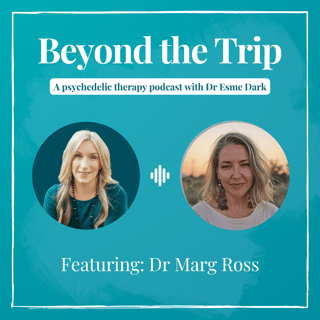
Speaker: We'll also be exploring grief in another episode. um And in this episode, we talk to one of the real pioneers in this space in Australia, Dr. Margaret Ross.
Speaker: So you Dr. Marg Ross is a clinical psychologist and she was the chief principal investigator for Australia's first psychedelic assisted therapy trial.
Speaker: Her team investigated the use of psilocybin for end of life distress. She has trained therapists and medical professionals both nationally and internationally in psilocybin-assisted therapy for end-of-life care and the psychosocial aspects of positive care.
Speaker: Her work is particularly informed by an interest in cultural rituals and altered states of consciousness at end-of-life.
Speaker: She's had the privilege of receiving instruction from various indigenous medicine practitioners, deepening her interest in the traditional healing practices and the intersection that this has with contemporary medical practices at the end of life Now, this episode was recorded actually a little while ago now, maybe just less than 12 months ago, and I've been waiting to release it with the other episodes during this kind of mini season, I guess, of episodes exploring psychedelic assisted therapy in the end of life and all that goes with that. um So this is a two-parter because in this first episode, Marg was not able to discuss yet the findings of her research. It wasn't published.
Speaker: um And so i actually have her invited her back much more recently to come and talk about the results. So in this episode, we're going to be talking about her set the setup of her trial and the what it was like to set up the first psychotic research trial in Australia, her research in palliative care and her work in that space, how psychedelics are much more about transformation, not symptom reduction.
Speaker: It leans into the personal and I, for the very first time, talk a little bit about my own near-death experience and that impact that that has had on my career, my life and who I am. And Marg really flips the interviewing onto me for that part, which is really fascinating.
Speaker: and quite vulnerable for me and so there was if I'm honest a little part of me that was nervous to put this out so I hope you enjoy it she shares about her experiences in this with her own illness as well and how this has shaped her work and We talk about therapist burnout and and sustainable models of working and cultural perspectives on death and dying. There's many other things. This was a great conversation and we went for quite a bit longer than we thought. um And so I'm really delighted to be bringing you this part one of the conversation with Dr. Marg
Speaker: Good morning, Mark. Thank you so much for coming to Beyond the Trip podcast and and and taking some time out of your Monday morning, which is a public holiday today, to be here with me. I feel really honored that you've chosen to spend some time with me today. feel really excited this. my not at all. Thank you for having me.
Speaker: This is important talking. Yeah, absolutely. And I've been, you know, you and I have kind of come across each other in ah in our fields of work and have both been working in the space. You way before me were involved. um And then I kind of met you through work a few times. And so it feels really lovely to have you here.
Speaker: thank you. You were someone who I'd heard about a lot, you know, you were actually one of the people who got the very first psychedelic research trial in Australia off the ground, right? Yeah.
Speaker: Yes. Which was, yeah. An extraordinary journey. The, um, it doesn't feel like I've been an in that long, I guess. That's the other interesting part about it. I don't feel like I've been here in the arena all that long. Um,
Speaker: But, um, yeah, the getting it off the ground was a very interesting experience. We'd had, you know, a decade of um, various research groups trying to get psychedelic research, uh, back in the, um, Australian research arena. And it just was amazing.
Speaker: um rejected again and again and again. um I think it was just a good time. at the i think the cultural ah uptake of the idea of psychedelics was was very much in the the public psyche. I think, you know, um Michael Pollan had just released his book that same year that I had submitted my protocol. I think that was released in the May.
Speaker: I submitted in September, I think it was doing all the podcasts and everyone was talking about their ayahuasca experiences or that. So, uh, I, that helped things, but more than that, the, the science just spoke louder than anything, um, that I could write. Uh, so that was massive surprise. We were not expecting it. Um, and we were in no way prepared for what happened next.
Speaker: Yeah. yeah Yeah. But that was, it was the beginning. Yeah. Yeah. And do you want to share just for listeners who maybe are not from here, like what you actually were doing because you were working with psychedelic, assisted psychotherapy with end of life care, right? And maybe it would be helpful for people just to understand the protocol that you took people through and what you were actually doing before we get into the rest of today. So so so prior to kind of launching this, i had worked in palliative medicine and psycho-oncology, um,
Speaker: But, but more at the kind of the, the severe end of cancers and then also end of life, just in general, not just cancers. So things like, you know, end stage cardiac failure, um, end stage lung diseases, motor neuron disease, et cetera. Um, and I'd been working in there a decade and.
Speaker: The problem that we saw and we would frequently come up against is if people weren't responding to our traditional treatments that we could offer them, which was medication or talking therapy, creative therapies, they they they just remained terrified. And their families, like it was it was really awful to watch this. They would withdraw. They wouldn't. Um, you know, they wouldn't really respond to their usual pain meds. Like had an augmented experience of pain. They couldn't sleep. So I was looking for, uh, emerging therapies that we could potentially offer to our patients and nothing really was new. We did have palliative sedation, which is a really, really, um, blunt and very, um,
Speaker: You know, this is a last resort kind of thing where you have to kind of knock someone out for a few hours so that i can just get some respite from their suffering. um so So, yeah, I was looking at this. They had, um ah there were two trials that came out of the US in 2016, actually an earlier one in 2011, a pilot study um from Charlie Grob.
Speaker: This was their their reemergence after, you know, the the big decades-long hiatus of Psychological research. so yeah, yeah ah that really inspired me. The um the work of Roland Griffiths and Stephen Ross, who had done work in um cancer and they were able to really quite rapidly ah bring down anxiety Uh, and that was sustained over a period about six months follow up with some, um, psilocybin mis therapy. And I went, okay, I think, you know, this would be great.
Speaker: We're doing this and, um, no one was doing it. So we wanted to do that. Uh, so we did, and we were kind of looking, we kind of had to start really with our own protocol. We were looking a little bit at at what they had done in the U S which was extremely conservative, i have to say, um, to the point where it would have actually eliminated a lot of people who would have otherwise been able to safely take it.
Speaker: and So some of our work actually was refining that protocol and changing it a little bit. So it was a bit more inclusive for people who were taking particular chemotherapies, for example, that would have usually been excluded, but they could safely take it.
Speaker: I'm pretty happy to say that, you know, um from a safety point of view, we had no serious adverse events. um yeah People who were very sick, um even with end-stage cardiac failure, tolerated it beautifully.
Speaker: So we were very, very lucky, actually. no that' will You know, the the thing that was, I think, more unique, I guess, about our study is that the entire team was staffed by clinicians um who were working in the field of of palliative medicine. So we we knew...
Speaker: where the risks were that we made it to mitigate. ah And we were doing, you know, weekly, bi-weekly meetings just to see how people were going. So we had eyes on them like you wouldn't believe. um So, yeah, lots of safety in there, but um ah actually it turned out that people tolerated psilocybin really well, even at quite advanced stages.
Speaker: That's great. and And you were working in a dyad, right, with um your therapy partner, Justin Dwyer, is that right? Yes. yeah and and And did you take, what how many sessions of therapy but did people have in the protocol? like And how many doses did people have? Did that depend or was it all the same?
Speaker: Look, largely it was three prep sessions. The way that we had to do it, um and yeah, and shout out to my diet partner, JD, who we've gone through so much. Yeah.
Speaker: And you would understand that. I do. Yeah, I understand that. and know Maybe we can talk about that in a minute. Yeah, it was profound learning. um yeah So, yeah, we we had a protocol that was slightly different and the reason being was more...
Speaker: Because we had very tight timelines, um by which I mean, like our our patients, a number of them were still on palliative chemotherapies, which meant that they were, you know, two weeks chemo on one week off or one week on one week off or the 1-8-15, you know, kind of dose protocols, which meant we had one week.
Speaker: Um, where they were not fatigued, where they were not really sick and yeah you know, they were doing a okay. so we literally had to do bootcamp. So we would see them Monday, Tuesday, Wednesday, yeah consecutive days for preparation, dose them on a Thursday and integration on Friday. And that was because we had to just, that was the time that we could do it. We had to work around their, their treatment protocols. That was just not, not an, um, not an option. Yeah. Uh, so yeah, and that, the, in that way, we stumbled across some interesting findings, which was that they had quite a degree of momentum, um, there.
Speaker: And so instead of, you know, seeing them a week later or two weeks later and spending 20 minutes of the session, getting back to where you were the previous day, they were right there the next day. And we just went and we went deeper and we went deeper. And, um, uh, so it was like bootcamp and the way that they treated it was that they really,
Speaker: ah tried to protect that time and we encourage them to really protect that time so that they could a really optimize the experience, you know, with more reflective kind of, you know, preparation, yeah um journaling, reflecting, spending time in nature, doing things.
Speaker: things that were more meaningful to them that they could really get, uh, as deep as they want to go. Yeah. Yeah. So that's, that's how our protocol was perhaps a little bit different, but it was, um, it had a lot of advantages I have to say. um ah Yeah, yeah. I'm just thinking about that from a therapeutic perspective. You know, sometimes you get something really deep in a therapy session, i'm either a prep or an integration, but, you know, and then the person goes away and things come up and they kind of, maybe their protectors in my IFS language come up and yes and the defenses. and And then, you know, you kind of have to kind of start again almost in the next session. But then if you're working with people in that kind of intensive way,
Speaker: I could imagine that could be really, really helpful for getting really, really deep with people, which is amazing. Yeah, for for the right person, absolutely. I think yes yeah it's not for everyone. None of this work. Absolutely. They're super important. Yeah. So so that was, I think, um that's the, and they got ah a very good sense of us and we got a very good sense of them yeah um in such a short time as well and how they were going to make use of us in the dose session in terms of casting us.
Speaker: Yes. Which which just was very interesting. um But yeah, so that's how I think our protocol developed and it was perhaps a little different to the the the usual, know, TRD or anxiety ones which are bit more spaced out.
Speaker: Which certainly has more advantages, you know. It's just a different client group in a way. Well, I guess it depends, but yeah yeah. Yeah. And it's interesting that, you know that's quite interesting to me that that even people with end-stage heart disease and heart failure were able to tolerate the psilocybin because so often those people people with heart problems can be excluded in general from a lot of research, can't they? That's a really important finding, actually.
Speaker: me Yeah. And we certainly had the... the um elevations in blood pressure and heart rate, there transient, none of them went beyond about five minutes. Um, so all expected, um, non-clinical didn't need, um, any attention from the study doctor.
Speaker: it was just more monitoring and then they, they kind of, yeah, in the the waves that psychedelics can come, um, they sort of crest and then fell and it was fine.
Speaker: Yeah. so and yeah And so you finished that study now, right? So where are things at at the moment and what are you, ape I know you can't go into lots of detail. I'd love to like do that. but boys i don't I know. You have to come back on, Mark, when you're allowed to do that. I'm so sorry. I know. It was fine. when Win, win, win. Look, ah i it set we're very happy with our results. Yes. But I can say that, you know, from a safety point of view, very well tolerated, very well tolerated. Um, yeah in such a medically unwell cohort, which is, you know, wonderful. Uh, there, you know, there are things that we need to be mindful of. That's not to say that it's still across the board to say, um, there are certainly people that we wouldn't give it to. um
Speaker: but I think, um, much more, ah tolerable than people first thought, particularly in things like cardiac failure. Yeah. So.
Speaker: Can you, I have a, like, who would you not give it to from a therapeutic perspective? Or do you mean from a health perspective? Oh, kind of both. I mean, it's yeah it's a tricky one, isn't it? I think, um God, there's so much I could say about that. From a medical perspective, um obviously, if people are very, very unwell um yeah and if they've got things like, ah ah obviously, like, you know, type 1 diabetes, we know that as an exclusion because you can't tell if they're having, um you know, hypo. Yeah.
Speaker: Yeah. Event. Um, but also things like, uh, you know, if they're very, very unwell and they've had delirium, which is a big thing in, in palliative care, yeah um, particularly towards the end.
Speaker: Um, yeah So yeah, things like that. If people have got some acute issues going on, if they're in urinary retention, yeah things like that, we we can't and we wouldn't proceed. um Yeah. And like, yeah, there's certain things that you look for in cancers. I won't get into it as a whole without spying. It just means that they can move from stable into unstable territory quite quickly.
Speaker: um So yeah, you would you would have to. exclude on on that basis, but you know, if they're pretty stable and their their treatments have been optimized and the medical clearance is the thing that you're looking for, um and then yeah, you would, you would, you can proceed.
Speaker: o but And there's a whole therapeutic piece here too. And people ask me this question a lot, like, who is it not for? and yeah it turns out from a, I'm not a medical person, so from a therapy perspective. And I have so many different answers to that question, you know, it depends, right? And I think that's the thing. It's like, well, what do you say? I've got, I mean, I've got in a minute. Yeah, I'm too.
Speaker: You go first. You like where I can go? There's the there's the whole, I mean, we know there's the the usual exclusions. If you've had a psychosis, if you, you know, yeah um a manic episode, first degree relative, we know all that. I know that there's some movement toward things like bipolar 2 that they're looking at, which I think is very useful.
Speaker: um But it's a, I find it difficult to to answer that one because I don't think
Speaker: if This is such a, oh, you know, let me just gather my words a bit. It's it's it's an existential experience and and we're kind of looking at it diagnostically to say, well, no, if you've got that diagnosis, you can't. And I, I think it's so much more about where that person is at, what they're prepared to do, where they're, what they're looking for, um, how active they're going to be in this process versus, you know, so there's so many things and it's not about, oh, well, you know, this person would fulfill criteria. Therefore it doesn't necessarily mean that they're going to know what to do with this or, you know, yeah
Speaker: Yeah. You know, some people can discard the transcendent. It's too much. Yeah. Yeah. So, yeah, I don't have a clean answer. um I'm keen to hear yours if you've got a cleaner answer than mine. I mean, I think I have when it comes to like a trial protocol, I do have kind of clearer ideas. I wouldn't say, i want to say that nothing in this work is kind of like clear cut in some ways, but I don't,
Speaker: I think if someone hasn't had, if they're coming into say like in in the trial I worked on, um if they're coming into that sort of 10 weeks of psychotherapy with a cutoff, I would be concerned and have screened out people where they don't have um a history of, say if they've got one two one attachment figure who was solid, then that's great.
Speaker: If they have none and no current attachments, like no partner yeah or or family around, then those are the people who I would say, I'm not sure this is the right treatment because it can at this precise moment for you yeah because because of the cutoff, because that can be re-traumatizing for people who and have a lot of attachment wounding and and not to say that it can't be really helpful for some but I just think in the trial protocols you know I mean there's been podcasts about this right where people have felt like they just really get dropped off the end and there's a really good reason why people have to stop treatment and there's a research reasons for that but I don't think
Speaker: So those are the people i would say. maybe i love I love that you said that because it's such an important point. We and echo that as well in terms of what we've seen. I am remembering um a couple of participants who were quite socially isolated and really kind of enjoyed the the structure and the the interactions.
Speaker: Um, that the trial afforded them. And then once that had finished, nothing sustained because they were, we were discharging them and we'd sort of pulled them out of this isolated place.
Speaker: Um, you know, with not great attachment histories either, no one of of real kind of, um, significance there. And they, they were kind of then just jumped back into that isolation again. um And i i really think that if you don't have some little kind of social support structure, it doesn't have to be huge, but if there's not one person, two people, three people around you that can kind of um talk with you, be with you, yeah is it's some we do. i think you're right, that idea of re-traumatizing, but also making people...
Speaker: very aware of how profoundly isolated they are. Um, and that happened. We had that happen. Oh, um, uh, I think it was, you know, there's a lot of grief that, that, um, one participant in particular had found, um,
Speaker: And that was more of an existential regret, I think, of, of you know, not not having those connections not having those connections, turning them down. And, ah you know, that that left that person in quite a painful place, which we worked through. but some And actually, i have to say, it did lead to some good outcomes for that person. But we have to be really mindful of what we're doing, I think, and what we can make people aware of that they didn't anticipate.
Speaker: ah yeah Yeah, absolutely. Absolutely. Because it can get bumpy on the road to integration, right? sos it's And so it's helpful, you know, and I think, and so, with the caveat of what I just said, like in the community space, that might be a whole different story because there's not that same need for a hard call because there isn't a research trial that people can maybe work with with therapists or be in ah in group spaces um where they can connect and so those people can be held in a different way and i think um so i wouldn't be so as concerned i just want to do a lot of kind of wraparound support and make sure that was in place yeah no i really i think yeah you're spot on i think we're all kind of coming to that conclusion one of the things i was um
Speaker: Uh, I'm very interested to see where the group work kind of goes with this. Um, so a good friend of mine, um, mentor Brian Richards, son of Bill, um, yes we're working on a cancer study and an open label in ah Baltimore and they did it with a group model and it was, you know, it made a lot of sense. Um,
Speaker: And this group that became this kind of constant for all of them. And it continued for, i think, more than a year after the the study had stopped. And they they got a lot of solace from that. um So, and obviously group dynamics is a whole other ballgame. So that's, a you have to screen very carefully for that as well. I've certainly done the group psychotherapy with um ah borderline personality construct. And so, yeah, you've got to be very mindful of yeah group dynamics when you're doing particularly this kind of work, but they had, you know, ah really successful outcomes for that. Amazing. Yeah.
Speaker: That's great. I can't wait to hear about that trial a bit more, but yeah. well So, yeah. What can you say about the trial just to wrap up that part of the conversation? So you submitted everything.
Speaker: It sounds like it went well. Can you say that? I can say it went well. I can sound very happy with it. I think, um you know, one of the things that i often say, because we've got the,
Speaker: this is where we get the science bit of it that makes the, spiritual or whatever you want to call it, but you know, and it it has less taboo. Spiritual as a word in psychology has a lot of taboo, but it doesn't in ah palliative medicine because it is a very core part of the WHO definition of what is good palliative care. And we have to look at the spiritual needs of the um the patient and their family. yeah So that's something that we do. But the thing that is really interesting is that so many of these trials just look at symptom reduction.
Speaker: yeah But we can do symptom reduction with what we've already got. We can give people sedatives. We can give people antidepressants and it just kind of flattens yeah and doubters symptoms, but it doesn't address them.
Speaker: So what we found and, you know, And I say this all the time, and it's psychedelics aren't about symptom reduction, they're about transformation. And um one of the things that we were really buoyed about for, yes, we we saw reductions in distressing symptoms um and psychological distress, but we also saw ah ah big increases in quality of life and um a spiritual wellbeing.
Speaker: yeah Which is exactly what we're we're after. Decrease in hopelessness, decrease in demoralization. So we saw these um ah big shifts, but the ones in perspective,
Speaker: um about their illness and about death were the things that were just, yeah, fantastic to, to see. We, um, yeah, we probably, probably had, I'd say four non-responders in the group, um, of 35. Um, that's pretty good. yeah. And look, not nothing beyond, i just, it wasn't for me. i didn't like it. Didn't find it useful.
Speaker: Um, yeah, I won't do that again. That was shit. And it's not for everyone, that's for sure. Right. And nothing, nothing works for everyone, you know. Exactly. It made me anxious. I hated that. I'm not doing it again. And so, you know, that's, yeah. We did talk about that, but yeah. i think um They come, they read Michael Pollan's book and they want Michael Pollan's trip.
Speaker: Yes. And yes. And his book has been amazing for the field in many ways, but also has challenges. and and ah A blessing and a blight. Absolutely. Yeah, absolutely. Absolutely. Yeah. So, yeah. So that was the, I, yeah, I think in a nutshell, we were, we were very pleased. um and it would be wonderful to see more of that. I am interested to see how the group, ah been moving forward, how that would work. I think.
Speaker: Two to one is fantastic for clinical trials is not good for clinical practice. It is way too expensive and it's way too, um, time. Uh, yeah, it's just not efficient use of time. We we could do this better, I think.
Speaker: Um, yeah. Yeah. It'll be interesting. um to see how all of that goes. And there's, of course, more integration groups work coming up now in Australia where people can go and be with people, other people who've experienced this kind of thing. So that can be really helpful as well. i think It's wonderful.
Speaker: Yeah, we need it. So, yeah. Yes. And I've said so many times on this podcast, you know, that' it the thing I find challenging about this field is that, you know,
Speaker: in research we have to tie things to diagnostic labels or to categorization where it's actually a psychedelic if I think about you know it change it's not about that it invites us to go much deeper than these labels and then we have to kind of fit the fit the results into them for the process that we're going to but I know that on the trial I worked on on your trial you are looking at things in a much wider lens which is great and I hope that continues Oh, I think you're you're so right. It's like, how do we,
Speaker: um how do we, you know, compress that person's life and yeah their experiences that they come like they visit their entire universe. Like it's just sort of this strange, you know, so we're kind of reducing that to a clinical intervention, which feels absurd,
Speaker: um And then the researcher in me understands why we have to do that, but it's like, my God, you know, the it's so, so deeply personal. It can touch any aspect of past, present, future, which kind of collapses and it's all available. Yeah. um or or you know, we had people accessing ancestral kind of experiences and, you know, um and we've got a problem with that because, ah you know, science treats that as abnormal. Hmm.
Speaker: But spirituality treats that as a mystery and particularly when these experiences, you know, give comfort or or bring solace in that way. So we I think we need language and and and training and systems that that really honour that.
Speaker: um I think our current model is is much more about, well, that's pathology and that's it. And we reduce it to checklists, which is just... It's in so many ways In many ways, feels crazy. But like I think, you know, i this thing and I'm thinking about like what you're sharing about spirituality and in positive care, it feels really important. And I think about what drew me to this work and a lot of it It was that being able to bring together the spiritual and my interest in old states of consciousness, but also together with my work in in trauma and PTSD and and and to feel like I could really hold those things and was that you kind of have to.
Speaker: And was there a point... and was there a pointch
Speaker: where you went, yep, I think that's my next. Like what was that? Like yeah how did that come about for you? Shall we go there? Because there's a big story there. I've got all day. yeah Awesome. Me too, Ashley.
Speaker: All right. Wow. Okay. There's so many different versions of my answer to this question. And so I guess there was a point. I think I'm, you know,
Speaker: from a professional perspective I spent years working in refugee and asylum seeker mental health and so in that space like your space we have to hold spirituality as a really key part of our work yes um and because so much of the trauma of those experiences is a spiritual or injury yes and so you can't you know I agree with you like and in mainstream psychology it's kind of like well we don't want to talk about that but in my work it's always been really important Yeah.
Speaker: um yeah And so, and um and the kind of MDMA research around PTSD was kind of something I was interested in through my work at Foundation House, which is the mental health service I worked in for almost 10 years actually.
Speaker: um And then, and then, and kind of, I guess in the background, very interested in like yoga and meditation. And I had my, probably my first big experience with altered state of consciousness was in meditation in in somewhere in India, when I was very, very deep in this space and kind of, I felt, i kind of felt myself go outside of my body. And I had one of those kinds of experiences when I was in Goa, um, when I wasn't in Goa, where was I?
Speaker: I don't remember, somewhere in India. yeah And so that was, so it was those things. But I think the moment, the moment that it all kind of came together was after um a serious illness that I had.
Speaker: e So I was working really, really hard for a long time in the refugee mental health space and I had my private practice. And then of, I reckon in 2020, got really sick and not with COVID. I actually ended up in the Royal Melbourne Hospital in the acute neurology ward with some kind of a mystery neurological thing that they think was some sort of meningitis, but it took them ages to work out what that was.
Speaker: car and yeah yeah And so I'd been working really, really hard for a long time, which I'm sure might have been part of how I ended up getting so unwell. Yeah.
Speaker: And then i kind of had this, I went into the hospital and I had this experience where i was kind of lying. i i went into, I was and unconscious in bedroom, in the bed lying there. And I had this kind of experience that I won't go into the whole detail of because it will take a long time, but where I really felt like there was these women moving around my bed singing.
Speaker: Oh my God. Wow. And this is like, this is the full story of what actually how I ended up in this work. And I kind of, I, you know, everybody says that those near death experiences can be quite like a relaxing thing. Now for me, I was panicked. Yeah. Because I kind of, I guess I had that. I was I don't, I'm not ready. I don't want to go anywhere. not up for this. I want to come back. And so I'd say I had that real state of panic and then I kind of relaxed back into it and kind of, I don't know, I just remember this anxiety. And then I remember calm.
Speaker: Yeah. Mm-hmm. And I guess from there I had to reassess a lot of my life. Oh, yeah. yeah Oh, yeah yeah. You have different eyes after that. you can't yeah There's something about the way that that will.
Speaker: it's ah It's a strange one that happens. So sorry I'm loving this story only because, no, I'm love i'm not loving that you were so sick. But thank you for sharing that. It's such a profound shift when you are so unwell and you are sitting on that precipice of life and death. And I've obviously been at many bedsides of dying people and the experiences that they have.
Speaker: prior to dying, um ah kind of ah vision states or... or um and not And not delirium either. This is the ones that are they actually...
Speaker: just at kind of, you know, having these experiences or um vision states or dream states, they move in and out of these sort of altered states of consciousness and what they see and what they talk about is phenomenal.
Speaker: um And you just go, well and it's very, ah really psychedelic actually. yeah so yeah Yeah. Yeah. But that the women are like,
Speaker: Who were they? with that like yeah what were Who were they? I need to know. I'm sorry. yeah if that's okay Well, absolutely. Well, look because there a story there. So I'm not sure. And I guess i hold the mystery. We're talking about the mystery of these kind of states. I'm not sure. To start with, I couldn't see faces, just kind of the objects they were holding. But I actually panicked, kind of came to a little bit.
Speaker: and thought of a close friend of mine who i um was supporting me a lot during this time and another friend and I closed my eyes and suddenly those two women were there. And so there was lots of other women, but my two close girlfriends who were very supportive and holding me a lot during this were suddenly there. And so I don't know who the other women were and I don't know what sense...
Speaker: Like, I'm not sure what that was, but I do know that holding the mystery of it and connecting to it has helped me kind of make some, made some really big shifts in my life after that. So I quit my job at Foundation House, not because it was just time, you know, 10 years in refugee mental health was enough for me. That's a long time. That's, that's way past the, the, the due date. Yeah. Yeah. Yeah, which meant that I could then have space to come and work in this space. That's a whole other, because I wouldn't have been able to take a job in psychedelics if it hadn't been for that, despite being really fascinated by it.
Speaker: Yeah, I think, yeah, and the the profundity of that. Yeah. um is something that you can't just walk away from. I've had a very similar, well, sort of similar. I was yeah very sick in 2004 and I nearly died actually.
Speaker: um I had a ruptured appendix and then developed complications after that and I became septic and had peritonitis. Anyway, organs started getting under stress and my heart rate was up and anyway, I had a special and I was just, yeah, anyway, it was not good and sort of in the middle of the night. And I remember sort of having this sense of,
Speaker: uh of yeah it was kind of a kind of a religious deity that i was like oh you know one I was brought up with I was sort of brought up battered catholic no longer practicing um but um and then these sort of other and they were female there were female um uh And they were just there.
Speaker: And I went, oh, I don't think I'm very well. And I knew i was pretty crook. I don't think I realized how crook I was, but I remember thinking if I did die, I wouldn't actually be upset because I felt that awful. But um yeah but then when you come out of that, you that same experience that you had, you can't go back. And so I was surrounded because I was at the time I was about 27 and I was surrounded by peers and friends who were like, oh, I just want to, you know, buy these shoes and, oh, I think I'm going to do that. No, if I go out this weekend and, oh, he's kind of cute. And I was like going, what's it all about actually? Oh, my God, you know, we are so close to the precipice of life and death. So it it propelled me into this existential place that I just was not, you know,
Speaker: are oh I was thrust into, I wasn't um in step with my peers at the time. So that was a interesting time.
Speaker: Yeah. And do you think that that is part of how you ended up doing the work that you do now? Most definitely. was most differently Were you already a psychologist then? or you was, yeah. So I'd gone back to ah ah to study. So I did the four plus two. so then, um and I just, when I was, I went into hospital and I just put in my only application to go into the master's slash doctorate. Yeah. I'm really glad I got in because I was really sick. um So, ah and yeah, so i I, thought I really wanted to to work at end of life um and always had, which kind of stemmed from some of the experiences losing my maternal grandmother quite young um and coming from a family where we just did not talk about that. Yeah.
Speaker: Yeah. And so I'm like, well, where did they, like, what happened to them? Like, you know, it's and why were they, you know, why are we kind of kept away from this? So we kind of, we edit dying people out of life. And I yeah struggled with that, but, um,
Speaker: and And what they were facing. I had a glimpse of that when I was sick, but it was very quick. um But it left me wondering what what people face. And no one's really prepared to sit in that liminal space with them, but it's a profound time, honestly. so I hope bet. ah Yeah, but then also then moving into the the hospice setting and seeing people were having these quite profound, spontaneous moments of transcendence, similar to what you'd had in yeah India where it just kind of, ooh. Yeah.
Speaker: And we would have these, ah you know, I was very fortunate to to sit with many people on their deathbed and hold many dying hands and hear stories and talking to them and they go, oh, can you see...
Speaker: That's my mum out there. Oh, my God, can you say where's that light coming from? And the the the room is completely dark. and um Or, you know, having them dreaming that they're everywhere all at once and and and they have to tell you their life story, even though they're they're sputtering and can barely breathe. And then I'd go in to see them the next shift and they were dead.
Speaker: um And it was within days. They would have these sort of experiences and then, I'd go back in to see them and they were dead. Yeah. Two days later. um he So, yeah, there's... Such a... Yeah. Such a humbling like way, such a humbling time to work with people and to have come from having that experience and then it sounds like others, yourself, like what... I mean, this is a big question, but it sounds like you went into that very existential space, like, and then has this work really... helped you to kind of I don't know like somehow ah integrate that are those kind of extensile questions into your life and your work do you think I I think I
Speaker: oh, that's an ongoing integration. Yeah, right. Me too, I think. I was like, oh, who are those people? I'm still working that out. I've got a few ideas who those women were. I know who them were. but Yeah, it's so funny. Like I think i I deliberately sought out a practitioner who was a Buddhist um therapist, a psychologist who was a Buddhist. there I felt like –
Speaker: I was like, I don't know if this is answering your question, but I realized that um the models that were on offer felt lacking.
Speaker: I felt like it was. In psychology. In psychology. Yeah. so it was very surface. I felt like. Yeah. Yeah. it wasn't quite getting to the places I wanted to go with with people who were trying to articulate these very, ah you know, um profound anxieties about dying and and facing death. And, ah you know, it doesn't touch it. Talking therapy doesn't touch it. Very rarely does it touch it. You know, you can get to those places perhaps with, you know, ah
Speaker: deep states of mindfulness, hypnosis, perhaps breath work, but um nothing really got to it like psychedelics. But for me personally as well, I felt like I'd visited a place. I'm keen to hear what your thoughts are about this as well.
Speaker: Because as sick as I was, as unwell as I was, there was something very profound about being in that liminal space. And I thought I really want to work there.
Speaker: I think that I'm just speaking as I'm thinking, um, cause I've never really been asked that question. So thank you. But I think, um, it was a, it was a space that I went, no, I feel comfortable here. I would like to sit with people in that liminal space where it's deeper talking. It's where we're really accessing.
Speaker: ah really profound aspects of, and I'm sure there's, I'm going to get hit for this, like all these people who are doing, you know, psychoanalysis and like, what are you talking about? Yeah, we do depth earth all the time. But to really hear it on a deathbed, like there's nothing like it. Yeah.
Speaker: And I think having our experiences, yeah, probably propelled us into this work. Into the psychedelic work, right? Because it does get into those places. If I think about some of the things that people have shared with me after their psilocybin journeys, some of them are similar to what I experienced, you know, nothing. else It's never exactly the same.
Speaker: And at the time, you know, i had no... I really wanted to work in in psychedelic um research or psychedelic mental health work. But at that time, there wasn't much happening in Australia. This was 2020. So, you know, and I had friends in the UK that were doing it, but it wasn't like, oh, I really want to do this work because it wasn't happening really. i am yeah But I think it kind of, ah for me, think it took me into this this place you know,
Speaker: I don't know, like kind of knowing that, I mean, from a very practical level after that experience, I had to change my life quite dramatically because I was sick for probably two weeks in the hospital and then six months of kind of being out and trying to get better. yeah And so i had to make changes. and but But those changes had been a long time coming, of course.
Speaker: and then And then, so once I had the space and I knew i had always just been having this feeling that there was something else I wanted to do. And so when I saw the work coming up, I thought, that's it. I also really want to work with people in that depth space, in that liminal space to support people because I really do I'd read the research around the MDMA for PCSD, for example, and working a lot in that space and seeing the results. You can't ignore that. Like the science does speak very loud. You know, like we can. So was like, I really want to do this work.
Speaker: Yeah. Yeah. i am Yeah. yeah It's extraordinary how, you know, an MDMA, um, and I haven't had there the privilege of working with MDMA, but, but actually prior to coming into end of life, um, my doctorate area was on complex trauma. So I'm, I'm fascinated by, by, what's possible with people who've just got very injured instinct and experience of trespass in the body and and how it can um facilitate extraordinary healing. Like nothing else comes close. Nothing else comes close. um
Speaker: So, yeah. Yeah. I was going to ask you a question, but I'm not. Go on, please. Yeah, I'm sure. Let's do it. So you've had this experience now after the PsyGAD and what um what psychedelic assisted therapy was?
Speaker: Well, there's there' two questions really, but if but I guess we'll go for the for the the top of it. oh How that has changed your work as a question, but also ah how you've carried those experiences that you've seen.
Speaker: Oh my goodness. There's so many. Start where you like. Yeah. There's so much to that question, you know, and I think I can say that we had a bit of a prep chat that we wish that we'd recorded. Oh God. It was so good that we didn't. I've heard my lesson with that. I'm going to do that for next time. and it was supposed to be like a 10 minute catch up. like yeah, we're going to talk about this and then, you know, an hour and a half later, like, oh my God, we should have pressed record. Yeah.
Speaker: Yeah. so It was a glorious chat. It was an amazing chat. And and yeah so I guess, you know, i was thinking about this off the back of that conversation of like, how has it changed my practice? Which is a question I often ask other people. hasn't been kind of, and I'd love to hear your answer too, but I think, and how has it changed me as a person? So have I split those for a moment, which is also a bit false, right? But how has it changed? Like, I feel like...
Speaker: i In some ways, it's felt like a process of coming home to things that I've always known deeply, but it's kind of reinforced so much of what I've always believed about humans is that this idea that with the right conditions and the right process, the psyche will move towards healing and that kind of really core concept. And of course, a lot of people's lives don't have those conditions in them. So we have to support that and support them. But I've really seen that. And I guess it's really strengthened my belief in that, which means that I go...
Speaker: I can get deep quickly with my clients in a way that I was doing before, but I think I trust that process more. yes i get out of the way a lot more. I kind of, um I've always tried to not put myself in the expert role of any kind with my clients, but I feel like there's a leveling that happens in this work that I've brought into other practices. Of course, there's still professional boundaries, but I think it's been really, really helpful in kind of Okay, so you have all these different diagnoses, but let's get to the core of what's actually going on for you and let's talk about that. Let's name it rather than getting tied up in labels, which has never been something that I've been particularly interested in.
Speaker: Yeah. And let's work with that. im I yeah. And I, I, know you know, I name, I think, you know, it's definitely also because of the counter transference and transference being so on steroids in this work.
Speaker: have to You have to name, you know, projection, which for people listening who don't are not psychologists or who don't know what that means, projection is where you see the world through the eyes of how you were brought up usually. And so you see other people as treating you as you were treated as a kid, right? And so I think I'm much better at spotting those in my general practice because they have come up so strongly. Yeah. In yeah psychedelic work. So those. Yeah. yeah yes Oh, yes. Oh, yeah. I love You know, I had, um we had this young woman that we were seeing and had had a very, very powerful experience during the session of um both myself and Justin in parental roles. And as she came out, um she said, oh, my God, you look so much younger. Yeah.
Speaker: Yeah, it was it was glorious. But yeah, i thought yeah. Wow. And that probably happens all the time, but I'm in yeah general therapy, but it's so like pronoun pronounced here. I've become dad and mom and sister and like annoying friend or love friend or all of those things. And and it's really important to about it.
Speaker: Oh, yes. Oh, yeah. Yeah. And it's it's wonderful. You need to pull it to transference in that way. but Let's talk, you know, um about yeah with what's come through here. ah But it is. It's so augmented. Yeah.
Speaker: That's wonderful. And then personally. yeah For you. Wow. I didn't forget that bit of the question. I know. Nor did I was like, I'm going to have to. that's And you know but what I was thinking when I was thinking about, and you had a feeling you had asked me this, is is just I mean, it's been a profound experience for me personally that I guess began in that hospital bed, but also that I spoke about before, but also <unk>s through doing this work, it's my whole life has changed since I started working in this field. I've moved out, you know, from a practical level as well. I've moved out the city. I've moved into into nature more. I've moved i've you know moved in with my partner, which was huge as well. Yeah.
Speaker: And so I think if I really had to pick, I feel it's like something to try to say so many different things in a small sentence would be that I reckon this work has connected me more to my own soul.
Speaker: So say I feel like, you know, the self-experience and also the dyad working in the dyad and witnessing other people <unk>ve I've had to go to places within myself that I haven't been to before and some of those have been amazing, beautiful places and some of them have been the more shadowy places that we all have to visit. yeah i'm i feel like much more clear in who I am, how I work as a psychologist and who I am outside of here and I speak up more.
Speaker: I reckon that's a real practical thing. Yeah. And then there's so much you know that I can't put into words about, you know, the feeling. I just feel different. And in a really positive way, it's not always been smooth, it's been bumpy, but how do we capture that? Like in a research protocol. And and how do you know, yeah, I've got so many questions that, that experience. And this is, this is something that I've kind of just been left with as well, because I think that with your experience that you had um personally when you were very unwell, medically unwell the um with meningitis and then having that kind of profound, that was a psychedelic experience. ah yeah with um yeah And then being um ah witness to so many um transcendent experiences and or in the study, yep how do you,
Speaker: make sense of place these experiences and was it something that fit within your ontological frame or did it require ah complete re-evaluation? Yeah.
Speaker: You don't have to speak to it if you don't watch it, but I do. No, no, I'm so interested. I think for me, I think having kind of practiced meditation and being, I guess, you know, a word that gets a bad rap, someone with a spiritual practice for a long time, for my years of yoga and meditation, yeah in some ways it's,
Speaker: it was a familiar territory, but also not, you know, like, ah this makes so much sense. It keeps talking. yeah It's the the mystery of it. You know, I think what it, what how I've made sense of it is that I am, my job as a therapist in this space and a human is to hold the mystery. Like, I'm not sure. I don't know exactly what this is, but what's important is the person in front of me, how they make sense of it and how,
Speaker: and how I make sense of it. And I think, ah I think I've just got a lot more comfortable with the I don't know. like I don't know what that is, you you know, and and that's okay. I don't have to know. Yeah.
Speaker: Yeah. yeah Absolutely. What about you? Well, well I, cause I, I love it. I mean, in this way, we're just, you know, we're, we're not immune to this ah medicine. We're also shaped by it. and I love,
Speaker: You know, and and how that person in front of us makes sense of it. But the thing that we're not talking about, which I love that you are and your whole podcast is dedicated to this, is, is well, how do we make sense of what we see?
Speaker: yeah um And I'd had, like similar to you, you know, I'd done a lot of mindfulness and um ah I can't say i was a I was a bad Buddhist, but I sort of yeah got into into Dharma classes. But there was a time where we were seeing and hearing so much about, you know, people kind of having experiences of like ah um ah something other than human or things or giving them knowledge or whatever. And it could have been parts of society, but it just sort of started to become, you know, other realm, otherworldly, something more than human. And I was like, i don't know what this is. And and even with that background, i actually asked for a closed meeting with some people
Speaker: very trusted ah um Buddhist leaders actually were mental health trained and I asked for a closed group and I said this is please hold this confidentially and don obviously do you identify but I said this is some of the phenomena that people are experiencing and I just want a non-Western science take on this what do you think this is um because I was trying to yeah So what am I hearing?
Speaker: This is far beyond anything that traditional p psychotherapy had ever prepared me for. um And even in my own spiritual kind of practices and things like that, I was like, wow, this is, this is really out there. yeah Yeah.
Speaker: Yeah. Did it help? Oh, the, the closed group. Well, it was so funny because I said, yeah, well, why then, you know, we had one person, you know, experience this and, you know, we had number of people experience deceased relatives, um yeah all those kinds of things. And, and,
Speaker: kind of places it just felt very uh there was a commonality to it which was strange um and i kind of went what do you think and they just smiled and went yeah but yeah I can imagine yeah of course like you know yeah dumbass like yeah of course like we're buddhas you know you can access these states through meditation so um Which is kind of lovely and reassuring and and we all laughed our heads off that it's sort of the Western science has kind of hit these ah states, these altered states, and we don't know what to do with them.
Speaker: no No, that's right. I mean, and I think, yeah, I think it's really, it's why we, in this field, we do need to be working with all kinds of disciplines. It has to be really multidisciplinary, I think. Absolutely. Not just that science practitioner.
Speaker: i think that's the that's the thing. And it's, you know, and also that, that you know, what you were saying, talking about before about how the the transference and countertransference is so augmented and the need though to to make sure that you can have those professional boundaries whilst balancing that profound connection because it's, yeah you know, and the one of the things that our participants said um frequently was that after the dose session, their relationship to us changed.
Speaker: Yeah, we had that as well. Yeah. and Which made termination that much more fraught and um um impactful. So, yeah. yeah but Yes, well, that's, yeah, that's the whole yeah important thing. But i want can I turn those questions around on you now? Sure. So how do you think this work and that experience has changed your practice as a psychologist or as a therapist? or Oh, God. Start there and then we'll go into the other. Start there. I'm so much more...
Speaker: i'm i'm I think I've de-emphasized the the the talking much more interested in kind of... ah ah people's way of expressing that, for example, um at the moment I'm working with a couple of young women and I'm asking them to do photo journals for me. Some of the things that they have with chemo is they get chemo fog and they find it hard to find words and it's really frustrating. They can't articulate their experiences and they go, okay, I want you to start taking photos for me we're in ways that capture what what you're experiencing. And it has been profound and they've gone, this has been a game changer.
Speaker: um, for them finding other languages, uh, the use of music, um, the use of, you know, kind of prescribing experiences of uh, you know, where you're more likely to experience things like awe. So asking people to go and do something and, uh,
Speaker: bring a particular quality of attention to it so that they're like, oh ah you know, um i love Daka Keltner talks about this in his book, which is wonderful. you know, they did this experiment, which I love where they had um two groups of people. i think they were over 60 and they made them ah do selfies.
Speaker: um they'd They'd have to go for a walk and they'd have to do a selfie, but yeah, The ones that were instructed to kind of really, you know, go very slowly, ah take their time noticing, you know, things like veins on leaves and then um patterns in nature and all that kind of thing. the The selfies that they produced were really, really interesting. So the the first group, they were just taking selfies and, you know, their heads in most of the shot. The ones that were asked to take more notice of the natural world.
Speaker: they would take a selfie behind this enormous, yeah there's this tiny part of them and this enormous tree or this beautiful body of water and that they were more, you know, connected ah to to the natural world. in that way so And they were they were actually experiencing greater, um,
Speaker: yeah um or scores, how can you score all right, but much higher in in their sense of daily access, access of you know, ah their quality of life improved. They reported feeling much more states of war. So I think I'm much more likely to kind of prescribe experiences, I think, um in that way outside of the room and um that's There's talking, but there's also you know, what other languages do you speak? And and so, here yeah. um
Speaker: I love the photo idea, now you know, because you hear so often, don't you, in this work that there's so much that happens that can't be expressed in the words. But that's true in life. Yes. In general. hundred percent. yeah yeah so the And I think particularly for, when you know, when...
Speaker: to To find other ways because we can sometimes just not in the same way, psychedelics, you just can't articulate yeah the the experience in words. Sometimes those linguistic rappers just fall.
Speaker: Yeah. Oh, hopefully short. But that, that from, from that point of view, um I think that's how it's changed me. The, The personal, again, that, that false split, which is a strange thing. Um, I, I'm still figuring that out. I think that we were so intense and you would know this. So, you know, when you're, when you're doing dosing every week or sometimes twice a week, which is just not possible. yeah Yeah. Don't, do don't try that on my kids. five don that Don't do it. Only a couple of times. Oh God. Yeah. We were ruined at the end of it. Absolutely ruined. um
Speaker: i i I think I came out of it and went, I don't recognize myself anymore. There was such shift and I don't um fully ah grasp all of those changes yet. They're still kind of making themselves known to me in a very similar way. i need to be in nature a lot more. um ah that's I'm from the country, i'm I'm currently in the city, but um I need to get out. I need to get back to to nature. um
Speaker: But I think as well, I mean, it feels like i was in a liminal space for four years. i was in an altered state and I've just kind of come out blinking into the sunlight and kind of going, damn, I've got some stuff to integrate. So, um, uh, making, you know, you can't unsee, you can't unhear those experiences that people had. And they were very tangible in the room.
Speaker: I think, um,
Speaker: I, I'm thinking about how I carry, I guess, those stories and those vision states that people are having and those energies that kind of stay with us, um, as clinicians, cause they do. um and how I process that and integrate that. And, uh, the creative arts are a big one for me, music in particular. Um, and I think doing tangible things, I think with my hands as well, as well as, you know, big meditation, um I'm a big meditator, so not great at it, but, you know, um i keep showing up What does that even mean? What does that even mean? You keep showing up. This is the most important part. Just keep showing up, yeah um yeah. Water, I don't know why, but water is just such a profound place for me now. It's soaking and um and I kind of...
Speaker: had a lovely experience of kind of reconnecting with my own lineage in in some ways. in that there ah um
Speaker: so Obviously, i I've got a mixed bag. I'm quite a Mongol. But i I've got um um ah Scandinavian heritage and Nordic heritage and Finnish. and use so that Being in sauna is amazing for me. And there's a lot of...
Speaker: um kind of folklore and, you know, the sauna is quite a liminal space in, yeah in Finnish culture. And this is where they would birth children. It's where they would have their dead. This is where they would, the women would get together and they kind of sauna magic. Like it was quite beautiful. is is So I'm very interested in, in accessing other liminal states, not just the psychedelic.
Speaker: Yeah. Yeah. It's so interesting what you said about water because I feel the same. Like i I live near the ocean now, so that makes it easier. But when I was in the middle of Saigat, kind of maybe six months in into the trial I was working on, um I rented a place in Janjuk, which is near the beach. Yes. Yeah. Beautiful. Beautiful place. And I honestly think that's what got me through without kind of I don't know, there's something about the saltwater that has always been a big part of my life and, you know, my family, era and you know, all kind of a family of people who grew up by the sea and were into a sailing and all of those kind of boat kind of experiences. But I don't know, it was just something really profound about integrating things.
Speaker: the experience because you do go into so a kind of altered state with your clients. We do. yeah And you know, and I think maybe, ah I don't know, I'm wondering now, I'm just kind of wondering out loud, but do you think that aside from the, the, the the vicarious, ah but when we have to integrate, we're in, we're kind of doing this in rooms. We're doing this in clinical kind of settings and it's sort of taken out of that wildness where, you know, ah we can experience those states of awe, you know, the massive body of water, a massive kind of chasm yeah of um ah a beautiful view. um
Speaker: And I think, I don't know, I felt like I was just running for it. i was like, where is this? I need to be in that, you know, all of a sudden the, the um I don't know, like I think,
Speaker: That, yeah, I don't know. What mean what are your thoughts about that? i I'm saying it out loud as I'm thinking about it, which is not very glad very elegant at all. But, um yeah, I'm just really struck by what you just said about vicarious or because I actually haven't heard those that phrase before. And I feel like that's so...
Speaker: So descriptive of what I experienced, you know, and and sometimes we're hearing what they're going, people going through huge, very emotionally charged, hard experiences too. yeah And, and, and, both and, which is so much of our work. Yes. The dark and the heavy and then into the kind of amazing expansive light or whatever the mystery, whatever it is. Yeah. And it does,
Speaker: It does. You do you hold that in your body. Yeah. we We carry it. I think we, and. and how we carry it or where it's located in us. so i I'm so interested in that.
Speaker: I'm so interested in that. We're not talking enough about the impact on us. yeah It's a wonderful currency in this work, but my God, it is. both sp It's both. It's both.
Speaker: And yeah, I feel like there's a whole other episode in that. in Like how do we I've been thinking a lot about that because I have burnt out in my career before. yeah and I'm not in this work, but in other work. And i just do you think.
Speaker: This work is both, it has the potential to be very intensive on your energy, but also gives so much. It does. Yeah. and I don't have the answer of like how we support the workforce as we move into this, but we need to be talking about it.
Speaker: ah hundred percent. Yeah. I thought about this actually, i was talking with um someone the other day because I said, oh, are you doing, they thought I was just doing this full time now. And I went, no, like, oh cause Justin is obviously an AP and we have a clinic. Yeah.
Speaker: But we see mainly end of life. I feel like that's our thing. But people were like, oh yeah, you'd be doing this full time. I'm like, no one should do this full time.
Speaker: No one should do this full time. If they do that, they're not doing right by their patients all themselves or themselves. It's exhausting. So I almost wonder if there's a way, I mean, it would be great to see.
Speaker: Cause like, what does it look like? What's the ideal model? Who knows? But I think, um, uh, and And we do, look, we we actually do do PAP for of life and, you know, um yeah yeah occasionally. But again, it's it's not the two-to-one model is ah is a very difficult one in in practice.
Speaker: But I think that if we were able to do it in places where it was either, you know, low cost, no cost, public funded some way yeah um with a group. So it made more sense, you know, carefully screened and carefully held.
Speaker: um But you would have rotating teams because otherwise yeah you're just exhausted. um Yeah, I know. I was thinking about for myself, you know, it was what frequency would work for me if I was going to work in this space. And, you know, dosing every week was was kind of, I don't think that's sustainable over a long time. I could do that for a period and then rotate. Yeah. Or is it every other week or is it every month? I don't know. it would depend on the person, but I do get nervous about kind of these models that want to roll out kind of really i'm clinics and people dosing all the time. And i just, I don't think it's wise for anyone. no It's a hundred percent. I think, you know, you're you're right. with There's a period where you can tap out and tap out for a while because you have to process that. You go to these really profound places with people. We have to take care of ourselves. Um, and also even if they're not having, they can have these really challenging experiences that is full on, like the way you're cast, um, and what you're holding, um, those projections is, um, really, really intense, but I think, yeah, that who knows what it's going to look like. I think, um,
Speaker: But yeah, you're right. Wasn't there, I think, was it synthesis in near the Netherlands and it, it folded. i think they were trying to scale up because I had this ah overwhelming demand, but therapists were just burning out left and right. It was, yeah um, I thought I read there was, yeah, some, some therapists had talked about it and they just said it was just too intense and it was just relentless and they, ah they, they couldn't keep pace and it was, um,
Speaker: that's what they had. There was quite an extraordinary existential burnout, I think. Yeah. Yeah. And I think, I think in order to hold space for the, the awe that you get as well, you need that time, you know? And I think, I think that that,
Speaker: I think if I think about, know, myself and how this work has changed me, I think my capacity to connect to all is greater. Yes. Yes. For sure. Yes. For sure. I see more. You know, I think I like to think I'm i'm quite ah like ah I like to be in the magic of life. So I have that, but the capacity to do that anyway, but it's definitely got bigger.
Speaker: Oh, yeah. Yes. Yes. In the little things, in the vine, you know, the little the leaf or the bird or, you know. Oh, 100%. And how you can just kind of drop into it and and feel ah the intensity or the magnificence of that.
Speaker: tiny moment which is quite beautiful yeah that that's been a gorgeous um side effect actually yes um yeah but um but i think yeah we've got ah it's and it's a funny thing because um the for the For those of us who have had the privilege of working in this arena, we all get it.
Speaker: We all get this, like like, what do you do? And we do we talk quietly, like, oh, oh yeah like yeah, how amazing. oh yeah but what And then we talk about how we decompress, how we, ah and and and so much of that is that people just running to the edges of nature and jump um and then finding the awe.
Speaker: So, yeah. Yeah. sorry yeah Yeah, I think I feel more connected in my body to the things that bring me joy. And, yeah you know, and those things might be small things like nature or my my cat, who's a very small, fluffy thing, who's around here somewhere, you know, and just feeling, i feel those things more in my body as a result of this work, both what I've done personally, but also seeing clients.
Speaker: Yeah, phenomenal. It is. it's It's something I would never give back. um say oh No. yeah ah gosh so I have one more question. Is that all right? That's absolutely fine. was thinking, my gosh, it feels like 15 minutes and we've been going millionaire. I know, right? so So I guess, and it's a slight, like, I mean, we've covered a lot of what what I was hoping to talk about, but one of the things I did want to you know, you're a female leader in this space, right? In a space that traditionally I feel has had
Speaker: a lot of male leaders and so what's that like and what advice do you have for other women wanting to kind of come forward in this space I guess? Yeah thank you that's a ah very important question as well you know I I was i was ah So I have to say, Justin, who is um my, Justin Dwyer, who is a psychiatrist and he's um my therapy dyad colleague, but he but we also worked together for many years, but he was sort of the person, you know, had had to say yes to this. um And he was an extraordinary support. And he just said, you know, his philosophy, as he said, was, you know, yeah hire good people and get out of their way and let them do their thing. And he did, he just kind of let me do my thing. Yeah.
Speaker: so I was surrounded by ah people like himself, Mark Bowie. These were males that were absolutely ah fantastic, very supportive because ultimately there were emails that came in that said, Oh, hi, Dr. Dwyer. Hi, Dr. Dwyer.
Speaker: It went mid to the males. Right. can you tell us more about your research? And they'd go, actually, Margros is the lead investigator. Here's her email. like So, you know, it was, yeah there's, there's that. um But if you've got,
Speaker: um uh if you're surrounded by people who are very supportive that but that makes that easier but yeah there's there's always that kind of unfortunately there's a there's a big over-representation you know sometimes you'll look on panels i think oh manals manals yeah time calls and manals i laughed my head off but you know and and i had and i was also i had you know really strong women in the um the team which is great you know I have a fantastic, um ah one of my my work besties who who was on the team, Rula Kalyanis, gorgeous social worker. And I'd worked with her for a decade in um Parliament. So she was like, yeah, come on, you know, like she was a great cheerleader. I had i was around strong women. This was wonderful. Very, very powerful for me. And I come from... um
Speaker: We're all women in my family. I'm one of five girls. wow And I have five nieces. So that just we can't produce boys. and So, ah you know, I mean, my mother was very strong, her background, you know, um the women, um,
Speaker: were very strong and you know it's just like no you go out and you do what you want um work hard don't rely on someone else love many trust few pedal your own canoe um nice which was one of her favorite um quotes um that I think comes from Native American literature, but that, that idea that, you know, okay well, I had this idea and I'm just going to try build it, but I had a wonderful support around me, but I would say this, if you're going to do it as, if they absolutely do it.
Speaker: Don't think, um oh, and also I'd have to say this, don't ask for permission. Yeah. Forgiveness is easier. So yeah.
Speaker: Yeah. Do that. yeah I think, you know, I was judicious about where I asked for permission and obviously I followed all the the things I had to do and all the, but I knew if I'd gone some places that I probably would have been stopped, um discouraged, actively discouraged. um So I went where I needed to go.
Speaker: Yeah. And she made yourself with strong women. Yeah, and i also in the support of males or other, just i think we need all types of human in this work. I understand. There's a you know lots of different ah parts of society that are underrepresented in academia in general. It's not certainly not unique to psychedelics. Not at all. Not at all.
Speaker: And I think for a healthy ecosystem, need all people, all types of human or genders. all Yeah. you know Yeah. i But I think, and I think it's shifting, but there's still work to do. Oh, yeah. I mean, there's, there's, it's, there's a, you know, I feel like I i want to write a paper about, so you know, the, the, the silent side effect which is narcissism. There is a lot of inflation in this community. that's just so across but So, you know, people go, no, it's my way. And I'm the, um, without realizing there's a space for everyone. There's actually enough space for all of us. Um, but you know, yeah some people can get very threatened or, um, uh, you know, so there's a lot of justling. You see it in academia, you see it in, um,
Speaker: You kind of see it everywhere, unfortunately, and it's in the underground. there's There's all sorts of characters sort of walking around. But I have one of my one of my greatest teachers of the Eduardo Luna, and he said you he said, yeah, narcissism is the thing that's just not talked about here. There's a lot of spiritual inflation. There's a lot of, um you know, oh, I'm doing it better. i'll yeah but My way. So so yeah unfortunately, sometimes you think you're coming into, you know, something that's all, you love and peace and...
Speaker: Yeah. yeah Pistols at dawn, like, you you know, my good friend who you also know, Simon Raphael said to him that he got into psychedelics because he thought that that would be like a more kind of a path like ah academia that would be more about peace and love and connections and realized it was even worse than academia. It's just.
Speaker: Yeah. Oh gosh. Yeah. He's correct. He's absolutely correct. Yeah. I mean, there is at the moment because it's still new in this arena, new in this arena, I say, because it's obviously extremely old, but there's a lot of like, oh, you know, trying, jostling for terrain.
Speaker: Yeah. Yeah. But I think, you know, there's, you know, it's good to see that some of that is simmering down a bit. There's, you know, that yeah I think that, Um, people who are wanting to make a quick buck, you know riding into town and they're sort of starting to fall away a bit, which is good. And then you'll be kind of left with the people who are more serious about the research and the work and that's what we want. Yeah.
Speaker: Yeah, it does feel like, you know, the way things got rescheduled here, there was that kind of, other people have talked about in other countries, it felt like a bit of a gold rush, like people were kind of, all these companies are wanting to kind of make lots of money. yeah And it's become very quickly apparent that that's not yeah actually possible. And maybe that's a really good thing. That's actually a really good thing. Because, you know, again, we we haven't figured it out yet. We haven't figured out what model would work and how uh you know we can prepare people for this they've still got really bent expectations the couch you know yeah I'm just gonna lie back and it's gonna reset my brain and we move them into very passive recipients if you follow the cultural dialogue of it but they're just so true no youve got to work hard so we've got more work to do I think um but that will come in time I think so too yeah and I think um
Speaker: Yeah, there's a lot in what you just said actually about like it isn't, I've, you know, I've spoken about this before in this podcast that, you know, this psychedelic work is is something that you have to show up for as a client and that you have to kind of, it's not a straightforward like path oh where you get to reset your brain. It can be bumpy, you know, in my own way.
Speaker: Integration experiences have been bumpy. by in integrating sometimes this work, just actually being a therapist can be bumpy, but those bumps are really important part of it. Those are the the ones that actually probably, arguably, would produce the the biggest changes and the biggest transformations. so we, yes yeah, I think it's it's really tricky, isn't it Because we just, um yeah, I think...
Speaker: we we really have to work with that. The thing that, and I think maybe I'll say this, maybe you'll let us out. I don't know. I'm talking about how psychedelics have landed in the consulting room, that if you just pay enough that you'll get a transcendent experience. And it's a strange thing what that does to it. Like, and I think this is where I think the people who are kind of going, yeah, we can make a lot of money out of this, did not think about this. And you can tell they're not clinicians because yeah if you're a therapist and you've got someone who's just walked through the door and they plump themselves on the chair in front of you and they've gone, I've just paid how many thousand dollars to the receptionist at the front.
Speaker: I've done my bit, fix me. The expectation, like it completely changes the therapeutic dynamic. And their expectations of it doesn't matter how much you work with that. If they've paid that money, they're expecting results. So, you know, we'll, we've got a really strange model in that way. And I don't, and it's not good for the therapeutic relationship.
Speaker: And they haven't thought about that. i i think expectation effects are a huge problem across the board actually. It's more intensified in clinical practice, but we certainly saw that on the trial as well, that people have kind of read Michael Pond's book or they've watched a documentary and they, you know, and yeah no two psychological experiences the same, no one's journey is the same. So a lot of our work was about kind of initially going, okay, we this is a trial. yeah for the anxiety disorder we have a you know so we're going to see if this helps you we hope it helps you and you might get placebo which for some reason i ended up with i think out of all of my participants oh i'd say probably 70% were placebo oh oh my gosh
Speaker: Which meant, i which actually what it meant was that I worked with people for so long. Yeah. Therapeutically because then they moved into the dosing arm. Wonderful. Yeah. So actually I did really long term therapy first. So it was very interesting. Yeah. Well, and and just, sorry, this is just a quick question by that. Yeah. In terms of how you see preparation and the length of preparation and what are your thoughts about that?
Speaker: My personal opinion is that a good chunk of psychotherapy first is better for most people. We are absolutely the same. Yeah, for most people. It depends. I mean, it doesn't have to be. There's lots of different models. There's a trial that's going to be starting where I think the psychedelic therapist joins with the person's actual long-term psychotherapist, which could really good idea.
Speaker: Yes, that would be a way to do it. So they come in for for some dosing. yeah um But yeah, I mean, in my ideal dream practice, I would be working with people for quite a long time yeah first. yeah yeah um Not everyone, of course, caveat with every kind of therapy, but i think there's something really good about the long-term therapy first.
Speaker: No, I'd agree. I'd agree. Sorry for that little diversion, but yeah. No, that's fine. Yeah. It's, some yeah. Yeah. Oh my gosh. So many questions. and so many I know. i know. We've come with a lot of terrain, Mark. Is there anything that we haven't spoke about yet that you want to talk about? No, I think that's kind of it. I mean, I've got some, I could talk about your experience for days and, yeah.
Speaker: what that meant for you how it changed you, how it so closely aligns with your work. I mean, and what you see and, and I guess deepens your empathy for where people kind of move into those, those places. But yeah, it's a I mean, I have a question for you, which I've never been able to ask anybody because you're probably the person who has sat with more people at the end of life.
Speaker: Does anybody else have that experience? of You know, because all the books that I read were sort of, oh, you know, it's going to, you feel already calm. And I did, but my initial feeling was panic. Yeah. Like i was like, I'm not ready to die.
Speaker: Yeah. Yeah. Which is good. that yes youre That's your life preserving instinct there. Good. Yeah. Right. Have you heard that before? I'm curious. um That it gets calm.
Speaker: No, that people have the panic part first. Oh, yes. oh Oh, yeah. I mean, that's awe, isn't it? I mean, you know, I loved, you know, there's ah there's a wonderful definition of that where it sort of says that, you know, awe kind of lives on the upper reaches of pleasure and terror.
Speaker: Ah, I love that. And so there's a, um and and you see that, you can see when, ah people move into those terror phases and you can see when people kind of, kind of land and they, it's it's tangible in the room.
Speaker: odd The way I've heard it so beautifully put was a, one of our participants in charge said, I'm in a state of grace. mark I'm just in a state of grace. it was like, Oh my God. And it was so tangible. um So yeah. But yeah, terror is, um,
Speaker: That's that life-preserving instinct. um but Sometimes you can have that and then you can burst into something numinous that often gets quite dark. We have people who go through quite hellish or malevolent experiences, but we we're like, just get curious, keep looking, keep looking, start interviewing it, get get curious. What's it here for? Yeah. yeah between And then it would burst into something numinous. I think um that's the the dying before you die experience in a psychedelic.
Speaker: I think, yeah, at end of life, yeah,
Speaker: There's, yeah, it really, it really depends on, I guess, the existential maturity of where that person's at um as well.
Speaker: Yeah. I'd have to say the people that do dying worst, yeah. would be narcissistic white males. yeah I'm not going anywhere. yeah Yeah. Yeah. Yeah. How dare I'm going to die me. Like I can't die. Like, it so yeah, they're usually terrified and not at peace at all. Yeah.
Speaker: Yeah. that yeah Well, i I think, you know, it's interesting that I was curious about that because when I think about if I just, I'm just processing it real time here, like that experience of anxiety and then calm is what so often we held space for in um on the trial, you know, people go into this like sometimes, as you know, psilocybin is is strong as well, right? So it kind of comes on and there's anxiety.
Speaker: And then there's something frightening and people move through that, know, that's the inn and the through. And I guess I just did that in a small way with that experience or in a big way, maybe. Yeah. Or just kind going, what is this? And you kind of, the curiosity moves you through. I think if you can kind of find a way to, you know, you know, in our flight instructions that we give people. Yeah. Be curious. See what's there. What is that? You you've got, it's a manifestation of your mind. You've got every right to ask it why it's there and what it's doing there, what it's going to teach you. that can help move through. But I think, yeah, you certainly see terror. You see
Speaker: or you see peace, you see yeah moments of like, um it's almost like the reverse of giving birth in a way. Like there's something very profound about it. A lot of family members will come out of it kind of going, that was the most devastating moment losing my loved one, brother, sister, mother, father, um but it was the most sacred.
Speaker: Yeah. I don't know what I witnessed, but it was so, you know, there's a Profound states. And, you know, it's I've been with people at their deathbed and when they have died and it's the closest thing is this just being with someone in ah a psychedelic experience.
Speaker: Yeah. Totally. That's about as close as I can describe it Yeah. Yeah, i ah and and that so, i said this earlier, but so humbling to be there in that moment, you know. the ye Yeah, yeah.
Speaker: Wow. Yeah. um this Takes your breath away. And there's no words. There's no words. I was just trying to, you know, I, in my younger years was a nursing assistant on an older adult ward. Oh, yeah, yeah.
Speaker: have had that experience just a couple of times not to the level that you had but I was so deeply moved I've never forgotten it yeah Ever. And we would open the window so the soul could go out, you know, all those kind of traditions in Wales where I grew up. yeah yeah I was like 20 at this point. Oh, how beautiful. There's some extraordinarily beautiful folklore and and rituals in in Wales as well. I know. We've got a lot. Yeah. And it was. I mean, there's nothing for us to sort of see that in the the hospice. This is kind of the lovely aspects where the humanity kind of
Speaker: um, uh, kind of mingled with the Western science. ah Yeah. So yeah, we were getting some flowers from the garden. We would do this, we would do yeah all sorts of things. And, um um Yeah.
Speaker: So beautiful. gosh Wow. you so much, Marv. What a great conversation. I feel like I could keep going, but I think we should stop now. And they're in 40 minutes, nearly. know. i know it's Easy to do. It was a wonderful chat. Thank you so much. Thank you so much. And I, you know, I look forward to keep continuing connecting. thank you so much for coming on the podcast. My pleasure.
Speaker: Thanks for having me.
Speaker: Thanks for listening. If you're interested in following along on the journey with me, check out my Instagram or website details listed in the show notes. And if you enjoyed this episode, please leave a review and share this podcast to help get this important conversation out to more listeners.