A podcast is an on-demand show released in episodes that you can listen to online. Some podcasts also include video. In Hindi, podcast is written पॉडकास्ट (podkaast) and can be explained as इंटरनेट पर उपलब्ध एपिसोड वाला ऑडियो कार्यक्रम, an episodic audio programme available online. This guide explains the meaning, listening platforms, Indian podcast formats, and practical steps for recording your first Hindi episode with a phone or simple microphone.
What Is a Podcast, and What Does It Mean in Hindi?
A podcast is a series of recorded episodes organised under one show name. Each episode might contain a story, interview, discussion, or lesson, and listeners choose when to play it rather than following a broadcast schedule. Podcast apps organise these shows so people can discover episodes and follow their favourites.
If you searched for “podcast meaning in hindi,” distinguish the Hindi spelling from the explanation:
- Hindi spelling: पॉडकास्ट
- Transliteration: podkaast
- Simple Hindi explanation: इंटरनेट पर उपलब्ध एपिसोड वाला ऑडियो कार्यक्रम।
- Explanation transliteration: Internet par uplabdh episode wala audio karyakram.
“पॉडकास्ट” is the borrowed word written in Devanagari, rather than a separate traditional Hindi term. Think of a fictional show called “Chai Par Kahani”: the show is the podcast, while each separately released story is an episode.
Audio Podcasts and Video Podcasts
You do not have to appear on camera to make a podcast. Audio lets you focus on voices and storytelling; video adds expressions, demonstrations, and visual interaction. On YouTube, a podcast is organised as a designated playlist whose full episodes are videos.
For your first project, choose the format you can produce comfortably. A thoughtful audio episode is a better starting goal than an elaborate video production you cannot sustain.
Popular Podcast Formats in India
Indian podcast catalogues include interviews, comedy, fiction, educational conversations, spiritual content, and personal stories. Treat these as formats to explore, not a popularity ranking. The right choice depends on your subject and presentation style, so browse Indian listings to hear how different creators approach each one.
Interview
- What listeners hear: A host explores a guest’s experiences or expertise
- Beginner-friendly Hindi idea: A conversation with a local artist about their creative routine
Solo explainer
- What listeners hear: One presenter explains a focused subject
- Beginner-friendly Hindi idea: A clear introduction to an everyday technology concept
Storytelling or fiction
- What listeners hear: Narration, characters, or a continuing plot
- Beginner-friendly Hindi idea: Original short stories inspired by small-town life
Co-hosted conversation
- What listeners hear: Two presenters exchange perspectives
- Beginner-friendly Hindi idea: A discussion about college life or cricket memories
Comedy and culture
- What listeners hear: Humour, observations, and cultural discussion
- Beginner-friendly Hindi idea: Funny, original stories about everyday situations
Spiritual or reflective
- What listeners hear: Discussion of texts, ideas, or personal reflection
- Beginner-friendly Hindi idea: A thoughtful exploration of a familiar story
Separate your topic from your format. Cricket is a topic; an interview with a coach is a format. You could cover the same topic through match explainers, fan conversations, or narrated sporting history.
For a Hindi podcast, decide whether your delivery will be primarily Hindi or conversational Hinglish. Try explaining one idea aloud before committing. Choose words your intended listener understands, rather than forcing either formal vocabulary or English expressions into every sentence.
Where Can Indian Listeners Find and Access Podcasts?
Indian listeners can look for podcasts on YouTube, Spotify, JioSaavn, and Apple Podcasts. Search by show name, creator, subject, or language, then open an episode to start listening. Available shows and listening features differ between services, so check the platform where your chosen creator publishes.
- YouTube: Search a topic with “Hindi podcast,” open a full episode, and explore the creator’s podcast playlist. Eligible podcasts can also appear in YouTube Music.
- Spotify: Browse podcast categories or search directly. Follow a show to save it to your library, and use episode options to download for offline listening or share with friends.
- JioSaavn: Look for a podcast or creator by name. Its catalogue includes podcasts alongside music, so check the current listing for available episodes.
- Apple Podcasts: Search or browse for a show, play an episode, and follow it to add it to your library. Notification settings help you keep track of new releases.
Try searches in both scripts: “Hindi stories” and “हिंदी कहानियाँ,” for example. Start with one episode rather than trying to assess an entire show from its cover. Listen for clarity, pacing, and whether the programme delivers what its description promises.
How to Start a Podcast in Hindi With a Phone or Microphone
To start a Hindi podcast, choose a specific listener and topic, outline an episode, record in a quiet space, edit the recording, and publish it through an appropriate hosting or video workflow. A phone can handle your first audio recording, and a simple compatible microphone is an optional next step. Begin with equipment you already have and test before buying more. For a deeper walkthrough, see our step-by-step guide to creating a podcast.
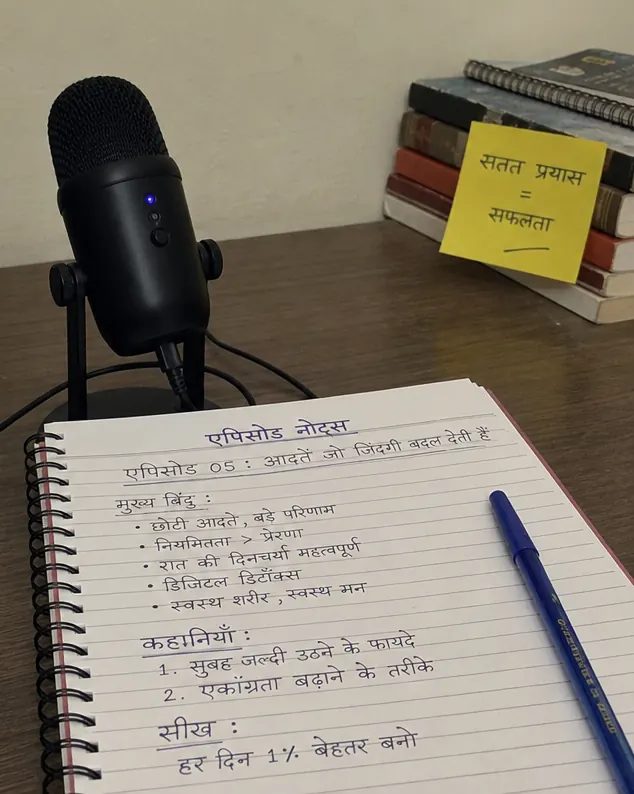
1. Define One Listener and One Clear Promise
Write a sentence describing whom you want to help or entertain. For example: “My podcast helps Hindi-speaking first-time job seekers practise interview conversations.” That gives you a clearer starting point than “a podcast about success.”
Next, draft several episode ideas. If each idea answers a distinct listener question, keep developing it. If they all repeat the same advice, narrow or rethink your premise before recording.
2. Choose a Manageable Format and Schedule
For your first attempt, try a solo explanation or a conversation with one guest. Avoid making your launch depend on celebrity access, complicated sound design, or several people’s calendars. Choose a publishing rhythm that leaves room for preparation and editing.
Set the episode length around the material, not an imagined rule. Your practice episode might be a short explanation with one example. Finish when you have delivered the promised value, rather than stretching the recording.
3. Prepare an Outline That Sounds Natural
Plan the order before recording. A clear narrative and agreed interview structure make the session easier to follow and manage.
Use this simple outline:
- Opening: State the problem, story, or question immediately.
- Context: Explain what the listener needs to know.
- Main discussion: Develop a few connected points with examples.
- Takeaway: Give the listener something useful to remember or try.
- Close: Preview the next topic and invite them to follow.
A sample opening could be: “नमस्ते! आज हम बात करेंगे कि पहली नौकरी के इंटरव्यू की तैयारी कहाँ से शुरू करें।” Use it as inspiration, not a required script. Read your own opening aloud and simplify any sentence that feels awkward.
4. Set Up Your Phone or Simple Microphone
For phone-only recording, start with your device’s recording app. Choose a room with curtains, cushions, or other soft furnishings, and keep your hands away from the microphone. Record a sample and listen back before attempting the whole episode.
If you use an external microphone, check that it works with your phone or computer and that the recording app has selected it. For guest conversations, wear headphones and ask your guest to do the same. A quiet room and a dedicated microphone are useful foundations for clearer recording.
Use Do Not Disturb to reduce interruptions. For an offline phone recording, BBC Academy’s smartphone audio advice suggests airplane mode, so a call cannot stop the recording. For an online interview, keep the connection your recording tool requires. Check power and storage before starting.
5. Record a Test, Then the Episode
Record your opening at your normal speaking volume. Listen for distant speech, rubbing noises, distracting background sound, and words that are difficult to understand. Adjust your position or room, then test again.
During the episode, imagine explaining the subject to one person. If you stumble, pause and repeat the sentence instead of restarting everything. For interviews, agree on the topic and intended publication beforehand, and let your guest finish before asking the next question.
6. Edit for Clarity and Check the Result
Aim for an understandable conversation, not flawless speech. Trim abandoned starts, unnecessary repetition, and pauses that interrupt the flow. Keep enough breathing space for the episode to sound human.
Listen through the edited version before publishing. Check that your opening matches the discussion and that edits have not changed a speaker’s meaning. Keep an untouched copy of the original recording so you can revisit decisions later.
7. Create Your Show Details and Publish
Prepare a show name, description, cover artwork, episode title, and episode summary. Make the description specific: explain who the show is for, its language, and what listeners can expect. Prefer a descriptive episode title over “Episode One.”
For distribution through podcast apps, a hosting provider can supply an RSS feed containing your show and episode information. Platforms such as Apple Podcasts accept hosted RSS submissions and review them before they become available. Publishing to your host is therefore not the same as confirming your show is available in every listening app.
A YouTube podcast uses a different setup: create or designate a podcast playlist and add full episode videos. Keep promotional clips separate from that full-episode playlist. Check YouTube’s current creation instructions before uploading, and study what makes top YouTube podcasts successful.
Make Your Hindi Podcast Easier to Discover
Give each episode a clear subject and a title that reflects the actual conversation. For example, “पहली नौकरी का इंटरव्यू: तैयारी की शुरुआत” tells a prospective listener more than “An Amazing Discussion.” Avoid promising answers your episode does not provide.
Use Hindi, Romanised Hindi, or a combination based on your intended audience. Include an accurate description and useful timestamps where appropriate. Treat search phrases as a way to clarify the subject, not something to repeat mechanically.
Before sharing your launch, run this checklist:
- Playback: Open the published episode and confirm it plays correctly.
- Presentation: Check spelling, artwork, guest names, and descriptions.
- Promise: Make sure the opening delivers the subject advertised by the title.
- Feedback: Ask a few intended listeners where they became confused or lost interest.
- Next episode: Have a realistic topic ready so launch excitement becomes a repeatable habit.
After feedback, choose one improvement for the next recording. You might shorten the introduction, explain unfamiliar terms, or prepare stronger follow-up questions. Resist redesigning the whole show after every comment.
Record, Edit, and Host With Zencastr
Zencastr is a podcast recording, editing, and hosting platform. Its tools cover audio and video recording, editing assistance, and publishing to Spotify, Apple Podcasts, and YouTube, giving creators a connected workflow from conversation to finished episode. For a beginner, that makes it worth exploring alongside a basic phone-recording setup.
Its editing features balance audio levels, remove background noise, and cut long pauses and filler words. Review the result yourself, especially where an automated edit could affect pacing or meaning. Check the current feature details and test your Hindi workflow rather than assuming every language-dependent tool will meet your needs.
Ready to turn your idea into a first recording? Try Zencastr with a short practice episode. Start with one useful topic, listen back carefully, and improve one thing before recording again.