Transcript
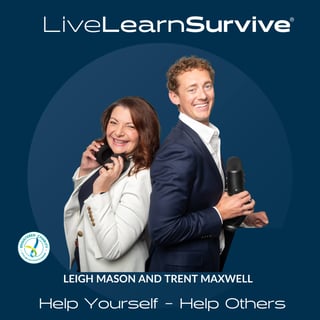
Speaker: G'day, I'm Trent Maxwell.
Speaker: And I'm Lee Mason.
Speaker: And we want to welcome you to our Live, Learn, Survive podcast.
Speaker: Since 2018, Lee and I travelled the globe and met face-to-face with over 33,000 children in six countries across three continents.
Speaker: We created a series of award-winning children's books, a global online education program, and are founders of the Live, Learn, Survive charity, all focused on teaching children and young adults life skills that will not only help themselves but help others too.
Speaker: We're on a mission to spread awareness about fire, water and first aid education to inspire the next generation of first responders.
Speaker: So join us for the next half an hour with some fun, inspiration and kindness and we'll try and learn something too.
Speaker: How are you this week, Lee?
Speaker: Welcome aboard.
Speaker: Maxie, I am good.
Speaker: How are you this week?
Speaker: I'm good.
Speaker: It's another special guest week.
Speaker: special it's one of our favorite days we've got a friend we do have friends we do have friends we do have friends so um you know yet again we love this because um you know we can highlight different people in different careers and i think this is going to be a really interesting chat so um so shall i roll with the intro maxi yep roll with the intro and we'll go straight into the questions
Speaker: Okay, so today we are joined by Nathan Metpalf.
Speaker: Nathan is a qualified paramedic who joined the New South Wales Ambulance Service in 2005.
Speaker: After spending an incredible 17 years of dedicated service on the road, he is now working as an Aeromedical Control Centre Officer.
Speaker: Did well getting that all together, Maxie.
Speaker: Nathan's career with NSWA has included deployment with Team Alpha to aid in the 2011 Brisbane floods.
Speaker: I remember them well.
Speaker: As well as roles as station officer, standby control centre officer and team member for the remake of the 80s TV game show, It's a Knockout in 2012.
Speaker: How cool is that?
Speaker: So let's give a warm welcome to Nathan.
Speaker: And I'm really excited to hear all about his incredible story, serving the community.
Speaker: Nathan, welcome.
Speaker: Welcome, mate.
Speaker: Hey, guys.
Speaker: Thanks for having me here.
Speaker: No, it's good to have you, mate.
Speaker: And I'm very lucky.
Speaker: I actually know you personally, Nathan.
Speaker: So it's good to have you here, mate.
Speaker: Take the true one of your mates, really.
Speaker: Yeah, we've met that way.
Speaker: And I'm sure throughout the chat we'll talk a little bit more.
Speaker: But, yeah, I've known you for a little while.
Speaker: So thank you for coming on.
Speaker: And I know this is going to be a great chat.
Speaker: So as we were speaking before, mate, we'll get Lee to start off with the questions.
Speaker: Absolutely.
Speaker: So, you know, what I would love to know, to start off with, Nathan, tell us about your paramedic career and what it's looked like so far.
Speaker: Well, Lee, I joined, I'm actually, I joined in 2005.
Speaker: I sort of had a leaving school, not a clear path of where I was going.
Speaker: And
Speaker: Well, Maxie, I tried to be a fiery for a long time but struggled to get in and I applied for ambulance and was lucky enough to make it through.
Speaker: So that was 2005.
Speaker: Since then, I worked on road as you talked about for, well, still currently I'm road certified.
Speaker: But in 2012, I moved into what we call standby control officers, so dispatching road ambulances.
Speaker: Yeah.
Speaker: Also still working on road at the time, so back and forward, basically just to have some variety in the job.
Speaker: In that time, also doing work with station officers, so kind of managing the team at my station.
Speaker: And yeah, just in the last few years, I've moved on to the aeromedical control that you talked about.
Speaker: Yeah, so... Different things in that time, but yeah, they're the main.
Speaker: I was going to say, Nathan, as a fiery out of Bankstown, I'm sure, you know, hopefully one day we can cross some paths out on the road.
Speaker: But what are the stations you have worked at over the years?
Speaker: Look, I've been lucky enough to stay relatively close to home.
Speaker: Most of my work has been in the north of Sydney in Ryde, but...
Speaker: I went through a period of where I'm not a real fan of night shifts.
Speaker: Our night shifts can get pretty brutal along the way.
Speaker: And so I was swapping a lot of shifts and basically had to work all over Sydney as part of swapping those shifts.
Speaker: So pretty much every station in Sydney I've worked out of at some stage.
Speaker: Do you have a favourite?
Speaker: I like them all, Maxie.
Speaker: There's different work at all of them, you know, different backgrounds for people in the areas and stuff.
Speaker: So you get to meet everyone.
Speaker: Youngsts in the city, depending on the day and, you know, the time, like you meet a different generation.
Speaker: Yeah, for sure.
Speaker: I was just going to say, because I'm rolling on to that, because I've spent the last couple of weeks at RPA Hospital, do you have a favourite hospital in Sydney that you like to drop patients off?
Speaker: You have really good doctors and nurses that you mingle with as well.
Speaker: Oh, look, I reckon they're all pretty good, Maxie.
Speaker: There's good crews in all of them.
Speaker: They all, you know, everyone, despite what sometimes the media might portray about hospitals, they're all working super hard behind the scenes.
Speaker: They do.
Speaker: They do an amazing job.
Speaker: Yeah, the health system gets pretty hammered.
Speaker: Yeah, good teams everywhere, good bunches.
Speaker: I've got friends in different hospitals that I've met over the years and try and stay in touch with them.
Speaker: Yeah, good stuff.
Speaker: Part of the Aeromedical Control Centre now we work with nurses and doctors in our centre.
Speaker: So we have a doctor there who we call the State Retrieval Consultant.
Speaker: He oversees all of our work basically in the state.
Speaker: Do they have just from with little Sonny, the nets, do you work alongside nets in your control centre as well?
Speaker: We do a lot of work with and for nets.
Speaker: Yeah.
Speaker: We do a lot of their transporting around the state and
Speaker: Part of my role is directly liaising with NETS to coordinate and work out logistics for their jobs.
Speaker: So their nurses will call us and, you know, we've got to move this patient from, you know, location A to location B and they work out a priority that has to be done in.
Speaker: And most of their work is fairly urgent.
Speaker: You know, someone like...
Speaker: like your little bub being born in a remote part of the state.
Speaker: Not great.
Speaker: You've got to get them out of the way.
Speaker: You've got to get them there.
Speaker: So what is NETS?
Speaker: Can I just ask a question?
Speaker: What is NETS?
Speaker: It's the neonatal emergency transport.
Speaker: Okay.
Speaker: Yeah, yeah.
Speaker: That's what I thought it might be something, but I just thought for those people that don't know, yeah, it's newborn and, yeah, neonatal.
Speaker: Yeah.
Speaker: So they're dealing with newborns to 16-year-old.
Speaker: Yeah.
Speaker: Right.
Speaker: And just with the aeromedical, adding on, a couple of months ago we interviewed one of the toll ambulance crewmen, James Cohen, and he used to work out at Bankstown.
Speaker: Yeah.
Speaker: But when it comes to the toll ambulance and New South Wales ambulance, they do have three choppers.
Speaker: Do you want to explain the chopper situation or how that works with the aeromedical?
Speaker: Yes, out of Bankstown, they have the three that you talked about.
Speaker: Across the state, there's eight, but the three out at Bankstown and one of those is a dedicated NETS helicopter.
Speaker: So that shows you the amount of work that we do for NETS that we've got a dedicated helicopter for them.
Speaker: Wow.
Speaker: That's awesome.
Speaker: Depending on the priority of their response,
Speaker: We will put NETS crew, so a doctor, or sometimes two doctors and a nurse along, a NETS trained nurse, we put them on the helicopter.
Speaker: So then the helicopter, we just have our pilot and the crewman.
Speaker: And then the NETS team, we fly them pad to pad for the hospitals.
Speaker: Yeah, that's amazing stuff, mate.
Speaker: And just obviously hearing and seeing, being at the hospital lately, knowing what they do, it's amazing.
Speaker: So, yeah.
Speaker: I mean, sometimes we have more than, you know, one next job running at a time.
Speaker: So, and depending on distance as well, sometimes like part of my role is to work out, you know, is it going to be quicker to use a plane versus a helicopter?
Speaker: Yeah.
Speaker: okay yes we have we have logistics um the pines in sydney that are yeah that we'll use we'll put a next time on that as well oh cool that's incredible that's what i was going to ask so knowing a little bit more about the era medical control so is is that the are you the team that control those eight helicopters or do your does your range spread further than just your
Speaker: you know, maybe area of Sydney because it's aeronautical, are you like statewide or?
Speaker: Where I currently work, the Aeromedical Control Centre, we are basically responsible for the coordination, the response, the treatment and the transport for all pre-hospital patients.
Speaker: major incidents, medical retrievals.
Speaker: We sought long distance medical transports and part of the helicopter job is also they do a lot of search and rescue and major incidents.
Speaker: There you go.
Speaker: It's amazing.
Speaker: It is.
Speaker: Just as part of that, so as I said before, we have the nurses there, they'll triage jobs as they come in, sometimes with the help of the state retrieval consultant, who's the main doctor in the centre.
Speaker: And then we work out whether we're gonna respond plane or helicopter or a fixed, sorry, a road retrieval, you know, around Sydney, sometimes it's quicker to get straight in the road retrieval.
Speaker: So we'll have a critical care paramedic and a trauma doctor on board.
Speaker: So working out the appropriate clinical levels, et cetera, for the management and, you know, transport of the patient.
Speaker: That's sort of the job in a nutshell.
Speaker: Yeah, that's incredible, Nathan, because... In the room where we work, so we're divided into what we call RLTC, which does its Rapid Launch Trauma Coordinator.
Speaker: So they're doing helicopters and then the fixed wing doing, obviously, the planes.
Speaker: But we work together to, you know, see what's going to give the patient the best result.
Speaker: Yeah.
Speaker: There you go.
Speaker: That was probably one of the longest...
Speaker: question one answers and it's good because it's so interesting um you know we as a fire we we work alongside um sometimes the the ambulance choppers and stuff like that so it's good to learn a little bit more about that on the rescue there maxi you'd see our road retrieval um doctors and uh critical yeah a lot of the time a lot of the time we deal with them a lot
Speaker: Sorry, can I just add to that, Maxi?
Speaker: Sorry.
Speaker: I know it's like, what a brilliant, brilliant answer, Nathan, because, you know, me not being a first responder or not knowing this world and so many younger people might be listening to this and might like the idea of being, you know, in the ambulance service.
Speaker: They think the main role that comes to mind is on the road driving an ambulance.
Speaker: What you've just said there,
Speaker: is so many different facets of the career and the different directions it could take you that that could be just the one like bit of that make might spark curiosity and make somebody want to start and investigate and learn more about a chosen career so thank you for sharing that because i had no idea about that i just thought you know
Speaker: incredible.
Speaker: I think in emergency service, you know, working for the government there, police, fire, ambulance, we're lucky that when you initially think of them, you probably think of them as just, you know, that basic role as that's what they are.
Speaker: But behind the scenes, there's a lot of hope to move into different areas.
Speaker: Yeah, absolutely.
Speaker: Brilliant.
Speaker: Sorry, let's see if you go.
Speaker: It's all good.
Speaker: So question two, who inspired you growing up?
Speaker: Maxie, you know, I was thinking about this back when, I don't want to give away my age, but, you know, growing up, social media wasn't really around.
Speaker: So you kind of were inspired by people closer to home.
Speaker: Whereas, you know, today, like, you know, you can see all these famous celebrities and sportsmen and all that all over your social media.
Speaker: Every day you're bombarded.
Speaker: Yeah.
Speaker: I reckon like just, you know, my father was, you know, he was a hard worker, instilled a work ethic into me.
Speaker: He encouraged me to invest when I first started working and that type of thing.
Speaker: And beyond that, my grandfather as well, he's got basically a fair bit to do with this area before I even knew.
Speaker: But he grew up here before this area was developed.
Speaker: But he built the local shopping center.
Speaker: He owned a fair bit of land and made some good investments back in the day.
Speaker: So I think those guys rubbed off on me.
Speaker: Yeah.
Speaker: That's awesome.
Speaker: I'm sure we'll talk about it, but I love soccer as well.
Speaker: Back in the, I'll say, the 80s slash 90s, Craig Johnson for Liverpool was a bit of a hero of mine.
Speaker: So I'm a strong Liverpool fan now and love my soccer.
Speaker: You're in good company, Nathan.
Speaker: There is only one team.
Speaker: You're in good company.
Speaker: The Reds.
Speaker: Max and I have been to one field.
Speaker: Yeah, I went a couple of years ago.
Speaker: Yeah, it's a good part of the world.
Speaker: But I got to watch him play at Wolverhampton, and we won.
Speaker: Well, you know, on a side note, you know, talking about age, and obviously I'm a couple of years older than Maxi, Kenny Dalgleish was my absolute hero.
Speaker: Yeah, I was going to be a good champion.
Speaker: King Kenny, he was the man.
Speaker: I've got a Liverpool framed picture up here, but yeah, out of shot.
Speaker: Oh, we'll talk later, Nathan.
Speaker: Back to the script.
Speaker: Sorry, Maxi, where were we going?
Speaker: You're up to number three.
Speaker: It's me, it's me, it's me.
Speaker: So, Nathan, did you get good career advice at school?
Speaker: We had a careers, you know, I think it was once a week we do a careers class, but I was kind of at school for maybe just a good time and not so much.
Speaker: So I reckon as part of that, I would have got good career advice if I had taken it on board.
Speaker: Yeah.
Speaker: As much as I like to, you know, don't like to admit it, I,
Speaker: yeah school was school was good times and you know yeah yeah yeah it's uh you know what i think when you're younger it's finding that thing that um kind of sparks your interest and that like nicely goes into the next question you might see that i think it's you yeah well when did you realize you wanted to become a paramedic i know you're saying before with the fireys you tried for that but what what was the the pin drop point
Speaker: Just going back on the career advice, my old man worked in advertising, so I was always, you know, I guess we'll lead into it later with tattooing and art and stuff, but I was always thought that that's where I was going to end up, graphic designing, advertising, et cetera.
Speaker: When I left school, I...
Speaker: I did courses to get into graphic design.
Speaker: And then I finished the course and fell into a job with a, basically through a mate of mine.
Speaker: And it's a super long story, so I won't go into it.
Speaker: But I ended up as a storeman and the working conditions were fairly good.
Speaker: There was a housing boom and I was working in a paint factory.
Speaker: And we were just, you know, super busy.
Speaker: I was making a lot of money back then and I just got comfortable and stayed there for so long, but I was not enjoying the work and not motivated.
Speaker: And I think it's very important, speaking of careers, like it's important to do something that you really enjoy doing.
Speaker: And I was not enjoying it.
Speaker: So I was, you know, always looking for something else and trying year after year, trying to get into the fireys.
Speaker: and then saw ambulance advertise and just back then in the newspaper, I thought I'll give it a go.
Speaker: It was making me a practice run for the fire brigade.
Speaker: And yeah, I fell into it, got lucky and got through successful.
Speaker: I even thought, I'll just see how I go, you know, whether I like it or not, still try and be a fiery.
Speaker: But, you know, 17 years later, no, I'm longer than that, 19 years.
Speaker: 19 years, yeah.
Speaker: In 2005, yeah, in 2024.
Speaker: So 19 years later, I'm still going in ambulance.
Speaker: Yeah.
Speaker: Amazing.
Speaker: Amazing.
Speaker: So I'm going to skip the next one because you said you saw it in the paper.
Speaker: So what would you say?
Speaker: has been your best career decision so far.
Speaker: Well, joining was a good decision.
Speaker: That was a good one.
Speaker: Yeah.
Speaker: And as I said, I got lucky.
Speaker: Our employment, well, recruitment now, most of the guys have to be university educated.
Speaker: They learn a lot.
Speaker: They're a lot more advanced clinically than I ever was.
Speaker: I'm still learning stuff that these guys probably forget, you know.
Speaker: Yeah.
Speaker: There's so much to it.
Speaker: Yeah, they were way better educated than I ever was.
Speaker: So I think my best career decision was, yeah, applying for ambulance.
Speaker: Yeah, brilliant.
Speaker: Mate, more of the serious side of the chat.
Speaker: Most stressful part of the journey so far?
Speaker: Look, Maxie, starting out, you know, being, not having any kind of clinical background at all, I was, for years, I was not comfortable going to work.
Speaker: And still, you know, you could, I still work on road and, you know, some of these jobs you go to, you aren't comfortable.
Speaker: I'm sure you'd know as, you know, responding to your jobs.
Speaker: you never know what you're going to be confronted with.
Speaker: So, yeah, it can be stressful that way.
Speaker: Yeah.
Speaker: Just saying, mate, like thinking on your feet too, like what I've noticed, you could be the guru, the godfather, you know, the godmother, whatever of a certain discipline within your role or your job.
Speaker: But every job's different and you always get those real quirky jobs that no one's really dealt with.
Speaker: You pull out the...
Speaker: the ops manual and you're like looking through the pages trying to find something to do with the job that you're at and you can't.
Speaker: So a lot of the time, as well as paramedics and as far as, is you thinking of with experience and knowledge that you have in the past, but you kind of use it to good practice.
Speaker: And as a good rescue operator told me, you need to make sure you have plans.
Speaker: A, B, C, D, E, F, G, just don't have the one planned.
Speaker: You always got to be.
Speaker: Whenever you get comfortable, that's when you're going to be brought undone.
Speaker: Yeah, 100%.
Speaker: Concentrating and just going back to having multiple plans, that's where we are now, like our aeromedical work.
Speaker: Like, you know, you've got a plane responding to a job.
Speaker: You've got to have plan B and plan C because something could change and, yeah, you only have that plane, you know.
Speaker: It's just absolute uncertainty, isn't it?
Speaker: You have got no idea what your shift could be like.
Speaker: Yeah, exactly.
Speaker: Yeah.
Speaker: Have you got a, just going off script here, have you got a decent story that you can share about a job that you've done aeromedical or as a paramedic where it has been pretty crazy?
Speaker: Oh, Maxie, they're probably all long stories, but, you know, examples are things like, you know, remote jobs, for example, out the back of, you know, Burke and all that, where there's not a whole lot of, you know, infrastructure.
Speaker: So a lot of these properties will have runways, you know, they've got hundreds of thousands of hectares of land.
Speaker: They'll have a runway on their property.
Speaker: We've had a plane land on one of those and actually, once it's stopped, has sunk into the runway after they've had big rains out there.
Speaker: You've still got an unwell patient.
Speaker: Yeah.
Speaker: So what happens then?
Speaker: Do they just send another, or how do they do?
Speaker: They just send a car or they go?
Speaker: I've had interesting ones where...
Speaker: The remoteness of Central Australia will respond to jobs in the top of South Australia, around Cameron's Corner, that type of area as well.
Speaker: I had a guy who was on a motorbike.
Speaker: He was a foreign traveller going around Australia on a motorbike.
Speaker: He crashed his motorbike.
Speaker: He was very remote and he was texting back to the Netherlands.
Speaker: to say he'd been in.
Speaker: And then they were coordinating with RFDS, who we do a lot of work for.
Speaker: RFDS in Port Augusta, so the bottom of South Australia, had taken the call from the Netherlands about their son being lost somewhere in the outback.
Speaker: And we managed, all of us together, we got his GPS coordinates, but he ended up
Speaker: being found by someone just randomly driving past in a ute.
Speaker: He had some spinal damage.
Speaker: These guys loaded him into the back of their ute, wrapped him in a swag and took him along the Birdsville track.
Speaker: So we got him...
Speaker: I ended up having a helicopter responding from a... I should elaborate a little bit more.
Speaker: Sorry, it's a long story.
Speaker: But in some of the mining sites, they're so big that there is paramedics work in these helicopters on these mine sites.
Speaker: So we liaising with this guy, we were able to give him some coordinates of where this ute may be.
Speaker: They managed to meet up.
Speaker: He's flown, then flown the patient from...
Speaker: the Birdsville track into Birdsville airport where I got a plane from Broken Hill to them and then flying down to South Australia to the hospital.
Speaker: Logistics.
Speaker: Logistics, that's unreal.
Speaker: It's logistics and having plans and, you know,
Speaker: just make well yeah just trying to make it work making it work and you save that guy's life and it's it must be an awesome feeling to to know that you contributed to that guy getting the care he needs a lot of uh work along the way and a lot of a lot of people involved yeah but eventually he got the hospital where he needed to be incredible so obviously that's like you know like i say not not like a regular day as many would people would understand the
Speaker: incredibly stressful.
Speaker: How do you deal with that stress?
Speaker: How do you look after Nathan?
Speaker: Well,
Speaker: I try not to overthink my work, which helps, I reckon.
Speaker: But I've got, you know, outside of work, Maxie has touched on, I think, earlier a bit of tattooing.
Speaker: So I've got side interests in there.
Speaker: I love my soccer and play it like you wouldn't believe.
Speaker: But I'm battling some knee injuries at the moment, but still trying to play through it.
Speaker: I like to keep fit.
Speaker: I do a lot of just reading books.
Speaker: I've got into gardening lately and, yeah, I'm about to do what is known as the Shipbox Rally, which is a charity fundraiser for the Cancer Council.
Speaker: Yeah.
Speaker: Yeah, and just talking about Birdsville, I happened to be as part of the Shipbox Rally last year.
Speaker: I went along the Birdsville track and we stayed a night in Birdsville, so it really helped as part of my job knowing
Speaker: Yeah.
Speaker: Yeah.
Speaker: That kind of keeps your mind occupied and off work when you're not there.
Speaker: Yeah, absolutely.
Speaker: So the rally, just say a little bit, so it's for cancer.
Speaker: And isn't the idea that you just have like lots of different, do you get like donated a car or it's literally some of these cars are like, you know, like, you know,
Speaker: There's lots of mechanics and maintenance along the way, isn't there?
Speaker: And what kind of distance is it so people can imagine?
Speaker: The shitbox part is in reference to the car, so it's got to be worth $1,500 or less.
Speaker: There you go.
Speaker: You don't get much for that.
Speaker: Yeah.
Speaker: There's a $5,000 charity, like, entry fee, I guess.
Speaker: Yeah.
Speaker: So, you know, I've been lucky enough that we've got some sponsors on board but also just friends and family donating.
Speaker: Yeah.
Speaker: So to get over the $5,000, which goes towards Cancer Council.
Speaker: So 250 cars do it each year.
Speaker: Last year we raised, my spring rally last year raised $2.4 million, which was fantastic.
Speaker: It's amazing.
Speaker: Just going on amounts.
Speaker: The Shipbox organisation have raised $50 million in the last 15 years for Kansas.
Speaker: That's unreal.
Speaker: Phenomenal.
Speaker: Yeah, yeah.
Speaker: So distances can be, what did I, last year we did as part of the rally was about 5,000 kilometres.
Speaker: Yeah.
Speaker: And all through dirt roads.
Speaker: You're driving a $1,500 car down the Birdsville track that, you know, you're on the road.
Speaker: Yeah.
Speaker: Set up four-wheel drive going along there.
Speaker: So what happens out of those 250 cars, surely a couple of them would just die, you know?
Speaker: They die.
Speaker: So what happens then?
Speaker: Do you just take a car like Bill and Barbara and Paddy and they jump in your car?
Speaker: Jump in your car, yeah.
Speaker: Or the army actually supply a truck with mechanics on it and those guys can come and help you try and fix them.
Speaker: A lot of mechanics do that rally as well.
Speaker: So everyone pitches in, tries to get the cars running.
Speaker: We had a guy last year, Maxie, who blew his car up on the first day.
Speaker: He got it to this little town.
Speaker: There was eight people in the town.
Speaker: They tried to fix it, unsuccessful.
Speaker: So he went to the pub, he bought another car and he blew it up again.
Speaker: And in the six days of the rally, he blew up four cars.
Speaker: We ended up giving up, which was somebody else's car.
Speaker: Oh, that's gold.
Speaker: That is gold.
Speaker: We couldn't have even put your Jeep in, Maxi.
Speaker: That would have been a luxury.
Speaker: That would have been a luxury vehicle.
Speaker: We couldn't have even stuck that in.
Speaker: We've had some blobs.
Speaker: He had an old, like an AU Falcon, sort of like an old taxi.
Speaker: He had his stickers and his bonters on, like, the bonnet and the boot and the doors.
Speaker: he's gone into town and he's bought another one the same car but different color and he's he's unscrewed the bonnet the boot the doors swapped it all over so he's on it and drives it off oh that's gold you love that sort of stuff and that sort of community stuff you know live learn survive been a charity we've been lucky enough to do some charity events over the last couple of years and
Speaker: You know, whenever we've done stuff within the community and donations and fundraisers, it just brings everyone together and it's always a good time.
Speaker: We need an idea like that, Maxie.
Speaker: You guys could jump in as a live, learn, survive car, maybe, no?
Speaker: Two people in the car.
Speaker: But then you're raising funds for the Cancer Council, aren't you?
Speaker: Yeah.
Speaker: Well, yeah.
Speaker: Yeah.
Speaker: So we like, you know, I lost my mom to cancer.
Speaker: I would raise funds for them in a heartbeat, but we need to have our, we need to do something for, we'll send Maxie skydiving or something.
Speaker: I don't know.
Speaker: You guys, everyone's been touched, you know, like your charity, you know, you've got your specific charities that you're raised for with cancer.
Speaker: Like everyone's got a cancer story, you know.
Speaker: Absolutely.
Speaker: For sure.
Speaker: And I know how passionate and how much you enjoy doing it, mate.
Speaker: So hopefully it becomes a thing where you can keep doing it over time and have a bit of fun along the way.
Speaker: I was eager to get back after doing it last year.
Speaker: So, yeah, straight back into it.
Speaker: So how many days is this one that you're starting tomorrow going to last, Nathan?
Speaker: I actually am leaving Sydney tomorrow to drive.
Speaker: I'm just going to the Central Coast.
Speaker: We're working on the car, giving it the quick last going over.
Speaker: We go on Thursday and then start on Friday.
Speaker: You do about 500, 500 to 600 kilometres a day working your way.
Speaker: We're going up past Broken Hill, a place called Batuta, you know, the Batuta.
Speaker: Yeah, Batuta, yeah.
Speaker: We're staying a night at Batuta at the hotel.
Speaker: You stay in those little towns along the way.
Speaker: Everyone gets together and the town goes on, you know, and eventually at night they have this bar set up and they supply you dinner and breakfast.
Speaker: So,
Speaker: We bring in a lot of money into the community as well, just, you know, over the bar and social communities along the way.
Speaker: And it also spreads the, you know, the word of the charity.
Speaker: Do you go through Surat?
Speaker: Maxie and I a couple of months ago were out in the Maranoa, out at Surat, Roma, that area.
Speaker: We are going to...
Speaker: I do it with my brother-in-law.
Speaker: So when we drive, we're going to get to Townsville, fingers crossed, the car makes it, and then we're going to drive back to Sydney, again, fingers crossed.
Speaker: But we go through there on the way back.
Speaker: Oh, you've got to stop at the pub and say, Liam Maxey, say hi.
Speaker: It's the right hotel, mate.
Speaker: It's a good pub.
Speaker: It's the one-stop shop.
Speaker: You've got everything in there.
Speaker: I'm sure that's standard all country clubs.
Speaker: You've got to go in the pub, find Holly, and say, Liam Maxey sent me.
Speaker: She'll look after you.
Speaker: She'll look after you.
Speaker: She's a legend.
Speaker: She's also been on the podcast.
Speaker: Not in support, but also a nurse.
Speaker: Yeah, exactly.
Speaker: Mate, best piece of advice you've ever been given?
Speaker: Look...
Speaker: I was talking to a guy at work recently thinking about, you know, what kind of advice I've been given.
Speaker: And he actually had said to me, like, he was asking a bloke who'd been in ambulance forever how he'd survived for so long.
Speaker: And, you know, I kind of look at this guy and I think I'm a little bit like him, but I'm...
Speaker: I'm always trying to take things on and fix it and, you know, sometimes it's stuff that I don't have the ability to fix.
Speaker: So, you know, he was kind of saying in a long kind of story that I'll cut short is, you know, don't like try and take control of things that you can't actually control or have influence over.
Speaker: So, yeah, kind of let things go if, you know.
Speaker: Yeah.
Speaker: Yeah.
Speaker: That's the hard bit, isn't it?
Speaker: It's like, you know, we all know we need to do it, but it's really good advice if you can master it.
Speaker: I've been told a few times along the way, but probably haven't listened as, you know, as well as I should have.
Speaker: But, yeah, so I'm trying to do that, you know, trying to let things go that I don't have.
Speaker: It's a good tip.
Speaker: Good advice.
Speaker: It is a really, really good tip.
Speaker: So next career goal, what do you have...
Speaker: Any goals for the future?
Speaker: Well, look, in the role that I'm doing, there is the ability to progress a little bit through that.
Speaker: So I'm pretty happy with where I am right now.
Speaker: So, yeah, I'll just see what happens.
Speaker: But as we were saying before, in the ambulance and same with fireys, I imagine there's ability to progress or move sideways.
Speaker: Yeah, if you get to the point where you feel like a change.
Speaker: Yeah, that's awesome.
Speaker: At the moment that I'm working towards, just trying to master what I'm doing, I guess.
Speaker: Yeah.
Speaker: Good stuff, mate.
Speaker: Yeah, that's great.
Speaker: Really great.
Speaker: We spoke about it before, tattooing and football, but what other hobbies do you have?
Speaker: Do you like to do anything else?
Speaker: I didn't mention my kids before.
Speaker: I've got three kids.
Speaker: Yeah.
Speaker: They chew up, they're probably the biggest hobby.
Speaker: They chew up a lot of your time.
Speaker: But, you know, even with them, a lot of their, like, my relationship with them involves sport.
Speaker: I mean, besides being a parent, but, you know, they're really into their sport as well.
Speaker: So a lot of that.
Speaker: And my younger fella, you know, he's a bit different than the other two with his sport.
Speaker: But, yeah, I try to spend a lot of time with him as well, just mucking around and,
Speaker: Brilliant.
Speaker: Saturday morning, sport busy?
Speaker: Yeah.
Speaker: Well, the older they get, I guess, I mean, I'd like to say it's slowing down, but it's not really.
Speaker: Absolutely.
Speaker: Yeah, I try and keep fit and, I don't know, I love working out in the gym too, so daily exercise really keeps your mind.
Speaker: Keep your body moving.
Speaker: Yeah.
Speaker: If I miss out on a workout, I don't feel good.
Speaker: So I guess, yeah, exercising is, you know, good mental health for me.
Speaker: Yeah.
Speaker: That's like you, Maxie, isn't it?
Speaker: You just like, yeah.
Speaker: Yeah, like I'm at the stage now where, yeah, most days I'm down at the gym or doing some activities.
Speaker: And, you know, even you, Lee, in the last couple of years as well, like, you know, it's so important to move the body and doing different things because it is good for your mental health.
Speaker: Yeah, I love to swim.
Speaker: Swimming's my thing.
Speaker: I love to just go to the pool.
Speaker: I think you never regret a swim.
Speaker: You don't have to smash yourself.
Speaker: I'll just say you don't have to smash yourself, but you can, you know, just move the body in some way, however you can, and you'll definitely feel better for it.
Speaker: Yeah, none of the Australian, you know, Olympians need to be worried about me.
Speaker: I'm not going to be coming and taking their goals.
Speaker: But, you know, I do my bit.
Speaker: What did you say, Maxi, get in and throw them over?
Speaker: Just get in there and throw them over.
Speaker: Yeah, exactly.
Speaker: I know you can get some swimming lessons from Maxi.
Speaker: Oh, swimming's the best.
Speaker: I don't go in the ocean.
Speaker: I'm a poor girl, but I do love to swim.
Speaker: So, yeah.
Speaker: So, Nathan, I want to know all about this tattooing.
Speaker: How long have you been a tattooist for?
Speaker: This is obviously your creative side.
Speaker: Yeah, look, I've always enjoyed art, drawing, painting.
Speaker: I used to, in my spare time at school, you know, when I probably should have been listening to careers advice, I'd be scribbling a bit on my arms and, you know, coming home looking like I'd been tattooed.
Speaker: And I don't know, just along the way, like I always wanted a tattoo and my mum and dad were always like, you can't have one of those.
Speaker: The first thing you do when you're old enough is go and get one.
Speaker: I don't recommend that kids, whoever's listening, you should listen to your parents.
Speaker: That's good advice.
Speaker: If you do get a tattoo and you're over 18 and you really want one, you can do it.
Speaker: Go see Nathan.
Speaker: Nathan will support you.
Speaker: Nothing silly.
Speaker: In saying that though, that's how me and Nathan, a few mutual friends, another firefighter I know, but Nathan's done a few of my tattoos that I have.
Speaker: I've got a couple on me and we always have some really good, deep and meaningful chats and it's always good to catch up, mate.
Speaker: So thank you for your time and the art that you've done on my body.
Speaker: I love hanging out with you, mate.
Speaker: We need to do it more.
Speaker: 100%, mate.
Speaker: Well, I think after little Sonny's been born, there's a date coming up where I'm going to catch up with you for a beer and maybe a cheeky tartar.
Speaker: We'll see.
Speaker: Yeah, you've got to get Sonny on.
Speaker: Absolutely.
Speaker: Sure, somewhere.
Speaker: So how long have you been doing it, Nathan?
Speaker: Well, nothing.
Speaker: Actually, the tattooing.
Speaker: Look, about 15 years of tattooing.
Speaker: I know.
Speaker: Or seriously, I guess probably in the last five, six, seven years.
Speaker: Yeah.
Speaker: And I just sort of started out.
Speaker: Like I got a few tattoos and asked a lot of questions, but I couldn't really get a lot of help off tattooists.
Speaker: Yeah.
Speaker: Did a lot of reading and then was lucky enough just to randomly meet a guy through a brand who...
Speaker: he's a blind tattooist and um he was happy to help me out uh and yeah just from there i guess just um you know meeting people like maxi happy to come to an unknown and let me have a go and then how do you how do you train i i've got no idea do you you know do you just how do you stop uh lee i don't know if it's good to say how i started okay
Speaker: All right.
Speaker: I'm taking that that wasn't tattoo school then, Nathan.
Speaker: So we'll skip.
Speaker: Well, obviously, you know, it was something, a passion and you found your way through and you found it.
Speaker: And I've seen Max's tattoos.
Speaker: You're obviously very good at it.
Speaker: I started really small, not doing a lot of them, but just the more you do, people see that you can do it.
Speaker: And the more you do it, the better you get, you know, practice, practice.
Speaker: I did a lot of reading, a lot of practicing.
Speaker: And, yeah, now I've got a fairly, you know, a client base that I'm happy with.
Speaker: I don't totally flat out, but I don't have the time to do it either.
Speaker: You're too busy saving New South Wales and getting the choppers in the right place and the planes going where they're supposed to be.
Speaker: All the planes and the choppers at the moment.
Speaker: Even talking of how do I deal with stress?
Speaker: It's tattooing like, you know, someone like Maxie coming along and we just have a chat like this while I'm, you know, scribbling away on his body there.
Speaker: And it's a good mental health thing for me as well.
Speaker: Yeah.
Speaker: Gets a lot of things off your chest.
Speaker: And, you know, the amount of chats we've had in the past, mate, I've had some pieces done by you that have been...
Speaker: longer than three, four, five hours.
Speaker: And yeah, you get to know someone pretty well and you have some good old chats.
Speaker: And if I'm not 100% or if you're not 100%, we kind of bounce off each other and we have a good time.
Speaker: That's what I was about to say.
Speaker: Sometimes the clients who come along, you know, they sometimes use getting tattooed as like a stress release, mental health, and it works for them.
Speaker: You know, they can offload to somebody.
Speaker: Sometimes I'm just someone random to them as well, but, you know, you get to speak to someone about what's going on and just getting them offloading is good.
Speaker: I think as well with tattoos, they've always got a meaning.
Speaker: So that almost stops the story, doesn't it?
Speaker: Like why?
Speaker: Why?
Speaker: what does this stand for or what does it mean?
Speaker: You know, that's what I would imagine as well.
Speaker: And that's like Maxie saying with Sonny coming along, you know, that's always going to be something special for him, you know.
Speaker: So I get to be a part of like Maxie's life forever there, you know.
Speaker: Yeah, 100%.
Speaker: And a lot of the tattoos are sentimental in some way, you know.
Speaker: Some people get some silly ones or whatever, but, you know, there's a story behind it.
Speaker: But, yeah, that's why if someone is going through a loss in the family or a birth in the family or, you know, a rough situation,
Speaker: period of their time, you know, battling something, you know, sometimes people do it to express how they feel and it reminds them of a good and a bad time.
Speaker: So, yeah, it's a good time.
Speaker: Well, when I get my first, Nathan, will you get a call?
Speaker: With pleasure.
Speaker: I can't get though because my dad will still tell me off.
Speaker: I'll be like, you know.
Speaker: Just get the words.
Speaker: You'll never walk alone.
Speaker: You'll never, yeah, why, yeah.
Speaker: Why, whatever, you'll never walk alone, yeah.
Speaker: Yeah, exactly.
Speaker: I'm thinking of doing one soon.
Speaker: Sorry?
Speaker: I'm thinking of getting one on myself soon.
Speaker: There you go.
Speaker: Absolutely, absolutely.
Speaker: So we just talked about sports.
Speaker: Oh, sorry, have I jumped in?
Speaker: Sorry, Max, it's you.
Speaker: Yeah, it is, mate.
Speaker: But we spoke about sports before, but with football and so on.
Speaker: Tell us about your sports that you do play with your football team.
Speaker: Oh, Maxie, I'm just a soccer, you know, football freak, football for me, freak.
Speaker: I've been playing for as long as I can remember and playing, you know, during my 20s and 30s, like every night of the week, I'd have a game on.
Speaker: Yeah, that's awesome.
Speaker: It's bringing me down now with my knees.
Speaker: They've suffered a bit, but I'm battling through it.
Speaker: Yeah, that's good, mate.
Speaker: Still playing.
Speaker: Yeah, yeah.
Speaker: I'm playing over 45s at the moment and still enjoying that.
Speaker: And, yeah, the season's finished now, but summer soccer and indoor soccer still.
Speaker: So that's year round.
Speaker: And ever since you remember playing in nappies till now, have you won many premierships?
Speaker: Oh, mate, we like to think that we've won it all, Maxie.
Speaker: Yeah.
Speaker: You can always tell a story about how good you were.
Speaker: Yeah.
Speaker: You've had some good wins.
Speaker: Good wins.
Speaker: yeah yeah we've uh well i just played in uh well we won that we won the premiership this year with my uh old boys team which was good yeah yeah and actually if i was the mate of um our mutual friend calum who put us in touch there you go his district manager maybe i can't remember his name yeah anyway isn't it on fire yeah we played against him in what they call champion of champions so they beat us
Speaker: That's fantastic.
Speaker: I love it.
Speaker: Absolutely brilliant.
Speaker: Absolutely brilliant.
Speaker: So if you weren't a paramedic, Nathan, what do you think you would do?
Speaker: Look, you know, I reckon you guys could probably guess already, but a fiery would have been, I reckon, a pretty good role for me, but probably a tattooist.
Speaker: And I'd love to say professional soccer player, but, you know, I just never got into it back in the day.
Speaker: Yeah.
Speaker: Yeah, I've got an elder son now who's quite handy with soccer.
Speaker: So, you know, maybe I'm living a bit of my soccer passion through him.
Speaker: Yeah, yeah.
Speaker: We got him... Has he been spotted yet by a coach or...?
Speaker: He actually played Australian schoolboys back in the day, went to the UK, which was... That's amazing.
Speaker: One of my proud moments.
Speaker: He scored a goal against England in the International.
Speaker: Long taken.
Speaker: Brilliant.
Speaker: That's amazing.
Speaker: Who would you support now, Lee, living over here?
Speaker: Look, do you know what?
Speaker: I don't...
Speaker: I'm just a Liverpool supporter.
Speaker: I mean, I was a Liverpool supporter in the 80s from being a teenager and being from Nottingham in the 80s, it was actually the time when Liverpool's biggest rival was Nottingham Forest.
Speaker: Yeah.
Speaker: But I was never, ever a Forest supporter.
Speaker: Actually, the opposite.
Speaker: So, it was a thing.
Speaker: I got into a teens.
Speaker: My dad is a Scott, a massive Celtic supporter.
Speaker: So the old Celtic Rangers rivalry, many of the Celtic, Dalgleish came from Celtic to Liverpool, came through my dad, you know, just football is just huge in the UK.
Speaker: Good choice to follow there.
Speaker: I actually meant would you support England or Australia?
Speaker: Oh, sorry, sorry.
Speaker: I thought you meant like a club or whatever.
Speaker: Oh, look, you know what?
Speaker: When it comes to football...
Speaker: It would be England.
Speaker: It would be England.
Speaker: There's nothing like being in a crowd of well-behaved England supporters, the good supporters, not just that whole.
Speaker: I was just actually over in England when the European Championships were on, and we were in a hotel in Scotland, and I ended up in the bar, and there was a Dutch guy, my husband's English, there was myself,
Speaker: There was a German guy and there was about seven nationalities in the middle of the Highlands of Scotland sitting around the bar, sitting around the TV in the bar.
Speaker: And the guy behind the bar was Polish.
Speaker: And it was just, it was one of those things that, you know, football, you know, they call it the world game, but it was everybody having kind of respect for the
Speaker: It was just a lovely, lovely atmosphere.
Speaker: And I think that's the beautiful thing of, you know, football.
Speaker: And, you know, it's, yeah, so that's why I would still sit in the pub and go England.
Speaker: You got it right there, you know, talking about the world game and football, bringing people together, like me playing it for so long in so many teams.
Speaker: Like I've got, I've developed so many relationships through it, you know.
Speaker: Yeah.
Speaker: So many friends, you know, getting out there.
Speaker: Very multicultural.
Speaker: Yeah.
Speaker: Yeah, exactly, exactly.
Speaker: And it's such a, you know, like kids, I've seen kids playing, you know, there's some great TV ads, kids playing football that with just like, you know, rubber bands, anything scored, you know, they just kick in a field kicking a football and it's just accessible to every child as well.
Speaker: So, you know, it's like cricket in India, like, you know, every kid can do it.
Speaker: Yeah, exactly.
Speaker: Yeah.
Speaker: Mate, towards the pointy end of the chat, it's been a great chat so far, but what advice would you give to your 16-year-old self?
Speaker: Oh, Maxie, what would I give to myself?
Speaker: Probably, you know, if you have...
Speaker: Like life goes fast, I guess.
Speaker: I've got to, you know, my eldest now is 22.
Speaker: I remember when he was Sonny's age, Maxie, you know, being there for the delivery and he would have been there.
Speaker: It just, life goes so fast.
Speaker: So if you've got, you know, a goal that you want, you know, work towards it.
Speaker: don't let things put you off get you know get get a get a plan and get a plan make it happen yeah because before you know it you'll have kids you know you'll have kids of your own and it just happens so quickly happens quick yeah so you got to get things dreams and goals in place because if life does go too quick you want to spend um you know the other part of your life
Speaker: bumming out that you didn't get a chance to achieve any of those goals or dreams.
Speaker: And, you know, you do have time if you put your mind to it.
Speaker: So, yeah, it's good advice.
Speaker: Yeah, make time for what you want to do.
Speaker: Don't put it off.
Speaker: If there's something that you – if you want, go after it.
Speaker: Yeah.
Speaker: Yeah.
Speaker: That's really great advice.
Speaker: Brilliant, brilliant.
Speaker: So, last thing, Nathan, we have a Live, Learn, Survive playlist.
Speaker: So, everyone that's ever been a guest on the podcast –
Speaker: give us the go-to song.
Speaker: You said you weren't a fan of the night shift, but you've got a night shift.
Speaker: You're putting it in the car.
Speaker: You're heading to work.
Speaker: You're thinking, what is the go-to tune that's going to get me going for this shift?
Speaker: This might not really give away my age.
Speaker: Are you guys old enough to remember In Excess?
Speaker: Oh, of course.
Speaker: Yes.
Speaker: When I was back at school, I used to get pumped up before.
Speaker: I used to play rugby at school.
Speaker: I used to get pumped up with their song, Don't Change.
Speaker: Don't Change.
Speaker: Brilliant.
Speaker: Yes.
Speaker: Love it.
Speaker: I listen to everything, but that really, you know, that still does it for me.
Speaker: Well, mate, that's added to the playlist.
Speaker: So if you've got Spotify, look up Live, Learn, Survive, and it's the most recent added song.
Speaker: And in that playlist, you've got all different songs from all over the world of people adding their happy, go, lucky, pump up, fire up songs.
Speaker: So it's a really good playlist.
Speaker: So you've contributed to that.
Speaker: So thank you, Nathan.
Speaker: In there.
Speaker: So did you ever go and see InXS?
Speaker: Apparently, you know, back in the day in Sydney, did you ever get a chance to see them?
Speaker: I actually didn't, disappointingly.
Speaker: I've seen a lot of bands, but, yeah, I didn't get to see them.
Speaker: I was just at Cold Chisel actually on the weekend, which was fantastic.
Speaker: Ah, yeah.
Speaker: No, no, I've got a couple of friends that used to go and see them a lot, you know, around like eastern suburbs and like further down.
Speaker: What's the pub further south?
Speaker: So I wondered if you'd ever had a chance to see them live.
Speaker: All right, it's one band that I regret not seeing, yeah.
Speaker: It's always the wrong.
Speaker: Nathan, it's been an awesome chat, mate.
Speaker: Hats off to what you do within your role with Ambulance.
Speaker: You know, you're doing some great stuff there.
Speaker: Look forward to catching up after the Shitbox Rally.
Speaker: Good luck.
Speaker: Make sure you come home in one piece.
Speaker: And I'll be catching up and getting a tattoo with you soon, at least before the end of the year, to celebrate Sonny's birth.
Speaker: But thanks, mate.
Speaker: It's a great chat.
Speaker: And anyone out there, like what Lee was saying, anyone out there that might be put off being on road as a paramedic or being involved in ambulance, so many different opportunities, not just with New South Wales Ambulance, but ambulance around the world.
Speaker: I'm sure that they do have, you know, there's a lot of aeromedical helicopters and planes out there.
Speaker: So if you do have an interest in
Speaker: aviation and rescue and medical, you can do what Nathan does.
Speaker: So, yeah, go for it.
Speaker: Absolutely.
Speaker: That's incredible.
Speaker: Thank you, Nathan.
Speaker: I absolutely love that chat.
Speaker: I learned so much about everything.
Speaker: And, yeah, good luck on the rally.
Speaker: May your shitbox stay in place and get you across all the way to Townsville.
Speaker: Thank you, guys.
Speaker: Thanks for your time.
Speaker: Thanks for having me.
Speaker: I really appreciate it.
Speaker: It's great.
Speaker: And, yeah, good job here on the podcast.
Speaker: Brilliant.
Speaker: No, you did good, mate.
Speaker: You did good.
Speaker: Absolutely.
Speaker: Smashed it.
Speaker: Send us some photos when you're in the middle of nowhere.
Speaker: We'd love to see it.
Speaker: Will do.
Speaker: For sure.
Speaker: Take care, guys.
Speaker: That was brilliant.
Speaker: Take care, everybody.
Speaker: Have a good week.
Speaker: Stay safe and we'll see you soon.
Speaker: Can I plug my shitbox social media?
Speaker: Yeah, of course.
Speaker: Tell us.
Speaker: We drive a Camry, so it's called Sons of Anna Camry.
Speaker: Sons of Anna Camry.
Speaker: A-N-A Camry.
Speaker: A-N-A Camry.
Speaker: There you go.
Speaker: We'll give it a shout out for sure.
Speaker: Exactly.
Speaker: Well, Camry, I mean, that could be a nice smooth drive.
Speaker: Unbreakable Toyota, mate.
Speaker: I tell you what, we love a bit of Toyota, don't we, Maxie?
Speaker: Our friends at Surf Toyota, there's nothing wrong with Toyota.
Speaker: Sons of Anna Camry, well, I'm going to be following that, absolutely.
Speaker: On Instagram or Facebook, you'll find us.
Speaker: Brilliant.
Speaker: I'll be there.
Speaker: You'll have a new follower within the next 10 minutes.
Speaker: All righty.
Speaker: All right, legend.
Speaker: See you all soon.
Speaker: Thanks, guys.
Speaker: Bye.
Speaker: Bye.
Speaker: See you.