Transcript
Speaker: This episode is sponsored by First Home Mortgage.
Speaker: No, you don't have to answer. it was nice that you read those and checked some things off. Well, I still have a question. Okay. What is a mortgage? Oh, come on now.
Speaker: My job is to teach you all these things. And it's going to change. Is is it going to change a lot with computers and artificial intelligence and all this stuff you're learning? Mm-hmm. It's going to way different.
Speaker: But still, I think the fundamentals will be the same. Yeah.
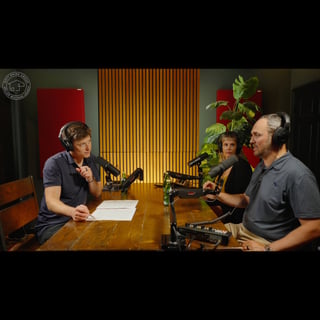
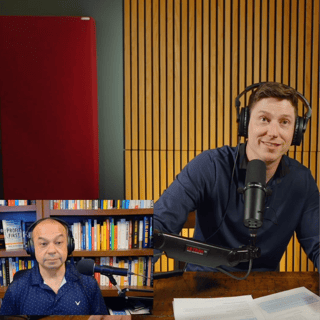
Speaker: Hello everybody, this is Matt Rhine with another episode of All Roads Lead to Real Estate. And I have a another guest here today that's very special in in my eyes.
Speaker: And he's what I like to refer to as my mini me. This is an episode that I had thought of for a little while, and I had to wait until this guest was really seasoned, was ready for the moment, because it's a little more adult conversation than I think we typically have at home. And so the guest I have today, his name is ah Sir Charles Ellis Rhine, as we call him at home. He's my son, and he's nine years old. So hi, Charlie. Thanks for coming back. This is your second time on this podcast in a couple of years. It is.
Speaker: so Are you excited for round two? Yes, I am. You are. Excellent. so the The purpose of today... and I thought this would be interesting for a lot of reasons. Obviously, for me, it's my boy, so that's always fun. but The other reason is because I get asked a lot of silly questions that people think are silly that aren't really silly. and i think adults, Charlie, have ah a tendency to be nervous to ask questions they think they should already know the answer to.
Speaker: and sometimes they nod their head a lot like this. Have you ever done that when you don't really know what people are telling or asking of you, but you're just like kind of going along with it? Does that make sense? Yes.
Speaker: And so today's episode is to help explain real estate to you as if you're a nine-year-old, and I thought the best way to do that is to bring one. Now, granted, Charlie, you're around me, so you know a little bit about what I do, I think. and Yeah, a little bit. A little bit. And so we're going to get into it, Charlie. And so I think it'll be fascinating. So Charlie, I want to start before we get into the real estate side. I want people to kind of know a little bit about you. um So where do you go to school, Charlie? um Lutherville Lab.
Speaker: Lutherville Lab. And do you like your school? Yeah, it's a good school. It's a good school. And what grade are you in? I'm in fourth grade. Okay. And Charlie, what's your favorite thing to do at school? What's your favorite class?
Speaker: My favorite class is... like sp like anything or does it have to be like a learning, learning subject? it's You tell me or give me two.
Speaker: Dismissal and recess. Dismissals your favorite class? Wow. I think that school's doing quite well. What else? Is it is there anything else? Math.
Speaker: You like math? Yeah. Math is my favorite learning, learning subject. Okay. Well, that's good. um Yeah. you're You're doing pretty good, right? Yeah. Yeah. You're very proud you're in the advanced math, right? Mm-hmm. So, that's very good. And so, what's your favorite sport? My favorite sport is baseball.
Speaker: Okay. Are you really happy with your baseball yes career so far? Yes, really happy with my baseball career so Yes. Did you make your travel team this this past year? Yes. And what positions do you play? Pitcher and catcher.
Speaker: Sweet. Yeah, so you do a great job. So i'm very proud of you, buddy. So I'm also helping to coach. It's fun. So that's what dad does when he's not doing his day job. So this kind of gets back into um you know my world here. And so i'm very excited. Thank you so much for joining me, buddy. You're welcome. All right, so let's get into it. So, Charlie, um how do you want this to happen? What I want this to be is, you know, we have not planned this. I have not coached you in any way, shape, or form. So, I want this to be as authentic of a conversation as we could have, right? Mm-hmm. So, you got to help me out. So, do you have a question for me? do you want me to start with questions for you?
Speaker: i have a question for you, and then you can start giving me some questions for you. For me, I mean. Okay, go for it. um What makes a house good for a family?
Speaker: What makes so That's an interesting question, and I want to start by turning the tables on you. What do you think, Charlie, would make a house really good for a family? I don't know.
Speaker: Is there anything in particular? What makes the house that you live in? Do you like your house? Yeah. Why do you like it?
Speaker: Because it has a lot of space because we have a lot of people in our family. Okay. So that's a very good thing. So when people are looking to buy a home, especially if they have kids, they're going to look for enough so enough space, right? They need enough bedrooms, yeah enough bathrooms. Do you like sharing bathrooms with everybody in the family, or do you think the kids like their own bathroom if they can get it?
Speaker: I would like my own bathroom. That's just me, though. Yeah. So that's like everybody. I don't think that's super unique. So that's one thing people look for. Some people want a big backyard, and some people don't want a yard. The interesting thing, Charlie, about finding a house is everybody has their own wish list, and it's different for everybody I help. So what you like could be very different from the next person I help. Other people, yeah. Yeah. So that's the neat part. So when I sit down with someone, the first thing I do is get to understand what is important to them because you're going to want to buy a house one day. Are are you?
Speaker: Yes, I probably. Oh, yes, I need to. Why do you need to? Because I i guess I want to then. Yes, because you can live somewhere without owning it, right?
Speaker: what's What's that called?
Speaker: Like rent. That's right. You rent. So you pay someone else to live in their house. Yeah. And so does daddy own a bunch of houses that I rent to other people? Yes. Yes. And so you're going to be in that business too, buddy, when you get a little older.
Speaker: So I have podcast episodes just dedicated to that. So you can be a landlord and rent to other families to live in your house. So, that's also a reason i sell people houses.
Speaker: So, when you look at ah the needs, the first thing kind of leads, Charlie, you're very wise. It leads me into the first section of what I'm going to do, and I'm going to try to explain to you, so you can understand it, the process that I go through. So, guys, if you met me and said, all right, I want to buy a home, whether you've bought homes in the past and you know what you're doing, or your first timer, um it's the same process pretty much. and so Charlie, I want to explain this to you so you understand it, so you can tell your friends. That's a tall order, but if I can do that, anybody that's listening is going to know this. right I'm going to just explain it that clearly, hopefully. Everybody grade me at home. So guys, the first thing, Charlie, I want to explain to you in the process, there's two. the Either you're buying a home or you're selling a home. Those are the two reasons most people are calling your dad. So the first part, the very first step, Charlie, is to get pre-approved. And I'm going to read down the list that I want to talk to you about, and then we're go to go back to this pre-approval process. So, the first thing, Charlie, you're going to do one day is get pre-approved to understand how much of a home you want to buy.
Speaker: And if you have the cash and you don't need it alone, then we're going to talk about your budget because you have the savings to be able to just buy it. Okay. Does that make sense? Yeah. So, that's like if you want to buy a baseball card, you can either save up and buy it right up right away, yeah or maybe you have to borrow some money to be able to buy it. Yeah.
Speaker: So that's the first thing I talk to people about, to create a budget. The next thing, Charlie, is a saved search. So I'm going to save a search based on the criteria that the person that I'm speaking to or the family I'm speaking to wants. And you have to do what? You have to verify that criteria with the budget.
Speaker: Does that make sense? Yeah. So then never, ever, ever, that one of the things, Charlie, everybody does is sometimes save the search and go look at homes first, and they have no idea how much they can afford. Does that sound like a good idea? yes Oh, wait, no. I mean, no. No way. why Why is that a bad idea? Because, like, what if you can't buy the house that you want?
Speaker: That's right. Is that going to make you happy or really sad and upset? Or really upset. That's right. And so that's something, Charlie, as silly as that sounds, I have to repeat constantly. Because the what I've learned after doing this all these years, Charlie, is that nobody wants a loan.
Speaker: Everybody wants a house. Just like no one really wants a real estate agent. They want the house. They want a house. I'm like a necessary even. That's exactly right. They want the keys. Give me the keys. I don't want a loan. Get out of here. um all right so The next thing after you save a search is to actually do the fun part. That's called the shopping. Do you like shopping? Yes. yeah That's going out and seeing the homes. That's the home tour.
Speaker: After you tour homes and you find one you actually like and you want, you do the next step, which is make an offer. so I'm going to go into detail on that because that's... I'm going to really go in the down the rabbit hole there because that is something people don't really understand. so We're going to discuss what an offer looks like and how to make it appealing and how to get a house accepted. so Once you get an offer and the sellers, the people that have the home currently, agree to your terms, you get the home contract accepted, meaning it's going to be yours. During that process, there's roughly 30 or 45 days, in which case during that period, it's called pending.
Speaker: and When it's pending, there's going to be either inspections, an appraisal, or both, or none of those. It depends on your offer. and then so That's your contingency period. and Charlie, the very last thing, that's the most exciting part. It's called closing. That's when you actually get the keys. In the house. In the house. and That's when you get to party and have fun.
Speaker: And get the house. Correct. So that's the finale, right? That's that's the at the end. And if you're in real estate, that's the only moment your dad ever makes money is when we reach that finish line. I never make a penny from anybody I speak to until I reach the closing table. Yeah, closing, finish line. So I could help 500 people look around, but if I never do anything to help them buy anything or sell something, I don't make any money.
Speaker: So that's how real estate agents get paid. They get paid at the back, at the very end. So, Charlie, what was the very first thing I said we were going to talk about? um It was, forgot the word.
Speaker: Was it a pre-approval? pre Yeah. Pre-approval, right? So, where you create the budget. So, my question to you as a nine-year-old, right? So, what do you think that means? If you had to explain it based on the little bit of information I just told you. what Like, what is a budget?
Speaker: Sure. whatever However you want to answer that. What is a pre-approval to you? What does that mean when I say that's the very first thing I want to do if you want to buy a home?
Speaker: I don't know what a is. That's exactly correct. That's what I was hoping you would say, because that's the point of this show. Good job, Charlie. um A preapproval is going to be when you speak to a bank or a mortgage person, so someone with the money. so Banks have lots and lots of money, Charlie. What they do is they they take money and they borrow it. so what they if you had Let's say you had $100.
Speaker: You can give your money to a bank. That bank will give you a little bit of money. It's called interest. and say, thank you, here's a couple dollars for your $100. They might give you $2 or $3 every year for you giving them the money, and they so save it for you. They put it in a nice protective bank.
Speaker: And then they get to loan that money out to other people, and that's how they create mortgages. It's actually a way we create money. Have you ever wondered how money is created? Printers.
Speaker: Printers is one way. Digital is another. It comes through the lending process. So when you create a mortgage, you're creating money. So that's why we're incentivized. you know what incentives are? No. An incentive is is something the government does to try to give us a reason to do it.
Speaker: and so There's lots of incentives to buy homes, and one of them is because they want money to be created and entered entered into the marketplace. so That's what we're all doing, our civic duty, by buying a home. Trust me, that's how this works. so You're going to talk to someone like a bank that has the money, and then they're going to ask you, can you show me your pay stubs? Show me if you have a job, how much do you make? Do you have any other debt? said Do you know what debt is? no It's like how much you owe. So, if you bought a car and you owe $30,000 on the car, they want to know what your payment is on that car. Does that make sense? Yeah. So, they're checking to see what your expenses are and how much money you make, and they're going to create and ah a number and say, you are now approved to a certain amount of money.
Speaker: And then that is going to be your budget for correct the house. And how long do you think that takes? think that takes weeks and weeks and weeks? I think it takes like years. it takes years to get that pre-approval done?
Speaker: Well, maybe months. don't know. Yeah. So what's really cool is it you would think it takes forever, yeah but you can get it done in like an hour. Oh, you can? Yes, you can.
Speaker: Very quickly. It would take like year or a month. You would think. And a lot of people think that. And is it a scary process? I don't think so. No, it's super easy. you just It normally is just done online. You click a few buttons, you upload some documents, that's it, and then someone calls you and helps you. And when you get pre-approved, Charlie, you are not required to use that person or that lender or that bank. Ever.
Speaker: So all it's doing is having that ability to know what your budget is. And the crazy part is one bank can tell you one number, talk to two others, they'll give you two very different numbers. And that can be very frustrating for people.
Speaker: So what you want to do is work with a realtor, someone that's why I have a job, because you should know, though if you work with a good realtor, they should know who the good banks are, the good lenders, so they can connect you with someone who's good. ah Like a good budget.
Speaker: Yeah, so it's an accurate budget, because the last thing you want to do, no one likes your dad when i knock yeah when I give you the wrong information, you love a house, and your kids love it, your wife loves everybody loves it, and then you realize, oh no, it's not in our budget. yeah That is not how I get good reviews on Google, Charlie.
Speaker: It's bad. So, I want to make sure I have that very accurate. right So, that's the first piece. and that should If you can, always go through your real estate agent to get that initial process done. You can always shop the rate. You can always be making sure you're getting a good deal later, but you want to create that budget first.
Speaker: so Does that make sense? Yeah. so do you Can you repeat to me the basics of what a pre-approval is? Pre-approval is like a budget for a home. so like If you buy a home, you have a budget, so you can't go like over the budget or under the budget. Yes.
Speaker: Good job. That's the first one. Got that done. Next one, saved search. So what do you think that means? you You're good on the computer. I do not know. Good. So a saved search is when you take that budget and then I sit down with you. It's kind of called a consult. We can do it online, on the phone, on the Zoom, or the old-fashioned way like this, in front of each other.
Speaker: And we can talk and say, how many bedrooms do you need? What type of area do you want to be in? How close do you want to be to your work? Where does your family live? You get all the details. and Once again, part of my job and any good realtor's job is to then take what they say plus your knowledge of the local area and combine it. and I can help a show them and tell them hopefully to expand what they're considering looking for to make sure they don't miss any areas that they might not know about currently. yeah right and That's called a saved search.
Speaker: and You do it just like you do anything online. I i do it on my site. I save it. and The whole point is, then it gets updated to every single day they'll get an email that tells them exactly what hit the market that matches their criteria. and That's how we know which homes to go look at.
Speaker: Does that make sense? Yeah. So that's a saved search. Saved search. Right. And so do I do that first or do I do pre-approval first? Pre-approval, so you have the budget for the house. That's exactly right. And so then after the saved search, they're going to then go and we're going to do a home tour. Have you been on home tours with your dad before? Is it a showing? That's exactly right. What do you do? What's your part when you help your dad at showings? Turn on all the lights. You run around like a crazy person, right? Turn all the lights. So the house looks better.
Speaker: That's right. Why? Because light helps houses look better, right? Yeah. Open up the windows, all that stuff, right? You want to make it brighter. Brighter. That's right. So, we're going in to do a home tour. Normally, you do a couple home tours before you find something you like. Yeah. And you ideally show several homes on each home tour so you can compare.
Speaker: And you compare neighborhoods and say all the details get the all the the details. All the details that you with one. Correct. And is that the most fun part of the whole thing? Probably more.
Speaker: Yeah. Definitely. It is. Because you get to shop. It's like shopping for a bike. See the house. Like it or want it. That's right. Because you didn't pay for anything. You just get to explore. Yeah. So that's the cool part. So you get to do that. And then once you find one you like, the next step is to write an offer.
Speaker: What do you think that means? I don't know. lu and i can tell you that's the most honest I wish half of my clients admitted they didn't know that because it can be very confusing for people. and so I try to explain it without offending anyone because some people who have done it before don't want to admit, oh, I don't know all the details. yeah so Charlie, I'll tell you what it's not. An offer is not a single piece of paper or a little email or a phone call between agents. An offer is the entire contract. It's the whole thing. It's like 30, 40 pages. and A buyer has to fill out all that paperwork and sign out all the details because when I submit it as an offer, it has to be complete, including that pre-approval letter.
Speaker: So, once again, if you don't have that, now you're rushing, if you find a home first, rushing to talk to a bank to say, please approve me, I have a house I want to buy today. Yeah. That is not fun. But you can't buy a house today.
Speaker: Not if you're not pre-approved, you can't, unless you have the cashola, right? Yeah. You have the cash, you can do it. But most of us don't. Yeah. Most people borrow. would not. wouldn't. No, not yet. One day.
Speaker: One day you'll have the cash. So, okay. So that's what we're doing. going to write that offer. It's 30 pages at least. Wow. Yeah, it's big. And so you want to go over all those terms. I think the best time to learn about those terms is probably not the day you write the offer. Yeah.
Speaker: It's probably before. So, some of those terms need to be discussed when you're doing your saved search. And I'd say this to anyone who's listening that is thinking about writing an offer or about to buy a home, even if you bought a home in the past, you need to ask your real estate agent, explain to me the different terms that I might need to know about and the different contingencies and the different ways to structure an offer so you don't have to explain it to me in two months when we find the perfect house and now I'm stressed and now I really want it and now it's the first time anyone's ever explained it to me. So, some of those could be your inspections, your appraisal, your timelines, your your ability to close early, your ability to do what's called a rent back, where someone you buy the home and let someone else who currently owns it live there longer. yeah yeah Right? So, there's all these different things that you need to be able to do, and you want to know them in advance. That's the best way to do it. Less stress. you can buy the house easier.
Speaker: Easier. That's the key, Charlie. If you can do that, someone is going to refer you to their friends, and that's what daddy's looking for. Yeah. So, you make money. I need to make money. That's true. Yeah. And that's the way to get good reviews. So, the best way to make money in real estate, Charlie, is to help people get what they want yeah and do it well. Yeah. that they can get what they need and what they want in the house, so then they pay you money because you helped them get to that process. That's right. so If you're really bad at your job, are they going to tell their friends and family to use you?
Speaker: Yeah, no, they're probably not going to use you. They'll leave bad reviews That's exactly right. That's exactly right. so After you do a really good offer and we get the house, you will then be accepted. and that's Acceptance means the seller has signed the full paperwork, everything. All the 30 pages? All of it. Not a single page missing. Not an initial, nothing. They send it back over and then it's... We call it a ratified contract, but it's an accepted contract.
Speaker: That means everyone agrees on the terms, every term. That creates the the period between when you have an accepted contract and the closing. That on average, Charlie, is about 30 days. That's it.
Speaker: It could be longer, but on average, it's around 30 Yeah, i I'd assume a year or something. Yeah, so you would think, but it doesn't take that long. Yeah. And if you have cash, you can close 10 days, yeah maybe even sooner. So it doesn't take that long because you have to verify that the person you're giving all that money to actually owns the house in which you're trying to buy. Can you imagine if you bought, let's say, a car from someone and they didn't even own the car?
Speaker: Yeah. a lot And you gave them all that money? very Yeah. You'd be real sad. Scam. That's exactly right. You were avoiding scams. So that's the title process, which is a whole thing. We're not getting into that. But part of this is a title search. So they're verifying who has their correct title so they can transfer it to you. So you could, it's ah most homes have inspections.
Speaker: Do you have any idea what a home inspection might be? Maybe like... don't know.
Speaker: Maybe like, yeah, I don't know. That's good. it's It's going to be when you have a third party, someone that's a licensed home inspector. That's all they do is look at homes. They come in and check out the condition of all the things. Oh, i yeah. I was going to say clean, like deep clean or something. Yeah, kind of, but not exactly. So, this person doesn't clean. They're just double checking to make sure the windows work, your appliances work, the heat and air conditioning work, if there's any leaks. Yeah. Now, remember- so it The house is good for the people. That's right. And if it's not, this is your chance to then negotiate and say, hey, that roof doesn't look good. I need some money or you must you have to fix it. Correct. Yeah, so then you... yet The um person who checked her all the conditions and stuff, they have to give you money so then you could pay for the roof.
Speaker: Kind of. you're As the buyer, you're going to actually ask it from the person that currently owns it, who's called the seller. so That's usually you're asking them and saying, hey, I need some money to do some fixes here.
Speaker: and There's lots of ways to negotiate that. and Charlie, one of the best reasons I'd like to say people use me is because during this heated, crazy, tense moment, Your dad knows exactly what things cost. and I don't know what things cost everywhere else in the world, but I know it locally. That's why you want someone that knows what things cost wherever you are. because Believe it or not, the same repair in Maryland can cost very different from where your mom was born. She's in New York, right? Yeah, New York. in new york so New York prices are very different than Baltimore prices. Aren't they... i've but They're more expensive, pretty right. yeah Yeah. Everything's more expensive in New York.
Speaker: That's pretty much true. Yeah. so But the point is, we go through that process and we're going to try to make sure you feel comfortable buying the house, negotiate the items, and then only if all of us agree, yep, we are all happy enough, we're going to agree to move forward, then you keep going.
Speaker: and If you don't, that's when you get your deposit back. It's like the money you said, hey, here's some money to hold the house in good faith. You get that back if you cancel on the inspection. Charlie, this is something you wouldn't know. It just happened recently, the last year or two. You can now cancel in Maryland for any reason during the inspection timeline. so You don't have to give a reason. You could just say, thanks, see you later, and you can get your money back and keep searching.
Speaker: So, that's important to know so people who are terrified of the process, they can get out during the inspections if they... for any reason. Cancel if they don't like a detail or something or something's not working. Correct. You don't have to explain yourself.
Speaker: So, that's important to know that. And then the appraisal. What do you think an appraisal? That's an interesting word, right? Yeah. It's a confusing word. Yeah. So, an appraisal is being going to be ordered typically from the lender, the person trying to give you all that money.
Speaker: and they Why do you think they might want an appraisal? Why do you think they want to verify what the home is worth? Why do you think the bank cares about making sure the home is worth what you're going to pay? Because of of your budget?
Speaker: Yeah, they that's part of it. yu and so They're going to want to verify that if you if you are under contract for, let's say, $500,000 to buy a house, they want to verify it's worth because can you imagine if it's only worth two hundred thousand as a crazy example and they give you five hundred thousand Yeah. That's not fair to the bank because then- Because then they just give you an extra $2,000 for what? Yeah, for nothing. And then in the case you don't spend- Imagine if you never pay the bank bank back. Yeah. The bank has the ability to take the house back.
Speaker: It's called collateral. They could say, hey, you didn't pay us. We're getting our house back. Yeah. and And then they can sell it. And then they can sell it. And then they can sell it for money. Correct, and then that's how they stay safe. yeah so um You really can't beat a bank. Banks are fabulous things, and I'll teach you about how to be a bank later. That's a whole other episode. You've be older for that one, buddy. but Believe it or not, you too can be a bank.
Speaker: You can do lend to other people. That's fun. It's another way to make money. Yeah. But that's what an appraisal is, and so you're going to have to verify it's worth what the contract says, what you guys agreed. There can be diff times where it's a worth more or less, but remember, it's an opinion of value. There is no so an appraiser doesn't there is no such thing as knowing the exact number.
Speaker: so Some people get really excited or really depressed based on the appraisal. It's an opinion. If I got three appraisals, Charlie, with three different people that do it all day, they can give you three very different numbers. Isn't that crazy? Yeah. so It's part of the process that's necessary in the event the appraisal is way off.
Speaker: You can either negotiate, you can walk away and say no thanks, or you can switch and get a different bank or different lender and they can give you ah a new mortgage and they'll order a new appraisal. so There's a few options, but that's necessary you're getting a loan. That's another you know another hurdle before you get the keys.
Speaker: Yeah. Got that? Yeah. Cool. And so that's the appraisal. so the last piece is the best part. Closing. Good. You have a good memory. So closing. So what does that mean? Like where you get the closing is where you get the keys and you get the house and you pay for the house. That's it.
Speaker: Yep. So that's the time when you actually owe the money. And get the house. oh the house no That's right. So when you go to closing, there's something called a final walkthrough. That's typical where you go through with your agent.
Speaker: Hopefully, the last owners deep cleaned it. Note to the sellers out there, leave it how you wish to ah purchase one day, right? Yeah. So, do that. um But you're not required to do a deep cleaning. You're just you're just a good person if you do. you know Aim for that. So, you go there, you you walk through, make sure nothing's damaged. It's not another full inspection. Everything is working. You're just verifying it's in the same general condition. As it was. Yes. So if the water has three inches of basement, or the basement has three inches of water in it, that's what I meant to say, yeah that's no good.
Speaker: And you that's why you always double check as close to closing as you can, preferably the same day. And then after the final walkthrough, you go directly to closing, and that's when you sign a crazy stack of papers, like 150 pages. wow Yes. seriously Wow. And you still have to use a pen for most of these. So are they teaching you guys how to write your name in cursive?
Speaker: Not really. i mean, they give us cursive packets in ELA, but they don't really teach us anything. Yeah, and I'm learning that with a lot of other kids that are just getting their first house. They don't know how to write their name.
Speaker: So, it's important because they're still doing the old school signature. You'd have to sign your name Charlie. And so, you sign all these pages, and that's when you actually... send and borrow the money, the bank will pay and on your behalf if you're getting a loan or the cash will transfer from your bank to and actually close on the home. That's when you get the keys. Buy the house. Get the keys. Yes. Get the house.
Speaker: That's right. And i remember, this is a public service announcement. You can't put stuff in that house until you pay for it. Yeah. I have lots of people, Charlie, that ask me, I'd like to put all my furniture in there the week before. no no, no. You can't do anything until you pay for it. After you pay for it, you can put the TV and the couch and the furniture.
Speaker: That's right. And the blinds. That's it. And so thats that would be ah the closing. And that's when you get the keys. And after the closing, you get the house. That's it. And that's the basically the whole process. And then it's the fun part of moving.
Speaker: It's not the fun part. No. No, I can't even fool you, can I? So moving's not fun. I don't think anyone's ever called me for help because they love moving. I think people are... That's not the fun part. But um at least you get to move into something that hopefully you're excited about. and Yeah. A bigger house, maybe. Maybe. Sometimes smaller. Sometimes people have bigger homes and want to get a smaller house because that' they need Because have too much space. that That happens. Too much to clean, too expensive to keep it up, too much work. So that's very common too. So that, Charlie, is the entire process. That's the whole kit and caboodle. um Does that sound like something that is pretty easy or does that sound like something very confusing still?
Speaker: It's like mid. I understand most of it, but not some it. Got it. And the cool part is you don't have to remember this unless your job is to do what I do. Because everybody has their own job, right?
Speaker: Yeah. You have teachers. You have people that... Baseball players, football players, yeah soccer players. Yeah. And they have their own jobs. Yeah. And so then they have to rely on someone else. I don't go to the hospital and tell the doctor what to do.
Speaker: Right? Yeah. So I pray. I'm hoping they know what they're doing. Yeah. because that's their job. And so my job Just you know what you're doing because it's your job. That's my job. That's all I do. And so all I do is help explain it to people and then I hold their hand so they can... I just want to make them familiar with it. So if anyone's listening to this, right, they might have a good idea now what it looks like and sounds like. Yeah. And what the process is of buying a home. That's right.
Speaker: And then they could buy their own home one day. Yeah. so it's Just like me. Yeah. Do you think you're going to buy a home one day? Yes. Do you know the crazy part? I don't know if I've told you. Do you know you already own a home?
Speaker: Not really. Yes, I've taken you and your brother to one of the homes I bought last year. Yeah, but this you bought. I did, but- I didn't buy it, so it's technically still not, I don't own a house. Technically still you owning the houses. Yeah, but I'm going to blow your mind. going to tell you some things we don't normally talk about. So that house, Charlie, is going to be for you.
Speaker: So you're going to get that house and so is your brother. And I have other properties that I'm going to give to you guys and your sister eventually. And then it's really neat, so you can do something called generational wealth building. So real estate allows you to borrow other people's money, very low cost, and then you can use other people's money to help you build assets like homes that go up in value over time.
Speaker: We borrow other people's money, and then we let the people that live in the home pay that off for us, so we don't pay for it. And then you guys will get the benefit and then you can then do other things with it. You can borrow against it and ask the bank for more money. Yeah.
Speaker: Isn't that crazy? Yeah. And I'll tell you all about it because that's going to be a when you get a little bit older, we'll do a podcast about that because you can borrow money against the things that other people paid off.
Speaker: You don't owe the government any tax money because it's a loan. Yeah. And then you can buy more homes with it. And you don't pay taxes on that either? Yeah. Isn't that crazy?
Speaker: Yeah. And then if you secure it correctly, entitle it correctly, you won't pay any taxes down the road when you transfer it? Yeah, because I'm pretty sure no one really wants to pay taxes. That's the easiest thing anybody's ever said. Yes, that's going to be the highlight of this podcast is people want to avoid taxes. Yeah, so they don't have to pay extra money to the government. Right. so taxes the One way that would explain taxes to me, Charlie, taxes are necessary, but taxes are incentives.
Speaker: That's a neat way to think about taxes. so What that means is it's not that they're necessarily good or bad, but they incentivize us to do things. Well, they're technically good because then it gives the government money to do good things, like build new buildings. Right. And that's the way I hope everyone thinks about how the government uses our money.
Speaker: But sometimes they don't always use it the best. Sometimes they use it for military. Yeah. so The government needs money to protect us and to do things, yeah but you also can react to the incentives they provide, like buying real estate, because they incentivize us and and reduce the amount of taxes we owe them. so Your dad sometimes does buy properties or invest in certain things for deductions, because I'm doing what the government asks me to do, so I don't have the tax bill at the end of the year.
Speaker: so That's why I call them incentives. so People that don't pay taxes, even if they make a lot of money at their job, I'm doing as the government told me to do, therefore I owe less tax. so That's one of the reasons we invest in these type of things like real estate, as opposed to just trying to get a pay raise at your job. because Believe it or not, Charlie, if you work for someone else and you make a lot of money,
Speaker: The government will ask for a of it back. lot of taxes. Right. So that's the least efficient way to earn money. Yeah. So you want to try to find other ways that are even more efficient. And that's what I'm going to teach you as you get bigger.
Speaker: And so, that's the purpose of this podcast, buddy, is so other people can listen to other ways to make money and teach their own kids and keep it going. Yeah, generation to generation learning the process of home. That's Buying home. Homes are one aspect of it, but I think it's important that people still do it. Do you believe this, Charlie? The average age of a first-time homebuyer in the United States, do you know what that is?
Speaker: I'm going to guess 21. twenty one 21. That's funny enough how old I was. I was 22 when I bought my first house. Guess what the average is? got close. You got real close. You'll be 18 when you buy your first house, because I'll see to it. But when do you think the average age... But when I'm 18, I don't think I'm even in college yet.
Speaker: You'll be in college. I thought I'd be in high school. I'll show you how to do it. And you can do it with very, very, very little money, guys. That's the key. I'll teach you how to do that. But the average age is 40.
Speaker: That's wild. Well, listen, that's not that old now. Your dad's older than Be careful. Be careful with how wild that is. But that's a lot older than it used to be.
Speaker: It used to be in the late 20s, and then it was in the 30s, and it keeps inching up because a lot of parts of the country are really hard to afford. But there's ways to do Yes, Yes, there's ways to do it, and um I hope I inspire people when they listen to your dad to learn about it because we know a lot about your iPads and your iPhones and cars and other things that go down in value and don't make us any richer. Yeah. So hopefully we can get people to think about real estate as ah as a whole different thing.
Speaker: So, um I don't know, Charlie. Did we do a good job explaining stuff today? Yeah, and I think we did a pretty good job explaining to a nine-year-old. Yeah. Is there anything else I left out before i wrap this up? Not really.
Speaker: I did it all. we've We answered every question. Oh, like all of these questions that I have? No, you don't have to answer. It was nice that you read those and checked some things off. Well, i still have a question. Okay. What is a mortgage?
Speaker: Oh, come on now. No dinner for you tonight. Can you explain to me, Charlie, in the most simplistic terms? Now we're really going to see. what What is a mortgage? We just talked about that. It's part of the pre-approval process, remember? you talked about a mortgage?
Speaker: That's true. I don't know if we said that word, did we? Fact check me, guys. Did I say the word mortgage? oh I don't think I did. You didn't. Shucks. All right. Maybe you do get dinner tonight. All right. so Good job, buddy. so A mortgage is when... the it's It's the document that says that I'm going to give you the money for your house and I'm mortgaging... and you Do you remember Monopoly? Yes. You know how you can mortgage one of those properties? Yeah, you can mortgage them and then you get money. Because the bank gives you money. so What you're doing... It's called collateralization. That's a tough one. Collateralization. Yes, it means I'm going to give you my home that I just bought as collateral. so If I don't pay you back, you get to take my house. and and The document is called a mortgage.
Speaker: It's more of a ah concept. so In the state of Maryland, it's ah it's a deed of trust. Charlie, know that's kind of confusing, but it's a way to get the money to be able to buy the house.
Speaker: Does that make sense? Because no one's just going to hand you free money so here you go here's a couple hundred thousand dollars, enjoy. Yeah, just take your hundred thousand dollars for the house, you know, house. That's right. And i have that's what makes real estate really interesting is because there's not many things an average person like us can buy that we can easily get money from someone else.
Speaker: Because it's a real asset. It's called an asset, something that that actually maintains and retains value and can appreciate. and so That's an interesting thing, and that's what a mortgage is. so That's what I started off by saying. Nobody wants a mortgage, but they want a house. house yeah and so um Mortgages are not bad. You're going to learn something, or probably not in school, quite frankly, which is another discussion, um about debt.
Speaker: There is good debt and bad debt. All debt is not bad. Debt means you owe someone else money. That's not always bad. I would think that'd be bad. Correct. And most of the time, it's not good.
Speaker: But debt when you invest, yeah, debt when you invest in an asset that goes up is really good. That's a special thing as long as you keep your debt levels nice and low and manageable. It's very low risk. So you sell house. Because imagine this, Charlie. Correct. Imagine if you saved up from your job $100,000 and you're going to use that for a down payment as an investor to buy a house.
Speaker: You could buy one house and put $100,000 down as a down payment. Actually, I'm going to change the scenario. Let's say it's $400,000. You saved up really long time. You got $400,000 saved. You can buy one house in this area in Towson for $400,000. You didn't take any mortgage out. You don't owe anybody a dollar. and You rent it out and you make $3,000 a month.
Speaker: That's what you could do. Or I could take $100,000. How many does $100,000 into $400,000? how many times does a hundred thousand go into four hundred thousand Four times. There you go. See, that math is working. I can buy four houses basically with that same $400,000. That you saved over- What's 400,000 times four? What's four times four? It's 1,600. $1.6 million. If you take 400,000 times four, it's Four times four, 16.
Speaker: sixs one thousand six hundred so one point six million dollars so if you take four hundred thousand times four so it's four hundred thousand full times for sixteen Yes, so it's 1.6 million. So now you have control of $1.6 million dollars of real estate for the same $400,000.
Speaker: So if your home appreciates, just to make it easy, 10% a year, let's just pretend that's true. If it gets 10% a year for the math purposes, what's 10% of $400,000? You remember Not really. remember that not really That's $40,000. You're going to make $40,000 in a appreciation.
Speaker: right That's how much it goes up. but What's 10%, it's like You just move the decimal. Regardless, it's You're to make a lot more money over time by using debt in real estate. so Mortgages aren't always bad.
Speaker: Just don't mortgage too much, because then that's risky. yeah so um well Good question. I can't believe I breezed right through that. Is there anything else I forgot, Charlie, so I don't um get in trouble? Let's
Speaker: Oh, yeah. You did not explain what is the most fun or like what is the most boring or and most fun part of your job. Oh, that's nice. That's a good question, Charlie. um What do you think I would say is the least fun part of my job? What do I complain about the most?
Speaker: And remember, we're on air. with Don't use first names. so Don't say mom. I don't get it.
Speaker: That's an adult joke. um Yes. So, Charlie, I would say the hardest part of my job is the time. What I do takes a lot of time.
Speaker: And what time do I get home from work most days? Nine, oh probably not, like eight, probably. Yeah, 8 p.m. Well, it used to be like 7.30 in the winter, but now it's eight. Yeah, because it's spring and it's getting busier. Yeah. So I get home way late, which stinks. I don't like that, and I work all weekend. Because don't dinner and watch movies with Yeah. So my hobbies include work. That's my work. That's my hobby. that's my That's my life. So that's the toughest part about my job that I wish I got more time. And the funnest part...
Speaker: I think I get to know people, Charlie, in ways that even some of their friends don't know them. Because you get to experience something that's really personal, and you get to know what they like, what they don't like. You get to know their finances. You get to know all about their kids sometimes. it's Some people are open books once you get to know them really well, and it's really neat. Because otherwise, you have a circle of friends that's pretty small, and that's all you the people you get to know.
Speaker: Like the house we're in right now is Mr. Raul over here. Now he's a friend and I sold him a house years ago. So you get to meet lots of new people. And so it's relationships. That's my favorite part. And I think a lot of people have different jobs that don't get to know people that well.
Speaker: So that's my favorite part. That's nice. Yeah. Pretty sweet, right? Cool. All right. Well, I'm going to end it there, Charlie. What did you learn? Is there anything that you think was interesting or was it all boring? You tell me.
Speaker: I think the most interesting part was... do you think?
Speaker: The inspection thing where they have to check all of the, um like the inspection where they check if everything's good, like the heat and air conditioning and stuff. Do you want me to take you to see one of those one day? Yeah.
Speaker: Yeah. They're really, they can be fun. They're stressful sometimes. Sometimes. Sometimes. I think I've been to one inspection where there was like ah people seeing, like they were going in the basement checking everything out. yeah Seeing if the toilets work.
Speaker: Right. Yeah. Now, you got to check the toilet. That's important. That's a key element. Really important. No toilets is real bad. You don't want to live there. Yeah. So, that's neat. Well, thanks, Charlie, so much for coming back. And I'm going to be able to teach you different things as you get older, and I'm excited about that. And my goal, I think, as a dad, is to help shorten the amount of time it took for me to learn all this stuff. My goal is to shorten that so you know it a lot earlier. Faster. Yeah, because is your dad going to give you a lot of things? Not old, yeah, no. Nope. Daddy's not doing that. Daddy's not playing that game. What I will teach you, I'm going to teach you things. Does that make sense? That's going to be your gift.
Speaker: Don't expect a lot of money when daddy's gone. Your job, I'm going to give you a lot of knowledge. Wait, you just said you'll give me ah all your money when you die. Well, mommy will get all my money when I die. And then she's going to marry a very young, attractive you know pool boy. It'll be very different. It'll be very different around the house.
Speaker: No, Charlie. it'll be ah My job is to teach you all these things. And it's going to change. Is is it going to change a lot with computers and artificial intelligence and all this stuff you're learning? he is going to be way different. But still, I think the fundamentals will be the same. Yeah. So cool. Well, thanks, buddy. Well, thanks for joining. you Thank you. Thanks. For teaching me all the things about buying, the processes of buying houses. All right. All right. Well, I love you, buddy. Love you, too. All right. All right. Till next time, everybody.
Speaker: See ya.
Speaker: And big thank you to our sponsor, First Home Mortgage. You can check them out at firsthome.com.