Transcript
Speaker: This episode is sponsored by First Home Mortgage.
Speaker: And then next thing you know, I'm making business decisions based on this account that seems like it's my money, right? But then you owe taxes and then you owe this bill and you have payroll. And then at the end of the day, I get this little meager thing that's left, or if anything, sometimes.
Speaker: And I realized I worked really hard. You look at the end of the year and go, what did I actually earn? Like, what what' just happened? No, someone introduced me to the book and it was an eye opener for me because I just assumed business owners understood how to run a business right and understood the language of finance.
Speaker: And it turns out they don't.
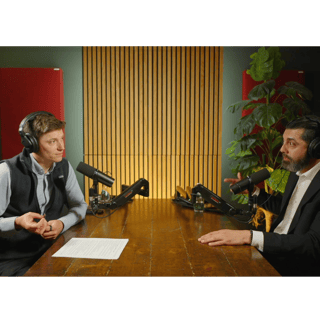
Speaker: right hello everybody this is Matt Ryan with All Roads Lead to Real Estate and i have a guest today that has a topic that he can discuss that i think every single one of us needs to know about and is specifically in my world um i'm in real estate i'm a ah business owner and i own a a couple small businesses and many of my clients do as well and so yeah i know any realtor listening to this probably needs this more than anything and um and Rocky, I think you'll probably attest to that in a moment as well. but Today's guest is a certified Profit First professional.
Speaker: and If you don't know what that means, then you're in the right place. because I used to not know what that means until I read that book actually behind you, Rocky, Profit First. and The book is, I think, yeah a complete game changer for many of us. and I can't wait to get it in in this conversation with you. Rocky, I want to first acknowledge um your your story a little bit and who you are. and so it's it's Rocky, and um I want to make sure i pronounce your last name correct. It's Lalvaney?
Speaker: Lulvani. Lulvani. I asked you beforehand, I still screwed it up, Lulvani. So, um Rocky has an MBA. He is a a profit first professional. um He's a founder of Profit Comes First, and so that's a website. You can check that out as well as as we're talking. And so you have a a host of, um I guess you're hosting two separate podcasts at this point, aren't you?
Speaker: Correct, sir. and so there's There's a a wide range arrangement, if you will, of information out there that Rocky provides, but I want to first off welcome you to the podcast, and I'm excited about our conversation today.
Speaker: Thank you for having me. Excited to be here with you. well Wonderful. Well, Rocky, I'd i'd like to to i guess start by sharing some of our commonalities. I believe in corporate America. um You've retired from corporate America, correct? You now work for yourself.
Speaker: That is correct, sir. And so where was your first professional job? I want to see if I have this correct. Did you and I do the same thing ah in our earlier years? Were you in pharmaceutical sales?
Speaker: i I was, but that was not my first job. no I was in the office equipment space first. Okay. And then I went into medical devices and then into pharma. Got it. So in and around that range. But before that, I had my real estate license.
Speaker: um Wow. So you've done- During that, I was flipping houses. So I've got real estate background too. Well, it's similar. you I think you stayed longer in corporate America. How long were were you in the corporate America world post education prior to to really jumping you know jumping off the boat and going into the deep end of the water and working for yourself?
Speaker: Too damn long. Yeah. Like 30 years probably. I could only last seven. That's the most I could stomach.
Speaker: I didn't know how to start a business. That was the problem. yeah That's that's like that's a common a common issue. Are you helping now, now that you're in your newest role as a coach and as someone that's helping to have these conversations? Is this something that you you can, I guess, relate to and help others work through that first hurdle? um I can, but it's not where I spend my time. yeah ah But yes, what we actually help with the hurdle, which is what my hurdle was, it wasn't how to start a business, it was how do you build a business model that makes you money
Speaker: doing what you love and you know that it's going to work. Right. And so that's the real key. How do you build that sort of a business model? So even while I was working in corporate, we had the real estate flipping, we had real estate rentals. I had done some real estate selling early on, but it just didn't, it didn't excite me.
Speaker: Yeah, well, it's it's a grind. I think that's what you don't see on Facebook and TikTok and all these other things. It's certainly not ah the sexiest ah profession in the world. I'll admit it it is all-encompassing. That's how I would describe that, but I think a lot of small businesses are, and if you don't feel that way, I don't know how successful you'll be in that space, to be honest.
Speaker: Some businesses are easier than others. Yes. Well, I want to get right into it, Rocky. so i know i thought it was fascinating. I had to at least say this. i was doing you know a little bit of research and just understanding that that you kind of immigrated to this country is what I have here at age two. and and I thought it was really interesting that your father came over with basically just the money in his pockets. and You hear that story, I do. It's something that you hear, but you rarely ah you know it's sometimes kind of puffed up a little bit more than than the reality of the situation. but It sounds like that's exactly what happened. and and It seems like you lost your mom at an early age and it forced a lot of i guess ah life experiences on you at ah at a young age is what I would and assume.
Speaker: It did. um You learned how to take responsibility and you learned how to do things and you learned how to survive and thrive. yeah and You have to do all that stuff and figure it out. um and It was a different time than today. Today, the world's a little bit different. Back then, the world was ah quite a bit different. Yeah.
Speaker: Well, I guess for better and for worse, but different is accurate. But I can i can kind of relate to that. I lost my father in elementary school. and And while I didn't come here as a first generation, we're fifth generation farmers in Maryland. and But we certainly, um you know, it was ah i was a working childhood. That's what I would say. I worked as a kid. So you do want to farm.
Speaker: And so I think that's, it helped shape who I am. And I think it helps prepare me for the career in which I have now. And i I worked as a teenager different ways. Back then, actually, I had side hustles too. So I was selling stuff and paper route. You learn how to run a business and make money. And and I also had jobs in in local restaurants and that kind of stuff as well. So a variety of experiences.
Speaker: Well, i I think it kind of leads us to where we are today. and Rocky, I'm going to say this as if I you know got you at a coffee shop and I'm sitting here picking your brain because this is why I'm excited about having this conversation because as someone who's read the book, I know you're obviously an expert at it compared to myself, but they the principles are very yeah They seem almost like common sense to a certain extent, but they're very they're very much something that as someone who's done this before and started a business, I feel like I got paid whatever was left at the end of the day, and I have an operating account, and I know I can't be the only person doing this that's this dumb, but it's the reality of the business, right? Where I'm out there, whatever, I get the is of the income, get thrown into this checking slush fund account, and then I start to perceive that as my money.
Speaker: and Then, next thing you know, I'm making business decisions based on this account. that That seems like it's my money, right but then you owe taxes, and then you owe this bill, and you have payroll. and Then, at the end of the day, I get this little meager thing that's left, or if anything, sometimes.
Speaker: and I realized I worked really hard. You look at the end of the year and go, what did I actually earn? like what What just happened? and You think you did well and you might have. ah so i don't know if that's a journey that you've heard a lot of the same exact experiences, but that's why I read this book and that's why I'm interested to talk to you because that's not how you're recommending but all any of us to live our lives, I would imagine.
Speaker: No. Someone introduced me to the book and it was an eye opener for me. Because I just assumed business owners understood how to run a business right and understood the language of finance.
Speaker: And it turns out they don't. um And that was kind of shocking to me that They run their businesses and they have no clue what's actually happening. yeah And I was like, oh, I can fix that. Because all those things that are in the book that are common sense, I was taught that as a kid.
Speaker: Sure. like That's how we learned finance. We learned how to negotiate finance. When my dad bought his first house, I was probably 13, I would pick up the phone and call the mortgage companies and check on rates and do all these things. and Yeah, so talking money, learning money, and all that stuff was just natural. and I assumed everybody else was learning it too, because I had. and i found out that wasn't the case.
Speaker: I know it's not. In my world, in real estate, the easiest thing to i guess to make to wake people up is to ask them anything about their business. Ask them what their profit was for the last 30 days, or what if they have a P&L, when's the last time they looked at it? Ask them almost anything, and not all, but many ah small business owners don't know any of these details. you know They're just in the business. They're working in the business, not necessarily on the business, is how i how it sounds like to me. Has that been your experience? That is, I think, very much the experience for probably 80% of business owners.
Speaker: Of the 20 that are left, I think 75% look and go, I'm not sure what to do about this, which leaves you about 5% of business owners who actually get it, know it, and use it. right So that's why I think business success rates are what they are.
Speaker: Well, I mean, can you can you start off by giving us an overview of what essentially this in in principle means? So when you say profit first, and I know... You know you have ah a website and a business dedicated to profitcomesfirst.com.
Speaker: Help explain the 30,000 foot view of all of this. So the book is written by Mike Michalowicz. All right. Mike owned a company. He owned multiple companies because he's an entrepreneur, right a business owner.
Speaker: and That company actually investigated Enron and said, yeah, it's all fraud. So right there, they're looking at the company, they figure this out, they're working with big companies, high profile, sells the company,
Speaker: He still doesn't understand finances. He thought he did, but within the next couple of years, he actually went bankrupt because he he thought he was smarter than he was.
Speaker: and During that period of, holy crap, I lost it all, what went wrong? he He realized that he had the wrong equation because he was told sales minus expenses equals profit. so Where does that leave profit?
Speaker: It's the end. It's what you said. It's a leftover. And he goes, well, how the hell am I supposed to be profitable if I think this way? And so you've been you've heard many times, pay yourself first. He's like, okay, we're going to do sales minus pay myself first. Profit equals expenses. And what you're actually doing is constraining expenses.
Speaker: When you grow up here as an immigrant or poor, you learn to be frugal. Frugal is good. The richest man in America is Elon Musk. He walks the factory floor and he's frugal. He's like, why are there six screws in that panel over there?
Speaker: Why aren't there three? And if someone says to him, I don't know, they're fired. You better have a damn good reason why there's six in there and why you already tried two or three and the panel fell off. So we know that we need six. That's how we know. We we broke it.
Speaker: Yes, he's a first principles. He refers to that as the first principle. That's a first principle. So Mike put that in a book that everyone else can understand. You've got to run your business on a constraint. And so when you pay yourself first, when you take your profit first, you learn to figure out how to run your business on less. So no matter what the size of your business, the guy next door is doing it on 10% less.
Speaker: Well, why can't you figure it out? right And when you start to do that, you start to keep more money. Too often, I think we throw money at the problem. yeah Instead of saying, hey, how do we do this in a better way?
Speaker: Well, I can tell you, I've had conversations with people that have been doing this. This is coming up on my 20th year doing this. so I've been doing this for a long time because I stopped the corporate world a lot earlier than yourself. and What I learned from some people that have done this a lot longer is that even in your best of years, which I know if I look at arc of my career, I might very well be in those best of years.
Speaker: I still have the giddy up to work the hours and do all the crazy things for my earned income. and Yet, sometimes if you're not careful and we're not paying attention to what we're discussing right now, you'll realize, what do I have to show for it in 10 years?
Speaker: and Even if you take off a percentage as profit, this is the shaking that I have to do to myself. and i By the way, I am implementing what we're discussing today because I started this process about two years ago.
Speaker: Because in my world, if you take off 10% right off the top, just like I prepare for the government, I have to pay them. They're coming knocking. So you have these operating accounts, and i and I'd love for you to get into that for people that aren't familiar with it, of how you separate these into different accounts when you have these this gross income that comes in, so you don't confuse all of the you know the the bundle of money that you might have as gross income you know as your own personal income, because it's not.
Speaker: So yeah, basically what Mike did was he used the envelope system. And the way the envelope system used to work, in the old days, people got paid and they took their money and they put money in a food um envelope and money in a rent um envelope. And back then they put money in the Christmas envelope. They used to pay cash for Christmas presents and they'd save up all year for it.
Speaker: And Mike took that same concept and uses it for business. So when the money comes in, the first thing we do is we put money in the profit um envelope. It's a bank account because we're not going to be sitting around with ah envelopes in the business. right And we do that because...
Speaker: your business is supposed to be profitable. Then the next account that we set up and fill is the owner's pay account so that you get paid. Most owners pay themselves last, not first.
Speaker: You took the risk, you did the thing, you're working harder than anyone and yet you're paying yourself last? I mean, seriously. The third account is the tax account because the IRS is coming no matter what.
Speaker: And then that last account is your operating account. And so now yeah this is what's left. Figure out how to run your business on what you have right and be frugal. And that's okay.
Speaker: Well, and some of the the frugality comes from ah hard choices and the necessity. So I can tell you when I have wonderful years, I feel as if I don't need to be. I've earned the right to make all these spends, whether they're in hires, you're making some poor decisions and in talent because you're maybe overpaying or hiring someone that you shouldn't have, that you need to figure out different roles for the people you have. and um and so but Getting back to profit first, the first thing that I thought of, well, I'm already using all the money I currently bring in. Where is this magical profit you speak of? Where does that money come from? like i love Sure, i like like how about 50%? I love a profit of 50%. The book indicates that even a 1%, anything to start that that bucket needs to happen, correct? Because anybody can operate from 1% or 2%
Speaker: Anyone can start with one or 2% less. That's correct. So the book the book is based on Parkinson's law. And Parkinson's law says you will use up all the time and money allocated. So you're in the real estate business, right?
Speaker: i I used to flip houses. You know what the most amazing thing is? What's that? We get to the day before closing and there's like 38 things left on the punch list. or Day of closing.
Speaker: i don't know how, but everything gets done and worked out. Last second. Right. Right. It's the same thing. If you constrain the time and money in your business, stuff will get done. You'll figure it out. The problem is when you throw money at it, it will disappear. So that's rule one.
Speaker: Rule two is is the Pareto principle. That's twenty twenty twenty eighty twenty rule. yeah So 20% of what you do produces 80% of the results, which means that most businesses, we're wasting a lot of time and money on what you talked about. Oh, I've got money, so let me spend it.
Speaker: Where is the return on that money? If I came to you and said, hey, I've got a business too, I want to spend some money, why you go ahead and loan it to me. You probably have a lot of questions for me.
Speaker: Including when you're going to get paid back. Why aren't you treating your business the same way? Well, I can tell you the guilt. There's an owner guilt, correct? I think it's like, well, I've done well. I need i should keep growing.
Speaker: and that's my That's one of the things I deal with. If you were my coach, I can tell you that would be something I i fall into the trap of. I should keep growing. and by that By definition, I have to keep investing. and That's the way I feel. I'm investing in the business.
Speaker: Okay, let's go with that. You're investing in the business. How many investments do you make outside of the business that you don't expect a return on? Zero. Okay.
Speaker: So what's the investment return on what you're investing in your business? Show me the return, show me your track record and show me the payback schedule. right You can do that. I'm all in for you investing in your business. right What it usually is, is I'm wasting money in my business. right And let's just be honest about it because that's the reality of what happens. They are not investing.
Speaker: They're
Speaker: There just ways that- well i mean but how I would say maybe this is the the business pitch for someone that's in your shoes here. How does someone like me come to grips with that reality? My wife is not in my business. She's my life partner, but she's not necessarily my business partner. so i I don't have heard of you know to role play this with and go through the decision. Is it up to a business owner to have the capacity to really hold themselves accountable and make these hard decisions and cut tough conversations, or do they need to find someone in their life, whether it's a coach, whether it's a mentor, or someone that has to hold you accountable and say, where did this money go? What are you doing with it?
Speaker: Well, so the bank accounts will hold you accountable, in which case you've got money in your profit account. Now, the money in the profit account is not designed to reinvest in the business.
Speaker: So if you want to reinvest in your business, what I suggest you do is you set up a loan document to yourself. Wow. And you say, I'm going to invest in the business.
Speaker: And the business is going to pay me this much. Hand the loan document to your wife and say, hey make sure that, you know, or whoever. Sure. and And let it happen.
Speaker: And that's how you create the discipline or get a coach or get an accountability partner or hire somebody like me. yeah I'll just tell you the truth. yeah I don't care. Yeah, that's's ah the truth is ah is a tough one to swallow. I think we all think we're very talented and we we we know it all. I know I fall into that trap consistently. and I've had a coach for many, many, many years in my life, a business coach, because I don't trust myself to you to make decisions without someone.
Speaker: and I don't even want to hire a coach that necessarily I like. I almost want someone who is going to tell me the truth, because I find a coach, if I have ah ah too long of a relationship with them, they become a friend. and Friends don't always... they become more Does that make sense? That's been my experience. I've had to rotate out of coaches for that reason.
Speaker: It could be. i will say this. i I struggle with a lot of business coaches. And the reason I struggle with business coaches is because their clients are all business owners who have these wild and crazy ideas. And they're like, hey, I've got this idea to grow. We're going to do that. ah And the business coach is great. Let's do it and I'll hold you accountable.
Speaker: You know what no one did? What's that? No one figured out the math behind that problem or that growth. Oh, you want to do this? How big is the market? How much do you think you can capture? What's our average selling price? What's it going to cost us to deliver that? What's our marketing costs? How quickly can you ramp this up? Do we need to make an investment? Okay.
Speaker: I sit down with my clients and we just do the back of the napkin math and I show it to them. And then they look at it and they go, Well, that sucks.
Speaker: Or they go, wow, that's pretty good. I can make a lot of money doing this. And I will i will challenge their assumptions if if they need challenging. And that's how we do things. We simply just do the math.
Speaker: We look at the opportunity. We come up with reasonable expectations, not real estate, you know like, oh, this house is going to... Yeah, let's be reasonable. Sure.
Speaker: And if you do the math, you'll be shocked at what it says, and it really helps you make decisions. And you can do that at any level. Well, that was my next question is how and when does someone typically start this process? I've been in business long enough where I have pretty i have consistency because I've been doing it long enough. I have consistency that in my earlier years, I never had that level of consistency. It's tough. It's a big fail rate. If you own a restaurant, a high fail rate. So there's a lot of industries that have ah a pretty high fail rate and that takes a significant amount of risk and you got to push all the chips in the middle almost to have a chance is the way it feels. Do you recommend people start adopting these strategies early on or is this something that you have to wait till you have consistency first? What do you tell people?
Speaker: Before you begin a business, understand the business model.
Speaker: and build out the business model to be begin with. It's not a reaction, it's the starting point. Now, the problem is a lot of people are like, well, I don't want to spend money yet because I'm going to spend it on the the opportunity. I can't tell you how many companies I hit. They've got 10 million in revenue, 30 million in revenue, 50 million in revenue.
Speaker: And they're struggling, and they're struggling because all the way through, they built their business model wrong. They paid their sales reps too much. They paid them too early. They paid them on the wrong incentives.
Speaker: They made purchasing decisions and pricing decisions and collection. They're all wrong. And if they had just done it right,
Speaker: it would have been so much easier. You can do most of the math on the back of a napkin. Yeah. So, there's a baseball team out there that's pretty popular these days, Savannah Bananas. Oh, yes.
Speaker: couldn't even get a ticket here. They came to the Baltimore you know stadium here, the Orioles. I couldn't get a ticket. You couldn't get a ticket. Jesse Cole read Prophet first, got out the back of his napkin and realized He didn't buy a business. He bought a hobby for a rich person.
Speaker: Yeah. And he said, I can't make this work. The math doesn't math. So how do we change the game? Well, I need ah entertainment because people come to baseball to be entertained. right How do I get free entertainment because I have no money to pay them?
Speaker: Grandmas and babies, right? And when grandma and the baby shows up, they bring the whole family. And when the family shows up, what is every dad upset about?
Speaker: A kid who's like, buy me this, get me food, da da da da. I don't stop feeding my kids ever at the stadium. Ever. Okay. Right. So do you know that when you go to a Savannah Bananas game in their stadium, not in Baltimore,
Speaker: you pay one price and it's a very reasonable price. Everything's covered. Your your food is... You don't you you want a hot dog, kid? Go get it. How happy is dad now? yeah right I didn't even know that.
Speaker: Yeah. Grandma's dancing on the field, the babies are whatever. you know You're watching entertainment. The kid can go get as many hot dogs as he can eat. And you're content. So the x experience is such that they can fill a stadium of 100,000 people. They are the most profitable baseball team percentage wise of anybody. Wow.
Speaker: And he did it because he he built a business model that works. He thought about his business. They talk about that in the book. But there's no framework in there. How do I do this for my particular business? And that's the biggest issue I've had with the book. A lot of people start it and they're like, it doesn't work.
Speaker: No, no, it works. Your business doesn't work. You've got to deal with the truth. I mean, that sounds simple, but I know it's not because I get used to the way I have it. And if I'm bloated and I have over leveraged my business and it feels nice, I have all these things. i All I can say is I was having a conversation right before we started taping this. about um the AI world that's coming. There's AI agents that are going to be able to take over. you get it We were discussing a Mac mini. You could set all this up with all the different versions of AI and some some version of that, not in the very distant future, I'm talking
Speaker: almost currently, you're going to have some version of this that's going to dramatically offset some of the expenses that I think will allow Profit First to work in instances where it'd be tight otherwise. Does that sound like something you believe at this point or do you find that to be too far-fetched or too early?
Speaker: Here's my fear, and it's already starting to happen. i don't
Speaker: You're old enough. Do you know what Google AdWords were when they first came out? How much they cost? I used to do a ton of Google AdWords and it was like 50 cents to a dollar a click.
Speaker: So you were kind of late because that was expensive. Oh, there are a lot more in that now. There are a lot more than that now, right? yes Right now, AI is cheap. These companies are losing money like left and right. right they're Yeah, they're not profitable.
Speaker: Yeah. Claude is already starting to clamp down and put limits on your usage and all of these things. so I think you're going to see more and more constraints and cost. so The question is, what does that model look like? How expensive does it get? right The other problem with with AI is
Speaker: When you don't have to pay for tokens, you run AI like you run your business, fat and lazy. Sure. sure and so People who don't streamline systems and understand how to make it work with the least amount of effort, that's the key. Now, the third part of that comes in, this goes back to Elon Musk. like Elon Musk went in and he built the factory, he automated everything. And then he realized, you know something, there are certain things that humans can do better even in production.
Speaker: And so you have to figure out how to make that mix. So I believe you have somebody behind the scenes helping you with your podcast. Yes, I do. Yeah, I have somebody behind the scenes who does a lot of my podcast stuff.
Speaker: My podcast guy runs a lot of AI stuff that I have built for him to run, but I need somebody to put the pieces together. um
Speaker: Could AI replace parts of him? Yeah. but It's a security, it's a does it blow up, does it do this? I don't mind that. so I think there is going to be that.
Speaker: um I think people who use AI are going to become much more valuable and people who don't... i I was thinking, and this is the way I view it, I i need to hire someone right now. and The way I would view it, I am not going to hire someone who's not comfortable with this discussion. I would love to hire someone, pay them well, actually probably pay them more than I would have otherwise, but they have to represent five people.
Speaker: They have to be have the capacity to do more than the what I would have expected a couple of years ago, where I would pay maybe two or three people. Does that make sense? I'd rather give the person I hire more and expect more of them through the leverage they can produce. That's my thinking of how this is going to play out for me, and it would be more profitable. So two things that come with that.
Speaker: Number one, specialization goes away. Generalization becomes the goal. How many different domains can you understand and plug together?
Speaker: Can you see a wider picture, which is 180 degrees from where we've gone up until now? The second part, and I was just having this conversation in a pre-interview with a guest, they want to hire a new right-hand person. and They're like, this person has to know AI.
Speaker: How do I know how to hire a person who knows how to use AI? Because it's changing so fast. and I said, well, that also goes back to the old days. you need to hire She was going to hire a person who was curious and a constant learner.
Speaker: and I said, those are good. Look for someone who has a true philosophy major and look for someone who has been classically educated because they've learned how to think, not what to think.
Speaker: and so They're trained in how to figure out how to learn, right and they don't need to be told what to do. And so that's the key. Who do you know who's a generalist who can walk in to an unknown subject, figure out how to learn it, take action, and get it done? That's the future. yeah Schools are so, so far behind unless you're in a specialty school or you're in a classical education curriculum. um
Speaker: That's where it's going. So, I think more than ever, you've got to be able to think, act, take action, and and adapt, and adapt at a speed we've never had to adapt at. I'm very bullish. I think the capacity for business owners to do better. I think there's going to be a tremendous amount of profit. I just think those that that remain in business, I think will be fewer. I think there's going to be... That's just my view. I study this quite a bit. i I'm bullish because I think that it's going to be positive in general. and so i don't know i just I know you probably speak to more business centers. I'm so narrowly focused in my world that I'm always interested to hear what you've heard from others. Are others bullish of this? Are they excited for the future about... what's ah what's i mean It's around the corner. i used everyone's like expect I can tell when people are like, 10, 20 years, you might be right. I'm like, no, it it's not 20 years. it's ah you know It's right around the corner. No, we're going to have massive disruption. there's
Speaker: There's another underlying thing that's occurring. So if you think about it, over the past Roughly 20 years, we we have really got hooked on social media. Today, with AI, who were the some of the earliest people to use AI were your content creators and marketers. sure So they're just dumping so much stuff out. Most of it's not even real.
Speaker: People are sick of it. people are going to go back to real. And going back to real means person to person, which means small businesses where I can sit across from you at the coffee shop and know that you're real are going to thrive, which means you can have more businesses. people you're going back to If you think about it, the gig economy is kind of here.
Speaker: And so how do we get platforms that are not um abusive of the gig worker and how do we we put all these things together? so i I think there's going to be more opportunity and more people doing their own thing. I think delivering a human experience is the term that I've heard and i kind of latched onto. I think we, especially in my world, I i deliver a real estate service that ah there is aspects of that that can be replaced, I think, by technology, but everybody in my experience, most people, want the human experience. They want to know that I'm there for them and that i'm there's a connection.
Speaker: so I just think I could leverage, I could offer a way better experience potentially that I'm still the face of. and I can deliver that that that touch, so to speak, that AI can't do. because I think you're right. I think people are going to be sick of... I can tell you this, if you ever scroll through Facebook or any of these other ones, everything's AI, it feels like. It's all junk. it's all it's all But you could tell no one created this. I could make this podcast into 54 clips and three clicks of a button. And you kind of can tell which ones are fake and which ones someone you know like Raul here has actually put his eyes on.
Speaker: That's my opinion. And that is the key. AI can help with that. um There are parts of it. you know It's funny because in the world of real estate, the whole change of the commission structure and everyone's like, oh, I can buy a house myself. i see I've watched most people. Most people, yes they can't even buy a car themselves. Now you want them to buy a house themselves. right They hate the whole process. yes They don't understand half the stuff. So I think there is the need for experts, um how that works out.
Speaker: I don't know, but i there is that whole process human interaction. I just wanted to add this, because I know you don't speak in real estate every day, but believe it or not, when all the commission lawsuits were happening, believe it or not, more people are choosing to hire a real estate agent than ever in US history.
Speaker: so it's actually went and By the way, commissions went up. The average commission in the country went up afterwards. so it's it it Because it more people spoke about it that never spoke about it before. It was just one of those things that people signed and never really quote unquote got brought up. and Now people were bringing it up and average commissions went up and more agents were... It's really interesting. i think the only people that made out really well from that... It's not like I don't believe any consumer has saved money, so to speak. i think the only people that profited ah were the attorneys involved.
Speaker: That's just my my two cents. The attorneys did well, hundreds of millions of dollars in and fees, I believe. but That's sex's usually the case. Yes. and so um so For people that are getting getting back to this profit first mentality, what do you recommend people do to really start understanding this? Because I know someone just told me I had to buy the book, I had to read it, that's where I started. Is that the first step? What do you recommend that someone does to try to grasp this concept in a deeper yeah way, and what's the first step?
Speaker: So there the first step is the one you'll take. So if you read a book, get the book. If you want to watch a video on YouTube, go on YouTube and watch a video.
Speaker: If you want to hear my take on every single chapter of the book, come listen to my podcast. All that stuff's free. Figure out what works for you. The second step, and this is the hardest step, open the extra freaking bank account.
Speaker: Yeah. Okay? And like you said before, even if you open one bank account and you label it profit and you move 1% over, 2% over, and you just keep increasing it, just take those two steps.
Speaker: and then keep going. and what i I believe this is in the book or I'm making it up, but I i can distinctly remember it said, don't open that account in your regular bank. so If you you bank with Bank of America, that's what I recall from that. and I did that. I went and found another bank I can't physically walk into, and I've been depositing my profit in that separate account. and You're shaking your head. Is that something that's old-fashioned, but that's what I'm doing because I could have sworn that's what I read.
Speaker: So the profit and tax account are to be kept in another bank. The reason that that occurred is because it's Mike.
Speaker: Mike sees money, Mike spends money. He doesn't have any discipline. Here's the reality. Most of you probably don't have discipline. No. So if you don't have discipline, the other bank account has to be locked away and hard to access and difficult because you will steal from yourself correct when times get tough and you have to make it hard to do that. well i I like it not just from the, I i know I'll steal my from myself, but I like it because when I log in, because I log into my business account much more often, I don't even see that money. It's not there. It's not on the screen. It's out of sight. out of It's like I don't see it.
Speaker: and then and Then I don't get tricked into going, well, I can take from there if I need something. or i I don't even see it. It's not even there. and Then i only I invest that money like twice a year, so I ignore it the rest of the time. That's that's what I've had to do.
Speaker: You have to do what works for your personality. That was the one thing I learned as a kid, discipline. yeah And so I can have all the bank accounts and it doesn't bother me.
Speaker: I'm shocked how much it bothers people. yeah And so if that's something for you, then do what you did. It's an extra step. It's worth it if you can't trust yourself. Right.
Speaker: Yeah. No, i I hear you. So, I mean, is there any other truths that you think we need to hear? Is there anything else that you've learned having all these conversations with people? Is there anything that that are just something you know someone needs to hear?
Speaker: So, the number one issue and the number one solution to most business problems, raise prices.
Speaker: and a lot of people under price. And when you under price, even a small price increase dramatically increases your bottom line. So for a lot of businesses, a five or 10% price increase can double their profits. like That's how dramatic that lever is. During COVID,
Speaker: I had builders who were walking to closing with checks because they didn't keep up their pricing with what was happening in the world, and they actually owed money after they built the house at closing.
Speaker: Wow. Wow. I haven't seen that, but I can believe it. Yeah. Well, it it that was new construction that that got bought in probably late 1999, or not 2019, and then COVID hits and prices, deliveries, everything gets whacked out. And if you weren't paying attention, right you didn't know your inputs, you got hammered. So, you think it's probably more wise for many folks to consider a price increase, even though no client or customer wants to see that.
Speaker: that makes That was your first comment, not cut down and try to find ways to cut your expenses. You can only cut so much. Yes, be frugal, right but that has a much more powerful la lever. right The gas station didn't have any trouble raising prices, did it? No, it didn't. And they haven't come down, just so you know. They're still over a dollar per... I just read this article. They're over a dollar more than they than they were a couple years ago for the same cost per barrel of oil.
Speaker: so Who's making that profit, that difference? I can tell you who's making that difference. Most prices at the grocery store and everywhere else did not come down. Most large corporations increased prices. It's the small business owner who's just afraid to do it.
Speaker: Yeah. Yeah. Well, i i i totally hear you. so I appreciate what you're saying here today, and I want to make sure um i want to wrap it up, so I want to make sure people can check out your information, ProfitComesFirst.com. I think it's a fascinating concept, and I think for anyone to not consider this, at least once again in real estate, the number number of people I know that do this are almost zero.
Speaker: It's so rare. It's shocking. this is like I think of it almost as common sense once you become familiar with it, but the idea to start this just sounds bizarre to me.
Speaker: At least when I first started, I was like, this is't who does this? and I'm like, oh, this makes sense. and so um so i mean Is there any other parting words you have for us?
Speaker: There's over a million business owners who do this. So it works. And if you enjoyed the show today or any other day, did you hit the like button and show some love? Did you share it with someone else? Maybe share it with another person that listens and then you guys can have a conversation about how you're going to do this and hold each other accountable right in and make it go better. So that's pretty much it.
Speaker: Well, wonderful. Well, once again appreciate your time and thank you so much for joining me. And I think the message that you're sharing is is so valuable and and I hope people continue to reach out and work on this because I know it's it's a work in progress for me and I'm grateful to have ah been exposed to it.
Speaker: So, well, thanks so much. I really appreciate it Rocky. Thanks for having
Speaker: And big thank you to our sponsor, First Home Mortgage. You can check them out at firsthome.com.