Transcript
Speaker: This episode is sponsored by First Home Mortgage.
Speaker: I'm sure you might know some of the statistics, but what is the percentage of the economy that is based on small business in the United States? but There is one statistic I do know that I like to share, which is that only about 20% of small businesses that anyone ever attempts to sell actually get sold.
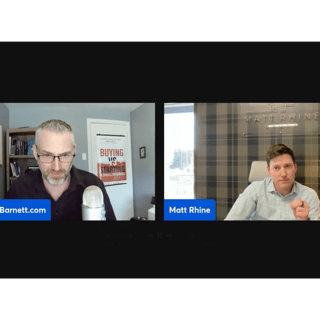
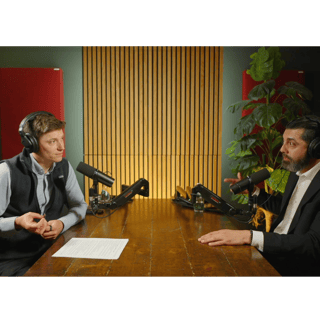
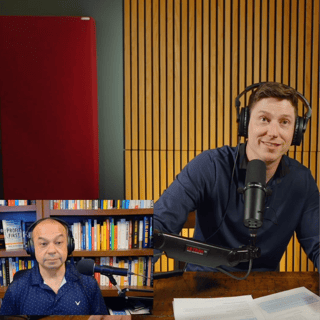
Speaker: All right, and hello everybody. This is Matt Ryan, your host of All Roads Lead to Real Estate. And today's guest is is not exactly you know head on here in terms of real estate, but he's someone, it kind of carries forward a theme I've had here lately with ah folks that are considering what to do and in relation to their finance and and and their business endeavors. because One of the things I consistently hear, and I'm thankful I'm getting some feedback now, shout out to all the folks listening and commenting on on our platforms here, but a lot of people seem to be interested in the world of investing and finance and business ownership. and We've had people on ah recently that have discussed the the different opportunities that exist in franchises. I thought that was really fascinating conversation. and so I was recently a guest on ah today's guest podcast, and I wanted to invite him here to kind of go through, if you will, through a different angle for our listeners. and i think it'll be very fascinating conversation. and so I want to introduce David Barnett. so David, thank you so much for joining me.
Speaker: Hey, Matt, thanks for inviting me over. I always have fun with these. Well, thank you once again for for joining. And so you're coming you're joining us from Canada, so I know you're not local. We have many local folks join us. So you're from from your office there in Canada. So thank you so much.
Speaker: Yeah. i Hey, i um I help people and work with people all over. um and And my own channel, probably about 65% of our audience is American. so Wonderful. i'm I'm talking with Americans all the time.
Speaker: Well, wonderful. And I want to give you a proper introduction here because I think I can certainly say that your specialty is not something most people are familiar with. and It's a thought that probably goes through a lot of folks' minds, but they don't know exactly where to start or who even has the type of information that you're about to share today. and so David has an entire business set up to assist people as they are considering um exiting small businesses, getting into businesses, valuing. businesses, and you have a wide variety of experience. so You have a 25-year career that has spanned all kinds of things. I was really impressed getting to know you a little bit about what you've been able to do. You're you're a small business owner yourself. You've been a commercial debt broker.
Speaker: You've been a business broker and a franchise operator. um i mean I'm just going to read the whole list here. American Express Corporate Credit Manager, Certified Machinery Appraiser, and you've been a best-selling author now of a multitude of books. and One of them, I think, is right next to you. a Very nice and smart plug there. um yeah Buying versus starting. so I think yeah all of those are available right on Amazon. and and so Am I missing anything? I know yet yeah you have, obviously, a consulting business to assist people through these conversations and thoughts. and You are all over the the online space as well for people to to learn more about what you have to say and to and to stay connected with this. so Am I missing anything here?
Speaker: ah Just ah the podcast. like i I went onto YouTube and started to answer people's questions over 11 years ago now. and so I've had a podcast and YouTube channel now for over a decade.
Speaker: and Every week we answer questions from people in our audience who are just asking us questions about buying, selling, financing, or managing small and medium-sized businesses. so it's ah It's a never-ending content creation wheel. But ah the main way that people learn about me or or start following me and stuff is they they go into Google and they type a question because they're thinking about doing either an acquisition of a small business or they're a business owner and they're thinking about selling it or they've got a question about that.
Speaker: And oftentimes my videos are the responses to their questions and then the people start to ah to join the audience and and keep learning. Well, and this is... My first question is going to be a very selfish question, question but you know you certainly have the experience, and you've been doing it for years. Before it was popular, if you will, like before it was the thing to do to be found online.
Speaker: ah How has that journey changed? just being i mean You told me before that a lot of your business comes from people that find you, and they organically find you. It's not that you're being paid to advertise, necessarily, on these various platforms. Has that changed over the years? I mean, over a decade of doing this, has it gotten easier, harder? is it i mean i mean how How would you describe that experience?
Speaker: Well, if we if we think about people I meet who want to buy a business, the the people who want to sell, we can all imagine a business owner, that that that group hasn't really changed. But if you think about people who are considering to buy a business,
Speaker: I would say that more than five years ago, they fell into two different general categories. They were typically middle-aged people who had some kind of career and they had built some degree of personal equity, savings, et cetera. And they were thinking about getting into a business, maybe even starting one, but they they maybe had a mortgage and kids heading to college and obligations like that. And for some reason or another, they thought maybe I should buy a business. and then they started to look online and they would meet me.
Speaker: Or they were from a different camp and these would be primarily people that were like new to the country who were professional people, but maybe their credentials weren't recognized. And so they needed to to get an income somehow and they thought maybe business ownership was a way to do it. So you imagine like ah an engineer perhaps who can't practice engineering anymore, but maybe they they buy a business related to construction. They can certainly take advantage of their knowledge. And so it was pretty much those two groups the the the middle-aged person wanting to get into business for themselves and the the newcomer who needed an income.
Speaker: and Then about five years ago, things started to change where I started to meet more and more people who had fallen under the spell of online influencers who were telling them that there was this huge generational wealth transfer about to happen with baby boomers retiring and that there were all of these businesses that needed to be bought and it was easy money in simply acquiring a small business and there was nothing to it.
Speaker: And i i really started to run into a lot of people who had no idea what they were getting into. And it was because of social media influencers. And that's really dominated the last few years.
Speaker: I just got off recording a live stream that was broadcast on YouTube, LinkedIn, and X. And one of the comments that popped up was, David, I'm so glad I found your channel. You're one of the only places online that is having honest conversations about the risks and dangers in small business acquisition.
Speaker: And a lot of the content that's being created is around this idea that it is somehow easy and and a no-brainer. But I'll tell you that if you want to consider different ways to invest your money with you know government bonds being sort of the lowest risk thing you put your money into, and then getting into stocks and mutual funds and all you know the whole gamut of things, commercial real estate.
Speaker: ah Small businesses are the other extreme. ah There are 101 risks or hazards that can befall a small business that can just kill it within 90 days. It is a very risky asset class. And I'm always warning people that if you're going to get into the world of small business, you need to have a certain um education, knowledge base, experience base, et cetera, that you've built up so that you can properly manage and run the business once you've got your hands on it. And so that's really how things have changed over the last few years.
Speaker: Well, it feels to me, a lot of small business owners that I know didn never acquired the business. That's one of the reasons I wanted to speak to you. it didn't It would never have occurred to me that I should go out and buy someone else's business that's already there. Franchise models, I get. right That's a proven system or model. It has a brand associated with it. I buy into it. That, to me, makes logical sense, but to go find someone else and buy their small business,
Speaker: ah to me, sounds risky. This is what I wanted to to figure out from your perspective. it Usually, especially really small businesses, a lot of it, and I think of my own, I own a couple small businesses.
Speaker: If I delete myself from those businesses, at least the way it's currently structured, I'm the first to admit The business ceases to exist in 90 days, probably. Maybe 180 if I'm really lucky. But I couldn't look at someone directly in the face the way it is today and say, buy the Matt Ryan Group. Go ahead and buy what I have. I couldn't do it because it's not currently set up in a way that would be possible for them to profit on that long term. and so Do you see that risk of a small business that was started with an entrepreneur that if they if they remove themselves, it just crumbles because they're that they're there, they're living and breathing the business, and they are responsible for the majority of that income?
Speaker: Yeah, so so you're you're hitting the nail on the head about what is one of the biggest concerns that buyers have. I'll tell you what drives people to want to explore acquiring a business is that they learn how you know the statistics on new startup failures. Like 90% of businesses that are started up are not around after just a couple of years or something like that. And so what people believe then is, if I buy a business that already has customers, I've avoided that problem.
Speaker: Because if the business is making money today and I simply step in and acquire it, then I will be able to continue having that cash flow. And so the Matt Ryan group is largely geared, I mean, it's named right after you, right? Sure. You are providing leadership and direction and guidance to the people on your team.
Speaker: If somebody was going to look at your business and then they were going to compare it to a corner bakery, right? That corner bakery, the people that go there every day to buy bread are probably not as engaged with its owner.
Speaker: And the people that are there doing the work, making the bread, et cetera, have a certain skill set and customers may know them, but they're far more replaceable than you in your business. And so that corner bakery might be considered a much more likely candidate for a purchase than to something like your organization.
Speaker: Someone who might consider buying your organization might be somebody who's already in your organization, right? and then But here's here's the caveat. When people look at buying a small business, they usually ask two questions. The first question is is what's the cash flow that I'm going to get if I buy this business? What cash flow exists today?
Speaker: The second question is the one you hinted at, will that cash flow continue under my stewardship? And that's where people start to examine you know what role the owner plays day to day, what key relationships there might be between ah big and big customers and the business. you know is the Is the owner managing all of those relationship relationships themselves, et cetera?
Speaker: um So the belief is then that if I buy the business that's already running, I don't necessarily have to go get all those customers right away before I you know hit that break-even point like a startup entrepreneur has to. right But oftentimes what people are actually doing is they're trading one form of risk for another.
Speaker: So let me give you a scenario. If I do a startup, maybe I put some savings and maybe I borrow on my credit card and I start the business. If it fails, i will have lost the savings, I've lost my time, and maybe I still have that credit card balance I've got to pay off over time.
Speaker: But if I buy a business, maybe I'm going to do a transaction for $500,000 $700,000 or $1 million. dollars I'm probably going to borrow at the bank. If i overpay for that business and I end up over leveraging it and I have too much debt and the business in some way doesn't succeed, not only have I lost my down payment, I still owe the money to the bank. So you're you're kind of replacing startup risk with financing risk.
Speaker: if you don't structure the deal in a risk controlled way. and and That's a big part of what I talk about in my content is is identifying the particular risks for a specific kind of business that is going to be acquired and then creating a way to do the acquisition that manages or at least shares the risk with the person selling the business so that you can kind of plan for all the different outcomes that could occur and have different ways of you know trying to manage that deal if things don't work out the way they should. Like I said, small business is the riskiest asset class that exists. Well, and I mean, I'm sure you might know some of the statistics, but what is the percentage of the economy that is based on small business in the United States? it's
Speaker: are you I think the majority of employment is tied to small business, but I couldn't tell you specifically what the you know as far as the GDP contribution, but there are a lot of small businesses. There is one statistic I do know that I like to share, which is that only about 20% of small businesses that anyone ever attempts to sell actually get sold.
Speaker: So it it is a very difficult thing to sell. And that's because of what a business is. you know When you show somebody a house that's for sale, everyone knows it's a building with a roof, windows, and a door.
Speaker: It's very tangible. You can put your hands on it. You can have an inspector inspect it. And the likelihood of a material change happening between inspection and closing maybe a couple of weeks later is very little. I guess just it's a building. It stands there.
Speaker: When you think about a business, I often i give people this mental experiment. I'll say, do you believe you can show me a photograph of a business? And people will will say, well, of course. And they're what they're thinking is a picture of like a gas station.
Speaker: And if you did show me a picture of a gas station, I would say, no, that's a building with some gas pumps in front of it. That's not ah a business. Or if you imagine a picture of like a bunch of service vans with some plumbers standing in front of it, you know company photograph kind of thing. And you say, there's a business. And i say, no, those are some people. They look appear to be technicians and they've got some vans that they drive around in. That's not a business.
Speaker: And what I'm trying to get at is that a business is actually a system. It's where you've got people and equipment, machinery sometimes. You've got capital in the form of inventory and equipment.
Speaker: All of these things are operating together at the direction of the owner, who's kind of like like the... like the um up the the conductor in front of the orchestra, right? And they're kind of like directing how people are supposed to do their job to try to make beautiful music come out of the orchestra.
Speaker: And that system is extremely fragile. Anyone can just think about a time when they were at one of their jobs and somebody messed up in some way and an order was messed up and a customer didn't get what they want and somebody was upset and we ended up giving a refund. And you probably thought, geez, today we didn't make any money.
Speaker: And that would be an example of when the the sort of system breaks down. Well, if you've got this system of people interacting with each other and that's exactly what the business is and it's working successfully under one person, transferring that over to a new owner means basically passing the baton to a new conductor in mid-symphony.
Speaker: And I like that analogy because people can kind of imagine like you know a new conductor comes out and tries to grab the baton and carry on with the music. Obviously, there could be some some errors or hiccups or whatever, but a business inherently is is ah is a very fragile kind of thing. um A great example I always like to use is you know sort of the the pizza shop that people in the neighborhood love.
Speaker: A new owner could come in and everybody's ordering pizza on Friday nights. And the new owner comes in and says, I'm going to change the sauce rep recipe. And then within two weeks, everyone tastes a new pizza and they don't like it. And boom, all of the the love and and loyalty that's been given to that pizzeria just disappears. And that's that's as how quickly and easily a business can kind of end up on hard times.
Speaker: Well, and I think some of, because I've been a part of ah I grew up in a small business environment with my family. Granted, it was farming, and my father had a a business with a milk truck. and he was you know so We were always involved with payroll. and i I understood some of this. i They never really worked for anyone else. I never grew up in an environment where someone had a boss. That was unusual. When I chose to have ah a boss right out of college, it was unusual. I didn't like it. i I was not a fan of it. I didn't like someone else. in that position over me. But when I see this, I think there is inherently an X factor to businesses. There's like a little bit of that pixie dust. and There's something in the air that sometimes a founder or someone with a certain level of energy that I think is not transferable always when another entity picks it up. so I have a family member currently that is is ah being um
Speaker: I guess, proposition to purchase their business. and It's a a very large entity that's coming in that's going to... and I wanted to get your thoughts on this. I wanted to come in and take what is a small... It's not actually a very small business, quite a good-sized business, multi-multi-million-dollar business, but they're trying to take it and, I want to say, Walmart-fy it. i don't know How do you describe that? They want to just make it and harmonize it to where it's all this similar product, and then they're going to then resell it. That's their whole goal.
Speaker: Three to five years of potentially package this thing and sell it to even a bigger fish. and It's an interesting idea, and i i from what I understand, that's becoming more and more ah common.
Speaker: Is that something that you're seeing, these Wall Street-type companies that have these big, big funds that are coming after small businesses now? So the ecosystem or the landscape business acquisition kind of looks like this. At one extreme, you've got individual people who want to buy a business and they're going to take over likely from person who is another individual person who owns and runs through the business. And continue the operation. Yep. And a lot is not going to change for that business because the new owner is going be much like the old owner and the new owner...
Speaker: What is their motivation for buying? We addressed that earlier in the conversation here. They're looking for an income. they're They're both making an investment by buying the business, but they're going to work there and they're looking for that income. and Often these these new owners have an intention of being there for a really long time. like A lot of people will think this is going to be the thing that carries me to retirement and then I'll sell it to somebody else you know who's younger likely.
Speaker: the And then in that landscape, you've got other kinds of buyers. You've got strategic buyers. So if you imagine a big company in a certain industry, they might always be on the hunt for smaller companies in the same industry that are going to bring them into new markets.
Speaker: that company is going to buy another business. They're going to fold it into their, you know if you imagine the board cube in Star Trek, they're going to fold that acquisition into their big mothership enterprise and they're going to carry on. And so in those acquisitions, the local brand, the local character is often going to end up disappearing with you know the relabeling of the big brand. And and they've gotta do it because they've gotta create efficiencies of scale, they've gotta have standardized procedures, products, et cetera, throughout their organization.
Speaker: so So people will do that if they're not as concerned about you know sort of the legacy of the family business being evident there in the long haul. And sometimes it's the right decision because of the way an industry is changing, way technology is changing, et cetera.
Speaker: what What you are describing is what is typically thought of as a private equity play, and and private equity companies are often seen like the house flippers of business. So they have raised some money and they borrowed some money and they buy a business. And their intention is to make changes to make the business bigger, more profitable, more efficient, so that it becomes more valuable and they can in turn sell it again to someone else.
Speaker: And it's it's interesting because um oftentimes the buyer at the end of that cycle is going to be another private equity firm. And so I've got someone pretty close to me in life who has been through this now three times.
Speaker: And the first time that the business was purchased, and they're they're an employee in this business. The first time it was purchased, the private equity group introduced new systems, new processes, new software, and it became a better place to work.
Speaker: It was better organized. you know Things were more efficient and they really liked it. They then sold it to another private equity firm and that company tried to do more with it.
Speaker: But really there wasn't much left except not give people raises and increase the prices. And now they're in the hands of the third one. And in the year and a half since the third deal, almost a third of the staff is gone. yeah yeah like So that's kind of it's It's sort of like ah what we've seen happen now because there are fewer and fewer of these opportunities for these big kind of like slam dunk, you know, flipping opportunities.
Speaker: And the people who got into this back in the 80s and 90s and early 2000s, they were in this green field of opportunity. And now everyone's seen the movie, everyone's seen the read the book, everyone's, you know, heard of the person who did really well. Everyone's, you know, seen what Blackrock and Blackstone and all these For some reason, it's always a color and ah and ah and a piece of nature um in their names. But they've they've seen what they've done. and now we've got the huge numbers of people coming into the market trying to do the same sort of playbook. And it's becoming harder and harder. yeah And so it's it's basically what i'm when I'm talking to business owners, I ask them, what is important to you?
Speaker: Is it important for you to get the most cash on closing? Is it important to get the highest price? Is it important for you to know that your business and the head office functions and everything within it are going to carry on in this community?
Speaker: Is it important for you that the legacy of how the business acts in the community carries on? Because whatever those things are to you that's important, who you choose to take over is going to have the biggest impact on whether or not those things are actually going to carry on going forward.
Speaker: So it's for business owners, We're also seeing a new category of of acquisition, and this one's kind of interesting. For people that have been very successful, who've taken money out of their business over the course of their ownership, who really don't need to sell to retire, for example, increasing we're seeing increasingly we're seeing these new forms of employee ownership.
Speaker: where people are transitioning their company into a worker co-op or some kind of partnership amongst a team of leaders within the business or or something of that nature because they want to preserve the character of the business and they want to see it thrive and they don't want to see it change.
Speaker: and you know businesses have certain functions that are higher paid, you know the leadership functions. If if a business has 10 million in revenue, there's probably a bunch of people in there that are earning six-figure salaries for their leadership roles.
Speaker: and If that business is in a small town, that business is really important to that community. because it creates this anchor of economic activity and spending in that small community.
Speaker: If that thing gets bought from by a company from the big city, those top jobs are going to disappear. Those functions are going to be done back at HQ, and that's going to be a big blow to that community. so so People who really have their heart or soul in a smaller town, especially, they they're looking more and more at these alternative transition structures to try and make sure that what they've built continues to serve that community going forward. And that that often means that the seller of that business ends up being the bank, yeah that they end up financing the transaction, they don't get the big paycheck on closing day.
Speaker: But again, it's your business if you own it. It's your property. It's you are up to you to decide what you want to do with it And people are motivated by a wide array of different incentives. And so it really takes a lot of soul searching. The worst thing that a business owner can do is simply put off preparing and not want to worry about it. The the most common succession plan I ever encounter in this world is the I'm going to live forever plan.
Speaker: which is what I call it jokingly, which is people who just don't prepare in any way. They just they just keep showing up and punching the clock, but eventually everyone leaves. And if you're not prepared, that can be the worst of all outcomes because if there's no transition or succession plan in place and heirs aren't prepared and you haven't you know dealt with tax issues or you don't have the you know like life insurance policies in place for different things all that kind of stuff, it can really create a mess. And the most common outcome of a mess is is closure, harry unfortunately. Yeah, that's that that sounds tough, but it sounds like the most realistic outcome for most people, I would think. and um i mean but Part of my question is, especially for my audience that that comes, and and oftentimes they call me because of the experience that I have, but my experience a lot of times often write leads directly to real estate because Go figure, right? When someone has savings, and they typically are a professional, they have significant savings, and they're trying to figure out how to deploy that money. and if What advice would you have for them? is this Is this a strategy if they still have a day job?
Speaker: and they're busy. However, they want to deploy capital, and they want to use it wisely. Maybe they even have a couple investment properties. They've already listened to why what I say, right? Because to me, real estate investing makes a lot of sense. it's It's not entirely passive, but it's mostly passive. It can be done in such ways that it's very, very tax efficient, and I can retire off of it. I can leverage it. it's it's It's something I certainly understand, but if someone has additional um capital to work with, how do you advise them to educate themselves and to consider different opportunities at that point as they're starting their exploration into this space? like sure What's that initial advice look like?
Speaker: so So, the very first thing someone has to determine is, do they want to try to be a business owner without being there full time or not? And it sounds like you're you're asking, you know does it make sense for someone to buy a business and keep doing whatever it is they're doing today? Yeah. Do they have to leave what's made them successful enough in the first place to have the capital to do this, or does it have to be a career change where they say, I'm ready to switch from this career anyway, and now I'm going to jump?
Speaker: So if someone's going to leave their job to go buy a business, that's that's actually the the easier one to tackle because then it's simply a question of, do you have industry experience that is applicable for this particular business?
Speaker: Do you know what you're getting into? do you know how to run this kind of business? and do you know what to expect? So i always say to people, you want either to know the industry directly or have analogous experience. So, you know, the the guy who, um you know, used to run construction crews for a big company buys the roofing company or something like very direct analogous experience. They know what they're getting into.
Speaker: When you get into something that is entirely foreign to you that you really don't know, my advice to a lot of people actually is not well received a lot of the time. I usually say to people, if you really are thinking about leaving your corporate job to go buy that hamburger joint, why don't you go get a part-time job there on the evenings and weekends and start working in one and really see what you're getting into and what it's going to be like to own that kind of business and what happens in that business and what the customers are like and the employees are like and all this kind of thing to really give yourself firsthand exposure. And sometimes people like to hear that, but you know people will,
Speaker: imagine things that are very far from reality if they have not lived in that reality. Now, if someone's going to buy a business and they've they've come across some idea that maybe they're going to buy a business and put a manager in place, what I do is I is i go through this thought experiment. I say, imagine the big chain gas station.
Speaker: Maybe there's an Exxon near your house or something like that. so Every one of those gas stations has a manager. But the big company doesn't let that manager run that business as though were their own and then submit financial statements at the end of the year.
Speaker: Yeah, sure. Right? The big company is keeping an eye on that gas station. There's somebody called a regional manager, maybe who's supervising 15 20 locations.
Speaker: and That regional manager is looking at some kind of scorecard daily or weekly. like How many gallons do we sell? What were the sales of the convenience items? you know Did we have you know a theft? like like They're keeping an eye on things and they're looking for certain things. and When something gets ah out of line,
Speaker: you know Hey, the ratio of gasoline to bottles of soda is off. you know What's going on? the The regional manager is going to pick up the phone and talk to that manager and say, what's going on? Oh, there was construction on the street in front of the gas station this week. Okay, now I understand why fuel sales are down. like like There's somebody keeping an eye on it.
Speaker: If you are going to buy a business and not be there every day, that's the skill set you have to have. you have to be able to understand the key pieces of data that are going to indicate what the health of the business is and you have to be watching them so that you get the first indication of something going wrong.
Speaker: Because if you wait until the end of the year when the financial statements and tax returns are done, you could be looking at a problem that's already been ongoing for 14 or 15 months by the time those pieces of paper are put together.
Speaker: And for most people, um you know if you have not worked in that space, you're going to have a hard time with that area manager kind of skill set.
Speaker: I've seen people successfully do this, but here's the normal path. The normal path is they buy a business and they go in there and they work and they they do a transition period with the seller. They learn how to be the manager themselves. They learn how to do all those jobs.
Speaker: Then they build the processes, the SOPs, the checklists. They understand the KPIs because they run the business and they learn enough enough to be able to step back and then they promote somebody to take that day-to-day management role.
Speaker: And now they they know what numbers to watch and they understand the business because they've been in it. you know one of the One of the most misleading things I've ever seen is somebody advertising a transmission shop. It was in a northern state.
Speaker: And the advertisement basically said that the owner operates it remotely from Florida for six months of the year. you know Absentee owned, you don't even have to be there. And what's misleading about that is that that owner ran it every day for 30 years.
Speaker: So yeah, that owner can log into the POS system from their kitchen table in Florida, and that owner can look at the you know video digital video cameras on site. They can see what's going on. They can talk to the manager. they can you know They can assess quickly what's going on because they know everything about that business. It would be very different, Matt, if you bought that transmission shop. I mean, you wouldn't know what kind of questions to be asking.
Speaker: and That's the difference. right and so um The one place where you might find a bit of an exception to this rule could be in businesses that are so highly systematized, they are designed to be run in this way, which kind of leads you into the sort of franchise domain. you know I've met people who've owned subway locations, for example, and and they have not been there. they They have a full-time job someplace else.
Speaker: But I just want to remind people that there are certain categories of decisions that you will never delegate. You can get the best manager ever to run your business for you.
Speaker: But if you are a person with a net worth of three or 400 grand, and then you go borrow 700 grand and you go buy a business for 900 grand, you've now got this huge exposure to your own savings and debt for $900,000. And it represents more than your net worth.
Speaker: you're not going to hand the reins of that thing to somebody else. Right. Every decision over about five grand you are going to make personally, it is always going to occupy bandwidth in your mind. You are always going to be thinking about it.
Speaker: and The people that I've met who have had the quickest regrets have been people in this kind of scenario where they say, you know I bought the business because I thought it was going to be a good sort of form of passive income. you know It seems like the employees all knew what they were doing, et cetera, et cetera. And then they start to talk about you know the 2 p.m. phone call about something important breaking. you know What do we do, boss, kind of thing.
Speaker: and and it you know it can get complicated quick, I guess, is is what I would say about that. It just sounded like a cautionary tale, what you said. What i want to hear is, why does anyone want to go through the pain, suffering, and potential downs, right the all the potential exposure to the negative side of things you just expressed, which is very sobering, it's very smart that you're doing that. I feel like someone in your position could certainly just sit here and just say why it's such a valuable thing. Do it, do it, do it. As opposed to, hey guys, you need actually maybe think this through and have a plan. um but
Speaker: Explain to people very clearly, if you could, why does someone choose to go down this road? Why can't they just stay in their W-2 job? Why why become a you know an entrepreneur or take over a business? like Why go down that path?
Speaker: it's It's from one of two motivations. um The first motivation being, if you want to think back to earlier in this conversation when I talked about the newcomer to the country, it's often, I need an income. right so I've met people, both newcomers to the country and you know people who were not, who just happened to lose their job or whatever, And they're like, I can't find a job and I need an income because I got mortgage payments coming. And and so that person realizes if I can't find the job that suits me, maybe I need to do something like buy a business so that- I can hire myself.
Speaker: Exactly. Guaranteed get that job. so So that's one kind of person. The other kind of person is is the person I will say who's trying to level up. they They feel like they've achieved what they can achieve in their role. They feel like they're they have more potential. They can go and achieve more. they want to They want to prove it to themselves and to their family and to their community. And they just they want to reach for that the higher ladder rung, right? And for them, that's usually what leads them down the road to thinking about starting a business.
Speaker: And then when they really examine the problems there, then they say, maybe I'll buy one. And so it's it's kind of an extension of the same sort of thing. And and that person wants to get off on their own.
Speaker: it It's interesting though, because the the reason why some people get into it is because, or why some people think it's a good idea to buy a business is because they see the the way that businesses for sale are advertised and the way they're represented as far as the cash flow and the earnings.
Speaker: which is part of the marketing methodology of business brokers in the whole industry, right? It's obviously making it look as good as it can. um And so people will see these great rates of return prospectively that they can get. um A lot of the time, you know people realize, hey, if I do want to be wealthy in the long haul, business ownership is going to be a faster vehicle to that. So that's an element as well.
Speaker: but But I've also had people pursue it for lifestyle reasons. you know I've had more than one conversation with the big city executive earning $400,000 $500,000 a year who says, i just... I need a fly fishing cabin in Colorado somewhere and I want to take people fishing all day and get out of this rat race kind of thing. So so people have different motivations. it's It's usually about change, leveling up, that kind of thing. Yeah, I'd say I gave up my 40-hour job to work 80. I did, but at the same time, i think the level of of um satisfaction that I have of owning my own business is fantastic. and and so i have many other reasons. There's always all the tax advantages, and because you are now helping to create the job. right You're on a different side of the equation, and the government treats you differently as a result. and so There's different perks along the way. so um I always encourage people to consider it if they haven't before. but One of the things I wanted to to talk to you clearly, because I am a ah realtor and I work in this space every day. um I'm not sure if you're familiar with my industry enough to know this is exactly true, but um
Speaker: Real estate agents have a tendency to not know they're also business owners. It's it's really fascinating, but it's true. so If you're listening to this and you're a realtor, you also are a ah you're a business owner. and Oftentimes, I say that because one of the number one reasons, there's an incredible fail rate. There's about a 70% or more, depends on the year, fail rate every three years for realtors. It is exceptionally high. and One of the reasons they fail is, even if they're successful, there's something called the IRS. and They like to get paid. and so When you have to pay your own taxes and estimates, they don't account for this. and One thing they don't know is any of their numbers.
Speaker: They couldn't possibly tell you what their income was, or their expenses, or their ratios, or their tax withholding. They don't know any of it. and They don't know their forecast. It's really remarkable. but um well First off, are you aware that that is is something we suffer from here in the real estate community?
Speaker: yeah Well, it's not just you. it's It's across a lot of different parts of the economy. you know a lot of small business people get into business and they don't necessarily understand what their obligations are. you know When you are first starting, you don't have any kind of background of profitability for anyone to base any kind of like quarterly submissions to the organization.
Speaker: quarterly partial payments for your tax bill and then you file that first tax return suddenly you owe a bunch of money yeah and it this leads back to what I was saying earlier about understanding how to run a business you know business ownership is for is for business people and Everybody who's a business person had to learn how to be one so I'm not I'm not saying this is a hurdle that is insurmountable but you need to have an understanding of what you're getting into and and um
Speaker: When you own a business, the buck stops with you. like like You can't point your finger at anyone when something falls apart. It's always you. And so just understanding and learning, look what do I have to do? at There are all kinds of really great accountants out there. you know And when people first get into business, they often ask the question, well, how should I be structured? Do I need an S-Corp? Do I need an LLC? Am I good as a sole proprietor? Like a CPA is the person you talk to and most of those CPAs are probably going to say something to the effect of, hey, you know make sure that you take a certain percentage of you know what you're earning and you kind of set it aside because you're going to have a tax bill.
Speaker: And it's it's about being disciplined, I think, is probably the core personality trait that leads to success in business.
Speaker: um If you're undisciplined, you're going to see a big deposit going into your bank account as you know money to spend. A lot of people have gotten into trouble in industries, just particularly when where where clients kind of sort of prepay or make deposits on things. Yeah. Because that that money isn't actually yours, it belongs to your customers you have yet to deliver for them. and ah Discipline and understanding what you're getting into is really important. but What you're saying doesn't surprise me at all, but I'll tell you, that particular problem goes across many different aspects of small business. yeah well yeah yeah you know To tie this back to real estate though, i like to point out something to to business owners because
Speaker: One of the biggest things that business owners do that kind of frustrates their exit is at some point in their career as an owner, they probably had an opportunity maybe to purchase the building they were using or renting, or maybe they saw another building across town, they moved their business into it and they bought it because they had the funds to make the down payment or whatever. and Now they have a business with a building.
Speaker: And one of the biggest hurdles that buyers have when they buy a business is getting the financing and money together. And if you imagine a car dealer, car dealers understand that people don't have like 50 grand in their bank account to buy a car. So the car dealers line up all the financing options, right?
Speaker: and And one of the things i i I would love to point out to the business owners in your audience is that a building and a business are two entirely separate financial assets.
Speaker: And for somebody to be able to buy your building and your business all at once means that they need a down payment on the business and a down payment on the building. And they have to qualify for the balance of the financing on the business and on the building.
Speaker: And where they're just buying the business, they don't have a track record of profitability to satisfy sort of the mortgage side of that equation. And so I've seen many, many business owners waste years and years of their life trying to make deals happen because they insist on selling their business and their building all at once.
Speaker: And the real formula to get out in a much more expedient way is to sell the business and become the landlord. Right. And then that person who bought your business, once they've operated the business for maybe two or three years and they've got their own track record in successfully operating the business and they've been paying rent to you,
Speaker: That person can then go to a banker and say, look at all the rent I'm paying and I've got a good business here. Will you help me get a mortgage to to buy the building? and and Then you sell the building. and and so um I'm i' often pointing out to people that there's many different ways of deals can be a deal can be put together.
Speaker: ah depending on the scenario, the individuals. And that that scenario I just described is actually more lucrative for the seller because they got to collect rent for a few years. That's the first thing I would want to do, but my head always goes to real estate anyway. but i Sure. I'd love to be the landlord. It typically is where I want to start and and finish, by the way. but I am just curious as to, do you recommend at this point that people start with the end in mind? Having seen what you've seen and helped people try to create the possibility, might be 10, 15, 20 years into the business, now they've finally realized, huh I'm getting up there and I don't want to do this day in a day out. all like
Speaker: For us in real estate, we often get there right around that fatigue where when your phone rings, you are angry that your phone is ringing. When you when and you're early in the process, you're really excited. I can't wait. I got it someone calling. Now, you resent the phone, and it takes years for the phone to ring. and Now, when the phone rings, I'm tired of it. so In my life, i I am always curious. I still have the energy. I still have the desire. but I don't currently, for example, have a path forward that I'm going to make this marketable. in our world are our Our value, from what I understand, is typically from our database and the consistencies that you have been able to show year after year. and There's a certain multiple that's applied to the cash flow of your business and the size of your database and how you manage it. so That's how I understand it to be true. do you recommend people and probably This is probably applicable to any business. Do you recommend they start considering the end when they start it, or do they not have the Because it's so risky, you don't think you're going to make it in 10 years. You want to, but you don't know. so Does that make sense? do they do they Is it right to start thinking about that in the beginning or say, well, I'll think about that if I get to that point?
Speaker: i i I say that businesses fall into four categories, and and this is what I call them. I call them hobbies, jobs, small businesses, and going concerns.
Speaker: And so so the problem with thinking about your exit when you start a business is you don't even know if you've got something that is worth anything right because you're starting. right And so I usually say when you're starting, you're in the the scrappy fight mode. You may have to pivot and change a bunch of things that you expect to do in order to make this thing work as you learn from customers and suppliers in the marketplace.
Speaker: So the point at which I believe people should start thinking about the exit or their end is when they actually graduate from the hobby stage to the job stage to the small business stage. So here's how I describe them.
Speaker: When the business is paying you as much as your time is worth in the you know employment market, So if you are a person who should be earning $100,000 if you worked for somebody else, when your business is paying you a fair wage of $100,000 and then there is more money too, you're in small business space. If if that business is only putting $75,000 a year in your pocket, it means that you are subsidizing the business with a quarter of your time because you're worth $100,000 but you're only getting paid $75,000. That's the hobby category that I mentioned.
Speaker: So when you're just earning 100 grand, you now own a job. you're You're basically paying yourself what you're worth. So you got to get across that line into small business category. And now there's real profit beyond just the value of your time that what you should be getting paid anyway for working there every every day.
Speaker: That's when you have to start thinking about, does this make sense for me to try to create something now that is saleable? Buyers are going to have two questions when they look at a business for sale. The first question is, what is the cash flow?
Speaker: And what they look at is what's called a normalized cash flow. I mentioned earlier about the business owner that owns a building. If you look at the financial statement of a business that owns a building, you will not find an expense for rent.
Speaker: But you know, as a realtor, that when you evaluate a property, the the commercial real estate appraiser is going to figure out what the market rate of rent is in that area for that type of building. And they're going to come up with their estimation of what the net operating income should be.
Speaker: Then they're going to apply a cap rate to that. Well, that net operating income for that business is mixed in with your profit on the business because you've got both of these assets mixed together on the same P&L.
Speaker: So what you have to do if you own that business is you have to say, what would I be paying in rent if I did not own the business? and and This is what I mean by normalization. so you Let's say that building would cost you 120 grand a year in rent. You got to take that off your earnings. I'm not shocked, but I'm shocked that you're even saying that because all the small business owners I know set up a separate entity for the building, pay themselves fair market rent to get the expense on the other ah business Well, that i thought that those people those people have had some advice. yeah
Speaker: However, what you'll find is that a lot of them are not paying themselves fair market rent. They're paying themselves enough to make the mortgage payment. Got it. Right? And that's what I will see too, is people will will be paying their other company like 80 grand when it really it's worth 120. So we make these adjustments so we can see what the true cash flow of the business really is. And so I've met, unfortunately, business owners who want to retire. They think they're earning 300 grand a year when we do this normalization with real estate and other things that might be going on in their business.
Speaker: they don't they don't even cross the job line. um like like it They were basically collecting the rent and their salary and adding it all together. And yeah, yeah they had a great income, but they were benefiting from their investment in real estate. like it It wasn't really the business generating all this. And so sort of the next stage of this is once you have that business, if you start to think about how you might exit.
Speaker: Probably about 10 years before you want to get out, you need to have your first proper business evaluation from somebody who helps people sell businesses so that they can go through and do this normalization process and ah and compare your business to other similar businesses that have sold. We've got private databases of transaction data we look at and and show you here's what the likely selling price is and here's what the likely terms are so that you can then go visit your CPA.
Speaker: Right. and say, hey, if I did this deal, what would I net out? What would it look like? Because it's never as good as the first number, right? And now you know where you're at.
Speaker: And some of the biggest input that I'm able to give people when I do those early valuations, I do a lot of benchmarking comparison. So I could say to someone, hey, did you know in your industry the average gross profit margin is 35% and you're at 32?
Speaker: If those three points were on the bottom line, here's how much it would be worth in the value. But now they have time to make the adjustment. If you wait until your retirement age before you even look at valuation, you don't have time left. And this is personally why I believe we see so many 70 and 75 year old people in their business. Right.
Speaker: Because by the time they really looked at what they could do, they ran out of time. Well, do you think, and i this is top of mind for me, and I think it should be a top of mind of everyone, but because you're valuing businesses and you're helping small business owners, are you starting to look around the corner here with artificial intelligence? that the AI systems, the models, the AI bots, there's you know these computer systems and models will be able to replace many, many, many of the ah white collar jobs that are there, and they're going to be able to do so. Now, it's not, ah it's not I don't think, in disagreement now. I don't think anyone can argue this case. At some point, that will. It's a matter of when.
Speaker: and and what that will look like. so Are you starting to see, is it wise that someone starts to maybe look around the corner now and say, maybe i need to if I'm getting close to selling the business, do I maybe consider doing it sooner before the disruption happens? Especially if you've been doing it forever and you're already half burnt out, before like you're going to have to embrace it and change with the times or be left behind. so Does that make sense? Are you starting to think about how that might influence the outcomes of some of these businesses?
Speaker: There have always been reasons to to accelerate your exit path of one form or another. you know I saw an article the other day that talked about how there's a bunch of people nearing retirement who are kind of pulling the report now because they don't want to have to deal with AI in their job or what have you. and so yeah There's business owners who are thinking along the same lines.
Speaker: the here's Here's the thing I'll point out to people though, is that because of the risk of small business, they tend to sell for relatively low low multiples of cash flow. so you know we We talked earlier about the net operating income of a building. so If you've got, ah I don't know what it is like in ah in your area, but you know an older commercial property, maybe it's going for a 10% cap rate. Would that be fair?
Speaker: and Maybe, probably not that high, but in that ballpark, probably seven or eight. I like 10% because it's easy to do. 10 is easy, especially on a podcast. If that net operating income is 100 grand a year and you want you need a 10% rate of return as an investor, it means building is worth a million dollars to Right.
Speaker: And so you're paying also you're paying 10 times the net operating income. Small business valuations are more often expressed in that multiple methodology. People talk about multiples of cash flow.
Speaker: And usually when they're talking about small businesses, they're talking about a number between two and like three and a half. So the the multiples are much, much lower. What that means is a lot of the times if you get your business valued, you could be shown a number that will be very disappointing. And your first reaction might be to say, well, if I just stay here for a few years, I can get that same money. And you'd be correct, right?
Speaker: And so I'm always pointing out that the meat of ownership, the benefit of being an owner of a highly profitable business is in owning it, not in selling it. like Everyone wants to think about sort of Silicon Valley and you know guys like Mark Zuckerberg who sell their stock and get a lot of money, but that's not the reality of most people that are in business.
Speaker: Most people that are in business, when they do finally exit, it's going to feel a little underwhelming. and so You could know for certain that AI might disrupt your business in the next five or six years.
Speaker: It may still make sense to keep operating it, for five or six years rather than sell it today. and and This is where rational decision making of a business owner can kind of conflict with what an outsider might believe about what could be best for them. Because just as the business owner is going to see that AI could disrupt what's going on, all the buyers can see it too.
Speaker: right the the The question I love to ask is is if you were The very first guy who streamed a movie on Netflix in 2012.
Speaker: Could you still make money owning a video store that day? Yeah, of course. Of course, right? Because people were still renting DVDs for another six, seven, eight years beyond that point.
Speaker: and so And that's kind of where we're at right now where, yeah, everyone's everyone agrees that change is coming. No one can quite put their finger on exactly what it'll look like.
Speaker: But I know living in Canada, next week I got to get my tires changed because my winter tires need to come off. all right right And so there's always going to be space for a tire shop.
Speaker: And there's there's always going to be certain businesses that... um that are going to have that appeal. you know that That corner bakery, there's always going to be someone willing to take a little bit of their grocery money and go get the fresh bread because they like it so much. like there's There's always room in business for the things people need and the things people want that Maybe you know in 30 years, it'll be a robotic bakery, right but that change could also happen under the stewardship of the new owner.
Speaker: We don't know. Well, i'm I'm excited about change. I think change is something that is inevitable in every industry, but I think change is going to happen at rates that we have never seen before. That's my cautionary tale to myself. and i'm ah I'm trying to look to the benefits, because there will be tremendous benefits for all of us. and i mean Certainly, I'm getting to speak to you. I didn't think I would have have done something like this in years past. and so I think change is is beneficial. and I want to encourage people that have a business currently to reach out and at least start thinking about this conversation. I call it adulting. um Not just you know burying our head in the sand and going, I'll worry about that later. There's always next year. and I just think it's being realistic. I think, David, that's something that I give you tremendous credit for. You were very honest and, I'd say, sober-minded when you're discussing this. um But the reality is, if you're not a business owner, you should be thinking about it.
Speaker: I think it's one of the best things I've ever done. I'm proud to say I'm an owner of a business. um I didn't say that very often as an employee of someone else. um but However, it's something I'm proud of. and ah and so I thank you for at least highlighting this. and and Once again, if you want to get into that space, or if you're considering exiting that space, I think you'd be a valuable resource. and Like you said, I started this off by complimenting you, I think, about ah the ah how long you've been doing this online. and You certainly have a lot of resources and content for people to plug into. and so I'll make sure David Barnett here has all of his information. so If you're listening to this and you want to go check out some of his other details, you can. and I think they can reach out. Is is it your website the easiest way if they they want to plug in directly to you? Yep. If you go to davidcbarnett.com, there's a work with David tab that has contact details. and if If you just look up david's David Barnett's Small Business on any podcast player or YouTube or the internet, you will definitely find me because
Speaker: I've been making content for such a long time in this space. well that's That's impressive. what i mean Do you think I can do it? I want to be like you, David. It's it's challenging. I gave you tremendous credit. I think a couple years ago, I'd be like, yeah, that's great, whatever. But now, having done this for just two or three years, it's it's remarkable the people that have longevity in this space. and In your pocket, I'm telling you, you had intro, you had the exit. It was really well done. and You said just a tremendous amount of your business comes from your online um platforms. and so I think all business owners listen to David here. you know He's been ah very successful and and ah consistent, I would say.
Speaker: and Well, I think that the different algorithms and whatnot on the platforms reward consistency. and so so That's one of the most important things is that if you're if you're going to publish, we we've we've changed it over the years, like the day it comes out, but right now every Monday morning is a solo cast video. That's just me answering ah a question that someone has put out, has given to us. and Then on most Thursdays, we're either doing a live stream or a prerecorded interview. So we we try to maintain that that publishing schedule as much as possible. Sometimes the interviews don't, they slip through the cracks, but that Monday morning video is always there.
Speaker: Wow. It's very impressive. and And once again, thank you, David, for joining me. And hopefully I'll be chatting with you at some point in the future and our paths will cross once again. Awesome. Thanks, Matt. Thanks for inviting me over. I appreciate it.
Speaker: Thanks.
Speaker: And big thank you to our sponsor, First Home Mortgage. You can check them out at firsthome.com.