Transcript
Speaker: Thank you for joining the Something's Brewing podcast with me today, talking about my new little tagline of coffee conversations and community and just having real conversations with real people and seeing what what's brewing on your side of the of the fence and wanting to have a space for you to talk about everything that's been going on From corporate Max to now CEO retreat, come find your zen Max and everything in between.
Speaker: So I wanted to give you a moment to introduce yourself. And then if there's something that you have as a drink or what would be in your cup if you didn't have a drink over there, I always like to start with that fun question of what's in your cup.
Speaker: What's in my cup is water. It's 3.30 p.m. on a Thursday. So if I had any caffeine at the moment right now, I would be really impacting my ability to sleep tonight. But usually in the morning with something's brewing, I do two double espressos in the morning to get my day going.
Speaker: And that has been like the last two months I got back from Europe and a very cliche thing of coming back from and like, oh my gosh, I love espresso so much. How have I been going my whole life without espresso and bought an espresso machine?
Speaker: And so the last two months, I have been just pounding espresso. Oh my goodness. That's so funny. That's generally what's in my cup in the mornings. I'm the one that goes to Europe and I'm like, where's the American coffee? Yeah.
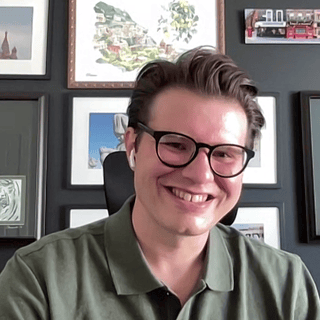
Speaker: ah Yeah, i don't know. i mean, I don't know why this time it just hit me that way, but it did. So yeah, big espresso guy these days. But yeah, my name is Max. I am the founder and principal of a company called Ritual Retreats, as well as another company called Sand and Salt Escapes. And my journey has been one of about 10 years in the corporate world in the consulting space.
Speaker: Had a really intense period of burnout at the end of 2021, shingles, anxiety attacks, a whole nine yards. Which at the time was a really difficult thing to go through, but as I have learned throughout my journey, sometimes the things that are most difficult in the moment end up being the things that are actually best for us.
Speaker: And that was a huge turning point for me, and it was a time where i really leaned on my mindfulness practice and really deepened that to recover and to start feeling better. And that led me into this whole kind of world of running mindfulness retreats in Costa Rica and then starting to get interest from my leaders in my corporate network, asking if we could create similar experiences for them. And that all evolved into the two companies that I run now. So it's been a wild journey, but one that I am incredibly grateful for, for all all the ups and all the downs. and there's been a lot of both of those along the way.
Speaker: I love it. I love it. I'm so happy to have you here because your story and we got connected through a mutual friend. And right away, I was like, oh, this guy's doing exactly what I would love to do is help facilitate retreats in an awesome place in Costa Rica. And just building a community of people who might not be aware that they are burnt out and or have some struggles that they need to move through. So one of the questions that came to mind as you were talking is, did you even know you were burnt out before it hit you?
Speaker: Yes, and I certainly did. i experienced a lot of fatigue. There were lot of physical symptoms of it. I mentioned the shingles, as the anxiety attacks. But I think the biggest thing that really transpired for me from burnout, which I don't know that a lot of people talk about, but it was a really big, almost what I would describe as identity crisis, where when you are burnt out, you least the experience that I had, use you kind of colloquially, the experience that I had when I burnt out was that I really stopped caring about things.
Speaker: which was really unique for me because I'm somebody who cares intensely about everything that I do. I think that's probably also what got me in a little bit of trouble and caused the burnout.
Speaker: But um I found myself in a place where I just stopped caring about work. I stopped caring about things. And that to me was the biggest kind of concern when I looked at what was going on and realizing, oh my gosh, I don't even recognize myself anymore, let alone kind of the physical symptoms of it and some of the emotional stuff was going on. But just to not care, there was a real identity, like truly like an identity crisis going on in that and being like, oh my gosh, who am I? If I don't care about things anymore, that's never been am.
Speaker: um So yeah, those I was very acutely aware of what I was going through the entire time that I was going through that process. and then So to get to like a place of shingles and anxiety attacks, did you pay attention to that like kind of whisper at first or kind of let it go? I feel like there's a lot of people that could resonate with not caring as much, especially if you're doing something on the day-to-day that kind of becomes rinse and repeat.
Speaker: um So how would is there a distinguishing between This is just what I do. or like I'm burnt out and don't care. The, I think that when experienced pain,
Speaker: experienced the burnout, what i really leaned on was this mindset that I had been taught growing up. And I think a lot of us are taught growing up that you just push through things and you shove it down, you keep going. And the strong thing to do is to just keep going and to keep putting one foot in a around front of the other and to keep pushing.
Speaker: And that's what I did at first. And I think that actually exasperated a lot of what I was going through rather than taking the time to kind of step back and observe it and understand it. I just kept going forward.
Speaker: And that only made things worse. So that was a really big lesson for me. And it was only when I actually decided I was quitting work and I was going to take some time off that I was able to get a little bit better perspective and understand um when I had a little bit of space to let my brain untangle just like what it was like to feel joy again in ways I hadn't in so long.
Speaker: um and go through some just some reconnecting to myself and figuring out who i was as a human being absent what I've been told that I'm supposed to be by society. I mean, we all go through this conditioning from the time that we're little and you're first grade preparing for second grade, you're in grade school preparing for high school high school for college, and your jobs, and it's about the promotion. It's all about what's next and you keep pushing and you're never happy with what you have.
Speaker: And I really identified with that. And like when you get promotion and I would never sit back and celebrate or just be like, okay, well, what's next? Like, what are we looking at doing next year? And how do we get there?
Speaker: And that was a really, really unhealthy behavior. now, i've um so yeah, just getting a chance to really step back after I did go to that burnout and realize I don't have to push through things. I can actually sit back and rest and observe.
Speaker: Gave me a lot of perspective and helped me build some of those practices that have prevented me from stepping back into that kind of experience again. Yeah. So can you walk somebody through what did it look like to pause and start to look introspectively?
Speaker: and think a lot of people can resonate with, I'm just doing what I need to do for my family, for you know what society tells me, we need money, we need to do this, but are unhappy at the end of the day.
Speaker: so it takes a lot to put your foot down and say, I can't do this and I'm quitting and take that moment. But what did that look like for you? It was super scary.
Speaker: The first day that I was gainfully unemployed was April 9th of 2022. I sat down that morning to practice yoga. And when I sat on my mat, I just started uncontrollably bawling my eyes out, like absolutely heaving.
Speaker: And I was just overwhelmed with this feeling of total helplessness and feeling like I had no idea who I was. I felt like I had just jumped off of a ship in the middle of the ocean, had no idea which way land was, which way I was supposed to start swimming. And I was just sitting there treading water thinking, oh my gosh, what have I done? Realizing that I knew nothing about what was important to me. I knew nothing about who I was.
Speaker: And I was going to have to really start reconstructing my own self image and connecting back with myself um in a way that was absent anything that is...
Speaker: kind of already exists in those structures that we have as a society. And I had to let go of a lot. So there were three main, what I would describe as like practices that helped me do that as far as kind of what that looked like.
Speaker: The three practices were silence, discomfort, and reflection. Ooh. so silence for me is, i mean, it's something I think we're all really afraid of. And just like that idea of being alone with our own thoughts can be a very intimidating feeling. But that is where we get a chance to actually peek inside and observe who we are.
Speaker: so when you think about silence, you can look at it through two lenses. One is internal silence and the other is external silence. So external silence, how are we quieting all of these inputs that we're getting all day, every day? in order to just be able to have a little bit more clarity and focus.
Speaker: Internal silence being how are we stepping back and actually observing our mind, observing our thoughts, observing our emotions, observing our body and getting a chance to tune in and pay attention to what's there in the and the present moment.
Speaker: that's kind of the first big practice. That's scary in itself. Super scary. um but And I think a lot of people, re well, for myself included, and you know that I resonate with all of this, but I think we've learned to take emotions, thoughts, everything as true fact and reality versus just what they are. And you're the observer of those things. And I think that piece of knowledge that I gained when I was in a very dark place was...
Speaker: very insightful for me to not associate and attach to those things, but to observe and use it as a lesson as to how does my mind work and how has it been conditioned to work?
Speaker: That's so beautiful. I think that's, it's such an important skill to do that. I mean, imagine if we were taught that growing up and we had this opportunity to understand ourselves, understand how our mind works and how life works like it through school.
Speaker: but Unfortunately, we don't, but I think then there's so many tools that are so profoundly impactful for that. For me, meditation has been one of the most amazing. Meditation, yoga is also a really impactful tool. Breath work, a lot of journaling is something that I do every morning before i do like look at my phone, touch anything else.
Speaker: There's a lot of practices that can help us slow down and just be the observer of our experience and realize, oh, I'm actually not my thoughts. And I have the ability to choose one thought over another.
Speaker: I have the ability to choose how I'm experiencing something and see all of the different truths of a situation and realize that something that seems kind of shitty in the moment might actually be happening for me if I can hold this thing and I can observe it and step back and realize that I am not that thing. and I'm not my emotional experience while still feeling things. And this is not like an ad for po toxic positivity. I'm saying like, don't feel the negative emotions. I absolutely feel those emotions But feeling them, not not attaching to them.
Speaker: Exactly. But you don't attach to them. And I think that's just been, yeah, that but those practices are so important. And that's what happens in the silence is you get a chance to observe it and to see it and to, yeah, just to better understand it.
Speaker: How do you get over the fear of that? and think you you just have to practice it, right? It's just like getting used to
Speaker: observing? Yeah, it's um mundane. It's very rote. It's something that you have to just do over and over and over again, but it's like anything else. And I really, i have a strong disdain for the idea of building habits. Because I think that when we talk about habits, we oftentimes hold them as this, um,
Speaker: this like very perfect thing that we're trying to do. And that if we don't do this for three weeks straight and then on the 18th day we fail like, oh my gosh, it's all wasted. But when you start looking at as a practice, it totally reshapes the way that you think about it, where it's like some days you have, when you play sports grump, like some days you have a good practice, some days you bad practice, some days you skip practice.
Speaker: But when you skip practice, you also then realize, oh, wow, actually, i but can better see now how much the practice does help me. And it disarms it a bit so that we're not striving for this idea of perfection, but we're rather just truly practicing through it. So for me, it's kind of about like building that practice, not thinking about it. It has to be perfect. It has to be any particular way, but just allowing it to be what it is to...
Speaker: get into just like the routine of it because it does take time for those types of practices like meditation, like yoga, like breath work to really take hold and to see the impact of it. But if you can commit to doing that and building those practices, they're truly transformational.
Speaker: Yeah, it does bring up the idea of trust, you know, and that's something that I've struggled with is, is building a practice I kind of am am like all in or all out and versus like, okay, I missed it yesterday, i can still do it today, right? Or making it perfect in what it is. How do I do this the right way, right? There's not one right way to meditate, you know, but a lot of people don't even spend time in silence at all. We just distract ourselves all day.
Speaker: So yeah, and that being the first one is huge. I think there's so many misnomers about meditation. And it's something that but when we work with the executive teams on retreats and we're introducing these types of practices, what I think we do a really good job of is demystifying them and talking about, okay, like how does this practically work?
Speaker: So when we think about the idea of meditation, what all we're doing is we are training our attention. Our attention can only be in one place at any given moment. And where you have your attention has a drastic impact on the way you experience that moment.
Speaker: What we're doing with meditation is we're training our ability to actually manage our attention because when we don't consciously manage it, it's being managed by our minds and it goes into the realm of thinking and thinking is the opposite of presence.
Speaker: So we can take our presence or take our attention and we can bring it into the present moment. We're ultimately are automatically cultivating presence. So, for example, why we put our attention on our breath during meditation is because you can only breathe in the present moment.
Speaker: Can't breathe in the past, can't breathe in the future. You can only breathe in the present moment. So by placing your attention on your breath, you're automatically cultivating presence. And when we're doing that, we're letting go of all of these thoughts, all of these things that we're worrying about, about the future, the things that we're ruminating on from the past.
Speaker: And we're just getting a chance to tune into the present moment and all of the information, all of the joy, all of the experiences that are available to us in the here and now that when our attention is being managed by our mind,
Speaker: we just totally miss because we're somewhere else and we're not here. and So we can start to like work with these tools and understand, okay, like why do we do these things? It helps so much from just the practical application of them and realizing the value that we can gain by building these practices that we've been talking about.
Speaker: Yeah. Yeah. And oftentimes people want, they want the the end result, but it's getting to it. Right. It's putting the the practice in and the work in to get there. um And as somebody who lives in my head, probably 99 percent of the day, it is something that I am consistently ebbing and flowing in and out of with meditation. So I think learning that there's not one specific way to do it and it is a practice versus building a habit is a great way to frame it. So silence was number one. What was number two?
Speaker: Discomfort is number two. Okay, tell me. We spend so much of our lives these days being comfortable. It's right now in Charlotte, North Carolina. It's like 78 degrees outside. It's absolutely freaking beautiful. But I'm sitting in here in a temperature controlled room where it's I've got it down to 68 degrees and it feels absolutely magnificent. I'm sitting a super comfortable chair. I am in soft, like nice clothing. Mm-hmm.
Speaker: I can go about my entire day never feeling any sort of discomfort. And we, in the year 2025, have so much convenience, so much comfort.
Speaker: um And that's not how we evolved as a species. For 2 million years, we were out and about in the natural world, having to find our food, having to hunt, having to Um, in the last 10,000 years of the agricultural revolution, having actually farm our food, um, there's so much of this comfort in our everyday life.
Speaker: And we don't learn anything about ourselves when we are feeling comfortable, whether that's something about like a stretch opportunity at work, or whether that's going out and riding a hundred miles on your bike and seeing what you're capable of, uh,
Speaker: we don't learn anything about ourselves unless we're doing those kinds of things. So I think that that second practice of discomfort is incredibly important. And I find ways to do that for myself weekly, monthly, and yearly, where I will put together kind of make big challenges for myself to figure out, okay, like what's my edge? How do I continue pushing this? And through that process, get to discover things about myself that I don't find out when I'm sitting here in this super comfortable chair talking to you 68 degree mood.
Speaker: sixty eight degree for group And my 68 degree room is freezing for me. So my comfort would be outside in 78 degrees. So, but I completely agree. And I think to me, it kind of piggybacks off of the first one, which is silence is discomfort for people.
Speaker: So to put those two together, and now I have my homework of sitting in more silence for sure. But I completely agree. You know, it's, we've become very spoiled as a society and don't like it when there's something that's out of our routine or something that is just not what we're used to, you know, and nobody really knows how to flex. It's just a very big inconvenience for people versus and an opportunity, you know, and seeing these things, not as obstacles, but opportunities is ah is a mindset shift that people can benefit from making.
Speaker: Yeah, yeah, it is an opportunity. Anytime you see discomfort or feel discomfort, like that's an opportunity and invitation to learn and to grow. yeah And you can make either the choice to go through and open up that door, or you can make a choice to say, nope, I'm actually comfortable where I am.
Speaker: And you're going to miss a whole opportunity so to figure out a little bit more about yourself and what you're capable of doing. I always thought that as an athlete growing up, it helped me.
Speaker: like lean into discomfort a little bit more than I normally would have because of the training aspect and the competitive nature that i have grown up with, where it's always been, albeit like a physical discomfort more often, but it has definitely translated to a lot of mental stuff that I've gone through being able to sort my way through it and a resiliency factor. And I didn't know if if you resonated with that at all.
Speaker: Yeah, I think you're spot on with the resiliency with that. And I think there's so many lessons that we can take from that. So right before we started recording here, I was sharing with you that the about a week ago, i went through it four days of super heavy anxiety. I was yeah just like, I was not good.
Speaker: And as I sat with it, what I started to realize was i was able to draw this parallel to what I love to do from like an endurance sport perspective. So I love going on like super long hikes. The trip that we were just on in Europe was 120 mile hike through the Alps.
Speaker: I love to go, like love to do eight plus hour hikes, eight hour bike rides. And that's, that's a good combination of the discomfort and the silence that you were mentioning before. Like yeah no headphones, nothing, just me silent in nature.
Speaker: So that's a space that I think is really important to be able to experience because i was able to, as I was going through this anxiety, what I was realizing was as I was kind of like transitioning some stuff with work and I was settling into more of a routine. And I think there was a big piece of me that was really like, oh my gosh, this is what I've got going on for a while here. And I was able to draw the parallel to when you're you're out on a 10 hour hike and you're three hours into the hike and you've rolled over every thought in your head and you're sitting there going oh my gosh i've got seven hours left of this before i'm like able to reconnect to anything and it's this massively overwhelming feeling that i always get and then it usually happens like two to three hours into the hike and then you have to just like punch through it and you get to the other side and then you start settling in and you feel this deep presence but because of intentionally going out and like
Speaker: finding these experiences for myself, I was able to draw that parallel as I was going through that and intense four day stretch of anxiety there and realize, oh this is actually really similar to what I go out and I do when I'm pushing myself in a very like way of seeking discomfort that I can then translate that learning into what I'm doing right now and disarm the current situation I'm in.
Speaker: Good for you. It's a lot of self-awareness, honestly. It's a lot of like proactively putting yourself through the shit, literally, or just like what's on the other side. And I know that there's something, so let's figure it out.
Speaker: Yeah. Well, life throws like life throws hard stuff at us. And if we want to be prepared when that happens, we need to go out and we need to go do hard things intentionally ourselves that we're ready when it does. And we kind of have a little bit of a playbook to fall back on.
Speaker: Yeah, we have to flex those muscles. If we if we never challenge ourselves, then you know we just continue to get beaten down, honestly, by certain things that are thrown at us and you never defend yourself in a way.
Speaker: Yeah. How boring too. ah It's an autopilot. It's a conditioned thing. i don't think there's people that are aware that there's even an opportunity there. They just see the obstacle, right? And you either go around it or you'd ignore it. But people, and don't mean to generalize, but a lot of people, it's hard to go through it.
Speaker: Yeah. So how, what's your relationship been like with discomfort? So I'm sure even just doing something like starting this podcast is like, that's an act of seeking discomfort. It's not a physical challenge that we've been talking about, but that's still something like you're putting yourself out there. You're being vulnerable. yeah You're doing this thing.
Speaker: um so yeah. What's, what's your relationship? Yeah. It's a good, thanks for asking. It's a good question. The podcast specifically has been something that has been on my mind for like years. And I'm ashamed to say that, but a gentleman who reached out to me on LinkedIn and he was the one that actually encouraged me to start this. He's like,
Speaker: it's so funny by, by talking to you, you would never imagine that you struggled with self doubt or self comment, whatever the things like I've dealt with a lot of mental health issues. And I was sharing that with him and he was like, I'm going to make you do this.
Speaker: This is something you need to do. You light up when you talk about it. Like you're a natural conversationalist. And this is something that I want to see you succeed in. So I was literally I've thought about it, talk about thinking, right? I think all day and I have struggled to put things into action. And then I see other people doing it and I just get more and more angry and annoyed because I'm not doing it myself. And I have to go through the process of like, apparently I don't feel worthy of it or I'm afraid of what people will think or am I doing it right?
Speaker: Or what the heck am I doing in general? Like, who am I to to start start a podcast? All of these questions that just keep me stuck and that kept me stuck for years. So my partner was literally standing over my shoulder as we go. Okay, three, two, one, launch.
Speaker: And it was kind of official. And i didn't really look back. But the funny thing is i had three episodes that I had recorded three years ago.
Speaker: And I never did anything with it. So the foundation, yep, the foundation was there. And ah had the intention ah long time ago and never did anything with it until I started to see other people doing it other people I knew and I was like damn I still want to do this so I had to sit through the discomfort it came to the point of annoyance with myself to be honest of I have this vision of myself doing much greater things I want to write a book I want to start this podcast you know we you and I have talked about it I want to help other people build some of their things and
Speaker: Sharing my story is one of those things. It is discomfort, but I feel like through that, I've just found my purpose of paying it forward. So I've really kind of had to own up to that. And i sat through a lot of, you know, I launched it and I was like, what the heck did I just do? Where do I go from here?
Speaker: I was like, okay, how often do I have to post? And when do I do this? And how am I going to find the people? And I've heard so many times people are just like, it comes to you when you put it out there and the intention is there, it flows to you. And that's exactly kind of what's happened. So it's weird to be living what I've heard other people living and what I've kind over having.
Speaker: But to your point, it would not have happened if I didn't follow that little nudge and kind of I don't want to say ignore, I acknowledge the questions, but at some point they didn't have power over me anymore.
Speaker: So what have you figured out about yourself by pushing through that discomfort? That everything I was afraid of was in my head, that I have had this idea about myself for a reason and that I haven't i haven't really honored the talents that I have.
Speaker: And the ability that I have to connect with people to help other people share their story. And that this is an example, as well as a lot of my mental health struggles of coming out on the other side to see that I was the only stopper of my own power.
Speaker: That's beautiful. Thanks. Yeah. I mean, it's taken, like i said, I recorded three, three years ago and I think, again, I continued to help other people build stuff and I continue to see other people do it.
Speaker: And I continued to stay small. And at my core, I know that that's not what I'm meant to do. So it's not about fame. It's not about anything like that, but it was what, when am ah am I in flow? When am I most alive? And it's conversations like this. And I'm meeting people constantly who are doing stuff like this and being introspective and overcoming obstacles. And I like to be able to showcase that.
Speaker: So I think I've learned way more of my purpose through starting this and I'm getting closer and closer. i was talking to my dad the other day and he was like, I'm just so happy to see you finally seeing your capabilities and the vision.
Speaker: Cause I can feel that you see the vision and it's a weird thing to say out loud, but I do. um And then I get excited. So, um so, so freaking cool.
Speaker: Yeah. I think that, yeah, it's so much of it. and just I've sent a stat with similar questions before and i initially used to think of it. Well, I just need to get on my own way and just like, let myself be myself and let myself kind of,
Speaker: unfold and then as I sat with it longer and looked at it from different angles I thought well actually this is more about just letting letting myself get out of life's way and letting life oh I love that bold through me through the way that it's supposed to rather than myself stepping in the way and being a blocker of it absolutely that framing for me was super helpful to realize okay it's not even like me getting out of my own way it's just me getting out of life's way and like what I love you ask to happen a lot of what I've owned, like opened up to like, there's what emotional, physical, spiritual, all of those aspects of health. And the spiritual was always something that I was very, very interested in. And it's funny from a young age, like I wanted to be, and I wanted to go to space.
Speaker: Like I was just like very fascinated. Saturn was my favorite planet and I just loved like energies and astrology and all of that come to find it was the one piece in my life that was so missing from a holistic approach to life where I was living and still am because I'm in that transition period and kind of purgatory of which way am I going but living in my head versus allowing life right and following the signs in the universal alignment and just seeing that things unfold when you're open to having them unfold without you putting up your own barriers um and energetic blockers.
Speaker: So i I love that. And that's a great way to look at it because for a lot of times people were like, stop getting your own way. And there were things, if I look back that I had to overcome to be in this moment of not getting in my own way.
Speaker: Yeah. Yeah. It's almost like a switch from, but it's like, well, I'm getting in my own way. I need to get on my way where at times it feels a bit sabotaging, like self-sabotaging and like, you're just kind of hurting yourself where that pivot to saying, okay, I just need to get a life's way and let life unfold.
Speaker: I think for me is a little bit more of an altruistic way to think about kind of this. It's like the same tension, it's just different framing of it. yeah How do I understand that? Oh, like this isn't about me.
Speaker: right i'm not the center of the freaking universe here and there are like other things that are going on that like if i can allow them to they would like to unfold and that's yeah that so that framing for me it was like a helpful way to realize oh this isn't just all about me i'm not the center the freaking universe here what do you think people are afraid of when it comes to realizing their potential i'm just thinking of people out there who are in a job they don't like or are burnt out going back to what we originally talked about and are in both their own and life's way but they have this calling or they have like a passion and something continues to stop them
Speaker: I think there's a lot of layers to it and it's I'm sure unique for each person. I can speak to a lot of the struggles that I've had and just what I've observed with having conversations like this with people.
Speaker: um I think that there is a fear that exists between the ability when you cast a vision for yourself of what you have and of the potential to be and the way i like to kind of look i was like becoming who you are and you're peeling back all that stuff to like become this version of yourself.
Speaker: There is a i think, big fear that naturally comes up of, well, what if I'm not that? And what if I've been lying to myself about that?
Speaker: And then it becomes easier to just not try and find out than it is to confront perhaps coming up short.
Speaker: But I think the issue with that and what I would push back on anybody who believes in that kind of about themselves and why they're not moving in that direction is that we have this vision of ourselves. And I think that's a really important thing to move to, but when we can practice emotional detachment from that and just allow ourselves to move in a direction that creates this possibility for us to go in any other direction as well.
Speaker: And it creates like, it's like infinite possibilities open up. We just have to take the reins off of ourselves to allow ourselves to move in a direction And say like, yes, this is where I want to go. This is a version of myself that I can picture that I really want to be doing these things. And that's amazing. i'm like, go for that. And at the same time, be open to anything else that might unfold along the way. So we don't have blinders on and saying like, this is the only thing that I have to go do.
Speaker: And I'm going to go do that at all costs. Because then you miss everything else that the blinders are protecting you from seeing that life is offering you. And I think that is a really important thing when we do like quit jobs or like start companies or start a podcast or all of these different things where we're like, we are trying to become this version of ourselves. We know that the we have the capability of being is to practice emotional detachment from the outcome so that we can go in other directions because just what we think we have the capability to be like, maybe we're wrong, but just go and like, start learning something along the way and you'll learn something along the way. And wherever it goes, it's going to happen for you. And you're going to have a fricking magical ride along the way. If you let yourself.
Speaker: Yeah. The word that comes to mind is curiosity, you know, just being curious, but also allowing. So that's my journey with writing a book currently of the discomfort, but.
Speaker: getting stuck in my head and the how. So, um, I feel that. So, okay. We have silence, discomfort, reflection, reflection, So reflection can look like a lot of different things. For me, we mentioned journaling before. i yeah practice tumor conscious journaling every morning before or when I wake up. I don't, my morning routine, i I sleep with a physical alarm clock instead of my phone because I think like one of the worst things that we do to ourselves is sleep with our phone next to our bed. So when our alarm goes off, the first thing we're doing is we're looking at all of our freaking text messages and emails that have come through the night before and just immediately unleashing all of the cortisol into our brain and starting our day down a path that sometimes is a wherever irrevocable.
Speaker: with the direction we're going in. so yeah so the physical alarm clock, get up, brush my teeth, sit down in my journal, and I just write whatever is top of mind and go down with that. So that's a super helpful way for me to practice reflection. I think therapy is another incredible way to practice reflection. If you're fortunate enough to have like a partner or somebody at home to be able talk things through, that's also incredibly helpful.
Speaker: But how often are we actually taking a step back to take stock of where we are and the things that are going on for us and just noticing what's coming up as we are practicing silence and observing, as we are pushing ourselves through discomfort, how often are we stepping back and reflecting on our experience to getting a chance to kind of download those insights and understand a bit of what's going on and doing maybe some intention setting or whatever that looks like.
Speaker: and of coming out of that. but that ability to really step back and reflect is so often all we're doing is just like go, go, go, go. We're told how we're always supposed to be productive. We're supposed to be like never a dull moment, always just consuming things, learning, growing.
Speaker: But sometimes I think the most important work happens when we step away and we step back and we get the chance to observe. So that ability to reflect and building an intentional reflection in the course of your day, in the course of your week, your month, your year, depending upon the cadence, the amount of reflection, whether that's like a 10 day trip to Joshua Tree, where you just sit and do nothing besides like journal, hike and stare at mountains, which is one of my favorite places to go do that.
Speaker: That is really, really helpful way to do like practice reflection, but like on a really big once a year chunk, whereas the journaling five to 10 minutes every morning, super easy way to check in with that. So there's different practices you can do that require different time commitments, but that idea of reflection being a third. So it's the silence,
Speaker: How are we paying attention to what's happening internally, blocking out all of the noise from externally, discomfort, how are we pushing ourselves and understanding more about we're capable of bull of and the reflection, how are we stepping back and seeing all of that. And when you can regularly engage, I think in those three practices, you're able to understand and learn more about yourself, the things that are important to you and connect more deeply to yourself, to others in the process, into life and what life is offering you.
Speaker: Love it. Love it. Okay. So I'm taking you back now. So you were completely burned out. going back to your your life here. Completely burned out and quit your job. Yes.
Speaker: What happened? Took some time off. My mindfulness practice was super helpful in just helping me ground. Spent some time down in Costa Rica that eventually led to running mindfulness retreats. I started a company doing that where we ran like 15 retreats in the first 30 months ahead. Okay, you made that sound really easy. How the heck did you get to doing that though? Did you have the idea of it?
Speaker: I did have the idea of it built out like the brand and everything, ran the first, we call it like the pilot retreat in July of 2022. And able to convince 10 people who I knew to come down and do this mindfulness retreat, uh, went really, really well.
Speaker: The point where I thought, so we were doing things like, I mean, we stayed in a beautiful private villa. We had a private chef. We didn't take care of everybody from like private transportation to, and from the airport. We're doing things like meditation, breath work, yoga, um, staying on the beach, just like everything very thoughtfully curated every detail taken care of so people to show up and just like relax and be themselves connect with themselves.
Speaker: They have nothing else to worry about. So we ran the first one. and I was like, Oh my gosh, this is freaking awesome. We have something here. that's ah Yeah. And so I put down so naive. I put down deposits for three more retreats on the villa and was like, right, we'll figure out a way to get this to market.
Speaker: So that was, if those were going to be November, December, in january and in 2022 going into 2023. And I quickly realized how little I knew about taking a direct-to-consumer service to market. um And we also had like hardly any social proof because we didn't go do a good job capturing images, videos, testimonials, things like that from the first retreat.
Speaker: So it was a huge, huge task trying to get this thing to market. We ended up spending a lot of money on ads the first year. yeah i was like spending $6,000 a month on Google Ads, which was ah lot of money just coming straight out of savings.
Speaker: And we didn't make any money really like the first 18 months. But while we were spending a lot of money on the ads, I was also very focused on boosting our organic SEO presence. So doing things like interviews, podcasts, stuff like that.
Speaker: So that by after about 18 months, I was able to stop spending money on ads because we had enough presence online. from all of the organic work that we had done working with influencers and people like that, just getting a ton of content out there and very professional content as well to build the brand that going into 2024, we had sold out all of our retreats, hadn't spent a dollar on acquisition costs. and things were rolling going to 2024. And as all of that was going on, I started getting reach outs from people from leaders in my professional network saying, hey, what you're doing is interesting.
Speaker: Could you curate a similar experience for our organization? So I started tiptoeing my way into that work. which was amazing to get to bring a lot of the expertise that I had from like being in the consulting world everything we did there, and then also the mindfulness world and merge those in a way. That's awesome. I think it was so deeply, deeply needed in the corporate space. So we started running retreats for leadership teams. 2022 was the first one that we ran and ran a handful of those for the next few years. i was really focused on the direct-to-consumer work, but also kind of picking up
Speaker: some of that corporate work that was just organically flowing in the door. Were you stopped by discomfort along the way? Oh my gosh. um I was so, I had so much discomfort along the way.
Speaker: i yeah. My brain is like, how the hell did you even know where to start, what to do run a retreat, figure all this out? i was very fortunate from my experience in consulting to have a lot of experience designing experiences and being able to hold space for people and being able to facilitate conversations. I also had mindfulness practice for several years as well. So I understood that world and was able to create you and this really nice blend between the two. So building together, like the service itself wasn't hard. The go-to-market stuff was really hard.
Speaker: i would I was just... way out in front of my skis on that, which is why it costs so much money for us to actually acquire customers. But that, pet yeah, I mean, there were so many moments along the way where I was just like not sleeping. I worked so many hours the first couple of years. Like I thought I worked a lot when I in consulting. I worked so many hours the first couple of years building this out.
Speaker: um But we had to set the foundation. We had to do it right. And we had to go, and mean we were moving really quickly now looking back on it, but at this time it also felt like we were going really slowly.
Speaker: We had to just cross every T, dot every I and take care of every detail. i mean, everything from like handwritten notes for guests when they show up to um every retreat that we ran was tailored to each different group that we worked with.
Speaker: It was all very, very customized, but it was such an incredible crash course for a couple of years and getting learning how to do that a really high level that when ended up building out Ritual Retreats, that process was just so natural because I had like ah been through the gauntlet. like I know knew what I was doing when we launched Ritual Okay, so what's ritual?
Speaker: So after we started getting a lot of traction in the corporate world, what I realized was that our, in order for that work to have the room that it needed to grow, we needed to separate separate it into the second entity.
Speaker: um Because it was very difficult to speak to a direct-to-consumer buyer and a corporate client underneath the same umbrella. We were just diluting the message between the two of them. So I decided to separate our corporate retreats out into a second entity called Ritual Retreats.
Speaker: So then we had two sentence all escapes, ritual retreats. um It was a really frustrating process, though, because it was kind of like this moment in in about mid year 2024 where I realized even though we had all of this momentum, everything was going so well. i was just like everything I'd worked so hard for for the last couple of years was just starting to move in the direction it needed to.
Speaker: I realized, oh my gosh, this like isn't sustainable. I need to strip the service out and like reboot everything. And that was a really painful moment because it was just so kind of realized like, oh shit, we're about to start over on so much of this stuff, like building out a new brand. And I took the opportunity of building out Ritual that I wanted to, like I started going back and interviewing CEOs and presidents organizations and was just like, if we're gonna go do this, we're going to do it the right way. We're gonna, again, cross every T, dot every i and pay attention to every freaking detail in this process. And we did.
Speaker: And we were able evolve the service and build it out in a way that is incredibly curated to working particularly with executive and leadership teams. and that's what we do at Ritual is we curate leadership team retreats with help leaders connect with themselves and each other as human beings through mindfulness, through reflection, through rest.
Speaker: And in the process, they build relationships with each other that transform how they show up and work together as a team. It's some of the most meaningful work that I've ever had a chance to do because you have people coming in that have absolutely zero expectations of what they're walking into. And when they leave, it's just incredible to see the transformation of the way that teams work.
Speaker: we also embed rituals into the way that they interact as a team. so depending upon like the cadence or whatever the team has, but we build specific rituals in to help them continue this growth that they've had on the retreats. And then we work with the CEO and president of the organization afterwards to have one-on-one calls where we integrate and support them with the work that we've been doing on the retreat to help lead more mindfully. And then that ended up actually leading into our second revenue stream with Ritual, where we do mindfulness-based executive advisory, working one-on-one with CEOs and presidents.
Speaker: Wow. We have monthly calls with them, 60 to 90 minutes. We also have, do in-person work where we'll fly. So like next month I'm going to Joshua Tree to work with the CEO in person. Oh, your favorite place.
Speaker: hey Yeah, like bummer. Bummer, I have to go to Joshua Tree again. Damn. Shoot. ah So yes, we do that where we get to work one-on-one with them, where we take what's going on with their business and with them personally, and we explore it through mindfulness-driven lens. And that's also been really meaningful to get to work in a very intimate way with executives um to help embed more mindful ways of living and leading.
Speaker: That's awesome. I mean, I can feel your energy as you're talking about it. And I love it. What comes to mind for me is how hard it is to get people in those spaces to pause and not just continue to perform, perform, perform. Oh, I have a business I have to run. i can't do, I don't have time for mindfulness.
Speaker: Right. And that is one of the biggest barriers I can imagine you might run into. But getting people who are willing, I guess, I don't know how many people come to you with previous background in mindfulness, but I would imagine it's it's few that then can see the power of that and the power of pausing and reflecting for maximum ah ROI in an organization as well.
Speaker: Yeah, we work with CEOs and presidents of small, medium-sized businesses who there's generally one of two things they true. One, they have a mindfulness practice and they understand the power that mindfulness can have to create presence, presence to create clarity, to create connection to themselves and to each other.
Speaker: Or they are just really human-centric leaders and they truly care about their people. One of those two things has to be true in order to step into this kind of work.
Speaker: The teams themselves might have a little bit less exposure to it. So when they show up, they're a little bit less sure about what exactly is going on. and So that's a little bit of um a fun box to get to open up and to explore with them.
Speaker: But as far as the clients that we work with, because we we work directly with the executive team and the CEO and the president. like They need to have either mindfulness practice or they've created a culture of openness and kindness and they genuinely care about their team.
Speaker: Otherwise, this kind of work doesn't really stick with the company. I believe it. So as we look to wrap up, I'm going to dish the question back to you and say, what have you learned about yourself throughout this process?
Speaker: I've learned how resilient I am. I've learned how scrappy i can be. I have... i have
Speaker: I think I've learned, mean, I've learned who I am and the process and i fully believe that who we are is dynamic. We're not stagnant beings. We're constantly changing based upon the experiences that we have and our body chemistry changing as we get older.
Speaker: But I've learned who I am and I've learned practices to continue exploring that. And I know the value of those things. And for me, that's such like such a gift.
Speaker: Yeah. I feel much more alive than I ever did when I was in the corporate world. and So I think that that's, yeah. I have a better sense of who I am and how to stay in touch with that.
Speaker: It's probably a good ask for. That's what people want in life, right? You know, but we're here to, to know ourselves and to, you know, have impact and, So I would congratulate you on that. And if you were to leave ah listener with one piece of advice to feel better, to think clearer, to just be more of themselves, what would that one piece of advice be?
Speaker: You're capable of more than you think. We tell ourselves stories of what our limits are. Society conditions us to believe that we can only do certain things or that we only are a certain way.
Speaker: And when we can challenge those through intentional actions, like the silence, like the discomfort and the reflection, you figure out that you you have infinite potential and you can harness that.
Speaker: um So yeah, I'd leave anybody listening to this with the advice that you're capable of more than you think. Just go freaking tap into it. Well, Max, thank you so much for being on Something's Brewing.
Speaker: I'm sure there's going to be a part two, but for now, you've just dropped a lot of insight, wisdom, and inspiration, honestly. So I can't thank you enough and good luck with everything that you're building.
Speaker: Thank you so much for having me here. And I'm just super stoked to get to contribute to what you're building too and to like get to see it and experience it firsthand. So thank you so much for the opportunity. Of course, my pleasure.