Become a Creator today!Start creating today - Share your story with the world!
Start for free
00:00:00
00:00:01

138 Dea Poirier | Mystery and Thriller Author

432 Plays2 years ago
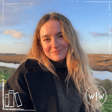
Best-selling mystery and thriller author, Dea Poirier is this week's guest. Tune in to hear all about her writing, how she puts out two books a year, sometimes three and how aphantasia effects her as a writer and reader.
Support the show on Patreon, chat with Jamie and other guests on the Discord server and get all of the episodes ad free.
Get a whole month with WriteMentor's Hub for free using the coupon code 'Write&Wrong'.
The Chosen Ones and Other Tropes
Jamie, Melissa and Noami talk about the best and the worst writing tropes!
Click here to find all of our guests' books as well as the desert island library over at bookshop.org.
Click on this referral link to get 30% off your first three months with Zencastr.
Recommended


















Transcript
The Role of Writing in Storytelling
00:00:00
Speaker
Oh, a spicy question.
00:00:02
Speaker
I love it.
00:00:02
Speaker
Because the writing is sort of everything, right?
00:00:05
Speaker
You can fix plot holes.
00:00:07
Speaker
So some readers love that and some readers are like, but I wanted more of this.
00:00:11
Speaker
So it's kind of a gamble.
Meet Dee Poirier: A Best-Selling Thriller Author
00:00:14
Speaker
Hello and welcome back to the Right and Wrong podcast.
00:00:17
Speaker
On today's episode, I am joined by a best-selling thriller author from all the way across the ocean in Florida, somewhere between Disney and the swamp.
00:00:28
Speaker
It's Dee Poirier.
00:00:29
Speaker
Hi, welcome to the show.
00:00:31
Speaker
Thank you.
00:00:32
Speaker
So excited to be here.
00:00:34
Speaker
Thanks for coming on.
Exploring 'Have You Seen Her': Themes and Inspiration
00:00:36
Speaker
Always great to start with your latest works, which is Have You Seen Her, which will be coming out September 19th.
00:00:45
Speaker
Tell us a little bit about it.
00:00:47
Speaker
So it's a complicated story, but at its core, it's really about an incredibly toxic sisterhood between two women who could not be any more different.
00:01:02
Speaker
Our main character, Blair, is a social worker who has a very mundane existence and has been estranged from her sister for years, and
00:01:12
Speaker
And then she gets a call that her sister, who is one of the biggest influencers in the world, rich, famous, amazing person, has disappeared.
00:01:21
Speaker
And her brother-in-law wants her to come to Florida to try to help find where her sister has gone.
00:01:27
Speaker
Okay, great setup.
00:01:31
Speaker
I love how you just opened it with, at its core, it's about a toxic relationship.
00:01:35
Speaker
I mean, that's always interesting to me, at least.
00:01:37
Speaker
Yeah.
00:01:38
Speaker
Well, I've written a few books that had, you know, a sibling dynamic and they've always been like rather good sibling dynamics.
00:01:49
Speaker
And so I wanted to do something different this time.
00:01:50
Speaker
And I was like, what if I just made them not really like each other at all?
00:01:56
Speaker
What's the opposite of loving?
00:01:58
Speaker
Yes, exactly.
00:02:00
Speaker
Is that something you like to do with your writing in general?
00:02:03
Speaker
You sort of like, it's like, oh, I did.
00:02:04
Speaker
I've done that a few times.
00:02:05
Speaker
Let's do something completely different here.
00:02:08
Speaker
Yeah, I feel like otherwise it just gets a little stale and you're like, are my readers going to think I'm just telling the same story again?
00:02:16
Speaker
And so I really wanted to do another sibling book, but I'm like, oh, I don't want this to be like too similar to my others.
00:02:23
Speaker
So let's just try to do something completely different.
00:02:27
Speaker
Yeah.
00:02:28
Speaker
Did you have, having written a couple of like healthy sibling relationships, was it fun to then write a sort of destructive one?
00:02:35
Speaker
Yeah, honestly, it adds way more drama to the story to be able to, like...
00:02:41
Speaker
Just be like, oh man, let's not make anything good in this relationship.
00:02:46
Speaker
Let's have like a terrible backstory.
00:02:49
Speaker
Let's make them not like each other at all and just be completely opposite personalities.
00:02:54
Speaker
That's so funny.
00:02:55
Speaker
Is this, it sounds like you went into this with quite a lot of ideas about how it was going to play out.
00:03:03
Speaker
Did you, are you someone that plans these books?
00:03:05
Speaker
Do you, do you have everything kind of lined up before you start writing it?
Overcoming Aphantasia: Dee's Writing Process
00:03:09
Speaker
Yeah, so I have a...
00:03:12
Speaker
I guess neurodivergent is the term.
00:03:15
Speaker
I have aphantasia, so I cannot picture things in my mind, and it's difficult for me to structure things in my head.
00:03:25
Speaker
So I am a very, very detailed plotter because I find it much easier to write my books that way.
00:03:32
Speaker
So ahead of time, I write out my full outline, my outline for each chapter, my character arcs,
00:03:41
Speaker
descriptions I'm going to use because I can't picture these characters.
00:03:45
Speaker
I have no clue what they look like.
00:03:46
Speaker
I hope my readers do.
00:03:48
Speaker
So I make myself these little cheat sheets so that writing the book is easier for me.
00:03:53
Speaker
And so, yeah, I would say like before I actually start really writing a story, I probably spend a full week or more planning out all these elements so that I don't get stuck during my drafting period being like, oh, no, I don't have any idea.
00:04:11
Speaker
what kind of house they live in.
00:04:13
Speaker
Right.
00:04:14
Speaker
Okay.
00:04:14
Speaker
So when you, when you come to write it is actually quite a smooth process because you've got it all kind of mapped out and you know where everything kind of fits within the puzzle.
00:04:25
Speaker
Yes.
00:04:26
Speaker
Yes.
00:04:27
Speaker
Okay.
00:04:27
Speaker
Do you, um, a friend of mine is a, is an avid planner also, and she, all of her chapters are approximately the same length and she knows exactly within those chapters, like to the sort of hundred word ish where certain moments are going to happen.
00:04:43
Speaker
Is that kind of how granular you get with it?
00:04:46
Speaker
Oh, no, I wish I could.
00:04:48
Speaker
Oh, definitely not.
00:04:50
Speaker
I mean, mine, I would say my chapters really vary in length.
00:04:53
Speaker
And I don't plan how long they're going to be.
00:04:58
Speaker
I normally just plan...
00:05:01
Speaker
the core elements.
00:05:02
Speaker
So if there's a specific conversation I need to happen, if there's evidence or red herring that needs to appear, if there's a big conflict moment that needs to be present.
00:05:15
Speaker
And then I like to end a lot of my chapters on like little cliffhangers.
00:05:19
Speaker
So also like I will call out like this is a cliffhanger you're going to use at the end.
00:05:24
Speaker
Yeah.
00:05:25
Speaker
Cause I think that the sort of baseline planning thing is you're sort of roughly just knowing with each chapter, it's like, okay, these are the elements that need to go into the chapter.
00:05:33
Speaker
And that's the kind of most simple kind of chapter planning you can do.
00:05:37
Speaker
Yeah.
00:05:37
Speaker
Yeah.
00:05:38
Speaker
Yeah.
00:05:38
Speaker
So I'd love to talk a bit more about the aphantasia.
00:05:42
Speaker
It's so interesting to me because it's one of those things that it's very hard for me to fathom, like to think about how that works.
00:05:51
Speaker
I'm sure like a lot of people, when I'm reading something or when I'm writing something, I am picturing it like a sort of movie scene or like me experiencing it in my head.
00:06:02
Speaker
For you, let's start with, you talked about it a little bit, but what is the definition of aphantasia?
00:06:11
Speaker
What does it mean?
00:06:12
Speaker
So the traditional definition of aphantasia is that you have no mental imagery, but there's actually a scale of how extreme your aphantasia can be.
00:06:24
Speaker
So you can have very little imagery in your head, or you can have none, and I have none.
00:06:31
Speaker
So I actually didn't realize this until probably like six or seven years ago.
00:06:38
Speaker
I always thought it was, you know, like when people told you to imagine something, I didn't think you were actually imagining something like I because my head doesn't do that.
00:06:48
Speaker
So I thought it was just like figurative.
00:06:51
Speaker
I guess like that's the difficult thing is like you don't really understand that your brain functions differently than anybody else's because you've never been in anybody else's head.
00:07:00
Speaker
So when I realized that everybody else really or not everybody else, but a lot of other people have mental imagery, I was like, wait, what?
00:07:09
Speaker
That's not fair.
00:07:11
Speaker
You get that.
00:07:14
Speaker
That's so interesting.
00:07:15
Speaker
Does it, is it, is it strange?
00:07:18
Speaker
Yeah.
00:07:18
Speaker
I mean, obviously you've just said like, it's strange for you to like, if you watch a film and you're like, God, is this what you, is this what people are like picturing?
00:07:25
Speaker
Like this is kind of vaguely going on in people's heads while they're reading.
00:07:29
Speaker
Yeah.
00:07:29
Speaker
I mean, I am one of the rare people, I guess.
00:07:33
Speaker
I absolutely love the, um, the book into movie, um,
00:07:39
Speaker
genre like I love when people make a movie out of a book because I had no no idea what these characters looked like unless I was reading a graphic novel yeah so to be able to like see it on the screen like oh my god like this is what the author meant like this is what these people looked like that's phenomenal yeah
00:07:56
Speaker
That's yeah, that's so cool.
00:07:57
Speaker
You must enjoy because a lot of the issue that people have when it's like, oh, we've adapted this into a movie is like, oh, well, I pictured them differently.
00:08:08
Speaker
You know what I mean?
00:08:09
Speaker
That's such a big issue.
00:08:10
Speaker
That's just not a problem for you.
00:08:11
Speaker
No, no, no, no.
00:08:13
Speaker
Not at all.
00:08:13
Speaker
Yeah.
00:08:13
Speaker
Yeah.
Aphantasia and Its Impact on Reading Preferences
00:08:14
Speaker
I feel like there's also, there's a little bit of, um, just thinking, um, this is me personally is like, sometimes I'll get so excited about a scene because I've pictured this incredible cinematic moment in my head.
00:08:26
Speaker
Um, and I'll get so attached to that, that it'll be sort of,
00:08:29
Speaker
almost ham-fisted while I'm writing.
00:08:32
Speaker
I feel like in some ways there's a benefit to you where it's like, you're not picturing these things in these kind of movie moment cinematics, which means that you can be much more logical, I think, about how you approach the story in your writing.
00:08:46
Speaker
Yeah, I think...
00:08:49
Speaker
I'm able to kind of distance myself from it a little bit in a way.
00:08:53
Speaker
So I'm not very in my head about it.
00:08:56
Speaker
And the other thing is like, I don't daydream.
00:09:00
Speaker
So I don't get distracted.
00:09:02
Speaker
So when I sit down-
00:09:08
Speaker
So like when I sit down to like write my scene or write my book, I literally can just think about that.
00:09:14
Speaker
Like my brain doesn't drift to other things or to imagining it.
00:09:19
Speaker
I can just.
00:09:21
Speaker
It's like I have words in my head and I'm just putting them out.
00:09:25
Speaker
That's brilliant.
00:09:26
Speaker
Like laser focus.
00:09:28
Speaker
And how does it affect you as a reader?
00:09:31
Speaker
As in like, are you drawn to certain genres because of the sort of forms and traditions of those styles?
00:09:38
Speaker
Yes, I would say one, I prefer audio books.
00:09:42
Speaker
It's really hard for me to sit down and read physical books.
00:09:46
Speaker
I've always had issues with that.
00:09:48
Speaker
I had a really hard time reading as a kid.
00:09:50
Speaker
Yeah.
00:09:51
Speaker
So I absolutely love audio books.
00:09:53
Speaker
And I've just I find it so, so difficult to read like high fantasy or super hard sci fi because I
00:10:03
Speaker
I'm just like, I have no idea what you're talking about at this point.
00:10:06
Speaker
When it's so, so descriptive and so outside of anything I've experienced, it's like my brain has no reference point.
00:10:15
Speaker
So my brain is just like, we're disregarding all of this because we don't know what any of it means.
00:10:21
Speaker
Yeah, because especially with fantasy, and I've seen all the memes and stuff when it's like, when you pick up a fantasy novel, it's like you can't pronounce half the names or half the words.
00:10:29
Speaker
So the author is just asking you to be like, make something up.
00:10:32
Speaker
Yeah, yeah.
00:10:34
Speaker
Imagine something, whatever you want.
00:10:36
Speaker
And my brain's like, nope, we don't do that.
00:10:39
Speaker
Sorry, can't do that.
00:10:41
Speaker
Have you watched sort of like book adaptations of fantasy into film and then looked at them and sort of thought, oh, that's what they wanted?
00:10:49
Speaker
Yes.
00:10:50
Speaker
So I really do enjoy fantasy TV shows and movies and same with sci-fi.
00:10:55
Speaker
I love sci-fi movies.
00:10:57
Speaker
Um, and like, I, I tried to read, what was it?
00:11:01
Speaker
Um, um, Oh no, it was a dragon writers of Pern.
00:11:06
Speaker
And I, I liked the idea of it, but so much of it was like, I have no idea what this is.
00:11:14
Speaker
Um, um,
00:11:16
Speaker
And I can't remember if they actually made a movie out of that one, but I'd seen some other similar dragon movies.
00:11:21
Speaker
And I was like, I wonder if this is what they meant.
00:11:24
Speaker
They have How to Train Your Dragon.
00:11:26
Speaker
Yeah, I've seen the How to Train Your Dragon.
00:11:28
Speaker
And then I guess like the Game of Thrones ones might be similar because they've got a bunch of dragons.
00:11:34
Speaker
Yeah, that's so interesting.
00:11:36
Speaker
Yeah, there's definitely been ones I wish that they had an adaptation because I was like, my brain isn't going to fill in any of these blanks.
00:11:42
Speaker
So I'm not going to be able to read this at all.
00:11:45
Speaker
Yeah.
00:11:46
Speaker
So what genres are you drawn to then?
00:11:50
Speaker
I understand obviously anything that's sort of otherworldly and highly descriptive like fantasy and sci-fi.
00:11:56
Speaker
What's the kind of stuff that you like to read or listen to on audiobook?
00:12:02
Speaker
I listen to a lot of mystery and thrillers.
00:12:06
Speaker
I really like those.
00:12:07
Speaker
I also listen to a lot of
00:12:10
Speaker
middle grade and YA with my son in the car.
00:12:12
Speaker
Um, and those are usually like, he likes the ones that are kind of fantasy.
00:12:17
Speaker
Um, the like Percy Jackson books, he's a huge fan of those.
00:12:22
Speaker
So we've listened to all of those books.
00:12:25
Speaker
Um, but in general, I absolutely love thrillers and mysteries cause I feel like they're the easiest for my brain.
00:12:31
Speaker
Um, dark romance is also great.
00:12:34
Speaker
Um, cause I, I don't have trouble with that at all, but yeah,
00:12:39
Speaker
I wish I could do more fantasy.
00:12:40
Speaker
I really do.
00:12:42
Speaker
Well, don't worry.
00:12:42
Speaker
Cause there's a Percy Jackson television series coming out soon.
00:12:45
Speaker
So you'll be able to watch it all.
00:12:47
Speaker
And then you can catch up with what your son's listening to.
00:12:50
Speaker
Yeah.
00:12:52
Speaker
Okay.
00:12:52
Speaker
Let's get, let's get back onto, onto, onto you and your writing and things like that.
00:12:55
Speaker
This is your eighth novel.
00:12:58
Speaker
Correct.
00:12:59
Speaker
Yeah.
00:13:02
Speaker
That's a pretty impressive turnout.
00:13:04
Speaker
Two novels, two novels a year.
00:13:06
Speaker
That's, is that your kind of schedule?
00:13:07
Speaker
That's where you're at
Writing Productivity: Dee's Annual Goals
00:13:08
Speaker
now?
00:13:08
Speaker
I usually write two to three a year.
00:13:11
Speaker
That doesn't mean I get to publish two to three a year, but, uh, I, I do write a lot, um, because I just need to keep my brain busy.
00:13:22
Speaker
So I do tend to write two to three a year.
00:13:25
Speaker
Uh, right now I'm publishing on a schedule of like two to two a year.
00:13:29
Speaker
I would like to be able to do three a year.
00:13:31
Speaker
Um, but haven't gotten there yet.
00:13:33
Speaker
Um, but yeah.
00:13:36
Speaker
In terms of publishing as well, your new book is you're publishing with Bookature and you signed with them a couple of years ago.
00:13:46
Speaker
But your original books were not with Bookature.
00:13:47
Speaker
Were they with Amazon Publishing?
00:13:49
Speaker
Yes, they were with Thomas and Mercer through Amazon Publishing.
00:13:52
Speaker
And then I also have one book through Polis.
00:13:55
Speaker
Okay.
00:13:55
Speaker
And are you only publishing with Bookature now or are these kind of like concurrent things that you're working on?
00:14:03
Speaker
Right now I'm just working with Book Couture.
00:14:05
Speaker
I do have some other books on Sub, but they're in a different genre.
00:14:11
Speaker
Oh, okay.
00:14:12
Speaker
Because I am trying to write some fantasy.
00:14:15
Speaker
Oh, okay.
00:14:17
Speaker
After what you just told me, that sounds very brave.
00:14:20
Speaker
Yeah.
00:14:21
Speaker
I mean, they're historical fantasy, so I feel like it's a little bit easier.
00:14:27
Speaker
But yeah, so my book, After You Died, it is a...
00:14:33
Speaker
supernatural thriller so it definitely has a lot of my thriller elements but it also has like a supernatural bent to it okay that makes that makes it more sense so when you say historical fantasy are you talking sort of like uh myths and legends and stuff but but still set on earth
00:14:49
Speaker
Not so much myths and legends.
00:14:53
Speaker
I would say they're usually more paranormal or supernatural.
00:14:57
Speaker
So in a historical setting with a historical element behind it, and then I'll just tell you.
00:15:05
Speaker
So the one I just finished is it's about the
00:15:09
Speaker
body snatching period in Baltimore in the 1800s when people would dig up bodies for the medical school and sell them and yeah that's like the basis of the story with a very magical element woven in oh very cool that's a that's that's a great pitch I love it I'd like to read it when can I get it uh hopefully soon
00:15:35
Speaker
Awesome.
00:15:36
Speaker
So going back to your eight books, I was interested to see, I was going through your books and within your books, you do tend to write sequences.
00:15:44
Speaker
So you have the Calderwood cases, which is, was it two or three books for that?
00:15:49
Speaker
Yeah, the afterlife, two books, and then three Detective Harlow Durant books.
00:15:55
Speaker
But the new one is standalone.
00:15:56
Speaker
No plans to make a sequel for that?
00:16:00
Speaker
uh no i i don't mind writing series but they don't sell as well as standalones okay so and i also like the tidiness of like wrapping it up in one story and then being able to move on um trying to like carry a story arc over three books
00:16:22
Speaker
And in Harlow Durant, it's actually meant to have a fourth that isn't completed yet.
00:16:28
Speaker
But trying to like do that character arc over four books and knowing like, okay, I have to sprinkle these little elements into book one and two and three to finally wrap this up in four.
00:16:41
Speaker
Yeah.
00:16:42
Speaker
Sometimes it's just nice to be able to bundle it all into one book and be like, done, now I can move on to something else.
00:16:50
Speaker
Yeah, I know what you mean.
00:16:52
Speaker
Because you're not just, as a writer, you're not just sort of like having to, not necessarily draw things out, but you are having to pace yourself quite a lot.
00:17:01
Speaker
You're also asking the reader to then pace themselves as well.
00:17:04
Speaker
You know, the kind of denouement that they're eventually going to get when this character completes their arc.
00:17:10
Speaker
But yeah, I mean, trilogies and duologies and things like that, the best ones are always planned in advance.
00:17:16
Speaker
You need to know, like you say, how slowly you're going to pace where that character goes, what the storyline goes and things like that.
00:17:24
Speaker
Let's talk about thrillers.
00:17:26
Speaker
Thrillers, just within publishing at the moment, very, very, very popular genre.
00:17:32
Speaker
And in turn, that then means that lots of people are writing for the space, which makes it harder to break into.
00:17:38
Speaker
So a lot of people listening are writing there somewhere along the writing journey, maybe looking to sign with their first publisher or agent.
00:17:48
Speaker
What advice would you, as someone who's, you know, been in writing thrillers for a while, you've written a lot of books at this point, which have been published.
00:17:57
Speaker
What advice would you give to up and coming thriller writers who are looking to make their debut stand out from the sort of the rest of the pack?
00:18:05
Speaker
It's such a tough question because everybody's journey is so different and everybody's book is so different and there's no like universal advice.
00:18:16
Speaker
There's, because it's
00:18:19
Speaker
Everybody is going to find their own path.
00:18:23
Speaker
Just like everybody has their own way to write a book.
00:18:27
Speaker
The only thing I can really say that I think really matters and that really resonates is writing a story that is in some way very personal.
00:18:41
Speaker
So for example, I started my writing journey writing YA and
00:18:48
Speaker
It wasn't really working.
00:18:50
Speaker
I got an agent off of it, but it wasn't selling.
00:18:53
Speaker
And my agent at the time recommended, maybe you should try writing, you know, suspense or mystery for adults, because I think your writing would really lend itself to that.
00:19:05
Speaker
And you tend to go very dark for YA.
00:19:08
Speaker
And I was like, okay, sure.
00:19:09
Speaker
So I tried and the book was,
00:19:18
Speaker
I wrote around the time that my grandmother passed away.
00:19:21
Speaker
And at the core of that book, it is about, you know, a sister who...
00:19:28
Speaker
Her sister died and the killer was never caught.
00:19:31
Speaker
But at the core of that book, it's about grief and loss.
00:19:35
Speaker
And I think that it resonated so well because I was going through so much loss at the time that I was able to really thread in everything that I was feeling into that book.
Making Stories Personal: Authenticity in Writing
00:19:51
Speaker
And in every single one of my books, they're not about me, but there are elements that are deeply personal.
00:20:00
Speaker
And like my book that I'm working on right now, I would say is my most personal to date.
00:20:06
Speaker
It is about aphantasia.
00:20:09
Speaker
It's the main character also has aphantasia and a brain that works very similarly to mine.
00:20:16
Speaker
And I would say it's one of the scariest things I've ever written because trying to explain to the world how your brain works to people whose brains who don't work that way, I'm having to try to reconcile those two things and make them make sense to somebody.
00:20:34
Speaker
Yeah.
00:20:35
Speaker
Yeah.
00:20:36
Speaker
And, but at its core, I feel like it's a necessary story to tell.
00:20:40
Speaker
That's the thing that I've gotten asked with every single book I've written is, well, what about this is personal to you?
00:20:48
Speaker
What about this resonates with you most?
00:20:52
Speaker
And I think that telling this story is the most personal and the most resonating thing I can write.
00:20:59
Speaker
And so I would say in any of your writing on your, your path to publishing,
00:21:06
Speaker
look at that and say like, what about this is personal to me?
00:21:09
Speaker
How can I add something that feels more real to this?
00:21:15
Speaker
Well, I think that's a wonderful answer.
00:21:19
Speaker
No, that's brilliant.
00:21:20
Speaker
And it's so true because even, you know, going further than that, it needs to be personal to you because otherwise you risk sort of just regurgitating a collection of
00:21:33
Speaker
who are probably your favorite authors, if you know what I mean.
00:21:35
Speaker
Subconsciously, you're going to start emulating people that you like the writing of.
00:21:40
Speaker
I guess one of the hardest things about being an author is writing sort of authentically and not mimicking other people's styles.
00:21:50
Speaker
They'll always be there because we are the sum of our experiences.
00:21:53
Speaker
Yeah.
00:21:54
Speaker
Yeah, I think that's really good advice.
00:21:57
Speaker
Interesting that you said you were originally writing YA, you got an agent writing YA.
00:22:02
Speaker
Do you think the YA protagonists are usually sort of 15 to 18?
00:22:11
Speaker
Do you think that was part of the disconnect, was the age gap between you as the author and the protagonist that you were writing?
00:22:18
Speaker
Do you think it's sort of an additional hurdle?
00:22:22
Speaker
I don't know if it was so much that because I have been told, like my first two books, I got told a lot that like the voice felt very YA even though it was an adult book.
00:22:33
Speaker
So I don't know if that's it, but I think that the disconnect is that I do write very, very dark books.
00:22:43
Speaker
I just, I don't know.
00:22:44
Speaker
That's just where my brain always goes is like, what's the worst case scenario?
00:22:48
Speaker
And let's write a book about that.
00:22:50
Speaker
So, you know, not only am I picking a very dark setting, the characters are usually very emotionally damaged in some way.
00:23:00
Speaker
Yeah.
00:23:01
Speaker
And working through some, like, really tough things.
00:23:06
Speaker
So...
00:23:07
Speaker
While I know that YA now tends to have a lot of those darker topics back then, I mean, we're talking like over 10 years ago at this point.
00:23:17
Speaker
Okay, right, right, right.
00:23:18
Speaker
It was not really focused on a lot of those darker things.
00:23:22
Speaker
And I also, I think...
00:23:25
Speaker
At my core, I didn't read a whole lot of books that blended kind of like thriller and mystery elements with the supernatural outside of YA.
00:23:35
Speaker
I saw that all the time in YA.
00:23:37
Speaker
So I felt like, oh, that's what I need to write because I don't see very many adult thrillers with these things.
00:23:46
Speaker
So yeah, okay, I'll write that.
00:23:48
Speaker
And then I kind of got away from writing The Supernatural a bit and then transitioned to more of the adult books.
00:23:56
Speaker
But I still love the YA.
00:23:58
Speaker
That's, yeah, because I was thinking as you were saying that YA has gotten very dark over the past years.
00:24:09
Speaker
I mean, just in the last three or four years, there's been a huge kind of rise in very dark, murdery YA, especially in the UK.
00:24:18
Speaker
Maybe it's time to get back into YA.
00:24:19
Speaker
Yeah.
00:24:25
Speaker
It's ready for you now.
00:24:26
Speaker
It's ready for your darkness.
00:24:29
Speaker
Amazing.
00:24:29
Speaker
Well, that's really, really good advice on a sort of, with the preface of there is no universal advice, which I think is also true.
00:24:36
Speaker
You just got to figure it out and just do your best, listen to everything and then see what works for you.
00:24:42
Speaker
Exactly.
00:24:43
Speaker
And that brings us to the final question, the incredibly unfair and difficult question of, Dee, if you were stranded on a desert island with a single book, which book would you like it to be?
Desert Island Book Choice
00:24:58
Speaker
Okay.
00:24:59
Speaker
I was going to cheat and like try to sneak in too.
00:25:02
Speaker
Okay.
00:25:02
Speaker
Well, lots of people do.
00:25:03
Speaker
So you'd be amongst good company.
00:25:07
Speaker
I will go with my all-time favourite book, which I've probably read over 10 times at this point, which is Diary by Chuck Palahniuk.
00:25:17
Speaker
Is that Chuck Palahniuk who wrote Fight Club?
00:25:21
Speaker
Yes.
00:25:22
Speaker
Ah, okay.
00:25:23
Speaker
So it's funny, like the first book I ever read from him was Diary and then later read Fight Club and all of his others.
00:25:31
Speaker
But Diary to me is just...
00:25:34
Speaker
The most brilliant, amazing book.
00:25:40
Speaker
It surprised me in a way that no book has ever surprised me before.
00:25:44
Speaker
And anybody who's listened to me on any podcast will be bored with this answer because it's always the answer.
00:25:49
Speaker
Because I just love it.
00:25:50
Speaker
And everyone, I'm like, you need to read this.
00:25:53
Speaker
Not Fight Club.
00:25:54
Speaker
Fight Club's a great movie.
00:25:56
Speaker
The book.
00:25:58
Speaker
I've heard that, yeah.
00:26:01
Speaker
But Diary is just...
00:26:05
Speaker
it's phenomenal it's phenomenal um and then my my runner-up would be a darker shade of magic by v.e schwab um that is one of the only fantasies that i mean it's so based like sort of in this world that's like my brain can wrap around it in a way that's not confusing so i i love the writing i love that book so those are my sneaky two
00:26:34
Speaker
Are you hoping for a movie adaptation?
00:26:37
Speaker
I believe it's in the works.
00:26:38
Speaker
Is it?
00:26:39
Speaker
Well, I hear that about a lot of books and then you check in five years later and it's still in the works.
00:26:45
Speaker
I know that one.
00:26:46
Speaker
I would, I would be there like opening night.
00:26:50
Speaker
Day one.
00:26:50
Speaker
I'd be so excited.
00:26:51
Speaker
So excited.
00:26:53
Speaker
Amazing.
00:26:53
Speaker
Amazing.
00:26:54
Speaker
Awesome.
00:26:54
Speaker
Awesome answers.
00:26:55
Speaker
I've not had either.
00:26:56
Speaker
I don't think neither of those books have been picked before.
00:26:58
Speaker
So that's always, always fun to get, get new and original ones.
00:27:01
Speaker
Well, thank you so much, Dee, for coming on the podcast and telling us all about your, your writing and aphantasia and everything that's going on with you.
00:27:10
Speaker
It's been really, really fun and really interesting chatting with you.
00:27:13
Speaker
Of course.
00:27:13
Speaker
Thank you for having me on.
Connect with Dee Poirier Online
00:27:15
Speaker
And for anyone who wants to keep up with what Dee is doing, you can follow her on Twitter at Dee Poirier Books or on Instagram at Dee Poirier.
00:27:25
Speaker
She's also on Facebook.
00:27:27
Speaker
Just search her.
00:27:28
Speaker
You'll find out.
00:27:29
Speaker
And to make sure you don't miss an episode of this podcast, follow along on Twitter, Instagram, TikTok, and Facebook.
00:27:33
Speaker
You can support the show on Patreon.
00:27:35
Speaker
And for more Bookish Chat, check out my other podcasts, The Chosen Ones and Other Tropes.
00:27:39
Speaker
Thanks again, Dee.
00:27:39
Speaker
And thanks to everyone listening.
00:27:41
Speaker
We'll catch you on the next episode.