Transcript
Speaker: Welcome to the Solarpreneur Podcast where we teach you to take your solar business to the next level.
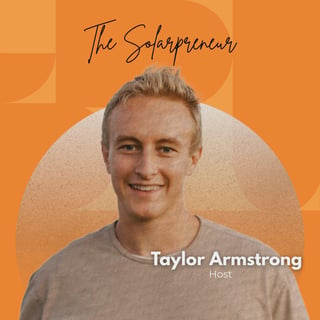
Speaker: My name is Taylor Armstrong.
Speaker: I went from $50 in my bank account and struggling for groceries to closing 150 deals in the year and cracking the code on why sales reps fell.
Speaker: I teach you to avoid the mistakes I made and bring in the top solar dogs of the industry to let you in on the secrets of generating more leads, falling up like a pro and closing more deals.
Speaker: What is a Solarpreneur you might ask?
Speaker: A Solarpreneur is a new breed of Solar Pro that is willing to do whatever it takes to achieve mastery and you are about to become one.
Speaker: What's up, solopreneurs?
Speaker: If you are listening to this, want to wish you a happy 4th of July.
Speaker: You will probably hear this the day after the 4th of July, or maybe it's clear in the future.
Speaker: But either way, gotta love our country.
Speaker: Or if you're listening to this in Australia or something, then happy independence.
Speaker: I'm sure you guys have an independence day too.
Speaker: But we just got done celebrating our 4th of July here.
Speaker: I'm actually recording this.
Speaker: It's almost 11 o'clock after our little firework celebrations here.
Speaker: So that is what is on my mind.
Speaker: Anyways, if you are new to the show, as always, we are here to help you close more deals, generate more leads and referrals, and hopefully have a much better time in the solar industry.
Speaker: My name is Taylor Armstrong, your host in this crazy solar world, and happy to be here.
Speaker: Hopefully I have been able to share some value with you.
Speaker: on the podcast.
Speaker: And today we're going to be talking about, is it necessary to have technical knowledge about solar?
Speaker: This is a question that I think is highly debated sometimes.
Speaker: When I first got into solar, it was like, okay, you don't need to know anything.
Speaker: Just get out there, tell them XYZ, tell them they're going to save money every month and boom, you got a deal.
Speaker: That's all you need to know.
Speaker: And I think that's how a lot of these companies approach it.
Speaker: I think there's pros and cons to it.
Speaker: So we're going to be having a little discussion today on, is it necessary?
Speaker: How much knowledge you actually need to have about solar, about panels, about inverters, about electrical panel upgrades, about D rates, a lot of stuff.
Speaker: So I'll just preface that.
Speaker: I don't think it's necessary to know a ton, but I think there are pros to have some knowledge.
Speaker: So we're going to be jumping in that and much more on the podcast.
Speaker: Reminder that next episode, I guess not reminder because I haven't said this before, but next episode we're going to have Everett Brewer.
Speaker: He is CEO of Storrs Power, which is a battery.
Speaker: They do batteries and he is probably, as far as I know, one of the foremost experts on battery systems.
Speaker: And most of the stuff I didn't know about batteries.
Speaker: So just an invitation.
Speaker: Make sure you do not miss out on next episode because you're going to hear a lot of cool stuff about batteries.
Speaker: And what's cool about Everett, he breaks it down so simple that even someone that's an idiot when it comes to batteries like myself can even understand it.
Speaker: So don't worry, you're not going to get lost.
Speaker: It's not going to get super technical.
Speaker: He's going to tell you how you can explain it to customers, break it down, and why you should consider using batteries.
Speaker: So that is a little bit of the reason why we're talking about the technical stuff today.
Speaker: Is it necessary?
Speaker: But that's a little sneak peek for the following episode that's coming out on Friday.
Speaker: Okay, and so let's jump into it.
Speaker: I just got done with my fireworks show.
Speaker: Actually didn't see too many fireworks tonight.
Speaker: We had the choice between going to get ice cream and getting the good seats at the fireworks show.
Speaker: I'm a sucker for the sweets.
Speaker: Got a major sweet tooth.
Speaker: Gets me in trouble sometimes.
Speaker: So we chose ice cream instead of the good fireworks show.
Speaker: So probably...
Speaker: I have some regrets.
Speaker: Probably should have gone and seen the fireworks because, I mean, fireworks, they're coming once a year on 4th of July, at least the good ones.
Speaker: Ice cream I can get anytime, but I'm like, hey, I can watch fireworks on YouTube.
Speaker: I can't eat ice cream on YouTube, though.
Speaker: So let's go get ice cream.
Speaker: Makes sense, right?
Speaker: So that's what I just got done doing along with hitting some doors.
Speaker: Fourth of July, great time to catch people home when they're happy.
Speaker: Set up some appointments today.
Speaker: Went to a little company party with the team here.
Speaker: Had some barbecue.
Speaker: It was a great time.
Speaker: So I hope you enjoyed your day as well.
Speaker: But let's jump into the topic here.
Speaker: So first, I want to ask you a question.
Speaker: Have you considered this?
Speaker: Let's say you are hiring two people.
Speaker: One of them has extreme technical knowledge of solar, knows everything about the panels, about the systems, and they're just a guru at this stuff.
Speaker: But the other person, he knows nothing about solar, but he has had a sales job before.
Speaker: Maybe he came from selling pest control or, I don't know, had a previous sales job.
Speaker: So two options.
Speaker: One, no sales experience, but has...
Speaker: all the knowledge in the world about solar.
Speaker: The other has no knowledge, but has some sales experience.
Speaker: So as you're thinking about that, I'll tell you what my answer would be.
Speaker: I'm going to 100% every time choose the person with the sales knowledge that I think has the better sales skills.
Speaker: Why?
Speaker: Because you cannot, I mean, sales is so much more valuable than
Speaker: And that's why I think technical knowledge is nice.
Speaker: But you think of all the engineers, all the people that know information, and they're making less money than the sales guys.
Speaker: Why is that?
Speaker: You got to be a brainiac.
Speaker: You got to be smart.
Speaker: Sales requires so many more different levels of reading of people.
Speaker: It's just, I don't know, in a way it's more technical than knowing the information, right?
Speaker: One guy put it this way.
Speaker: He said, sells people, work with people.
Speaker: Each individual person is ultimately an ultimately unknowable combination of thoughts, feelings, values, goals, and beliefs.
Speaker: incredibly complex.
Speaker: Now add that together a group of people in the context of a business and you have a very difficult and complex situation full of unknowable variables.
Speaker: If you can find someone with the qualities to handle this chaos, then believe me, training them in technical details is the easy part.
Speaker: So I think that is well put.
Speaker: And that is why anyone that asks, it is so much more important.
Speaker: Work on your sales skills over your technical knowledge every time.
Speaker: Okay, technical knowledge is nice to have, but so much better to have sales skills.
Speaker: If you can overcome the objections, if you can know how to sell, then the technical knowledge is just a cherry on top.
Speaker: So my answer to the question posed at the beginning of the podcast, should you have the technical knowledge?
Speaker: Yes, you should.
Speaker: But always, always sharpen your sales skills first and then add technical knowledge.
Speaker: So if you are just starting out in solar cells, I would consider that.
Speaker: You want to have a little bit of technical knowledge, but much more sales knowledge, especially in the beginning.
Speaker: I would spend 80 to 90% of your time on the sales skills.
Speaker: How can you improve your cells?
Speaker: And 10 to 20% on the technical side of things.
Speaker: Because I know lots of people in this industry that have no barely anything about solar and they're out there making a million bucks a year just because they know how to sell.
Speaker: And most people, as you're selling to them, most people want it broken down.
Speaker: So it can be so simple that a fifth grader could understand it.
Speaker: If you go back to the elections, Donald Trump, when he won, they went and analyzed his, you know, debates, his speeches, and they found that his vocabulary was extremely simple.
Speaker: There was, if I remember right, he never used a word that was above like a fifth grade reading level.
Speaker: And was that, I don't think that's a coincidence.
Speaker: That is one of the reasons he won the election because he could connect with everyone.
Speaker: He could have people understand him.
Speaker: And he could have almost everyone in the world relate to him because he was understood.
Speaker: And he broke it down super simple.
Speaker: He kept it super simple.
Speaker: The acronym KISS, as we all know, right?
Speaker: And so remember that the people who are ultimately crushing it in this job, they have the technical knowledge, some more than others.
Speaker: But when they do have the technical knowledge, they're breaking it down so simple because it's very rare, unless you're so into the engineer types or someone that does need a ton of technical details, it's pretty rare that you even need to get into technical.
Speaker: But it's important, I think, to understand it because you don't want to end up accidentally lying to the customer.
Speaker: You do want to know what you're talking about, but you want to be able to break it down so simple that anyone can understand it.
Speaker: And that is a skill in and of itself is having the knowledge, but being able to talk about it to break it down so simple that anyone could understand it.
Speaker: You think of the Bible, right?
Speaker: What did Jesus do?
Speaker: He told parables.
Speaker: What is a parable?
Speaker: It is a story.
Speaker: And that is how he taught his people, right?
Speaker: He wasn't getting into deep doctrine.
Speaker: He was explaining, you know, the gospel in a way to like sheep, to farmers, right?
Speaker: He was saying, hey, go find the one sheep that's missing.
Speaker: And that's what he did.
Speaker: Okay, so Jesus was a master at it.
Speaker: We need to be like Jesus in selling solar and in a lot of other things.
Speaker: So that being said, here's just a couple reasons.
Speaker: And we've talked about this in the show before.
Speaker: If you have not listened to the episode with Jake Hess, go listen to that.
Speaker: We can tag it here in the show notes.
Speaker: But he built basically a business, the Solar Academy, around teaching solar salespeople how to differentiate themselves with technical knowledge and how to break it down like we're talking about how to simplify it.
Speaker: So just some things to consider why you should want to at least know some technicalities of your solar.
Speaker: Number one, it's going to set yourself apart.
Speaker: You're going to be able to differentiate yourself.
Speaker: You're going to be able to sound like an expert.
Speaker: And even more importantly, when you're dealing with competitors, if you can go and break down the exact differences between your product, between the warranties, and again, simplify it, guess who they're going to go with.
Speaker: They're going to go with the guy who can explain these technicalities, who can point things out to him, and who seems like the expert.
Speaker: And a good example on this, I think I told this story one or two podcasts ago, but I was dealing with Koshro.
Speaker: He was comparing us to a Sunrun quote.
Speaker: And I went in there and showed them their design was just completely off.
Speaker: And I showed them, I said, this is why it's off.
Speaker: They've got panels over vents.
Speaker: They're not going to be able to move your vents and, or they're not going to be able to put it on the vents.
Speaker: And even if they wanted to move the vents, guess who's going to pay for that?
Speaker: you are.
Speaker: Hey, and me just pointing out a simple thing like that that he didn't see before gave me some credibility, made me seem like more of an expert.
Speaker: And then even more so when I broke down the quotes, when I gave him the cheat t chart, comparing both our products, both our programs, and guess who won the deal, right?
Speaker: So it helps.
Speaker: So you're going to set yourself apart.
Speaker: You're going to differentiate yourself as you know these things and can explain them to your prospects.
Speaker: It
Speaker: The number two reason, it's going to save you a ton of money.
Speaker: And depending on what organization you're with, some are better about knowing, for example, when you need a main panel upgrade or what your options are.
Speaker: And so I've saved thousands and thousands and thousands just by knowing, hey,
Speaker: Instead of doing a main panel upgrade, what if we did a renewable meter adapter, which out here in California, that's a little adapter that you can put instead of swapping out the panel.
Speaker: So something like that.
Speaker: Another thing is a D-rate.
Speaker: Okay, just things you can do to possibly bypass this panel upgrade or maybe just using a lower wattage panel.
Speaker: And this is something that you'll listen to Jake Hess's podcast, but we talk about it in there.
Speaker: You'd be surprised.
Speaker: Sometimes it is possible to avoid a panel upgrade just by using a lower wattage panel.
Speaker: Higher wattage panel isn't always better when you're dealing with panel upgrades.
Speaker: Okay.
Speaker: And not that, I mean, if people want a panel upgrade, give it to them, but especially out here where I'm at panel upgrade is going to add time.
Speaker: It's going to add money.
Speaker: And so I'm just like, okay, well, unless they're dying to have it, let's see if we can do it without it.
Speaker: Cause I want to get my deal installed quick and I want to save my customer as much money as possible.
Speaker: Okay, and then just knowing when you need a panel upgrade or not.
Speaker: If you are going to need it, do you have it priced correctly?
Speaker: The worst thing that can happen is I've lost deals when I didn't know the customer needed a panel upgrade.
Speaker: I went and told them, went back and had to tell them, hey, we're going to have to increase your price because you need a panel upgrade.
Speaker: They canceled the deal.
Speaker: What if I want to know on that beforehand?
Speaker: So do you know when a panel upgrade is required?
Speaker: Everyone should know.
Speaker: I think at the very basic level, you should all know at least how to take a picture of the electric panel, see what the wattage is on it, which that's just looking at the highest.
Speaker: You look on the main switch there, it'll tell you.
Speaker: It usually says service disconnect, and then it will say a number, usually 100, 125, 150,
Speaker: 200, that is the rating of the panel, right?
Speaker: And then from there, the bus bar rating, and that is the little label on the panel door, right?
Speaker: So things like that at a very basic level, at least know that, how to know if you need a panel upgrade.
Speaker: And Jake Hess, he has a little cheat sheet with this.
Speaker: I'm sure he'd be happy to share if you're in the solar objections group or hit me up.
Speaker: I can help you find it or go listen to our podcast with Jake Hess.
Speaker: But this is something that you can get and it helps you out with these things.
Speaker: But very basic level, if they need 100 or if there is, if they have 100 watt panel and you're trying to do a system bigger than, I don't know, let's say,
Speaker: six kilowatt then most likely they're going to need a panel upgrade okay don't quote me on it but i would just kind of plan on it so at that point you should price it in there include it so you can just roll with the deal yeah you don't have to increase the price you don't have to go back increase the uh sales price later you can just roll with it have included okay so
Speaker: Kind of a long point on that one.
Speaker: But that is the second, you know, just idea with this is you can save yourself a ton.
Speaker: I'm not having to come out of commission already have it included in the deal.
Speaker: Okay.
Speaker: And then last couple is I just think it increases your excitement level.
Speaker: For me, I get excited, learn more about the product geeking out.
Speaker: And I'm not one that likes super technical stuff, but just like interesting things that are explained very simply that I know I can explain to customers.
Speaker: I think it makes the job more exciting.
Speaker: I've been doing this six years now.
Speaker: Anything to make it a little more exciting.
Speaker: And then lastly, just less headaches down the road.
Speaker: If you know your customer wants to add a Tesla or is going to add a hot tub, it's like knowing, okay, I have limited roof space here.
Speaker: I'm going to use higher wattage panels for this one.
Speaker: Or if you know the customer should have a battery backup system.
Speaker: Just little things you can do depending on the needs of the customer.
Speaker: If you can do these things right now and save yourself some headaches down the road, even better.
Speaker: Okay, so have some basic technical knowledge so you can know exactly what's best for the customer.
Speaker: Not just give them the same cookie cutter system as everyone, but actually recommend them like a professional, like an expert.
Speaker: Show them you're an expert.
Speaker: Give them what they need now and then you're going to have to deal with less headaches down the road.
Speaker: And it's something I deal with all the time.
Speaker: I get calls probably on a monthly basis where a customer is just not happy because I didn't recommend them exactly what I should have.
Speaker: And these are deals from like four years ago when I first started in solar.
Speaker: But I wish I would have had that level of technical knowledge because I could have given them a battery at the time.
Speaker: I could have given them more panels.
Speaker: I could have explained something better or I just flat out misrepresented because I didn't have the knowledge.
Speaker: I've told the story where I promised customers that they would have power during outages.
Speaker: Not true.
Speaker: I got myself in a lot of trouble with that one because my first year of solar, I was telling everyone that.
Speaker: What happened when the power went out?
Speaker: They didn't have power.
Speaker: Even though they had solar, they called me all pissed off.
Speaker: So don't make that same mistake.
Speaker: So those are some reasons you should just get excited about knowing some basic stuff.
Speaker: Okay, number one, set yourself apart.
Speaker: Number two, save yourself money, save yourself commissions.
Speaker: Number three, increase the excitement.
Speaker: Number four, decrease the headaches.
Speaker: Don't have problems, don't have issues down the road.
Speaker: Solve them right now.
Speaker: So I hope that helps.
Speaker: I think you should be studying the technical details, but again, make sure cells come first.
Speaker: You always want to sharpen your cell skills and then get some basic technology, technical knowledge at the very minimum.
Speaker: Okay, so don't miss out on next episode.
Speaker: We're going to be learning more about the batteries, everything you need to know.
Speaker: how to explain it to customers, what you should and shouldn't tell them, and don't miss out.
Speaker: So we're going to hear from Everett Brewer.
Speaker: He is CEO of Storrs Power.
Speaker: Can't wait to pick his brain.
Speaker: You're going to want to be there.
Speaker: So we'll see you on the next one.
Speaker: Thanks again for tuning in to the Solarpreneur Podcast today.
Speaker: Go crush some deals.
Speaker: Peace.
Speaker: What's up, solarpreneurs?
Speaker: Hope you enjoyed the episode.
Speaker: Before you run out and start selling more solar yourself, wanted to let you know about an exciting new cheat sheet we created specifically for you in mind.
Speaker: One of the top questions I get asked on Instagram, on Facebook, by our listeners is, Taylor, where should I start?
Speaker: What episodes should I listen to in the podcast?
Speaker: You got too many podcasts, man, because now we have over 200 episodes.
Speaker: So what we've done, we created the top 10 most downloaded, most listened to, and I would say widely accepted, most useful podcasts that we've done here on Solapreneur.
Speaker: We put them together all in one sheet so you can go, you can hit the ground running, especially if you're new, you do not want to not have this sheet.
Speaker: So go download it right now.
Speaker: It's going to be at top10.solarpreneurs.com.
Speaker: Again, that's top10, the number 10,.solarpreneurs.com.
Speaker: Don't forget the S on solarpreneurs.
Speaker: We will have that in the show notes.
Speaker: Go download it right now.
Speaker: And especially if you have not listened to them, go listen to them and you can re-listen to them.
Speaker: That's going to show you how.
Speaker: So go download it and we'll see you on the other side.