Transcript
Speaker: Welcome to the Solarpreneur Podcast where we teach you to take your solar business to the next level.
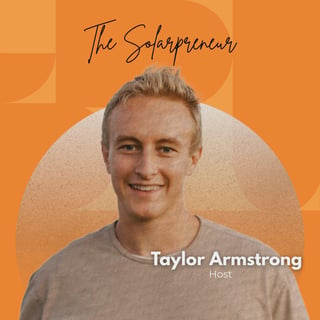
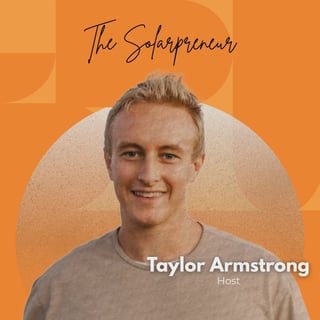
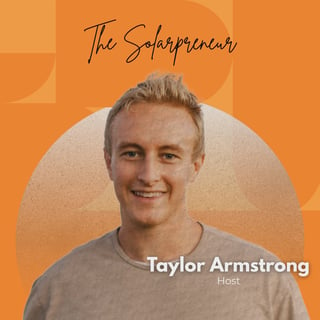
Speaker: My name is Taylor Armstrong.
Speaker: I went from $50 in my bank account and struggling for groceries to closing 150 deals in a year and cracking the code on why sales reps fell.
Speaker: I teach you to avoid the mistakes I made and bring in the top solar dogs of the industry to let you in on the secrets of generating more leads, falling up like a pro and closing more deals.
Speaker: What is a solopreneur you might ask?
Speaker: A solopreneur is a new breed of solopro that is willing to do whatever it takes to achieve mastery and you are about to become one.
Speaker: What's up solopreneurs?
Speaker: Today we're going to be talking about all the reasons why you should consider doing a setter closer program in your business.
Speaker: Or if you're not a company owner, there's going to be lots of tidbits that you will love today.
Speaker: Hope you're doing awesome.
Speaker: My name is Taylor Armstrong.
Speaker: And as usual, we are here to help close more deals, generate more leads and referrals, and hopefully have a much better time in the solar industry.
Speaker: Thank you all for joining us.
Speaker: If you have not taken the opportunity to leave us a review or share the podcast, that would be much appreciated.
Speaker: And I just quick update with me.
Speaker: I just got back from the Knox Star retreat down in Scottsdale, Arizona.
Speaker: Might do it.
Speaker: Well, we'll do a future episode on it because we actually had the one, the great Tom Hopkins on the podcast with us, which was incredible.
Speaker: If you don't know Tom Hopkins, the guy is amazing.
Speaker: He's written like 19 books on sales, on building businesses, and just incredible.
Speaker: He's, I think, in his late 70s now.
Speaker: So it was really just an awesome experience to get him on the show and then just interact with the other people in the Noxstar program, which if you want to hear more about getting in on that, you can hit me up.
Speaker: It's great competition, great networking.
Speaker: We also have a coaching group here at Solopreneur called Sol Society, which we are accepting more applications into and getting people massive results.
Speaker: So if either
Speaker: Either of those, they're a little bit different.
Speaker: Noxstar is more of the, you know, community competitions, you know, weekly calls is a big group program here at Solrepreneurs is definitely one-on-one focused and just a lot of accountability one-on-one weekly calls with that.
Speaker: And, you know, some different tools and things like that we use.
Speaker: So both have their pros and cons, but hit me up if you would like to know more about either of those and potentially get in on them.
Speaker: But that being said, Tom Hopkins, that episode is going to come out here in a few weeks.
Speaker: So you'll definitely want to be tuning in.
Speaker: But today we're going to be jamming on why you should consider doing a setter closer model.
Speaker: And I'm going to tell you my experience running setter closer and running a few different models in the six plus years I've been in the industry now.
Speaker: And we're talking about this because we had Tanner Williams on the show.
Speaker: He's going to come on the next episode.
Speaker: This guy crushed, I think, 140 deals, 130 to 140 deals.
Speaker: And the majority of these deals were in the summer running with a setter closer program.
Speaker: And so I'm going to give you my thoughts.
Speaker: And then, of course, on the next episode, we're going to go much more into depth.
Speaker: Tanner's going to tell you his experience with it and just share why he thinks it's the best model in solar and what worked with him doing it.
Speaker: And so for me, I ran especially back in 2019.
Speaker: That was my biggest year in solar.
Speaker: I had the 150 deals closed and about 120 of those made it to install, if you're wondering.
Speaker: But this year, we, that year, we did have a lot of setters.
Speaker: And as you, that's, you know, explains one of the reasons why it was my biggest year, because I was getting a lot of setter deals.
Speaker: I'll be transparent with it.
Speaker: And to my knowledge, most of the people that are doing huge numbers in solar do have a setter closer program.
Speaker: You look at Tanner Williams, that's coming on next week.
Speaker: You look at Ricardo Ritchie, who had 419 installs and has also been on the podcast.
Speaker: A lot of other people, they're running with a lot of setters.
Speaker: And I know they're still knocking, and I'm not hating on it because I got a lot of leads from setters too back in 2019.
Speaker: But obviously, there's a lot of value in setting and closing your own deals, self-genning.
Speaker: as we call it.
Speaker: But my experience was that I had closed a lot of deals, had a great experience running with a lot of leads.
Speaker: But the one thing I wish I would have done differently is not get complacent.
Speaker: Because what I see is that some people get in these setter closer models and the guys closing the deals, they get complacent.
Speaker: They just start waiting around for the next appointments.
Speaker: They don't do anything between, you know, maybe they have a two o'clock appointment and a five o'clock appointment.
Speaker: They got an hour between.
Speaker: And this happened to me.
Speaker: If I'm being honest, a lot of times I was not being as efficient with my time.
Speaker: I was just waiting for that next setter lead.
Speaker: So that was my experience.
Speaker: But we did have it dialed in, was getting a lot of appointments.
Speaker: That's just the one thing I wish that could have gone a little bit differently.
Speaker: But here's some reasons why.
Speaker: you should consider setting up the setter-closer model.
Speaker: And if you are a setter currently, maybe setter is where you're going to make the most money.
Speaker: I know a lot of guys that are making way more money setting appointments than closers.
Speaker: And I know a lot of guys that should not try to close because setting is what they're good at.
Speaker: And one of the reasons I like this setter-closer model is because it allows people to focus on really what they are good at, what they are skilled at.
Speaker: Not everyone should be closing deals.
Speaker: And there's some closers that are not very good at setting up appointments, but they're great closers.
Speaker: And so my suggestion for everyone as you're going through, as you're hiring people, as you're identifying if you should be a setter closer, there's two personality tests.
Speaker: I'm a big fan.
Speaker: One is called 16 personalities.
Speaker: And the other one is the disc test.
Speaker: May have heard of these before.
Speaker: Talked about them on the show.
Speaker: Went pretty in-depth with
Speaker: on these with Jerry Fusel who came on the podcast would have been, I think, about six months ago at the time of this recording, maybe a little bit longer, which we can link to.
Speaker: But I think it's super important that you identify what are your strengths.
Speaker: If you're taking a disc test, which you can find that on Tony Robbins' website, we can also link to that,
Speaker: But the high D, people have that high D, if you take it, that's the driver.
Speaker: Maybe those people are more, maybe they should be closing more.
Speaker: And then there's a lot of different identifications, a lot of different metrics where you can see, okay, maybe this person would be better suited for closing.
Speaker: Maybe they'd be better suited for setting.
Speaker: And it's not like it's a guaranteed, oh, this person scored this.
Speaker: They should only set.
Speaker: They should only close.
Speaker: But I think these things help.
Speaker: I'm not going to go super in-depth on this, but go listen to the podcast we do with Jerry Fusel if you want to hear more on this.
Speaker: But I think these are great tests you can take.
Speaker: And this is why I like setting and closing, because you can focus on what you are good at.
Speaker: And then number two, it is a lot easier to scale and close a lot of deals, in my opinion, in the setter and closer model.
Speaker: Again, you look at guys that are doing a high volume of deals.
Speaker: Most of them have a lot of setters under them.
Speaker: And it's a lot easier to just go appointment after appointment after appointment, close them up and start, you know, putting a lot of numbers through.
Speaker: The one thing I don't like is people who try to pretend like they're self-doing all the deals, but don't give credit to their setters.
Speaker: And it's something I'm trying to be like when you post your deals on Instagram, Facebook, whatever, like give credit to your setters.
Speaker: I think some people are out there posting deals and trying to get all this clout around them when they're just getting fed with setter appointments.
Speaker: And it's not bad.
Speaker: I still respect you if you're closing a lot of setter leads.
Speaker: But come on, you don't need to act like you're self-genning all these appointments.
Speaker: You can say that you got them from setters.
Speaker: Some people maybe will judge you a little bit.
Speaker: But for me, I still got respect.
Speaker: And I still think it's awesome when people close setter deals.
Speaker: But yeah, I think that's the other reason why it's great to have the program.
Speaker: Number three, it is easier to train and bring people in from different industries, especially if you're just running like blitzes, which I think are a great tool.
Speaker: If you're getting guys that are coming in for a summer program, I don't think people should be learning to close in most cases if they're only out for a couple months or even if they're out for a summer.
Speaker: I think it's too quick most of the time, especially if they're brand new to solar.
Speaker: So what's great about Setter Closer is you can put people in, they can still make a great commission, and they can just focus on that skill.
Speaker: A great example of this is I have a buddy, his name is Micah.
Speaker: He's come out a few different trips with us now to California.
Speaker: But in his case, he's in Houston and he's divorced.
Speaker: He has his daughter there, so he can't move out here.
Speaker: He has
Speaker: be close to his daughter.
Speaker: But what he's been able to do is come out on a few of these trips.
Speaker: He comes out usually two weeks at a time.
Speaker: And a couple of times he's had six, seven.
Speaker: I think his best two week stretch was 10 deals closed in the two weeks, which is awesome.
Speaker: He made incredible money.
Speaker: And he didn't have to like focus on closing.
Speaker: He could just do what he's good at because he came from pest control.
Speaker: He actually trained me in pest control.
Speaker: And so pro tip, pest control reps make great setters because it's similar to what they're doing, right?
Speaker: They're just doing a quick little transactional thing at the door, which I think is very similar to setting a solar appointment.
Speaker: So it's easier to train and scale that way when you're bringing people in from different industries.
Speaker: Number four, I think it's easier to pay the setters quicker.
Speaker: You can give them upfront pay, upfront money, and then you can have better retention with it.
Speaker: My first company, when I started out, we did not bring people in as setters.
Speaker: We just brought them in as closers and training.
Speaker: And...
Speaker: There wasn't really upfront pay.
Speaker: I've told my story.
Speaker: I started out with 50 bucks in my bank account.
Speaker: I was making no money up front.
Speaker: I had to wait on these commissions to come.
Speaker: And because of that, it was extremely difficult.
Speaker: Luckily, I was single at the time.
Speaker: I was having food paid for by my manager.
Speaker: But if I was like a married guy coming in and had to wait on these commissions and had to worry about my own business,
Speaker: housing and all that would have been tough would have been extremely tough so that's what I love is the way you can structure setter closer you can give them upfront money maybe you're paying them an m1 maybe you're paying them after the site survey but uh it's a lot easier to do that and get them some upfront money so they're not you know living like I was with 50 bucks in their bank account and begging for food outside
Speaker: Hey, and then the last thing I like about this and the last reason you should consider this is I think you can bring more structure into place.
Speaker: I see a lot of companies, they're just running like independent reps.
Speaker: Everyone's running around closing their own deals.
Speaker: Everyone's kind of creating their own schedule with setter, closer.
Speaker: I think it's great.
Speaker: You can kind of organize it to separate teams, right?
Speaker: Setters and closers.
Speaker: You can have the setters meet up, have them all go out.
Speaker: I think to maximize this, the people I see most successful, to be frank, they're doing daily meetings with the setters.
Speaker: They're getting them out.
Speaker: Ricardo Ritchie, who had the 419 close, he closes.
Speaker: He gets his setters together every single day.
Speaker: He runs a meeting for them.
Speaker: And they're out on the doors by 11 or 12.
Speaker: Maybe they grab their lunch.
Speaker: They're out there the rest of the day.
Speaker: But the meeting kickstarts it.
Speaker: And he has it super structured, which I think setters need and probably a lot of us could benefit from.
Speaker: Let's be honest.
Speaker: Most of us in this industry, we got ADD.
Speaker: We're easily distracted.
Speaker: We got our phone notifications going crazy.
Speaker: So good to have some structure.
Speaker: So something to consider.
Speaker: So those are just five reasons why I think you should consider running a setter closer model.
Speaker: If you are not a manager, if you're not in charge of these things going on in your company, still, I think some stuff you could take from there.
Speaker: If you're new to solar, maybe go take that disk test.
Speaker: Maybe go take a personality test and just consider, you know, some of these things.
Speaker: Maybe if you want to implement them, you can bring them back to your team, bring them back to your managers, bring them back to your company.
Speaker: But either way, figure out what works for you.
Speaker: I think everyone should learn to set and to close.
Speaker: If you are closing, still go out and knock doors.
Speaker: I do not think a closer should ever just like stop knocking doors because when you knock doors, it's sharpening your closing abilities.
Speaker: So don't just be one of those closers like I was a few months.
Speaker: You know, back when we had so many setter appointments coming in, there was a few months where I just decided not to knock at all.
Speaker: And I did not hit the potential I could have because not only was I not keeping my skills sharp by being out on the doors, but I was also missing out on self-gen opportunities going out and generating my own leads.
Speaker: So consider that setters are extremely important in this industry.
Speaker: I think they have the most important job and you got to pay them what they're worth.
Speaker: That's why I think there's, you know, there's setters that are making more than closers.
Speaker: I think setters should be some of the top paid people in solar.
Speaker: So fight for what you're worth.
Speaker: If you're listening to this, you're an owner or manager, pay your setters what they're worth.
Speaker: Don't pay them pennies on the dollar.
Speaker: They've got an extremely important job.
Speaker: And tune in next episode because, again, we're going to have Tanner Williams on.
Speaker: This dude has one of the best, most organized setups I've ever seen in the setter-closer model.
Speaker: So you're not going to want to miss out.
Speaker: Hear how this dude did on
Speaker: almost 140 deals in four months, essentially.
Speaker: Don't miss it.
Speaker: We'll see you on the next one.
Speaker: Peace out.
Speaker: Keep crushing.
Speaker: Have an awesome week and we'll see you on the next episode.
Speaker: What's up, solopreneurs?
Speaker: Hope you enjoyed the episode.
Speaker: Before you run out and start selling more solar yourself, wanted to let you know about an exciting new cheat sheet we created specifically for you in mind.
Speaker: One of the top questions I get asked on Instagram, on Facebook, by our listeners is, Taylor, where should I start?
Speaker: What episodes should I listen to in the podcast?
Speaker: You got too many podcasts, man, because now we have over 200 episodes.
Speaker: So what we've done, we created the top 10 most downloaded, most listened to, and I would say widely accepted, most useful podcasts that we've done here on Solapreneur.
Speaker: We put them together all in one sheet so you can go, you can hit the ground running, especially if you're new, you do not want to not have this sheet.
Speaker: So go download it right now.
Speaker: It's going to be at top10.solarpreneurs.com.
Speaker: Again, that's top10, the number 10,.solarpreneurs.com.
Speaker: Don't forget the S on solarpreneurs.
Speaker: We will have that in the show notes.
Speaker: Go download it right now.
Speaker: And especially if you have not listened to them, go listen to them and you can re-listen to them.
Speaker: That's going to show you how.
Speaker: So go download it and we'll see you on the other side.