Connecting Activism to Sex Work
00:00:00
Speaker
For all of our activist peers, regardless of the issue area that you're involved in, pretty much anything has a connection to sex workers because sex workers are humans. Sex workers occupy every community, every little nook and cranny of society. Understanding how the basic, big principles of sex workers' rights relate to things that all of us can get behind, like bodily autonomy.
00:00:23
Speaker
Understanding that help does not begin with handcuffs. If you're concerned about somebody, you think they're in a bad situation, hitting them to a police car and and handcuffing them is not a great way to help them.
Introduction to Power Beyond Pride
00:00:35
Speaker
Hello and welcome to Power Beyond Pride, a weekly queer change-making podcast bringing you voices and ideas from across our fierce and fabulous spectrum to transform our world. I'm Shane Lucas.
00:00:45
Speaker
I'm a lifelong activist, owner of a great idea, and convinced that socks mysteriously vanish in the dryer to start their own secret society. And I am Maddie, your co-hostess with the most of it that never wears socks because can't stand a mama's sandals and a heel type girl. that's what you get. We are your beautiful co-hosts today here on the QueerCast
Meet Savannah Sly
00:01:03
Speaker
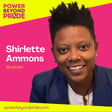
journey. In this episode, we will be talking to the globally recognized advocate and thought leader for the rights and welfare of sex workers, Ms. Savannah Swine.
00:01:13
Speaker
Savannah is the founder and co-director of New Moon Network, an intermediary fund and field builder that has channeled over $2 million. Honey, if you can channel over $2 million, can you come work for my fund? That's what I need you to do, okay? I need that in my life. Into the movement of sex workers since 2022. More than tripling funding sex work-led initiatives in the United States. Welcome, Savannah. We are so glad to have you here today.
00:01:42
Speaker
Hey Shane, hey Maddie, it's really great to be here. I've been listening to the podcast since you launched it and I'm just thrilled to be a guest today. Thanks for having me. Savannah, so happy to have you here. And I've been a colleague with Savannah for many years and so it's such a joy to have you on the podcast with us today. So I guess, well, other than channeling $2 million, dollars which I feel like just makes me want to, it's like the only psychic hotline I think I'd call, to be honest, I'll be honest if I can be transparent there.
00:02:07
Speaker
How's it going out there? I mean, things are pretty rough out there, as I think we all know. It's a really, really scary time. But I feel strongly that the people are strong and our communities are resilient. And a lot of the communities that New Moon works with have been dealing with authoritarianism in their daily lives for a long, long time. And so it's rough, but we maintain hope and we're just trying to do what we can to help meet the moment.
Savannah's Journey into Activism
00:02:32
Speaker
that. And I think would really be great to maybe start by letting people know a little bit how you got involved in the movement, because again, you bring such expertise, such insight. So can you share a little bit about your journey?
00:02:43
Speaker
Sure. I grew up in Vermont, which is where I'm calling in from today. And my earliest experience with realizing that law enforcement and the government and the law weren't always designed to protect people was when I was in eighth grade at my farmhouse that I lived in with my family in Vermont got raided by the FBI.
00:03:02
Speaker
It was a very upsetting experience. a Long story short, my dad ended up going to prison on a mandatory minimum sentence for selling cannabis across state lines. Turns out that's how my artist parents made our middle class living. I got to go to camp and I had a wonderful childhood.
00:03:18
Speaker
My parents were musicians, but they also sold marijuana. And so I learned very quickly about the war on drugs and and how it was impacting families like mine and people all over the U.S.,
00:03:31
Speaker
And I didn't really know what to do about it when I was in high school in Vermont. I didn't really know what activism was, but I was certainly angry and kind of radicalized by the experience. And then totally separately, when I was 18, I moved to Boston and went to art school. I was super broke until I discovered sex work. And then all of a sudden I wasn't broke anymore and I could Pay my rent and buy my art supplies. And i was fascinated by sex work when I started doing it. But then I also started realizing that the way that sex work was treated in our society was a lot like the war on drugs.
00:04:04
Speaker
And when I started seeing headlines about sex trafficking and all these police raids affecting sex work communities in the name of stopping harm,
00:04:15
Speaker
ah causing harm while saying they're stopping harm. It just really reminded me of the war on drugs. And I got really angry and I was an adult and I had the ability to do something about it. So I started doing something about it in Seattle, which is where I was living. And I found Swap Seattle, which was a chapter of Swap USA, but one of the first ah big national sex worker rights organizations in the U.S. s And I've just been sort of obsessed with the movement for sex workers' rights ever since. Okay. Well, it sounds like you've had a very eventful coming into who you are currently. And I love that. i well i don't love what you had to go through, but I love that you have through it all persevered and continue to go. And that really leads into my next question. What encourages you to keep going and
Harnessing Anger for Change
00:04:59
Speaker
to be a leader? I get angry. i am definitely fueled by anger, ah kind of a righteous anger, because I know what sex work has done for me in my life as far as financial stability.
00:05:12
Speaker
And also other things like learning about myself and connecting with a whole variety of people I would have never met otherwise and building community with them. And i get really angry when I see sex workers and our harmless clients being harassed.
00:05:28
Speaker
or harmed by law enforcement or a society, by unjust ah practices such as discrimination and employment and child custody. It just makes me really angry.
00:05:39
Speaker
So even when I've tried to step back for a time, and I have tried to step back, when I see ah headline about injustice against people in the sex trade, I just get compelled again to get involved. So that's what keeps me going is pure anger.
00:05:52
Speaker
I mean, fascinating you share that because I'm always interested in what it means to have rage. And as you said, that that is such a of fuel in your work. And I'd love for you to share a little bit more about that because oftentimes in in movement work and outside of it, actually, when I talk to people outside of it,
00:06:09
Speaker
They're always like, why are you so angry? And can't you just make peace? And there there's a movement toward finding peace. And there's all this sort of narrative about it I get it. there's ah There's space for it. I get it. But I'd love for you to share a little bit and but about how you process your anger and rage and maybe how you respond to this idea that like, why do you have to be angry all the time? Why where's that why is that necessary?
00:06:31
Speaker
Yeah, I mean, I have mellowed out quite a bit. I guess I've been doing sex worker rights advocacy for between 10 and 15 years. And the anger that I feel now is sort of a different kind of anger. It's the slow burn. This is for the long haul anger. Whereas when I first got activated, when I started seeing and what I believe to be is a very well-funded, intentional anti-sex trade campaign in Seattle that was kind of wrapped up as stopping sex trafficking was actually a moralistic anti-sex work campaign, in my opinion.
00:07:02
Speaker
I got so angry that it was almost a form of anxiety. And I've had a friend of mine who's a therapist tell me that anxiety is fear of the future. And so my anger was fear not only as to what was happening in the moment, but fear of what could keep happening and also informed by my own experience of having an FBI raid and having one of my parents locked up for a long time.
00:07:23
Speaker
Anger, that could happen to my friends, to other people who are just trying to get by, knowing how disruptive and upsetting that is and how frustrating it is to feel like you're powerless.
00:07:34
Speaker
So for me, anger translates directly into action because it is a form of anxiety where I can't sit still knowing that something bad is happening or is about to happen.
00:07:48
Speaker
ah So you have to take action. And actually, part of what we do at New Moon is, yes, we raise money and distribute it. And Funyuns. I don't know. Maybe we raise money. While we do it. Delicious Funyuns at New Moon Network.
00:08:00
Speaker
But we also try and offer tools and mentorship to help activists achieve their goals. And
Evolving Advocacy Strategies
00:08:08
Speaker
when we're approaching developing these programs, we think about what could we have used when we were emerging activists and advocates?
00:08:14
Speaker
Because when I got started, it was literally just getting a bunch of sex workers together. Let's dress up as crazy as possible and march around and scream and wave signs. And that's great. I'm all about that. But did it. Beautiful. It's a great thing.
00:08:28
Speaker
But did it help us achieve our goals? I had to learn. i'm like, oh, there's a process to changing laws. Right. There's a way to engage the media. There's a way to talk across differences.
00:08:41
Speaker
And it's also anger exists on all sides of all conversations that are about triggering issues. I've had to dial back my anger at people who are trying to eradicate the sex trade and recognize that they're also angry because there's a lot of trauma on that side, sexual trauma, gender based violence.
00:09:00
Speaker
And I've had to put on their shoes and feel their own anger and their own anxiety about harm that is happening or could happen. and I've had to realize that anger doesn't help us have nuanced conversations. And the sex trade is certainly a nuanced, complex topic.
00:09:18
Speaker
So my anger is still here. It is still my engine that keeps me puttering along every day. But I've had to balance it and take in everybody else's perspectives to try and have meaningful conversations that can move us forward. Because the whole going head to head and gridlock over so like the issue of disagreement around how the sex trade should be governed in our country feels like gridlock.
00:09:41
Speaker
And you can't get anywhere when there's gridlock. And if you do get somewhere, it's not even going to be like a sustainable win necessarily, because there's going to be that other side fueled by anger and anxiety and concern. And they're going to do everything they can to undo your win.
00:09:54
Speaker
So I'm all about trying to find common cause where possible, while also being a staunch advocate for sex workers' rights and decriminalizing. but And I posed this question back to you and Shane as well, but I do believe that there has to be some level of anger in any type of activism, because I think to me, not getting angry, irate, but getting ah to a level of anger is what prompts you to change, is what prompts anything to change. You you got to get frustrated with your current situation. You got to be able to deal with
00:10:26
Speaker
or learn to the lack of dealing with some because some people don't know how to deal properly so think anger is a good emotion that gets overshadowed sometimes because we want to make it a negative thing you know so I definitely think that it has to be there yeah think it's a matter I agree 100%. I think it's about how you channel it. And anger can be a positive or a negative force, or it can be a neutral. You can just be angry and just sit with it. And that can turn into, i don't know, maybe some mental health ramifications. For me, I have to take action to get the anger out of my system to feel like I'm addressing what is making me angry, as opposed to just letting it ah dominate me, frankly.
00:11:06
Speaker
Yeah. And I think that's the, and again, like as a movement, if you didn't care about the outcome, then you won't have any emotional reaction and that should be your concern, right? Like, I think this idea that sometimes there is this calm and again, we can look at the gendered ah critique of it, right? There's so many layers to the, again, black women, for example, being this idea about black women expressing anger, like There needs to be space for this because we're invested in the outcome. We're invested in the impact it has. And that that rage has, that fury has to have a home. It has to have a space.
00:11:37
Speaker
And so I love that we're talking about that because it has to be, like you said, you have to be able to navigate that without burning yourself up. Without it kind of inflated and engulfing your own kind of experience and those around you want to do well, right? It's hard not to do that sometimes.
00:11:51
Speaker
And so in this work, of course, we have impacts of those around us. So I'm curious, like what impact has this work had on your personal life with family, friends? Like many people think about in terms of doing sex work activism, they're like, well, how does that, how do the people
Personal Impact of Activism
00:12:06
Speaker
around you, how do you navigate the relationships of those around you?
00:12:09
Speaker
So do you have any, ah can you give any insight into your experience with that? Sure. Well, I have by and large been out as a sex worker for almost as long as I've been doing it.
00:12:20
Speaker
a long time. And when I first started sex work, I was doing erotic massage, which is just glorified hand jobs, essentially. And I didn't have I didn't have the left I didn't have the phrase sex work until I had been doing sex work for about four years.
00:12:35
Speaker
I just knew that I was giving handjobs for money, which is a hard thing to tell your community that you're doing. And when I would try people, I thought it was the coolest thing ever. I'd be like, hey, I'm doing this crazy thing. It's fascinating. I'm making some money.
00:12:48
Speaker
ah Coffee's on me. And all my friends, I learned I had to learn how to couch it, how to introduce it, because my friends, even my punky artsy friends who were really edgy,
00:13:00
Speaker
They wouldn't hear my enthusiasm or excitement. They would it would they would have a knee-jerk reaction of concern. Are you okay? And which made me feel a little weird and be like, oh, now I feel less okay because it is what I'm doing okay?
00:13:15
Speaker
And that's internalized to our phobias when you you feel society and the people around you, when you feel their framework or their perspective cast on what you're doing. It's like, oh maybe I'm not okay. Maybe this is gross. I don't know. It feels pretty great when I'm doing it.
00:13:31
Speaker
So, but I learned how to introduce it to people in a way that was more palpable. But then also ah pretty early on into my career, I discovered pro-doming, which turns out I have a natural knack for.
00:13:44
Speaker
And I just thought it was because I was a great actress and super open-minded, but turns out I'm incredibly kinky. And I discovered that through sex work. So thank you, sex work, for helping me understand myself.
00:13:55
Speaker
But so then this is the horarchy. And if we want to talk about what the horarchy is, I'm down to. But when I started saying I'm a dominatrix, people's reactions were totally different because society thinks that Pro-doms are intriguing. Oh, you're a woman who's stomping on balls. You're an empowered woman. That's great.
00:14:16
Speaker
And they don't really understand it's actually a customer service job, just like any other form of sex work. But that's different than saying, even if you say I'm a call girl versus an escort versus a companion versus a prostitute. Now, those are all the same thing, but with different phrases.
00:14:31
Speaker
And people receive those phrases in context to you as a person really differently. So, yeah, I had to learn to present it well and then talk. about this Once I said I'm a dominatrix, I had no problems. But so I've been super out with my personal work forever. And then the activism and the advocacy actually became the best way for me to talk about sex work because I was talking about something that people generally could get behind, but which was injustice and people being messed with by the police.
00:14:58
Speaker
And if I wasn't speaking about my personal experiences, people would just be like, oh, that's really great that you're doing that. Fuck the man. So and interestingly enough, it all culminated. I moved back to europe to Vermont about five years ago to take care of my father while he was dying of cancer.
00:15:14
Speaker
And my parents had known that I was a sex worker forever, but we didn't talk about it a lot. It made them a little uncomfortable, but they're very loving and very open minded. And they saw that I was happy. But while I was taking care of my dad at home doing hospice, I was at the kitchen table talking about sex work, this and that all day long. So I was running New Moon and I was building New Moon with my team.
00:15:32
Speaker
One of whom is you're one of your co-hosts, up Melody KG. Love her so much. And so through just talking about it so blatantly all day in the house, my parents got deeply inoculated the topic.
00:15:46
Speaker
And then when it came to my sex work, it's, oh, I actually got to take a trip this weekend. I have a gig. It'd be like, oh, OK, cool. and And then even like right before my dad died, like two weeks before he died, he was like, hey, honey, I've come here. i just want to let you know that I lost my virginity to a sex worker and I was a freebie.
00:16:06
Speaker
And was like, that's great. And so the fact that my dad used the phrase sex worker, which probably wasn't in his vocabulary until I introduced it, and that he was proud to share with me that he had a early sex work experience and that it was a good one.
00:16:20
Speaker
but That just meant a lot to me. And it really made me feel like the way that I've introduced my sex work to my community has been accepted. I feel very accepted. Well, that is beautiful. i love that story. It's amazing whenever the people around you, your community, can finally start to understand and love and be there with you to support you in those situations and in life in general.
00:16:42
Speaker
And we do have to go to a quick break, Savannah. So I do want you to hold that note because when we come back, I want to start the conversation of misconceptions. I think there's a lot of misconceptions in life and in our world, especially today. So I want to break through that when we come back. So I ask everyone, please stay where you are. Do not turn the channel. Do not flip off of your podcast sub subscription platform. We will be back with Power Beyond Pride in just moment.
00:17:12
Speaker
Welcome back. This is Power Beyond Pride, a queer change-making podcast. And I am Shane here with my ah fantastic co-host. Maddie Bynum. Yeah. And we are talking with the phenomenal activist, Savannah Sly, who has shared so much about her own journey in being an activist and what that means.
00:17:32
Speaker
And we were talking on our break really about the power of misconceptions that in movements that are oftentimes very frictious, or challenged, to have a lot of stigmas attached to them. There's a lot of misconceptions about that work.
00:17:45
Speaker
So i what are the common misconceptions that you're facing in your activism?
Misconceptions and Narratives
00:17:50
Speaker
Well, I think the biggest misconception that is sort of a contemporary misconception, and I would say largely manufactured through anti-sex work campaigning, is that sex work and sex trafficking are the same thing.
00:18:03
Speaker
That sex work is inherently harmful or that if you're doing sex work, you're doing it out of sheer desperation and probably being exploited in the process. Now, exploitation and harm certainly does exist in the sex trade. I think it exists in every industry.
00:18:20
Speaker
And sometimes people do get involved in the sex trade because it is the most accessible form of supporting themselves. And certainly sex workers are targets for exploitation by people who would like to make money off of us.
00:18:31
Speaker
So all those things are true, but to fully conflate them erases all the other realities and experiences and circumstances that people in the sex trade have. And it justifies things like the police stings and surveilling and censoring us and taking away the tools that keep us safe.
00:18:48
Speaker
So that misconception is big and it's all over the place. It's global and we spend a lot of time trying to parse it out. But it's nuanced and nuanced conversations are hard to really meaningfully advance. answer I was just going to say, I think you you really hit it on the head. And this actually leads into you, Shane. But I think you hit it on the head because one of the biggest misconceptions that I do want to shed light on is the misogyny in sex work that people on the outside looking in have. Because it's funny how we'll look at a man who's putting he himself through med school when he's a stripper and we're okay with that. But then you got a woman who is either a massage therapist or a stripper herself going through law school. And all of a sudden it's just, well, you fell down on your luck. Like you have bad issues. so
00:19:28
Speaker
I think the how do y'all deal with the misconception as people and organizers against sex work, both of y'all? Because Shane, even though you're a host today, but you yourself have also organized a lot of legislation for sex and sex workers and the advocacy. But how do y'all deal with that big misconception? Shane, do you want to start with that?
00:19:48
Speaker
Oh, no, I would love to hear your answer on this. OK, so a lot of it is so sex work is complicated. It's a vast industry. There are so many different forms of sex work and experiences that people have. People come from different backgrounds and circumstances and that affect the way they experience sex work.
00:20:06
Speaker
So it's not a simple subject. And the sex work versus sex trafficking conversation is essentially like good versus evil, as simple as it gets. So what we try and do is we plant seeds of doubt by complicating the narrative. So let's say that there's a bill being heard and a public safety committee, and it's going to somehow increase criminalization of the sex trade.
00:20:28
Speaker
ah We will bring in as many advocates as we can who have different stories. But all those stories, the point is that the bill being proposed is not going to make these people safer or more prosperous. So you might have people come in who have been totally autonomous in sex work their entire lives. Maybe they had a mainstream career and they decided that they want a different life and they like sex work and maybe they're making a lot of money and they're very privileged and enjoying it.
00:20:52
Speaker
They might come in and say, this law is just going to mess with me and this is totally unnecessary. It might even endanger me. So why would you do that? But then we might have somebody else come in and say that ah they were in an abusive relationship. And at some point, their abuser started encouraging them to get on OnlyFans or to go to a club or make some money. And then they started siphoning that money off of them.
00:21:12
Speaker
ah But then maybe they saved up some of that money and hid it personally and kept doing sex work when their abuser didn't know they were doing it. And they used that money to leave. So that's a complicated story of where sex work, somebody is exploiting and extracting, but then the person is actually practicing self-determination by building a nest egg to leave an abusive situation.
00:21:33
Speaker
And sometimes we'll bring people who were teenagers when they started doing sex work and talking about how their parents were absent for whatever reason and they were the breadwinner for themselves and their siblings and how this law would really have hurt that entire family structure and that it's much more complicated and requires a deeper conversation than the Than just this stupid bill.
00:21:52
Speaker
So we try and bring in a lot of different perspectives to complicate the the situation because we find that when lawmakers are actually concerned about sex trafficking or exploitation, if they're coming from a place of not wanting to cause harm,
00:22:07
Speaker
They at the very least will pause. And so one of our big defense strategies is to just get lawmakers to pause on advancing bad bills. ah Sometimes we can kill them, but just pausing, delaying, stopping so you can have more conversations. And then maybe they won't sign on to that bill in the future if it gets reintroduced.
00:22:27
Speaker
So complex complexity, planting seeds of doubt through complexity is one of our strategies. No, it's really, and thank you, Savannah, for sharing that. Because i think a lot of the a lot of the laws and the materials that get proposed, Maddie, to what you're suggesting here around whose bodies are we trying to control?
Impact of Laws on Marginalized Communities
00:22:43
Speaker
And the history of a lot of sexual criminalization is around trans women's bodies, around cis women's bodies. It's rarely been around a masculine censored body, rarely been in that a conversation. But it also gets down to how that law enforcement gets used.
00:22:57
Speaker
So in other words, will it be applied as equally among all people of racial identities, of all people of immigrant and and immigrant and experiences? Of course not. It is a tool that a lot of systems want to continue to use in the way that they use ah cannabis laws, the way they use different laws as ways to sort of put a thumb against particular population and say, well, this is a way we could control that population.
00:23:20
Speaker
Because when you look at the stats on how people feel about these industries, they don't really feel like they have to be criminalized. There isn't this large majority of people who feel that way. And the same with reproductive justice, right? When we talk about controlling people's bodies, when we talk about these things, like people don't want their bodies to be controlled.
00:23:37
Speaker
And so I think, you know, what's really powerful about Savannah's work, about many of the organizers who work in this space is that they oftentimes are talking about really bodily autonomy and not trying to make judgments about should it be, because there's a conversation about should it be legalized versus decriminalized.
00:23:52
Speaker
Like legalization is its own problem because it brings in this idea, should the government control what we do? But really what we're asking for, Savannah, I'd love to hear your thoughts around this, is we're really talking about decriminalizing things that shouldn't have been criminalized in the first place.
00:24:05
Speaker
So we can liken that to other, again, queer people being criminalized, yeah again, reproductive justice and choices being criminalized. the The act of criminalizing these things is an unnecessary way to control a population that that essentially the systems get to to reinforce that power.
00:24:22
Speaker
Any thoughts on that? Yeah, there's a lot of thoughts on that. I think that prostitution laws and there's plenty of evidence and there's lots of scholars who have written about the origin of prostitution laws as deeply anti-immigrant and early prostitution laws were originally meant to keep but Chinese women from immigrating to the U.S. s when there was a lot of Chinese men here working on railroads. So I think it was the the Page Act or the Chinese Exclusion Act, which was thousand a long time ago. And I recommend if people are interested in sex work history, checking out my colleague, Caitlin Bailey, ah who has the oldest profession podcast. I learned so much from her. She can give you the exact bills and the exact dates. But generally, the earliest prostitution law in the U.S. was to prevent Chinese women from immigrating here
00:25:05
Speaker
to connect with their partners because they didn't want Chinese people having kids here. They just wanted the labor, ah but they didn't want them coming here. And so they said that any woman suspected of prostitution was not allowed in the country. And they applied it to Chinese women under the assumption that they must be here to do sex work.
00:25:21
Speaker
Right. And so then we also see early prostitution laws, especially like loitering laws targeting black women's bodies specifically. And ah it's kind of wrapped up in the stereotype of black women being hypersexual.
00:25:34
Speaker
So if a black woman's walking down the street, of course, she must be engaging in prostitution. we need to pick her up and put her in jail. And that still happens. And loitering laws have been repealed in whole states like New York and also the entire state of California.
00:25:49
Speaker
under the pretense that these are racist laws and they're also anti-trans laws because it's usually trans women of color that are profiled the worst under loitering laws. Those are old racist laws that are still on the books today.
00:26:01
Speaker
But I also think that prostitution generally is criminalized Because it is and it's an it can be a source of economic stability and thriving for everybody except for mostly dudes. get up And I mean, and men are certainly in the sex trade and they can do very well as sex workers, but sex workers are primarily femmes, women, trans women, just like it's a feminized labor.
00:26:28
Speaker
And so... If women of color are making money all of a sudden, if ah trans women are making money, if immigrant women, if ah people with disabilities are making money, all of a sudden the power structure starts to really shift.
00:26:41
Speaker
Most sex workers, like people do sex work to make money. And so you might just be trying to get by every day. And that's a great way reason to do sex work. But sometimes people achieve stability and they might pay off their student loans or they might support their family and also family members overseas.
00:26:57
Speaker
They might even start a business. They can use it like sex workers are all about mutual aid. So that's a big threat. And I think that is actually the number one reason that sex work is criminalized.
Sex Work and Power Structures
00:27:07
Speaker
And also because when and now I'm talking in like Gendered terms, but women's bodies controlling reproduction when a person who's able to give birth but does not have to pair with a man to survive when they have agency over their reproduction and who they get to choose who they have sex with. And they're not financially dependent on a man.
00:27:30
Speaker
That's a total threat. to patriarchy and Christian nationalism completely. So I think that sex work is vilified and criminalized for those fundamental reasons, which is why sex workers are totally part of all of our movements. It's funny to me how in sex work we have different roles and two roles that really stick out to me right now because of my train of thought is dominatrix and doms and submissives.
00:27:55
Speaker
But if you look at how people... The criminalized sex work is more so because we're taking the power back for us versus from you. If you look at the lawmakers and who's gonna leave it at that general, but the lawmakers and the people who sit in these offices that make these different laws, let's be honest, you really don't want nobody. You don't you want to criminalize sex work because you don't want nobody to know what you do in your free time.
00:28:17
Speaker
You want to criminalize gay and LGBT and rights for everybody because you don't want nobody to know who you're sneaking to go see in the night because you have this ideal picture, Christian nationalism, that family first is what this looks like. But in reality, you use the same premise of dominant and submissive to keep everybody else down. And the fact that the matter is we're more dominant than you are is what really fuels their anger to to keep criminalizing who, what I would say in general, we are as a people. Because like you said, even to Black women, a Black woman could just be looking gorgeous standing by herself. And like you said, she's assumed off-gate that she's a sex worker or she's just a promiscuous person or she is someone that that deals with that in...
00:29:05
Speaker
making money in alternative ways when in reality, first, let's just be honest, the freedom to be a sex worker, that's freedom you can't purchase. like the to The freedom to know that my body is my body and I can do what I choose with it.
00:29:19
Speaker
That's the freedom you can't purchase, but we can criminalize it. yeah Yeah, it's radical to own your own body. Sorry, Shane, go on. Well, I wanted to build on that because I think it's talking about the intersectional movement. And I'm curious, Savannah,
00:29:30
Speaker
When we're talking about the intersexual influence and you said sex work cuts across all these different movements and yet all of these different movements are resistant to acknowledge like the impact sex work decriminalization would have on How do you respond to that and how would you encourage other movements to bring that into conversation?
00:29:50
Speaker
So I think that there is, i mean, there can be shunning of sex work in different movement spaces because it makes people uncomfortable. Also, sex workers can be really bodacious. And sometimes for like, we there's like and you can't just wear fishnets to the protest. And it's, well, why not? i You know, where it's like or sometimes people just don't take sex workers seriously because they don't understand the relevance to all this movement work.
00:30:13
Speaker
And at New Moon, we deal with this a lot when we're doing philanthropic education, talking to foundations or individual funders who might be fully supportive. They might be like, oh, yeah, sex workers rights, that's great. But I'm working on racial justice or I'm working on immigrants rights.
00:30:30
Speaker
Or I'm concerned about single mothers and anti-poverty initiatives or disability justice. Well, all these things are connected. And sex workers, we explain, are generally the canaries in the coal mine for a lot of creeping rights, human violations that can be openly practiced on sex workers.
Advocating for Human Rights
00:30:48
Speaker
Because in our society, we just accept that if you're a sex worker, a prostitute or whatever, that bad things are going to happen and you're going to get spanked or punished. And that's just sort of openly accepted in our culture. it's Non-consensually.
00:30:59
Speaker
Non-consensual, not totally non-consensually. And but so what happens to sex workers will eventually happen to everybody else. What we're seeing right now with censorship and surveillance, stealing people's data, especially biometric data off of social media sites, family separation.
00:31:18
Speaker
just open policing of communities without any reason. Maddie, I appreciated how when you were talking about the injustice of a black woman looking beautiful on the street and it being assumed that she's engaged in sex work, the assumption doesn't even need to be there. It's just a justification for rounding people up.
00:31:36
Speaker
I know a black woman who said that she was going to get takeout in her neighborhood. And she said she was wearing a so jeans and a sweatshirt and ah her hair up in a cap. And she got put in a paddy wagon for prostitution loitering because she was just in a neighborhood and they could mess with her.
00:31:53
Speaker
ah So I think that sex workers have been living under authoritarianism in different ways for a long time. And there's an amazing book that just came out from Butterfly Collective in Toronto. They are migrant sex workers working in Asian massage parlors, amazing advocates. And they just wrote a book called Not Your Rescue Project.
00:32:12
Speaker
And it is a playbook. for the movement, not just for the sex workers rights movement, but for movements at large about how do you survive and operate and fight back under authoritarianism? Because Asian massage workers bear the brunt of all these different threats.
00:32:28
Speaker
Being migrants, largely being women or LGBTQ people coming to this country and not having other forms of economic mobility or stability. I'm And dealing with so many stereotypes and misconceptions.
00:32:41
Speaker
And violence. And violence, right? Because and i it goes without saying that da massage parlors were the targets in San Francisco. They were the targets in multiple cities. And I think, again, thank you for, and we'll make sure that book, we need to get that book into the notes for this. So we'll make sure that people get a chance to see that.
00:32:55
Speaker
We're going to a quick break here, but stay with us and we'll be back in a minute to talk pleasure and get to know Savannah Sly a bit more, as well as some tips on how you can be supportive and things you can do in communities elevate this work and what Savannah's working to do. So stick with us and we'll be right back with Power Beyond Pride.
00:33:20
Speaker
Welcome back to Power Beyond Pride, where we are talking with a beautiful organizer, writer, strategist, and advocate at Complete Powerhouse all the way around, Ms. Savannah Sly. I can't tell you how free in this conversation is for because like I said, there's a lot of misconceptions that we have just dealt with in this conversation. But I do want to direct our conversation a little bit back to New
New Moon Network's Initiatives
00:33:41
Speaker
Moon as well. So could you tell us a little bit more what New Moon does and how do y'all as a collective really work in decriminalizing sex work? Sure.
00:33:51
Speaker
So New Moon Network is a national nonprofit that is what we call an intermediary fund. That means that we raise money and then the money is channeled through New Moon into the movement for sex workers rights.
00:34:06
Speaker
So ah we believe that there's around 300 active a sex worker led projects and groups in the U.S. And we try and ah distribute funding to them through our micro grants program, seed funding, occasionally sponsorships.
00:34:21
Speaker
But we ourselves don't have an endowment or a renewable source of funding. So we're also out there. engaging philanthropy. So we distribute funds, but we got to unlock the funds before we do that, which means going to philanthropic conferences, engaging foundations and donor networks to talk about the issue of sex work as well as sex trafficking, anything that they want to talk about related to the sex trade to either help neutralize funding that is going towards harming sex workers through bad policies or initiatives, um or ideally unlocking that funding to get more support for this grassroots movement.
00:34:52
Speaker
um But we also know that it takes more than money to move a movement. I think about myself i'm marching in the streets angry and yelling and waving my sign and not really getting anywhere with it. ah So we host a program with Woodhull Freedom Foundation. They're our allies and it's called Spokes Hub. And Spokes Hub is a a virtual a leadership academy for advocates with lived experience in the sex trade.
00:35:13
Speaker
We welcome anyone with any sex trade experience, regardless of whether they identify as a worker or a survivor or something else. And so we have classes on talking to the media, how the legislature works. and We also have deep dives on topics like ah what is the experience of a migrant sex worker? How does it differ from this kind of sex worker? What's it?
00:35:34
Speaker
What are the safety considerations for online sex workers versus in-person sex workers? ah When advocates graduate the program, ah we continue our relationship with them by offering them access to what we call the awards pool.
00:35:45
Speaker
ah The awards pool is where advocates can get some financial support for volunteer work they're doing out in the world. So if they're on a panel that's unpaid, we've all done a lot of unpaid speaking on panels, or if they're talking to a journalist.
00:35:56
Speaker
We feel like they should have some camaraderie and a network of support and some tangible support. and So through Spokes Hub, we've distributed a little over $20,000 to a pool of 34 graduates all around the country now.
00:36:08
Speaker
So that's a little bit about what we do. We channel money, we educate philanthropy, and we offer what we call capacity building programming like Spokes Hub. Phenomenal, phenomenal. And again, i think it's just amazing that you're talking about what does it mean, especially bringing your experience as a grassroots organizer have really tangible impact.
00:36:27
Speaker
there there's it's It sometimes feels really cathartic to go out and say something really powerful. But it's a lot more to start thinking about, well, what about the material changes that need to be made? What about, we talk about systemic changes that have to be made, but there has to be some investment into what those changes are. And I love, as an intermediary fund, because I learned about intermediary funds through New Moon. It was not an area that I'd been familiar with. So did we. First can you say it three times back to back? It's the question, intermediate intermediary. fund.
00:36:57
Speaker
But it's amazing because you think about these very large foundations and organizations. So if you are listening and you are from a foundation organization, way hey hey we I think it's really powerful because it's also these organizations wanting to authentically be in the space to do the work, recognizing they can't be on the ground with grassroots organizers.
00:37:16
Speaker
And so intermediary funds are really keys to making sure that you have people of lived experience who are connecting to other people of lived experience on the ground who are focused on delivering that work.
00:37:27
Speaker
right They're there organizing either protests or support channels, resources, material impacts for people who are asking for this. This is specifically coming from community-led and sourced insight. And so it's really powerful to me that the Meteorary Fund lives there, that you built it. That's, um again, a testament, I think, to the work that New Moon does and certainly a way for us all to understand how activism goes from the ground into change.
00:37:53
Speaker
So again, thank you for sharing that. Is there some other way that organizations, when we think about organizers and activists who are doing other work, say in racial justice, ah immigrant refugee rights and other places, that they can sort of also in their own way, tangibly impact the work that you're doing? Aside from just funding, ah there are there other ways that those activists can support these conversations around sex work decriminalization, around humanizing people who work, who have sex work experience?
00:38:20
Speaker
Is there some suggestions you have there as well?
Supporting Sex Worker Rights
00:38:23
Speaker
Sure. For all of our activist peers and colleagues and allies, regardless of the issue area that you're involved in, whether it's housing access, health care, data privacy, LGBTQ, immigrant rights, ah pretty much anything.
00:38:38
Speaker
has a connection to sex workers because sex workers are humans and these are issues about humans and sex workers occupy every community, every little nook and cranny of society. There is no specific stereotype of a sex worker.
00:38:51
Speaker
So if you're in a given region, ah if you wanted to be supportive of sex workers' rights, A, start by looking in your state or city to see if there is a sex worker group or project or even just some outspoken advocates.
00:39:04
Speaker
And you could invite them to coffee and see what they're up to and tell them what you're up to and just invite them to your stuff. And if you don't know how to find these groups, sometimes they can be harder to find. You can contact New Moon and maybe we can help make an introduction if we know somebody in your region.
00:39:18
Speaker
Also, just understanding how the basic Big principles of sex workers' rights ah relate to things that pretty much all of us can get behind, like bodily autonomy.
00:39:28
Speaker
My body, my choice. And understanding that sex workers also get to make that choice about their own bodies. Understanding that help does not begin with handcuffs. ah If you're concerned about somebody, you think they're in a bad situation, pinning them to a police car and and handcuffing them is not a great way to help them.
00:39:46
Speaker
um So understanding that looking towards root causes of instability and harm and understanding that housing justice is sex workers' rights, right? Access to education and health care is also sex workers' rights. um And then if you want to get nuanced, to understand that sex workers are asking globally For the decriminalization of sex work, not necessarily the legalization, which Shane said.
00:40:09
Speaker
Decriminalization means just stop arresting consenting adults. Yeah. And legalization is more like, okay, we won't arrest consenting adults as long as they're doing sex work in this specific way in this specific part of town with these licenses, which is really inaccessible for the majority of sex workers.
00:40:26
Speaker
So, yeah, decriminalization and understanding our shared causes and inviting people out to coffee or tea to get to know them in your community. So, Savannah, it has been a joy and a pleasure getting to know you as the organizer and the activist. But this is the section of the show where we like to take time to really get to know Savannah for Savannah. So are you ready to be uninhibited, unincumbent and just being all out honest with your answers about who you are as person?
00:40:51
Speaker
Yes. All right. So let's go. This is our speed round. I think Shane has the first question and we're going to start off and here we go. Here we go. all right.
00:41:01
Speaker
Three words. Describe yourself. am. i am Bold, ambitious, and overextended.
00:41:13
Speaker
overextended Well, I think you just answered the second question. but I think yeah answer you just answered my question I want to ask you because I was going ask you, and do you ask for permission or for forgiveness? But if you're bold and all these different things, honey i used to ask for forgiveness, but then I realized through much feedback from my good colleagues over the years that as a white middle class, able-bodied person born in the U.S., I should be asking for permission of my colleagues. I should be in community consultation and it shouldn't just be me and all my ideas. And this is how it's going to be. I've been a lot of learning around that. So.
00:41:51
Speaker
Yeah, depending on the situation, but leaning more towards for permission from my colleagues and my community now. Powerful. i would i If I add a word, I would add courageous to your list. I think, think again, you've always brought that into how I see you and grateful for that. and i Also, in just even acknowledging that learning is something I think we all in movements really benefit from, is really thinking about what that that means. The mix of our boldness and also our acknowledgement about what that does is powerful.
00:42:18
Speaker
Thank you. Okay. Favorite thing to do in the summertime. get stoned and yoga dance. And yoga dancing is a whole thing. I love dancing, but I love yoga. And sometimes I'll be like at a party or an event and it's, oh, my back's so stiff.
00:42:35
Speaker
And it's, I'm just going to do yoga right here because ideally this is chill. That's why I'm hanging out here. And then if there's great music that I'm going to to start dancing and it's going to be a yoga dance. And it took me a long time to get to that level of being uninhibited where I'm like, I'm just going to exercise, enjoy myself, do the beats in whatever environment we're in.
00:42:52
Speaker
That's my favorite thing. And then cannabis enhancement for me, ah just getting stoned and moving my body with some good people and some good music. All time favorite thing. What's the best song for yoga dancing? Oh, I've gotten really into the new wave of like psychedelic ambient, like crumbin kind of stuff. And it's just it's just groovy and it's made to ah do psychedelics too. And i find some music that I like and I'll listen to it for three years straight.
00:43:18
Speaker
So that's what I'm on right now. i think everybody has done a level of yoga dancing because if you ever think of downward facing balls and just let your mind drip for just a second I'm just gonna be honest okay That could be a form of yoga dancing. So let' so you get it. Right. I am all for it. I love learning new things. And I'm into psychedelic.
00:43:40
Speaker
I love that type of era music as well. Like type of music, psychedelic music. It's just more so just it makes your body move. It's not really and invoking of anything physically. It just invokes that movement within your body that's actually already there. so I get it. So what never fails to make you smile?
00:43:57
Speaker
What never fails to make me smile? This is super nerdy, but... a good meeting where you get through the agenda and everybody feels positive and maybe you had a good icebreaker. There was a little mix of interaction, but you got through this stuff and you're like, okay, go team.
00:44:13
Speaker
That really lights me up. And I didn't know that until I started doing activism. It's like, it's, it was a very surprising thing to learn about myself that I love running meetings. Yeah. You're truly an organizer. Yes. I love it. Shane is laughing as well. Cause he knows that's what makes him smile as well. Good. A good meeting. No notes. I got no notes on that one. Okay.
00:44:33
Speaker
Chocolate chips or hot fudge? Chocolate chips. Fair enough. Love it. When was your first kiss? Oh, that's a great question. I'm trying to remember.
00:44:45
Speaker
i think it was ah part of a traumatizing truth or dare game hosted by a sadist, actually, oh when I was in fourth grade. Yeah, i had a I had some pretty wild childhood experiences that were not so cool, but they didn't really... they I they they were interesting in retro. I just had some really redneck neighbors who did wild things and i was kind of there for it. But sometimes things would take a turn for the more uncomfortable.
00:45:12
Speaker
And so I think I ended up making out with someone's cousin and being really embarrassed about it. But everybody thought it was hilarious. I think that was probably my first guess. But yeah. There you go. mean, memorable.
00:45:23
Speaker
hey Yes, it was very memorable. it was definitely humiliating for both of us. And that was the point because children can be cruel. That is true. Well, how about this? We're going to speak with childhood for a second. What's your favorite homemade meal as a kid? Oh, as a kid. So my parents didn't cook much. My mom is really proud of the fact that she doesn't cook or clean.
00:45:43
Speaker
So I think my favorite thing to do as a kid um with my little brother is we would just buy Elio's frozen pizzas in bulk from like the Sam's Club or whatever.
00:45:54
Speaker
And we would take three or four of them and make a pizza. We called it a pizza pie where we would just stack them on top of each other, ah microwave and just melt it And there was something satisfying about cutting through the thing with a fork and a knife. It was like pizza lasagna.
00:46:08
Speaker
So it was just pizza. It was just way too much pizza, honestly. No Sips thing exists. Yeah, but they're very innovative. it was just such a thrill to have unbridled access to pizza like that.
00:46:19
Speaker
I mean, now you realize that's kind of a dare to try. I'm just putting that out there. Yeah. Oh, we still do that. Go get some frozen pizzas, just stack them on top of each other, microwave it and just see if it's as magical as it was then.
00:46:32
Speaker
I'm game for that. and What are two of your worst phobias? War and fascism. Hello. Can we just say that right now? can we just stop the person? Okay. War and fascism. I've always been afraid of it. I remember.
00:46:47
Speaker
So I don't have strong spiritual beliefs. I believe that anything's possible, like heaven, past lives, ghosts. All of it is possible. i don't know what if it is real, but I'm just open to all of it without having possibility.
00:47:00
Speaker
ah framework around it. But a past life thing, it's like I have been always afraid of war from such a young age. And I always had dreams and continue to have dreams about war and about running from people with guns who are trying to clear out an area.
00:47:15
Speaker
and And then I learned about Nazi Germany as a kid and studied it in high school a bit. And so I wonder, i'm like, did I have a past life where I was like gunned down in some part of a city that was being invaded. don't know. But war. And also, I don't think you need to have past life to also be afraid of war because it's horrifying and needless and just your destruction.
00:47:34
Speaker
ah So everything that's going on right now is really freaking me out. I could see as a member of the French resistance. I could, I mean, I would throw, right? Like I could, i think you would be a member of the resistance. I have i have zero, I have zero doubt that would be a, that's a Thanks. I think I would, I'd like to think that I would fight back. All that anger has to turn into some sort of action, but yeah. Okay.
00:47:54
Speaker
So what does power beyond pride mean to you? I mean, i think that pride is just one act aspect of resistance and advocating for your right to exist and your human rights. I think Pride is what we do to give ourselves the respect that other people will not give us and to celebrate each other and to also own that which is considered disrespectful in our society.
00:48:17
Speaker
But then we need to go beyond pride to get to the nuts and bolts. It's I can be as proud as I want, but if somebody is going to bust my door down and ruin my day or ruin my life, then i need to organize.
00:48:29
Speaker
Right. I need to learn from my community members about how this issue affects us all. And then we need to learn how to and be proactive and in defense and offense to make change.
00:48:40
Speaker
So I think pride is a really important part of keeping our morale high and reminding us as to why we're doing this and to and to also fueling our anger because pride to me is very beautiful.
00:48:51
Speaker
And when we see ourselves celebrating ourselves and celebrating our existence, It personally makes me extra angry that we get fucked with. So pride is also part of the anger engine for me. I love that. answer I think that's one of the better answers. I love it. I love it.
00:49:06
Speaker
So Savannah, we thank you for being here today. We thank you for just shedding your light and your beautiful wisdom and love with us here today. And real quick, can you tell people where we can follow you or where can we support you social media wise? Sure. newmoonnetwork.org is our website. And from there, you can find all of our socials. I personally have kind of not been on social media much for two months, and it's pretty great.
00:49:31
Speaker
But if you go to savannasly.com, you can find my socials, I think. You can also learn about what I do in advocacy. And also, if you're interested in meeting me in person and connecting and having tea, you can also learn more about that there. Love it.
00:49:45
Speaker
Well, thank you so much, Savannah. Again, it's always great to spend time with you. i am grateful that you got to share ah so much wisdom with us today about your own journey around the movement itself.
00:49:57
Speaker
I'm so grateful to be in community with you. And so we really would love to have you back on the show in the future. And that'd be wonderful again for that for you to join us. So thank you for joining us today. um I'm your co-host Shane Lucas and I am owner of a great idea and a person still trying to teach my dog to not vomit after drinking too much water.
00:50:15
Speaker
You can find me at shanelucas.com agreatidea.com or on socials at weareagi. And I am your other co-host today Maddie Bynum. You can find me here at IG is maddysimone737 and my Facebook at maddysimone.
00:50:32
Speaker
Remember to subscribe and get your friends to subscribe to Power and Beyond Pride on Spotify, Apple Podcasts, and wherever you get your podcasts. And stay tuned for the next episode coming your way at PowerBeyondPride.com. Power Beyond Pride is a project from A Great Idea. And A Great Idea is a queer-owned design and content agency. You can learn more about A Great Idea at agreatidea.com.
00:50:54
Speaker
This episode is produced by the wonderful and my beautiful co-host, Shane Lucas. Woof, yes. We don't have a round of applause machine just yet. We broke y'all, so we got to do it ourselves. Yes, Shane Lucas. Y'all make me blush.
00:51:09
Speaker
Smeena Sarkar is the project developer. Our editing is done by the amazing Jared Wilson, and he is always supported with our beautiful person, Mr. Ian Wilson, who is always here to just give us joy. Maddie and i are both part of this podcast. Awesome host team. There are seven of us, and we invite you to send in your questions and comments to us for our Reply All episode, which we do every month at PowerBeyondPride.com. Check out our new episodes each week. And we look forward to queer change making with you next time. Thank you from all of us here at Power BI Broad.