Become a Creator today!Start creating today - Share your story with the world!
Start for free
00:00:00
00:00:01
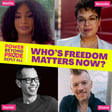
Reply All: Organizing, Solidarity, and Strategy to Melt ICE #39 image

Reply All: Organizing, Solidarity, and Strategy to Melt ICE #39

S1 E38 · Power Beyond Pride
Avatar
42 Plays1 month ago

This Reply All episode of Power Beyond Pride brings Mattie Bynum, Kenyon Farrow, and Shane Lukas together to unpack what it means to organize, stay connected, and tell the truth in a moment of escalating harm. Kenyon frames the rapid mobilization in Minneapolis as a continuation of the 2020 George Floyd uprisings, arguing that visible “mass response” is built through sustained, long-term organizing—not spontaneous outrage. The hosts connect that lesson to queer and trans strategy: LGBTQ+ organizations and community members can’t only show up when an issue is explicitly labeled “LGBTQ,” because immigrant justice and queer justice are intertwined.

Shane and Mattie name the layered risks facing LGBTQ+ immigrants, especially trans and nonbinary people in detention, including misclassification, abuse, and the broader ripple effects of fear—people avoiding healthcare, work, and school. Mattie shares the emotional toll of staying informed and the need to manage anger and overwhelm without disconnecting from community.

The conversation turns to whether progress for LGBTQ+ people has stalled or reversed. Kenyon points to coordinated right-wing messaging and a lack of effective counter-narratives from Democrats, while Shane argues backlash also reflects deeper cultural discomfort and unresolved internalized bias, even within LGBTQ+ communities. Mattie questions whether acceptance ever truly arrived, suggesting representation grew faster than real respect.

In the mailbag, they discuss how media narratives name (or erase) queer identity in stories of violence, and close with practical steps: know your rights, don’t isolate, share location with someone trusted, memorize key phone numbers, and shorten the time between harm and community response.


Recommended
Transcript

Introduction and Show's Mission

00:00:00
Speaker
I think a lot of what's happening right now, especially in Minneapolis, is a continuation of the uprisings in 2020. The reason why Minneapolis was able to respond this way in the, you know, over these two murders is because of the mobilizing and the organizing that happened around George Floyd in 2020. I think the lesson in it is like the continued work that it takes to organize folks has to be a part of like also any queer and trans strategy, whether we're doing specifically LGBTQ specific work, but I also think the LGBTQ organizations should still be present in that work and in those spaces.
00:00:44
Speaker
Well, hello, family. Welcome to Power Beyond Pride, the table where truth gets served hot. OK, not lukewarm, not cold, but hot, just like me. All right. Love stays on the menu and everybody has a seat at our table.
00:01:01
Speaker
So on this show, we are going to loosen our shoulders, sip something good and talk about what's really going on in the streets. I am Maddie, the loudest person in the room at all times, whether I'm just standing still or talking.
00:01:16
Speaker
I am always a vision to be around. Hey, i know I am here with my two co-hosts.
00:01:25
Speaker
Yes, she is. Now, when Maddie says, you know, what's really going on, we mean what's really going on. And we mean in politics, pride, pushback, progress, and all the messiness in between.
00:01:37
Speaker
This is Reply All. No script, no fluff, just truth, love, and a little bit of shade and side eye. And with that, I'm your other co-host, Kenyon Farrell. I'm a writer, activist, media strategist for social justice causes, and very glad to be here.
00:01:54
Speaker
And I'm glad you're here, Kenyon. I'm Shane. one of our co-hosts. And I guess I'm the other side eye. don't even know. have one side eye and then another side I i always wonder if there's two sides two sides to the eye.
00:02:08
Speaker
Anyways, i am light-long harm reductionist, a owner of a great idea, and a walking mohawk. with a penchant for music. So that's me. And I am excited for today, mostly because it's also been an incredibly intense, intense time. It's still going to be an intense time. And when we need to get started, we need to pour some tea, what I'm saying. So does anybody want ice or do they want their tea room

Impact of ICE on Marginalized Communities

00:02:33
Speaker
temp?
00:02:33
Speaker
ICE practices don't just target immigration status. They disproportionately harm people already margin marginalized by gender, identity, or sexual orientation. This is why immigrant rights are also queer rights, right? So LGBTQ plus immigrants, especially transgender and non-binary people, are at far greater risk of abuse, harassment, and violence in detention centers that other groups...
00:02:54
Speaker
that other that other groups often fail to protect LGBTQ people from assault and may place transgender women in male facilities, increasing risk of sexual violence and mental trauma, right? So, so like, the one of the big challenges that we've got right now is that, frankly, like, all these all these attacks on our immigrant communities, like, we forget that they include queer people, right?
00:03:15
Speaker
And so, like, all of our trans... Plus, siblings, all of our family members who just are are just experiencing layers of assault.
00:03:26
Speaker
It's hard to get through this time where where it just feels like it's every day. It's just every day. No, i definitely agree. I think at this point, like I know I said this to you in private, Shane, but i have to limit what I see, what I hear, what I do, because it does make us angry. And I think for me right now, being an activist and being angry sometimes is hard to manage the two, especially when I get to thinking about ICE and what's going on in Minnesota.
00:03:56
Speaker
The peak, like the innocent people are just getting killed in the streets for no reason. like they look And I say no reason because to me, I think this is all senseless. I think everything that's going on right now is senseless and crazy.
00:04:09
Speaker
And especially as a LGBT member and a trans woman, sometimes it's scary because it's, and I'm going to make a joke about it, but I'm being dead serious. I said to my cousin one time, every time I changed my wigs, people asked for my nationality. So I got to be careful being out and about around people because I don't want them to mistake me for another nationality.
00:04:29
Speaker
And it happens, and I feel like a lot of, especially trans women feel that way because of the fact that we we do change our with different colors. And not even just trans women, but women in general. You know what saying? People in general who are um makeup artists or artistic people who change up their looks so much that it's like,
00:04:48
Speaker
That adds another layer of security and safety measurements. Because what if that day I'm walking around with blonde hair, but my license got black hair? You know sam what saying? I don't look exactly like my license?
00:05:00
Speaker
And then I go into a detention center and I'm misgendered or misclassified or mishoused. And now am I just receiving punishment from the detention people? Because we know that they're not the nicest people.
00:05:14
Speaker
But I'm also having to fight for my own safety and freedom with other immigrants. Yeah, that's a lot.
00:05:24
Speaker
Yeah, I think one of the things right now that's been just so crazy is, so we've, in the last few weeks, has been obviously the focus in Minnesota on Renee Good's murder and Freddie's murder as well.
00:05:39
Speaker
and and And those things are obviously really important. But I think one of the things that we've had, and and also Keith Porter in l L.A., right? I don't want to leave you know him out as another person who was murdered by by ICE.
00:05:52
Speaker
But I think, you know, we've been focusing a lot on kind of what ICE is doing kind of in neighborhoods and in certain cities that they have specifically targeted. And we kind of lost a little bit of focus on what's happening to the people who actually end up getting captured and disappeared into these ICE facilities in the last few

Media's Role and Call for Transparency

00:06:10
Speaker
weeks. And so oh one of these has been happening as we sort of talk about the the death toll in terms of ICE, in terms of just the the actual kind of homicides that ICE has been committing. I think we're also missing what's happening to folks who are still actually in ICE detention centers or who have been shipped away
00:06:32
Speaker
to a range of different places or countries around the world. And we don't even know the number of deaths. Some have been reported, very few, but we don't know exactly what's happening to people, including queer and trans people, people living with HIV in those facilities, et cetera.
00:06:50
Speaker
And so I think once this is all over, the level of just atrocity that's been committed, I think we're not even prepared to to fully comprehend.
00:07:03
Speaker
No, I love you sharing that because it is it is important to note, like you said, the the high profile murders, those have been mobilizing. And it's really, again, been a moment for people to really see the harm that this administration has been has been doing on many levels. And I want to get to that in a second.
00:07:19
Speaker
But the those that were lost in facilities oftentimes don't get the same level of press. And there have been a number of individuals who either did not receive treatment and were due treatment. And so they had passed away due to from in their 30s and 40s due to coronary or other other issues. Again, who knows prompted by what.
00:07:35
Speaker
Again, there's so little record. There's so little transparency into those institutions. And we know of only a handful of those, but there may very well be more. But what I also want to circle back to is is something that you're you're also, i guess I feel like leading into a little bit, Kenyon, which is kind of the un the unintended, i don't know, and unintended is maybe be the wrong word, but like, the the so there's a lot of people who are seeing themselves at risk of being targeted by ICE.
00:08:03
Speaker
who aren't accessing health care, who aren't going to employment, who aren't seeking support in a lot of different ways. And those numbers, the individuals whose either lives are lost or parts of their life deeply affected and impacted by all of this, we don't get a number on that. We will not hear about those individuals who don't get access to treatment if they're living with HIV, for example, who may not get access to medication if they're in transition.
00:08:28
Speaker
A variety of things that are ah not just impacting our community, but many communities. Because again, you have individuals who are not able to access workspaces for fear of of of their families, may go hungry for all we know, and may have issues and health conditions related to not being able to access care and treatment or or proper food, whatever the case may be. So there is a lot to be done. And part of the attention going on responding to ICE is so critical. But it's also worth asking, what can our community do in some ways to rethink about how we're approaching individuals who are just simply impacted

Need for Solidarity Across Movements

00:09:03
Speaker
in our communities. We know Minneapolis is certainly getting a lot of attention there, but a lot of our communities are still very much in living in fear. a lot of A lot of children are staying home from school. a lot of families deeply impacted. And there are ways we can show up. And so I'd love to hear what your thoughts are there because I feel like queer community members need to see themselves as part of that solution too.
00:09:25
Speaker
Yeah, no, I think that there's a lot folks can do. I think that what's been so inspiring about Minneapolis in the midst of the atrocity is the level of which so many people in that city are, you know, have been able to be mobilized to respond. And I and and i think we, so what we see, if you're not in Minneapolis, is like people just at the various kind of like mass demonstrations that are happening.
00:09:54
Speaker
And not about like that that was actually built and developed over time. See, like I think a lot of what's happening right now, especially in Minneapolis, is a continuation of the uprisings in 2020. So the reason why Minneapolis was able to respond this way in the you know over these two murders is because of the mobilizing and the organizing that happened around George Floyd in 2020. So it's a a lot of the things that I see online where people are saying why people are showing up now when this is going on, I think these are the same people. like i think literally most of these People, are the same people that were in the streets in 2020 are now in the streets in 2025 in different cities, particularly Minneapolis. And so i think I think the lesson in it is like the continued work that it takes to organize folks.
00:10:47
Speaker
has to be a part of like also any queer and trans strategy, whether we're doing specifically LGBTQ specific work, but also, which I think that we need to do, but i also think the LGBTQ organizations have to also show up in the spaces, not just when there's a clear kind of LGBT cut. Now, obviously, in in Renee Good's murder, she was of as a queer woman. So that that matters. and but But I don't think even if she wasn't, we should still be present in in in that work and in those spaces.
00:11:20
Speaker
I love you saying that. because i Yeah, go go ahead. No, I was going say, definitely do agree with what you're saying, Kenya. I think to piggybacking off of that, like you were saying, community itself, I think the best thing we can do is just continue to show up. Because I do, I agree with you when it comes to Minnesota. I think the tension was already high because of George Floyd, that people continue to ride the wave. But it also shows us how Just like those same people showed out for George Floyd, they're showing out for this. It is like we have to stand in solidarity. So it doesn't matter if you're LGBTQ plus or not.
00:11:53
Speaker
We all have to stand in solidarity. I think that's the best way we can defeat this is if we stand in and a great number. If we continue to divide ourselves and it'd be like, well, you stand for gay rights, you stand for black rights, and I'll stand for this, where're we're never going get anywhere.
00:12:08
Speaker
So I think the best advice we can give other than staying vigilant, make sure you know your rights, you do not have to open the doors. like I need you to know all your rights because everybody here has rights and rights to due process. So not just knowing that, but also staying informed together.
00:12:25
Speaker
Because I feel like the non media is trying to isolate people. It's trying to make us mad. It's trying to make you feel like you're by yourself. It's trying to make you feel like you're oh so overwhelmed and alone. And in a reality, you're not. You can call me.
00:12:40
Speaker
i mean, I'm not going give y'all my number on the show. I do apologize. However, but the people who know me and if they need to call me, like we we have each other. We're not alone in this. So, Matty, do you think we need to have a tragedy in order to have this moment? I guess I hear what Kenyon's sharing, and i and it's really, i think, potent because it says, hey, we did this in 2020. We did this in 2025. One of the critiques that I've seen, and I think it's a a salient one, right, is that for communities of color, for communities who have faced continual violence from from law enforcement for many, many years, again, prior to Floyd, um throughout, you know,
00:13:16
Speaker
centuries in many cases. the The reality of this dipping in and out when we are confronted with a tragedy, i think that's a really fundamental point because the question is, well, how do you sustain that in a way that that people can understand? Because part of the Floyd protests also coincided with the pandemic and people having a little bit more space. This is coinciding in some ways, not so much that people have space, but but more with a specific city.
00:13:44
Speaker
So, you know, we're seeing some, we're seeing demonstrations obviously around the country, which is great, but I really think it's, it's important to note like sustained and what does that look like to sustain a movement even past the tragedy? So we don't even have a tragedy in order to fight for the rights and the, and the ability for people to be treated with dignity.
00:14:02
Speaker
Like it shouldn't take, it shouldn't take this. But I'm being told it is break time. So we are

American Complacency Towards Injustice

00:14:07
Speaker
going to step away for a quick break and we'll come back with a deeper dive with some more headlines. So stay tuned, informed and connected. This is Power Beyond Prime.
00:14:22
Speaker
Welcome back to Power Rearned Pride. My name is Maddie. I'm sitting here with the amazing Shane and the always phenomenal Kenyan. And when we before we went to break, we were talking about, do you think that we need a national tragedy or just a tragedy for us to all come together? And to answer that question, Shane, I'm going to say yes and no.
00:14:41
Speaker
Yes, because sadly, that's the only time we do all stand up. Like, I always think of a national tragedies. Like, I think of what I used to teach my nieces and nephews and what was taught to me as a kid with my sister. And it was like, no matter what y'all relationship is at home, when you go out in public, you are united front.
00:14:59
Speaker
So if somebody picks on your sister, I don't care if y'all just got through arguing. You you know I'm saying? You take care of your sister. So sadly, I look at our community that way. people like People will live on the same street and not talk to each other, but let one tragedy happen, all of a sudden, everybody's having a block party.
00:15:14
Speaker
So if it takes that to bring us together, sadly, yes. But to also flip it, it shouldn't take that. But I think it does.
00:15:23
Speaker
So I would definitely say that, yeah. it takes a national treasure. I don't like it. i think i'd like I'd like to think that the, but but you know, it's, it's a yeah, Kenyon, I'd love to know what you think about that. I know, and then we're going to move on topics, but yeah, what do what do you think about that? yeah's I mean, I've said for year, long before this moment, and a range of questions sometimes from people about why what What will it take to make Americans kind of like rise up en masse, right? to or Not just queer folks, but in general around a range of injustices. And for a long time, I've said when things get desperate, when the dollar falls out and bread is $3,000 U.S. dollars tomorrow, right? And I i think that
00:16:12
Speaker
People in this country see things that happen around the world with whether it's just literal genocides or whether it's people starving or the the people's economies falling out because of massive inflation. And so then their currency is worth nothing. I think Americans just don't think that that can happen here. Right. And I, And although we are living in a time where we are careening dangerously close to all of the above scenarios, and and I think that it is until people kind of ah reckon with the
00:16:51
Speaker
There's nothing that there's very little, I should say, that's ah separating us from many of the worst things that we see in other countries on television. It's not because Americans are so fucking special, which I think is our problem. We think that we're somehow God chosen and somehow ah these things can happen to us. And so people stay relatively complacent and not engaged. But but I think that people are are beginning to see that these things actually can very easily happen here. And and hopefully people will respond before it's too late.
00:17:26
Speaker
Now, I will say, as I go into the next topic, I agree with you. Kenyan, I think people need to get out of their fictional comfy place. Stop thinking that your life is so comfortable that this doesn't affect you. Because it does. One, we're all a paycheck away from being broke. Let's just be honest. Now, some people might have to lose three, four, five paychecks.
00:17:46
Speaker
But at some point in time, we're all from the same area. We all get up the same way in the morning. We all go to the bathroom the same way. And we all go down at the night at the same time. You know what same way.
00:17:57
Speaker
So I agree with you. I definitely do. I go down in a different way, but I, you know what? I'm just gonna, I'm just gonna, I'm just gonna put that out there. I know I know it was coming. Let us move on for another topic.
00:18:17
Speaker
I mean, I mean, I don't have to

Regression in LGBTQ Rights

00:18:20
Speaker
hold down here. then up brush broke I guess. Really, when you think about it. When I said it, I knew that I was like, I messed up and I got to roll with it. I just got to go ahead and say, will we go down tonight? Look here. OK, but no, we got to move on. Look, at we we can talk about your going down habits later, Shane.
00:18:36
Speaker
But did you know A recent new york a recent New York Times opinion piece argues that Americans are increasingly turning against the LGBTQ plus community.
00:18:51
Speaker
Sparking a debate about whether this reflects a real shift in public sentiment or something more. The article goes on to discuss that in two decades prior to 2020, visibility, recognition, and legal inclusion of gays and lesbians progressed and a lockstep larger and more prominent in such instances as pride, parades, landmarks that were lit by rainbows, and federal legislation of same-sex marriage.
00:19:18
Speaker
That progress translates into something remarkable. However, Currently now we are seeing that since 2021 to 2024, that the progress has not only stalled, it has reversed in just four years into anti-gay bias, which rose to be around 10%.
00:19:39
Speaker
increases also appear Increases also appeared in biases toward Black people, dark-skinned people, older people, disabled people, and people who are overweight, but not as starkly as the LGBTQ plus communities. So my question to you is, do we feel that we're being discriminated against more here lately than the last two decades?
00:20:05
Speaker
I mean, nobody speak at the same, i mean, both of y'all don't speak at the same time, but I would. I mean, I know what Kenyon thinks about this because I certainly have thoughts. Well, one, I would say there is something happening with the kind of acceptance of LGBT folks in American society. And and that is because though the right has done a good job in the last few years of really pushing back against various kinds of queer and trans political, cultural, social progress.
00:20:39
Speaker
And and and And so part of what happens is, I think, again, again it's kind of back to my other point, is that we take things for granted. that that We tend to think that, oh, we get acceptance and so therefore it stays there forever and forever and ever. And, a man, it just doesn't work that way.
00:20:54
Speaker
And unfortunately, the they're like the right in this country, right, the Republicans in the kind of right wing factions, right? understand that they can, if they put enough money and enough propaganda in the world, that they can actually start to make people believe the things that they believe, right?
00:21:16
Speaker
And unfortunately, the Democratic Party and the liberals tend to basically take their political cues from however people, whatever sort of surveys or focus groups they get, and they don't actually invest in actually how do you actually move people from one position to the next. They'll say, oh, well, we polled and people don't like this thing, say Medicare for all. So therefore we're not, as opposed to saying we have a vision in this country for
00:21:48
Speaker
a health care system that is without private insurance companies and kind of corporate interests in it, let's convince people that we're right. Right? They don't do that. and And so we end up in a situation where the Republicans, right, we we got to same-sex marriage. We got to all these different cultural touchstones of queer and trans people more visible than ever in the history of this country. But what they still stay committed to their vision and have continued to actually push back in ways that is actually showing success, right?
00:22:23
Speaker
And so I think that's the difference that we're in, is that we don't, the same sort of powers that be that are on the left are not invested in actually convincing people that they're right. They actually will just survey people at whatever position that they're in, and then they just won't talk about the things that they think people don't want them to talk about, as opposed to trying to convince people otherwise. And we saw that in 2024 in the elections around trans issues. The Democrats basically had no answer and said nothing. And then here we are.
00:22:52
Speaker
right, so I'm going to agree with Kenyon 25%. the other 75%...
00:23:00
Speaker
Because i wholeheartedly believe he's right in terms of the amount of strip strategic approach to arming an audience with transphobic language, with issues where they felt some level of conflict, and really building and investing in ensuring that it would fester as long as possible until through the elections and and even even into today.
00:23:30
Speaker
and today Where I disagree at the 75% of it is that it's somehow, i think it absolves the reality that I think whether or not you identify as queer, whether or not you identify as progressive or conservative, you have yet to reconcile a reality where LGBTQ plus people should be treated with the same level of dignity and have the same right to live as everyone else.
00:23:57
Speaker
There is a desire for acceptance. Like we oftentimes are looking for that affirmation where we wanna be approved, we wanna have a space, but we've not done the internal work oftentimes because we're oftentimes trying to see, we could see this in many of the ways that we co-opt a lot of heteronormative models. We're not interested in asking questions whether they work. We're not interested in asking questions whether these systems are any good.
00:24:19
Speaker
comes back in some ways, and we we can we can look at parallels in racial justice, we can look at parallels in a variety of ways. We're looking for acceptance from a power that honestly we bought into because we live in this system. So again, i i don't live in a vacuum. I live in a world that's misogynist and white supremacist and has all of these elements to it.
00:24:37
Speaker
And so it feels familiar. I don't know what it's like to live in a world that has the level of affection and care for self that allows me to live as a queer person unabashedly, without critique, without without any question of whether or not I belong here.
00:24:54
Speaker
And so what I think it is, is that yes, 25% of that 100% strategic sort of targeting, but that 75% lives among all the people, which is why, getting to your point, Kenyon, the Democratic Party couldn't push back because it itself isn't comfortable with the idea of a world that's trans-inclusive. It itself isn't comfortable with all of these conversations. It doesn't know what to do with it. And so it doesn't speak positively about it. I mean, I see this in in queer organizations and among queer people who are are still, and again, it's it's human.
00:25:24
Speaker
Because you may have grown up in a way that sees the world of the particular foundation and now you live an identity and an affection, a way of being that is just different from that. And so you're reconciling, like, what is it to manage this difference? What is it to manage this discomfort of something a little bit different than what I'm used to or what people expect? And the courage and the way to live in that, that, I mean, again, I appreciate everyone who does it. And I think there are so many gay people who do it.
00:25:48
Speaker
But I also know some of these same gay people have a lot of internal conflict about what that means. And so I think there is this sort of desiring to yield at a moment of discomfort sometimes that actually it is. It's sort of like, again, when we think about racial justice, like it is hard not to hear the stereotypes or the norms or the ways that society has given you a track record. And then at times they hear your own brain go, whoa, is that what my first reaction was? Like, that's not a great one. For queer people, I think we, I think all people go through it who are trying to question the norm and the systems of the norm. So my my feeling is what this number reflects is that, yes, we pushed forward, which is great. And we should. we We should have a version of the world that's better. But we never really did a reconciliation of what it meant to manage that different world that we were trying to build and that people were going to feel uncomfortable.
00:26:40
Speaker
Not necessarily bad, not all discomfort's bad, but they were going to feel uncomfortable. And if they don't know what that feeling comes from or how to manage it, then a Republican Party, a conservative movement can come in and say, oh I know what that discomfort is.
00:26:53
Speaker
It's this. rather than saying it's about, this is what a society feels like when we move it forward. And it's gonna be different. Because if these systems were good in the first place, we would be trying to change them, essentially.
00:27:04
Speaker
So i think, again, 25% it, absolutely of it to me, I don't think we've changed all that much. I think even queer people have a lot of that internalized homophobia that's still a transphobia that's all there.
00:27:16
Speaker
It's all still there. Yeah. I'm glad you said that. think we disagree. i would totally agree with I'm so glad you said this is a wrestling match. But no, and honestly. I'm sure, but go
00:27:32
Speaker
But no, i definitely agree with both of y'all. I don't think is i it's interesting to me that people say that we got further because I don't think we ever got further. I don't think we've ever moved the needle in the beginning, to be honest with you. I think, and I'm going to go back to my argument, I think some people got certain freedoms and liberties. And so they made it as a whole that the LGBT community got freedoms and liberties.
00:27:54
Speaker
But let's be honest, the whole LGBTQ plus community didn't. So I don't think as a whole, when they say that from the two decades prior to 2020 that there was an increase, honestly, I didn't see it then. I've never seen an increase in in supporting of the gay community. I see where we were complimented. as I see where we were...
00:28:18
Speaker
Not so much accepted, but I would say that people got to a place to where they they could be around us. They knew how to network with us and be in spaces with us. But I don't think it was ever an acceptance, to be honest. That's just my personal opinion.
00:28:32
Speaker
To me, that sounds like progress, but it sounds like representation. And I think representation matters. Like, an undoubtedly, representation matters. yeah But it's not the same thing as systemic change. It's not the same thing as meaningful change that it doesn't matter if you like me or not, right? I mean, I'd love if you like me. I like all of you. I i love that you like me, but it shouldn't matter when it comes to a court of law.
00:28:54
Speaker
It shouldn't matter when it comes to my ability to buy a house. It shouldn't matter in my ability to access a job or to raise children, whatever the case may be. But the problem is that we didn't change enough of those laws. We didn't change enough of these things that it doesn't matter what you think of me personally, but that I'm treated like a human at the same level of of rights. And we've never, I mean, we we're still fighting for that for women. We're still fighting for that for or to fight, to fight back and racial justice and racial oppression, and right? Or fight back, fight for racial justice. so Queer people made, I think they made enormous strides in representation. so So Maddie, I'd probably push back a little bit and say, I think we did make enormous strides representation-wise. We're telling queer stories. There's more awareness of queer stories. I love that.
00:29:34
Speaker
What I don't think we ever got, and we never fought for, and we never we never at least made it happen, was the systemic change to ensure, regardless of your feeling and your opinion of me, that I'm treated with the same level of dignity as everyone else.
00:29:48
Speaker
Mm-hmm. Yeah, um I mean, i I guess, I mean, we can always have our differences, but yeah, I don't i don't see where we have gotten but but so far. and And I do agree with you. You ain't got to like me, but you're going damn well respect me.
00:30:01
Speaker
That's how I look at it. you I don't care if you like me, love me, or hate me, but respect me. I respect you. Respect me. so I respect you in the morning, Matty. Oh, no. I respect you now. I respect you now and in the morning, Maddie. And on that note, we need to take a short break.
00:30:23
Speaker
I'm the one who's, I'm bringing us into breaks. That's fine with me. I'm doing that today. I'm bringing us into breaks. All right.
00:30:32
Speaker
I'm sorry. is you Yes, yes. Keep going. Yeah, i first stay with us because we're having a great time here. A great time about very heavy topics, but it's really important we talk about these topics as a community. And so I'm really glad to be in community with you all talking about it. We'll be back in a minute. and We're going to look in the mailbox or mailbag for your questions right after this a tiny little break.
00:30:59
Speaker
Welcome back to Power Beyond Pride. I am Kenyon and I'm here with my co-hosts, Shane and Maddie, and we are queer change makers ourselves. But it's not a check, what's in the box for your questions.

Media Bias in Portraying LGBTQ Victims

00:31:13
Speaker
She's laughing about your box. No, I'm laughing because I want to say something. Wait a minute. want it. What's in the box? We just said, we just said words. and We just can't use today. I guess that's, is that what it Is that what it is? had nothing to I'm going down I'm going to go down to the box.
00:31:33
Speaker
We are all mourning the loss of Renee Goode. I know they mentioned her wife as it relates to the funds raised in the government talking bad about her, but I don't really hear her referred to often as a lesbian. Is that a good thing? It's an interesting question because it's it's, we talked a little bit about Renee Goode earlier. And so I'd love to hear your thoughts on this because we do hear about her wife.
00:31:52
Speaker
i have heard I have heard a number of responses around her wife, but I'm curious what you all, how you all feel like her identity is is being played out or how it's being carried through in the media? And is is it good?
00:32:04
Speaker
Which is what the listener is asking. Yeah, I mean, i i mean, it it's complicated, I think, because on the one hand, i do think it's important that people are, ah in this case, Renee Goode is fully visible.
00:32:23
Speaker
in who she was as a as a person and the fact that she was ah just dropped off her kids, right, with her wife waiting, right, in the midst of this. So I bet because that's part of the story, I think it's, it is important. And and I think in general, it's, it is important for queer people who are involved in this moment in ways that aren't about like an LGBT issue per se are visible as as human beings that are concerned about the future of this country, that are concerned about their neighbors, whether they are queer, trans or not.
00:33:01
Speaker
So it does it does matter in that sense. But then there's a sense in which This is about state violence, right? And and so and and and I've seen in the question from some people on online as to whether or not the specific vitriol against her was because the the ICE murderer knew she was a lesbian or had figured that, it so if that was a part of the the nastiness, because he called her a bitch.
00:33:36
Speaker
after the fact, if I'm not mistaken. So i was so there's there's something in that that I think is worth looking at. so So I do think that it is important, I think, for those reasons that that no that her identity is is a part of the story.
00:33:54
Speaker
but it all is But the larger story is is about state violence and militarism more than it is about any of our kind of sexual orientation and gender identity per se.
00:34:07
Speaker
I definitely agree with Kenyon. I would say to me, it's a catch-22 because I agree. I think at some points, yes, it's important because if it was anybody else, we would list all their accomplishments, especially if it was a white man.
00:34:19
Speaker
The whole thing, like as soon as he got killed, it would me he's a grandfather, he's a serviceman, he is a lover of all things in his community, he's a pastor, a deacon.
00:34:30
Speaker
So I think in that sense, yes, but then at the same time, I think that it doesn't play a part because at the end of the day, this was a human being. I don't care if she was a woman, a man, black, white, gay, straight, or not. She's human. And she wasn't doing nothing wrong.
00:34:45
Speaker
So I think on that side, I don't think it really weighs in as much because I think it's just a part of who she is. Kenyon was saying that she's a mother, she's a wife, she's all these other things.
00:34:59
Speaker
But I can see where both arguments would actually work in this situation. Yeah. Yeah, context matters, right? It really matters in which way we're having this conversation because it is important to know LGBTQ people face violence, that it could have instigated that that hurt, simple identity may have played a role in the level of vitriol. Again, when we look at Alex Brady and his murder,
00:35:22
Speaker
It's interesting, again, Maddie, to your point, would it be different if a white guy was killed? Well, sadly, ah tragically, we know because not too long after, it all was pretty. So I think it's a really interesting thing because we do want to avoid erasure from the conversation. I do think it matters.
00:35:40
Speaker
Can I say something real quick, though? Yeah, yeah, of course. Shane, and to just comment off of what you said, it does matter because it's interesting how when I saw the the news coverage of, and I cannot remember his name to save my life. Y'all know I'm horrible with names. Freddie?
00:35:55
Speaker
Freddie. Yes. The main thing they talked about was he was a veteran and a nurse. And I thought that was interesting because when they referred to Renee, it was all about how she was a bad person. She was stopping this. She was trying this. So it's like, regardless of who she was, y'all were never going to give her a credible story.
00:36:19
Speaker
Either way you go, if that makes sense. Well, I mean, I will say, I mean, I think that i think there were a lot of favorable accounts of Renee. Renee, Renee, again, it depends on the administration. I think we're just going to... trash everything that the administration said about Azure, Google, because the all of that is false and it has been notably false.
00:36:38
Speaker
I think Renee Good was painted as someone and and understandably as someone who was volunteering, who was who was not an activist. in the sense of necessarily organizing in the same way, as much as we know, but more somebody who was volunteering, who was supportive in her community, who was ah who was a community participant. I do think it's interesting that they do, the way they do refer to, pretty again, the veteran component, that certainly nursing has come up a great deal in this sort of national conversation around sympathy.
00:37:09
Speaker
I do think that's really important. Coming back to to Renee, and and again, Kenyon, I'd love to hear your're you're you're kind of you're kind of your your thought on this. Because when it comes to Renee, I don't necessarily want the erasure, but I think, again, about the person, I cannot remember his name, in 9-11, who was responsible for bringing the plane down, essentially. in in what that was That was intended to be at a place to take out and and and and debt and hurt far more people.
00:37:35
Speaker
And so w risked his life as a veteran and he risked his life in order to and sacrificed his life to save a lot of other people in that practice. And he he was a gay man. and And it's interesting when that happened again, the way that was and wasn't talked about as part of the conversation, because I think we don't know.
00:37:53
Speaker
I don't know. So to for the listener's question, i don't I don't think we always know. when it is appropriate to bring up. But I also think we fear erasure, but we also don't want to be tokenizing or or providing ammunition. That's probably the wrong metaphor to use here. ah Providing resource for people to cause more harm.
00:38:13
Speaker
Yeah, and I think we don't want to also center ourselves in a story that, you know, that also can sometimes be the problem with like kind of ally politics where a person becomes or an identity becomes kind of centered in a way that isn't actually really.
00:38:28
Speaker
what's happening. but i But I think in the the case of of both Good and and Pretty, i think we saw, but I think we saw actually saw both things happen with both of them that with, you know, her it was, i mean, and it didn't depend on where the message was coming from, right? So from the administration.
00:38:44
Speaker
and it's flunkies, it was she was a terrorist, a domestic terrorist. that They literally said that. With Freddie, they said, what would you, well, they've been saying, well why would he come to a protest with a gun? right I mean, that's that they've tried to disparage both of them. in ways, and then it has taken community to either their direct loved ones or other people who knew them, work with them to actually kind of restore their humanity and tell a fuller story. I do think, and and and I don't know this to be true, and I i don't want to say too much, but but I do think that it's interesting that in Preddie's case, there has been no romantic partner
00:39:30
Speaker
like come Yeah, come forward. and That's that has been very interesting that that has not actually surfaced at all. You know, in in his case, right, it's been mostly his parents and then people in some cases, patients of his or other other nurses, people who knew him ah through his his work as a nurse at the VA.
00:39:50
Speaker
And so that that to me, the the silence around that part of his life, I find interesting. Right. And again, I don't I don't have any any knowledge or data about anything related to his personal life. But then i is the question then would it I guess that's the question is if his if he did, let's say he had a same sex partner.
00:40:12
Speaker
would we be would we be comfortable with their lack of disclosure at a time of grief? Would that be, because again, I will say Renee Good's wife made a very powerful and and and and incredible public statements, has recognized the need both to grieve and to address the real harm the real harm done to community and and many people in the city through the murder of her wife.
00:40:40
Speaker
So, again, that and i saw i you could tell that she has recognized what that is. But if Freddie did have a same-sex partner, it's irrelevant. So that's kind of what the the person's even asking is, what if they did, would we be disappointed?
00:40:53
Speaker
Like that you're like, hey, why didn't why didn't somebody say something when at the end of the day, to your point, that's not the center of the conversation. It's it's a component of their life. They're not necessarily diminishing it.
00:41:04
Speaker
Because it's not it's not so around homophobic or transphobic language that this is any of this is happening. It's not like they're hiding it or causing harm in some other way. They just may simply not, as ah as a as a significant other, not want to acknowledge this public space where they have now opened themselves up for critique. Again, which which we've seen with Rachel Goode, right?
00:41:24
Speaker
Which we've seen with Renee Goode's wife. And I think this brings us to the kind of last question in the bag that we wanted to talk about tonight.

Staying Vigilant Against ICE

00:41:31
Speaker
And what are some ways, and this so this question, let me say, comes from Allison. um So, hey, Allison.
00:41:36
Speaker
What are some ways that we as the LGBTQ plus community can stay vigilant and safe against ICE? So what do you guys think? I will definitely echo back what we said earlier. Make sure you know your rights. Make sure you have, if you don't, you can easily get a copy of your constitution. You can get a copy of your Bill Rights. You can get a copy of anything that you need to have on you at all times so that you know what you can and cannot do.
00:42:04
Speaker
And to stay vigilant, I think, it the it the also too, this might sound crazy to some people, but don't go out alone. Let's try to stay in some numbers. Because the thing about it is, too, you need to If it happens, we need to know if that makes sense.
00:42:20
Speaker
If something does happen. So I say stay vigilant and stay in in in your numbers of people. Pay attention. Keep your head on a swivel. Know your rights. And just know also, too, it might be dark right now, but our strength comes because we know it's going to get better.
00:42:36
Speaker
You have to stay focused on hope for the future because I think that's also what gives us strength to stay vigilant in these times. i love ah I love that statement. I would, I say, echo the vigilance. Absolutely.
00:42:49
Speaker
what i'll What I'll say is you're not safe. um I think it's really important to note that it doesn't matter where you are, who you're with. A lot of the fundamental principles being used by ICE, and again, there's a lot of likening it to Gestapo,
00:43:02
Speaker
World War II assaults, but it's it's much more more like the slave handlers, the the people who would ah go and find escaped slaves. It's a lot more, i want to i want to make that reference a little bit more than the Gestapo, because I think it's important to note that this has happened in America, in in this America. In the past, this is not new and that we're not safe. As long as this exists, as long as this federal government has decided to make a very bold assault, not just on physical bodies in varying places, but upon the laws and the protections that you have as an individual and as a citizen.
00:43:38
Speaker
You're not. You're not. You're not safe in your home. You're not safe. Again, a lot of the the places that we have, quote unquote, made safe, ah schools, churches, many of these spaces that we we would consider sanctuary spaces, they they have undone.
00:43:51
Speaker
And it's it's there's no there's no demonstration that this is going to slow. And so i don't I don't want to pretend there is a safety here because i I don't necessarily want people to be fraught all the time.
00:44:02
Speaker
But there's a reason to be fraught. Like it is you're not okay. this is not ah This is not a time where it is safe and and they're making it unsafe. And if you want it to be safe, then you will you will recognize that if you experience any level of comfort in this environment, you have a level of privilege that you need to spend some time with and figure out how you can impact the system to actually make it safe for people to exist and thrive on their terms and their bodies in their way.
00:44:31
Speaker
And that is something that you can do. But is there a way that the queer community can make it be both vigilant and safe? No. I mean, you just can't. I think you can negotiate places in which you have protections. You could do you can take precautions in appropriate ways.
00:44:45
Speaker
But I don't think this is a time where we need to affirm that there is a there is any day of safety. And I'm I want to also echo and make sure that we acknowledge that for this is not new for many community members in the United States. So that this is also not a new concept. It just may be a new concept for several people who who just may not have experienced that oppression directly.
00:45:08
Speaker
Yeah, I'm just a quick and close to say that. Yeah, I totally agree. I don't I don't think that we can stay safe, per se. if There's no no certainly no guarantee of that.
00:45:20
Speaker
And but but i the only things I would offer is. yeah Have somebody's phone number in your head that if you need to access and make a phone call a certain point that you don't have your phone with you that you can do in an emergency.
00:45:36
Speaker
Second piece is if you have a a smartphone, or some people often will share their location with, sometimes people do it with their partner or whatever. I always think it's too much. I'm like, I don't know where I'm at at all.
00:45:50
Speaker
We know where to find you, Kenyon. i like that shit. but but but But right now, I'm actually reconsidering that because somebody should know if I'm i'm actually... so So think about one of your homies who you don't mind sharing your location and they...
00:46:07
Speaker
and see if you dipped off at the bathhouse or you're here whatever. You don't care. and like they have so and then they have your location in case anything happens.
00:46:19
Speaker
And then you have to. or And also, if you have either... a the name of ah of a lawyer or at least a legal organization to also have that number in your head memorized in case you also need to use it. I mean, those are just some things that I would say like right now to just prepare yourself so that you, the the lag time between anything happening to you and people knowing and being able to respond is not great, right? That's, to me, one of the best weapons that we have is is the speed. And it's why in ICE and these different situations, they keep changing tactics because as people figure out, and so people are like figuring out all these ways in Minneapolis, Chicago, and other places to alert people that ICE is present, that this is what this is how they're tactically moving, they're showing up here, right there, and wherever, which is about like...
00:47:11
Speaker
Getting rid of that the element of surprise. Right. And to to do to to reduce the amount of time between them acting and then people being able to respond. So those are just some things that I would do or and that I'm doing now just to to to mitigate the the safety. But I don't think that I don't think we are safe at all in this moment.
00:47:33
Speaker
And news just came out about how ICE people are feeling shame about their job. So I just want to, I just want to drill that point home too and say like, they should. So I think we just want to, we just want to, in case, in case, in case any of the, any of you are listening here, you should, you should feel bad. You should feel very bad. We're not about shame here unless you're.
00:47:54
Speaker
Well, now, also, too, I think it's also noted, it's well to be noted that since all this has happened, the head of border control has been released of his duties. And Christy Noem right now is almost, well, the article I read today in the USA um newspaper, I am horrible with names right now. Y'all got to please excuse me tonight, okay? Because this is why i do not have nobody's number saved in my head, because I cannot remember nothing tonight. But they were saying that basically Kristi Noem is getting closer to being impeached and sitting down from her position as well. So those are great things. And as we go into our closing, I do want to echo one thing from Kenyon.
00:48:30
Speaker
I know it's easy in times of AI and smartphones to not know numbers. But like Kenyon said, please know a number. Because when you if if something does happen, you need to know someone you can call.
00:48:42
Speaker
because they are not going give you your phone. They are not going to give you time to look up nobody's number. Please know at least one person's number. And on that note, also, too, really. And if they're going to follow me, if if if they're going to follow me, then i just know that the rest area of my car didn't break down. I'm just i just, I'm there for a little bit longer than I'm on.
00:49:02
Speaker
Shane, you know what? Here's the thing with you tonight. I don't know.
00:49:07
Speaker
Did you have your Wheaties today? just saying in case you were worried that I was i was stuck there. and ever last share your location with people that don't mind knowing your tea. Hello!
00:49:19
Speaker
well Yeah. But look at y'all. We are so grateful for all the wonderful questions that y'all send in. These were some great questions. And please continue to send in questions. Get your friends to send in questions. Because ah first of all, there's no wrong question, no crazy question. And I promise you, as you can see tonight with Shane's brain cells and his conversation, ain't nothing off limits on this show. So with that being said,

Closing and Community Engagement

00:49:49
Speaker
Thank you. Thank you. Thank you. If you have any questions, you can always send them to our mailbag at PowerBeyondPride.com or visit us at our website, PowerBeyondPride.com itself, and you can submit your questions.
00:50:01
Speaker
Okay. Or even better, you can send us a video on any of our social channels. We want to see you, hear you, be in community with you, dance with you, all all all kinds of things. Yeah, all kinds of things. And that's all we have time for in this Reply All episode.
00:50:17
Speaker
Thank you all for joining us. I'm your co-host Kenyon, and you can follow me on all the socials just at my name, at Kenyon Farrell. And I'm so thankful to be here with ah Maddie and Shane as well.
00:50:30
Speaker
yes Well, I am thankful grateful to but always share space with you, Kenyon and Shane and all of our hosts. I am also one of your co-hosts, Maddie Bynum, and you can follow me at Maddie Simone 737 on Instagram, Maddie Bynum on Facebook. And remember, people, please subscribe and get your friends and families to subscribe to Power Beyond Pride on Spotify, Apple Podcasts, or wherever you receive your podcasts. And make sure you check out our website again, because I sound like a broken record, but I'm going to drill this home. PowerBeyondPride.com, okay?
00:51:03
Speaker
And I want to join the big gratitude pileup and say thank you both so much. I just love, and I said pileup, so there we go. And I, cause I appreciate y'all. It's such a great opportunity to be hanging out with you, to join all of you who are listening.
00:51:16
Speaker
Maddie, Kenyon, you're amazing. I'm Shane Lucas. You can follow me on socials at shanelucas.com and agreatidea.com. Also, you can download free posters at end-ice.com. If you want to get some posters and some materials about your stance to challenge ice.
00:51:32
Speaker
Power Beyond Pride is a project from A Great Idea, queer-owned design and content agency. Learn more about them at agreatidea.com. This episode is produced by Shane Lucas, who you just heard. And you also heard Maddie Bynum, who is ah not just a co-host, but our project developer.
00:51:47
Speaker
Our editor is Jared Redding, with support from Ian Wilson. And also, Ian, I got to give you a shout out tonight. Ian was on it with Keeping Our Time because we so kept going over. So, Ian, I definitely want to give you a big round of applause because you are always on it.
00:52:02
Speaker
We are just a small part of this podcast team here. We are awesome people, amazing people. And remember to send in your questions. Okay, how many times am I going to repeat my same question over and over again? Please send me your questions and at Power Beyond Pride dot com. I'm lonely. we Please talk to me, D, but that's what I'm saying. Send Maddie questions. Send Maddie your questions. We want Maddie to have your questions.
00:52:28
Speaker
And you can check out episodes of Power Beyond Pride each week. We look forward to queer change making with you and you and you next time and every time. Thank you from all of us at Power Beyond Pride.