Transcript
Speaker: You are listening to something rather than nothing. Creator and host, Ken Valente. Editor and producer, Peter Bauer. That conversation, inundation,
Speaker: We're the one, no annotations But we find ourselves in Yet another bed of conversation Alienation
Speaker: Confrontations People thin out young The whole ground I can't help it I'm sinking in Oh, I'm sinking in
Speaker: Somehow My hands mean too much about all I've seen before If only I could just check all my baggage at the door
Speaker: This bleak winter, let us somehow transform I do without status I do without money to
Speaker: I guess I never knew you, just a mess
Speaker: We could see in a new perspective fall Somehow all around Wonder what I did it for To stand as a victim in an endless war
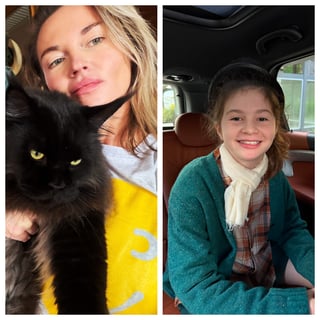
Speaker: This is Ken Vellante with the Something Rather Than Nothing podcast, and I'm really excited to get a guest I've been trying to get for a little while, Anna May, a singer -songwriter. Anna May, thanks for coming on to the show and welcome on to the show.
Speaker: Thanks for having me Ken. I'm glad I could do this. Yeah, it's a great pleasure. I wanted to jump in into about where you come from and where you played and just your relationship with music. I was excited that at least when I first saw you that
Speaker: I saw Connecticut, I'm from Rhode Island, and then I know you played out on the West Coast as well. Introduce listeners to, you know, your music and where you make it and what you do. Yeah, definitely. Yeah, I'm from Connecticut. I actually have recorded all my albums in Rhode Island. I don't know if I told you that.
Speaker: Yay. Yeah, I like Rhode Island. Rhode Island is a little more fun than Connecticut. And yeah, with this guy, Steve Rizzo, kind of near Newport, but like in Portsmouth, Rhode Island. And, you know, we've been doing I kind of I always say I do like minimalistic folk and a lot of my music has a lot of spiritual content just laced with like philosophical questions and
Speaker: ideas and so it's a little bit different from traditional folk and I listened to a lot of jazz growing up. My grandparents and my parents, my dad's side of the family are all musicians so my grandmother who's no longer here was a music teacher and guitarist and they lived in Marin and California and moved to Connecticut so
Speaker: I got to grow up around a lot of music all the time. I was kind of forced into it, but I grew to love it and just kind of carved my own thing from whatever I was taught, which was kind of radically different from what I was brought up with. Yeah.
Speaker: Yeah, well, I appreciate and enjoy your music and your take on it. And it's great to hear recording in Rhode Island, although I know it is Paul Smith, but I know that's not the problem. I know it is Paul Smith, but... No, it is.
Speaker: Great area. I want to tell you something. We mentioned Newport. Some of my greatest experiences as far as listening to music been in Newport. Not a place I went to a lot. I grew up in Pawtucket, but distinct memories of Newport Folk Festival. And one time with the Newport Jazz Festival, being out on a boat, out in the bay,
Speaker: and having the music come off and it was getting too hot jumping in the water off the boat and i'm like oh my god music all day and um that's amazing and the folk festival i remember seeing you know sarah mclaughlin michelle shocked uh randy newman who i love michelle shocked michelle shocked yeah yeah i i've never seen her before and um
Speaker: Actually, that was one of the more fun shows I can remember. It was a long time ago, but Michelle's shocked. Oh, she's awesome. Yeah. And she really dipped off the radar. Yeah, Newport Focus. Cool. I've been a few times. Who'd have hoped I'd seen there?
Speaker: old Crowe medicine show. I forget which years I went there, but yeah, it was super hot and Newport's a cool place. Like it's, it's a real mix of there. Definitely, you know, there is like an art scene there. It's not overwhelming, like a place like Portland or something, but there's stuff there and it's a cool place. I went there in May for my birthday and just had fun, you know, walking around and taking up the scenery. Yeah, it's beautiful.
Speaker: Yeah, Newport's kind of a strange area. And one of the pieces, like I've been around in Newport, there's a little bit of grit in Newport, that kind of introduced me. Yeah. I kind of dig that piece too. And it's great to chat about that and bringing up that time there. And of course, Rhode Island. So tell me, you were starting to talk about with your music, was there a moment for you
Speaker: as you're going along, and I asked this of artists, you know, where you're like, I'm an artist, or like, you know it, or something has happened, or, and some folks say, it's always been that way. They don't even know how to breathe differently. What's been your relationship to art? Yeah, you know, like I said, I was, I was around it a lot and around music, but, you know, it was always more like the classical opera, like more of a bitchet.
Speaker: study, you know, like just surrounded by great musicians. And I think for me, yeah, I always was a little bit dissatisfied with what I was presented with as a child. Like I do remember that, like the feeling of just not fully like integrating in my environment and needing to step away to process it. And I think that's a very artistic kind of thing. And I think
Speaker: I didn't quite know what it was. I was like, what is this? You know, this need to like decompress or step away from things in order to write about it. And I always did write. My mom saved a lot of like, you know, journals I did just from a very young age, but kind of more so than like a writer than a singer is what I always thought of myself as. I'm always reading a lot of books and
Speaker: So yeah, I was that feeling, you know, that identity of artist is it goes back a long ways for sure. Um, just this feeling of either like depression or, um, I had a lot of that as a kid, you know, I was just a very pensive quiet kind of kid and, um, a lot of even, you know, now just everything that I was presented with was either very like loud or, um, just not quite quite what I wanted. And, um,
Speaker: So I made stories and I made poetry and songs and eventually a lot of that just kind of grew and turned into actual songs with melodies and really was just a way to process everything that I experienced.
Speaker: And yeah, just very sensitive. So I think all those qualities, you know, when you talk to other people who do art, they kind of, you know, say the same thing and we can unite around that, that we always knew, you know, this was what we needed to do. And like, if I didn't write, I would feel strange. Or if I didn't somehow process my experiences that way, I wouldn't feel complete. Yeah.
Speaker: Yeah, yeah. You mentioned, you mentioned, you mentioned, you know, reading a lot of books and stuff. I just heard that, you know, I'm an avid book reader. And for me, I think about all the stories and books, and then I start to think about music like as a continuum. I think that's one of the great things about doing the podcast and talking to artists is kind of, you know, telling stories and hearing, you know, hearing from others and their experience.
Speaker: With art for you, I wanted to ask you what you think art is. What is art as an artist? What is it that you're trying to create? Yeah, I think it's a way to respond to your environment. We have all of this stuff, life happening, and art is like a reaction to living.
Speaker: And I think it's kind of intended to either solve problems, I think art can solve problems, it can create problems or disrupt the balance, you know, for good or for bad. And I think too it can change minds. I know like a lot of books and just pieces of art have changed the way I think. And that's, I think what I would intend, you know, with a lot of what I write, I always say,
Speaker: My kind of tagline is alternative tragic Americana, bleeding heart, stream of consciousness poems, invocations for peace and kind of resisting judgment. So I think a lot of music that I created just came from a place of trauma or discontent and wanting to change the way
Speaker: people think about the world and others. And that's kind of a broad thing to want to do with like one four minute or 10 minute song in my case. But I think it's a worthy thing to do to just continue to put it out there. You know, as I grew up, I just encountered a lot of hate and I was bullied a lot at school. So a lot of my writing is a reaction to that. And I think what's interesting about
Speaker: Like trauma is that it's so embedded in our nervous systems that it's cyclical and, you know, it's, unfortunately it's never ending and we all have it. And, um, yeah, we tend to repeat those traumatic moments. Um,
Speaker: So it's a really easy thing to write about in that it's so powerful and so present all the time. Happy things are that way too. But I think trauma can be just like a unique thing to write about. So in terms of just art and why I create it, I think it's this overwhelming need to want to change how people view things. And I think the older you get, you know, like for
Speaker: my childhood, I think, in ways I had rose -colored glasses on. And as you move through the world, you really do see how society is structured around judgment and hate in so many ways. So I think it's just my little way of trying to get a message over that and across and to do it in a somewhat metaphysical way. I don't know.
Speaker: Um, my music isn't super literal and that's why I have a hard time reaching people sometimes. But, um, yeah, just, you know, bigger ideas and bigger concepts. That's kind of what I, what I want to tackle or hope to tackle. So, yeah, I wanted to, there's something, um, I had recently learned as far as, I just went trauma and it was a very radical way for me to, um, to understand it. It was just so different than other types of things. And I want to tell you about it.
Speaker: Um, I was doing an art class with, uh, Susie DeVille and a book I've talked about on the show, which is buoyant and some great practices around art that really inspired by the artist's way. Um, you know, movements, mindfulness, morning pages, et cetera. Um, great stuff. And I've talked about on the show.
Speaker: One really, really cool thing that helped me understand trauma or our individual experience in a very different way was something she described as
Speaker: Imagine this, in New Zealand or Australia, there's a massive shore. And think about surfing, right? Think about some of those big waves that come in. I'm sitting there, I don't know how waves, you know, I know how waves happen. I was like, how do these big waves? But there was this one incredible piece where she related it, and it was called the underground geography leading up to the shore, which is called bathymetry.
Speaker: And within our individual bathymetry, like imagine our jagged pieces inside and water forcing its way through. There's, there can be glory in the expression, the big waves that come out, the big artistic creations. And as a way to just understand our individual, for me to understand my individual makeup and
Speaker: that there was some glory in that dynamic because you can't move, you can't radically move or just kind of throw away the rocks going up to the shore. They're going to be there, but it creates this display or artistic display. Yeah, that's really beautiful. And I just thought that it honored what we know, what we know about ourselves or what we struggle with ourselves, but we're still going to live, breathe and create.
Speaker: And that was just really helpful for me to think about our uniqueness as creators and those big waves are pretty damn cool. Yeah, no, it's like something cataclysmic is beautiful and radiant. Yeah, that's art. It's really cool. That helped me a lot. What's the
Speaker: What's the what's the role of art? And you've been talking about this a bit. I mean, you create. But what do you think the role of art is? And do you feel it's any different now? We're chatting late July 2023. Is any different now?
Speaker: I think so. I think, yeah, you know, in a time of unrest and climate crisis, I think art has a really big role to play. I think for a long period, maybe it was more
Speaker: Well, I think depending on different periods, art means different things. But for some periods of time, it was maybe more of a distraction. And I think now it can really be a pivotal piece in solving problems and just shifting the course of thought. And we really need that in this country for sure.
Speaker: But if you look through history, there's been so many of those things where something artistic was able to really profoundly impact an entire
Speaker: culture or generation and change the way things were. So I think that's coming and it really does feel in a lot of places, even where I grew up and back at home right now. And for years, I was just always complaining about how anti -artistic it was and how difficult it was to just
Speaker: you know, feel artistic. And I always felt like I had something to go up against here. But, you know, the last couple of weeks, it's been interesting to just see, you know, there's all these like pop up artistic
Speaker: things, visual arts and music and there's good things happening. So I think it's just the natural reaction to things going poorly and moving in the wrong direction politically or in any way. I think people just naturally have to, again, you know, it's experience trauma and experiencing trauma and digging deeper to kind of come into connection with art because I think art is intrinsic. I think we all
Speaker: really have that capability. And we all are artists, but it's just a matter of refining towards that course. And that can look different at different periods of life, I think. There have been times for me that I've just been intensely creative in COVID where it was almost debilitating. I didn't really live in real life.
Speaker: And then, you know, other times where I'm less so that way, but I think, uh, it's just about accessing it and having the right people and environments, uh, in order to, to get to that good stuff, which is really who we are. I think we're artistic, spiritual beings. Yeah. Yeah. As, um, before we came on, we were talking about and through us discussing here, um, kind of the,
Speaker: female artists, kick -ass artists that are really, you know, really, like I say, really important to me, who expressed Michelle Shock, Sarah McLaughlin, I've always had an affinity towards singer -songwriters. Tori Amos, my queen is Polly Jean Harvey, PJ Harvey, who I adore. Oh, yeah. No ends that I can conceive of. And, you know, Fiona Apple, and, you know, I think recently,
Speaker: before he came on just talking there recently she made uh... o 'connor passed away and and i think what's there's been some i don't contact with the deeply on fear at times horrific treatment of female artists culturally uh... especially non -conforming uh... presentation
Speaker: Body type way they sing too much anger Sinead right the critique of too much anger and for me. I'm still you know feeling feeling all that and Somebody sticking up somebody sticking up and um You know we're talking about some of the things which need to happen 30 years ago
Speaker: Um, but I talked a lot of female artists and I talked to a lot of artists and I don't know what the Latin term for is it, but shit you have to deal with. Um, what do you, how do you, how do you feel, how do you feel things, the things are now I look at some of those, you go back into the pioneers and people trying to create spaces the way I look at it. Um, how do you feel about that? Where, where, where things are now?
Speaker: And the things you have to navigate, say, within the industry or performing as a woman. Yeah, that's a really great question. I have kind of, yeah, I mean, I, so I'm a very introverted person. And I think I
Speaker: I just consider myself a writer and I do love singing and I love performing. But I am not really conditioned to being in the spotlight. I'm not someone that craves that. I'm not an extrovert. So it takes a lot of energy out of me and I have dealt with a lot.
Speaker: being in the spotlight, you know, I grew up with a musical family and I was performing and singing with them in public. So I've had this very like public life, but I'm not a very public person. I don't feel that way. I do feel a need to get the art out there, but the other stuff, you know, for me, it is not really where it's at. I think there's a lot of people
Speaker: who are like that. But as far as being a female artist, I've been criticized for being too sensitive, but I've also been criticized for being too aggressive where the word predatory came up recently. And I really have been sitting with that one and trying to decipher that.
Speaker: It really does seem like anything that you do as a female artist is under scrutiny or criticized. I had an eating disorder for many years. I was anorexic twice when I recovered.
Speaker: You know, that was an interesting thing to go through. I was really praised for being incredibly unhealthily thin when I was performing. I look back and I think, how on earth did I do that? I was barely eating anything.
Speaker: you know, mentally, it was in a horrible place. And, um, you know, and then you come on the other side and you're, you're too curvy, you're too, um, fat or whatever. And I think it all bring, you know, at least for me, it brings me to a point of really not caring. I just care so much less and, um,
Speaker: Yeah, I think the criticism that I've dealt with has been really hard, really paralyzing, but I was just talking to one of my best friends who's also been through a lot and, you know, she just said I'm grateful for these traumatic experiences because they've made me stronger and
Speaker: But it's not true of just performers. I think women in general are just really targeted. And I don't personally, I don't think it's getting better. I think, you know, in Oregon, that's, you know, one of the places I really like. I felt a sense of safety. There is a lot of.
Speaker: body positivity and acceptance that you don't see everywhere else. And it really is unique. So yeah, those are all really strange things to have to grapple with. But in terms of being on stage, there was a period in my life where I just would not dress up at all going on stage. I would really just be very casual, very consciously casual.
Speaker: Yeah. So it's, I think it's just an ongoing battle. I don't know if there's ever like a solution. I think people have so many different, um, perceptions that are a lot of the time really misled about women. So, yeah, this is, this is something I think about a lot and deal with a lot. And, uh, yeah, in terms of men, um, I think
Speaker: you know, if I ever had a child, I would not allow them to perform during like their formative years and have to deal with being preyed upon by, you know, so many men, like so many inappropriate situations I've found myself in from the time I was 17 just by being on stage. So yeah, that's a really good question. Well, we're talking, I mean, in general,
Speaker: I mean, safety, right? I mean, some of the things that, you know, audience sort of listeners, you can't take, you know, there's a lot of assumptions that are back behind, you know, as far as, you know, for, for, for safety and the vulnerability. And I, I know, um, uh, you know, I have deep respect for those who go on the stage. I'm always in awe.
Speaker: of artists on the stage of comedians, of one person performing aerial tricks, that it's all up to them. It's just in awe, but it's so much that goes into it. And I engage in performance not in that same way, but it's
Speaker: there's it's a lot. It's a lot. And when you've done it well, it just everything's feels natural and you go away and yeah, everybody's like, Oh, that was natural. And yeah, it was natural. But I did a shit ton of work. Yeah, it's really beautiful. You know, it's a really beautiful experience to perform. Like I've had, you know, really spiritual experiences performing and other times not so much but
Speaker: Yeah, it is. There's a lot that goes into it. And it's nice to feel appreciated. I think I really liked that. Just even being on the West Coast, like the level of appreciation is very high in terms of people listening. So that's really cool. Yeah. Yeah. Excellent. I have a couple of the questions for you, but I'm going to throw the big one in there maybe to kind of get it out of the way and have you kick it around.
Speaker: Why is there something rather than nothing at all? This is the big one and feel free because it's too big to really take some kicks at it or master this one. That's a good question. I've sat with that a lot and staring at the walls and sometimes I really think that
Speaker: Life is very random and chaotic and purposeless, and we can all kind of get into that thinking. But then there's something optimistic in me that says that we kind of are here to fulfill a purpose, and that's kind of religion -based. And I grew up in a Catholic family, so I had a lot of that thinking, just
Speaker: I don't want to say positive, but just that we are here and life has this meaning, but, um, I do feel that way. I think as, as much as I've strayed from that, um, I think it colors my work too. I think there's a lot of positive imagery and connections. Um, and there's like a lot of really beautiful some things out there. Um, I think we're here, we're here to create something.
Speaker: Essentially, I don't know if I believe that nothing exists. I think there's always something that precedes something and that all kind of goes back to creation too and creating things.
Speaker: I think art is kind of what's between the lines and, you know, even if it's like, you know, the subtext and even if something isn't quite formed, there's always like the possibility that something can form. And that's really a beautiful part of living that we have the capacity to do that as humans. And, you know, we live in a place where,
Speaker: where that can happen. But yeah, I mean, this is I've watched a lot of podcasts and read books and yeah, it's a big question. But I like to to be positive about it and think that we all have a purpose and there's a reason reason for it all. Yeah, I know I was deeply listening to this.
Speaker: Thank you. Thank you for your answer. I think about it a lot of times no matter how I ask and kind of like the way they answered around creativity and doing something and expression.
Speaker: So listeners, Anna May has a bunch of music and she writes. Anna, can you tell us as far as before getting into where to find all your stuff, but like, I just wanted to ask you, while I have you here, like, is there things that you're working on right now or certain type of
Speaker: themes or something that's connecting with you as an artist right now as you move forward, you know, through the summer into fall of 2023. Yeah, I've been doing a lot of live performance. And, you know, last year I had a very quiet summer where I did a lot of writing. So I have a lot of songs that I want to put on an album. So that's probably going to happen maybe fall or winter, I think, when things settle down.
Speaker: I'm always writing. I always have tons of notes and notebooks and it's overwhelming how much content I have, especially the last couple months. So there's songs to be written. There's a lot of songs that are already done. I do want to venture into doing something with a band. It kind of feels like the right time to do that. So far, Steve and I have worked on just really
Speaker: like sparse arrangements, really lyrically driven pieces, which I love doing. But I have some really lengthy songs. I have even a 15 minute long song, which I'm really like interested to kind of fool around with recording.
Speaker: and just a lot of pieces, like a lot of older pieces that I never recorded. So I'm kind of, I'm planning something, but it's in the very preliminary stages. So I'll be releasing a couple singles that I've recorded in the last year over like the next month. So I think there's three more of those that are going to come out, but that's all kind of from like a year ago.
Speaker: I'm excited for what's next. I just have like an insane number of songs and it's very overwhelming. I don't know what to do with them.
Speaker: and deal with your creations. I was listening to you. I could even think about these songs and what you might do with them. Where do listeners find your work? Where do they get what's out there and not in your head at the moment? Yeah, I know, not in my head. This is real and what is actually still in my head.
Speaker: I always direct people to Bandcamp because Bandcamp is kind of a good artist friendly site where you can buy the music, you can preview the music. So anime .bandcamp .com. I have some things on Spotify. I don't have all of my albums on Spotify, but a good chunk of them. So I think if you just search me on Spotify.
Speaker: And then I've gotten to do some videos over the last couple months, which have been really fun. And those are on my YouTube. So that's just YouTube slash anime folk, anime music .com. And then just like Facebook and Instagram. My Instagram is it's actually
Speaker: It's a Woody Allen movie and a Louis Armstrong song, so it's Stardust Memory. I know Stardust Memories. I know that movie. I sure do. I sure do. Yeah. That's a very philosophically happy movie. It is. It hasn't seen in a while. Stardust Memory. I saw that name there. Oh, yeah. It pulled me back. Definitely unique.
Speaker: film and very, very creative and thought heavy, thought heavy. Yeah, absolutely. What's great to be able to find you there and
Speaker: And folks, you've heard anime talk about playing live and keep an eye out. I'm just so excited to be able to talk to you and to have you on the program.
Speaker: the connections with Connecticut. So I was trying to figure if I'd ride you a little bit on the Connecticut stuff with Rhode Island, but you love Rhode Island, so it's like, hey, I don't have to do that East Coast thing, Connecticut, Rhode Island, we're all good. But it's nice to connect you that way, and I know you're making out to the West Coast. But I want to thank you for
Speaker: creating your art and also even on something like when you're talking about introvert, extrovert, extrovert and being able to perform. I think everybody figures that out for themselves because I've had dominant years of extreme introversion that people wouldn't believe right now but you know I just have as part of my
Speaker: makeup and we're complicated in that way. But I wanted to thank you for what you do. Thank you. To do that music. I got you. Yeah. Thank you. You do. Absolutely. Absolutely. Everybody check out Anna Mae. It's been a great pleasure to talk to you here on the Something Rather than Nothing podcast. And to have your music as well because it's a music heavy, music and story heavy show. So
Speaker: Deep thanks for coming on. Thank you so much. Thanks for having me.
Speaker: The dreamscape is all in me as our own. Lost love here for now. Past the traps of this twisted uptown.
Speaker: Spirits crawl the mornin' and tornin' you and me And that's our reality as we open our eyes Bit early and gently formin' the half Light a profited mystery
Speaker: This is not the one Something that I am meant to hold
Speaker: It doesn't feel like we're on the end anymore.
Speaker: We are free and I must really go in the end With nothing to do, nothing to fear And maybe this is not my plan Something that I remember
Speaker: And maybe there's no more, more, more, more, more, more, more, more, more, more, more, more, more, more, more, more, more, more, more, more, more, more, more, more, more, more, more, more, more, more, more, more, more, more, more,
Speaker: I am both separate and attached, moving slow and moving fast Running through the waves and dance
Speaker: It's not my word Something that I'd never want to And maybe It's not my word
Speaker: Touch up in a sacred place Are you just gonna run? Running through the waves And you're feeling here
Speaker: soon.
Speaker: It turns why today is the day to make you forever mine
Speaker: This is something rather than nothing.
Speaker: Your support helps us reach more listeners and spread our community across the planet. This is a global show and we like to give a shout out to our many listeners across the world, including many listeners in Canada, Spain, Germany, UK, Argentina, Brazil, India, Thailand, and so many more places. Be sure to follow us on Instagram at something rather than nothing podcasts for behind the scenes content.
Speaker: And the best way to help the show is to tell your friends about us. If you love it, they'll love it too. Tell your friends who love it. We love you. This is something rather than nothing podcast.