Transcript
Speaker: On today's episode, we talk about plants. Being both of us plant lovers, we get super hyped up about all things plants. We talk about our introduction to plants. We talk about some of our tips for growing plants and how plants have a way of increasing your connection to the world and your life.
Speaker: Enjoy the episode. Welcome to Stay Sparked. We are two longtime seekers, longtime friends who have been sharing inspiring conversations with the hopes of lighting you up.
Speaker: I am John Halcyon Stinn, the host of the Hug Nation podcast. And I'm Betsy Finkelhoo, the creator of the Power Affirmation Project and Somatic Bodyworker.
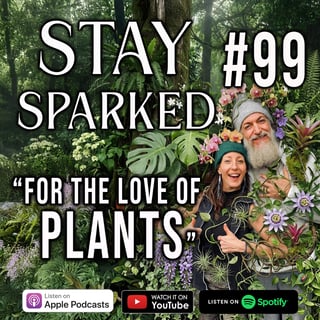
Speaker: And we like to start with gratitude. Betsy, what are you feeling grateful for today? Ah, well, I am grateful for this being our 99th episode. I'm so grateful. That means we have one more till our milestone podcast episode next week. So I'm just so grateful for this journey that we've been on together.
Speaker: Amazing. ah Yeah, 99. I am feeling grateful for the cactus that I see out my window that twice a year has these massive white blooms that last for one night.
Speaker: And ah there was 12 last night and it was just incredible. And then I learned that they are pollinated by moths who can smell for over a mile away.
Speaker: Wow. That's incredible. Incredible. Yeah. Well, speaking of amazing plants, our topic today is plants. We're to talking about indoor, outdoor, the lessons from and the benefits of acknowledging the miracles of plants in our worlds.
Speaker: If you are watching on ah the on on YouTube or check out our Instagram, you will see some images of our flower-packed backgrounds today. We have tried to make sure you can see that we are walking the walk.
Speaker: We're also extremely grateful for our sponsors, Lucid. Lucid makes mushroom and nootropic drinks that are incredibly tasting. They make you feel great. They're part of both of our daily practices, and we are so honored to have them a part of this podcast.
Speaker: We love you, Lucid. Find them on becomelucid.com.
Speaker: So I'm curious if you have always been a one with a connection with plants or if there was a time when you became ah you know interested or fascinated or or touched by plants and gardening.
Speaker: m This is new for me, actually. i how i consider myself a novice in the plant world. And since I moved Asheville, the Appalachian mountain range a couple of years ago is when I really started to open up to see this whole other world of gardening and connecting to the native species and understanding the ecosystem on a whole new level. When I lived in California, i i loved the plants. I've been fascinated by plants, but I didn't really have a connection to what it was to grow them. i you know built a garden at one point and tried to grow food, which was fun, but it it was hard, honestly.
Speaker: um And i did composting you know some years ago, which again was very difficult. I stumbled along the way. um Growing up, i didn't I didn't really have a garden. We lived near the forest, and so I definitely played in the forest a lot. But, you know, i was suburbs of Ohio, and i didn't know anything about dandelion, for example. You know, dandelions grow in our yard, but I was taught that those were weeds. And so, you know, medicinal plants were never part of the conversation of our family.
Speaker: um i had no idea that there was medicine growing in our in our yards. And now that I'm starting to pay attention more and learn more, it's just ah opening up whole other level of connection to the earth, ah connection to remedies, really deeper sense of intuitive listening and learning. It's just been a huge part of my exploration these last couple of years since I moved here.
Speaker: a yeah i recently learned there is no such designation of plant called weed. Weed just means any plant that is growing someplace that you don't want it to grow. m Right, exactly. we And there's just like there's so many beautiful, quote unquote, weeds that actually serve a purpose.
Speaker: You know, I know exactly when the the awe for plants that woke up in me. I was a senior in college and I was at like a grocery store and I bought an amaryllis bulb, which is a like baseball sized thing.
Speaker: ah sir It's like a baseball. And I put it in a pot on my windowsill and didn't anything for a few days. But then once it started to grow, these big leaves came up and then this stalk started growing out of it.
Speaker: Hard to explain it in another way except extremely phallic. This phallic thing grows where I can notice day by day. it's growing, growing, growing, growing. And then popped open these huge red flowers. And it was like watching a slow...
Speaker: motion money shot, like this, this phallic thing growing, growing, growing, and then exploding with color. I was like, Oh my God, what is this thing? And then the thing that even made it more powerful is I, I started to learn a little bit about bulbs and And that bulb that I bought had in it everything it needed to create that flower.
Speaker: In fact, you can buy bulbs sometimes like in wax, like at the grocery store or something or at Trader Joe's. You don't even need to put it in the dirt. You just put it out there and it will grow that big, beautiful red flower.
Speaker: Now, if you do put it in dirt, and gets sun and it gets nutrients. As it's growing, it is creating more energy from the sun from the nutrients.
Speaker: And then when it dies, i learned you don't cut off the dying stalk. You don't cut off the dying flower because what it does is once the flower dies and the it as it yellows, it doesn't look as pretty, but as it it pulls the energy back into the bulb,
Speaker: And so if it has a healthy growing cycle, the bulb will actually get bigger and get bigger. And sometimes they split. And i this hit me so hard, the idea of that death and decay is part of the cycle.
Speaker: And I couldn't help but think like, Is this a metaphor for human life? And that if we lead healthy existence, if we get the nutrients and the love that we need, when we then decay and die, do we draw in and or do our spirits become bigger, just like the bulb is?
Speaker: And for a long time, like that was the core of my spirituality was gardening and specifically bulbs, right? Wow, that's amazing.
Speaker: That is so metaphorical for how not only physical death can actually contribute to a deep transformation and a reigniting energy within your soul, but also when we let go of certain things or different aspects of ourselves, then it can fuel and fertilize the next phase of who we're becoming.
Speaker: And I love this conversation because plants are such teachers. They're such teachers. They hold so much wisdom. And they have been here a hell of a lot longer than we have. They know what's up.
Speaker: They hold that intelligence of the earth. And ah one of the things I love that you sparked this off, and hopefully if for you guys out there, it can spark something for you, is that question of when when did I start getting into plants? um I hadn't really and contemplated that.
Speaker: really ever until this moment. And actually, I come to realize i first started with succulents. Because succulents are pretty easy to tend to. And they are so beautiful. And they're so dynamic. And there's so many different variations. And they flower.
Speaker: And they can go through so many different cycles of their process. And so, yeah, my my first journey with plants was with succulents. And i miss my succulents because I don't have any more now that I'm here in the mountains. But they are also such teachers to listen because you don't water them like a normal plant, not like an indoor plant. You have to really be in the attunement of what their needs are and pay attention to the colors changing on their leaves when they might need water
Speaker: or how they might be, you know, sprouting up different things. And so, yeah, I think that this journey of being in a relationship with a plant can be so illuminating to how much we are paying attention to our relationships, right? How attuned can we be to this other being, be it a plant, an animal, or a person?
Speaker: Yeah, I when I got out of college and I moved back in with my parents and I there was no Internet. So i'd go to the library and find books on plants. And I started planting things all over the yard, including some things that my dad reminds me every time I see him.
Speaker: how ah overgrown their house and their yard has become with ah morning glory vines, which have a beautiful purple flower, but are so invasive and are so hard to get rid of once they once they take over.
Speaker: But the the the i was going to say that that the lessons of the plant world are so powerful and are so ingrained in us. And it's only been kind of recently that I think we've understood that lesson clear.
Speaker: When we're kids, when I was a kid, they taught us that in a forest, that trees are competing for sunlight. And now we know that a forest dynamic is way more collaborative. And that it is not a one of the the dominant plant survives. It is one of shared resources of communication through the ground, through mycelium, through through giving signs to other trees that there's pests. It's like this. And and how much different.
Speaker: The world is when a kid grows up understanding that the model of nature is not one where strong dominate over weak, but where all collaborate for healthy so ecosystems.
Speaker: Yes, absolutely. I'm just listening to a book called The Hidden Life of Trees. That one is just blowing my mind and it speaks exactly to what you are referring to how trees work together, how they communicate with each other, how they can send signals to each other when there's danger or threat, how they harmonize with the light. It's not a fight.
Speaker: And um one of the things that I'm recently sparked by is learning about the ephemerals, which this is a new term for me in regards to plant life in the forest, which the ah ephemeral means short lived.
Speaker: And there's a I think it's 15 percent of the plants here in Appalachia. are ephemerals, which means they they only come out for a short while. And that is right after this last snow. And then the canopy hasn't filled in. So the light's still coming in and it's warmed up enough. And all of these beautiful plants start coming out in the undergrowth, uh, in the forest bed. And I'm, I'm getting to take this class right now with astounding earth. This is a, an ecology class and we're learning about all the edibles and we're learning about the flowers and flower anatomy.
Speaker: And last week we were on a walk and we must have eaten like five different plants out of the forest. And it was so amazing to get to just pick a plant and have full confidence. I can actually eat this and it has protein in it. Where I had never done that before. And a lot of, honestly, a lot of people I go on hikes with won't do that because if you don't know what's edible, then you won't eat it because it could potentially be poisonous or dangerous. ah But the, the education is so valuable. And to understand these kinds of things is just like so beautiful. And my, um my teacher, Luke Cannon, he's hilarious. He says,
Speaker: Going in the forest and understanding what's here and who's here by name and what they're all about is kind of like being at a party where you know everyone's names.
Speaker: Or if you're at a party where you don't know everyone's names, you'll probably still have fun, but it's probably a lot more fun if you know people. That's cool. Yeah. Yeah, yeah i don't I don't know a lot of the names of the the people at my a garden party. But even if you are not yet comfortable eating from the woods, I so recommend planting garden.
Speaker: tomato, a cherry tomato plant because they it will fruit quickly. ah A big tomato tends to get beaten up by pests and tomato worms, and it can be frustrating. But at a cherry tomato, you can grow in a container,
Speaker: And there is something about ingesting something that you have grown that really gets you dialed into the the this miracle that's happening constantly, which is that on this planet, unique to this planet over all others, the the the star nearest us is sending energy to this planet. And we have this miraculous living thing that converts that energy into energy that other animals can then use.
Speaker: It's incredible. And when you actually taste warm tomato that you have grown, I have pictures that I just found of me in my young 20s posing with tomatoes that I grew. was such a dramatic birth. I was almost handing out cigars to people. so proud. That's so cute. I love that. Yeah. And tomatoes give confidence because then it's like, oh, yes, I grew something.
Speaker: Right. Yeah. I actually learned the lesson that the tomato plant taught me last summer was about boundaries. So having a garden, it's important for you to be clear about what you want there and what you don't.
Speaker: And I actually had a bunch of cherry tomato plants just pop up as volunteers and they started taking over. And I was like, I don't want these tomatoes. I'm like, oh, what am I supposed to do? They're so beautiful. And they're probably, you know, somebody would eat them. But I actually am clear that I don't want tomatoes right now.
Speaker: I love you. And I pulled them and I gave them thanks for teaching me about how how to have clear boundaries. that's That is a ah novice gardener's early lesson is that you will probably plant more tomatoes than you really need or want. know, totally. There are nightshades after all, yeah.
Speaker: Well, I'm curious about something for you. um So I'm just going to kind of preface it with, I would imagine that most of our listeners out there, and a lot of the people that know you might not even know that you truly are a plant whisperer. a ah indoor plant wizard and collector. And the plants that I've seen you have in your house are so healthy. They are so big. They are just amazing. And so I'd love to know about your indoor plant secrets.
Speaker: If there's anything that you can like share with us, that way we can start to put such goodness into our plants. Well, one part is that like I tend to be very aware and tend to them. like like i'm I'm constantly looking and checking and seeing if there's a wilted leaf or something like that. you know And I think that's a lot to expect everyone to to be doing that. So um I'll tell a couple things that make it easier than having to do that. When I was in post-college, when I was first learning, my parents had a gardener that I i i once asked him. I said, hey, Paul, like how do I know when I'm supposed to fertilize the plants?
Speaker: And Paul said, ah I mean, the plan will tell you. i mean, it won't tell you, tell you, but it'll tell you.
Speaker: Which I thought was just the most awesome advice. i have still yet to develop that kind of intimacy with my plan communication that Paul had. So I use a ah a liquid fertilizer almost every time i water. There's some fertilizers that you can use every time and some that you do like on ah on a timing base. So i do that every time.
Speaker: um i ah My life changed when I got a single piece of equipment, which is a moisture monitor.
Speaker: They're like eight bucks and you pop it in the soil and it tells you exactly how dry it is. I had no idea how moist most of my soil was beneath the surface. So I used to water way too often. And most plants, houseplants die because they're being overwatered.
Speaker: The majority of popular houseplants are lush, jungly things that can live, you know, in somewhat shade and things. But they need their roots to dry out and then get watered, dry out and then get watered frequently like a storm, sun, storm, storm, sun.
Speaker: And so most die because that the roots don't get oxygen because they're just underwater and they get a root rot and that kills them. So if you keep most of the popular plants, you pop it in and it'll tell you immediately. It just goes zing and it shows you, oh, it's still moist down there.
Speaker: Leave it. When you buy a plant, it'll tell you. and It might say, don't let it dry out. Cool. Then the monitor will tell you, oh it's getting close to dry out. Water it now. Water it now. So that has been a huge benefit to me to realize that my overprotective plant mommy needs to let it starve and not drink for a little bit longer most of the time. hey Same with orchids too.
Speaker: Yeah. yeah I mean, it there's most, most plants do not need as much water. And then when you do water it, you soak it as opposed to just giving it little sips. So you want to soak it let it dry out, soak it, let it dry out. um I'm also, to be totally honest, I've come to peace with not all my plants are going to live.
Speaker: So sometimes i buy a plant that is new to me and I think it looks so cool. And almost immediately it starts dropping leaves. It starts to look terrible. Unlike buying or adopting ah a cat or a dog, which would feel terrible if it died after you adopted it. I don't think you have to feel nearly as bad about a plant. It's just going to, you know, become a compost. You know, again, it's going to be recycled. It's all part of it It's okay.
Speaker: no no No guilt. that i How many plants I have just tried to save when they're on their last little little stem. Oh, I've like tried to keep this piece slowly alive for like a year. And I was like, OK, finally, I just had to let it go. Yeah. I've got a hospital area like and like that's kind of ah not part of the the main display of the home. um And then a side yard. I've got a hospital area. But, you know, it's like it's just like a human life. i don't expect them to live. It's just yeah it's OK.
Speaker: Yeah. I love that. Yeah. That's really, that's valuable. I think the one thing that you said that really sparked me was just really paying attention on a regular basis. yeah Like having your, having your eye on your plants when you walk by and really checking in with them and attuning to their needs at different moments. Um, I heard somewhere also that, um, plants can, your house plants especially, can feel when you're coming home.
Speaker: They've done tests on the frequency of the plants and how they change when you're not even inside your house yet. If you just pull up to your house, you can they can start to feel you come home.
Speaker: Wow. I'm going to get like an alarm system. This house guard got guarded by figs. It only ferns. Yeah. yeah Yeah.
Speaker: I mean, so as you start to, you you kind of get an eye for when something looks a little wilted or when something's drooping. um And then the other thing is that pests can be a problem too. And luckily online, there are so many resources that, especially if you know the name of your plant and you can describe, there's little black things on the leaves.
Speaker: you know there' there's It's yeah a lot easier to deal with that than it than it ever has been before. And there's tons of helpful plant people. Yeah. yeah Yeah, absolutely. And you know one of the things that I've been really grateful for is being able to take a picture of the plant and then post it on ai and then ask for guidance. And I've actually got got some really great advice.
Speaker: Like, oh, that plant looks like it it could use another pot. It's getting a little crowded. you know And so there's been some really helpful tips. I'll tell you the... There are a lot of plant, like, TikTokers and stuff, however, who are spread in bullshit. Oh.
Speaker: you can't You can't believe all of it. But one thing that I learned, I had no idea that... um I thought that if you buy a plant in a little pot from the store, that the best thing you could do would be give it a big pot.
Speaker: Kind of like if you get like a goldfish in little bag. Of course, it wants a big aquarium. That's the nicest thing you could do for it. But that is actually totally the opposite when it comes to plants. Because when you give plant, if you get pot larger, it's larger You want to get just a little bit larger because if it's too big, the soil stays wet too long.
Speaker: And then we go back to the root rot problem. So the the best thing you can do if you're going repot it is not go much bigger and then amend the soil that you buy. It kind of blows my mind that when you buy potting soil at the store,
Speaker: That is not ideal potting soil for almost any houseplant. You need to add stuff to it like perlite or orchid bark. You can look this up online, but you need to make it chunky so that the water flows through it so it doesn't just hold onto the moisture so the roots can dry out and the plant can thrive.
Speaker: I had to, when I learned that, I had to repot and get rid of all these massive pots that i thought that I was doing a service to and was actually punishing my plants. Wow, that's really helpful information.
Speaker: I actually am in the process right now. I have some a couple of plants that are getting really big and they're ready for a new pot. And I thought, well, maybe I should get them an extra, extra big pot so they have room to spread out. But no, maybe it's kind of like a hermit crab, right? The hermit crab is going to keep growing, but it goes one size up each time. And so I think that's really helpful.
Speaker: And some plants, like i have got... The largest ZZ plant that I've ever seen. And it like when we moved into this place, we had be like, where's that plant going to go? Because it it's a furniture. It's huge. Yeah. When we throw events here, i have to move it into another room. because is is But but that plant actually likes to be cramped.
Speaker: So it it actually, do a little search online. Some plants do better when they are are pressed together and and yeah don't have it. And another thing is that some some plants, when you give too much soil, it puts all of its energy into creating a deep root, much root structure instead of making new shoots and blooms. So it's sometimes it's counterintuitive. Yeah.
Speaker: Yeah, it's so true. And that's why it's such a journey to keep listening. um What about singing to your plants? I've had so many people say, oh, well, my plants are doing well because I talk to them and sing to them and I treat them like they're friends.
Speaker: I think it's true. i think if it's not true, worst case scenario, your breath has moisture and the plants like a little, little humidity. Yeah. I don't sing specifically to them except for ah Gerald, which is the ZZ plant. But that's just because we've got a romance going and, you know, that's how I s seduce her.
Speaker: And that's probably why she's so big. Right. likes it. So maybe it is working. it is working. um God, I feel like i could I'm getting like a little too giddy as I'm talking about this. like i like my One of my favorite things to watch online is time lapse of of seeds growing growing and of flowers blooming.
Speaker: There's something so incredible. And to go back to the thing about like, this is this planet is the only one. i i saw a thing recently that said, what is the most, the rarest material in the universe?
Speaker: You know, is it diamonds? it gold? Is it some crazy metal? The rarest material in the universe is wood. Because we're the only planet that we've that any science has ever been able to discover that has trees.
Speaker: That's so amazing. Yes. What a precious resource. Yes. i love trees so much. Obviously, I moved to where the forest is and i try to get into the woods every single day. such medicine and it's, you know, it's for mental health as well.
Speaker: You know, forest bathing is a known medicine and it is such a resource for mindset and for just all kinds of different health benefits. Um,
Speaker: I recently was some ah science that people are t toying with that there may be ah mental health benefits to getting dirt under your fingernails, like working in the garden, that they microbes that actually have biological benefits to you.
Speaker: Absolutely, yes, that is so powerful, especially when you find a really good patch of soil. I know when I'm in the forest, I'm like, ooh, I'm gonna stick my nose in the dirt.
Speaker: It is so good for you. yeah that's why when when people might be depressed or struggling and you start gardening, something shifts on a really deep level. I mean, it gives a sense of poor purpose, of course, because we're tending to something and that's our nature as humans is to tend. But when we're actually getting our fingers and hands and breathing in the soil, it it really creates this biofeedback loop. And we can start to see more clearly, start to have more positive outlook. there's It's just wonderful.
Speaker: Yeah, I mean, I don't think it's a surprise to anyone to learn that, yeah, being in nature is good for your mental health. But I've been thinking about it a lot lately because it is easy to slip into spending huge amounts of time in front of screens, in front of my computer, um and What I've realized just recently is that when I go outside, even in the, the not ah not a national monument, and like not like not I'm not going to Yosemite. I'm walking around the shrubs in the canyon. But it's still a reminder of this system, these cycles, this growth, the photosynthesis, the animal interaction, that this the literal miracles that are happening
Speaker: constantly in our world, but we reduce it below our baseline awareness in in lieu of the fast paced TikToks that we're watching, you know, and the fast paced TikToks ah get our attention, but they do nothing to soothe our spirit. So so really making an effort to go sit with a tree.
Speaker: Notice tree. I'm not talking about it's spend an hour. Spend two minutes looking at a tree, the leaves, and and being aware of it. I had an experience when I was ah in a rainforest in Costa Rica, and I like took one step off the path and just...
Speaker: look down at this one foot by one foot square of the ground and how many little things were growing and decaying and decayin and this a whole world.
Speaker: And then to look up and realize that That intricacy, that magic is as far as I can see. i lose track of that for years at a time.
Speaker: And getting into a garden and looking being around trees is, I think, the antidote to losing our connection to the awe of being on this planet. Absolutely. There's such incredible diversity and to pause and to be witness. And what you're speaking to is mindfulness, mindful awareness to be present to the colors, the textures, the smells, the, the peripheries of what we're experiencing in nature to really start to pay attention to what's in the environment can help to bring a deep level of presence. Yeah.
Speaker: And when we're on our screens or when we're doing a lot of other life things, it can be easy to miss those details and practice mindfulness. But when we do it regularly in the forest, for example, or in the garden or wherever it might be, maybe if it's even a neighborhood walk and setting the intention to let the focus be on nature and the different colors and the different blooms. And um yesterday i went on a walk with my partner and his son and we stopped and looked at this flower. It was an iris.
Speaker: And we sat with it and we like pulled back the petals and we were looking for the stamen. We were like, you know, talking about what it would actually take for a bee to pollinate it. And we started to go into the inc intricacies of nature and how it.
Speaker: how pollination works and how it has male and female parts. And there's just so much just in one flower. And it brought us into such a deep level of presence and connection to our environment, which is such a gift, such a gift.
Speaker: yeah i As you're talking about being in the forest, i one of my favorite Ram Dass quote, unquote, idea is that you when when you go into a forest, you don't start going, ooh, that that tree looks all gnarled. Oh, that one's got bark that scratched.
Speaker: You just have this awe and appreciation for the diversity and of every tree. And I think as we cultivate that type of mindfulness and awareness for The perfection of a new bud as well as an old tree, when you can develop that appreciation, it helps you to see it in all people and in yourself.
Speaker: Yes, absolutely. It's a level of acceptance and curiosity. That's what's been really valuable for me in the forest, especially is when, you know, I see something in a tree, a quality of sorts, I start to get curious.
Speaker: How did it get to be that way? Why is that one growing sideways? Why does that one have, you know, a split there or a hole there? How did that get there? Yeah. And it's just such a beautiful thing to be in the contemplation of the history of where these beings have come from and to not be in a place of judgment about it, but just really genuine curiosity.
Speaker: um And the the other part of this that I wanted to bring to the forefront of the conversation too is the sensitive nature of of our environment and of the earth, because there are a lot of things happening on this planet right now that are endangered.
Speaker: There's a particular tree here on the East Coast called the Eastern Hemlock. You're probably familiar with the Hemlock Pine. I'm learning about it, and I'm sure many people out there maybe already know or not. But there was a tree that was brought over from Japan, a type of Hemlock that carried with it an adelgid. It was called the Wooly Adelgid, and it is a parasite, essentially. And in Japan, it's okay because there's a certain type of beetle that eats those adelgids and the tree can survive. But those beetles are not here.
Speaker: And that one tree that came overseas, it has decimated the hemlock population by 90% in about 20 years.
Speaker: And the hemlocks are ah very important species because they are also in relationship with all these other species species. like reishi, for example, grows on hemlocks. Um, and so there is this really crazy kind of thing that can happen if we're not sensitive to the environment, we can make a very long lasting negative impact on the planet just by something like bringing a tree to a different part of the world without considering what might happen.
Speaker: And so I think that there's, um, there's a lot of energy and, and, um, uh, just research and a lot of different people that are working to try to save it. But there's a lot of nuances and there's a lot of money that is involved in trying to help to restore the hemlock population. And hemlocks are just one of many species that are needing support. And so um a way to spark us is a reminder that if we are looking for a sense of purpose or want to put our energy into something in this crazy time that we're living, there's a lot of species out there that could use a little extra energy.
Speaker: ah support, whether that's financially or research-based or participation, volunteer work. There are so many organizations that are working diligently and hard to get things to to be restored again. And so I feel um really grateful to have been learning about the hemlock because i wouldn't have known about it until I moved here and started talking to the people that do know and are spreading this information. And so now when I see a hemlock, I'm so grateful and I hug it and I'm like, oh, yeah.
Speaker: so what ah What a precious, fragile ah existence and one that I think at every level we could benefit from more consciousness, more mindfulness, more respect for the interconnectedness of the living world. you know like It's easy to feel like we are disconnected from the forest, but you know Put a plastic bag around yourself and see how long you live because you need what's being produced by those trees, by that kelp. I we're all part of a system and but hopefully we can we can keep doing better and better.
Speaker: Yeah. And keep finding our way and to to stay inspired by the natural world. I think that this is a really in important in time with the rise of technology and all of us are so connected to our devices to make extra effort to connect to the natural world through plants, whether that's indoor plants or a garden or getting in the forest or connecting to the ocean. these are this is our this is,
Speaker: where we've come from and where we'll return to. And it's the core essence of who we are. And so I think it's a really, really beautiful thing to get to keep learning from these plant teachers because they're going to keep doing their thing.
Speaker: Yeah. And one thing that that i I've, in recent years, developed friendships with people who are far more connected to the plant world and will do dietas with different plants, the rose plant to Bobinsana, as well as medicinal plants.
Speaker: exit They're all medicinal, but on different levels of of ah power in the way that they the impact. And it's really clear that there is a communication and a wisdom implants that our modern world has ah tuned us out of.
Speaker: And i don't feel like I personally have that connection, but people I trust, you know, have interpreted the lessons that they have learned and the wisdom that they have gained.
Speaker: And i find that a helpful way to kind of ah deflect some of the the cultural narrative that that can be so destructive.
Speaker: Mm hmm. Yes, absolutely. Wow. Well, what a journey of a conversation. There's so many layers of it. And I hope that those of you out there that are also plant lovers are finding some inspiration from this conversation. and I'd love to wrap it up with some closing sparks.
Speaker: Yes. ah One, I just want to, one of my favorite books of all time is The Botany of Desire by Michael Pollan. And it it talks about, i think, four specific plants from the perspective of what if we're not acting upon them?
Speaker: What if they're acting upon us? What if the reason why cannabis gives up makes us high is because that plant wanted humans to cultivate it?
Speaker: you know And so we are, in fact, acting like the pollinators of that plant. And it is an incredible book, super mind opening. And I think a helpful way to get out of the deep cultural story that humans are the center of the story.
Speaker: um The other closing spark is that um whether it's a succulent or a golden pothos or ZZ plant or a snake plant, these are all easy things to grow, that trusting yourself to have a living thing in your house is so valuable.
Speaker: And also forgiving yourself if it dies. That's okay. You know, we buy flowers all the time, which are dying before we even got them. We just put them in our house and watch them die.
Speaker: So it's OK if you buy a plant and it dies. i mean, ah don't get me started on plastic plants, though. I mean, you wouldn't have a plastic dog, so don't get plastic plants. you know Get a plant, take care the best you can, you'll get better at it, and invite the miracle of living things deeper into your world.
Speaker: Yes, absolutely. i love that so much. And my closing spark is about how plants can really give us an insight into ourselves.
Speaker: When we are in communion with this plant being and we can start to listen on a deep level, then something can really start to awaken inside of us. Because then we start to pay attention more and there is a sort of a code or a language that can start to emerge when we're really in that place of connection with this being and not separate from it.
Speaker: Because I feel like that there is this unwinding of our consciousness to see that we're not separate, that we're a part of the whole. This other being that is here, right here with me, i'm I'm in a relationship with it. And so I think that there is something so magical about that and how they can just take us into ourselves and be mirrors for us as well. And so and then the other closing spark that I have for us today is also to pay attention to what medicine is already growing all around us. because if we start paying attention to what's happening in the yard or just even in our neighborhoods, there might actually be some very medicinal plants right there for us. Like I was mentioning at the beginning, dandelion.
Speaker: Dandelion is a medicine. If you can turn it into a digestible way, you can eat it, you can tincture it, you can use it. There's so many edible and medicinal plants right here in our environment. And I'll just hear one quick story as my closing step spark.
Speaker: I started working with Bach flower remedies, which are flower essences. they um There's one in particular that's pretty popular you might have heard of, which is Rescue Remedy.
Speaker: And this one is a five flower formula. And one of the flowers in there is called the Star of Bethlehem. And I started using it and I was taking some drops. It helps with emotional balance, emotional stability, helps to release resentment and fear and emotional trauma. And it was really just calming and great for my nervous system. And then one day i went into my yard and I saw this white little flower and I looked it up and it was the star of Bethlehem.
Speaker: And so I just felt such a little little wink from the earth being like, hey, the medicine is just right here with you and for you. And so I love that.
Speaker: Look up Star of Bethlehem.
Speaker: Beautiful. Thanks for sharing. Well, ah well If you would like a tour of my house plants, you know what? Nevermind. If you want to find me online, I'm available at lifestudent.com and you can find my daily gratitude circles, upcoming men's group. I've got a men's group in Santa Barbara, May 16th. And I'm when you're listening to this.
Speaker: as well as all sorts of projects like First Saturdays, Homeless Outreach is coming up ah shortly as well. Would love to stay connected and you can find me there. How can you find you Amazing. Well, if you want to come help me dig some holes for all the dahlias I'm about to plant, come on over.
Speaker: yeah um but I doubt that will happen. If it truly, though, if you of you want to come dig some holes, you can call me. um But to find my work in the world, I'm deeply passionate about helping people to rewire their thinking. using the method of the power affirmation, which takes you into self-inquiry and exploration of your belief systems, and then using affirmations, gratitude, and other prompts to help you just get into much more loving relationship with yourself. So that's on poweraffirmation.com. And then I have a growing library of audio affirmation meditations. that are on insight timer a meditation app and now also on spotify so feel free to check out some of my newest ones i just posted one recently for nervous system soothing i did one for new mothers that came out recently and my most favorite is the heart opening power affirmation meditation
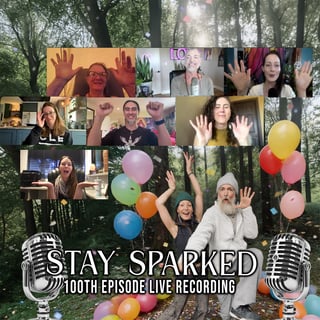
Speaker: Amazing. yeah Before we maybe get one of those affirmations, I want to remind people that you can find us on Instagram and we'll post some images of our plants. ah And um also want to invite you, depending on when you're listening to this, we are doing a live recording of our 100th episode on May 1st. So if you hear this before that,
Speaker: ah noon West Coast, 3 p.m. East Coast. We're going to be recording live. We would love you to be there and to hear your voice and have it be a part of this recording, of the next recording. We're having a party. So come on, hang out.
Speaker: Yes, love that. Welcome, welcome, welcome to our 100th episode. All right. Well, shall we close it out with an affirmation? i think we should. All right. So let's just focus our minds for a moment and take a deep breath.
Speaker: I am connected to everything. i am connected to everything. I am connected to everything. I am part of the whole.
Speaker: i am part of the whole. i am part of the whole I have a green thumb. i have a green thumb. My thumb is getting greener and greener.
Speaker: My thumb is getting greener and greener. I have a green thumb and I love my plant babies. I love my plants and they love me. i love my plants and they love me. i love my plants and they love me.
Speaker: Let's just keep affirming, knowing that we are stewards of these beautiful plants and we contend to them with love. Thank you all so much for listening and feel free to send us pictures of your plant babies. Yes. Yeah. of your baby pics. Yeah.
Speaker: Love you. Stay sparked.
Speaker: Has this conversation sparked you? Send us a note or leave a comment on the Stay Sparked Instagram page or YouTube channel. Reviewing us on Apple Podcasts really helps too. But most helpful of all is when you share us with a friend.
Speaker: We are so grateful to our sponsor, Lucid, makers of delicious functional mushroom and nootropic drinks. And special thanks to Dub Sutra, creators of our beautiful intro and ending music.
Speaker: Find links to me, Betsy, and all of this good stuff in the show notes.
Speaker: Stay smart, friends.