Transcript
chrisyzen: Here is a summary of why I do not recommend intermittent fasting. First of all, it signals scarcity to your body. So when you're fasting, when you're not eating, the body gets a signal that there is lack.
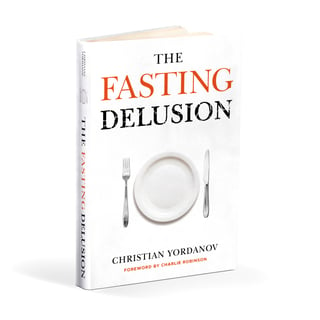
chrisyzen: And when this signal is given to the body on a long -term basis, it starts to down -regulate non -vital for survival functions. Which brings me to the second point, is intermittent fasting actually lowers your metabolic rate. That means that you basically burn less calories, even though nothing has really changed. right And there's one study that um I mentioned in my longevity book, how to actually live longer volume one.
chrisyzen: is after two weeks only of an intermittent fasting regimen, the ah resting energy expenditure of the study participants decreased by, ah um I think the average was 59 calories per day, which if nothing else changes over the course of a year, that 59 calories per day equates to about um three kilograms or about 6 .15 pounds of fat gain. But that's only if the metabolic rate doesn't continue to drop, which it very likely would because you if you're giving the signal of starvation or or scarcity to your body over a long enough period, it will continue to reduce its metabolic rate to conserve resources. um Then the other the other reason I do not
chrisyzen: recommend intermittent fasting is there was one study in published in 2020 in the journal JAMA Journal of the American Medical Association. That's what JAMA stands for. JAMA internal medicine and there they um reported that the intermittent fasting group lost ah they lost some weight But 65 % of that weight was lean mass. A lot of it was appendicular lean mass, so up and in the appendages, so arms, legs, and appendicular lean mass loss has been correlated with with weight regain. And then what they also
chrisyzen: ah concluded in that paper was that intermittent fasting, or they were calling it time restricted eating, in the absence of other interventions was not more effective than eating normally throughout the day. Which means that intermittent fasting only works for weight loss If you also cut calories and the reason intermittent fasting works, some people lose weight is because it's hard to eat your full three meals and a snack or two in an eight hour period. So that's the magic of it. You're just restricting how much food you can shovel into yourself in an eight hour period and people lose weight. Well, it's not that's not exactly magic. Right. um But the the problem with muscle mass loss.
chrisyzen: and the metabolic rate reduction is that if you continue to eat the same amount of food that you did, over time you will actually start to gain weight on this ah after this metabolic ah rate reduction and the loss of muscle mass. Now the other thing that was found in the research is that intermittent fasting lowers testosterone levels in both men and women which can result in a lot of problems. You see the the thing with when you do intermittent fasting, your cortisol level has to go up to compensate for no fuel coming into your body, right? So you become the fuel. You start to degenerate your body, your lean tissue, your muscles, your bones, because there's a lot of protein in bones, ah your joints, your skin.
chrisyzen: ah cartilage, cartilaginous tissues, even parts of your organs, they can all be basically disintegrated so that they can be turned into glucose and other things, of course. um So that's what cortisol does. And it's very well known that cortisol has an oppositional effect to testosterone. In fact, there was a study where they um gave men the drug hydrocortisone, which is like ah an anti -inflammatory drug, which is a cortisol -mimicking chemical, and that actually
chrisyzen: lower their testosterone. And then the in the same study, they gave them insulin and what insulin does is it clears your bloodstream of glucose and then the response is because your blood sugar drops, the response is a spike in cortisol because cortisol's main job is to keep your blood sugar high when it drops in a stressful situation. So in both those instances,
chrisyzen: the increase in cortisol, whether endogenous or exogenous, caused a reduction in testosterone. And actually there was two or three studies that I cited in my book, how to actually live longer volume one, where after two months of intermittent fasting, the men's testosterone dropped quite a lot. It was something like 20%.
chrisyzen: And there you go. what ah is that is that a So far, is this a beneficial trade -off, right? So you're you're reading, you're starving yourself, that's stressful, that lowers your metabolic rate, causes you to lose lean muscle, lean mass, which can include muscle. It lowers your testosterone. And it also, if you're already stressed, psychologically or physiologically, it doesn't really matter.
chrisyzen: If you're already stressed, intermittent fasting, because of the spike in cortisol that maintains your blood sugar by disintegrating your body, if you're already stressed, it places an additional stress on an already burdened system. And you know what the end result is?
chrisyzen: accelerated aging. And actually in chapter one of my book, I talk about some studies um where they looked at people at the lower their cortisol level, the lower their perceived age was. And there was another study in twins where the older the The bigger the difference in how they looked age -wise that the twins had, the higher the likelihood that the older -looking twin would die sooner in the in that study. So what what we know very well is that cortisol or stress ages us prematurely and it's it's elevated in almost any disease or condition that you can think of.
chrisyzen: So things like intermittent fasting, low carb diets, cold plunges, too much exercise, these dieting, these things stress the body and stress accelerates aging and disease processes. So that is my little very quick summary of why I do not recommend intermittent fasting.