Become a Creator today!Start creating today - Share your story with the world!
Start for free
00:00:00
00:00:01
#286  Balancing Beauty and Happiness in Ceramics w/ Claire McCauley image

#286 Balancing Beauty and Happiness in Ceramics w/ Claire McCauley

Shaping Your Pottery with Nic Torres
Avatar
37 Plays2 years ago

Take this Free Quiz to see how close you are to finding your pottery voice click here to take the quiz shapingyourpottery.com/quiz 

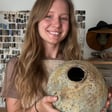
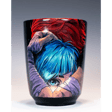
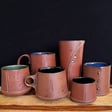
Listen in as we journey into the world of ceramics and pottery with the incredibly talented ceramic artist, Claire McCauley. Known for her unique sculptural mugs and illustrative pottery, Claire gives us an insider's view into her creative process and how she uses storytelling to breathe life into her creations. We learn about her fascination with pregnancy and birth, her decision not to have children, and how these aspects of her life influence her art. Join us as Claire opens up about her time at the Maureen Center for Clay residency, her evolution as an artist, and her use of sketching to develop her own unique voice.

Don't miss our exploration of discovering one's artistic voice in pottery making, as we share our own experiences and challenges faced in creating what we think people want versus what brings us joy. Claire offers insightful advice for budding artists and emphasises the importance of enjoying the journey of creating, failure and all, as a key to finding your voice. In our chat, we also highlight the role of happiness in art, where Claire shares her belief that there is no such thing as a bad sketch and encourages us all to find joy in our artistic endeavors. Tune in for a deeply inspiring conversation and an opportunity to learn more about Claire's journey and her advice for aspiring creators. You can learn more about claire by checking out her Instagram @clayremccauley

Top 3 Value Bombs:

1. Importance of Enjoying Your Craft: One of the most crucial lessons from the podcast is the emphasis on creating what brings joy to the artist. Claire McCauley highlights the need to enjoy the process of creating, stating that people are more likely to buy products that they can see were made with joy and passion. This reinforces the importance of passion and love for the craft in creating a successful artistic career.

2. The Role of Failure in Finding Your Artistic Voice: McCauley talks about the importance of not being afraid to fail when discovering your artistic voice. She advises artists not to worry too much about finding their unique style immediately but to focus more on enjoying the journey and trying out new things. Even if something doesn't work, it's an opportunity to learn and grow.

3. The Value of Storytelling in Art: McCauley provides insight into how storytelling can play a significant role in ceramics and pottery. She notes that pottery pieces are a perfect vehicle for storytelling as you need to view the entire object, and it requires movement through space with the object. This shows how an artist can incorporate personal narratives or broader themes into their work, making it more engaging and meaningful for the audience.

Recommended
Transcript

The Storytelling Power of Ceramics

00:00:00
Speaker
I feel like ceramics and pottery vessels, vases, jars are a perfect vehicle for storytelling because you can't just look at one side of it. You have to look at the whole object and you have to move through this space with the object.

Meet Claire McCauley: Sculptural Mug Artist

00:00:15
Speaker
This is Nick Torres here and on this episode of Shaping Your Pottery I gotta interview Claire McCauley. Claire makes some really incredible sculptural mugs and illustrative pottery. In this episode you will learn how Claire creates her sculpture mugs onto her own mugs and pottery. You'll also learn about how Claire uses storytelling to help depict a scene and a story in her own pots.
00:00:39
Speaker
Finally, you'll also learn about why Claire sketches and how that is helping her to grow her own voice. And there's so much more in this episode. I hope you guys enjoy

Claire's Views on Pregnancy

00:00:49
Speaker
it. I'll see you guys in there. Claire, welcome to Shaping Your Pottery. And share with me, what is something people might not know about you? Something that people might not know about me? Like fun fact or like fun ceramic fact? Yes, both of them. OK.
00:01:09
Speaker
My husband are not having kids, but I think pregnancy and like birth is such like a cool and weird like thing like when I was still in college I Did like maybe like too much research into it, but I was just like this is so fascinating and so cool But like I will not I would not like to participate in it, but I think it's so cool That's like my mom. My mom does the same thing She loves being in the actual like room when somebody is having like a baby. She's
00:01:37
Speaker
exactly like that.

Path to Ceramics: From Childhood to Career

00:01:40
Speaker
So tell the story how you got started making ceramics. It kind of started off when I was like pretty young. We took a trip to Washington state for a wedding and I was given some like polymer clay and so like when we were at this wedding there were a bunch of we like stayed at a place that's right along a canal and there were a bunch of ducks on it so I was like oh I want to take the ducks home I want I want to have these little things. So I just like sculpted this little river with some ducks on it and then
00:02:08
Speaker
kind of evolved into, you know, I was doing these small sculptures. I've used model magic. My grandma used to make like Faberge eggs. Like we grew up very Catholic. And so for our first communion or, you know, confirmation, whatever, she would give us a little Faberge egg. So growing up looking at those sorts of things, I definitely liked like these small miniatures.
00:02:34
Speaker
But yeah, I started doing clay classes in high school and then did it again in college. And then from there, I was originally an illustration major and loved doing ceramics and all that stuff, but I didn't want to switch my major that late in the game. So my feeling was if ceramics, if pottery was for me, then I would find it after school.
00:03:04
Speaker
Yeah, after school, worked at Five Guys for a year and eventually took some classes at a community college just to like stay in Clay, moved back to Chicago from Wisconsin after a year there and started working at Little Street Art Center. And that's kind of where like things sort of hit the ground and really started going for me there. I love it. So tell me about the moment when you got accepted into a residency at the Morian Center for Clay.

Transformative Residency at Morian Center for Clay

00:03:35
Speaker
Well, I was in Chicago. Like I said, I had started working at, or I'd been at Little Street Art Center for a couple of years at that point. And a lot of the people there, you know, had done residencies before. It was like the first time that I really like had the idea of residencies kind of presented to me of like, this is something you can do. And so, yeah, I had been in Chicago. I was really just like, you know, at the art center, jumping from working at the front desk to
00:04:04
Speaker
being in the back studio to going home. And I didn't feel like I was really taking advantage of living in Chicago. Cause it was like I said, just studio home, studio homework, studio homework. And so yeah, when I got, when I applied to the residency at the Morian, it was life-changing for sure. But yeah, I, I was sitting in my apartment and I got the call from Matt Shaiman kind of gave me the rundown of like, you know, here's what the residency is about. Like.
00:04:34
Speaker
you know, if you want to come, you know, take the weekend, think about it. But like, we'd love to have you. And I think I emailed him like 10 minutes later. I'm like, I don't need to think about it. I'm coming. So I absolutely love it. So what would you say or how does this experience contribute to your growth as an artist? I mean, it was the first residency that I've ever done. I
00:04:57
Speaker
have also gone on to do the Pentaculum. It's like a one week residency. So it's not like a, you know, pick up your whole life and go sort of experience. But yeah, I'm sorry. Can you repeat the question one more time? So how did this experience contribute to your growth as an artist? It definitely gave me the opportunity to really kind of dive in. I feel like before this, I was, you know, at the studio, but I didn't really do
00:05:27
Speaker
as much like, you know, building for like myself. Like, I mean, I had done glaze making before, but when I got to the Morian, you know, I was able to, you know, work with a smaller community, you know, be with other artists that were like close to my age and really kind of sit down and do more critiques that were helpful to, you know,
00:05:56
Speaker
help move me forward rather than like challenge me. Whereas like in the little street, I was, you know, doing my own thing and I was, you know, looking for some feedback, but in a residency, people, you know, you're in there with everybody.
00:06:12
Speaker
I love that. Shaping Nation, if you can get around other artists, other potters, your growth will be inevitable because you're just surrounded by so many other creative people. I love that. So what is something you learned during this time at your residency that you still use today?

Teaching Adventures: From Residency to Kids' Classes

00:06:28
Speaker
I think I really became a better teacher there. And that's definitely something I use, you know, on a pretty day to day basis. I am currently doing some like after school clay classes with kids and
00:06:42
Speaker
still work with, you know, within the teaching arena. And yeah, like, I think, you know, that was my first time kind of filling that role as the teacher. I'd done like assisting at Little Street, but, you know, guiding the whole class for the whole time was a big, a big jump for me. So let's talk about your pottery. In one sentence, can you tell me what you make? I make
00:07:12
Speaker
small narratives. I think that's. That's a great, great one sentence. Yeah, yeah. Tell me a story how you started making the part that you make today.

Storytelling and Nature in Pottery

00:07:23
Speaker
Well, kind of like I said, I, my grandmother made a bunch of garbage, ate eggs. I grew up in the nineties. So, you know, precious moments were definitely a thing then. And so, you know, people would collect these little sculptures of these precious moments.
00:07:39
Speaker
Um, and so I think that was like pretty influential, but yeah, I have always really loved like small enclosed objects. And so, yeah, I think that just has been something that I've enjoyed making. And, you know, I wanted to include that in a more permanent way. Cause like I was using like Sculpey or like model magic and that was like really foamy.
00:08:09
Speaker
And so yeah, I like the miniature. I like the detail. I like the, like I said, the storytelling. So I originally got my degree in illustration. And so I wanted to have these stories in a more usable way. So a lot of the mugs that I have, have these characters, have these stories wrapped around them. There's a lot of reoccurring characters in the sculptural work that I do.
00:08:38
Speaker
So something you are inspired by storytelling, as you just mentioned, nature and your past. How do these things impact the way you make your own pottery? The way that they impact them. I don't know, it's just sort of, you know, it's it's the way that you come to making, you know, I. You know, I think like a singular like a pot is kind of a story, you know, you have to turn it around and like you move through that space and
00:09:09
Speaker
It's, I feel like ceramics and pottery vessels, vases, jars are a perfect vehicle for storytelling. Cause like, you know, you can't just look at one side of it. You have to look at the whole object and you know, you have to move through this space with the object. Definitely agree. So much. So can you walk me through how you create one of your mugs with the detail sculptures on it? Certainly. I mean, yeah, it's, you know, you throw the base.
00:09:39
Speaker
I usually pull some handles. I only work on about max, like five of them at a time, just because it does take a while after they're completely assembled to get all the detail on there. So yeah, I'll throw four or five mugs at a time, pull some handles, get them in there. If they have like a little window on them, you know, before they get too dry, you know, I'll make sure that window, I'll just kind of push it in. I don't cut the window out or anything.
00:10:07
Speaker
And yeah, assemble it, add a little bit of underglaze. I do use a little bit of colored clay because I like working with those really fine details. It's sometimes hard to use the underglaze and get in those and have like those clean crisp, like if it's a frog on a lily pad, but the frog's only that big. You know, it's a bit easier to make the frog out of colored clay than to try to go in with a paintbrush later and underglaze the entire thing. Yeah.
00:10:36
Speaker
I love that tip. Shaping Nation, if you're ever needing, if you're ever working with very small things, use colored clay to help you color instead of underglazes or actual glazes. Make things so much easy for yourself. Oh yeah, yeah. And also working with like porcelain or like clay that's not super groggy is a good one too. Just because if you're trying to put that little detail in there with your needle tool and you accidentally bump
00:11:02
Speaker
you know, a little bit of grog that can take off an entire character's nose if it's small enough. Excellent advice. I love that. So let's talk about the business side of pottery.

Full-Time Pottery: Balancing Art and Teaching

00:11:12
Speaker
Can you tell me about the moment when you decided to go full time with your pottery? It was probably like when I accepted the residency. You know, at that point I was working at the front desk at Little Street Art Center and moving down to Florida to start the residency. It was a big leap.
00:11:30
Speaker
You know, I don't know, I don't know personally too many like full time, 100% only making all the time ceramicists. I think those are, you know, it's a hard way to make a living. So like I do consider myself like a whole time potter, but you know, I also teach a lot and you know, and there's, I used to feel a little weird about that. I'm like, oh, you know, they might,
00:11:58
Speaker
my full time artists are like, you know, if you're not only doing, you know, these fine sculptures, you know, if, you know, have to kind of pivot and make some work for markets and stuff like that's totally fine. I think there's a lot of pressure that especially young artists put on themselves to only create only, you know, make their living off of, you know, their art form. And if you can do it, that's amazing. But if not, there's like I said, there's no shame in that. And, you know,
00:12:28
Speaker
Keeping it fresh and fun is kind of the most important thing, you know? If, you know, you are dreading going to the studio because it's like, oh my gosh, you know, I have to make this many things to fill like this like quota or whatever. Like, I mean, it's pretty cool that you get to do that. But, you know, if you have to do a little work on the side, that's all good.
00:12:53
Speaker
Definitely reshaping nation. If you need to supplement your income with something else, go do it. There's no shame in it because now that's going to give you opportunities to work actually on your own pottery. I love that. So what advice would you give to someone that wants to start being able to teach their own pottery or teach classes about pottery? I think before doing that, you know, take as many classes yourself as you can, you know, exposing yourself to as many different teachers, as many different teaching styles.
00:13:22
Speaker
as you can is a great way to learn how to teach yourself. You know, that was, I was super privileged when I was in Chicago to be able to take so many classes, not only in pottery and ceramics, but also in a bunch of other disciplines. Like I said, I worked at the front desk and part of that was, you know, enabled in order to be able to help other people pick classes, they let us take classes so we could, you know, better help the people who were
00:13:51
Speaker
registering for classes. And they had ceramics, metalsmithing, textiles, drawing, painting, glass, all that stuff. And so exposing yourself to as many teachers as possible is cool and important. And if it's just the logistics of it, if you have that experience already, just reach out to people. The clay community is a supportive and beautiful community. If you're new in town and
00:14:20
Speaker
Don't know where to begin. Just find, just Google claim. Ceramic centers and like odds are somebody's going to be, you know, looking for someone to teach a date night and you know, just get your foot in the door somehow. I absolutely love that advice. So what would you say has helped you the most with being able to sell your own pottery? Probably my husband. He works for WordPress and so
00:14:47
Speaker
being able to not only sell markets and stuff, but figuring out how to sell my work online. I do have a shop linked in my website and having him, if I run into an issue or I run into a wall, it's such a privilege to be like, Austin, can you please come help me? I don't know. Why isn't it showing the price? How do I do this, that, or the other thing?
00:15:17
Speaker
That's been super helpful. Absolutely love it. That's so cool. So what advice would you give to someone that is trying to start selling their own pottery? If you're starting to try to sell your own pottery, you know, make what makes you happy. And I think people will see that. I think, you know, something, something I've struggled with is, you know, you're making, making, making for these craft fairs and earth.
00:15:44
Speaker
You know, whatever. And, you know, I kind of have it in your head of like, Oh my gosh, you know, what are, what are people going to want? What do people need? What do you, what do this, that the other thing, you know? And honestly, at the end of the day, like if you put, you know, joy into whatever you're making, even if it's not necessarily like art art, but you know, I would just say like, I've made a couple of mugs recently that have frogs on them and like, you know, frogs aren't, you know, integral to like, you know,
00:16:14
Speaker
my artist statement or anything, but like, I love frogs. I had a pond in my backyard growing up and they make me happy. And I think that, you know, when I bring those mugs in particular to markets, people can see like, I, I enjoy making them. I am, you know, it's, it's something that brings me joy. And I think people want to, you know, have that kind of joy. Absolutely.

Joyful Creations: Pottery for Happiness

00:16:40
Speaker
Great shaping nation.
00:16:41
Speaker
The most important thing is to make what you enjoy making, because otherwise the whole process isn't going to be as fun. Enjoy what you're making, have fun with it. I love it. Yeah, go ahead. No, I was going to go on the next step. You can go ahead. I was going to say I definitely like made like small planters that are, you know, they're fine. But yeah, there wasn't as much joy in those. And, you know, it's like, OK, this is the right price point. People are going to like this. And, you know, I had more people buy the mugs that were
00:17:12
Speaker
five, six times the price of these tiny planters because yeah, it's, you know, like I said, they can see that you enjoyed making that rather than like, okay, this is what I think people are going to like. Excellent advice with that. I love that so much. So let's talk about discovering your voice. What was your biggest obstacle when it came to finding your own voice? I think for like, at least my generate like millennials and kind of everybody who's grown up in with like the internet.
00:17:42
Speaker
There's so much input from all different things. And I think that's kind of the hardest thing that a lot of people, a lot of artists face when they're trying to find their voice is you're influenced by a lot of different things. And I think everybody has been throughout the years or throughout history. You go to a museum, you're influenced by that. You go down the street, you're influenced by that.
00:18:10
Speaker
Yeah, I think that's been the hardest thing. I also feel like it was a bit of a different journey for me because I didn't start out in clay. Like I said, I started out like in illustration and kind of made my way to clay. And so for me, it's been the way that I've kind of worked through that is through like a lot of sketches or like, you know, if you're going through your sketchbook and you're like, okay, well, like
00:18:39
Speaker
No, this looks a little bit like this. Trying to take elements that you like and pivot a little bit, or take some elements, but say, OK, I like this particular thing, but let's see if we can shift it in a different direction. And I think it also comes back to that joy aspect. If you make what makes you happy, and through that, you'll find your artistic voice.
00:19:08
Speaker
Definitely love that so much. So what are you doing to evolve your voice even further? Right now, I, like I said, I'm, I've been doing a lot more sketching. Yeah. I've been giving myself different, like sketching challenges. So trying to, you know, figure out if, you know, what I have been doing is what is currently still making me happy or, you know, spending a lot of time.
00:19:38
Speaker
kind of sketching things out, seeing, you know, how can I push different things further, different concepts, different ideas. What advice would you give to someone that is looking to discover their own unique voice with their pottery? Don't be afraid to fail or don't be afraid to try things. Like there's, there's no shame in like, you know, trying something out if it doesn't work. That's fine. If you're trying to find your own particular style,
00:20:08
Speaker
I mean, that's, I think it's kind of hard to give advice on that because everybody's journey is so different. But yeah, I think like, I wouldn't worry too much about getting there, you know, enjoy, enjoy the journey. You know, when I was in college, I worried about that. And it wasn't until after college that, you know, I really felt like I had a direction that I was comfortable going with, or I was happy with.
00:20:36
Speaker
So, you know, don't worry, don't worry too much about it. And you know, just keep making. Think of the biggest thing. Definitely. Shaping Nation, the best thing that you could do to help you find your voice is to simply just to keep making and enjoy the process as well. That's how you're going to be able to find your own voice. I love that.

Connect with Claire: Social Media Insights

00:20:55
Speaker
So as we are coming to a close here today, what is one thing you want to hammer home with my audience? Well, kind of on that last note, like, you know, there's
00:21:04
Speaker
in clay, in, you know, almost any art, you know, medium, whatever. There's no such thing as a bad sketch. You know, it's, you know, do what's going to make you happy. Be happy about what you're making or try to be happy about it. Yeah, no such thing as a bad sketch. Absolutely love it. Great parting words of advice. So, Claire, it was so great chatting today. Where can my arms go and learn more about you? I am on Instagram.
00:21:34
Speaker
at Claire McCauley, but C-L-A-Y-R-E-M-C-C-A-U-L-E-Y. I've also got my website, which is just C. McCauley.com. I'm also on TikTok under Claire, C-L-A-Y-R-E. And yeah, I'm around. Come find me. Hey, thanks for listening to this episode of Shaping Your Pottery with Nick Torres. If you want to discover how close you are to actually discovering your own unique voice with your pottery,
00:22:03
Speaker
I put together a free four question quiz. It's very short. It takes 30 seconds for you to take. If you want to know how close you are to finding your own unique voice, go to shapingyourpodtery.com forward slash quiz, or you could simply go to shapingyourpodtery.com and it'll be right there at the top. I hope you guys enjoyed this episode and I'll see you guys next time.