Transcript
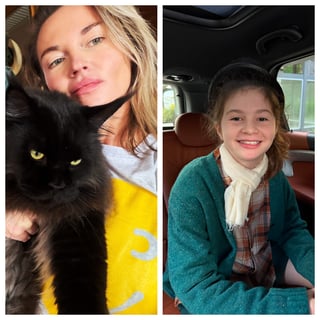
Speaker: You are listening to Something Rather Than Nothing, creator and host Ken Vellante, editor and producer Peter Bauer. This is Ken Vellante with the Something Rather Than Nothing podcast. And for this episode, I'm very happy to have Austin Sorlut -Thompson,
Speaker: who is a painter and she lives in London and I discovered her works on Instagram and just absolutely love the dynamic color and composition of her paintings. So I am so pleased to have Ozlem and we're speaking to her from London. Welcome to the podcast Ozlem. Thank you very much.
Speaker: Hello, Tom. How are you? I'm doing very well. And I wanted to thank you for taking your time in and joining us and introducing probably a lot of my listeners to your fantastic paintings. But before we get into that, one of the things I wanted to ask is, what were you like as a young child? Were you always interested in art, or do you
Speaker: Did you show an artistic inclination or interest when you were younger? Yes, actually. I was a very, very observant child. So I am a very observant person. And I was always observing nature, walking in this open nature area. And I started painting and drawing in very early age, about five years old when I started first drawing.
Speaker: And it was always something very normal to me, like very normal to do. So the natural way of expressing myself. It felt like that. And I loved using colors as well. I used those of pencils in the early ages with lots of drawings.
Speaker: And then when I first went to school, my teachers said to me, I have my kind of technique while drawing. Now, even they said that to me, I chose different directions in life, and study science, and all this turning to biology. And it's really made me so happy to do that, as well as
Speaker: Focusing on art in the end, I think it's a very good experience for me. Yeah. And one of the things I mentioned to you is I'm very interested in science. And sometimes during the show, there's been a bit of an overlap
Speaker: between, you know, folks who do science and work in art or, you know, back and forth. I'm always interested in the connection between two fields which many people think are just very different. So I'm always really interested in how they connect for the artist.
Speaker: And I was wondering for you, with your background in science, in biology, and moving into art, how you made that transition or whether it felt like a transition? I think it was so natural process for me. When I was studying biology, I was drawing all the creatures, all these microscopic
Speaker: and all these things on microscope PC. I was doing them on paper and my teachers, my professors were very impressed by them. They wanted me to do their illustrations for their books. So it was like a natural thing to me. I don't know about
Speaker: Generally, maybe it might seem to other people very different subjects. But when you are in nature and when you are observing nature, and if you have a talent to do all the things, you can't just start doing it. And I think my imagination has me a lot as well. When I saw this microscopic world,
Speaker: I thought, why not? I can create my own world. And I decided to create fantastic creatures in my mind and put them on paper and then sketch them and then turn them into big paintings. And I used lots of different colors to express how I feel, how I feel about life, about nature,
Speaker: So colors also help me a lot while doing that. I think they have a connection between them, art and science, very deep connection, because we are organic structures. And our mind, our imagination is coming from nature itself. We are connected to nature. We can't live without it. We are part of it, like we are stardust that's caused against it.
Speaker: So I think that we have a big connection with nature and we should keep it like that. Thank you so much for that. I'm always really interested in that question and I certainly don't think they're very different areas of activity. Another thing I wanted to ask you too, though, is you moved from Turkey
Speaker: to London and I've been to London twice and I love, you know, just the size and the dynamic aspects of the art scene in London. What's your experience been about how place and where you've been influenced your painting? I think
Speaker: Moving from one country to another is making a huge challenge in some important life. It affected my paintings because when I first came here, I was thinking of maybe study more biology, do my doctorate degree, do other things. But when I stayed with myself for a long time,
Speaker: Because when you move so much, so much, you are like changing all those skins. You are throwing one skin like a cocodile through and building another one. So it was a big change for me. Before that in Turkey, we had very oriental art and music.
Speaker: I think my colors, I use lots of colors in my paintings, when you look at them. My colors are coming from my past experiences in my country because we have so much sunlight, we have very light culture and very oriental music and art.
Speaker: And they use lots of colors as well, because sunlight probably affects in some parts of the brain. I don't know where I'm at. And your subconscious is full of light colors. And when I came here, it wasn't that sunny all the time. And London is a very, very city to live if you're an artist, because you have
Speaker: so many things to see freely. You can go to galleries, you can go to exhibitions. And when you see so many paintings, so many artists, so many amazing artworks, it's making you understand what is good or bad. You are becoming very good at it by the time. And when I first came to London, I came for studying in 2010.
Speaker: for English. I saw lots of artworks and then I went back to Turkey and I started drawing more and more because of probably what I saw in here. And then I came back in 2015 and I decided to be focused on this subject much deeper than early times and
Speaker: I said to myself, this is what I should do in life, be an artist and just paint. I think these four things moving one city to another and also these cultural differences created my art, actually I can say, because you can use two different cultures, put them together,
Speaker: and use your imagination and it can create something unique instead of just one side or the other. And as far as one of the things I wanted to ask you, and I thought about this when you were speaking and talking about the kind of the dynamism of the color in the sun,
Speaker: your experiences and your memories in Turkey and London can be a rather, you know, foggy gray and drab at times. And so, you know, I definitely thought about, you know, the color in your art and, you know, it's a really fascinating thing to think about.
Speaker: For me, I paint and I've only painted for a couple of years and I struggle with having a natural inclination or an understanding of using color or a lot of different types of color. Do you feel that that part of your painting, is that been something you've had to learn over time as far as the color combination or is that something you felt maybe you've had a knack or an ability throughout time?
Speaker: I think using the color is the best ability I have. I have my own way of painting, but I am not very good at technical. I'm not using usual methods of techniques of painting, but I always thought that
Speaker: My painting, the most important thing in my painting is when you look at it, you will always remember that color. You will see it and you will feel like the viewer will feel like they look at something totally made of feeling because colors are feeling. For me,
Speaker: They can express feelings better than anything else, better than any shapes, better than any figures. Colours are giving that feeling. And I heard that when I was so small as well, I was mixing colours and finding out other colours. And when I look at them, they make me so happy when I go to art shop.
Speaker: happiest place for me in the world going to an art shop and looking all that color in front of me. So I think it's the way of expressing myself. It is the best place. I found that when I started painting, I started to absolutely love certain colors that I never really noticed before.
Speaker: And that was a great discovery for me. Like my favorite color painting, even though I actually don't use it a lot, is yellow in variations of yellow. And that's never a color that had a lot of appeal to me, but God, I love that color now. Yellow is very positive. You probably heard about Kandinsky's color theory about color.
Speaker: created a theory about this convicted Russian artist. I don't know. Can you tell me about it? He has a theory about every color has their own meaning. And he's explaining it very well. Everybody who is interested in color using the painting, they should look it up and find out about it more because it's really amazing. You can he he
Speaker: talking about which color is what kind of feeling it is given to the person who is looking at it. It's so interesting. Oh, thank you. Thank you so much. We're talking about Aslan Sirlo -Thompson and just talking about color in her painting. And thanks so much for your comments there. I'm deeply fascinated by my guest's thoughts on color.
Speaker: particularly within painting. But I got a big question for you, Aslem. What is art? I think art is creating something without really thinking about it, really organizing it with your subconsciousness, using the deeper side of your whatever it is. I don't know if it's soul or it is the
Speaker: other than three, four spots and energy in our cells. There's a kind of energy we have inside our body and reaching that level of deep, deepness and expressing it on a paper or on a comma. This is art for me. And thank you, thank you for that.
Speaker: 2020 has been just well, I don't know how to describe 2020, but with the, you know, the pandemic and various social issues and disruptions that have gone on, at least, you know, for me, that I've experienced in the United States, but it's been worldwide, of course. Do you think art has art itself or creating art that there's a different role for art right now today or
Speaker: as it kind of still served the same role that it's always served? I think, of course, which country people were in or they are in is art always but affected by what has been happening around us. There are lots of artists in the history. When we look at them, they moved from one country to another. They expressed the war
Speaker: Picasso, for example, they express wars on calm masses. And I think art has lots of things to say to the world. I think it is one of the best ways to tell people what is happening, and it is being recorded, and the next countries can see and understand this country better
Speaker: with some artworks. So I think art creates equality in the world, and art is universal. So it is like a universal language. When you look at an artwork, you don't have to know any language. You don't have to have a skin color. You don't have any kind of difference. It's indifferent. You are becoming indifferent in mind. And you can just look at an artwork and feel
Speaker: whatever is giving it to you. So art is universal and art brings equality to the human beings, which we don't see very often in the century. There's lots of problems in the world. So yes, I think art is so important for everybody and it will be in the future as well.
Speaker: Have you have you found for yourself as an artist that it's been easier or more difficult to create amidst the pandemic? I found it from my experience. I found it easier because I had so much I had so much time for myself and it made me create more paintings make make more
Speaker: create more ideas about what should I do. So it's fast for me, a very creative time, but also because of the pandemic. We can see the galleries are closed all around the world. We can see the people have worries about how to get food,
Speaker: how to survive. So it became a little bit more. This may be important to normal society because they had to survive from the virus and everything. But for artists, I think it was very, very important to be
Speaker: and create whatever their potentials are. So for me, it was a good time. Even I was so worried about my family in Turkey and everybody or my friends. I focused very hard on my artwork. Yeah. And thank you for the answer. I mean, I know I've had this question and talked with various artists over time.
Speaker: You know, there's been, you know, what I would say very different type of pressures at times or very different type of questions about, you know, what should I be doing or should I change it or should I just, you know, art my way through this time? Like everybody's had a different response. I'm always very interested in how you navigate that.
Speaker: I got another question that I'd like your answer. Who or what made you who you are? Very good question. I think the life experiences and challenges and where I was born and
Speaker: how to see them, how to see the experiences and how to make them a potential creativity made me, myself, me. So all of these things, if I was born somewhere else, maybe I would be someone else. I think that one of the biggest things where you are born is like,
Speaker: creating everything in your life, and when you learn from it, and then when you move somewhere else, you are having lots of different experiences, and this is building up, building up, and there will be always challenges, of course. And this challenge is making you stronger, and if you focus on who you are,
Speaker: very deeply, you can understand what you should do in life. I think I had a very big process of understanding myself all these years, and I finally found that I should just paint. That's my answer.
Speaker: I decided that no one else decided for me. I made this decision and I took the risk and I started following it right now and I'm doing my best. Yeah. Yeah. And, and, and, and thank you. I mean, these, you had something in there about that, that I think that's really profound in the sense that, you know, who am I first and then
Speaker: What do I do? And, you know, I'd imagine as you described that process, while not easy, it sounds to me that it was just connected with what you knew you should do or in how you developed. So, and I thank you for that because I and others get to enjoy your paintings. Um, yeah. Um, okay. Uh, awesome. Why is there something rather than nothing?
Speaker: I think, I can say, experience. We should have experiences. So there is experience rather than nothing. We should have experiences about life, about why are we in this world and understanding deeply ourselves.
Speaker: Oh, I think that's my own experience. Yeah. Thank you. Thank you for that. I mean, I know as far as a lot of, you know, your answers to these questions, I tell guests this a lot of the time I, you know, I'm really kind of, I'm impacted by ideas in how, how people look at the world. And so I always personally appreciate, you know, beyond creating the podcast and for my audience, I also always personally appreciate, um,
Speaker: how my guests help prompt my thinking on questions that I think about a lot. So I really appreciate that. So, Aslem, I've had guests from around the world. Most of my guests have been in the United States, but I've had some from England, in Australia, in Ireland.
Speaker: I was just wondering here for the final question, if you could just let everybody know, no matter where they are, how they might be able to connect with your art, where to find it, where to find you, and whatever you'd like to share. Of course. Thank you very much for giving me a chance to talk about these things today.
Speaker: I have an Instagram account, they can find me my account name and I have a website with the same name. They can Google me and find out very easily about
Speaker: some of my publications, my artwork, my exhibitions, next exhibitions, and my art books going to be published in 2021, some of art books. So I think Instagram is the best platform to find out about my art because I share my processes as well, not only the artwork. When I paint, I share a close -up
Speaker: pictures of the artwork or they can see details. They can write me easily. I'm always answering the questions when anybody writes me about anything. Thank you very much for inviting me for this lovely podcast. Yeah, thank you, Aslem. It's been a great pleasure to talk to you and I can tell you that
Speaker: Uh, again, um, I'm going to, I'm going to look, I'm going to dive a bit more into, um, you know, uh, with Kandinsky and, and color and, and take into account about, about color and, um, just its impact. And you've helped me kind of form my thoughts more about it. And, um, again, uh, really appreciate your art, really appreciate your time.
Speaker: And I hope to talk to you again soon. Aslem Sorlu -Thompson, wonderful painter. Thank you so much for joining something rather than nothing. Thank you very much. Thank you very much for inviting me. It's lovely to talk to you. And your questions are really amazing. They are very mind -opening questions. Thank you very much. Thanks, Aslem. Take care now. Thank you. You too. Bye bye. Bye bye.
Speaker: You are listening to something rather than nothing.