Transcript
Speaker: Hi everyone, a quick heads up ahead of the episode. Unfortunately, it's been brought to my attention that there is a scammer impersonating me. They've been emailing people from a faked to account, posing as me, and offering paid packages to come on the podcast. To be clear, there is no payment involved for guests. I do not charge guests to come on the podcast, and obviously that means there are no packages for guests and the like.
Speaker: If you're unsure that you are in communication with me or the scammer, you can check by messaging me on my verified Instagram account at rightandwrongpodcast or through my website, contact page, rightandwrong.co.uk forward slash contact. That's all from me. Stay vigilant and enjoy the episode. Ooh, a spicy question. love Because the writing is sort of everything, right? Like you can fix plot holes, but if the writer... So some readers love that and some readers are like, but I wanted more of this. So it's kind of, it's kind of a gamble.
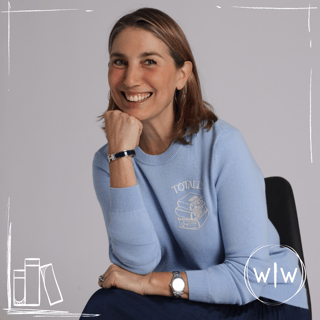
Speaker: Hello and welcome back to the Right and Wrong podcast. On today's episode, I am joined by a literary agent with decades of experience in publishing. It's Kate Barker.
Speaker: Hello. Hello. It's nice to be on a podcast. I haven't been on a podcast before, so I'm a bit nervous, but let's well let's hope it goes well. Hopefully i make your first experience a good experience. Thank you.
Speaker: Let's... jump right in and let's start with your career in publishing which is um an impressive one from from what i've been reading do you remember way back when what your first job in publishing was how did you get your foot in the door uh yes i do uh my first job which i got in the summer after i graduated rather a long time ago, was as a marketing assistant at the Folio Society, which still exists, which does sort of pretty versions of Jane Austen, or it did at the time. And I got that um through a an ad in The Guardian.
Speaker: um i applied because that's how you found jobs in those days. I applied for an ad in The Guardian and got that one. And it was an invaluable experience, which I don't think I really appreciated enough at the time. because And I only stayed there for a year or two because I wanted to work with real live authors rather than dead ones.
Speaker: But actually it was really silly because it was really city because it was it was in the days of direct mail marketing and actually it was data driven a way that publishing wasn't then for at least two decades, the publishing I worked in and is now, um you know, with digital tools is much more data driven in a way that was kind of informed to a degree by direct mail. So it was a very good introduction. Okay.
Speaker: That's interesting. And it sounds like you, you, it sounds like you'd, you'd set yourself on the journey of, I want to work in publishing. Hmm. Yes, i had I had. I had done some... i was a very bookish child and I'd done some work experience at Jonathan Cape. this was ah It was a very nepotistic age and my Dad happened to know somebody who worked at Jonathan Cape or knew somebody who knew somebody who worked at Jonathan Cape. So I was able to do work experience there one university summer holiday and had a wonderful time.
Speaker: i um i thought these are my people. This is amazing. And actually I was lucky enough to read um The Virgin Suicides when it was on submission and I thought it was incredible and I thought they should publish it. They didn't go for it in the end, but I found it in a bookshop years later and that was thrilling, you know, to be somebody in their twenties to have thought, oh wow, this, this did become a book. Um, yeah but it was, it was a lovely, lovely experience because I spent time in the art department. Uh, I spent time in editorial and I just came to see what an extraordinary experience it could be to work work with a bunch of very creative, talented people who were
Speaker: interested in the same things as me and then from that was that kind that led into you were under you worked at penguin for a long time and orion Yeah, so after the Folio Society, I wanted to work with real-life authors. So I got a job as a very junior assistant at Curtis Brown, and I was there for a couple of years. And that was invaluable training in agenting. I worked for two agents. And then I was still – because I graduated when I was 21, so i was still quite young when I'd finished that, and I needed to do some growing up, really, so I went travelling for a bit.
Speaker: And then when I came back, it was quite hard to get back into publishing at that point because I think, you know, I was at that tricky bit where you've had some experience. So you're sort of an overqualified assistant, but not enough to make you go in at a sort of more senior level. So i eventually got a job and this was through, um the introduction came through one of my agent bosses who represented Ian Rankin. And he introduced me to Ian Rankin's paperback publisher, an extraordinary woman called Susan Lamb at Orion. um And I wound up working for her for a year at Orion and she was a formidable woman um and a a brilliant paperback publisher. And then after that, I went to work for Penguin um as an editorial assistant at Viking and then slowly got promoted there.
Speaker: Yeah. So I was at Penguin for about a decade. Okay. And by the time you, you, you kind of, you, you left Penguin, you were, were you editorial director? Yeah, that's right. So I didn't go back after child number two came along.
Speaker: Um, and then I was at home with my kids. for a few years and then started doing lots of different things. I worked outside the industry for an app company for a bit, doing content marketing.
Speaker: I ghost wrote a book. I freelanced in various different ways. And then, um, du I'm just giving you chapter a and verse. Stop me if it's boring. um this is great Um, then, uh, what did I do? I got a job setting up a literary agency for a speaker's bureau.
Speaker: which was sort of simultaneously horrendous and fascinating because it was a completely different vibe and attitude to publishing. And it wasn't a good fit. And I was there for nine months. And then thankfully we parted company.
Speaker: They were all very Brexity. So it was a relief because this was around the time of Brexit. And um okay it was, yeah, it it wasn't a good fit at all. I then thought, well,
Speaker: I've learned how to set up a literary agency and I had had obviously had the Curtis Brown experience years before. Why I just do this myself? Because I'd learned sort of all the technical stuff really.
Speaker: And simultaneously I worked part-time at Bookature when it was an indie, which was amazing, um fascinating, brilliant people.
Speaker: um And that was absolutely invaluable experience because I had left publishing a few years before very, very depressed about the state of the industry and its failure to adjust to you know, the digital revolution. And here,
Speaker: worthy sort of visionaries, ah particularly particularly Oliver Rhodes, who set it up, who'd figured out how to make digital publishing work. And that was so inspiring and fascinating. So i worked there part time, as well as um setting up my own agency. And then after about a year, it became clear that I couldn't really do both at the same time. So since then, I've just been working as ah an agent ah with my own agency.
Speaker: Okay, wow. It's funny to think of how, like, that Bookature was at one point this, like, small little startup company and now it's so big. Yeah, yeah. They just, you know, i mean, is it wasn't just them who set the model because lots of indie authors have been doing it for themselves and there was a sort of gold rush period in the...
Speaker: you know, 2010s, but they were so data-driven and rigorous in the way they approached things. Doesn't fit lots of different kinds of publishing, but for the kind of commercial publishing they do, it was brilliant and revolutionary. And one of the things I had done actually that um when I was, um for various family reasons, when I was um at home with my kids, I had done a postgraduate diploma or in digital marketing, which actually wound up being much more difficult than I thought it was going to be. I i saw that it said postgraduate and I thought, well, I'm a graduate. I can do that. Didn't really appreciate that it meant marketing graduate. So that was a massive learning curve, but they were applying those principles that I learned. um
Speaker: Yeah. um Completely genius set of people. Yeah, well, I mean, that kind of, you know, like digital marketing and sort of ah content strategy, that's all good. That's all so much more useful now for authors than it has been like, you know, 10 years ago or whatever, because authors are so at the kind of forefront of their own brand and everything now.
Speaker: That's very true. just think, yes, that is true. And it's a sort of mixed blessing because on the one hand, if you're the kind of author who likes that kind of thing, is good that kind of thing, it's fantastic. You can control your own destiny in a way you really couldn't 20, 25 years ago plus.
Speaker: On the other hand, if you're the kind of author who just wants to write books, it's a bit of a burden to feel that you have to be out there on social media and doing all these publishing roles that traditionally your publisher would have done. So it works for some people, but not for others, I would say.
Speaker: Yeah, exactly. And I think there's a part of me that worries that that might be a bit even more difficult for people who don't want to like put their face on everything. They just want to write with the kind of this wave of AI things coming in and everyone kind of a bit of a witch hunt happening where it's like, well, if there's no person that I can point to and say, that's the person that wrote this, then there's going to be more kind of suspicion and things like that.
Speaker: That's a good point. That's a very valid point. I mean, um, It's interesting, isn't it, about the social media thing, because clearly that works for lots of authors, but it doesn't work for other authors. And and some publishers seem to find um that.
Speaker: you know, their sort of corporate announcements on social media do nothing, don't move the dial at all. So some of them, sort notably some of the big um digital publishers have kind of given up on doing that because they don't, but the for the time a resource they spend on that, they find it much more effective to do other things.
Speaker: But yes, I mean, the the the author personality thing, cult is not going away. And you are right. I think as we move in further into the age of AI, it's going to become increasingly important.
Speaker: um Yeah. People feel that they can identify with a real person. Yeah. And then, you know, it's, I've spoken to hundreds of authors at this point through the podcast and there is, there is an extra connection. I think, you know, this is a more optimistic side of things. Like if you hear an author speak, and this is why it's great to go to panels and things like that and just listen to interviews with authors. If you hear an author speak and you kind of hear about their story and their journey, or just like their colloquialisms, you know, the way they turn a phrase, when you then read their writing, I feel that you do get more of a connection with it. And you think, oh,
Speaker: Yes, that reminds me of kind of them as a person that I can feel that their kind of touch in this writing. Yeah, I think that's true. i mean, maybe it'll be less and less of a problem as, um you know, we we move through the generations that certainly my my kids who are in their teens, they're digital natives, they've grown up with social media.
Speaker: um They just seem to approach... the internet generally in a different way and don't really see it as distinct from real life.
Speaker: But I think not all of them, not all of them are on social media. So I don't know, maybe, maybe it will become less of an alien experience for those authors now who, who dislike social media and don't really want to do it ah because it'll just be something they've grown up with.
Speaker: Yeah, that's true. That's true. and ah And like with all these things like social media with AI and things like that, I hope that it's sort of like the the printing press and and and like ah moving on to word processors where, you know, back then people panicked and like they were saying, oh, word processing is going to ruin books and storytelling, things like that. And it's like, it was fine. You know, books survived, authors survived.
Speaker: We're still here. And I think once the dust settles, it'll it'll probably be fine again. It's always a discoverability problem though, isn't it? That's all that's always publishing's problem is there are too many books to be published and that was what partly what happened when you know Amazon came along and KDP came along.
Speaker: There had always been too many books and now there were really too many books and if all this sort of, you know, people are people are churning out AI written novels, self-publishing them, again, it's going to be harder and harder to discover anybody's book.
Speaker: Yeah. So I think that's, that's more of the issue. um it'll be an interesting question about whether there are, you know, people come to accept ai authored, for want of a better word, novels.
Speaker: Um, I, it wouldn't work for me. For me, novels are essentially about connecting with another human being's brain. and and But that might not be true for everyone.
Speaker: And i don't I'm sure that publishers, as you know, this will evolve, and if if publishers or some publishers see that there is a an audience willingness to accept AI written novels, then they'll start publishing them. Currently, there is no copyright in an AI generated material, I should say.
Speaker: Yes. So they won't. But that, I think, will change. but Yeah, potentially, because that's what I've heard is that is is, is a huge reason why publishers would be reluctant to do it is because they can't, you can't copyright it. thus yeah You can't really make that much money off it. Well, you can't, you can't copyright it at all. So yeah, no, you won't make money off it.
Speaker: ah or you can't enforce the copyright, but, um, I'm i'm sure that will change in the next five, 10 years, maybe sooner.
Speaker: Okay. Well, we'll have to wait and see. Just because if you think it's it's not, it's not just about books, is it? It's about all creative output. Yes.
Speaker: And it will be, ah it will be a struggle between, I suspect sort of the interests of big film companies, music, music companies, and so on Publishing, it will be a very, very small fry and all this. Um,
Speaker: Yeah, but but that battle around creativity and copyright will be fought out. And I suspect you will be able to copyright write AI work in some way at some point.
Speaker: Well, it's ah it's a daunting and terrifying future, but we'll have to wait and see what happens. yeah but i think I kind of feel like the horse has bolted. I'm more concerned about it from an environmental point of view, to be honest. But yeah.
Speaker: Yeah. I mean, i think it I think it, don't get me wrong, I think using ai AI to write novels, to do anything creative is completely abhorrent and is not something I want to be involved in. For me, it's all about Sort defeats point. Yeah, so it's about human creativity.
Speaker: But I think that force has bolted. ah So it's really how we manage it. Yes, exactly. Which is why things like the cult of personality that is, you see something like, um and I keep talking about this because I'm obsessed with it, but like the dungeon crawler Carl and the success of that, which is so plugged into ah the author who like connects with all of his followers and like they, he puts out sample chapters on his Patreon and they kind of give feedback and help write and shape the story and things like that. So like, you know, it's, it's so like human and it's the sort of community that have all created this thing.
Speaker: Yeah. Yeah. I mean, yeah, there are examples like that. On the other hand, it just, i mean, it's particularly acute in nonfiction at the moment. Nonfiction is not having a good time. Yeah. And it's, you know, there was a period at the beginning of this decade where was very, very optimistic for serious nonfiction. Or if you were an academic trying to share your work with,
Speaker: um a wider audience, there was a huge appetite for that. ah Now, if you try and sell nonfiction by an academic who doesn't have a quite significant social media platform presence or platform in some meaningful sense, um you've really got an uphill battle on your hands.
Speaker: Well, academia also is it's all it's it's suffering across the board. We need to, we as ah as as a society need to like figure out how to, how to deal with this and where to regulate it. But let's get back onto you. Let's talk about you. Um, we, we, we left off with you, you, and it was 2016 that you set up your own boutique literary agency. Yeah. And it was that was your full time kind of focus. um So let's talk about your list, which you've been building over the last 10 years. What are the genres and age groups that you as an agent represent?
Speaker: So thank you. So I only represent books for adults. I did try a bit of children's at the beginning and then stopped because I realized it's a completely different yeah ecosystem that I don't know anything about. um So I have more nonfiction authors than I do fiction. um Just thinking about what's coming next year. Next year, for example, I have a geeky Christmas book by a fabulous academic called Gina Rippon, whose first book was called The Gendered Brain, which Bodley had published recently.
Speaker: 2019, I think. ah But this one is ah called This Is Your Brain on Christmas. And so it will be a very lighthearted book about neuroscience, but it's told through Christmas. So it's sort of the neuroscience of Christmas humour or, you know, there'll be bits about Brussels sprouts and the gut brain access access. so I'll leave you to imagine what that might involve. So I've got that kind of serious nonfiction, but I've also, you know, I've got some cracking thrillers coming next year. i have, um, uh, was announced quite recently. Um, Harper Collins have set up a new imprint, um,
Speaker: crime and thriller imprint. And my author, Max Luther, is going to be on that. He does action thrillers, which they are um sort of, I think, going to frame a sort of lit RPG.
Speaker: I'm not a video game player, but when I mentioned this to my teenage son, he nodded sagely. So I think that's a thing. Basically, they're just sort of Lee Child-esque, extremely gripping, you know, um ah action thrillers. I've also got a new book from Catherine Sharman, who I think you had on your podcast before. did, yes. Yeah.
Speaker: So she writes psychological suspense. um I don't have any literary fiction coming, and I'm, you know, I'd love to find some, well, I'm never very literary, but I'd love to find some books accessible literary fiction because, know,
Speaker: That's sort of where my editorial heartland was of Viking. um But it's it's hard to find. That said, i do have some I do have a cracking novel that I'm going to go on submission with fairly soon. So fingers crossed. Watch this space.
Speaker: So it sounds like, yeah, a lot you're focused on sort of literary, crime, thriller, and obviously a large amount of nonfiction. Would you say, you said you had more nonfiction than fiction. do. I forgot Sel Thomas.
Speaker: Yes, sorry. I forgot Sal Thomas. Sal Thomas is this incredibly funny rom-com writer and she's working on a ah brilliant sort of post-apocalyptic rom-com, I suppose, called The Last Double Bed at the End of the World. And she's so funny. This will be her third book. Her first book was called The Accidental Housemate. She's just really snappy, funny, sulky, quite sexy books. And yeah, so her next one should be out next year as well. But sorry, I interrupted you. And now I can't remember what you said.
Speaker: I was just asking the the fiction, nonfiction. You said you have more nonfiction. Is that like a 60-40 or like a 70-30? Probably 60-40. And that has been because it's easier to generate nonfiction.
Speaker: And sometimes go... yeah um people switch between the two. So for example, I have a an author called Frankie Myron, whose first novel called The Service was published quite while ago now by a brilliant indie called Influx.
Speaker: And next year, Frankie has a a nonfiction book out called Whores of Babylon, which is a new history of sex work. She is a sex worker, but she's also a very, very clever and scrupulous researcher. And this is in a sort of episodic history of sex work through the ages from ancient Babylon to the present really. So I think that will be, wow it's a fascinating book and it's so, um so interesting that it's told from the but perspective of a sex worker who may not have the slightest idea of what it was like to live in ancient Greece. None of us do.
Speaker: ah yeah But, but, empathically can understand perhaps a bit more than most of us what it might have been like yeah wow that's interesting interesting stuff um okay so you you do do i was going to say that there was it was i was going to well i think it's often useful when people are listening and they're thinking oh should i should i query my manuscript to kate is also to say like things that you absolutely don't represent so you don't represent children's it's only adult I was going to say, it sounds like you don't represent romance, but you you have a rom-com. I do. I love rom-coms. I do rom-coms. So I'll tell you what i'm looking for. I'm looking for thrillers, psychological suspense, police procedurals.
Speaker: I love a ah a cracking thriller. I also love rom-coms, but they are really hard at the moment if they're not romantic-y and I don't do that. And they're really hard if you don't have a sort of really distinctive angle. However, I'm an optimist.
Speaker: I'm always happy to take a look. um Okay. And I'm really looking for reading group fiction. ah So recently I've loved um The Husbands.
Speaker: ah The artist, Lucy Steed, I thought that was wonderful. uh whatever I did write a list Heart the Lover by Lily King um In Memoriam by Alice Wynn and I you know I approached this thinking what else is left to say about the First World War honestly I i did a big paper on the First World War at university but no she had something new to say and it's a wonderful novel and then i really love The Wedding People Alice and Espatge I particularly like that kind of wry American voice. um
Speaker: And I like books that are doing something clever with the narration, like the names, which is such a shocking and moving book, but it can't just be about narrative structure. I think you need to have the novel has to have heart and be about something, not just, not just the narrative structure.
Speaker: um Okay. i So I've got really broad taste. I think ah I'm generally not very literary having said that, you know, in the last year or two, I've loved sea scraper. I've i read, may we feed the King before we went on holiday. I thought it was weird and brilliant.
Speaker: And Glorious Exploits is probably the novel I've recommended most in the last two or three years. So it is my taste is quite broad. So what i definitely don't do science fiction and fantasy, including romanticcy. I don't do children's. But beyond that, give it a go. um Okay. Although quite quickly, i think.
Speaker: whether it's for me or not. Yeah. And ah for everyone listening, it is currently August, 2026. Kate, you are open to submissions at the moment? I've just reopened. I've just come back from holiday. And yes, I've just reopened to submissions.
Speaker: um Just before we head over to the cozy woodland cabin, I did want to check because I saw online that you um you have a profile on both Cornerstones and Readsie, but I noticed the Readsie account is from way back in 2014. Are those still things that you do or those just kind of dormant accounts?
Speaker: um interesting i didn't know i had a profile on reedsy i must have set that up a long time ago uh those are dormant really right i i thought they might be yeah just thought i'd check thank you um so we are at the point in the episode where i ask you kate if you were snowed in at a cozy woodland cabin in the middle of nowhere which book would you hope to have with you Yeah, you said this one, and I think that's really hard. And I think it's hard because i can't just have one. What if I don't like it? Because if well it's difficult have i if I've read it before, a long time ago, then maybe I could read it again. But if I don't, I think that's very high risk, really. So I'd like to plead for more. But... um
Speaker: I get, I dunno, I think maybe, maybe a classic I haven't read before. So last year I read Jane Eyre because one of my children was doing it for GCSE. I'd never read it before. My God, what a banger that book is. I mean, I'm possibly not the first person to say that, but it was yeah sensational. So it maybe be a bit more, uh, maybe I could explore the Bronte sisters more. I dunno. Or I just read another classic I've never read before. I read the poison wood Bible on holiday.
Speaker: that was fabulous. So maybe that I also read a Kate Atkinson. She's reliably brilliant and absorbing and much cleverer than you might think at first glance. Um, but I also thought that I really enjoy reading scary books when it's dark and cold outside.
Speaker: um and so i am, i have treasured memories of doing this in various holiday houses over the sort of Christmas period. So um one time it was Sharp Objects by, it's Gillian Flynn, isn't it? Not Gillian Flynn.
Speaker: ah That was absolutely terrifying. I think so. Absolutely terrifying. And I'm sure there's, she's written one novel that I haven't read. So i might take that. Or it could be a sort of gothic historical, like The Woman in White, which I did read decades ago, but maybe I could give that another go. or i read actually a few years ago, another happy, frightening Christmas memory was a novel called The Silent Companions, which is a sort of gothic historical. And it's really clever and unusual in that it's it's a time slip novel, but the time slip is from
Speaker: you know, I can't quite remember, but it's something from like from Victorian to Tudor era. So it's not in the present day at all. ah um Anyway, whatever it is, and it might be Wolf Hall. That was another extraordinary holiday day read. Or it might be Dan Brown.
Speaker: I read, um you know, I read, I read a Dan Brown in Croatia. by my on holiday by myself decades ago probably the only only holiday i've been on by myself and i scared myself completely silly with this down for the mountain novel but whatever it is it just needs to be totally immersive um and and compelling and ah you know amazing world building i think i really appreciate world building no matter what the world is
Speaker: um But like I say, I think it's really high risk only having one book. So I'd like to plead for more than one. Okay, well, there's a very broad selection that people can can have a listen to. You know, it's so funny because I completely relate and I've spoken to other people with the same thing where it's like you said to yourself, ah I think, you know, it's about time I read a classic and and you go back and you read a classic. And then I'm like, wow, I'm so surprised that this book that has been popular for hundreds of years is really It's so good. Yeah. Yeah. It's who'd have thought? Yeah, yeah. Who knew exactly?
Speaker: yeah Yeah. Yeah. Yeah. Who knew? It turns out everyone knew. Yeah. Yeah. I might try. i mean, I've got, some I've got a friend who's a bit older who just, you know, went through this extremely long phase of just reading Dickens. Now I, you know, I, I don't have entirely happy memories of reading Dickens at, you know, for GCSE or A-level. It wasn't my thing at the time. Maybe I'd try that. Yeah. Yeah.
Speaker: Maybe I tried Trollope, you know, people people love Trollope. maybe may a big Russian novel, you know. I don't think, I've definitely read Anna Karenina. I don't think I've read War and Peace. Maybe that would be one to launch into.
Speaker: That's a very big novel. That's a real doorstop right there. um Yeah, it's amazing. The surefire way of making someone not enjoy a book is to have them study it at school. Yeah, completely. And just the GCSE curriculum is so depressing. Like my my very bookish daughter did GCSE last year, this year. And so I read Jane Eyre last year and yeah, it kills it. And i could I could not get over the fact that so many of the books on the curriculum are exactly the same as the books I was doing 35 years ago.
Speaker: it's It's mad. why we need to We need to shake that up. Definitely. Yes, absolutely. i remember my, when I was doing, i think it was Jesus E's and we were doing Shakespeare and my mother went out of her way to find um a production of that Shakespeare. So that before I was like bogged down and confused by just jumping between chapters and overanalyzing words, I could see the play as it was intended to be performed like as a whole. So I would have an understanding of what it was supposed to be before it was chopped up and dissected into all these chapters.
Speaker: tiny quotes and things that didn't really make sense. That's, I mean, that's a that's a brilliant thing to have done. I agree. Yeah. yeah But I mean, it i obviously we need to do Shakespeare, but it did feel a bit weird handing over my GCSE copy of Macbeth to my daughter. You know, it's ridiculous. With all my notes on it, was which i I haven't kept many of my school books, but I had kept that one.
Speaker: It's quite weird. And honestly, honestly, and in Spectacles, please, come on. We need to ditch that. It's an awful, boring play, you know. It was that or The Crucible, which is wonderful.
Speaker: But there's so many more exciting books we we could be asking kids to read. there's lots of new newer books. I'm not saying like brand new books, but yeah I've always thought something like, let's put a monster calls on the curriculum. Yes, completely. It's a fabulous book.
Speaker: um I think it's perfect. Is it not? for the it's no too Yes, you're right. it It would be perfect. Yeah. Yeah. Yeah. It's not too long. ah Yeah, no, I agree. I think never, never let me go is on the curriculum, but my, neither of my kids did that.
Speaker: um I mean, to a degree it's about which text the school has, I guess. Yeah. Different schools will have slightly different yeah things and the stuff like that. And also depends what year you might, you might miss out on a year because they did the book the previous year and then they, nor whatever. They don't have any copies to hand out. Yes. it so it will There will be practical issues. Definitely. But slowly needs to evolve a bit and be more representative as well. I mean, my son didn't do a single book by a woman.
Speaker: did There were no books by people of color. There was some poetry and my daughter did the poetry model this year, but no, it was it needs to be updated. Yeah, I think Virginia Woolf is the only one that sometimes gets, sneaks in there.
Speaker: And Jane Eyre, of course. Yeah. Jane Eyre, sure. um Jane Austen, I feel like when I was at school, someone did some Jane Austen. don't know.
Speaker: i don't know. um Mine didn't, but possibly. That would be more fun. That's something that I feel like teenagers would be more interested in. Do you reckon? I think they think it's boring. i think yeah I think the thing about Jane Eyre is it's so you know, emotionally on its sleeve that I think most kids can relate to that.
Speaker: I think most of them are going to, if you're forced to study something, they're going to it's going to become boring to them. but Yeah, true. It's it's hard to hard to win that. True. um But... Let's get on with with the next part of the episode. So next up, we are going to get into the finer details of what Kate is looking for in her queries. That will be available in the extended episode, which you can find at patreon.com forward slash right and wrong. Because you never know. You never know. yeah Just, just, ah I like a cracking story.
Speaker: Yeah. You don't know what you're looking for, but you'll know it when you see it. Yeah. I think I've got very, very mainstream taste, which has been shaped by a number of decades, too many decades working in the publishing industry and just largely reading things that are hit.
Speaker: So, yeah. Sure. Okay, cool. Well, I think that's that's that's fair enough. And I think I've had a other agents who have said same thing where they're like, there's nothing really. It's just like, you know, I know it when I see it and there's nothing better than being surprised.
Speaker: ah Like you were saying, you know, you you thought there was nothing else to write about World War I and then you're suddenly like, oh no, this is a good story. This is something new yeah who would have thought you know who would that's what you're looking for who would have thought yeah that's i mean that's the wonderful thing about fiction is there aren't really any rules um and it's wonderful to be surprised yes exactly and that brings us to the end of the episode thank you so much kate for coming on and chatting with me and telling me all about your your career and how you've kind of moved through publishing as well as your list and all of that stuff it's been fascinating and really fun chatting with you well it's been my pleasure and thank you very much for having me
Speaker: And for anyone listening, if you want to keep up with what Kate is doing or or submit to her, you can find her on Instagram at Kate7Barker, on BlueSky at Kate Barker, and submissions and all of that go through the website katebarker.net.
Speaker: To support this podcast, like, follow, and subscribe, join the Patreon for ad-free extended episodes, and check out my other podcasts, The Chosen Ones and Other Tropes. Thanks again, Kate, thanks to everyone listening. will catch you on the next episode.