Transcript
Speaker: Bonjour, Marc. Bonjour. Comment ça va? va bien. Oh, est-ce que c'est en français aujourd'hui? Peut-être, peut-être. No, I'm to switch right now because I will so will soon reach the limits of my classical French. ah So how are you doing?
Speaker: Oh, very well. As I was telling you before we started this, I delivered a little course today for the Writers' Federation of New Brunswick. And I think people actually remained conscious for some of it.
Speaker: So... that's That's always good to aim high that way. Yes. How are you doing? I'm okay. It's spooky season, and I think we have a spooky guest on, it so I thought I'd ask a spooky question, which is, are i'm and forgive me if I've already asked you this, what frightens you?
Speaker: And this is a question for our guests. What frightens me? I might have asked this question already, but I don't think so. So what frightens me? I get my immediate question back would be, why do you think there's things that frightened a man like me?
Speaker: Well, because you're a human being. Boy, what frightens me these days? Oh, God, I hate to even say it. So frightening. I don't even want to say it But bad things happening to loved ones. That's what frightens me. Yeah, that's that's the number one with a bullet.
Speaker: 100%. Yeah, yeah. What about you? ah Clowns right after that. Oh, yeah. I knew that. i knew that. I'm not like phobic frightened, but I'm definitely creeped out by clowns. they don't I don't see the appeal.
Speaker: I would say that you're intelligently frightened of clowns. Yeah, I mean, i think I think actually we're legitimately supposed to be a little bit frightened by them. Absolutely, yeah. A little bit what the gig is, but I thought this might be a question for our guests too.
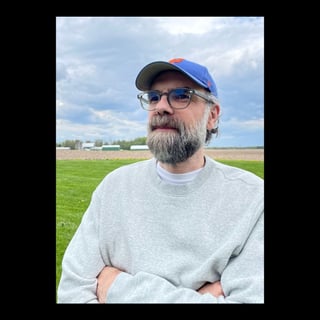
Speaker: Christopher Sweet, welcome to Recreative. Thank you. Thank you. I mean, thank you. ah Thank you. what Great to be yeah You want me to answer the that question? Yeah. What what frightens you? you to this Absolutely. Yeah. i think i I think you enter a phase of your life where, and it's probably, Mark, I don't know if you have a family. I'm assuming you have some family. But you you kind of gra a lot of us maybe graduate from tangential fears to more existential fears maybe. Yeah. I'm with you guys. Yeah.
Speaker: things happen to my loved ones. I'm a pretty new dad. I've got a six-year-old, a three-year-old, and a one-and-a-half-year-old. So right now, my whole world of fear is based around those little bodies.
Speaker: Yeah. It's completely what I was talking about. Yeah, exactly. Yeah. Okay. So let's rephrase the question. Is there anything that that you like to be afraid of?
Speaker: Like I think me with clowns, like that's me with clowns. Like that's like, i kind of get a kick out of being amused by my fear of. Okay. Yeah. Yeah. That changes. I'm going to have to go with roller coasters then.
Speaker: Okay. There you go. Yeah. I love them, but they are, so they can be scary. Yeah. Yeah.
Speaker: Perseverous thinking. Yeah, I think so. i mean, i would say if it was when we're in it, in terms of entertainment, I would say dread is something that just is the creation or the manifestation of dread in any sort of, you know in a movie or book, just the creeping sense that something's wrong or going to go wrong.
Speaker: But if in the real world, what I like to be afraid of is kind of ah spiders. i've They always... They always creeped me out for a long time. And I decided at some point in my early 30s, I wasn't going to let it control me anymore. And I i still can't let them touch me. Wait, it it controlled you?
Speaker: Well, you know, it was something that I would... If there were spiders in a room, I would just enter the room. or And I knew i was i was you know driving driving. in the summertime I was always a little bit anxious because I knew if a spider dropped down in front of me while I was driving, I'm going off the road. It doesn't matter who's in the car with me. So I i realized that I needed to get a hang of that. and So anyway, I enjoy having them around now. I like watching them. I like that they kind of make my skin crawl a little bit. Good for you. I would say like a spider would actually have to pull up beside me in adjacent vehicle before I would become frightened. They're dangerous on the road, man. You don't want to deal with them. Yeah.
Speaker: Yeah, they don't care, man. They'll just ah they'll just race anywhere. Gangs and stuff. you know I'm not trying to paint them all with the same brush. house byer Those are rock nids. Okay, would you be would you be frightened if I introduced you now? Because people may be wondering, who is this guy? A little bit frightened. That's okay. It's a good fright.
Speaker: Okay. All right. So Christopher Sweet has worked as a freelance writer, a manager, a waiter, bartender. This may use up the entire time of the podcast. ye Event DJ, actor, children's entertainer, truck driver, shopkeeper, call center operator, concierge, office assistant, barista.
Speaker: And I believe you're currently working as a campground manager. Everything is short of a Venezuelan beaver wranglers, near as I can figure. I only did that for a couple of weeks, so I didn't think it counted to put it on. Okay. It's nice work if you can get it, though.
Speaker: And the author of several books, one sitting here beside me, The Orchid Room. And Something Sweet was the, the it would would it be correct in calling Something Sweet a novella?
Speaker: Yeah, that's how I, yeah. I think it even says so on the cover. A novella. Oh, okay. Yeah. I think. Yeah. next And that is the that is the novella that brought you to my attention. It was recommended to me by the Partridge Island publishing folks up in St. John. God bless them. And yeah, they said, this one's flying off the shelves. You should be acquainted with this guy. So I did. And I was duly impressed. Yeah.
Speaker: Yeah, they're great. I owe them a lot. Shout out to Partridge Island Publishing. Thank you. yeah absolutely. Is there anything that I missed there that you would say about, especially pertaining to your writing career?
Speaker: No, I don't think you did. You shouted out two of my best-selling books, which I appreciate. Thank you. I've got lots more in the works. No, I've dabbled in a lot writing-wise, screenwriting and poetry, and I try to stay fresh in those things a little bit, but I consider myself a novelist above all.
Speaker: Right. Or novella-ist. Novella-ist. Novist. Yeah. share five of those pastimes, by the way, of those occupations. Really? Concierge. Yeah, I was counting. So a bartender, server. I'm not going to remember them all. Children's entertainer. Interesting.
Speaker: What am I missing? But not clown, to be clear. Not clown. No, I was the gorilla suit guy. hu Yeah, I was the gorilla suit guy. Now, Christopher, have you done your homework for this podcast? Oh, yeah, to the like sacrifice of my sleep. Yeah, it's been on my mind. Narrowing this down to one thing, and I cheated a bit, but yeah. ah And by the way, someone, a fellow author, recommended i make my whole list my ah my ah My chosen piece of art to talk about because I had a list of things written down as potentials. so Okay. And then I went through your history and nixed off the ones that are already on there. So sorry, Ray Bradbury and yeah a couple of others. but
Speaker: I guess that is sort of a byproduct of as we go on, it may become harder and harder to find guests because they're like, there's nothing left to talk about. oh there's so much out there. I mean, I know you're being anestitious, but there's so much out Yeah. Which is the problem. That's my problem. And and favorite changes right? That can change in your, even like in my week, that can change, you know?
Speaker: And so don't be too concerned because it's not like you have to only be on this podcast once. there are We have brought people back you know who are so passionate about it. They're like, hey, I got to talk about, we talked about this, now we got to talk about that.
Speaker: Okay, good. I'll mark you guys in for the next eight Sundays and then we can... Then we can really get somewhere. Yeah, exactly. Okay, so now I'm really intrigued. what What did you choose out of all this long list? Oh, my God. And i even still now, I'm like, oh, is this the right thing? i I chose based on, I tried to make it something that has affected me for ah a longer period of time. Sure. Something that has ah worked in my life as well as in my art and something that I talk about to other people. that i and so I chose, I've got the whole stack here, but the series, um Stephen King's Dark Tower series starting with The Dark Slinger and moving on.
Speaker: Great choice. Yeah, thank you. I'm glad that you recognize it. it's ah Absolutely. of an niche kind of a Darren, now I really wish I'd read them. Oh, i mean like man, but you know what? You'll be so happy you did if you do. I will. Yeah, I like his writing quite a bit, so I'm sure I'll enjoy it.
Speaker: So before we get into it, can I just ask you, does the word lobstrocity mean anything? Oh, yeah, of course. I've been through this series three or four times now. it's Yeah, it's it's not quite word for word in my memory, but...
Speaker: Yeah, Bob Strossy. Yeah, data chum, data chock. So I haven't read them all yet. I'm still in the middle. okay no so And I really look forward to it because, yeah, they are they are a pleasure. So tell me tell us why why you chose that series.
Speaker: ah Yeah, why? i So what like I said, that my rationale was kind of something that's affected me for more than just a couple of years and something that informs, I think, My work, maybe not directly, but tonally.
Speaker: I remember in, I think it was early 2000s, picked up the gunslinger on the recommendation of a high school friend, tore through it.
Speaker: Um, and I immediately picked up the next, I think at the time he was, he, he was on four books in the series because I recall as I almost immediately after I finished the last book that had been released, the next one in the series came out because he had a huge, there was a big hiatus for him, partly because he was hit by a car. Right. And then, uh, and so, and the next books came out and they're so, they're, they're tomes and, uh, and,
Speaker: you know I would read one and then I'd have to wait. And again, I'd tear through them and wait for the next one. This is the only book series I think that I've been, or one of the only book series that I've been waiting for the next one to come out like um kind of thing. And it was and it just grabbed me. and and partly because of the world he creates, partly because of the, but almost entirely because of the characters he puts into that world. I've always been, I've been a huge Stephen King fan for my entire reading life.
Speaker: And I've read almost everything he's written. And I'm kind of of the mind that he's not, and I don't say this really, you know, I'm not trying to bash the guy, but I don't think he's terribly original in a lot of his work.
Speaker: But his approach to, in his ideas, I mean, or his concepts, and i I only mean that loosely, but the way he approaches them is so unique and the way, and the characters he puts into that stuff. And just some of the tid, I mean, the guy is like a, a,
Speaker: a monk or something with some of the phrases and just the cast off lines he puts in there, stuff that sticks with you forever. um And you could, you know, turn to almost any page or chapter in these books and find something heavy hitting that he probably doesn't even remember writing in it. And, and that goes the same for a lot of his books, but getting, well, he's certainly written a lot of words, so I couldn't blame him for not remembering every one of them. Yeah. And he's getting up there, you know, he's ah yeah, it's his, his output is dang impressive. Mm-hmm.
Speaker: his ease and facility with storytelling that I find mind boggling. Like the, yeah when I read him, i think it shouldn't be possible to write like this. Like I should just be able to go to the, to the laptop and, and start to write the same way he does because he he just makes it seem so easy and natural. And then you sit down and try to do that.
Speaker: And you can't, you know, at least I can't. And so, yeah, there's some kind of, I've often long thought that, you know, because he writes horror and supernatural, that there's some kind of a contract with the devil at play here.
Speaker: i think the cocaine had a lot to do with it in the early days too. In terms of i think terms lot output, the focus and the output. Yeah, it's just, ah it's bound to output, right? Like yeah when you're, when you're writing that much, I think it does come a bit easier to you.
Speaker: Yeah, we're not yeah kids at home. We are not recommending cocaine to your own creative. Coca-Cola, the Coca-Cola. Yeah, I say cocaine.
Speaker: oh So is that your favorite then of his work? Yeah, ah I think so. right you know Like Mark said, right now, yeah. yeah um in in In this moment and in this frame of mind that I'm in, because my favorites change you know with the wind.
Speaker: But interestingly enough, or maybe you know not at all surprisingly, one of the other items on my list was The Shining by Stephen King. Oh, yeah. Yeah. right Which, again, is I've read that three or four times now, and it's hugely impactful, both in my you know my writing and the and life. Like every stage of life, it hits you differently.
Speaker: Where do you stand on the movie? I think it's a great movie. I know King hates the... you know Yeah, he hates the movie. Yeah, Kubrick's version of it. And I understand why. And as a writer, I could understand if... ah You know, i like I can understand that...
Speaker: he's upset that the, you know, he wrote a book about an alcoholic and alcoholism is the big, because that was important to Stephen King at the time too. And he, he, so you know, battled with that a lot. And that was to, you know, to Stephen King, the shining is, was about alcoholism and alcoholic doing this battle.
Speaker: I, and then, so from an audience perspective, I'm kind of forever of the opinion that, you know, the book, once it's written belongs to the audience. yeah It's, it's yeah what, when I read the book, it's what ah it's what it's about to me. And, you know, I'm not gonna argue about it with the guy who wrote the book, but, and, you know, say that my version is better, but the the whole point of reading a book is internalizing it and making it your own and having, holding it up as a mirror to your own life.
Speaker: And I think, Kubrick did a great, you know, he made his version of The Shining and he made a filmable version of The Shining. You can't film alcoholism. as yeah I spent a long time in screenwriting and a big, the big thing they tell you is, you know, it's, it's a visual medium. You got to, you know, and you can show someone drinking, but there's only so much you can do to illustrate alcoholism. And, and it's hard to make that a focal point of a horror movie, especially. And there's so much happening internally in the book.
Speaker: yeah and i I don't know. I think Kubrick nailed it. for you know Oh yeah, I love that movie. yeah i mean I like the book too, don't get me wrong. I actually really love that movie. I i just, I think it's quite brilliant and so meticulous in the way he was able to make his movies. Yeah. Yeah. For better or worse. And you hear stories about that too. And it's like, yeah yeah, whatever, you know, all the actors stayed on for the end there, you know, maybe regretting it now, but you know you bring up ah an interesting point that, you know, that film is a visual medium and, and one of the critical differences between film and, and writing which is that you can't get into the heads of the characters the same way in a film.
Speaker: And I recently read The Maltese Falcon. think it Oh, yeah. Oh, yeah. Yeah. yeah and what was really interesting about that that book is that It's kind of like a film because you never get into the characters' heads.
Speaker: It's one of those rare books where there's no – it's basically you read it as if it was a movie. Interesting. And you can hear them the – what's his name? Sam Spade. the Yeah. his yeah diet you can you know He's narrating it, but you can hear his – you can hear the voice like you're watching it on film, you know, ah she was a tall dame or came in with her. So I swatted her one and she, you know, it was the way it was written is almost for the screen.
Speaker: Yeah. Yeah. And it, so it basically takes one of the strengths of fiction and does away with it. doesn't even use it. you know The fact that you can get into their heads. so yeah I think you can get into people's heads with film though like I'm just thinking of alcoholism and um Have you seen Billy Wilder's The Lost Weekend?
Speaker: which familiar with it but haven't seen it it it's a devastating movie and it really does show maybe not his mind like maybe not what he's thinking but you get to sense the emotional despair of the character as he's yeah on his bender it's yeah and i i probably misspoke a bit or speak but you know of course you can represent especially these days, with almost anything on screen to some degree.
Speaker: No, but I completely take your point. Like, no, I'm not arguing your point. Yeah. It's like, they have their strengths. There's no question. i just going to I think part of the challenge, I guess, with the mediums is, um is, is wrestling with each medium's strengths and limitations and, you know, and trying to make them work in different ways.
Speaker: Yeah. And, and I think that's what makes a good filmmaker or author is someone who can do that. Or, who can subvert the conventions they're supposed to stay within. yeah And I think, and for Kubrick, I think in general, he's more of a visual storyteller too. I don't think script writing is his big strong point either. Maybe if you had Aaron Sorkin writing, you know, yeah The Shining, it probably wouldn't be as great. But, you know, the dialogue would be that, you know, they'd be conveying,
Speaker: maybe more of what Stephen King wanted there. Yeah, there'd be a lot more walking, talking shots. It's Joe's point. I mean, King is such a great storyteller, right? Like he just he just grabs you at the start of a story and you it just pulls you along. And I don't know that I would say that of Kubrick. I don't know that I'm watching for the story as much as I'm waiting for the thing to be revealed to me. If that makes any sense. It's it's a different kind of storytelling. It's not storytelling, but it's just a different kind. Less narrative.
Speaker: Yeah, and he's – I don't mean to say he's not – he's an excellent storyteller. it Just not the de scripting, but creating shots. like Yeah. I was watching a a little feature on 2001 A Space Odyssey and how long it took just to film some of the establishing shots of the the spaceship that they use in the movie and how many times – They filmed it and how he took the long, I don't remember what the process is called that he used to capture it, but it, it took ages for them to just get this, you know, 30 second shot of a, of a ship moving across the screen.
Speaker: If you really want to go down a rabbit hole, I guess I'm just going to say this because this, our listeners might like to, it's a documentary about all of the theories about the shot, about Kubrick shining. It's called room two, three, seven. Right. And yeah, don't, don't watch it in the dark,
Speaker: After taking peyote. That's all I'll say. ah Not a good. He means Coca-Cola, kids. Coca-Cola, kids. Yeah. No Pez before you watch this. pes Okay, I was going to bring us back to The Dark Tower. Oh, yeah. So refresh my memory. How many books are currently in the series, The Dark Tower?
Speaker: So there are seven main books. And there are, I believe... <unk> There is some Stephen King fan out there is going to hate me for wrong. I think there are two so short stories about it. One that I, I know for sure the little sisters of Elluria, um, which is a kind of takes place before the events of the, of the gunslinger, which is the first book in the series.
Speaker: And then he more recently wrote, uh, something that fits in between, i believe it fits in between wizard and glass and, uh, Wolves of the Kala, I think is the next one. And it's a it's a story within a story called Wind Through the Keyhole. And it finds the the um Roland, Eddie, Susanna, Jake, and Oi kind of at a rest stop. And Roland tells them a a story about, you know, the place they're in. So it's it's kind of an expanding, expandable universe, I think.
Speaker: yeah And I mean, and and it if you you know if you read any of his work outside of that or heard him speak about it, so many of his novels tie into it. And so many, like one of the main characters through the last few books, I don't want to spoil anything. he's He's a prominent figure in one of his other big novels.
Speaker: Yeah, I love that that notion of yeah mixing stuff up like that. For the sake of people who haven't read it or aren't familiar with the series, can you describe it a little bit? Maybe, yeah, but don't let my description turn you off of it because it's a wacky, wacky thing to say out loud. and but but it's kind of So if you're going to stick a genre on it, it's kind of ah fantasy Western horror.
Speaker: The first book reads a lot like a Western genre. horror kind of, but it's, it starts off with this gunslinger named Roland to Shane, and he's pursuing this figure called the man in black across a desert. And along the way he finds this boy, Jake, who um turns out comes from another world and he joins him on his quest. And as the books go on,
Speaker: the world that the books take place in kind of merge with our, our world and also other worlds in Stephen King's books and kind of tie together and to, so you know, I can't say much more about that without ruining it, but it spans genres. It spans, uh, lifetimes in the books. It, It spans worlds. well you know I wouldn't recommend it for fans of Westerns because it kind of shakes the Western vibe, except for that Roland is a ah gunslinger who's essentially a cowboy, but the way they're represented in the book is like Knights of the Round Table. they're um the The figure that they sort of de descend from is named Arthur of Eld, who is like our King Arthur.
Speaker: And it's really, and Roland's just a badass in the book. and um And the the people he meets along the way are so deep and so troubled and so broken. and and so is Roland. and it breaks your heart every time you read the series breaks your heart. And then you started again. And, and you're like, Oh, I love these people so much. and So much happens. There's so much devastation in these books.
Speaker: It's man. I think you've completely sold it. Yeah. You sold me. I mean, I'm already like Stephen King and I've just, I've just never got to these. So it sounds to me like if you're a fan of Stephen King, would you say these are must read? Oh, it sounds like absolutely everything. Stephen King comes together in these books.
Speaker: Yeah. Yeah. I, yeah, it doesn't, it might not come together, but it's certainly featured. Like you'll recognize things, especially if you're the kind of person who pays attention to, you know, the really fine details and books and movies and such. I don't, I tend to forget that the small things in a lot of things. So when I reread these books, I see it again and I say, Whoa, I didn't know that Or I forgot that happened. yeah I just read this other book that ties in and now I get it kind of thing.
Speaker: So how, how have these, how has the dark tower informed your own work or has it. ah It must've, I mean, I'm, I don't know if any, maybe some, no, some writers can as a writer, I have a hard time pinpointing where my ideas come from or, uh, you know, specific ideas, um, story ideas, people.
Speaker: But I know deep down that they're informed by what I, you know, my life, what I see, what I do, the people I interact with and the art I consume. and One of the things that I find, and it's not deliberate, but i know, you know, if I analyze, if I pay attention to myself, I know i enjoy things that take place in other worlds.
Speaker: no I think, Joe, you introduced me to the term portal fiction, which I love now. And I i like using that term. But people from this world exploring other worlds is more kind of what I like, not exclusively, but. Yeah. Yeah. um and in my work you know in the boy in the canvas joseph who's the the protagonist he's a twelve year old boy he's able to enter paintings and experience them as real worlds and that's kind of well
Speaker: you know probably inspired we read a lot of the line the which in the wardrobe or like that the chronicles of narnia and i was younger and saw the movie countless times the old i think it was a pbs movie maybe bbc and And that sort of stuff always tickled me. The the character work, I think, just to the unexpectedness of ah the characters that show up and the people who become...
Speaker: heroic in his books i love that i love that you wouldn't you know um but you get these people who are perceived as low lives maybe at at some points or would he likes you you know um what's the guy's name in the stand m-o-o-n spells moon oh yeah uh that guy um what's his name Now my brothers, I can hear him yelling at me. Everybody's yelling at me right now. Trash can man.
Speaker: he And so he was, you know, um he had mental um deficiencies that, you know, and Stephen King makes people like that heroic in his books. I think in... a um um I mean, a lot of the kids in his books too are either outcasts or, you know, have something holding them back in their lives, either physically or emotionally or in their family.
Speaker: And he, he kind of turns these, he elevates these people without even really elevating them. And often they die as they're, you know, yeah achieving the cause. And, and I've noticed myself do that in at least one occasion.
Speaker: I won't say which. Yeah. Yeah. Yeah. And I don't do it deliberately, but I like to look at it and say, oh that kind of reminds me of something that Stephen King might have done. Maybe not, you know, he would have done it better, but.
Speaker: but yeah Oh, don't say that. Don't say that. yeah Swinging the sword anyway. Yeah. yeah Is he your favorite writer then? Do you think you're at the moment? No, I wouldn't say at the moment. I've read almost everything he's done. i i i don't like speaking disparagingly of people's art. i To me, it feels like the fangs have kind of been worn down a little bit. And some of his work, I haven't enjoyed it as much as I used to. And so I've gone back and been reading some of his older stuff to see. Maybe I grew out of Stephen King, but it's the older stuff sticks still. it's like I recently read um interesting Pet Sematary and Salem's Lot, and they're
Speaker: probably more horrific now that I have kids than they were the first time I read them. And so well written again, like beautifully written. Yeah. But these days I'm, I'm trying to explore a lot more. I'm a huge, I'm reading a lot of more classics. Um, I mean, I mentioned it earlier. I'm a huge Bradbury fan. Something wicked this way comes was one of my favorites as a,
Speaker: Such an eloquent writer. Oh my Lord. And I read it more recently in my adulthood again. Yeah. And it just, and again, and that as well, beautiful, some beautiful lines in there. And even as more whimsical stuff, dandelion wine, I think it's called.
Speaker: It just summer anecdotes is all it is. And it just, it makes you feel so good all over and, The Halloween Tree, again, it's just a fun, I think it's a kid's book, but it's also poignant in a lot of parts and fun. And he can move from that to something like Fahrenheit 451, which he wrote in like 14 days or something ridiculous like that, and a rented typewriter in a library basement.
Speaker: And it's one of the most important books in the world, in my opinion. and so We talked with David Brin about that, actually. Right. And that's why it's not... And Abigail Grimes, actually. that's Oh, really? she bri yeah that That's kind of a legendary story. It gets keeps coming up and again and again, which is because it's so romantic, right? And the way he wrote it, you mean? Yeah, the way he wrote it. Like, he's literally... he's you know he's They're living above a gas station or something, he and his wife, and...
Speaker: He's the the number he's given to publishers is the gas station number. So he's always like but listening for the phone ringing. Yeah, it's a great story. hmm. Yeah, it especially for writers, I think, because we like to think there's hope.
Speaker: Yeah. you know yes well I think it can be misguided. I think you need to, before hearing that story, you need to write a couple of novels and then hear the story so that you know the real side of it. Yeah, exactly. yeah you know yeah You'll be disappointed.
Speaker: try So tell us about... Sorry. Yeah, tell us about tell usy yeah yeah your your own work. So how many books have you written so far and what are they? Well, I've i've published ah four so far.
Speaker: Written um probably double that at this point. um so the Yeah, you're in pace. That's about right. I'll show you. Yeah? Okay, good. I think so. Yeah.
Speaker: So my first, and I'll actually surprise you with something, or maybe not surprise you at all. but So The Boy in the Canvas, that's my first novel. I a recently, a really quick anecdote.
Speaker: was ah So you mentioned i manage a campground. We live on this campground. I manage it. We have a store. We all do store shifts. I sell my books in the store. It's one of the great great things about having it. I've been a monopoly on the literary world there. um And board stiff. And I just thought, i should...
Speaker: just flip through the boy in the canvas for whatever reason. And I pulled it off the shelf and I thought, and there was a little voice in my head saying, don't do it, man. And, and I flipped to the back and I read the synopsis on the back and nobody's pointed this out to me. So maybe nobody else noticed there was a missing possessive apostrophe in one of the phrases on the back of the book, which is a direct quote from within the book, meaning inside the book, there's also a missing possessive apostrophe. Oh, brother. Oh, God, I lost a lot of sleep. So then spent the next month redesigning the cover. So now came up with this. Which is a much shorter blurb on the back so I could proofread it without error. So that cover is going to come out soon.
Speaker: Because if you can't put out a new book right away, redo the cover and just put out an old one again. And then next came Something Sweet, which Joe, you um yeah introduced to me through this one. A novella. It's a weird novella, but... a ah This guy who creates strange desserts that make people think and want to do odd things. And his cousin, who's a health inspector, wants to. Yeah, they love it. His cousin's a health inspector and kind of wants to get to the bottom of where this is coming from. so
Speaker: That's cool. That's a good that's a great premise. you can Thank you. I call it a weird mystery, but that's probably not something. There's a real Lovecraftian element. it magical realism? Is it horror? like Is it more...
Speaker: No, more horror. Like yeah Joe said, a bit of there's a Lovecraftian vibe to it. But I wouldn't call it Lovecraft. I don't think it has the tone of a lot of Lovecraft.
Speaker: It's probably a little lighter. It doesn't have sentences in it like the science of the race were inurned in the declivity in the sepulcher. Yeah, yeah. And the the the narrator doesn't say, i shouldn't tell you this, but I'm going to anyway. i thought Yeah, yeah. It's like Lovecraft, only better. Oh, don't say that. Oh, my Lord. But yes, thank um And then I don't remember. I think these came out at the same time. So ah The Orchid Room is my most recent novel. And I simultaneously released this little novelette called Satisfaction Guaranteed.
Speaker: The Orchid Room is a supernatural horror about this girl who has had a bit of a rough go in life and runs away from home to join a group of ah young people who live in an abandoned kind of encampment out in the the woods of Pennsylvania, of Appalachian, Pennsylvania.
Speaker: And while she's there, she discovers this dark entity sort of overseeing the group. And then Satisfaction Guaranteed is like an episode of Black Mirror about a shopping app with ah an overzealous return policy.
Speaker: ah yeah And my next book, if I can plug that really quick. Go ahead. Which would be coming out. i i I'm going to say March. is the oh well it's kind of my that That might work with when we release these. It might be March. Oh, great. Well, there you go So ah I'm kind of shooting for March. It's a book called Encore. It's kind of a sci-fi horror about a disgraced rock band.
Speaker: asked by this mysterious organization to come play one final reunion show. And as they do, they realize they're kind of um opening a gateway to another world through their music.
Speaker: Ooh. so And there's the other worlds. That's Lovecraftian too. port it I think it does a little bit. Yeah. Yeah. to I'm a Lovecraft guy for sure. So what about like horror and and like that sort of creeping dread that you like? What what do you like about that?
Speaker: yeah that That feeling, that that creeping dread kind of feeling that I get from Lovecraft. it's just like Yeah. I i mean, i think I like that at the best part of the dread in almost any um in any film or book that I can think of right now anyway is the feeling before the actual horror is shown. Yeah.
Speaker: The buildup and the and the sense, especially – I'm trying to think of what... No, what's the... I'm thinking of leaving. Or I'm thinking of ending things. I'm sorry. That's what it's called. By Ian... And now the name's coming to me. Ian something or other. Banks, maybe? No.
Speaker: Anyhow. I'm thinking of Get Out. Yeah. Oh, Get Out. That's a good example, though, too. of Yeah. that That movie was so hard to watch. Yeah. Yeah. And and even re-watching it... it does a great job of building the dread. Um, I'm thinking of ending things does the same thing. And I think does it better because it doesn't tell you at any point that what's happening is, is something wrong. You just, it leaves it to the reader to decide something's not right here. Like I didn't know what I was getting into. I read, I went into it
Speaker: Yeah. Thinking it was maybe a comedy, maybe a suspense. I didn't know. And it was it was a great experience. in the And have either of you read it or watched it? i don't know if the movie is the same. No, it's on my list of things to watch, though. Yeah. yeah i'm I'm not sure.
Speaker: Find out if the movie does the same thing is as good at delivering the punch because the book was just the way it – did this reveal was what kind of, I'll never forget. Okay. Maybe I put the book on my list. Yeah. The book. Yeah. I don't think it's a long book if I remember or, or I enjoyed it so much that it went quick.
Speaker: So a question I should have asked you 41 minutes ago. What is your name? This is what editing is for, Joe. This is why we edit. I mean, you go by Christopher Sweet on the on on your books.
Speaker: Are you Christopher are you Chris? Or you're both? were ah I guess it depends on what you want from me at the time. I'm Chris to a lot of people, but I'm also, i don't care, really. I used to care. I used to not like the name Christopher at all.
Speaker: really now i like it yeah i don't know why it felt formal to me i think or maybe i got in trouble too much probably was it or not a winnie the pooh fan christopher robin yeah no i loved winnie the pooh yeah i don't know why i couldn't tell you i couldn't tell you but okay anyway so that was just a lead-up question to my actual oh i was gonna because i was gonna say it was just softening you up chris yeah saw yeah okay here comes the big one So your books are, are they all self-published? Are they mostly self-published? And if so, what are, what are your feelings of about it all? Traditional versus self-published? I,
Speaker: i I think, so my books are all self-published. When I wrote The Boy in the Canvas, um I spent a solid year querying agents and and trying to get representation for it.
Speaker: And I thought that, and I thought up until a few years ago, i thought the only way that I could legitimately call myself a writer and legitimately be a writer and that anyone would take my book seriously is if I was represented by an agent, a literary agent and published by you know, one of the big four or five publishers that was, you know, I wanted to see Doubleday on the side of my books.
Speaker: And then I spent almost an equal amount of time researching um self-publishing and the process and the virtues of it. and And I think, you know, times are changing and we're i we're shifting in a lot of ways and, you know, not just writing and not publishing, but in a lot of ways. I mean, look at Netflix and streaming and gig work.
Speaker: you know Screenwriting is always, i think, going to be a collaborative process because you can write the screen. And some guys, you know they're they're triple threats. They can write, direct. um They're good cinematographers, even act.
Speaker: And you know there's there are always going to be people who can do it all and do it all very well. I think... Publishing has been held on to by these you know big corporations for a long time and they got used to it and they got everybody else to used to it. and they're li And I'm not disparaging anybody. And and you know i think it should I think big publishing should go on for you know a while still. and But you know there are so many people who have jobs because of it.
Speaker: that it's going to be hard to let that go just for that reason. And then there are so many, and we get used to things as, you know, just people, we, we get used to a way of doing things and we know there might be a better way or an easier way or a more effective way of doing it. But change is really tough and, and bucking a trend is really tough and it's hard, bloody work, really hard work. Yeah. And it's hard work to do it right. And I think there are,
Speaker: The two big things working against self-publishing right now are the the traditional publishing world, which does not want largely does not want self-publishing to be a legitimate way of getting books out because obviously it's going to eventually cut into into their... um Oh, it already is. I think. Yeah. Oh, there's some very successful. yeah But also, I mean, they're – I'm not going to be, say, hypo hypocrites, but they're not against – Hugh Howey does well with Wool.
Speaker: They're not against republishing his book after he's already made it a huge success. Yeah, once they see that they can make money off of it. Once they they make money off of that, yeah. So that's a little bit of the game too. And the money, I mean, if they've got the money to say, hey, we're going to give you half a million dollars to do this again. And it's something I've thought a lot about, not because I think they're going to come knocking on my door, but if they did, I've asked myself a lot, like, would I – Would I sign the contract and give up and and risk one of my books being, you know, basically flushed into obscurity? If it doesn't sell well, they're not going to keep making it. It's going to go off the shelves. And I'm not going to, I don't see myself being in a position in the next 20 years to buy the rights back from it if, ah you know, it doesn't do well. So...
Speaker: you know But it's tempting. Money right now is very tempting for a lot of people. And the but the possibility of money right now is very tempting for a lot of people. And that's why lotteries you know are so successful in casinos. But the other thing working...
Speaker: um against self-publishing is self-publishers as well. and it's Because it is easy and it is cheap. And if I want, and, and, you know, and I don't want to get into the, you know, everybody's talking about the AI thing and we all know, I think we know, you know, the merits and and the, and the detractors about that, but,
Speaker: if i If I really wanted to, I could feed a few prompts into a machine and tomorrow I can have a book on Amazon. And I bet you 50 bucks right now, it would be selling better than my four books that are on Amazon right now. If I, you know, let the algorithm dictate what my book is going to do. Would it be good? No.
Speaker: Would it be polished? No. And and and um and the and where I'm seeing, i've I've been in a lot of self-publishing groups where I've left a lot of them too, because what you're seeing is kind of a big initial burst. There are these guys who are really good at marketing and getting people to, you know, kind of like them and like how they present on social media and how they present as an author.
Speaker: And then you kind of see them plateau and eventually drop off and they're not, they're not growing. They're not going anywhere. And I, and I'm not, again, not trying to disparage, but And it's a really tricky balance to walk. And the way I'm approaching it is every book is a single step in my writing in career. And I might not see the end of that road. I might not see the end of that road.
Speaker: And I certainly won't see the end of it anytime soon or the the pinnacle of it, I guess I should say. But, and I'm sure that you're aware that you are joining the illustrious ranks of people who have so published in the in the past. Mark, you mentioned one, a modern example. Hugh Howey.
Speaker: Hugh Howey, yes. And then going back, Mark Twain, self-published. Herman Melville. Melville. Moby Dick was self-published. I didn't know that. Yeah. I can see why. Tons of those big books. yeah Leaves of Grass, Walt Whitman. Yeah, Walt Whitman. It's a Charles Dickens. yeah Yeah, it's a thing. Yeah, it's a thing, guys. Yeah.
Speaker: Yeah. And, and I, ah but, ah and again, i think what's, what works against it is the, and right now we want everything now and we want the feedback now and we want the reviews now. We want the notoriety now. And I think those guys, a lot of guys have to wait a long time to see any kind of return or recognition for the work they do, especially in the self-publishing world.
Speaker: You got to work your butt off to, you kind of have to decide if you're, you know, unless you have all the time in the world, if you're going to put the work into the art or put the work into the marketing, that's been a ah tough thing. And yeah, I'm, Oh yeah. I'm actually struggling with that right now. Cause I, I feel like I'm falling on the art side.
Speaker: I feel like I'm less interested in, Continuing to bash my head up against the marketing wall. And you know what? I'm just going to keep writing great books that are artistically satisfying for me and I know for my readers. And hopefully something will break through. Like i I'm still going to do whatever marketing I can, but I'm not going I used to focus on it. I think a bit too much, to be honest.
Speaker: Same here. Yeah. I think you're right. And I think the other guys are right too. And it depends on, who they are it's what you want. And if you, and you know, maybe you and I could put a lot of work into our marketing and make an extra 500 bucks this month.
Speaker: Exactly. Or we can put, and it's a lot, and you guys know, and yeah it's a lot, like a single post for me takes so much effort. energy and thought. Oh, yeah. Yeah. Kind of. and And we want our stuff to be good, right? If we want our art to be good, we want our posts and our social media to reflect it. So we want to have a polished post and we want it to say the right thing and and also hit the algorithm.
Speaker: notes and all that in it. Yeah. It's, you know, it's, it's energy you could be spending on your art. Yeah. And I, I actually think it's hugely overrated the time that we're expected or supposed to spend on social media. you know, I have a theory that, you know, for everyone that becomes aware of you and your work, 1% of them may buy your book, you know? So if you have, if you work really hard and get 1500 social media followers, you know,
Speaker: yeah that translates into one, you know, 1% of that. Maybe 1% of that. Yeah, maybe. My Amazon sales have been at zero. I'm not selling myself very well. I hope it doesn't, you know, not the quality of the books.
Speaker: Zero for the last two months. I think the month before that I sold two books on Amazon. But I go to markets and I sell, you know, um I think the last that I was at a market today, it wasn't very busy. I sold six books, which is fine.
Speaker: A few weeks ago, I went to one, I sold 19 books, which is for a single, for a five hour stretch. It is incredible. And it sounds like, you know, if you're listening and you've never self-published and you've never sold books at a market, it's like 20 bucks. what's That's not, Stephen King sells 20 million books in a week.
Speaker: and you know In a day. Yeah, I know. Sorry, man. But A, he's got 70 some odd books out there. b he's been doing it since ah you know for almost maybe years or more. and he And it was a different world. He came from a different world too. where he And he worked his ass off. If you yeah yeah read on writing, he talks about it. And he probably doesn't talk about it as much as he could. His probably his marriage probably suffered for it. His parent you know his relationships probably suffered. I mean, he had other issues too. but
Speaker: I love that book, by the way. yeah Oh, me too. I've read a few times. Do you believe it though? Do you believe he actually cuts 15% from his manuscripts? I don't for a second. I do. Well, I do based on his his re-release of The Stand where he added 150,000 words or something to it yeah when he republished it. so it And maybe he wrote that out of the, you know, took it and it for it. But i I believe that he had it.
Speaker: I think I cut probably at least that much from ah yeah from the Orchid Room. I think it's a worthwhile goal. I mean, 15% sometimes, it just depends on where you're at as a writer, I think. Well, and the type of writer you are. and how And some guys take a lot of time. Every word they put in is well thought out. yeah And you might not cut any – I don't think you can ever blanket make a blanket statement about how much you should take out or how much you should put in. Just like you know Stephen King says, you know never, ever use an adverb or use one adverb ever. But there's a place for adverbs. I feel that way with ah with Kurt Vonnegut on semicolons. Yeah, yeah. He has similar sort of like, okay, come on, but there's a point to a semicolon. Yeah. Right. And everyone's got their compunction. and But I don't, you don't see a lot of, there are some, I think there are readers who are trained by their favorite authors to not like certain things.
Speaker: And then, and and I think they look for those things and it can ruin an experience for you. And I think if you just set out as a reader, go out, try to enjoy what you're reading. Just try to enjoy it.
Speaker: you'll probably enjoy it unless it's a very terrible book or just doesn't resonate with you. yeah And I don't think you're going to really notice a semicolon, not semicolons, especially. mean, no, God, adverbs are a little more garish in the wrong spot. I think, yeah, when you're, when you're doing dialogue adverbs is, yeah.
Speaker: Maybe not. And now there's this thing against ah M dashes. M dashes. What? love M dashes. I love dashes. Oh my God. I'm trying not to let it. This has gotten super nerdy, guys. We're we're waxing poetic about M dashes. I love the dashes. I love you.
Speaker: That's funny. So, okay. We're we're actually approaching the the hour mark here as we're recording this. Christopher, I think you're an excellent ah example of of an indie self-published writer. I know that you're doing excellent work and working hard. And and I just want to reassure you that all three of us are actually going to be really famous one day after we're dead. Oh, totally. Yeah, so i was going to say post-humously.
Speaker: So you have that to look forward to. Mm-hmm. And I'm about to read your book, The Orchid Room. I think other people should reach out and and check it out the work as well. I've been getting a lot of good feedback on it. Thank you. yes Yeah. So any, Mark, any final questions for Christopher before we part ways? Yeah. Well, what's, ah so ah you mentioned the book you're working on now. What comes after that? do you have the next one after that?
Speaker: Oh, man. Yeah. Do you have another hour? no i So i alwayss yeah i I wrote, I've got two complete manuscripts and ah i should say two and a half. So I start i wrote the first book of a um what I thought was going to be a young adult, sort of dark fantasy, urban fantasy.
Speaker: I decided i don't want it to be young adult. I also decided i want to, I've already rewritten it once. And I fairly recently decided I want it to be in the third person instead of the first. oh I'm going to go back. Yep. I'm rewriting the whole thing. i halted the second book in the series so that I could rewrite it, flesh more stuff out.
Speaker: i'm I'm really excited about it, which makes it really tough. Yeah. But I won't talk too much about what that's about yet because it's a ways off. I recently finished the first draft of what I am calling a noir horror kind of thing. It's sort of a Squid Games-esque meets Maltese Falcon kind of thing. Maltese Falcon, yeah. Yeah, I'm probably...
Speaker: Not, yeah, but in terms of it's got a gumshoe, you know, or ah ah a detective. Yeah, it's got that kind of noir character. Yeah, and and it's and i when I finished it, I realized um this noir character, he's got more books in store for him. Like, I think it was the start of an adventure. Yeah, so I'm excited for that.
Speaker: And then... um Really quickly, I started ah a sci-fi novel that I also think is going to turn in... I'm planning on it turning into a series about... I'm i'm calling it... um The working title is Otherworld Almanac, about this guy who is basically recruited to find a new home for the human race in a different dimension because the destruction of this realm is imminent or you know the destruction of this planet and there are no other livable areas. So...
Speaker: He kind of, you know, Joe calls it portal fiction. He's going to kind of loosely put portal hop from world to world. looking I like how you just completely embraced that, the whole portal. Oh, ever since you said it, it's I think about it all the time. Yeah, I love that portal fiction. And it sounds like a picaresque sort of story, like where...
Speaker: You're getting like ah a sense of every world as he goes to the next world. Yeah, kind of yeah and it's going to be more like a adventure more humor into it. that a Humor adventure. and Yeah, it sounds like fun. love that kind of book.
Speaker: Yeah, i'm I'm excited for it. it's I've had to put it on hold while i I'm doing a fifth or sixth revision of Encore right now in preparation for publication. Yeah.
Speaker: So we we like to finish our podcast with our guests saying something extremely funny and witty. Could you please?
Speaker: Bananas. Joe, you son of a bitch. Nicely done. Sorry, I'm not. Nicely done. Christopher Sweet, thank you very much for being on our podcast, Recreative.
Speaker: Fabulous meeting you, Christopher. Yeah, nice meeting you, Mark. Nice seeing you again, Joe. Yeah.
Speaker: You've been listening to Recreative, a podcast about creativity and the works that inspire it. Recreative is produced by Mark Rainer and Joe Mahoney for Donovan Street Press Inc. in association with Monkey Joy Press.
Speaker: Technical production of music by Joe Mahoney, web design by Mark Rainer. You can support this podcast by checking out our guests' work, listening to their music, purchasing their books, watching their shows, and so on.
Speaker: You can find out more about each guest in all of our past episodes by visiting re-creative.ca. That's re-creative.ca. You can contact us by emailing joemahoney at donovanstreetpress.com.
Speaker: We'd love to hear from you. Thanks for listening.