Transcript
Speaker: What is up everybody and welcome to Shaping Your Pottery with Nick Torres. On this episode of Shaping Your Pottery I got to interview Kelsey Schroeder. Kelsey makes some amazing pottery and she combines
Speaker: sculpted animals and puts it together with functional pottery. In this episode, you will learn how to make those sculpted animals and combine them with functional pottery. You will also learn how being inspired with nature can really help you develop your voice.
Speaker: If you love pottery and want to take your skills to the next level, you're in the right place. Find your own pottery style right here on Shaping Your Pottery with Nick Torres. Let's get started. Kelsey, welcome to Shaping Your Pottery and share with me one thing you believe potters need to do in order to be successful in pottery.
Speaker: Sure. I'm sure she gets this from a lot of potters, but I think just practice, practice, practice. This is one of those things that it takes a long time to get really good. And it takes a long time to kind of figure out what you're doing. And there's always something new to learn. And I mean, just like any other talent or skill, you've got to put in the time if you want to really get good at it. So the more time you spend, the more you're going to be happy with what you're making in the end.
Speaker: You got to put in that work. So over the last 20 years, how has your pottery evolved into what you make today? It's changed a lot. I started pottery just in high school, taking a class from my local YMCA. And so to start with, it's just all about
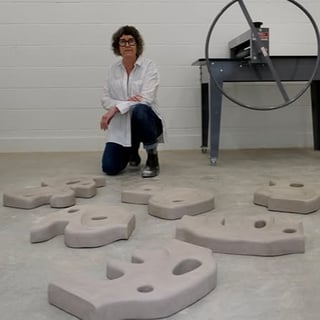
Speaker: learning and trying new things and I instantly fell in love with the wheel so I knew that was kind of a focus I always wanted to have and when I got to college I wanted to kind of take that further and do more than just you know throw a pot and be done with it and so I was doing a lot of sectional pieces where I was throwing kind of these big base forms and multiple sections attaching them together and then that kind of led into adding these
Speaker: like tapered coil attachments to the top and making these kind of, you know, fantastic, like ocean inspired, just sculptural forms. And so I did that for quite a while, but then after school, you know, I wanted to sell my work and sculpture is always a lot harder to sell than functional things. And so I started to kind of expand
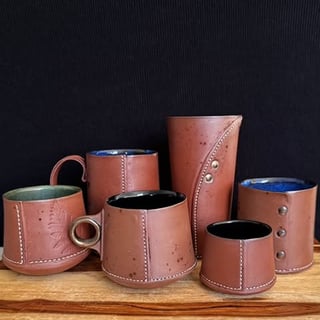
Speaker: into a more functional line of work. And I've still just always been inspired by nature. And so taking some of those ideas of what I was working with before and incorporating those into kind of the color palette I was working with, playing around a lot with just different forms that I like and what I'm drawn to when I'm looking for a piece of functional pottery.
Speaker: but still keeping that nature element. So a lot of those was color palette and just letting things bring their unique character, nature. You see a lot of things that aren't exactly perfect. And I like bringing those unique little glitches, you might say, to a piece of pottery the way it drips here on this piece, but not on this one thing.
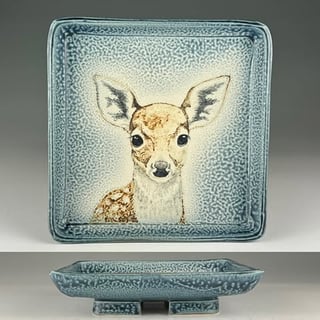
Speaker: And then eventually that kind of led to my wildlife work. I initially am a big cat lover. And so I started making these little cats and, you know, I thought it was funny the way that cats will just kind of curl up anywhere and liquid themselves into little nooks and crannies. So I started putting them kind of at the top of the handle of mugs and playing with that, which was really fun. And then it kind of just dawned on me that I could do that with all sorts of animals and, um,
Speaker: So trying to do some new things with that, explore different animals and find ways that I could make the mug also representative of their habitat. And yeah, so I feel like I took kind of a lot of twists and turns in there, but that's kind of how it goes when you're doing art, it's got to evolve and change and move into something new. I definitely agree. What would you say was the biggest challenge when you were combining sculpture with wheel throwing?
Speaker: There's maybe kind of a big learning curve when you're adding those sculptural elements just in kind of the technical, getting things to incorporate into the piece while still making it functional as one. I try and keep in mind that even though I might make the cutest little animal on top of the handle, if it's in the way of you drinking from the mug, then now it's a pencil holder and not a bug.
Speaker: keeping that functionality in mind. But also just, you know, there's with kind of dry time and things like that, a lot of things can be prone to cracking or kind of separating away from the mug because I've got to assemble the mug, have it stiffen up a little bit so that I can kind of mess with it as I'm adding the different sculptural elements to it. And so especially when you get
Speaker: you know, things like an octopus with long tentacles or, you know, tails on a tiger or something like that. They can be a lot more prone to cracking. Sometimes when I'm putting like coral pieces on the side, you know, if they don't dry slowly enough or if the mug is too dry when I attach those pieces, they'll want to kind of pull away from the mug. So that was kind of a learning curve just to figure out the timing of it all so that it all kind of works together and I don't spend all this time
Speaker: making this perfect little animal and then all the coral falls off and the mug kind of falls apart. So how do you prevent those cracks that happen? The biggest thing is really just letting it dry slowly. After I have the mug finished, I leave them all on a shelf under some plastic. I let it sit that way for a few days and then I slowly start to kind of open up the plastic a little bit. I live in a really dry area and so
Speaker: things dry out really fast here. And so I'm kind of the same. A lot of people have issues with like their handles cracking off of their mugs when they start first start kind of learning how to do that. And a lot of that I think is just dry time. So I let things dry really, really slowly so that they have time to kind of even out the moisture level and the piece that I just attached versus like the body of the mug itself. That's been the biggest thing that's helped me
Speaker: kind of reduce those cracks and those issues. Could you give me a simplified version of how you sculpt your animals onto your pottery? Yeah, so I start with kind of a basic little lump of clay and mold it into usually sort of a log kind of form to get the basic proportions of the animal right. And then I kind of start in with the head first and
Speaker: kind of refining the proportions of the head to the rest of the body, getting the basic shade of the head, kind of forming the snout, all this just kind of with my fingers. And then I'll start to add little pieces that it might need, you know, for ears or things like that, and kind of refining all the facial features of the animal. And then I kind of go into the body adding
Speaker: you know, legs, tails, whatever kind of appendages, and then kind of going back in and adding, you know, texture if it's something with feathers or long fur or something like that. And then a lot of times after that, I'll paint the animal with underglaze before actually attaching it to the mug just so I can get in all those nooks and crannies before situating it on the mug where sometimes I can't get into all those little areas. So a lot of them are
Speaker: painted beforehand. Could you? What advice would you give to someone wanting to add some like sculpture to their pottery? Sure. I think a good place to start is just thinking about what you want the final results to look like. Are you making a big sculptural piece that's supposed to have kind of a wow factor, but just sit on a shelf as
Speaker: you know, a discussion point in someone's home versus adding things to like a mug or a vase or something that still needs to serve a purpose. Because if you're adding those elements, especially to functional wear, you've got to keep that final function in mind. So I think kind of giving the time to that design process and then kind of what I said before, there is a learning curve with the timing of when to add certain elements so that they
Speaker: they really work on the piece and don't give you other issues. What is something that you hate or see people doing in pottery? This one, I was trying to think of a good answer for this question. And the first thing that popped in my mind and no offense to anyone that makes the little like hand warmer mugs, but those were like my biggest pet peeve. I don't know if you've seen them with like the little
Speaker: slab build attachment where you're supposed to like slide your fingers into I get at least one percent at every craft fair that tells me that I should be making those or asking if I have them and for me personally I just don't like the look of them they the clay gets too hot in your hands I've got really like long alien fingers so my fingers would never fit in there and they just drive me crazy and everyone is always asking for them and I just I refuse to make them on principle they're just
Speaker: my like nemesis of pottery just not my thing. And again, no offense to anyone that makes so much people that make really beautiful ones, but they're just not for me. And the magic thing that everyone just thinks that, you know, you should be making and not for me. Yep. Cause you, you want to make what you want to make. Yeah. And that can be hard, you know, finding, um, you know, what you want to make, but still what people are asking for, you know, and, um, I've kind of had to learn that.
Speaker: Just because one person at a show asks for something doesn't mean that I need to make a whole line of that thing. But if I keep getting people asking over and over for one thing, then maybe consider that and give it my flair. But if it's something that I just don't find joy in making, then I still got to draw the line and just say, nope, that's not for me. There's plenty of other potters that do that. So if you want to find one of those things, there's lots of other people that would gladly be making that.
Speaker: Yep, I definitely agree. You got to make what you want to make. So you are very inspired by nature. What is it about nature that inspires you? So many things. I mean, I could just say like, everything. You know, a lot of times what I feel like I notice in nature are those little
Speaker: kind of imperfections, you could say, just those little unique qualities to things. You know, if you think about people who love like rock hunting, you know, you can find a hundred different agates and they're all saying, you know, geological makeup, same kind of thing.
Speaker: You crack them open and each one has their own individual pattern in there. You look at flowers and there's the one that's kind of a little lopsided and just a little different than the other. I like finding just those unique little quirks about whatever I'm looking at, whether it's an animal or a mountainscape or whatever it might be. I just think there's so much beauty in those kind of little imperfections that
Speaker: make things unique. Now you have been making pottery for 20 years and 12 years professionally. How long did it take you to discover your unique voice? That's a really good question and it's hard to say for sure because I think it's something that's always kind of evolving. You know what I'm making now is definitely different than what I've made before. But I think there's a common thread through all of that.
Speaker: And so I would say probably sometime in college was when I was making the most work. And so I started to find commonalities in what I was looking for and what I like to make. And so I saw as those patterns emerge, whether it's a certain form or a color palette or whatever it may be. So it probably started developing in there. So that would have been
Speaker: you know, about five or six years after I first, you know, took to the wheel. But there was still a lot of developing from there. And like I said, I started with more kind of sculptural work from the wheel and then developed into more functional forms. And now I'm this kind of hybrid, you know, between the two. So it's always evolving, but it took, you know, probably at least five or six years to start to understand that a little bit more.
Speaker: What would you say was your biggest challenge in trying to discover your voice? I think just the time it takes to do that, you know, you have to really put in the hours to be able to see those patterns emerge. You have to be able to kind of step back and look at your work. And, you know, with a critical eye, say what's working, what isn't working? What's my main goal?
Speaker: in this body of work? What am I trying to accomplish? Am I just trying to get really good at making plates and cups so people want a bunch of dinnerware? Or am I looking to make something that is a standalone, you know, one of a kind kind of thing? And yeah, just seeing what sparking
Speaker: in you. And yeah, it takes time to be able to do that. And it takes a critical eye and looking at your work and thinking about your work before you can really start to understand that. For those who are listening, it's important to be patient, but also keep on trying to grow and grow and develop your voice that way. Yeah, yeah, absolutely. If you had to start over, what would you do differently to discover your unique voice?
Speaker: I don't think I would honestly do that much differently. I think the journey to get to where you are is the journey it was supposed to be and how that works. And so I don't feel like there's a lot that I look back on and regret not doing or wishing I would have done in a certain way. There are some things that maybe I had the opportunity
Speaker: to do but didn't take advantage of that. And so I would have maybe taken advantage of a few more opportunities, you know, firing different kilns or trying out different techniques. But all in all, I honestly would probably do it about the same really. When you feel overwhelmed or unfocused, what do you do to get back on track? I am a big list maker. When I'm feeling overwhelmed, I feel like I've got just
Speaker: Too many things going on in my head. I can't keep track of it all. I'm trying to move myself in too many different directions all at once. And so if I can make a list of what needs to be done, that helps me kind of focus that energy, especially when I have a bunch of custom orders or a show coming up, something that I know, okay, I need 30 mugs and 20 spoon rests, whatever it may be. If I can write it out on paper,
Speaker: that helps me kind of focus down like, okay, I really do need 20 mugs. I need five of those to be this animal, three to be this animal, you know, whatever, and kind of sort through that way. And then from there, I can kind of prioritize what is most urgent, you know, what needs the most dry time before being loaded into the kiln versus what can I kind of knock out quickly at the end.
Speaker: sort of thing or if there's people I've promised a certain due date, I've got to get that done first. So when I can get that list and get it kind of visually organized in front of me, it helps me organize it more in my head and feel less overwhelming that way. Could you tell me, what is your favorite animal to sculpt onto your pottery? Oh, that's hard. It changes because I like doing so much variety in it.
Speaker: Um, I just finished making like a bunch of octopus earlier today. Um, and that's kind of always a favorite cause I like molding all the little tentacles and giving them, you know, certain little curls and making them kind of unique. Um, but I also like trying something new, you know, when I get suggestions from people on what they'd like to see. Um, it's exciting for me to kind of go to my Pinterest board and start saving a bunch of pictures and decide.
Speaker: you know, how would I situate that animal on the mug? What would make it kind of unique and capture the personality maybe of that animal? So I like kind of the challenge of doing something new too. Um, so yeah, I couldn't say for sure. There's, there's a lot that I like to do. And, and I especially like the variety of getting to do a bunch of different things. I get bored pretty quickly when I have to make a bunch of the same thing over and over and over again.
Speaker: So now you don't just make animals, you also make plants and a lot of other stuff with your mugs and pottery. How do you combine animals and plants so they kind of mold together? I start by kind of thinking about what the animal's environment should be. You know, sometimes that's research into where do they really live? What kind of habitat is that?
Speaker: And then kind of thinking about, you know, an overall color scheme to the mugs that would kind of evoke that. Because there's some things, like I was thinking about alligators a while ago and trying to think like, you know, alligators, you think are kind of greenish. And then they also live in kind of green swamps. And so there needs to be a way to differentiate between that. So I looked at a lot of pictures, kind of get a better vision of what I wanted.
Speaker: the feeling of the end result to be and then kind of decide what elements are needed to bring that to life. And sometimes it's just a few simple leaves kind of around the animal to give them, you know, a sense of space where they're nestled into. And sometimes, you know, it's a little more elaborate creating a whole underwater coral scene or a mountain scape or something like that.
Speaker: just something that's going to make the animal feel at home in the mug and not like I just stuck a parrot on top there and said, yep, there's a parrot on a mug. I want it to feel like it's really nestled in there, like it's living on that mug, like it would be out in the wild too. So bringing in those little elements from their habitat and just kind of researching what those might be. That, it was amazing. What advice would you give to someone looking to take the pottery to the next level, I guess?
Speaker: I think kind of what I said before, just really taking a critical eye to your work. You've got to really step back and say, you know, what's working? What's not working? If it's not working, is it because you haven't given enough time and you need to keep practicing to get it there? Or is it just not working and it's not worth pursuing that concept any further?
Speaker: And being honest with yourself as you're looking at that, you know, not everything we make is going to work. And I've had plenty of, you know, visions that I thought, oh, this would be great. And I try it out and try it out. And it just isn't working. And so I've decided, you know, that idea is not worth pursuing that much more. It's taking too much of my time. And then focusing in on what is working and starting to really refine all the details of that, you know, that might be
Speaker: your glaze palette and you've got to do a lot of testing to really hone in on the exact color scheme you're going for or you know with me a lot of it is sculpting these animals and saying okay which ones am I really nailing and which ones you know aren't working as well that I need to practice more to figure out all those little details what's missing to make it really come to life. But yeah you've got to have that kind of honest critical eye to be able to
Speaker: really step back and look at your work a little more objectively. It's hard when we're in it and we're just focused so hard on what we're thinking about. It's easy to lose what the overall vision should be until you step back a little bit. For those that are listening, it's important to have a vision of where you want your pottery to go. Yeah. As we're coming to a close here, what is one thing you want to hammer home with my audience today?
Speaker: That is another good question. I think just, you know, if this is a passion, you know, give it the time that it needs. Really take the time to work in the studio and reflect on your work. And yeah, it's going to be that much more enjoyable for you when you really give it the time and attention. If that's your passion, if it's something that brings you joy, then
Speaker: make sure you're giving it the time that it needs, because it can be good for our own head space to be able to focus in on that. Thank you so much, Kelsey. I really enjoyed this conversation. And where can my audience go and connect with you? Sure. The biggest place is just Instagram. My handle is just Kelsey Ceramics. That's where I post my latest work and the most updates on things, shop updates and reels and all that sort of thing.
Speaker: And that's linked with my Facebook too, so you can see it on there. But yeah, Instagram is the best way to find me on there. Thanks for listening to this episode of Shaping Your Pottery. If you would like to learn how to discover your voice, I put together a free six step guide that will help you discover your voice and so that you can make your pottery stand out. Go to shapingyourpottery .com forward slash voice to get this free guide.