Become a Creator today!Start creating today - Share your story with the world!
Start for free
00:00:00
00:00:01
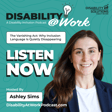
Ableism in Tech: Building Accessible Products with the Founders of Dateability image

Ableism in Tech: Building Accessible Products with the Founders of Dateability

S1 E2 · Disability@Work
Avatar
17 Plays3 months ago

Ableism is deeply embedded in the tech industry—but it doesn’t have to be.

In this episode of Disability@Work, Ashley Sims is joined by Jacqueline and Alexa Child, sisters and co-founders of Dateability, the first dating app built specifically for people with disabilities. Together, they unpack ableism in tech, why accessibility is still treated as an afterthought, and how inclusive design benefits everyone. The conversation also explores disability representation in startups, barriers to VC funding for disabled founders, and what it takes to build accessible technology from the ground up.

This episode is a must-listen for tech leaders, designers, founders, and anyone committed to disability inclusion, accessible design, and equitable innovation.

Disability@Work is a production of Disability Solutions, a non-profit job board and consulting firm dedicated to helping people with disabilities achieve career success—partnering with corporate employers to help them understand the value in hiring and retaining top talent from the disability community. Tune in for fresh conversations and bold perspectives on disability inclusion. 
Recommended
Transcript

Introduction to Disability at Work Podcast

00:00:07
Speaker
Good morning and welcome back to Disability at Work, a quick 10-minute podcast delivering news, insight, and a safe space to learn about disability inclusion.
Meet Jacqueline and Alexa Child of Datability

00:00:18
Speaker
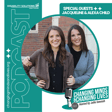
I'm your host, Ashley Sims, and today we're diving into a topic that affects every corner of the digital world, ableism in tech. Joining me today are Jacqueline and Alexa Child, founders of Datability, the first dating app built specifically for people with disabilities.
00:00:36
Speaker
Welcome, Jacqueline and Alexa. Thank you so much for having us. Well, let's get into it.

Systemic Ableism in Tech Design

00:00:42
Speaker
So you recently joined Julie Soash on our sister podcast, Changing Minds and Changing Lives, where you shared the emotional and personal side of your guys' story. um Today, i wanted to zoom in a little bit more and talk a little bit about why a about a datability type app was needed on the market. Jacqueline,
00:01:02
Speaker
You were dealing with a lot of ableism in mainstream dating apps. When did it hit you that those experiences weren't just personal, but actually like a reflection of a systemic ableism issue in tech design?
00:01:18
Speaker
Oh, I don't even know if I realized how pervasive it was. um until we launched Datability and all these people would tell us how needed it was and how um just really overlooked disabled people have been. And pre prior to creating Datability, just was not in touch with my fellow disabled peers and I didn't know how to be. um i didn't know like just how to insert myself. And so, yeah, i I hadn't really been able, I was not able to communicate with people and get all these different perspectives until Datability was launched. And we had people with so many diverse disabilities come to us and say how how necessary an app like Datability is. Yeah. um One of the stats that we talk about all the time is one in four people in the U.S. has a disability, yet so many products, apps out there don't have any sort of accessibility built in or it's treated like an afterthought.

Misconceptions and Spending Power of Disabled Individuals

00:02:30
Speaker
Why do you think that is? That's a good question. i think that there's, listen, being disabled, it can happen to anyone at any point in someone's life. It's not a minority that you are born into, you can be, but not necessarily. So if you're not born and disabled, that doesn't mean you're not going to become disabled. In fact, most people age into disability if they don't become disabled earlier.
00:02:53
Speaker
And I think that scares people. I think they'd rather not think about it. I think that there's also this incorrect stereotype that disabled people don't work or they're on government benefits and so they don't have spending power. And so it doesn't matter if I'm not making my product accessible because they're not going to buy it anyway or spend money or make me money. And so I think it's a combination of those things.
00:03:15
Speaker
Yeah. And I also will add that I think that accessibility in the tech space, at least, is it's very difficult to achieve. And there have not been.
00:03:26
Speaker
really, like for lack of a better word, accessible solutions for to implement, to easily implement accessible tech. And in that it can be a barrier, you have to be very skilled to um make sure your tech is ah accessible. And I'm specifically referring to screen readers. It's really hard. we you know Our engineers are really really skilled and meticulous and it is still a very tedious process. And we there's we often make mistakes that we have to um fix and improve upon. and And also accessibility is always changing too. And so it's never like, oh, you check this and you're done with it.
00:04:10
Speaker
It's this really rigorous you know process of always making sure that you maintain accessibility. And I mean, just despite how hard it is, it needs to be done from from everyone.

Challenges in Securing VC Funding

00:04:26
Speaker
Yeah, absolutely. I mean, I think like finally the world is coming around to realizing why we need like closed captioning and stuff. But I mean, as far as like image description goes, we get comments from people all the time saying like, hey, you left you left like a you left an A.I. prompt on and the bottom of your post. And i'm like, one, this was not created by ai but also, no, this is just an image description. And here's what this means. And so it's just.
00:04:55
Speaker
It's like, it's not mainstream and the mainstream, they don't know about it. Yeah. Yeah. Okay. So you guys decide to build your app.
00:05:08
Speaker
Um, Of course, building it is one thing, which I'm sure there were many struggles along that journey. um But also funding is ah a big thing when you're starting a tech company um or building a tech product.
00:05:24
Speaker
um And the reality in the startup world is that a it's more difficult for disabled founders. So Forbes has reported that disabled founders are up to 400 times less likely to secure VC funding. And Fast Company found that 92% of disabled entrepreneurs say investors overlook disability centered products.

Choosing Angel Investors Over VC Funding

00:05:50
Speaker
Given that landscape, you you guys made the decision um to go a different route. So you went with securing different angel investors, grants. Can you talk a little bit about that experience, why you went down that route um and what kind of led to that decision?
00:06:12
Speaker
Yeah, the gap is pretty incredible. Also, women get less funding to begin with. So we're ah we're a double whammy. We're a women founded and you know a dis and disabled founded with Jacqueline and then a disability centered app. And we did try to get that VC money. I really underestimated how difficult it would be for us. um But we were often told to shift to a platonic friendship app because intimacy and disability make people uncomfortable. Or we were given praise, but like, it's just not like the time because it's not something that they like seem as like, you know, like the sexy product. They don't view it that way. And so after being, you know, turned down time and time again, we finally found angel investors who really believe in our mission and value what we're doing. And in hindsight, I think that was better. i think that VCs often will pressure
00:07:07
Speaker
companies and startups to push profit, profit over people. And we don't want to do that. Of course, we want to have a successful, profitable company, but we want our users to be first and we want the product to

The Need for Accessible Tech in Mainstream Companies

00:07:18
Speaker
be quality. And so I'm glad that we don't have to deal with that pressure, but it was staggering to find out like how much discrimination there is in the startup tech investment world. Yeah. And even like minority driven VCs, they're often,
00:07:36
Speaker
forgetting about disability, you'll see a forum and it's like, which minority do you belong to? And it lists everything and disability is nowhere to be found. And um it just just adds to the fact that like we are the forgotten minority, despite being the world's largest.
00:07:54
Speaker
yeah Yeah, that's crazy. um Despite these barriers, um you guys built Datability with a lot of accessibility in mind, um including i think it's Datability DEETS, which is ah a function where you can basically disclose your disability neutrally or in a safe way. um And you have a bunch of other accessibility features that you've talked about a little bit earlier. So why do you think more tech designers don't include those features? I mean, we talked a little bit about it earlier where it's about, you know, it's not super easy, but we've also talked about the fact that it benefits more than just the disability community. You know, a a lot of people use captions.
00:08:38
Speaker
ah So why do you think that's not more mainstream? I mean, we use captions when anyone like with an Irish accent is on TV, I need subtitles to make sure I'm understanding them correctly. Yeah, but I mean, like captions benefit literally everyone. But and and I think that that is why it has become adopted is into the mainstream is because non-disabled folks use that. And um and so i I really think it comes from a place of ignorance and not even knowing
00:09:13
Speaker
one, like what these things are and two, how people benefit from them. um I think that like everyone should definitely use as a voice, the voiceover app and then use a screen reader to realize that that is how people rely on their devices and and People I think are are are not interested. And I think even if there was you know an engineer at one of these big tech companies that was willing to implement these accessibility features, there's no one you know letting them know why they're important or had or what is necessary. And so i know with our engineers, they're incredibly dedicated to making datability accessible technically.
00:09:57
Speaker
But they might not have known like what exactly that entails until they partnered with us and we hear from our users and we pass along the messaging. And so that's also, you know, I think part of the problem is that there's no one at these big companies saying we need to perfect this. Our users need this feature and this is why.
00:10:14
Speaker
yeah which just adds to the point that disabled people deserve to be hired and ah be involved in these workplaces.

Community Feedback on Datability

00:10:25
Speaker
Yeah, for sure. um What kind of a difference has it made? like what What kind of feedback have you heard from your community about those accessible features? Well, people really love um like the image description that we have on our photos. And so people say that it was a big surprise to have that on a dating app and that they're grateful for it. And also just knowing that we are committed to it and that although there will be um ah hurdles along the way that we can't
00:11:03
Speaker
work really hard to fix those things has been really well received. Right. You're never going to achieve perfection right out the gate, but we are, you know, we're working towards it. We're so open and it to our users' feedback. We're easily reachable. And so I think that that really helps. And, you know,
00:11:21
Speaker
Disability is so diverse and tech needs are so different among people. And so we want to hear from our users. We encourage that feedback so that we can, you know, try to make Datability the most accessible dating app. Yeah, because unfortunately, one something that is accessible to one person may make it inaccessible to another person. And so when there's these competing needs, that can be really tricky to navigate, but we we do the best we can.

Advice for Disabled Entrepreneurs

00:11:49
Speaker
That's awesome. um For disabled entrepreneurs out there listening, especially those facing some of those funding barriers, what advice would you give them to stay on course? I think you have to remind yourself why you're doing this. um I think you have to keep going. i think that rejection is redirection and that you will find the person or the funder that like meets your needs. I mean, of course, that sounds like really idealistic. And sometimes people are building things that there isn't a need for. And so i don't know at what point you... take a step back and you know figure out if this is the necessary product, if there's a market need, or if it's just discrimination that's preventing you from getting funding. you know Our success stories from the app are proof that it is working and it is needed. But i think that we know we have hard times, but we never gave up. And I think having a team or a co-founder by your side that pushes you is good. I can't imagine doing this alone.
00:12:49
Speaker
I totally agree. Awesome. Jacqueline, Alexa, it has been great. Thank you so much for sharing your wisdom with us today. To our listeners, thank you for joining us for Disability at Work.
00:13:04
Speaker
If today's conversation resonated with you share it keep the dialogue going, and support disabled creators and founders wherever you can. Until next time.