Transcript
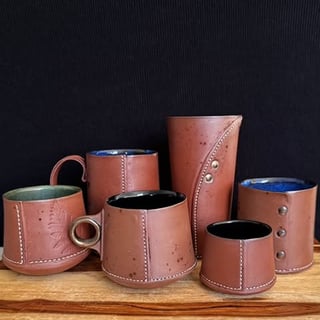
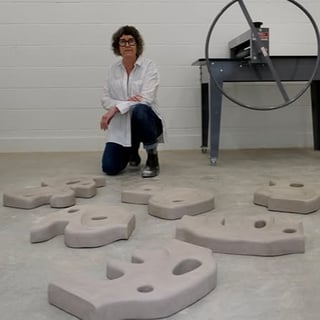
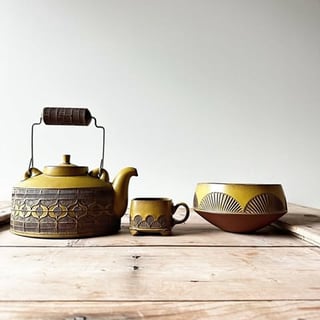
Speaker: people who are makers of some kind can relate to that feeling when you're not making what, when you're not being creative, you just feel like you're dying a little bit. What is up, Shape Nation? This is Nick Torres here. And in this episode, I had the great pleasure of interviewing Sarah Pike. Sarah makes some really incredible slab built and textured pottery. In this episode, you will learn how Sarah makes her slab built mugs and also how she adds the textures and how she makes textures for each one of her pots.
Speaker: You also learn about why you sometimes take a step off the path in order to start making your own unique creative voice with your pottery. Finally, you also learn about how taking just five minutes in the studio can do wonders for your pottery and for your voice. And there's so much more in this episode. Hope you guys enjoy it because I know I did. Hope you guys I'll see you guys in there.
Speaker: If you love pottery and want to take your skills to the next level, you're in the right place. Find your own pottery style right here on Shaping Your Pottery with Nick Torres. Let's get started. Sarah, welcome to Shaping Pottery and share with me what is something to believe potters should be doing to have success in pottery.
Speaker: Potters who want success, I think, really need to be diligent about scheduling time in the studio. It's hard for any self -employed person to be diligent about that. We are distracted by so many things in life, friends asking us to do things, housework, whatever else it is, but you really need to be diligent about taking the time to prioritize that studio time. I think that's probably one of the hardest things to do.
Speaker: absolutely great shape nation. The most important thing is to get into the studio and prioritize that time to actually practice getting better. I love that. So tell me a story how you started making pottery.
Speaker: I started when I was little, my mom worked in an art center and basically enrolled me in every after -school program they had because she was working there and that was free childcare for her, but also because I loved, loved, loved any kind of art. So I started in clay then and then when I was 13, I bought my first kiln, which
Speaker: It seems kind of crazy now because how could I possibly know that I wanted to be a potter then, but I got this used kiln, like a scut, the $150. I was working as a best girl at a restaurant and I bought it. My dad helped set it up in the basement and I made actually little slab built and coil built pots.
Speaker: It was just a part of our lives though. My parents were makers. They were always making things. There were always projects on the go. And it was just like another tool in our house. So it wasn't like I knew I was going to be a potter. It was more like, let's explore this avenue of making. And then I went to art school. I went there thinking it was going to be a painter. And I took a surround of my collective and I kind of knew right away this was what I wanted to do. So Clay has been with me since I was a little girl.
Speaker: I love that so much. So tell me the story when you and your family moved away from your husband's family ranch and how this impacted your own pottery journey. When we were living on the ranch, it was pretty full on. We were homeschooling our two young children. We were running the ranch. As you said, it was a lot of work looking after
Speaker: all of those living creatures, making sure they were healthy and well fed and that the farm was well looked after. So there wasn't a lot of time in that period of my life for pottery. I tried for a while when we had one kid to still make pots, but it was really difficult. Like I said, super busy.
Speaker: Now, when the kids got a little older, I started teaching some classes. I built a little studio into the barn that we lived in and I started teaching some classes, but I was just feeling the kiln with other people's work. I think a lot of potters can relate to that when you're starting out, you're just firing other people's work all the time.
Speaker: And then we decided it was time for a change for a lot of reasons. We moved to a small community. So finally we were living in town in a community and it turned out to be such a beautiful and supportive community because everyone sort of came out and really appreciated the arts. And it blows me away all the time, actually, how much this little town can be supportive of everybody's creative ventures.
Speaker: It was hard at first though. In retrospect, you can kind of breeze over all of the obstacles. I didn't have a studio of course when we first moved here. I worked in a community studio for a while and I hadn't made pots in a really focused way for a long time. The stuff I was making when I first started again was really awkward and weird and there was a lot of failures. I was wondering if it was even what I was
Speaker: supposed to be doing or could I do this? Could I even do this? And so for some reason I first interfered and yeah, started just kind of dove in, made a studio in the basement and started making pots more full time and going to art sales and just trying to find my little niche in the world. Yeah. It was exciting, but like any sort of, it was scary, you know?
Speaker: I love that. That was a great story. So what were you feeling when you were finally able to get more time in the studio?
Speaker: I was feeling overwhelmed a little bit. I was like, okay, the kids are... Now when we moved here, we put the kids in school. So now I had all the time where I wasn't looking after kids. I was learning after cows and I could focus on making work. And I started trying to make the work I'd made before I had quit grad school because I got pregnant with our son. I had gone to school in Minneapolis and basically left that world. That was sort of devastating.
Speaker: felt like my career as a power was over and I was going to be a ranch wife or some other thing that didn't really sort of resonate with me. And now here I was in this space where I could be what I wanted to be. And I was just like, I don't even know who I am. I don't know what kind of pots I make. I was trying to make pots that look like the salt fired work I was making before.
Speaker: There was just a lot of weird stuff for a while, but you know, back to your first question about what Potter should do. Some, for some reason I was diligent and persevered through a lot of failures and just kept making work. And whether that was stupid or just committed, I don't know, but eventually it started making work that I was proud of.
Speaker: Love that. Let's talk about your pottery. Can you tell me the story, how you started making your slab built pots that you make today? Let's see. When I was in school, I was mostly making throne work and was really interested in cutting pots apart and altering them and putting them back together. So, or to kind of like plague with the idea of working with clay when it wasn't necessarily round, you know?
Speaker: And then I went to school in Boulder for a while in Boulder, Colorado and was continuing to explore that throne and altered work. And I feel like I'm cutting it more and more and altering it more and more to the point where you couldn't really tell at the end that it had once been thrown.
Speaker: Then I went to grad school in Minnesota and Mark Ferris was one of my teachers and he's an incredible potter and does a lot of flab building and it sort of gave me the freedom I feel like or the what's the word like it just gave me the confidence maybe to step away from the wheel completely.
Speaker: and really focus on the freedom that making pots out of slab can give you because there's just so many different shapes and so many different ways you can texture the clay because the slab has such a different quality. I love that. So why do you like slab building instead of something like throwing on the wheel?
Speaker: I told a story about when I was in grad school and before I realized I was pregnant. I was still throwing a fair amount and the spinning wheel made me feel really sick to my stomach. So at that point I was like, I'm either not making pots or I'm making pots in a different way. And that really sort of forced my hand to start slab welding.
Speaker: Like I said before, there's such a different quality about slabs. And as I got more interested in texture and making stamps to press into clay, the slab is just such a beautiful canvas for that because you have the counter pressure of the table behind it. Instead of trying to get your fingers inside of a pot to counter pressure the stamp, it just receives the texture so well. So it just, it just felt like this really incredible avenue to take if I wanted to focus more on texture.
Speaker: But there's something about the slab too. There's a softness that I really love in a slab build pot. Yeah. I love the wheel too, but it's hard on the body, hard on my body. So stick with the slab. So you mentioned making or incorporating stamps to your pottery. Do you make your own stamps? I do. Yeah. Can you walk me through how you make your stamps?
Speaker: Their 90 % of them, 95 % of them are made out of clay and carved at that moisture content where the clay is just starting to turn color. It's not bone dry, it's not leather hard, it's sort of in between.
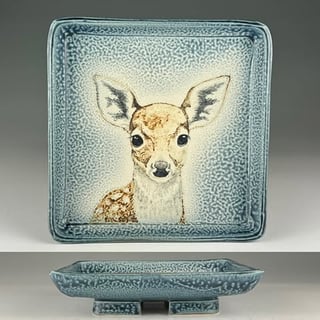
Speaker: And I'm really focused on when I push the stamp into the clay, what squeezes up into the stamp. So whatever I carve out of the stamp becomes raised on the pot. And I'm really interested in how glaze breaks over that texture. So I've come over the years to be more and more interested in more of a fine line.
Speaker: so that the glaze really breaks over it. So a lot of the textures that I'm making these days are actually repeated stamps that fit together. But within those stamps, there are a lot of carved lines that then become raised on the pot. Excellent explanation for that. So something from your website that I found interesting that you said was, I enjoy pottery that conveys personality, a slight air of attitude that step off the path. Can you tell me more about this?
Speaker: I like it that you brought that off actually because I sometimes think about pulling that sentence out of the artist statement, but it still really resonates with me. So already we've taken that step off that path.
Speaker: But I also love that feeling like I live in the mountains and I do spend a lot of time on trails in the woods, but in the winter I've been doing quite a bit of touring lately and backcountry skiing. So that feeling of where you don't need a path anymore, where you turn your skis off the path.
Speaker: And you have that freedom to go wherever you want and into that stillness, into that wild. I love that feeling so much. It just, it's both scary and freeing at the same time. And I feel like I want to have that feeling in the studio. I want to feel like I have the freedom to step off any sort of path. This is how you should do things and explore.
Speaker: this sort of other outside of that, you know what I mean? Yeah. How do you take that part of wanting to step off the path and how do you apply that to your own pottery?
Speaker: It's a good question. It's tricky. There's a lot of what ifs, and I think that's another thing that I would recommend to starting potters is encourage the what ifs. What if I do this? What if I do that? And so often when we take the step towards exploring the research, we encounter some kind of failure or maybe the material or the tools are not allowing us to
Speaker: really investigate what could happen. And sometimes we see a failure as the end of a road. I really feel like maybe you just need a different clay or a different tool and just keep asking those what ifs until you find some answers that can lead you on the next step along that path or non -path.
Speaker: I love that. Shaping Nation, sometimes you just have to embrace the failures and take a step off that path, but you have to continue making that pottery so you continue growing and find your own unique voice. I love that. So now, can you walk me through how you were able to create a slab -built mug? And yes, because you already told me about the texture part. Okay, like just the steps to make a slab -built mug?
Speaker: Yes. Okay. First, I roll out soft clay. I really like the clay to be quite soft. The softer, the better actually. If it's sticky, not so great, but if it's just before it's sticky, I'm going to take the impression of the stamp a lot better. So I roll out a big slab of soft clay and then I cut out the parts, usually a long rectangle for the walls of the mug and then a circle for the base.
Speaker: And then I move that slab onto a cement board because it absorbs a little bit of moisture out of one side of the wall of the mug or the future mug. And then that's where I will add the stamps. Then I will refine the shape like I might need to trim it a little bit just because the stamping might distort it. And then I lift that slab up and form it into the shape of the mug. And then once that's set up a little bit, add the bottom. And then a handle once that's set up.
Speaker: So something from all your pottery is that while you add texture at the same time, it still looks kind of smooth. How do you get that smoothness on your pots?
Speaker: The clay, for one, is a very finely thinned clay. It really snows. But I guess before I texture this lab, I'm really compressing any particles or aggregate back into the clay. So I've just got the fine on the surface. And I'm careful to not
Speaker: take any of that fines away in any way. Like I'm never scraping the surface and never cutting away at the surface. I am being careful to not even touch the surface very much with my fingers, just touching at the joints, you know? So I'm leaving that compressed clay, that really fine. It's almost like a, you have to be, it's almost fragile in a sense, because it's so soft and fine. I'm leaving it alone as much as possible so that the softness stays there.
Speaker: Excellent explanation of that. I love that. So let's talk about the business side of pottery. Can you tell me about the moment when you decided to go full time with your pottery? It was around the time that we moved here. Part of the reason that we moved to this small town was because I really was dying a little inside not making work. I think that most people who are makers of some kind can relate to that feeling when you're not making what
Speaker: When you're not being creative, you just feel like you're dying a little bit. So a part of the reason we moved here was so that I could spend more time making. And then I, I just told you how hard it was at first, but once I started to, to find, I guess, like find my voice.
Speaker: I started selling in markets and whatnot and realized that the work was resonating with people. I looked for every avenue that I could to make sales, whether it was selling online in early stages or going to a gallery or selling on consignment in the store or wholesale. I have pots here and they're all over the place just trying to make it work. And then suddenly it did seem to
Speaker: resonate enough to make some sales. So I decided, yeah, this is it. When I made that decision, I also decided to build a studio. We have an acre on the edge of town here and decided to get a loan out and build a studio space. And that felt like a commitment to myself, a commitment to this career that I had chosen. It was also super scary to take out that much money and build a studio, but
Speaker: In the end, it was almost like a daily affirmation to myself because I had decided that I was worthy of this career, of this lifestyle and building a space to hold that, that I can walk into daily and I love it. It's beautiful. It's a daily affirmation that yes, this is the life I've chosen and I'm going to make it work. I love that so much. So what were you feeling when you finally decided to go all in and go full time?
Speaker: Was I too late? I was feeling scared. Yeah, I'm feeling scared. Like, could I do this? Hey, am I really a potter, you know? It was, I don't know, it's hard now because it's been a number of years since I made that decision. It's hard to put myself in that place because I'm at this point now where I know that I can do it. I still have doubts, of course, we all do, but back then it felt like
Speaker: I needed a plan B, you know, as my studio can maybe turn into a rental space and I could teach or I could do something else. I definitely didn't feel 100 % like I was going to be able to do it. I love that. So what would you say was your biggest obstacle when you go in full time?
Speaker: biggest obstacle, probably my own brain, my own confidence, you know, just always having that little voice in the back of your head telling you that you're not good enough to do it. Maybe that was my biggest obstacle. Time also, you know, the kids were still.
Speaker: young and I wanted to spend a lot of time with them and life is demanding at that point in your life. So I'd say it was probably time and that little voice, evil little voice. So what did you do to help you get over this evil little voice in your head?
Speaker: I ignored it. I don't know. I think a huge part of it for me was community, actually. Just finding community that is, I don't know, the ceramics community, as you know, is just such a beautiful community. I know I have friends who are in other fields of making and they're jealous of the ceramics community because
Speaker: We are a group of people that like to hold each other up, you know, we like to help each other out. We're so quick to offer any words of advice or wisdom and space in our kilns. And I think that having a community like that was so helpful in those early stages, because whenever you heard, whenever that voice knocked me down, there was somebody out there that lifted me back up.
Speaker: I love that. And I definitely agree. Pottery community is definitely a lot stronger compared to a lot of other communities. I love that. So now you contribute your growth as an artist to social media. Would you mind telling me more about this? Yeah. When I first got on Instagram, I don't know what year it was. I could probably lock up my first post, but it was.
Speaker: I saw some people posting on Facebook these cool photos with cool filters, and I was like, how did they do that? Oh, it's Instagram. I'm going to try that. And I thought it was just an app to put cool filters on photos. And I went to Instagram, and I put a cool filter on a teapot, I think. And then I went back to do it again, like a month later. And it said, however many followers. And I was like, what? I didn't even know it was a social media platform.
Speaker: And then I kind of forgot about it for a while. And then a friend of mine, Robin DuPont, was here and he's good friends with Adam Field. And they were both like early, I guess, in the ceramics community early.
Speaker: appreciators maybe of the platform as a place for community and a place for getting your work out there. And Robin suggested that I spend more time putting work on Instagram. And
Speaker: In those early days, I mean, Jorge was doing the pots in action. Do you remember that pots in action? It was just such an incredible community builder where every week there was a new challenge where it was like, I can't even think of one now, but like put a pot in front of a bright color field. And it was just like all these people in community would take photos of their pots in front of like a vibrant blue wall or a yellow wall.
Speaker: hashtag pots in action and then at the end of the week she'd pick one. And then she started inviting other potters to be the, you know, guest artist that we can choose the theme. And it was such a great community builder too. I felt like we were all
Speaker: in this thing together, even though we were in our little studios all over the world. I think I lost track of what the question was there. I loved it. You technically answered it pretty, pretty perfectly. I said, you contribute growth as an artist to social media. Can you tell me more about this? And I think you answered it pretty well. Yeah, I guess what it comes down to is it, even though I'm in this small town and I had felt really isolated leaving grad school and starting a family and running around, it gave me access to a community, you know,
Speaker: So now what advice would you give to someone that wants to start using social media to help them sell their own pottery?
Speaker: It's tricky. I think it's such a huge platform now. Like when I started, I don't know how many potters were even on there, you know, as early days or so many now. It still definitely has community feels, but it's changed a lot too. I think that taking nice pictures, it's a good idea. It seems like taking videos, good videos, being authentic, I think to yourself and to your audience.
Speaker: I don't know, someone suggested using chat GPT to create content and I just felt like puking. I was like, that's not what it is for me. If this is about community and being honest with my followers, I'm not going to get a computer to write. It just feels like the antithesis of why I'm making pots.
Speaker: But maybe, maybe if you can't write something, use chat GPT. I can't be judgy. I haven't tried it, but I don't know. I like to make pots and I like to use them and it seems very analog and that seems the opposite of analog, but maybe social media is the opposite of analog. I think finding some, some spread through it that feels authentic to you, it's probably going to resonate more with people.
Speaker: I love that advice, some extra advice right there. So let's talk about discovering your voice. Can you tell me about the moment when you knew you were heading the right direction with your pottery?
Speaker: I love it that you do this, Nick. I just want to say that the whole idea of finding your voice is, for one, so hard, but also so important. And when you're starting out, it feels incredibly hard, right? It's like, how can you find your voice when it's not like you're born and started screaming? You had a voice. You were trying to find this thing that defines you.
Speaker: I think I stumbled on it personally. It was through, like I said before, a lot of failures, a lot of trials, a lot of what the fuck am I doing here? And also just trying things, being able to step out of my comfort zone and try things. That was important for me. The other aspect that I think really pushed my work was
Speaker: And it was all true, actually some unrelated event. I had a major loss in my life and was going to a therapist and I just couldn't bring myself to get in the studio. And she suggested, why not do one thing a day, like five minutes? It takes five minutes. Just do five minutes a day.
Speaker: and see if that will bring you back into the studio. And I was like, what can you do in ceramics that takes five minutes? There's nothing. And then I was like, well, maybe I couldn't do a stamp a day. And I started carving up these stamps and I committed to a month of it.
Speaker: And it worked like she was so smart. I started to think about something other than that loss and they started to think about what could I make next and how could I step off of that first idea.
Speaker: It really helped propel my work, but also helped me commit to my work. It's so hard to find your voice. I think that doing things like that, like being really intense, like, you know, grad school or going to a residency or some devoted length of time, like it's going to take time, you know, trying all things.
Speaker: I love that. I love that so much. Shaping Nation, sometimes all it takes is to simply get in the studio for five minutes and start working and something great will happen from those five minutes if you just keep being consistent with it. I love that. So outside of social media, you also contribute your growth as an artist to art, to school and doing mentorships. Can you tell me more about this?
Speaker: My mentorships were really quite abstract. It was more like I found someone who I liked and whose worth I liked and I just follow them around. They had no choice in the matter. But yeah, school for sure because it puts you in that place where you're around all these people who are making and all the tools and all the equipment.
Speaker: You're forced to think about what you're doing and forced to do things you don't want to do like those projects that you know I don't resonate with but I'm going to try it and maybe it could lead to something but the the mentorship is
Speaker: Yeah. Finding people in that community who are not necessarily making work that you want to make, because that clearly not finding your voice, but who are making work in a way that you want to make work in. So it's like, is that lifestyle how I want to live? Are there the way they think about it? Is that how I want to live? I feel like for me, that was huge. You know, sometimes the mentors, you don't even live near or with or see on a regular basis.
Speaker: maybe are inspired by them, some aspect of them, and embracing that and acknowledging that thing is huge. I love that. What would you say are some of the opportunities that started coming your way once you were able to find your own voice?
Speaker: I guess, yeah, you don't even know what's out there sometimes, being asked to go and teach workshops and film workshops and travel the world. During that, that's been really exciting, presenting in some conferences and whatnot, just getting out of my studio in this little town, which I loved being in this little studio in this little town. I'm an introvert.
Speaker: spending time on my own is great, but also I'm a social introvert. I want to get out there and see the world and meet people and meet other potters. And I'm curious about their lives. And yeah, I think that that's been a huge win, but I wasn't expecting that once I found my voice, I was invited to share it.
Speaker: I love that. And I definitely agree being able to talk to other potters is so great. I love that. So what does it mean to you to find your own unique pottery voice? I don't think, like, you know, there've been times when I'm learning where I may be making pots that look like someone else's pots. You know, I'm learning the process by making pots like someone else that makes them.
Speaker: It doesn't feel like you're worse, you know, it doesn't, it feels, it's like if you were a band and you only played covers, you know, like somebody already did the work. They already figured it out all the little injuries and they practice forever until they just figured out how to make that song. You're playing a cover. They've already, you know, the original band already did all of the work. So it's like.
Speaker: It's easier, you know? Easier is laid out. You can look up the tablature online and boom, you can play the song, but it's not yours. It never feels like yours. It's always going to be a Neil Young song or whatever, right? It's never going to be yours. So finding your own voice field, I was talking about authenticity earlier, it feels
Speaker: closer to your heart and maybe there's a lot of little inspirations from a lot of other potters and maybe the history and ceramics or whatever it is that's in there but it still feels like it's coming from a true place and it feels when you're making that work.
Speaker: It feels, I don't even know what the word is. It feels right. I guess you feel right about it. And you, so I think the what ifs and all that are more ready to come to you because you're already in a place of stepping off the path because you're stepping on your own path. I love that. That was some excellent advice right there. So now what advice would you give to someone that is looking to discover their own unique voice with their pottery? I think that.
Speaker: When you're starting out, you know, even when it was an art school, it was often recommended to, you know, make a pot in the style of blah, blah, blah. Right. So learn the techniques, take all the workshops, you know, see as many potters in action as possible. Like I loved watching, you know, at conferences or, or workshops, just watching potters who have been making their work for a long time. And it might not be that you're going to make the pot just like they do, but there was like one aspect of how they do it, but that.
Speaker: when you're trying to figure something out in your own studio, when you're asking that what if question, you're like, oh yeah, so and so did that. That might work in a completely different way with a completely different tool, but that might work for this situation. And suddenly you are blossoming in this other way, you know?
Speaker: So what ifs and really not being afraid to do the research and make them make the, you know, failures, because they're not really failures. They're just little, little obstacles that you have to work your way around and eventually you will find a way around them if you keep on it. Some excellent advice right there. Sarah, it has been great chatting today and as we're coming to a close here, what is one thing you really want to hammer home with my audience today?
Speaker: I think that already your audience is, is listening to you because they are wanting to find their own voice. And like, I think that's just such a beautiful thing. And I just want to say, keep at it. Like if I could, if I could find my voice here to find your voice and it's out there, it's just gonna, it's just gonna take a little digging. I love that. It was great challenge today. And where can my audience go and learn more about you?
Speaker: Yeah, Instagram and my website probably are the best places. I have a little newsletter that comes out very rarely that you could sign up for, but mostly it's Instagram. And what is your Instagram handle? It's their Pike Pottery. Hey, thanks for listening to this episode of Shaping Your Pottery with Nick Torres. If you want to discover how close you are to actually discovering your own unique voice with your pottery, I put together a free
Speaker: 4 question quiz, it's very short, it takes 30 seconds for you to take. If you want to know how close you are to finding your own unique voice, go to shapingyourpodtery .com forward slash quiz or you can simply go to shapingyourpodtery .com and it will be right there at the top. I hope you guys enjoyed this episode and I'll see you guys next time.