Transcript
Speaker: You are listening to Something Rather Than Nothing, creator and host Ken Vellante, editor and producer Peter Bauer. This is Ken Vellante with the Something Rather Than Nothing podcast, and this episode, I'm very happy to welcome Kate Matthews, who's
Speaker: an artist I recently discovered on Instagram and just love the portraits that she creates. And it seems to me when you look at these portraits, there's just this incredible story and world that she creates in those images. So it definitely drew me in and reached out to Kate and happy to have you, Kate Matthews, on the podcast. Thank you so much for being on.
Speaker: Oh, thank you. And thank you for inviting me. I really appreciate it. Yeah. First question, I try to kind of find out a little bit of the backstory. But would you take a little bit of time to kind of get into what you were like when you were younger? Were you always interested in art? Did you identify yourself as an artist? Or was there a different story about your creativity? Ash, I
Speaker: I've always been an artist or a creative type. And even when I was a little kid, and I think you'll hear that from a lot of artists that they had this creative kind of instinct or path that they wanted to follow, you know, just kind of, you know, painting when you're a little kid and drawing and creating stuff. But then I ended up going actually into theater.
Speaker: And I couldn't decide when I was going to college, should I study theater or illustration? So I ended up in theater. And then many years later, I just thought, hmm, I think I'm going to go back to illustration and find art. So that's where I ended up.
Speaker: So, what's, and I love theater. I haven't done too much theater on the podcast. Do you know, looking back, what kind of like drew you to that or like why you thought that was the, that's what it was? I liked, I think I just, because of my upbringing and my family life, I think I looked at theater as an escape or,
Speaker: an opportunity and a chance to be somebody or something else other than than what I was. And once I started doing that, it was fun. I mean, I enjoyed it. It was always a challenge, too. But so that's why I ended up going to school for that theater instead of illustration. So. Oh, yeah. Yeah. And could you and so for illustration in in how
Speaker: You practice your art, you know, visually now. Can you tell a bit about, you know, your style in your portraits or like your intent to depict? Can you just give a little bit of the flavor of what you do?
Speaker: Yeah, I initially, I mean, I studied painting. I went to the Laguna College of Art and Design and graduated from there. You know, oil painting, watercolor, I just play. But I've always been attracted to the face or the figure and more specifically trying to
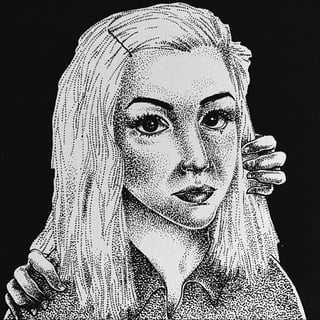
Speaker: capture something in the eyes of a portrait, like a feeling or evoke a feeling, whether it be a human or an animal. But then I've also wanted to incorporate the aesthetic of beauty in nature. So I ended up doing, really focusing on portraiture more than anything to try to capture a beauty and an essence in a character, more or less a made up character.
Speaker: And that's really helpful. And that's what I see with your images and the prominent women that are there. And when you mentioned the eyes, I thought back, because I've done this podcast for a bit. And that topic's come up on a couple of painters, Anya Khan and Lizzie Falcon.
Speaker: you know, kind of like have talked on on the show about about the eyes and do you want to do you want to talk about that like that the impact or is the eyes or the face of the portrait and what you try to convey when you when you're when you think you've captured it. I think I when I look at a painting when I'm almost finished or when I'm finished that I look at the eyes and I
Speaker: if I can sense some kind of humanness or some kind of emotion or aliveness behind the eyes and I think that I've
Speaker: my painting is done. And what's really interesting is sometimes people will look at the portraits and say to me, oh, she looks sad or, oh, she looks really confused or, you know, in deep thought or whatever. And what's really interesting is sometimes you can ask several people what feeling they get or what they sense from this portrait that they're looking at. And everybody
Speaker: answers differently, which is really interesting. So it gets me thinking, well, when people look at a portrait, is there something in that portrait that they recognize is in them? And what does it make them feel? Right, as far as what it evokes. And I always see that with
Speaker: eyes in a portrait, right? The person's right in front of you, like the image is right in front of you, and it's going to provoke something from you, right? Yeah, you hope, yeah. Well, you hope, and sometimes you don't even know what it is, right? It might look like, you know, an ex, or it might look like, you know, your favorite person in the entire world and kind of, you know, evoke that, evoke that reaction.
Speaker: Could you talk a little bit about one of the things I like to get into with artists? Can you talk about your process of painting? So for example, I've interviewed artists who produce maybe two or three paintings, illustrations, or maybe a lot more in a day, and others who work three to four months getting to that point.
Speaker: What's your process like in, you know, are you in general kind of content with how that goes? Yeah, my process has kind of changed over the years. I'm actually working now a lot in digital, digital art. So a lot of the portraits that like my, I'm doing a series of flower portraits. That's what I call them. And they're all done digitally.
Speaker: Um, so I work a lot. I have like on Pinterest, I'll have tons of different references and tons of different, um, you know, just an eclectic kind of grouping of photos and reference photos. And I sort of put them all together or certain photos will inspire me to use certain colors or a certain look.
Speaker: And it's just almost like a collage of ideas put into one painting, if that makes sense. I don't know. Yeah. Yeah. Yeah. Yeah. I had seen on some of the stuff that you posted that, in a couple of spots, comments upon what is art. And you know that's a big question in podcasts.
Speaker: Um, and I love, I love the answers to these, like, so for example, I'm listening, I've, I've read and listened to an author of my Norwegian author, Karlover Knausgaard, uh, who's, um, an author I've really just become deeply fascinated with. Um, but, uh, he, he's gone into kind of, uh, the art of, uh, Edward Munch, you know, um,
Speaker: just really incredible and intricate explanations of art and what art frames and what art shows. For you, in trying to define art, for you, what is art? Do you have a definition of art? Wow. Art covers a lot. Art is all...
Speaker: Art is life. Life is art. That's sort of general. But I mean, it's obviously a way for a human to express themselves if they don't use words or if they don't use music or film. They're able to share their expression or their ideas or mood or sense of feeling about what's going on in the world with other people.
Speaker: And I think everywhere you look, there's art. There's art in buildings and architecture. And it's just so ingrained in life and in history. I can't imagine a world without art.
Speaker: Yeah, that would be a strange, strange world. But yeah, it's a form of expression for me. It's a form of discovery or exploration and play and experimenting and learning and self growth and self learning, too. So, yeah. Yeah. Thank you. Thank you for that.
Speaker: I wanted to ask a question. I don't want to miss it because it's something I've been interested in. And I was just wondering how you think about it. You know, anytime I think within the portrait or like the introduction of some of the things in yours, you're talking about a flower series that that you're doing kind of introduction of like the botanical amongst. Do you have a particular way of thinking about, you know, connecting
Speaker: you know some of those natural pieces to your your your female subject a lot of times is is there a way particular way you think about that yeah i mean initially um i started doing portraits before the flower portraits and i started kind of thinking about personifying mother earth um and in the way to do that is to integrate like
Speaker: her in a natural environment or as a human being, as a woman, and showing the beauty of Mother Earth, whether that be what's her surroundings or just herself. And then also there's some paintings that I've done where I show Mother Earth who's hurting, being destroyed,
Speaker: But offering hope, I hope, that that's how it comes across. Yeah, so I think that's where I was coming from when I started painting these series of women is Mother Earth personified.
Speaker: Yeah. Yeah. And they're beautiful. And I just, yeah, I was interested in the connection of the natural. Sometimes it can be difficult, you know, to move between, you know, the human depiction and, you know, what is the botanical theme or that theme? But it definitely, it flows in the work that you do. And I really enjoy it. Moving away from flowers is a little something, a little bit more difficult.
Speaker: What's the role of art in a pandemic? And have you felt different type of pressures or how have you been jarred by in your practice, your art practice over the last few months? Well, actually, for me, as an artist, it certainly has allowed me a lot more time to focus on my art.
Speaker: Um, since I'm not, I'm, you know, self isolating and have been since, you know, I think it's mid March now, five months. Um,
Speaker: So I've been actually really happy being kind of self -isolating and being more focused on my work, taking online classes, playing a little bit more, really happy. Actually, it gives me a really good, I mean, there's many reasons to wake up in the morning, but it gives me something to look forward to, a project to work on, something to tackle, something to play with, something to experiment with.
Speaker: So I think it also helps keep me sane because no man is an island and sometimes you feel like you're on an island these days by yourself. Yeah, so as far as art in the pandemic out there, I think it also offers a different way to look at art or to see art, like a lot of
Speaker: museums, et cetera, and even galleries have gone online. They've made, you know, paintings that you never would have, maybe some person may never have been able to see in person, be able to be in that museum experience. So it's a chance for art to be discovered in a different way and in new innovative ways.
Speaker: And I think people need that. People need to be able to step away from what's going on in the real world and just look at all this beautiful art that's been made in the past and is being made in the present. Yeah, it's definitely such a great help. I mean, it's been for me and I've talked to a lot of people where it is. I saw recently
Speaker: On the Portland Art Museum had an opportunity to it was a virtual reality. So it's like a VR connection and you can go there for like a half hour, an hour and everybody's kind of separated out, but it was from a museum in Italy, so you could interact for the first time.
Speaker: like ever, and I forget which museum it is in Italy, but the first time you could interact with the collection, either online or virtual reality, you would always have to be there physically in its history. They'd never put anything out there. And so it's kind of a big event where you can like kind of interact in a very different way. That's awesome. I mean, that's awesome. And I mean, I think about, you know, the kids that whether they go to school physically or not or online, I mean,
Speaker: this could be an added kind of addition to their education, like being in a virtual, virtually being in a museum and maybe having, you know, a teacher talk over or guide them through this virtual museum. And that's all new, like fairly new, I think. I mean, we're being utilized right now during this pandemic. So I think it's a good thing. We have to learn from
Speaker: from what's going on around us. And maybe, you know, it's going to teach us some innovative ways to make art, look at art, experience art. So. Yeah, I agree. And then I think that's like one example. I'm going to read a little bit more about it, but it was just it was fascinating to me that prior to and I forget if it's next month that they're doing it, like prior to that date, nobody in the world would have been able to experience any part of that catalog.
Speaker: Unless unless you were there so it's uh, like you said, it's interesting how it kind of presses Maybe things into different ways and different ways to experience it A different question is what or who made you who you are? Oh gosh, um Yeah, that's uh, well, I think um
Speaker: Obviously my childhood, my background, I'm half Native American, Ojibwe, Potawatomi from Ontario. But I grew up in a mixed race household. My father, my adoptive father was black and my mom was European, Austrian. And I found my natural mother, you know, after I'd moved out of the house,
Speaker: And I was introduced to a whole new world and culture and person. And so my background, I think, is a mix of is very eclectic. And I believe that it's influenced my art and where I'm going with it. And yeah.
Speaker: Was that experience, I mean, how overwhelming was that experience to go through and to kind of like process through like, in whatever way. And like, in talking about you creatively, as far as like opening up a new world, I know.
Speaker: and seeing how you create. Did you work through it that way with those discoveries and confusions that would come about, you know, that whole history? Yeah, yeah. It's like I was introduced to the, you know, my mother was traditional. She lived on the res. She grew up in a residential school.
Speaker: And just by me getting to know her, I found her in my 20s, by me getting to know her and the culture and what her background is and was, it did cause some confusion because I, you know, my big question was, well, where do I fit in? Do I fit in in this quote, you know, white world or this native world, or is there a way to kind of marry the two together? And then with, you know,
Speaker: racial tensions, et cetera, growing up in a mixed family. All that contributed, I think, to where I ended up in my life and the things that I paint and create now, for sure. And even geographically, too, you'd been from Canada and Ontario and
Speaker: And, you know, you now work in, in California and I, I love the state of California. Like I'm always like, I'm from the East coast. And like, when I talk, there's always these regional type of things like Oregonians complain about California. When I go to an area, like I don't adopt any of those prejudices. It's like, I love California. I love Oregon. I love Washington. And it can be, I, I found that within California, at least I haven't spent a ton of time there, but in people that I've known and just kind of
Speaker: with some of the areas and the kind of the vibrancy of like creation and entertainment obviously in Southern California, but like of creating and of kind of like a natural like bright environment that is really inspiring to me as a creator. Is that something you experience here that you find yourself kind of sensitive and responsive to your new environment?
Speaker: Oh, absolutely. I mean, growing up as a kid, we'd always watch the Rose Bowl parade. And I always used to think I'm going to live there someday because it looks so beautiful. And meanwhile, it was snowing and blowing outside the window. I mean, outside our house. And so I did. And it was kind of fluky, but I ended up the first place I ended up was in Pasadena years and years later, going to the Academy of Dramatic Arts.
Speaker: in Pasadena, I don't even know if it's still around. But yes, in Canada and Toronto, that's my little green sheet conure, by the way, chirping. In Canada, I mean, I was one of those people, I think, that had that seasonal
Speaker: deficit disorder, whatever it's called, you know, because like there would be years where there'd be 300 days of just cloud, whether it was cold or rainy or just miserable. And, and that used to get to me. That would, that it just brought me right down. But like down here, I just love the sunshine. I don't lie out in the sun, but just the brightness and the beauty and the flowers and just this constant
Speaker: You know, so what if it rains, it's going to be sunny tomorrow and it's not going to be snowing. Yay. Yeah. Well, I, I, I shared, I shared that reaction to, to the environment. I totally know, uh, what should mean. And, um, and I, like I said, not to like make it over, like over romanticize or make it nostalgic, but like I've been, like I said, the environment, sometimes the weather and the sun can be like,
Speaker: a very useful, powerful, wonderful thing. And that's typical, right? Yeah. What's the name of your bird so we know who our other guest is? Well, her name is, or his name is Pretty Girl. I always thought that he was a girl, but I found out that he was a boy, but I've never changed the name. So I don't think he really cares what I call him as long as I am nice to him. Nobody really minds being called Pretty in general.
Speaker: I think that's okay. One of the general questions I ask, and we've talked a little bit about, you know, your process and such. But one of the things I've thought a lot about lately is about like the intent of art and what you're trying to create. And
Speaker: Do you ever step back and kind of wonder why you create or what compels you to create something new or a new illustration or new digital art? I think it's a combination of curiosity. What can I do? How can I create this feeling? Or how can I learn something from the process?
Speaker: something that I didn't know from the last painting, or even trying to get better than the previous painting, trying to learn different things. And it's an escape, too, for me. It's almost like a form of meditation where I can just escape from, this is going to sound weird, escape from myself, like from all the voices in my head and just kind of
Speaker: I'm able to focus and zoom in on what's right in front of me. I'm in the now. I'm not in the future. I'm not in the past. I'm right there. And time just disappears. They always ask you, well, how long did it take you to make that painting? And I'm like, you know, I really have no idea. And I don't really want to count the minutes while I'm doing it. I just want to do it. And then I'll know when it's done. And
Speaker: You know, you can say, well, it took a whole lifetime plus two days. Right, right, right. Yeah, yeah. And I like your description. I mean, yeah, I mean, there's nothing, you know, I mean, I'd say obviously, but you know, there's nothing weird about it. I mean, I think there's always this.
Speaker: aspect of where the question is like where the self is when you're creating right and In that process or you know, I think popularly lately, you know within that flow that the self seems to like disappear or to dissipate and your act of creating flows from there and I know when I've had that experience and it's not a particularly common experience for a lot of people but when that occurs and
Speaker: I think it's like that experience of mindfulness or immersion into the moment. And it sounds like.
Speaker: kind of that's where you you get in your process and lose that time. Oh, yes. And then if somebody like someone calls out to me, they need something, I'm like, oh, like sometimes it's like a spell has been broken. It's like, oh, oh, oh, I'm back to reality. And it's like almost jarring. You know, so that's why when I create, I like to just like close all the doors and just like kind of lock myself up and just really focus for however long
Speaker: You know, I I focus for that particular time. So Well, um, I have a big question name of the podcast. Why is there something rather than nothing? Oh, yeah, you know what? I'm I was thinking about that and I was like, well, you know logically with nothing there's Nothing is non -existent to me. It's um
Speaker: when there's nothing, there isn't anything. So, non -existence is almost like you're not here, you're not, you're dead, you've never been here, but you're here and there's always something here, there's always
Speaker: As long as you're alive, it's always something. Yeah. You know, you've heard that term, I'm sure, when somebody's exacerbated or whatever. Oh, it's always something. Well, it is always something. And it's always something. It's not always a negative something, but it's always something going on. And something is life. That's how I look at it. Otherwise, yeah. Yeah.
Speaker: Part of it in general, I ask it and it's been part of the program is, you know, just in the sense is like a big philosophical question. But, you know, artists are creators. And when, you know, you've created something like whether, you know, it's an art piece that you put and put out there. It's something that you've set aside and it's like this is something to consider. Right. And there's other things there. And
Speaker: I find it a particular challenge because I think we're all kind of think we're up to something or doing something. Right. But, you know, like, where did that come from? So I I appreciate that. And I tied a question all the time to kind of like being in in in creativity. So we're chat with Kate Matthews, one wonderful artist,
Speaker: And Kate, I was wondering here towards the end, if you can talk about maybe where your art is, where it can be found online, where it's been placed, how to contact you, anything like that? Oh, sure. Yeah. One thing that I'm really excited about is that I did, all last year, I worked on images for a tarot card deck.
Speaker: 78 images. And it's going to be published. The deck is going to be published next year by Shafer, Shafer Publishing, by the Body, Mind and Soul Red Feather Division. So I'm really excited about that. It took me like a whole year to create all those images. And I'm kind of proud of that. And I'm also well, you can find me at Kate Matthews, Kate Matthews with two Ts .com.
Speaker: and I'm on Instagram at Kate Matthews Art. I will be promoting the tarot card deck very soon, as soon as probably the end of this year. I'm also working on the flower portrait series, which you have seen. I'm working in collaboration with a writer, and we're going to create a oracle deck.
Speaker: and the flowers and the images, they have meanings behind them. So yeah, that's what I'm doing right now. And that's where you can reach me, katemathes .com.
Speaker: Yeah. And thank you. I'm very excited to hear about the tarot deck. And I imagine, gosh, that's going to be just gorgeous with the art that you do. When is that? When did you mention that that will be released? I think it's going to be released early 2021 or mid 2021. They're just I've just submitted all the images to them. And I worked in collaboration with actually a tarot card reader and teacher. She wrote the book part and guided me with the imagery.
Speaker: And yeah, so I'm excited about that. Yeah, thanks for that. I know that those images are going to be gorgeous. And I know you probably worked really hard at trying to do that. I don't know what the term would be, like interpretation or presentation of what's there. So yeah, that sounds great. And well, thanks for laying out
Speaker: uh, how folks can, can find you. Um, I encourage all the listeners check out Kate Matthews. Um, just, I really want to thank you, Kate. And it's, it's been great to encounter you and, and, you know, and meet, meet you and chat with you. Um,
Speaker: Your art is beautiful, and I'm just really pleased and honored you were able to spend some time and, you know, kind of convey to the listeners something rather than nothing about, you know, some of your thoughts about the bigger questions as well. Yeah, well, I just want to say thank you for this opportunity and I.
Speaker: I'm going to listen, definitely listen to some more of your episodes. And I really admire what you're doing. And you're also giving a lot of artists a voice, another way to be able to express or explain themselves or just talk about their process. And if there was nothing, then this podcast wouldn't be. So yeah, I'm glad for something. Thank you. Thank you. You're so kind.
Speaker: Truly a pleasure, Kate. Definitely chat with you again and look forward to the work that you're doing and also the presentation and publication and the works that you have done. Thank you so much. Thank you so much, Kate. Thank you. Thanks. Take care. Bye now. You are listening to something rather than nothing.