Transcript
Speaker: Real quick before we get started, did you know that the questions that we asked are going to determine what our pottery is going to look like and is going to determine what our voice is going to look like? That's why I created 15 questions that you can use right now to start discovering your own unique voice. Go to shapingyourpottery .com forward slash questions to get this free booklet.
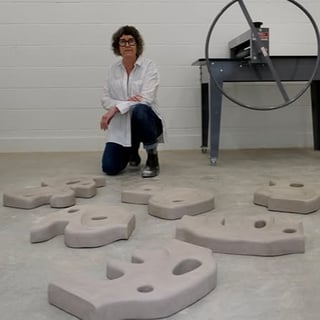
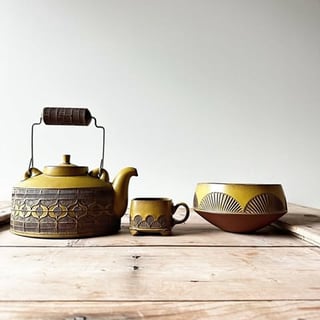
Speaker: If you love pottery and want to take your skills to the next level, you're in the right place. Find your own pottery style right here on Shaping Your Pottery with Nick Torres. Let's get started. What is up, Shaping Nation? This is Nick Torres here. And on this episode of Shaping Your Pottery, I got to interview Ingrid Chase. Ingrid makes some really incredible texture design pottery and that she makes, she uses various different things to actually make her textures like shoes.
Speaker: In this episode, you will learn how Ingrid makes her texture designs. You will learn about creating challenges for yourself so that you are growing as a potter and you're trying just new things to keep yourself a little bit fresh.
Speaker: Finally, you will also learn about sticking to one thing and repeating it for a while so that you can find out what is truly working and what is truly going to be your voice. I'll see you guys in there. Ingrid, welcome to Shaping Your Pottery and share with me what is something you love besides pottery.
Speaker: Well, I love a lot of things besides pottery. Naturally my family, but one thing that I really love actually is reading. My favorite time is on the weekends when I can get up and just read and drink coffee. And, you know, I think that's one of the things that makes me excited about making functional work. Cause I like collecting mugs and it just ties in with that time that I think is super special for me. I love that so much. I always liked reading a lot too. I think it's really amazing. So tell me the story, how you rediscovered ceramics.
Speaker: Okay. Well, I'm actually a high school art teacher as well. I had had to take some classes in college for my certification so that I could teach that. But in 2013, I had a little boy and he's always been a mama's boy and he was always kind of really attached to me. So I wanted a little me time and I needed, I did a little bit of throwing in college when I was getting that certification, but I wanted to learn how to do that better.
Speaker: So really honestly I started taking the class for recertification for teaching and to just kind of have some me time and I just really fell back in love with it. What made you keep pursuing ceramics further? You know it's really something that when I get my hands in the clay I kind of just can't put it down you know. So I started taking those classes and I just
Speaker: you know, didn't want to stop and I continued to take more of them and I kind of at the same time also been painting and I was doing these paintings where I would make these little ceramic sculptures and do photographs of them and then paint them and I realized that the painting kind of seemed like work to me but the ceramics was always really fun and then I just had this like epiphany like hey I need to just continue doing this this is what I enjoy doing and in creation should be about having fun to me.
Speaker: Absolutely, absolutely agree. Shaping Nation, the most important thing is just to simply have fun. That is like the most important thing. If you're not having fun, then it's really no point to it. Absolutely. So can you describe to me the moment when you decided to take the leap and set up a full -time studio in your home?
Speaker: Okay, well, I had actually, I was still taking the classes at a community studio, and initially I just wanted a little bit more time to make, so I got a wheel at first, but I still would do the community classes, community center classes, because I liked being around other people, and it was a lot to have a kiln in my home, but actually somebody gave me a kiln, and then I kind of was procrastinating, getting it wired so I could have it at home, and then COVID hit,
Speaker: And the studio shut down and I was like, okay, this, I've got to do this. And it's been really amazing having a Kiliman home and being able to just do it all here and not to carry giant boxes full of pottery to another place to get fired. Love it. So let's talk about your pottery. In one sentence, tell me what you make.
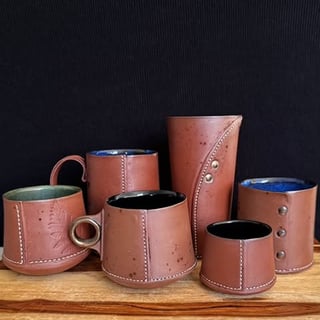
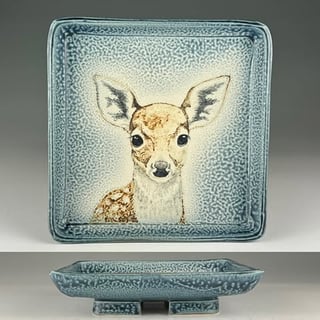
Speaker: Okay, I would say it's hard for me to do one sentence. First of all, I'm definitely a more is more kind of person, but I would say that it's functional pottery that's really rich in texture, color and pattern.
Speaker: Love it. I'm going to like learning about that later on. So tell me the story of how you started creating your texture designs. Well, you know, one of my instructor had gotten me to do some little simple clay stamps, and I had been using that before. Some fist stamps, little like roller wheel stamps.
Speaker: But the thing that really honestly changed my direction is I discovered I had this little wooden rib that I would use all the time when I was first learning to throw, I would like dig it down into the wheel head to kind of push against it and get the walls straight. And it actually ended up sanding down the edge of that. So it made this little teardrop shape on the edge of the rib. And so that's what I really started pressing in to make my pattern. So I just really kind of discovered that I like looking around and making or finding a lot of different things that I could press in to make that texture.
Speaker: But I always liked that it was like the culmination of all my mistakes came to this thing that I really liked. And if I lost that rib, I don't know what I would do. I thought I lost it at one point because I still use it all the time to make texture. I tried to make one myself and it just wasn't the same as that one. So I don't know. But that's what got me making and getting really interested in texture and pattern. So what is it about texture and pattern that really kind of interests you? I mean,
Speaker: You know, obviously I do ceramics. I feel like that most people that do that are very tactile in nature. Not all, but I mean, it is just such a touch base medium. I don't know. I just, it's almost just super calming to me to do something and just repeat it over and over again. And I feel like it can just come together into this really nice look, just purely by repeating something again and again, you know, something greater can come from it.
Speaker: I definitely agree. It's that repetition that kind of ends up making it look a lot better. Eventually, even if it's not good right now, it will look good eventually. Exactly. So can you give me a simplified version of how you create and decorate your texture designs?
Speaker: Okay, so I throw most of my pottery on the wheel, and then once it's trimmed and ready, I just basically grit it out, you know, on the surface with some watercolor. And I have stamps, the bisque stamps that I use a lot. And I usually just always start with that. And I just, I mean, it's people are always like, how do you come up with this? I just do something, I choose a stamp, press it in, I repeat it.
Speaker: I decide if I want to change it, what else I want to add, but it's, it's the great thing about pattern. Kind of like what you just said before is just by nature of just adding to it and repeating it again and again, it looks, it makes it look pretty good. Absolutely. So something I found interesting is that you are inspired by the challenge of approaching each piece as a blank unplanned canvas. Can you explain this a little further to me?
Speaker: Sure, like I said, when I start, I do start with a grid structure. I think it's nice to have that structure as a starting point because it initially I didn't do that. And I would start and kind of eyeball the repetition and it didn't line up. Perfectly, and it really never does line up perfectly, but it was pretty off to me. So I like giving myself that structure and then.
Speaker: It's actually, strangely, people have asked that, and it's strangely harder for me to follow a plan than just to go with it. You know, it's like, I feel like it's more stressful if I have to go back and check and check a design and try to match something. Because, you know, you've got the three -dimensional form of the object. It's different than a piece of paper. You know, I just like that challenge of looking at it. Sometimes I make that first impression and I think, oh my gosh, what did I do? This is totally mess us all up.
Speaker: But then it's kind of fun to be like, okay, how can I bring this back? What can I do to make it look a little better?
Speaker: How has this helped you grow more as a potter and as an artist, being that you're not really planning what you're trying to make? Well, I mean, I like that, you know, I came from a background. I studied a lot of different fine arts, but, you know, I did painting before. And with that, you're usually not reproducing the same thing multiple times. Each piece is something new and different. So I like that to me, by challenging myself to do something different each time,
Speaker: I see them a little bit more as a work of art, not that any ceramics is not. I think it all is a work of art, but by making it unique, it just pushes me to not rest into what I've done before and not feel satisfied by what I've done before to always challenge myself to do something new and different.
Speaker: I love that so much. I truly believe that if we can challenge ourselves with our pottery, then our pottery is going to grow and so are we and our voice is going to grow. And I truly believe that so much. And that is some excellent golden piece of advice right there. Now, what advice would you give to someone trying to add their own texture to their pottery?
Speaker: Okay, well, so number 1, I do, I make my own texture stamps. Initially I would go out and there's so many pre -made texture stamps and rollers and different things like that you can get, which are a great starting point. But I think if you're trying to make it your own, I think kind of starting from the beginning and making the texture that you're going to repeat.
Speaker: yourself really makes it unique. You can look around I mean I'm always and I think a lot of potters do this always looking at anything that I see and like oh what would that make if I pressed it into the clay that would make a really cool texture. But you know I've seen people too just like walk around and find things in the environment to press clay into to make texture. I have a little project that I do with my students where they make a little texture stamp by just pressing into the bottom of their shoe because usually there's a really cool pattern on the bottom of that
Speaker: But I think just opening your eyes to the textures all around you and then how can you use that to make a stamp and then bring that into your work and it'll just make it super unique. That is really interesting way of trying to add texture into your pottery like using your shoe that's super creative. Yeah.
Speaker: So you have been, you know, an artist. That's what you have been. You studied art. How has studying art really helped you with developing your voice as a partner? Well, you know, I've always really been interested in looking at lots of different media. I was a crafts major, so I did painting, but then I also did metalsmithing, woodworking, fiber work. And a lot of my, I mean, maybe not a lot, but a good amount of my inspiration comes from just looking at art, period, right? So actually there's,
Speaker: When I started to add a lot of color into my designs, that actually came from looking at another artist that does leather work and has these cool kind of textures in theirs and they like hand paint into their leather work. And so I think looking at lots of different art and thinking, how can I bring that into my own work? I'll sometimes use this little roller that looks like stitching and that relates to, for me, like when I would do fibers and fabric work.
Speaker: But just know that any of that visual can come into clay. And that's what's amazing about clay is you can do literally anything with it almost artistically. You can really focus on surface. You can focus on form. And so that's why any medium can really be inspiration for you. Absolutely agree. So we're going to talk about your voice in a little bit, a little bit further down the road. But for now, can you explain to me how you like get the colors that you get onto your pottery?
Speaker: Yeah, so I glaze all the colors on there and I have just little bottles that I have all my different glazes in and I just squeeze them out into the little space. There's something about dipping the brush in glaze that it's like a texture thing for me. I don't like the feel of it. So I like the little bottles and you can just squeeze one little layer on there and you don't have to do those multiple coats, which is nice.
Speaker: and then I can just have the glaze there ready in those bottles to go so I can kind of mix and match colors. If I was smarter I would have test tiles of every single color and I could put them all together and figure out, but I kind of just try to remember what they look like and it works most of the time. It's all part of the game. Yeah.
Speaker: Where do you get those little bottles that you're mentioning? I've just ordered them off of Amazon before. I think they're, I forget exactly what they're called. Sometimes people use them in like Henna, precision. I can't remember exactly what they're called, but yeah, I've ordered them from Amazon before and they're pretty inexpensive.
Speaker: Now, can you tell me the story, how you started using that technique? Like when you first started using that technique? Well, actually one of my Instagram friends, Sarah Beth Pottery, she uses it a lot with underglaze. So I think she had done a takeover of speed ball maybe. And so I saw her, she was in her studio and she was using them for underglaze. And I was like, oh, that would work for glaze too. So I got the inspiration from her.
Speaker: Love it. So let's get back to discovering your voice. What challenges did you face when you were trying to discover your own voice? Well, I mean, I feel like with ceramics, again, there's like so many ways you can go that it's kind of hard. For me, it was hard to pick one way to go. Initially, actually, my pottery was pretty different. I used to put all these barnacles all over everything and it was a little bit more organic and natural. I do really like nature.
Speaker: And I had started doing some shows, and that's what most of my work was initially. And people kept, you know, in the following years, they'd ask for like, where's the Barnacle Lady, you know? And I actually realized that I didn't like doing that, you know? And so that was a struggle for me to try to figure out like, can I just leave that style behind? And I haven't fully left it behind. Sometimes I come back and revisit it usually about once a year in the summer. I feel like it's pretty appropriate then. But I like not being pigeonholed into doing that. But I did feel for a little while like I kind of had to do that.
Speaker: And then I realized I don't, you know, I'm doing this for fun. I can make it look however I want to. What did you do to make that transition from making the barnacles into what you're making now? So I started initially kind of combining the two. I still had the patterns on there or I had the patterns on there and then I had the barnacles, but I just, I didn't really like the way it looked together. So then I just stopped doing them and, you know.
Speaker: Sometimes people ask for them and I just tell them if I'm gonna make that style again, but I don't know. Luckily, this is not my full -time job, right? So I feel bad sometimes for people that, you know, I wonder about that. People that find a style and people come to expect it and you have to stay in that style, I think can be pretty limiting. But because I work full -time anyway, this is just extra for me, right? So I don't feel like I have to stay like that.
Speaker: Absolutely. Shaping Nation, you don't have to stick to just one single style. You can make whatever you want to make. If you want to go make something completely different than what you're making, go make it. Nobody's holding you back. Just go make whatever you want to make. And it can be scary, especially if you've done something that's pretty successful. Well, people like this. But like what you said at the beginning, if you're not having fun doing it, if it's not holding your interest, then it's not going to be good or it's not going to be as good. Absolutely. 100 % agree.
Speaker: Now, what would you say has helped you the most when it came to discovering your voice? I think one of the things that helps me is, you know, kind of like with approaching each mug as a blank canvas to give myself some type of challenge of doing a lot of one thing, because sometimes that repetition brings something new out of it. So I do every now and then sketch, like little pattern designs.
Speaker: And so I'll draw a bunch of Opals, like 20 Opals, and try to put different designs in each one and see where forcing myself to do it over and over again can make something unexpected come from it. Because I usually feel like the first couple examples are
Speaker: like kind of the obvious answer to the problem you give yourself. I do remember a time too, right after I got the wheel, I just gave myself the challenge to make something every day, you know? And so I just forced myself smaller as big as it was, get in the studio every day, and just by getting that habit going, it really did help me kind of focus in and change what I was doing and explore, you know? And so I think finding your voice takes a lot of exploration initially, and then you start to discover what really brings you the most joy.
Speaker: Absolutely agree. Like right now, currently I'm literally doing that with my work right now. I'm trying to get into the studio at least daily, if I can, and I'm trying to at least work on what I'm working. And that has helped so much tremendously. Right. And sometimes like, you know, I've seen people do it on social media, but make yourself do it and make yourself post about it if you're on social media, because by doing that, announcing you're going to do something and then holding yourself accountable to it, it really does force you to do it. Definitely. That was some really great advice right there.
Speaker: What is something you have done or still do to help you evolve your voice even further? Well, I do. I mean, I love learning about process. So as many, you know, videos that I can watch of people working in their studios, I love doing that and learning new things.
Speaker: I'm part of a local potter's guild and they have workshops where they bring in ceramic artists, you know, twice a year or so. And even if it seems like it's not my style or my look at all, I find that every time I go to one of those, I learn one or two little things that I want to either try or bring back into my studio and kind of tweak in my own way. But I think just constantly, you know, just looking at other craftsmen, looking at the world and just challenging yourself to just try something new, not settle.
Speaker: Absolutely, you have to keep on trying new things to make your voice evolve and that is super powerful advice right there.
Speaker: Now, what advice would you give to someone trying to discover their own unique voice with their pottery? So there's a phrase that, you know, you hear as an art teacher, as an artist that the idea of stealing like an artist. So I think that the, the world is rich with visual information and, you know, sometimes I feel like people can get a little discouraged feeling like there's nothing new that they can do. Everything's been done before, but I think that.
Speaker: trying to look around and see things that you like right techniques that you like or styles that you like and kind of take that but don't just copy it exactly think about how can I put my own little spin on it or how can I take from multiple sources or have inspiration maybe not take but have inspiration from multiple sources but how can I combine it into something new you know people have reached out to me before about oh what
Speaker: could I sell some of the bisque stamps that I've made? And there's no point to that. Like, I will teach you how to make them, make your own, you know? Don't try to take somebody else's thing. So I think that it's just super important to just be conscious. And sometimes I feel like you do it unconsciously. Like, I definitely look at my work and go, oh, does that look a little too much like this other thing, you know? But try to consciously be aware of where you're taking from if you're taking inspiration from something and putting your own spin on it.
Speaker: Definitely. Shaping Nation. It's okay to take inspiration from other people, other potters, other artists. As long as you are putting your own spin on it and to make it truly your own, that's where your voice is really going to show up. Because that's where the things that you like and those are the things that you're going to want to focus on. And people will see it and they'll know. So if you want to make a name for yourself, it's really all about trying
Speaker: to make it your own, to be different, right? Exactly, exactly. So as we're coming to a close here, what is one thing you wanna hammer home with my audience today? I think the main thing is to always challenge yourself to do something new, but make sure that you're always finding joy in what you're doing. Because if you're not, it's not gonna be your own voice. It's gonna be something you feel like you have to do and that's not you.
Speaker: Definitely great. Ingrid, it was really great chatting today. Where can my audience go and learn more about you? So I'm pretty active on Instagram. I'm IMC Clay. I think it's underscore underscore Clay between IMC, but I should know that, but I don't, but I should come up pretty quickly. So I'm there and then I've got a link there for my website where I post things and do updates and everything. But you can see most of my work on Instagram. It does post to my Facebook page as well. It's also IMC Clay, but I
Speaker: Don't check that as much as I should. So if you really want to get in touch with me, an email that's posted on my website or a message on Instagram is the best way to.
Speaker: Thanks for listening to this episode of Shaping Your Pottery with Nick Torres. If you want to start discovering your own unique voice, you must first start with the right questions. That's why I put together a free 15 question booklet for you to start discovering your own unique pottery voice. All you have to do is go to shapingyourpottery .com forward slash questions to get this free booklet.