Transcript
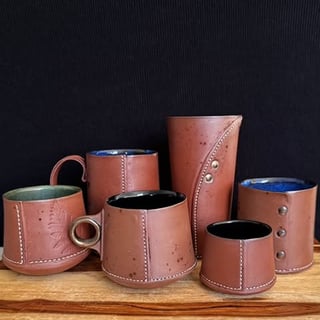
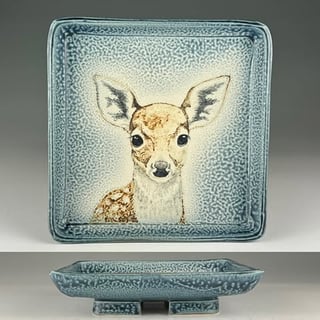
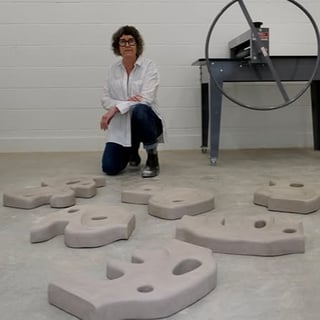
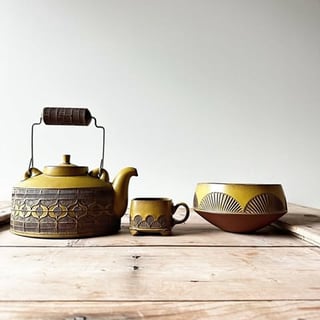
Speaker: Welcome to Shaping Your Pottery with Nick Torres where we help you discover your own unique voice so you can stand out from the crowd and have more fun making pottery so you make pottery that is truly amazing. Hey how's it going everybody this is Nick Torres here. In this episode of Shaping Your Pottery I got to interview Lindsay Sipta. Lindsay is a mom and has been featured in ceramics monthly. She has taken her pottery
Speaker: across the world to England so that she can develop her voice further. In this episode, you will learn how to make patterns onto your pottery, learn about growing through community and so much more. Lindsay, welcome to Shaping Your Pottery and share with me one thing you believe pottery should be doing to have success in pottery.
Speaker: Sure. So I feel like it's so important to just be making a lot of work, but also be open to what's going on in the greater ceramic world, what's going on in your life, and taking advantage of opportunities that come your way, not being afraid to go after something that might seem
Speaker: Hard or challenging a lot of things in my career have kind of happened on a whim and it's really led me down A path that's been really remarkable. So being open to those things. I think it's really important Absolutely level. We're gonna have a really great show today We're gonna talk about your time as a resident at the clay art center your time in England
Speaker: and also how you make your pottery as well. So can you tell me the story about your residency at the Clay Art Center?
Speaker: Yeah, so I finished up at Ohio State with my MFA. I applied to all the things. And I was so lucky that Clay Arts Center offered me a position. And the thing about grad school that I didn't realize was that I was in an academically focused program, which meant I was in the classroom a lot.
Speaker: you know, to fulfill that requirement. And so being able to be at Clay Art Center and strictly make work was an incredible gift. That gift of time that I think about now a lot on the flip side, but
Speaker: Yeah, so being there, I was in this incredible community that welcomed me with open arms, and I made work, they supported my work, and then I taught in the evenings. And it was really an incredible stepping stone to the next chapter of my life. It showed me how important community is, and it kind of changed the shape of what my future would look like. How did this start developing your own style of pottery?
Speaker: The residency? Yes. Yeah. I think I already had a lot of those pieces in play. It was just the opportunity to have the time to develop them and to take risks that really started to shape that voice and to clarify the voice. Yeah. What was the biggest lesson you learned that you still use today?
Speaker: Well, I think the biggest lesson I learned was how important it is to build a community around you and how important that community has become to me, but also the beauty that comes from, you know, sort of being responsible for bringing these people together. And so a lot of what I'm doing now.
Speaker: at the community college near me here in Toledo is that I'm inviting members of the community into that space to maybe take a class as a part of our 60 plus program to be enrolled in our community arts program.
Speaker: And so through that we're building this really incredible community of people who love clay and they come with a breadth of knowledge about life and different careers and I've seen my academic students really thrive from having that opportunity to engage with
Speaker: these older individuals who have lived a life and have lots to share and are excited to share. So it's brought a breath of fresh air into the studio space that I wasn't expecting, but I knew that deep down how important that was going to be. And so Clay Arts Center started that shift for me. That is absolutely amazing. I love how you are building that community and building everybody up. Yes, yeah.
Speaker: So you are very inspired with patterns. What is it about patterns that inspire you? That's such a hard question. I certainly love patterns and I love all kinds of patterns from, you know, a pattern that has unexpected
Speaker: movement to it to something that's very rigid and structured. I love looking at pattern and architecture. I like looking at pattern in in clothing. I like how pattern, you know, becomes texture. So it's hard to define, you know, why I like it so much, but I like it all and I look at it all. And I like figuring out to how it is going to come together. So
Speaker: the shapes that I'm designing, it's really fun to play with how those components start to piece together and seeing how I can change a pattern really drastically by placing them differently. So I think it's just part of that research and I really love it. So could you give me a simplified version of how you would make patterns onto your pottery?
Speaker: I think it's hard to explain it without showing it, but I'm taking a shape and simplifying it down to a half component. So if you're thinking about a diamond, I'm cutting that diamond in half. And then I make a decision when I'm placing that diamond on my pot, whether I
Speaker: Once I have that initial diamond, the half shape, I'm making the decision whether I match it tip to tip, so point to point, or then edge to edge. There's a positive and a negative that starts to come into play as well. It's a lot about trial and error, really.
Speaker: and process and being open to the good and the bad. I just did a whole line of saucers and I decorated every single one differently because I kind of liked them all. I liked where it was going. And so now I get to edit that down. And when I make another round of them, I'll edit them down to maybe two patterns that I want to really focus in on or two style of design.
Speaker: So I am much more of a trial and error type of artist. I like saving my results and documenting it because a lot of times the things I throw to the side initially have value. And so being able to go back and look at that is valuable too. What do you use to actually make your patterns? So I'm laser cutting.
Speaker: tools and I guess I could talk about how it all started, which is probably more interesting. When I was an undergrad, my mentor, John Gill,
Speaker: had we were having a conversation and my father at the time you know I was a junior in college and juniors always have to have an internship you know and so he said he was pushing me about it and I so I told John Gill I really need an internship my dad's been hounding me to like get it together and he laughed because that's not really a thing that artists do right and um
Speaker: So he said, why don't you just go to Anderson Ranch for the summer and you just like just left it like that, like really simple. Just go there. And I was like, okay, what does that mean? You know, like, how do I make that happen? And he made a phone call and I don't know, two months later I was there. It was.
Speaker: this kind of unbelievable situation. I had to keep pinching myself that I was in it, but while I was there, I met this incredible artist, Michael Wissner, and he happened to be giving a workshop. And maybe I should go back and say Anderson Research Center is in Aspen, Colorado, Snowmass Village, Colorado.
Speaker: And they have artists that come through all summer long. So they'll have professors, they'll have full -time artists, they'll have students that come through to take the workshops, they have hobbyists that come through, teachers that come through. It's really an incredible opportunity to meet a lot of people at different points in their career.
Speaker: and to learn from all those people. So this was certainly an opportunity for me to fill up my toolbox, and I did. So I happened to walk in on a demo by Michael Wister, a Colorado -based artist, and he was doing these really incredibly patterned pots, and he still does, but he was showing a demo on how to make tools. And
Speaker: it seems really like not complicated saying that right like make your own tool but for me back then i was always using the tools that came in the toolkit or or that you could buy at the pottery store i didn't really think about making my own and so um
Speaker: it was life -changing. It literally changed the trajectory of the work I was going to make just walking in on this 15 -minute demo. And it's really remarkable when I think back on it. So he asked if I wanted to make some tools with them, and I did, of course. And so I made these tools. I took them back to my studio. I started playing around with them. I started looking in my toolbox to see what I had. And so it all came together just on that chance
Speaker: trip, internship, my junior year of college. I took that back to college and, you know, John Gill giggled when I like showed him what I was making and what I wanted to make and he took me to the library and we were looking at these tufted Victorian chairs in the Sears and Robux catalog and
Speaker: Um, I don't know. It just, it was an amazing thing that took me down this road that I would never have expected, but, um, I feel like I've just started to tackle it. You know, like I have so many more ideas and I'm so excited about.
Speaker: what I'm going to do next. And that's really exciting because I've been doing it now for 15 years, but I don't feel like I'm out of ideas. So I don't know what your question was anymore, but that's how I got here. So how do you keep like everything fresh after doing it for 15 years?
Speaker: Yeah, it's hard. And I guess I maybe should have prefaced the interview by saying that I, you know, I'm a mom to three little ones under four years old. And so that freshness has definitely changed.
Speaker: in the last four years, it's felt more recently like I'm just trying to keep my head above water. But I'm seeing the light at the end of the tunnel. So if anyone's listening that is like in the depths of motherhood, there is light at the in the middle somewhere. And you'll make work again. And so I'm in my studio really actively now during nap time. So know that that it's always during nap time, it's always three hours, maybe ish, sometimes one, you know, but
Speaker: But I think, like I said, I don't feel like I've exhausted all my ideas with patterns. So I've been really investigating how I can take these tools that I'm laser cutting and
Speaker: I want to laser cut patterning into the tool so that when I'm pressing the tools in, I'm also getting a pattern that's residual. And so that's something I want to work on. I've tested it out really vaguely. And so that's kind of my next endeavor. When I got to Ohio State for grad school, they had a laser cutter and my professor, Rebecca Harvey, just very simply, sort of just like John Gill, like, just go laser cut some new tools.
Speaker: And I love the way they, both of them talk so freely and simply to me about things that were really complicated because I probably would have talked myself out of figuring it out, but because they were just like, go do it. It's easy. Just, you know, figure it out. I did. I did figure it out. And so I've been laser cutting these tools and, um, and so that next step that I want to do is really investigating that residual, um, patterning that could come from the tool itself.
Speaker: So I think just keeping it fresh is about continuing to investigate, to take risks. I'm still making the work, but I'm trying to integrate new patterns, new designs as I go.
Speaker: I really love that. For those who are listening, you have to kind of experiment a lot and keep on experimenting new things in order to see what you want to make. Sure. Sure. So could you tell me what is something in pottery you wish you didn't have to do, but you still have to do anyway? Oh, recycle clay. 100 % all day. I agree 100 % on that one. I hate recycling clay, but I do it anyway. I know. I have too much waste to not recycle it.
Speaker: Yeah, it's so much and it's so painful. I 100 % agree on that one. So you had the great opportunity to follow your thesis research to England. Can you explain to me what your thesis was about? Yeah, so I was investigating the history of the table and the importance of it, the establishment of it, the importance of it, and then also questioning whether we'll still
Speaker: continue to sit at a table. I was interested in the intimacy of a table. Really anything about a table was kind of where my thesis started. And a lot of that research existed, you know, was coming out of England.
Speaker: It seemed natural to try to get there to push the research further. But remember that a lot of what I do is visual. I'm not so much of a book smart artist or focused that way. So seeing it and experiencing it was really crucial to that for me. So I wanted to go, I wanted to see the Victoria and Albert and see all of the
Speaker: collection of pottery from floor to ceiling, from across forever. Because I wanted to see what the work looked like before the Industrial Revolution, during it, you know, when the Victorian era kicked in and all that food specificity happened and they were making, you know, pickle dishes and asparagus dishes and all these different trays and mustard containers and, you know, just these kind of bizarre things. I wanted to see it in person and I wanted to see it at a grand scale.
Speaker: And then the last part of that trip was that my professor, Rebecca Harvey, really pushed me to go to the Royal Pavilion because it was really a remarkable palace in Brighton. And it seemed really out of the way and I was really nervous about, you know, what if I should spend the money to go that direction.
Speaker: Or I should just focus my energy on the V &A. And I had also been a stroke on Trent to see Wedgwood and all the sprigs that they make as a part of their Jasper Ware collection. But I went and it changed.
Speaker: my thesis. So I walked into this palace and we're touring and it's all these layers of textures and ornamentation, floor to ceiling, totally ridiculous, over the top, crazy. My head was exploding because it was so much information, so many cultures mixed together. And so I'm trying to process all of this. Of course, you can't take pictures because why would they let you take pictures?
Speaker: So I get to the grand dining hall and I see this huge table with these candelabras all the way down the center of the table and they were massive. And I just
Speaker: I just stood there and I secretly snapped a picture on my camera. And I couldn't stop thinking that that was what I wanted my thesis show to look like. I had been making these towers, I'd been stacking my work, kind of going back to
Speaker: to that history of the table and the intimacy of dining and all of that. And so I wanted, when I saw those candelabras down that table, I just thought I've got to do that. So when I got back to school, I totally shifted how I was going to display my work. I ended up building this huge table and I displayed the work sort of in a linear fashion so that when the light hit it, I got these really incredible shadows.
Speaker: behind the work. It was stacked super ridiculously high and each each tower was a survey or you know one of one of the why am I blinking each serving was you know as a service of the meal so
Speaker: you know, whether it was your entree or your dessert. And I like this idea that the people enjoying the meal would have to participate. So they would be passing the dishes to one another as they took down the towers to enjoy the meal together.
Speaker: So that trip, again, sort of going back to the Anderson Ranch tool making spontaneity of that experience, the same with this Brighton experience for me, all of a sudden just witnessing this one table, huge table with these candelabras really changed the trajectory of my thesis show and how I present my work moving forward.
Speaker: For those who are listening, it's very important to just kind of explore things and like whatever catches the eye, maybe that's the next thing that's going to give you something new. Yes. So how did this experience help you with developing your voice further? Yeah. So, you know, I think that each experience is what pushes the voice
Speaker: that individual authentic voice further. So I figured out how to make the tools. I spent a lot of time in grad school figuring out my glaze and then obviously experiencing the world and the history and the research.
Speaker: And when all of those pieces start to come together, all of a sudden your voice starts to become really clear. And I was able to weed out the things that weren't important anymore. And I stopped worrying about making the other stuff, the stuff I thought I had to make. And I think I also was able to say no to things that I knew didn't fit
Speaker: my aesthetic or my intention. So it's really about each experience and acknowledging it and documenting it and being open to it. And I say documenting because there's been so many times where I've referenced my sketchbooks from many years ago. And so I remind my students all the time that having a very thoughtfully
Speaker: well -kept sketchbook can really save you in the long run. And so I remember I was doing something in the print shop and I wrote down exactly what I did and the order of things. And then three years later, I was back in the print shop and there I could go back to that sketchbook to rereference what I had done. It's always surprising to me the things I think I'll remember, I don't.
Speaker: And so having that documented has been really crucial. And I think that there's a lot of times where there's been ideas that I've had and I don't have the capability to pull them off in that moment, but it was still a good idea. And so being able to go back and
Speaker: remind myself of that good idea in a few years. So I can try to pull it off now. Maybe I have the technology or I have the equipment or the time, whatever it is. I think that there's a lot of ideas out there that we walk away from because of whatever reason. And they're still good ideas. You just have to give yourself the time to pull it off. I absolutely love that. That was really great. So can you tell me
Speaker: How has a failure or a parent failure led you to future success? Yeah, so this is like a very vulnerable question. I have two that I would be willing to share. The first one was that when I left undergrad, and remember, I was at Alfred for my BFA. And when I was there, and I'm sure it's still this way,
Speaker: people were in the studio all the time into the wee hours of the night. And so when I left there and my faculty recommended me for the next thing, my special student, a special student gig, I probably had an ego and I had expectations of what a studio should be like. And I was 22. And so I had a lot of things going
Speaker: you know, against me at the time, but I had a really bad experience. And I thought about not going back after the first semester, I returned. And it just, it never got better. And it wasn't just me, it was like the group of us special students, we all were really struggling with the situation.
Speaker: that we were in and the way we were treated. And it was really unfortunate because it could have been a career killer. I think if I would have got a full -time job in doing something else when I left there in the spring, I don't think I would have touched clay probably ever again. It was just that kind of experience that just killed, it just ripped my soul, my artistic soul out of me. I was so depleted and I also didn't have the next thing. When I left there, they were just like, bye.
Speaker: They weren't like, can we help you? What do you want to do next? Can we recommend you? There was no conversation. And so I had to figure it out. And some of my colleagues, they didn't figure it out.
Speaker: And so what I learned from it was that I learned that I had value. And so the next place I went, I made sure I was going somewhere where somebody was going to care about me and was going to mentor me and was interested in giving back as much as they were expecting me to put in.
Speaker: So that was the first, like really big, it felt like a big failure. And like I said, I'm sure I participated in the bad situation. But it was, yeah, potentially soul crushing. And so the second one was more recently, and I was teaching adjunct at multiple institutions, like many adjuncts do to try to, you know, bring in enough money to justify all the things.
Speaker: And I got really excited about this institution I was working at. I felt like all the people around me were excited about what we were doing and what I wanted to do. They were excited about creating community, bringing in a community program into the art studio, which was something that was important to me. And all of a sudden, the administration shifted.
Speaker: We got a new president, we got a new dean, all these things shifted and then there was no support. And the writing on the wall became really clear that I had to get out before it got worse and became more of a toxic situation. And I don't know that I could have done anything different to change it, but that was really devastating.
Speaker: because I had created a community of students that I adored. And I had some really incredible academic students too, that I was excited about. So that was really, really hard to walk away from. But what I learned is that I had to prioritize what I wanted. So I was teaching at all these places. And so that forced me to say, okay, I'm going to just teach at one place where I have the support
Speaker: that I need to accomplish the things that I want, which was I wanted to teach academic, I wanted to have a community program, I wanted to have a little bit of latitude.
Speaker: to take on special projects and things. And I had that institution always, but I was trying to have all my eggs in lots of baskets. And so when I focused in on what I wanted and I was able to define it, which is what this kind of failure forced me to do, all my students followed me.
Speaker: to this other institution, right? So when I started up my community program, all my students from the other institution were all, there they were, you know, my communities followed me. My students, academic students, I kept getting new students funneling through the program, which was good.
Speaker: So sometimes these failures do, they're heartbreaking, but they force you to reevaluate what you want, um, what your expectations are. And then they also teach you to think carefully about what your expectations of, of your employer or whoever you're working with are too. And so, um, yeah, I think that clarity was really, really crucial. And I, I maybe hope someone listening will be able to see the clarity and their failures too.
Speaker: It's hard, but it's good when you can define them. Those are two really amazing stories. So now, if you had to give advice for someone looking to develop their own unique voice, what would you say?
Speaker: Yeah. I mean, you got to make the work, right? Like you can't make five pots and have a good one because the first one's going to crack and the second one's going to be like wonky and the third one's, your glaze is going to stick to the shell, you know? So like you got to make a lot of work and you got to figure out what's good about the work.
Speaker: So I've had a few students recently that come to mind. And one of them was making, she kept making really great work, but then when she'd glaze it, it would come out terrible. And finally she had a success. And I pulled her aside and I said, this is really good. Do you like it? And she said, yes. And I'm like, why do you like it? And we talked about it. And so I said, you need to do this.
Speaker: like this only, don't do anything else, just like make the work and glaze it like this. And so all of a sudden she had this body of work that was really incredible because the work she was making at the Leather Heart State was great.
Speaker: It was just the glazing that she couldn't figure out to make successful pots. And so I think being able to pull the good to the front of your mind, push away the bad, pull the good forward and then start to put all the goods together. So like she did and having success that way. So the same thing happened with me. I had a pot come out of the kiln that was like everything I wanted in a glaze.
Speaker: And so that's what I honed in on. You know, I had these red dots, slip dots, and this runny glaze. And I thought, yeah, that's it. That's that juiciness I wanted. And so then it was just about testing and testing and doing it again and again. And I can't tell you how many pots were stuck to the shelf. I am sure that, you know,
Speaker: Paul Simon was rolling over like so angry at me at OSU because I'm sure I ruined lots of shelves and didn't clean them up as well as I should have. But it was part of my process, you know? And so, yeah, I had to ruin a lot of pots and a lot of shelves to figure out that I needed to put a foot on my pots that was going to catch my glaze, right?
Speaker: Like I had all the pieces together, but they were all stuck to the shelf. So then finally I got smart and I put a foot on that would catch the glaze and then I wouldn't be stuck to the shelf and I would have more success. Success is coming out, you know, that we're saveable. So yes, find the good. That's my advice. Find the good and put all the goods together.
Speaker: That is some awesome piece of advice. So as we're coming up to our last question here, what is one thing you want to hammer home with my audience today? Well, I think I've already hammered at home just being open to the experience of life and being open to when people are generous with you, when they offer you opportunities.
Speaker: you know, when someone wants to help you, let them, you know, and don't be afraid. I think that, you know, we miss out on opportunities because of fear too often. So I would just say be open. My whole career has, as I explained, shifted because of these little unexpected spontaneous situations. And so being open to that and then doing it, right? Like it takes grit.
Speaker: And I think maybe my failure, my example of my failure is an example of that grit, right? Like you are going to be told no so many times, whether it's shows or jobs or, I don't know, all the things, right? People, customers that come back and say your pot didn't work right, or I don't know, you know, and you just have to keep pushing forward and, and making a lot of work. So good luck. It's the process.
Speaker: Lindsey, I had a really great time interviewing today, and where can my audience go and check out your work? Yeah, so I try to post on Instagram, so at lindsaycepta, and then I have a website, lindsaycepta .com as well.
Speaker: Hey everybody this is Nick Torres here and I want to help you guys out but I don't know what you guys are struggling with. I don't know what is difficult for you guys right now in pottery or just overall in general. So help me help you guys out by going to email me at nick at shapingyourpottery .com.
Speaker: I know you guys are listening to this podcast for a reason. So help me help you by putting in the information and giving me some data that I can actually provide real value to you guys. So please go to nick at shapingyourpottery .com. Email me there so that I can help you guys to my best of my ability.