Transcript
Speaker: Ooh, a spicy question. love Because the writing is sort of everything, right? Like you can fix plot holes, but if the writer isn't there. So some readers love that and some readers are like, but I wanted more of this. So it's kind of, it's kind of a gamble.
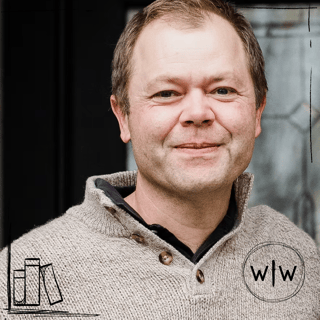
Speaker: Hello and welcome back to the Right and Wrong podcast. On today's episode I am joined by a former film journalist who now writes popcorn fantasy, horror novels and recently released his first spooky children's book. It's Josh Winning. Hello.
Speaker: Hello, thank you for having me. I'm such a big fan of your podcast so I'm absolutely honoured to be here. Well, I'm honored to have you on um and and I'm excited to to talk to you. We've got a lot to get through. um as always, we start with the latest publication, but you you've actually put two books out this year. So we'll we'll start with the most recent one, which is um How to Train Your Zombie. Am I around thinking this is your first children's book?
Speaker: It is. Yeah. Number one. not at all scary. Okay. Tell us a little bit about the the the story. what's What's the book about? It's about three brothers who are shooting a a YouTube video all about monsters in ah in a graveyard. And then, they're shooting a video about a zombie is probably quite important to specify. And then a real life zombie bursts out of a grave and it is the sadly dead best friend of the middle brother. And the brothers sort of try to train the their zombie friends so that he can stick around with them forever. but there is a mysterious man with a sentient shadow who wants to put the zombie back in the ground.
Speaker: So it's sort of like goosebumps meets diary of a wimpy kid jaunt, but sort of tackles themes of grief and letting go and friendship and brotherhood. So quite a lot packed into sort of like 40, 40,000 words. Yeah. But yeah, so that's, that's my, that's my how to train your zombie.
Speaker: has a changes And and this is this is middle grade, right? That's the kind of age range this is targeted towards. Yeah, sort of 9 to 11, I think, is the age bracket that is recommended for readers. But i know i know younger readers who have read and enjoyed it, and I know slightly older readers who read it and enjoyed it. Some readers in their 40s have enjoyed it. So, yeah, there is the recommended age bracket, but I think hopefully it appeals to, you know, across the age groups. Yeah.
Speaker: I think that's, yeah, I think a ah you know a good story, whilst it can be targeted towards urgent age, should be accessible from from any age. This is why I often watch a lot of children's movies, because some of them are just really good, you know? Absolutely, yeah. Especially especially the films from the 80s and the 90s. They had this almost fearlessness about confronting dark themes. in a way that maybe more recent kids films or kids TV shows don't necessarily do I'm not super up and what the kids are watching but I get the feeling that they're not going quite as dark as say a horse drowning in the swamps of sadness or um you know all the crazy stuff that happens in labyrinth
Speaker: well Well, the never ending story, I think, is shared generational trauma for millennials. So absolutely I don't know about that. People forget. People always forget the horse does come back at the end. People get so upset about Artax drowning in this, the swamps of sadness that they do. They do forget that at the end of the film, He does he is magically resurrected by Bastion and you see him you know happily charging across a ah field ah with a trail on his back again. So he does he does have a happy ending in the end.
Speaker: Okay, yeah. i I will say I have two nieces who are young, so I have watched quite a lot of modern children's movies and there's a few that absolute standouts. If you if you want to peruse modern children's movies, there's the animated movie...
Speaker: The Puss in Boots, which is the craziest thing about Puss in Boots, The Last Wish is that it's a sequel to a spinoff that was like 10 years before that didn't do very well to a franchise that hadn't had an entry for like many, many years. And it's just the most, just thought it was such an incredible story. It's such a good film. I just didn't understand why it was so good.
Speaker: Yeah, it's fantastic. It's really funny. Really, really funny. Very knowing. Doesn't sort of try to talk down to kids. It very much talks ah but alongside kids. But I think it does have that appeal to to grownups as well. And yeah, like it's way better than it had any right to be, quite frankly. yes My only assumption with that was that the whatever studio signed off on it ah just said, okay, whatever, you know, this is going to do badly. We'll just leave the creatives to it. And it it feels like there was no studio meddling or anything. And they just created this incredible story.
Speaker: Yeah, and that could that can go either way. You know, it can turn into an absolute budget sapping monstrosity where someone's ego gets completely inflated beyond all control. Or it can create this beautiful, beautifully dark pearl of weirdness that everyone ends up adoring.
Speaker: Yes. Yeah. I, ah I love that film so much. Um, but we digress. We're supposed to be talking about you and always with we're talking, so we're talking about how to train your zombie, your first children's book. What was it that inspired you to write for, for a younger audience? You've never written for this kind of age before.
Speaker: That grew completely out of conversations with my agent, Christina Perez. She, I was just having dinner with her one day and i was talking about my three nephews and telling her all the funny things that they had been getting up to And she just looked at me across the table and said, i want to read that story.
Speaker: And I was very hesitant because I've never written for children before and I didn't know where to begin, quite frankly. And yeah, just sort of, I don't know, maybe. And also there was a hesitance because I thought, well, these are my family members and I don't want to do anything that would upset anyone in the family.
Speaker: So i kind of said, yeah, okay, whatever. And then didn't talk to her about that again for a good couple of years. And then I think the market, yeah, was like, no, that's thats done, goodbye. And I think the market changed and there suddenly was this outcry for sort of spooky stories or just books in general that will get boys reading. you know, there's this, apparently there's this crisis with boys not reading as much as they used to or or at all. And so there's this movement within publishing to try to encourage boys to read.
Speaker: because of, you know, just how much reading can benefit young people. There's so many benefits that you get from from reading, not just the pleasure of and a good story, but I think, you know, the development of empathy and reading outside of your own experience, all those great things that can come out of books.
Speaker: So, Then, yes, I think Christina came back to me again and said, well, have you thought about maybe trying out a mill grade thing? And she pitched me the title, how to train your zombie, which made me laugh out loud. And I sort of scurried off with that title and just came up with, with this book.
Speaker: And I did, I did speak to my sister because the three brothers are loosely inspired by my three nephews, sort of the age, similar in age. They're a bit older now, but at the time they were a similar sort of age. so like eight, 10 and 12 in the book.
Speaker: And I said to her, I've been sort of asked to write this book and i just want to check that it's okay that I am sort of loosely drawing from your children. I don't want, I would never want you to feel like I'm exploiting your children in order to write a book. And she kind of looked at me like I was crazy and said, oh, it's fine. Don't worry about It's absolutely fine.
Speaker: Which was lovely to hear and meant that I felt that I could go off and do my own thing without worrying too much about what she or the boys would think about it. Okay. I imagine they'd be excited to hear that they were laid loosely inspired characters in ah in a story.
Speaker: Yeah. Difficult to tell. I think the eldest is almost 15 and he's sort of not particularly interested as far as I can tell. I think probably he's got other other things going on. Sure. Yeah. ah The youngest...
Speaker: He is, I think he's just turned nine and he loves horror stories. He loves, he's watched all of stranger things and okay he does have a copy of how to train your zombie. I don't know that he's made it all the way through it yet, but he's definitely the one who is a reader and was most excited about this idea of his uncle having written a a spooky book for kids for sure.
Speaker: but i hope i don't let them down there was also that pressure of like oh i hope he what if he doesn't ever finish reading it and that means he hates it oh god what's that say about me but it's fine it's fine i don't mind it's fine yeah yeah yeah maybe maybe it's it's better for people who are removed from it but i know you said it was it was some years before you kind of actually decided to act on this uh kind of shared concept between you you and k christina because you hadn't written children's before. And I think it's, I think it's a very common misconception that people think writing children's literature is easier than writing for adults.
Speaker: Did you find it challenging kind of going younger and and having to sort of work with a different audience like that? I weirdly didn't. I think that I don't know. I think that I just, I love all kinds of spooky stories. And like we were saying, I grew up with goosebumps and point horror books, and I grew up with those spooky films from the eighties and the nineties. So i think that I've got quite a good sense of my inner child and it was actually quite joyful to just imagine what I would have loved to read as a, as a child. And
Speaker: I weirdly didn't feel like I was having to tone much down. I felt I did decide that the zombie in the book was going to be ah the dead friend of one of the brothers. And that was...
Speaker: partly like an emotional reason i felt like there had to be an emotional reason for the brothers to really care about this zombie and so it had to be like a dead friend uh which meant that once again i was writing a book about grief which is what always seems to happen whenever i write a book whether it's for grown-ups or children it ends up being about grief uh i think partly because I think losing my mum when I was 21 really did have such a huge impact on me that the the ripples of of that bereavement continued, they just carried through all of my creative work. So it was almost just like a a given that this book would end up being about grief.
Speaker: But I think that the, the thing that, that I did have to be conscious of was things like specific childhood fears that actually are very much based in the real world. So originally the, the boy in the book who is dead, he was run over by a car. That was my original draft. He, he died in a, in like a hit and run accident.
Speaker: And that was my original draft. And that's what sold to Scholastic. And then when I started working with my editor, she said, I think that maybe we need to try to come up with something a bit more surreal that isn't quite so rooted in the actual fears of children and parents, you know, sending kids off to school.
Speaker: that is something that, you know, hopefully what wouldn't happen, but it's something that is obviously quite present as a, as a worry. So that's why we came up with the idea of the boy being squashed by a load of bottles in the supermarket. So something, something that doesn't minimize the grief and the loss, but does play up the surrealism and sort of maybe more of an uncanny death that sure yeah that wouldn't terrify kids so much that it would just overwhelm their reading experience so there were little little things like that that i had to think about that um that we were factored into the writing but but yeah mostly i felt like i was just let loose and it was just really fun i just had a really great time writing this book
Speaker: Okay. And that's good because I usually, I think when people are enjoying writing something, it comes through in the writing and you can feel the enjoyment of the author that they weren't struggling through, through this. Hopefully i do.
Speaker: I saw, was it, um, I've forgotten who said this, but somebody said that another writer said that, the this the the energy or the struggle that you're putting into writing doesn't necessarily represent the the reading experience i think it was um the author of yellow yellow face rf quang rebecca quang Yes. I think she said that even if you're like really, really, you know, tearing your hair out at your laptop, that like every word is painful.
Speaker: That doesn't necessarily mean that what you're writing is bad. And that was such a relief to hear because I do think it's true and it it definitely holds true for me. But, but yeah, hopefully also that you know, if you're enjoying it and you're having fun, that also does come through on the page. So it's a win-win maybe. I don't know. Yeah.
Speaker: I think as with all things writing, it's entirely down to the person, the individual, because I also i think it's um Charlie Brucker who writes Black Mirror. yeah he i believe he said in an interview once that often he stands up with his laptop and walks around while writing it so that he's uncomfortable and then that translates for him into the writing that's interesting yeah i've tried that before so what typing one-handed while holding the laptop i guess yeah just making his life as awkward and difficult as possible
Speaker: torturous that's what he thought it came through yeah maybe comfort is the death of creativity like you have to be uncomfortable well it depends what you're writing i mean yeah if you're writing cozy fantasy comfort's all you want right Yeah, like lots of iced coffees and like nice cushions. Exactly, yeah. Raining outside, but you're all warm inside with the kind of mood lighting. Yeah, definitely.
Speaker: I hadn't thought about that, ah you know, I don't write for for children. and It's interesting to hear you say that, yeah, you have to think about things like you don't want two real things. a thing because you don't want to grow or enhance or even just create a sudden fear for a child reading this where they're you know obviously this is an exaggeration but if it was a car crash you don't want to suddenly have a child be fearful whenever they come to a road or they go near cars uh little things like that yeah that's interesting exactly i don't know how many children are now going to be terrified of the supermarket because of the possibility of bottles yeah you never know well that's good they won't go in the like wine aisle i guess so maybe yeah
Speaker: yeah um So whilst this book came out in September, ah you also had a book coming out in August. So am I right in thinking that then you must have been working on these books alongside each other, you know, at the same time you're going through production?
Speaker: I think so. i think I think maybe Be Still My Unbeating Heart, which is my adult cozy mystery. I think that was pretty much done and dusted by the time I was working on How to Train Your Zombie. Okay. So there wasn't too much crossover there. From what I remember...
Speaker: So I didn't have to like navigate that sort of shifting voice or tone or anything like that. Thankfully. Oh, okay. So you didn't, you weren't sort of editing both at the same time, even though they, the release dates were very close together.
Speaker: Yeah, i think i'd I think the release date for Be Still My Unbeating Heart was moved. So I was originally working to a much tighter deadline. And I think that had been filed and laid out and ready to roll for almost seven or eight months, maybe.
Speaker: before it hit shelves maybe even more maybe more like 10 months so maybe i was just starting to write how to train your zombie when i was finishing up be still my own beating heart so yeah there was very little crossover okay that's pretty good timing but that also it tells me that Be still my unbeating heart.
Speaker: You, it must've been quite a delay between you finishing working on it and then it actually coming out versus how train your zombie must have come out pretty quickly after you finished it. i was It was crazy. yeah I think we sold how to train your zombie in December, 2025.
Speaker: five And then it came out this year. So it came out in September, 2026. And I think I'd finished writing it. it went on submission in September, 2025. So it was really fast.
Speaker: ah wow Oh, wow. Obviously they wanted to get it out for October. Exactly. Yeah, I think yeah I've never experienced anything like that. And I was happy actually, because it means that it does still feel really fresh now.
Speaker: Whereas talking about a book that you wrote sort of two or three years ago is everything starts to get a bit fuzzy and you you can't really tell how much you're reverse engineering this idea of what happened when you were writing the book.
Speaker: Um, so yeah, it, it feels good to be like, okay, like this time last year we were out on submission. I was waiting. And now that it's already in the world. And I think that was very much scholastic thinking.
Speaker: We don't necessarily have many horror books on our list for the year. yeah And there's this real push for, to get boys reading. ah so yeah, I think those were maybe the two big motivating factors for scholastic to, to really get this done quick.
Speaker: Yeah. Yeah. Yeah. and And obviously you want, they want to get it in time for Halloween. Um, with what you just said in mind about having that fresh, but also be still my unbeating heart being a bit older. Um, tell us about be still my unbeating heart. What's the story? I don't know. I can't remember.
Speaker: it's a It's a cozy a mystery. It's set in Northern Italy. It's about ah and a gay 80s flirty vampire called Bastion. who goes on holiday with his best friend, a talking cat named Whitby.
Speaker: And they've had like a really rough couple of years together. They really need this break. They're desperate to have a good time. And what the first night that they arrive in Venatza in the Cinque Terre,
Speaker: Bastian discovers a dead body on the beach and is immediately arrested on suspicion of murder. So then he has to attempt to clear his name because he just frankly wants to get back to his holiday.
Speaker: And he teams up with this sort of sexy local inspector to try to find the real culprit. And of course, sparks begin to fly between him and the inspector.
Speaker: Meanwhile, the cat is just sort of on the sidelines, rolling her eyes and telling Bastion what a disgusting flirt he is. Okay. This sounds very upbeat and and and light. is this is this You said all of your books invariably end up being about grief. Is this also about grief?
Speaker: It is in a funny way. It's not super, yeah, it's not super obvious until a bit later in the book. I think that, yeah, it's funny you said it sounds super light because it was intended to be a very light, frothy summer read. And so my first draft, I was thinking about things like TJ Klune. I was thinking about Studio Ghibli films, trying to capture that excitement and fun of being on a holiday while also weaving in the romance and the murder mystery.
Speaker: And the first draft was almost too breezy and too laissez-faire. And Bastion was sort of so reckless with his own life a lot of the time without the reader necessarily understanding why he was behaving the way that he was behaving. So through the subsequent drafts, I did start to dig into more of the darkness of the story.
Speaker: And that's where maybe the grief starts to come in, where I started to think about Bastion's sort of he's he's someone who's coming to terms with the fact that his life was stolen from him at a time when he suddenly was able to embrace himself as a queer person so he's he's a relatively young vampire he grew up in the 70s under a very oppressive domestic environment where he wasn't allowed to sort of dance or be you know openly queer in any way because that was deemed unacceptable by his family
Speaker: Thank And it was only when he left home, moved to London, discovered this new queer family in London that he started to feel like it's okay to be who I am And, you know, this is my life now. It's going to be amazing.
Speaker: And then he gets bitten by a vampire and it's all snatched away from him. And he's, he's been othered as a young person at home. And then suddenly and he's othered by this queer community that he has found as well. So he, he goes down a very dark path.
Speaker: And he starts to, he kind of, he's like, okay, i'm a monster now. For years I've been branded a monster by society as a queer person. And now i have been turned into an actual monster. So I'm just going to go for it. And he sort of, he just goes for anyone who ever made him feel like an outsider and he kills them.
Speaker: ah which is all very dark. And this is backstory that sort of hinted at and developed across the the course of the novel. And we start to understand how Bastion has now come to this place of flirty, frothy, I'm going to go on holiday and have a great time with my cat. sort of uh person if that makes sense okay right so it's on the surface it's it's kind of silly light-hearted fun but then as the book goes on you learn more about the kind of much more dark and much more serious themes uh yes with the characters okay okay interesting
Speaker: um because i feel like you can't just be i don't think you can be silly completely without any grounding at all i think obviously if you're writing a comedy then maybe you can get away with it more but i think if you're doing more of what i've what i've done which is like a mystery romance um that has sort of so social commentary a little bit as well so in this in this world the vampires are sort of like an allegory for the queer experience so as soon as i started going down that path i don't think the book could just be completely frothy and light i feel like you do need to care you do need to feel the the darkness that these characters have been through and you want you want them you have to want to desire to see them happy by the end of the book
Speaker: Yeah. Yeah. I think that's true. I, that's, I mean, but when I think of comedies, the ones that really connect with me are the ones where it's, it's not just comedy. Like you say, there is like a ah sadness to them.
Speaker: Basically anything, any television show by Bill Lawrence, like Scrubs, Ted Lasso. Yeah. Yeah. where it's yes overtly it's a comedy people are doing silly things and it's funny but they all they're all wrestling with something they're all struggling with something and then when you see the when the funniness kind of splits for a moment and you look between the lines of that and you see that they're kind of like broken inside that's really heartbreaking Yeah, absolutely. Like what, what do they have to lose? What are the stakes? It's the classic thing of there's, you know, a fine line between comedy ah and tragedy. And I think, yeah, even, even sitcoms at 90s stuff like Friends, they, they're all struggling to make ends meet. It's not just them having a great time. They do have to worry about money and
Speaker: and paying the bills and I guess their relationships, you know, keeping their relationships alive and yeah. so I guess, yeah, there, there are fun ways to, to add stakes to something frothy and fun.
Speaker: Yeah. I also think it's very hard to do a comedy where, there is no kind of, there's nothing part past the comedy. I think to attach to any character, you have to be able to relate to them in some way. And I don't think anyone can relate to someone who's just 100% happy and funny all the time.
Speaker: Yeah. I know who is that way in the world. no one. Yeah. yeah exactly and then sometimes you'll get a character like that and then there'll be ah there'll be a reveal where suddenly it's like you realize it's all a facade and they're putting it on the whole time and they're actually like incredibly lonely or incredibly sad or struggling with something and in their own time yeah yeah have you seen the film a real pain i have seen with um not macaulay culkin yeah is it kieran kieran kieran mccolkin hard name to say i think it's yeah mccolkin's brother yes yes i have seen it yeah and jesse that's like a recent example of that i think where he's quite annoying and self-destructive and then at the end of the film you're like oh and it just breaks your heart
Speaker: Yeah. I was, the one that I always think of is, I used to watch, I watched like all of Scrubs. In fact, there's two really, Scrubs episodes that stick with me is the one, i don't know if you ever watched it.
Speaker: There's one with Brendan Fraser, where Brendan Fraser comes in and he's like ah Dr. Cox's best friend and he's all light and fun and everything. And then I won't ruin it, but something that, something is revealed at the end that's very sad. And then there's another one with ah Michael J. Fox.
Speaker: And Michael J. Fox comes in and he's, JD's jealous because everyone loves Michael J. Fox and he's like the best doctor and he's the best surgeon and everything like that. And then at the end, JD finds him like washing up after surgery and he he's washed his hands like 50 times and he just keeps washing them. And it's it's just like, it's just, yeah, it's this like really heartbreaking moment where you're like, you know, nobody's perfect and he's trying really hard to make everyone think he is.
Speaker: Yeah. Yeah. And I think that most, I think characters are the things that people really read or watch things for. I think the characters are the other things that I definitely return stories for my favorite characters. And the ones that I love are the ones that are flawed and have issues and they're, they're trying to be better people. i always remember my friend saying to me years ago,
Speaker: that um i think i was having like a like a dark period in my life and my friend said but you're still trying and there's something sort of both hopeful and heartbreaking about somebody who is trying i think because it yeah it's difficult to try it's difficult to get up every day sometimes and and keep trying despite everything um Yeah, so I think that if there's if the yeah if there's a character who is desperately trying to do better, be better, live their life despite things that might be trying to pull them down, that is hugely relatable and hugely moving at the same time.
Speaker: Yeah, I think, I think there's maybe nothing more relatable for the human experience than someone just trying, you know, just trying to overcome whatever everyone's ah trying to overcome something. So as soon as someone's trying to overcome something in their life, I think that it's hard not to relate to them.
Speaker: Yeah, totally. Yeah. Um, just before we go to the woodland cabin, uh, I did want to ask, it's probably evident. Uh, I mentioned at the top of the episode, you used to be in film journalism. Um, so you obviously have a connection with film and, and and and televisions.
Speaker: So we've been talking about several different movies, and TV shows throughout this. Um, do you, you know, you obviously write, books for different age groups do you also or are you interested in writing screenplays i've thought about it a lot over the years and i i've tried off and on when i was a teenager i did write scripts i used to write sort of fan sequels to some of my favorite slasher films so i wrote i know what you did last summer three and i wrote urban legend three ah so i've done that and it was yeah it was really fun um
Speaker: i don't know that i have the the right skills i don't know if i want if i decided to do i think i would really want to train properly to to learn how to do it and when i've had meetings about potential film adaptations i've been asked you know would you want to contribute to the script would you want to work on the script and my answer is always I think the best person for the job should do it. And I don't think that's me necessarily.
Speaker: So yeah, I, I'm intrigued by the idea of scripts, but also because I've worked in the film industry to a certain degree, I know the heartbreak of writers who have poured their everything into a script and And then it's taken away from them. It's rewritten 12 times. And often their name is still... They're still the credited writer on the final film, if it does get made. But the script may bear absolutely no resemblance whatsoever to their original script. And I just can't think of anything worse than than that. You know, it's so it's so it misrepresentative of your original intentions. It's sort of...
Speaker: I feel like with a book at least, a book is a complete um it's a complete object. you know it's ah It's a complete story that you have overseen from the beginning to end and you have okayed every single comma and word change and hyphen added. you know that is your That is your story utterly and completely.
Speaker: And a script isn't, I don't think. So that's probably the main reason, aside from fear. that i haven't gone down that road okay yeah yeah so you we would you want to be involved like in a consultancy sort of capacity like you had the script writers and they were like i would just kind of drop in and ask questions and just check passages with you or would you want to be completely hands-off and you if if one of your books got adapted you'd be like i'm happy to pass this on like ah but you know this you guys i trust you guys to to do the best with this
Speaker: I think a bit of both. I think just out of sheer curiosity, curiosity i would want them to send me scripts that they were writing and I would want to read them and just see what they were doing and probably learn from what they're doing and see the ways that they would translate and prose into active on screen action.
Speaker: um But I don't know, it would be, it would be very difficult. I would have to decide. not to be annoyed or not to be... not to be too precious. I think I'm not really precious. I think being a film journalist that gets beaten out of you pretty early on because in journalism, it's such a collaborative effort. And I, I hope I bring that to books as well, where I really do feel like the best idea wins and there are no losers in this. You know, if, if an editor comes to me and is like, Oh, I think that maybe this might work better here. I'm always open to that. And probably I'll actually, um
Speaker: do it because i think that i'm i am but one brain and i i never think i'm the smartest person in the room far from it so so yeah that's a long roundabout way of saying i'd be interested and curious to read scripts of stuff that was being adapted from my my books but i would have to decide to what degree i would actually react to those scripts i think Okay. Yeah. I think that's, I think that's reasonable. I think I, I think the, the only, author most authors I think are in a similar boat and the the only authors I've spoken to who have said that they would want to be in it are either already have experience within screenwriting or I'm thinking of,
Speaker: alexandra bracken was on and she has had one adaptation where she was not involved at all and she would like she's i think there's another adaptation of one of her books in the work where she suddenly would like a lot more involvement and a lot more uh voice within that so it might just be an experience thing yeah yeah that's interesting i guess it's sort of seeing what happens and then moving on from that and yeah yeah exactly um and that brings us to the point in the episode where i ask you josh if you were snowed in at a cozy woodland cabin in the middle of nowhere which book would you hope to have with you i feel like i've probably spoiled it already because i mentioned this story earlier on in the chat but i think it has to be the never-ending story by michael endy okay
Speaker: Because I've never read it. This is the thing. I've never read that book. i love the film so much and I get so much joy from rewatching that film. And there is, you know, that yeah I enjoy watching the film over a period of time. You know, i first watched it on VHS as probably a seven or eight year old. and got different things from it to what i get from it now as a 40 something year old so much depth in that in that story such an audacious audacious sort of piece of filmmaking i think as well but that's why i've never read the book because i'm sort of nervous about ah loving it as much as a film or not so i'm probably take
Speaker: I would probably take that to the cabin out of cu curiosity, but also with this vague hope that the book would actually come to life and I would be able to escape the cabin through the story of the never ending story.
Speaker: Yes, that's, that's nice. And it's also interesting to hear it from that way around. Cause I think a lot of people are often like, Oh, I read the book. I don't want to see the film cause I know it won't live up to it. So it's funny that you're approaching it the other way around. I think there's so few in my experience though. I think if you watch the film first, there's going to be very few times where I think you'll be disappointed by the book. Cause a lot of the time it's just, there's just a bit more in there. You can't fit a whole book into a two hour, two hour film.
Speaker: yeah exactly but yeah i do feel like for the for most of the films i've loved that are based on books i haven't gone back to read the book and it's if it's i feel like that's because if a film has captured perfectly that story i i don't feel the need to go back to the book so like film i know this is absolute sacrilege but like miserable like Like Misery and The Shining, Dolores Claiborne, all those great Stephen King adaptations. I haven't gone back to the books because I just don't feel the need to. I've already got this perfect version of the story on screen.
Speaker: Maybe that's awful. Doesn't he hate The Shining film? Oh yeah, he hates it. But you know, that's that's his opinion. Yeah, yeah, yeah, yeah. It's funny because the... I know a lot of people who...
Speaker: being a millennial growing up with lord of the rings um i know a lot of people who watched lord of the rings and then thought oh i'll go read it and then very quickly gave up reading it yeah and i'm like yeah yeah because that's that is a style of writing that does not really get published anymore like it's a lot of dense long descriptions random pages of poetry right and those films which is beautiful in its own right but yes sort of doesn't doesn't give you the same experience as a blockbuster movie No. Also, I mean, realistically, if the Lord of the Rings were to be published today, a lot of that would be probably put as like a sort of side novella or like a reference book now, because a lot of it really doesn't have anything to do with the story. It doesn't affect the story. um It's just, you know, it would be different if it was published today. But it's funny yeah that you say that about like, if you watch a film and it gives you everything you need, you don't feel the need to read the book. I feel the same way in many ways. Like,
Speaker: I never read the Game of Thrones books. I have all of them. But I feel like I've watched so much of that. It's like, I know that they're very different and I know that I would get a lot more out of them.
Speaker: First of all, he hasn't finished them and I've been burned before. But, yeah you know what i know, I know that feeling. What's funny is I felt the opposite with a Monster Calls.
Speaker: I read a monster calls a few, maybe four or five years ago for the first time. And I knew that there was a film, but I felt like the book was such a complete experience for me that I totally, yeah, I totally did agree. We've got like the exact same experience because I love that book as well and was so moved by it.
Speaker: And yeah, no desire to watch the film whatsoever because the book is so perfect. Which is funny because i I even looked up the film out of curiosity. Great cast. It's got pretty good reviews. yeah And I was like, I just don't, I don't need to see this. There's nothing it can offer me that I wasn't given in the book.
Speaker: Yeah. You don't need it. Totally. Yeah. Yeah. Let's get back onto what what are we talking about? We're talking about you. Next up, we are going to go back in time a bit, go back to when Josh first started writing, how he found his agent um and and his his publishing adventures since then. That will all be in the extended episode, which is available along with all the other extended episodes at patreon.com forward slash right and wrong.
Speaker: I always want to ask, what are you thinking of when you think of horror? You know, are you thinking of splatter gore, you know, sort of and you know, there's a market for that as well. I'm not going to yeah yuck anyone's yum, but, um but there's so many flavors of horror that I think people would enjoy and and and do enjoy.
Speaker: And that flippancy and that dismissiveness is, is quite grating sometimes. So I do understand that frustration with romance yeah for sure. I think it comes back to what we were talking about earlier where for, I mean, for you and I, it sounds like characters are the most important thing. So I will, the genre of a book doesn't really bother me too much because if the characters are good and the story is good and the characters are relatable and their journey that they go on is, is going to make me feel something. It doesn't really matter if it's,
Speaker: set in like a haunted scary village or if it's in like a high fantasy magical place in the sky or if it's just in like a like a university you know the yeah this the story the main attachment is the characters their relatability and the journey that they go on yeah yeah couldn't say any better than that did it we solved it we solved writing guys if you want to write a bestseller that's it just write a great story with erasible characters yeah easy peasy um and that brings us to
Speaker: uh, the end of the episode. Thank you so much, Josh, for coming on and chatting with me, telling us all about your, the two books that you had come out this year, how to train your zombie and be still my unbeating heart. Um, it's been so fun hearing about all of your writing journeys and and your, your adventures with publishing. Um, yeah, thank you so much.
Speaker: Thank you. It's been great to be permitted to ramble for a little while. and yeah your i feel like you are you are the center of the enormous venn diagram that is publishing you've just hit what over 300 episodes or whatever so yes you are the center of publishing now aren't you okay yeah i think i think that's correct yeah let me yeah let me get all the with the big five on the on the line and just let them know i'm the center now um For anyone listening, if you want to keep up with what Josh is doing, you can find him on Instagram at Joshua Winning, on Facebook at Josh Winning Author, on or on his website, joshwinning.com. To support this podcast, like, follow, and subscribe. Join the Patreon for ad-free extended episodes and check out my other podcasts, The Chosen Ones and Other Tropes.
Speaker: Thanks again to Josh and thanks to everyone listening. We will catch you on the next episode.