Transcript
Speaker: Ooh, a spicy question. love it. Because the writing is sort of everything, right? Like you can fix plot holes, but if the writer... So some readers love that and some readers are like, but I wanted more of this. So it's kind of, it's kind of a gamble.
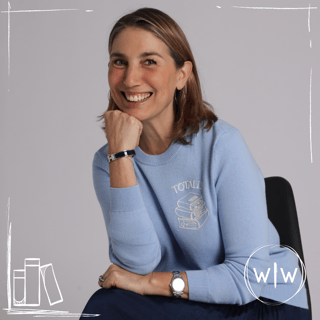
Speaker: Hello and welcome back to the Right and Wrong podcast. With me today is a literary agent with the Ampersand Literary Agency. It's Katie Blackton. Hello. Hi, nice to be here.
Speaker: Thanks so much for for coming on and chatting with me. um I caught up with one of your colleagues, Jamie Cohen, not not long ago. so it's fun to speak to more people from the agency. um When it comes to agents, always a fascinating um group of people speak to. You guys have such a sort of holistic view across publishing.
Speaker: um But let's start with, because I'm always interested in in the path to becoming an agent. ah And from what I've gleaned online, would I be right in thinking that you, Katie, worked across a number of different areas of publishing before you found your way into literary agency?
Speaker: Yeah, absolutely. I think I've had definitely not a linear route into agenting and actually not even to publishing actually. So I actually started in film and TV and then advertising and did a bit of everything. Bluntly, I was trained as an editor for film and TV and then ended up as a production, a producer for advertising, um which I'm i'm not gonna lie, it pays much better than most publishing jobs, but it it was also completely saltless and no offense to anyone still in advertising, but I just had one of those classic moments where I looked around.
Speaker: And thought, God, why am I killing myself like Nivea adverts? This is so bleak. um So I decided to pivot. Luckily, um had some savings and went and became a bookseller as a kind of refresher. And that was amazing. I would have done that forever, except it doesn't pay the bills very well.
Speaker: And then I sidestepped over to an agency called the Bright Agency where I went into marketing and then wiggled my way into the literary side of things under Arabella Stein, who i was incredibly lucky.
Speaker: She's sort of publishing royalty and it just knows everything there is to know. So learned my literary chops under her and that was... That was it basically just sort of found exactly what I wanted to be doing. So very, very exciting to finally get to where I want to be.
Speaker: Yes. But I mean, all that kind of stuff, it all helps, you know, having an experience in all those different industries in marketing and things like that. It all helps because it feels like being a literary agent is such a broad and eclectic job.
Speaker: Yeah, massively. And I think it's a fascinating one because I think it's the most, well, this is me saying this not having ever worked in editorial. So I'm sure some editors and some marketing people I know in in publishing might come for me for saying this, but I think it's the most varied insofar as, you know, nowadays as a literary agent, you're exposed to do some editorial, but you're also sort of talent hunting. You're also...
Speaker: coaching, you're negotiating, you're people management. So it's a very, it's something I really enjoy about the role actually is that it's not very, it's never the same thing every day. So that's great. um But yeah, I think it's definitely given me a a really interesting take on the industry coming from a couple of different areas because publishing is its own very unique industry and it's it's very fascinating coming in from other areas to see how people sort of act as if this is just how it is it's always been and it always will be yeah and you sort of think this is bizarre we we don't have to do things certain ways necessarily it's just how it's always been sort of ice so it's an interesting take for sure
Speaker: Yeah, it's it's it's such an old industry. Everything is so rooted in like, well, it's always been this way for like literally like a thousand years whatever. Yeah, absolutely. And I mean, one of the best, the the pleasant surprise for me coming into publishing is Everyone is so lovely. It sounds ridiculous. I mean, there are the odd, terrible human being, but basically people and books, it's come to my attention that people who love books and dedicate their lives to them tend to be quite nice people, actually. And so I'll occasionally get someone who's say oh, God, This person's a real hard nut and you'll be really hard pressed negotiating with them. And they're just, they're not, they're just lovely. They're not bad at all. You know, and I sort of look back at my advertising days where people were literally like shouting and screaming seemed to be the mode of communication, you know?
Speaker: So um it's, yeah, it's funny her coming into it with that perspective. It just is a much nicer industry to be in than a lot of the others of it I've dealt with. Yes. what i What I would say is it's not an industry that people go into wanting to make their like millions. You know what i mean? Oh yeah.
Speaker: Yeah. I do. I have to say, i it's one of the first things I say to sort of pretty much any author, actually, when I say, what do you want to do? And occasionally you get these authors who are like, most of the time people are writers because they love writing.
Speaker: yeah But occasionally you'll get an author who's like, I'm on publishers marketplace all the time and I see six figure deals and I want to be that. And I'm like, well, listen, if you're looking for money, you you might want to think of something else because it's a very high, high gamble risk to think that you're going to, you know, it's like going into acting and assuming you'll be the next, you know, Florence Pugh or something. It's like, well, you might be, but it's a high, high risk, low reward strategy in my opinion. Yeah.
Speaker: Yeah. Yeah. Cause it's the, you know, it's the, it's the 0.1%, right? You only, it's the thing that I talk about a lot um with people where it's, if you go on the bookseller, I can understand why people who are not sort of um that much involved with the industry or news and stuff would be like, well, it seems like all authors are just making six figure deals all the time. Yeah. And it's like, well, no that the bookseller is reporting on that because it is noteworthy, a noteworthy deal, you know?
Speaker: And there's definitely, I mean, there's and there's more intelligent and far more, you know, actually people who are advocating incredibly well. But, you know, there's definitely issues in the industry insofar as the issues around author pay. And there's definitely the fact that I think there is a sort of, I digest can't imagine it's going to continue the way it is forever.
Speaker: Because, know, It's a hell of a lot of work being an author and hell of a lot of time and passion and just incredible work. And then, you know, most authors don't get paid very much and that sucks. And it is kind of the gamble of this creative industry. But at the same time, i think there is a conversation to be had about how we sort of even that out a bit more rather than just sort of like the top hundred books getting absolutely everything and everyone else just has to lump it or leave it type of thing. um
Speaker: But you know, that's also slightly nihilistically us in a post-capitalist, you know, end times and no ethical consumption under capitalism. And you know, I'm not sure, you know, better minds than mine have tackled that question. So sorry, we've jumped straight in with such a nihilistic take on the industry. Straight into the deep water. I know. I'm sorry. didn't want to do that, but I am sorry. I've moved the table there.
Speaker: I'll say that, I guess. That's fine ah Sorry. Yes, I do tend to wax on a bit. So feel free to cut any of that. But that's not to say it's not a wonderful industry to be in as well. Yeah, yeah, absolutely. And I think there is um a silver lining to the fact that sometimes it can be difficult with the way that the money is shared out in publishing. But the silver lining being, like you said before, a lot of people are in publishing because they love reading and they love books and they love writing. And so on average, I have the same experience with you. Most of the people I meet who work in this industry are lovely and they're here because they love it, as opposed to here to make millions and millions of whatever currency.
Speaker: Yeah, absolutely. And I think it's a fascinating, I always try and educate my authors about about the processes that happen in publishing behind the scenes, especially, like i guess, you know, like even acquisitions and what happens in those chats and the editors, know,
Speaker: they you know Again, even the short, I've not been an an agent that long relatively. It's been a what five years or something. Even in that time, I've seen editors are having to jump through so many more hoops than they did originally. And again, you do get the sort of superstar editors who are absolute legends and can just literally rubber stamp something great increasingly, and especially the younger editors. the amount of legwork they have to put in to get something through acquisitions and kind of scrape through, you know, some breadcrumbs for the author in terms of money and everything else. And so I always try and emphasize to the ah the authors themselves that, you know,
Speaker: the editors are, if someone is taking you to acquisitions, if someone is doing all of this work for you, it's a huge, a huge sort of plus in that column of them believing in you and your work because increasingly, you know, sadly, but I guess not sadly, editors just cannot put in that time and effort for something that they just feel a bit lukewarm about. So if an editor's moving with your work,
Speaker: It's like, holy you know holy cow, this person really believes in your writing. They're really bending over backwards and jumping through hoops to try and get you through. And I think it's worth authors knowing that because it can sometimes... Publishing can become a bit of a sort of faceless monolith of...
Speaker: why will no one look you know recognize me and understand what I'm doing? And it's like everyone in publishing I know is just you know trying their best, but are also slightly overworked and overtired and underpaid. I'm just trying to get the best books out there and doing everything they can to advocate for these authors. So yeah, it's trying to remind remind the authors that behind these big publishing houses, it's usually one or two individuals fighting their corner.
Speaker: Yeah, because i I had an author and an agent on a while ago together and it was, sorry, an author and an editor. It was the editor who had signed the author and the we were kind of talking about the process of how it took place and the author was sort of surprised to hear that the editor, you know, an editor will receive um a manuscript from, usually from an agent like yourself and then...
Speaker: they might get back to you or they might be like, just put a hold on that. I like it, but get give me hold because then they have to if they want to offer on it, they have to then prepare a whole presentation, set a meeting with the rest of the team.
Speaker: And this is all on, not on their, like they have to do this outside of all of the other work that they're doing. Oh my God. Yeah, exactly. Weeks, a month, even for them to like get all this stuff together, get the team together so that they can sit down and pitch to this team.
Speaker: So they are really advocating for your book and working for you even before they've ah potentially put an offer in. Yeah, exactly. And again, it's like, I work in, obviously I go across sci-fi, fantasy, horror speculative, all these different things, and adult. And it's, you know, some of my, especially some of the epic fantasy ones, if they're like,
Speaker: ah hundred say 120k words or sometimes even like if you get a massive one 140k words they're having to do all of this but then they're also having to get all their editorial colleagues to read that you know yeah I would say a month is incredibly conservative frankly I would say I'd be lucky to hear from someone for months and months and months you know and it's all again you have to give them that understanding of like it's just people behind the processes who are trying desperately to keep up so Yeah, I think there should be a lot of compassion for editors. Not to say there isn't huge systematic issues in publishing, which there are like every industry, but at its core, I think there's some there's some genuinely good people just trying to get some genuinely good books out into the world, which you kind of have to remind yourself sometimes when you're feeling a bit up against it.
Speaker: Yes. Almost all of the individual people that you will encounter through the steps of publishing are all just people that love books and want to put the best new books out into the world. Yeah, exactly. Exactly.
Speaker: um Let's talk about... Actually, before we get onto into your list, there was one thing I wanted to ask because I saw this on, I think it was on the MSAM website in your bio. It said that amongst your um exciting mixture of jobs, it said that you were a contributor to the Graham Norton Book Club.
Speaker: Yes, I was. Yeah. what does that mean? Oh, that was so much fun. it was a, it was a podcast actually that Audible did, um where I should probably make, put some more details on there if it's, yeah, I've kind of forgot I'd put that on my bio actually. Um, so it was a podcast and I actually started when I was a bookseller and I think there was about six seasons over eight years or something, but it was very, it was the, the premise was sort of a book club esque where they had 10 quote unquote normal people,
Speaker: And every week, four of us would read a book and then get on and talk about it. And it it started really well. And I'm not going to lie. The problem was, was that we all ended up quite liking each other.
Speaker: So we ended up, it was much less interesting by the later seasons because we tended to all just like, oh yeah, I totally see your point. Oh yes, that's an interesting take on that. Whereas... Yeah, so some of the earlier seasons where we didn't perhaps see eye to eye quite as well.
Speaker: And also people were taking, I think, bigger swings on the big book choices. So we kind of, ah there was a bit more spice to the whole situation, but we're arguments. And I think oh basically the feedback eventually from Audible was like, they're all too pleasant and we're all just getting on. And everyone was just picking really good books. So there wasn't really anything to say except...
Speaker: yeah it's really good I really liked it so I think um yeah I think but it had a a bit of an end date baked in in some ways but it was really fun and some amazing people from all different sort of bookish backgrounds and non-bookish backgrounds and they're a yeah fantastic really interesting gang of people bluntly so if you ever if you ever want see the many and varied ways that bookworms end up getting involved in the industry or tangentially or nothing nothing at all. You know, they're a really interesting gang of people.
Speaker: Okay, that's interesting. Also funny that like, even if you, you know, if you get a group of people together who all love reading, even if they all like very different things, initially, ah if you if you if they spend more time together and like keep reading, their their tastes will tend to blend and merge with each other and they'll be more open to the things that they didn't think they liked originally.
Speaker: Well, I think it's that classic thing was that, you know, it's like, there's so many studies around the fact that basically, if you read it fosters empathy, and, you know, compassion understanding. So, you know, it is that thing of like, there was some recommends there that I was like, ah Jesus Christ, why have we picked this? This is absolutely nightmare. Yeah.
Speaker: But, you know, even if I hate it, it's someone's picked it for a reason. and you start sort of putting yourself in their shoes and thinking, oh, I can see why you liked it for that reason. Not for me, but, you know. And so at that point, when those are the conversations happening, it's a lot less interesting than somebody saying,
Speaker: I don't get you at all and you're an absolute idiot and why would you pick this, you know, which I think makes for more entertaining entertainment than yeah people being reasonable. But yeah, so. Yeah, that's what Haudible wanted.
Speaker: Yeah, exactly. I guess the takeaway from it is that book readers are probably better people but less entertaining in the long run, maybe. Yes. As the, you know, as this as you said, as the studies prove, as ah as you as the empathy grows by reading other things that other people are interested in you will begin to understand the other person better.
Speaker: And then that makes the show more boring because you're all nice each other. It's like, this is an entirely pleasant and very, very dull. um Okay. let's get Let's go back on to to to you and the list. So you you started Ambassand last year, I think it was, 2025?
Speaker: Yeah, I think it's been, i think it's almost bang on a year now. God, that time flies. But yeah, so about a year. um I was so lucky to find them. They're really just such an excellent agency and they've got such a great...
Speaker: attitude towards their clients, but also publishing at large, I'd say. i I was coming off the back of, I got made redundant from Bright Agency about a year before that. um They effectively wound down their literary list, which was so, so gutting. But, you know, when it's one of those things, it just happens and yeah bigger cogs at work. um the lucky thing there because they literally made the whole thing redundant. I got to take a good portion of my authors with me, which was such a, I mean, so pleased with that um because they are such talented and wonderful folk. And it's one of those ones. I think a lot of people I know, it was very sweet. Actually, the industry sort of really came
Speaker: to my sort of, I'd say that they really came through for me insofar as like people who I reached out to and was talking to and both agents and editors and all sorts. And everyone was telling me about, Oh, if you've not been made redundant in publishing, you've not, you've not been in publishing long enough. You know, it happens. Don't worry.
Speaker: So it was a really, it was a really lovely moment sort of find my publishing community actually. um And I spoke to a lot of agencies and a lot of different sort of approaches to agency agenting and whatnot and I was very lucky to have a couple of different options put before me and I think Amazon just they really got what I wanted in terms of the approach to author care and the approach to that sort of small selective really putting the artist and the author first as opposed to
Speaker: just chasing the next big trend type of vibes, which I think is a pit that we can all fall into. But I think publishing is such a slow you know, industry, if you start chasing your own tail with it, it's, it's a death knoll actually. So they just had the very, very sound approach that i was looking for and they're lovely people, which helps as well. So yeah, really lovely.
Speaker: Yeah. Um, so you, you, you had like some of your list moving into Ampersand online. Uh, I counted on the website, it's showing that you have 16 authors on your list. Is that, is that up to date?
Speaker: Yes, I believe so. um So I think i moved when I moved, I had about, I think I had nine, i want to say. And a lot of them were obviously YA, children's focused due to that was where Bright's speciality was. So I've grown my list quite well over the last year, which is, and I'm still growing. I'd hope to have a few more people joining sooner or later, but I mean,
Speaker: Again, I'm just very lucky. I've had some absolutely wonderful authors, you know, pop into my submissions. And yeah, I think I've I'm very lucky to be able to focus on just the books that really speak to me and i think have absolutely wonderful potential.
Speaker: um wherever that is. So at the moment, the official line for me is that I do middle grade through to adult um with graphic novels as well as straight fiction.
Speaker: Occasionally, I'll drop down to sort of chapter book for the graphic novel side of things, because I think there's some really fun people doing some wonderful things in that space. um On the children's end, I do tend towards slightly more SFF, fantasy, sci-fi, all of that stuff. But will ah I will do a slightly more contemporary vibes as well in YA and middle grade that I probably wouldn't go towards in adult. um In my adult writers, it's SFF, horror, speculative, anything just a bit weird and wonderful, basically. i'm not you know There's sometimes things that are slightly genre-defying slash genre-defying.
Speaker: crossing that I think they're quite fun when they come across your desk because you think, oh, there's something a bit different. So very open to that. um I'd say, and I still get the submissions, but I, you know, I'm very clear about it. So I think it's people just sending it to everyone they can think of, but I don't do crime or thriller and I don't do history or, you know, nonfiction or memoir or anything like that per se. So it's kind of, I think sometimes people just send you things because they've just sort of picked every agent they can find online and send something out. Um,
Speaker: So sadly, those um i I don't rep though. So tough, you know, sorry. Yes, there's lots of there's lots of wonderful agents that do represent that kind of thing. Yeah, you just have to find the right agent. And suddenly okay and and And on the adult stuff, I'm looking at your website, you, in terms of commercial to literary, it looks like you kind of span the whole thing. Cause you've got like Babel on here and then sort of legends and lattes, Terry, Terry Pratchett, whole range of things.
Speaker: It's a weird one because it's sort of like i I get terrible FOMO as an agent, which is probably not the best for my submission numbers because then I have to go through a lot more. But I do get real FOMO because it's that thing of like I've always, ah every time I set a limit on...
Speaker: something like that where it's like literary to commercial something will come along and prove the exception to the rule and it's like ah damn you know so I mean i i think personally I'm slightly more on the commercial end if I'm completely honest um that said I've just gone out with a super literary body switching horrible thing on submission which is incredibly literary but also just funny you know so i think if it's going to be sort of i'd say you know the really navel gazing literary ones which are very very insular and they've got to have something to hook hook your teeth into in my opinion but i'd probably tend towards slightly more commercial i reckon um
Speaker: but then again you know always there's always an exception to the rule so yeah i don't want to count anyone out in case in case something wonderful comes along yeah no of course and i think that that sort of mirrors the market as well you're more likely to see every now and again a like literary fantasy or sci-fi will will like top the charts but largely it'll be a lot of motion of more commercial books Yeah, absolutely. And it's always that one as well. I mean, I've got one which it's published so i can talk about which great because a lot of my stuff is still waiting to be announced slash in the in the in the back ends of stuff, you know. um
Speaker: But, you know, I say I don't really do contemporary and I i sort of, I think I say quite openly on my manuscript wishlist, I'm like, I don't really do contemporary, especially in teen. It's not really for me. It's got to have something weird or wonderful about it. One of my absolutely fantastic authors is...
Speaker: her debut book is kind of the most beautiful YA book about romance and young love, but also um suicidal ideation, you know, and it's really, really out there in terms of what I would normally pick, but it's just one of the most beautiful books I've ever read that, you know, again, I wouldn't have found it if I'd sort of instantly cut off all commercial stuff. Um,
Speaker: That said, I think her next one, she's planning on putting some werewolves in. So I, I'm like, fair enough, you know, maybe the next one will be slightly more my usual, but yeah, she's an absolutely stunning author. Um, so yeah, again, never say never is what my sort of, or FOMO, I suppose.
Speaker: Yeah, sure. so yeah, never said never, but you do tend to lean towards a more like sci-fi fantasy speculative. Absolutely. Yeah. Something otherworldly. Yeah, exactly.
Speaker: Okay. Okay, cool. um I just have one more question before we head over to the cozy woodland cabin. ah I've chatted with a few agents who not only are literary agents, but they are also authors. Have you ever thought about writing and potentially publishing something of your own one day?
Speaker: Oh, yeah. I mean, i think about it constantly because i think everyone in this industry does. And ah I just... I think I'm just not a writer, actually. i can write and i have written the odd chapter, but I think the thing is, and again, it goes back to what i' saying at the beginning is that the best writers who come into my inbox and sort of end up on my list,
Speaker: They write because they write. you know They write because it's something deep inside them that they just sit down they have to do it. And it's kind of almost like a daily practice or a... I don't know. they just It just is a thing that's so intrinsic to them and they do it constantly.
Speaker: I'm just not built for it, I don't think. I think I just... I'll start and I'll sort of be aping someone, you know, like I can do a fantastic dupe of whoever I'm reading right now. But A, I don't really have my own voice and B, i have lots of great ideas. And I sometimes think like, oh if funny I sometimes toy with the idea where I'm like, go to one of my writers and say, could you just write this? Because I'd love to see it in print. But I think that's a bit...
Speaker: a bit controlling to be an agent who's basically asking people to write personal books for them seems a bit OTT. So I don't do that. But yeah, I'm good with ideas, but I don't, I don't have the stamina to follow through for a whole book. You never know, maybe one day, but definitely not right now.
Speaker: Yes. I guess that lines up with that. You've had like a great experience across a variety of different jobs leading up to become a literary agent. Being a literary agent itself is a job that involves like wearing many hats and doing many different things any given day.
Speaker: Yeah, absolutely. And I love, I absolutely adore the editorial stuff I get to do with my authors and i get a lot of creative fulfillment with that. um I suppose maybe one day I'll have such an amazingly sparkling idea that I just have to get it down, but that's not happened yet. You know, I don't think I'm called thusly yet. So yeah, we'll see. you Watch this space, I guess. Never. but Yeah. Never say never, but now. Yeah, exactly. Yeah, definitely.
Speaker: yeah definites okay Okay, cool. Well, that brings us to the point in the episode where i ask you, Katie, if you were snowed in at a cozy woodland cabin in the middle of nowhere, which book would you hope to have with you?
Speaker: uh this is this is a really hard one for me because I did listen to some other episodes and I was really angry that my my boss Jamie picked Ursula Le Guin because I was like damn she's one of my favorites too and now can't say that because I'll just sound like I'm sucking up to him or something um I I get very like panicky about the idea of having limited books because I'm a book hoarder. So then I started thinking like, how much can I fit into, can I take like a trilogy in one or something? I started thinking about it quite mercenarily, but then I round it back. I think for pure like setting, i would love to, I mean, I love Terry Pratchett.
Speaker: um And like, I guess if you're going to do the whole thing, um If you're going to do the whole setting of it, it would be Wintersmith.
Speaker: Is it The Wintersmith? Sorry, I've just realised I might have forgotten the name of it, which is now embarrassing. Yeah, Wintersmith, sorry. Yes. ah So I think for sort of narrative setting and appropriateness, it might be The Wintersmith from Terry Pratchett.
Speaker: um I have to say I'd love to reread recently and it's been on my list to read again recently is The City We Became by N.K. Jemisin, which i've read I've only read once and it just is stuck with me and I feel like I need to go and live it again as another. So one of those two um right now. Again, it will change day to day depending on what you ask me. So sorry, very rambling answer to say i'm going to try and sneak two books at least into my into my suitcase.
Speaker: Okay, I see how it is. we'll see We'll see what TSA says when you get to the junctions. It's not even the ones I've got like to hidden down my pants or anything. I've literally got books down each each pant leg and everything. It's like... Well, those are great. um Also, I've had a few Terry Pratchett's before. I usually, when people ask me, I usually go for a Terry Pratchett, but I've never had Wintersmith. So that's ah an original one It's just because it seems very, if you're going to sit in a winter cabin, i would, I mean, the shepherd's crown for me holds such a special place because I literally cried reading it because it was after post, you know, when he died, he, they released it posthumously, but I don't know if I could, that maybe sent me into a depressive spiral to read that alone in a cabin. So try and keep it lighter. Yeah.
Speaker: yeah my choice I don't what just um small gods stuck with me like none of his other books I don't know why I just love that one yeah it's so great I think some of his standalone ones like small gods where they're not quite as sort of part of those character journeys are just so impactful yeah Terry Pratchett I mean can do no wrong and definitely so in love with him as a writer so yeah I had um uh john baker on a while ago and we were talking about we'll get into this in in a bit but we were talking about submissions and he he he always cautions people not to comp terry pratchett because yeah because he's like there is only one terry pratchett and you're just gonna you're probably most likely going to disappoint me if you compare your thing to terry pratchett yes 100 except i mean and this is
Speaker: This is ongoing, so I'm going to try and carefully navigate the and NDA vibes of this. But I have an author who is... There is currently stuff happening right now, so maybe by the time this comes out, things will have happened. I don't know. Anyway, I have an author on my list who does, I guess, comedy fantasy is how you'd class her very briefly. But she's such a stunning author because it's funny. It's funny, low, cozy fantasy, except... she has this rage underneath that it's that Terry Pratchett thing where it's like, it's funny, but it's also like, Oh, there's something seriously to say here. And it's so funny. Cause I've had to, the comp is Terry Pratchett and, and she is her own person and she is her own writer and she's not like just duping him. But,
Speaker: I've had to say to editors, I'm like, I know how this sounds, but the comp is Terry Pratchett. Just bear with me, you know, believe the, you know, just I know how it sounds, me coming in here and saying it's a Terry Pratchett comp because I know, but you just just just try it, just try it and see. And so it's so funny because I've never had to sort of qualify a comp before in that way. yeah but it really is, it has that sort of, because I think that's the genius of him is that,
Speaker: It's funny and it's light and it's silly and it's goofy and it's like, oh you know, trolls and everything else. But you're like, but it's actually an um an analogy for racism, you know? Yeah, yeah, yeah. And we've got a shit ton of sex keys. Am I allowed to swear on this?
Speaker: No. Well, you just did. I guess so. Apologies for any young listeners at home. um Yeah, so it's the fact that he's got so much to say and he's so furious about it underneath the funnies. And that for me is just...
Speaker: irresistible and it's what really drew me to this writer as well. So hopefully I can shout about that soon, but yeah, so I've had that very funny comp issue recently where I've been trying to yeah sort of qualify my comps.
Speaker: Okay that's funny yeah to have it firsthand for you to be like no no wait but I understand that this is a risky comp but hit me out. Yeah I know I mean it is it's the same thing as ah the amount of people I get in my inbox who are like I have written the next Lord of the Rings and I'm like i don't think you have.
Speaker: sorry I just don't believe that but okay. I'd also say say that maybe this is controversial. Lord of the Rings, I do not think would be published in its current state today.
Speaker: They would go to town on the editorial on that. Oh God. It is, i mean, ah absolute genius and of its time, but... that was a man with a special interest in linguistics that, yes you know, it's like Victor Hugo being like, and now four chapters on the Paris, Paris sewage system. you're like, what? yes Listen, we love an autistics, you know, we love an autistic special interest, but like there's editors for a reason, guys. We maybe, this goes in the appendices or in the the secondary fodder. Yeah. You know? yeah Yeah. No, I probably wouldn't pick up Lord of the Rings right now if it came into my inbox, which probably...
Speaker: Um, so something damning about me, but but it's not just, you know, Lord of the Rings obviously came out and like, think was the fifties. Yeah. Like that's a, yeah you know, that's a very long time. It's a very different tradition of writing back then, but even more recent things, you know, there's, there's books like, I don't think Harry Potter would, would, would be edited in the same way if it were to come out now. I mean, yeah, maybe some sensitivity readers to start with would be, a yeah. Yeah. Yes, exactly.
Speaker: Purely on the opening. I think it's like several chapters before anything interesting, like in terms of managing stuff actually happens in that book. Yeah, it's been ah I'm not going to lie, it's been a while since I read Harry Potter, actually, because partly because of the, I think, like many queer people grew up on it and then now feeling the ultimate betrayal that she who will not be named funding of various causes. So I think I've kind of scrubbed a lot of it from my memory banks as far as possible. But for sure, yeah, it's it's that thing. Just thinking of big books.
Speaker: Exactly. That came out in the 90s. Yeah, I think it's always that classic thing. And we get it a lot in children's literature, actually, as well, where we have a wild nostalgia for the things that we read as kids.
Speaker: And again, we get a lot i get a lot of authors who... Weirdly, I think people get to retirement age or have grandkids themselves and suddenly think, I could write a book.
Speaker: But they write the book that they loved when they were a child in the 1970s or 80s or 60s even. And you're just like, do you actually speak to your grandkid?
Speaker: Sorry to be blunt, but do you know what they like? Because... yeah you know, it's a charming, but it's not what they're they're interested in right now, actually. It's not what they're living, you know, they're living with like bizarre stuff happening right now, you know, that is so wildly different to what you nostalgically remember. So I think that's a really interesting problem that faces children's writers for sure.
Speaker: Yes. One of many problems that that faces children's rights is. Yes. Yes. um trying to think what I was most attached when I was younger, the the only series that i was really super attached to was Artemis Fowl. And I hope that holds up because I have such good memories of Artemis Fowl. Yeah.
Speaker: that I think it does actually. i reread it. A while back. I'm trying to say, I was going to say not that long ago, but I think it's probably about seven years ago now. So quite a while ago. But yeah, just that seems again. Yeah. That's really, that really, I love those as well. So good.
Speaker: Yeah. There's some great kids series out there, but yeah, there's something, there's that sort of horrible moment when you revisit something that you thought was brilliant as a kid and you're like, Oh God, this is super racist. Yeah. This is diabolical. Yeah. oh Jesus the homophobia is rampant or something and you're like Jesus can't believe I liked this but you know that's the point isn't it it was different times but yeah it also means every comedy from the 90s and early 2000s yeah yeah exactly but then again it's that thing it's like I I live in sort of slightly naive hope that it means that there's room for new and emerging writers are going to do wonderful new takes on
Speaker: these bigger, bigger universal themes without the blatant racism and homophobia and ableism and all the other horrible things that we sort of seem to think was great children's fodder for the 90s. Yeah.
Speaker: And I mean, ah and it has, it has like all the new books or the new television shows for like younger audiences that, you know, that is much it's much fewer and far between that you see anything even remotely close to what it, what it was. So we have come leaps and bounds.
Speaker: Yeah. At least. Um, so next up, we're going to get into, we've touched on it just now, but we're getting into submissions, queries, maybe talk about some comparison titles, uh, all of that jazz that will be available at, um, uh, on the Patreon, patreon.com forward slash right and wrong.
Speaker: I would like to just note as well, please don't go off and write that if you are listening to this as if I'm going to, because like, that's the, that's the horror. That's why we never pitch things as agents. yeah Someone's like, I literally wrote what you asked for. And you're like, I don't know what I want, ah but I know when I see it So I'm so sorry in advance. but um I was delirious in the moment when I asked to pitch that. It a fever dream. I'm so sorry. yeah, um but yeah do so we'll see what happens with that.
Speaker: No, that's great. That's great. we've got We've got broadly what you represent. We've got a few kind of more genre-specific stuff, contemporary fantasy and horror. And then and then we've got a very hyper-specific thing for someone to maybe have somewhere in their back pocket. Yeah. Okay. Well, good luck with that. Anyway, I hope, I hope to look, I look forward to seeing it through. We'll see. Yeah.
Speaker: Yeah. Yeah. Well, that brings us to the end of the episode, Katie. Thank you so much um for coming on and talking to me and telling me all about your, how you got into publishing, how you kind of, you you moved through and became a literary agent. And then all of our discussions on submissions and querying and all of that fun stuff. It's been really, really fun and interesting chatting with you.
Speaker: Yeah, thank you so much. been delightful hearing from you as well. And yeah, hopefully there's some some fun tidbits in between all the rambling. But um yeah, it's been really lovely chatting. lots of fun stuff in there. And for anyone listening, if you want to keep up with what Katie is doing, you can find her on Instagram at Katie Blagdon on her website, katieblagdon.com.
Speaker: ah Or if you want to look at more submission guidelines or the the other agents at the Ampersand Agency, go to theampersandagency.co.uk. To support this podcast, like, follow, and subscribe. Join the Patreon for ad-free extended episodes and check out my other podcast, The Chosen Ones and Other Tropes.
Speaker: Thanks again to Katie and thanks to everyone listening. We will catch you on the next episode.