Transcript
Speaker: Ooh, a spicy question. I love it. Because the writing is sort of everything, right? Like can fix plot holes, but if the writer... So some readers love that and some readers are like, but I wanted more of this. So it's kind of, it's kind of a gamble.
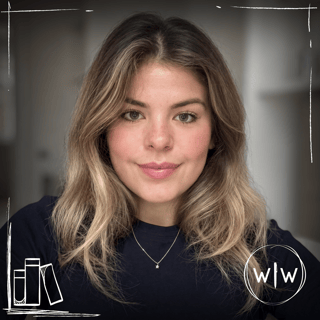
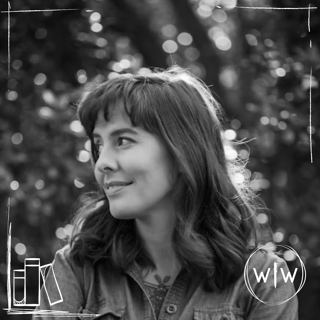
Speaker: Hello and welcome back to the Right and Wrong podcast. On today's episode, I am joined by epic fantasy author, marvellous Michael Anson. Hello.
Speaker: Hello. so excited to be here. Me too. Thank you so much for coming on. um Let's jump right in as we always do with the upcoming release, ah Air of the Shadow, which is the sequel to Firstborn of the Sun. Tell us a little bit about the new book and then the the series as a whole.
Speaker: Okay. um Bit tricky because Air of the Shadow is the middle book. So yeah um it's it's having middle child syndrome. um But Air of the Shadow is the sequel to First One of the Sun.
Speaker: um In this series, we're kind of following the journey of our main character, Lore, who lives in this world where she starts off not having any sort of magic um and everyone in her world can harness the power of the sun. And ah in this second book, we're seeing her still on that journey. She's discovered that she has a different kind of magic, but also puts as big a target on her as much as not having anything. So it just made it worse really.
Speaker: And so in book two, we are just continuing her journey. She's trying to find her mother's homeland, um hoping that she'll find some sort of refuge there. And she just gets into a lot of trouble on the way there. So it's, this is the big adventure part of the trilogy.
Speaker: Okay. And tell us a bit about the, the kind of story as a whole for people who are, who are new to this, haven't read Firstborn of the Sun, the first one. What's the kind of big story here?
Speaker: So this is an epic fantasy that is steeped very, well, like plunged into Yoruba culture. So i was exploring what um fantasy looks like from the lens of the adventure stories that I would have heard growing up. So Yoruba tradition is very full of, um quite steeped in oral storytelling. And so you would hear stories about gods and myths, and this is how our histories and legends have been kind of preserved through time. um And it's always grand and dramatic and epic. But growing up, I wouldn't even have considered it to be fantasy because um almost all Yoruba stories have speculative elements to it, but we just consider it to be fiction all in all. And so when I stay thinking I want to write a Yoruba story, it fit best within this kind of epic fantasy adventure lens. And so I'm looking at politics within a Yoruba court, with heirs and, you know, the fight for the throne. But putting this, our main character, so putting Laura in this world where she's different and where we have four main point of view characters. So we're just looking at the same world through four different people. And so we have a bit of an ensemble cast that's going on this adventure. And there's a big tag at the end who says, you know, who will sit the gilded throne, which is the the journey that we're on throughout the first one series.
Speaker: Okay. Very cool. So a lot of classic epic fantasy stuff going on, different POVs, a big journey. Do you, well, I'd imagine, you know, the second book's about to come out. I'd imagine you are well underway with the third book.
Speaker: You would imagine. i would hope. Um, when you started writing this, did you know how it was going to end? Did you know what the whole trilogy, what the big kind of story was going to be?
Speaker: Um, no, when i started writing it, I knew more about the world building and the plots of like the setting of it. than I did about the lives of the characters in it.
Speaker: um And that's because I i had this moment, I talk about this often, but I had this moment flying over the Sahara. So um I'm from Nigeria and I live in London and kind of going back back and forth one of these days, I was just kind of looking out the window seat and I'm seeing, obviously the Sahara desert all sand, um but I did not know that they had snow-capped mountains in there as well. And there's just loads of snow and you see it creeping over the sands. and you see patches where like the snow has melted off, but just miles and miles of snow.
Speaker: um And I just thought, oh my God, this looks fantastical. Because in my head, was thinking about it from a very physical, very science chemistry point of view. i'm like, there should be no snow in the desert. And and so I thought, what if I gave people the the traits of this physical elements and you know some are cold some are hot will they be able to kind of find the balance that somehow snow has found over hot sand and ah that was my what if question and so I started to build the world first and then fill it in with characters when I decided to make it
Speaker: centered ah around the Yoruba court, because it can be quite dramatic um and and very political. I knew that I wanted to have this main character who's very different and set in a world that doesn't quite understand her and she doesn't quite understand herself within it.
Speaker: either. um I had the, as a builder, I had the idea of like a clash. Obviously there needs to be that. So there's probably a war coming um that have been talking about since book one. um I have an idea of who will be alive at the end of this and when everything settles, but I'm not quite sure how they get there yet. um Just a couple of weeks ago, i was brainstorming book three. So no, I am not very far gone um And I had this idea ah that changes everything. And I started writing this email to my editor saying, you won't believe who is actually going to sit the bloody Gilded Throne. And as I was about to click send, i was like, wait, this is such a, so out of let's build. I need to make sure that it works before I send it. So it's literally in my draft right now. And it starts with, you won't believe it. but That's exciting. Okay.
Speaker: Um, it sounds like you have an idea for the overall kind of trilogy where it was going, but you're kind of figuring out as you're going, when it comes to the individual books, did those, do you have more of a plan with those or you, again, is that kind of like, you sort of know what's going to happen, but you're figuring it out as you write it?
Speaker: When I had the the idea and I said building out this world, in my head, it was like a single book. So very loosely, it's we have a girl, she gets in trouble, she runs away, she finds her people, she comes back, there' a big war.
Speaker: And then what happens? That's where I got stuck. But in my mind, I thought, okay, fine, when I get there, I'll figure it out. um And when I had written about 120,000 words into this story that I thought was a single book, she had just left the kingdom she was in. um And I just thought, okay, so it's not one book then, um because this is act one of the the full arc that I've kind of just described um the back and forth journey.
Speaker: And so, At that point I realized it it had to be a series just as a result of the fact that the story was not done. um And when I kind of got my agent and and we sent out, it was like, okay, it'll be a trilogy. And was like, it might be more, but let's say trilogy first, because again, knowing myself um and knowing that this is like half of act one, it is a bit of a long story. um And so we started with that and and we kind of cropped it out into a trilogy. And um so I, that meant that as long as I have not reached a part where, as long as I've not reached the wall, I still have an idea of what's happening. When I get there, hopefully the rest will reveal itself to me.
Speaker: Okay. Yeah. I like to think that With that kind of approach to a story, once you do get there, you've kind of, not just for yourself, but for a kind of like in a broader sense, you've established so rigidly what the world building is, what the characters are, who the characters are. But once you get there, you'll sort of be like, well, the only logical way for things to go is that this way, that this character will do that. And then the world will force this to happen. And then that character will do that.
Speaker: Yeah. Yeah. Um, I'm not at all worried because I, this is just the kind of writer that I am. ok Um, no, so it's not like, I don't know what I'm doing. It's more that I like to have like, um, like signposts. So, um, I'm, my brain kind of continues to work in the background, knowing that she's here, she's going here, she gets stopped here. She gets into a bit of trouble. Um, she comes back the decisions that the characters will make, um,
Speaker: ah very loosely based around the lampposts or signposts. But when I actually start drafting and writing, I allow that to change if it needs to, which is why, you know, a couple of weeks ago when i was thinking about um one of the characters who's um going to become, um you know, if i if I go along with that, going to become a huge character in the book, um He was a character who was supposed to die in book one, but my husband loved him so much. So I kept him. um And I had always planned to kill him off in the future. But what i was like, hmm, I can do something with this. um So I think the world's quite safe. The story is quite safe in my mind. i just kind of need to.
Speaker: it it needs to unfold as I write because I allow for surprises even to myself. Right, right, right. When it comes to, you said you kind of start with world building. So the world building and presumably the magic system, there's a sort of evolution of that.
Speaker: Is that also something that you're figuring out as you're writing these or are those things that are a little bit more set and you've kind of figured out what what the kind of limitations of the magic are? Um, no, I work those out as I go along. So I work out everything as I go along. yeah Um, the, the first thing that was solid is I want heat energy and cold energy and I use Yoruba, what's better. The magic system is referred to as Agbara, which just directly translates to about like strength or power in Yoruba.
Speaker: um And so you have Agbaro Uru, which is heat energy and Agbaro Tutu, which is cold energy. And that's just kind of very loose, very, very loose translations for any Yoruba person listening saying that's not it. um So um and so that's what I knew that I wanted. i I also didn't want it to be exactly like fire and ice. And so the heat energy is quite literally heat energy as opposed to fire. um And the kind of cold energy works a lot more with like shadow magic, a little bit of ice because you need that. it's more um steeped in about in like shadow magic and kind of the coolness of that. So that was like the canon, everything else.
Speaker: flowed out of that. ah So I spent a lot of time watching and reading um clips from anime shows, um which my husband really helped with because he's a huge fan. um And um there's a superpower Wiki website that I am permanently on, just kind of seeing all the ways you can play around with this. But when then it came into the world itself and how the characters use that, um it came as a result of what I needed them to do.
Speaker: So in a world where everyone has the ability to harness the sun, Of course, there'll be warriors and fighters and things like that. But I wanted people to use it in their day-to-day because if you just imagine it as having hands and,
Speaker: breathing. They use it to cook. They regulate their body temperatures. They don't even think about using it. it's quite very instinctive. um And so when I was thinking about my kind of main character, I'm looking at her as someone in this world who has to pretend that she has this. And so the part, the kind of, she has, the world has two magic systems where everyone has the power of the sun, they're born with it, they can use it. but they also have the old gods. So in this case I have pulled on the Yoruba pantheon. So like Shango, Ogun, Oshun and the rest of the gods within the Yoruba stories. ah
Speaker: I refer to them within the story as old gods. And so our main character is pulling on the magic of the old gods to pretend as though she does have the power. So she has firepower because there's a God who is Shungo who, if you think about it in terms of Greek myth, will be like Thor. So it's like the fire of God, the God of fire and lightning and things like that. And so I'm thinking,
Speaker: that having this secondary magic system came solely as a result of answering the question, how does she survive in a world where everyone has this magic, but she doesn't, it's going to be very noticeable. And so I'm like, she needs a subset, something, um an alternative.
Speaker: And so she summons the God of Fire to help her kind of mimic the heat energy in that, you know, playing around with it, she can hit up her swords, um, and the flame up and things like that. Um, but all of that, when you read the book, it'll feel very much like it had always been there, but it was in answering the question, how did she get away with this until, you know, 18 or, uh,
Speaker: how about old she is which I i do think is like 18 or just about um so things like all all of that my world building always comes as a result of questions so my character gets into um either a bit of trouble or I'm thinking what would they do with their lives if this was normal to them and then I just keep building on that sometimes many times I have to go back to edit but I prefer to do that that way Yeah, I think that's the people the the general kind of difference I i see when when people are like, oh, I'm ah i'm a planner versus a pantser is that if you planned everything out, you generally don't go back to the redrafts as much. You've just spent a lot of time planning. Whereas if you're yeah more of a pantser, you're probably going to, that time that would have been spent planning is spent more in the redrafts.
Speaker: Um, out of curiosity, what are the, like your like top most influential animes that have inspired some of the magic in this?
Speaker: Um, fire first was a huge one. Okay. Um, I usually watch so many clips. Like, I don't know why just didn't sit down to watch everything at like, um, or read everything episode by episode. I just took, uh, my husband has the collection. And so I'm like,
Speaker: pages this to this and I put sticky notes on there and then I come back to it and it really helps because it's visual. I'm like, I want to see the powers coming out of this person's hands. I want to see what, how the other person reacts. Um, and, um, well, it's not exactly anime. Um, Avatar was a huge influence, um, for me. The last airbender.
Speaker: Oh yeah. The original, the real one. Yeah. not Not the big blue people. we don't talk about the blue people. Yeah. um And, and yeah, and just kind of exploring that. um And of course, you know, with the last airbender, they're planning for a war and they're, everything's, you know, um leading up to this big moment, but we see them on the road. We see them use their bending in like everyday scenarios. And that's really what the research was for me, how people who have this regularly would use it in,
Speaker: in cooking and playing and fighting and, uh, and just making life feel normal because it is normal. Um, so yeah, that was, kind of part of my research a lot of it because I didn't sit to watch too many episodes I just took clips of it um I can see them in my mind but I'm strongly struggling to remember their names because it's a collection on YouTube yeah yeah yeah yeah I know what you mean I think that's so true I read a lot of fantasy and there's always I think Brandon Sonson talks about it because he's very good at doing this where It's like, if there is like a kind of big magic system, if you're not factoring it into like how it would affect the economy and the day-to-day logistics of life, that doesn't make sense. Like it has to.
Speaker: Yeah. You know, yeah it's, it doesn't make sense. If I watched, if I watched or like read a fantasy where they they have these incredible magic abilities, but they only use them to fight each other. It's a bit like, well, why, why would they only use them for that purpose? Exactly. Exactly. You can make your life so much easier if you just use them for, you know, domestic things.
Speaker: Yep. And I made that quite, so with the body regulation, it's the first thing that all the um kids learn just because they're in the desert and they're never really too sweaty or anything like that. But um with my character, Laura, she complains about being hot all the time, but not in public because it's like, why? Like we know it's hot, but why are you hot? um And one of the characters, Laura,
Speaker: temporarily, loses some of their powers. Um, and the first thing they say is it's so hot. like And I thought that was cool to just kind of remind people that, um, yeah, then, you know, the regular people are not complaining about this because they kind of, um, to them, it's like breathing. They wake up and they're just like, their body just resets it. Cause they've learned how to.
Speaker: Yeah. I mean, and and that's stuff like that, just little things, which are not probably like massive to the story, but it's just ah yeah an immersion level, right? It's just a little reminder that like, no, everyone is a bit magical here and yeah everyone is doing this thing. Yeah. That's cool.
Speaker: um You mentioned ah earlier that that the second book, is having middle child syndrome. um Did you, is that sort of along the lines of, did you find that it was difficult to write the second book? A lot of people I speak to authors when they, when they write their second book, usually under contract, they say it's a lot more difficult than when I wrote the first one. Have you found that?
Speaker: Yes, it is the hardest book I've ever had to write in my entire life. Okay. And I've written, well, not too many, have've written four books now, but it was still the hardest.
Speaker: And I think it was timeline wise as well. It was much shorter. I was, um, I had also heard a lot about the second book being a problem and I was terrified of it. Perhaps we talk about it too much. Um, so I was already worried before I even started. Um, but I also was having this really strange moment where it's the first sequel of Everrating. Um, and I really liked the first book, um,
Speaker: in the most humble way possible. i like think it's a great book. but So when I started writing draft one for book two and I'd read like book one to remind myself some of the details and things like that, I'd be like, Oh, I really liked that sentence. Like, I can't believe I wrote that. That sounds so cool. And I'd be so intimidated of like last year me, which I'd never experienced this before. And I didn't know how to even explain it. Um, or,
Speaker: um get myself kind of out of it quickly enough. So I struggled with that. and um And I just kept thinking this, you know, the second, it has to be a good book. It cannot be a middle book slump. And, you know, it has to be good. And I think it took me a while to kind of find my footing again. But once I did, I was just like, oh, actually, I do have a lot to tell. Like this, it was almost like reverting to the fact that I'm not making, as much as I'm making up the middle as I go, that my original idea, I'm still within that flow.
Speaker: So I'm still within that story that I thought was one book. So I am not kind of lost. I just need to go back to my notes and and remember and immerse myself in in where the story um ended because um book what book two starts just right off where book one stopped. So it was kind of just doing that and and getting back into it. And because our main characters live in the world that she she was in in book one, um it also was new world building for where she's going to.
Speaker: So and that was a bit trickier, but a lot of fun as well. um It felt like starting a new world within a world. So, yes um, the books kind of split the people who are back at the old kingdom and the people and, you our main character who's separated and making sure that the events kind of sync, um, in a way where big things happen with, with her big things happen with the other people as well. Um, and when I was done, I was like, Oh, that's actually good. like I think I made it in the end. Um, it w it was really tough. Edits were hard. I cried so many times, but I am happy with it now.
Speaker: Okay, good. I'm glad. When it comes to, you know, we've been talking about how your process is sort of like, you you know what direction you're heading and you're kind of figuring out as you go. When you come to like book two and and now you're conceptualizing book three, the extra world building that you're doing, does it become more difficult? Because now you're kind of restricted by, can't undo the stuff you've but you've done before. Everything has to work within the framework that you've already created.
Speaker: Yes, yes, that that is tricky. That is hard. um And the biggest part of The most difficult part, I think, of the world building was setting up the laws of succession within the firstborn world. um So I know you had told me to um pitch it, say the pitch earlier, and I went on a big ramble. I'm going to give you a really short pitch. I would explain the world building and why it's hard. So my kind of new way of kind of talking about it is I just read this line, which is, um for the entire Firstborn series, what we're leaking at.
Speaker: So as it goes, on the night of a great blood moon, six children were born to a single man. Nearly two decades later, the mysteries of that night still haunt the kingdom. Which one of them was born first? Which of them was born to die? And which of them will roll?
Speaker: So this kind of covers... this series, this is why we're here. We're trying to figure this out. So trying to um create a succession within this world, I did not want it to be a regular monarchy. So in this, in the kingdom of Uru in the first one world, um princes and princesses and and children of sovereigns are not allowed to inherit the throne um every time ah so they're just like rich guys they get money they get called a prince or princess but that's it they have no influence or nothing like of the sort and every time the sovereign dies it goes back into like a lottery thing where the
Speaker: the high priest then goes through some marriage ceremonies. um And from the bunch of women, the first child born from that kind of ritual is then going to be the sovereign. But because they're a baby, the the the high priest who's given, who's sire them, um will roll as regent in the estate for 18 years and then hand over to the sovereign that was born 18 years ago. And so the cycle kind of always goes that way. So figuring out this timeline and choosing when all my main characters were born, who gave birth to them, the circumstances they were born in, the timeline um in terms of how a hybrid is chosen, all of that nearly broke me. Like I, it took months and months and if not years, like the final, final version, I had to go in, i went into my um publisher's office. I sat down with my editor and her team we had huge, like, they're not even A4 papers, like the large, massive white papers across the the conference room table. And then we were like, okay, this is it. Cause this is what's going in the book. So this has to be, um so if you open the first pages of first one, you see the timeline there, that, that took forever. It took, yeah, it took forever and it can't change. So when I was writing book two, um some people have ages or the the the young cast,
Speaker: I have their ages because I had to know when they were born. So if you look at the timeline, you'd be like, Laura was born this year. And that year you see how far it was from the last stripping ceremony or marriage ceremony or death of a sovereign, because that's what matters in this world. um And there's a, there's an order of maidens and, and the, the ah leader, she's called the mother of life.
Speaker: And, In book two, I had to say her age because it was relevant. And i was like, oh, I don't know how old she is. i was like, oh no, but she's bound to a priest that is like 98 years old. So like, she wasn't even born when he was like, when he was made a priest. And so I'm like, okay, but so scrap that. And so something that didn't make it into book two, but I have it as a note now is that he had a a maiden before her and then she's probably had to kill that maiden or something's happened for her to then become his maiden. at an appropriate enough age to then make it into the story because, and that's solely because I cannot change the timeline, but it allowed me to, it forced me to be creative and think, okay, how do we go about this? How, you know, she's already a ruthless person. So it was, it was good to, it easy to create a story around that, but that's not in book two. Like it's not relevant apart from the fact that her age needs to make sense. But for that, I needed to make a backstory that just, I don't even know where it would fit in the series. but it took me like two weeks to figure this out.
Speaker: Okay. Right. So yes, you've sort of made something very complicated and then you had deal with the consequences of that. Yeah. down yeah I did.
Speaker: Okay. There's a cautionary tale in there somewhere for writers. There is. um Before we head over to the cabin, I just had one more question for you. ah So you're at the precipice of having two traditionally published books here.
Speaker: You've seen how the system works. You've been through the processes. Are there any parts of publishing or things that you now know that you wished someone had told you ahead of time? um I feel like every new author ah often is like ah a publishing buddy, like a okay um someone who's ah gone maybe just a couple, a few years before you to kind of tell you the pitfalls of it and kind of prepare you emotionally. i feel like
Speaker: me I wish I had someone who who told me that as much as your book is really important to you and precious to you, it is a business to the other half of it. So you're in a business relationship. And I think I understood that logically, but not quite um in reality until I started to kind of see them like, oh, okay. So like now I'm, I'm like, as soon as my draft is done and I'm done with edits, it's like you take your off your,
Speaker: writer hat and put on your ah your business hat and you're now like, okay, so now we have a product and we're in project management mode. So what is happening? So that is that is kind of how I've had to think about it to just keep my sanity. Um, because i just like, I don't want to be, um, like an emotional writer who's just like, this is my baby. It's so important. It's like, nope.
Speaker: logically this is a product where we're launching a product what are we doing about this product um and yeah it it helps to kind of see it like that because it is a business and and for most writers who kind of get their first deals and and debut it takes a while before you realize that um it's your book's a baby to just you um to to the world that you're partnering with it's a product Yes. Yeah. I think it's like you said, especially for debut authors, it's very difficult to, to reconcile that when you first come in. And the main thing that everyone's telling you is like, oh, I love this book. This is really great. So yeah, your you're, you're unlikely to kind of, no one's going to directly say that to you.
Speaker: you just have to kind of figure it out unless like yeah you have a, an author friend who's done this a few times and they're like, I just need to just a quiet word. It's like, just temper your expectations and know what this is.
Speaker: Yeah, but it is fun. um there's you know There's so many moments within the publishing journey where I pause and think, I can't believe this is happening. This is but yeah like this is so Every time my publisher comes up with something cool or ah really excited, it always starts with,
Speaker: all caps. Like when I go all caps, it means like you completely blown my mind. like ah like um And I really do appreciate having the support um of my team. And I'm very lucky to have like an editor who's like obsessed with the story that I'm writing. um And you can tell that. And so on hard days, I know that I can just pick up the phone and be like,
Speaker: i'm I'm freaking out or send a text or an email or text or ah ah forced her to, to um I send her memes on IG sometimes and and on WhatsApp, I message her, like if I see something funny, I send it to her. like, I was just thinking of this.
Speaker: um And so it really helps to have a really good relationship with your editor because when I'm crashing out, I know that I can crash out together and and like and and tell her. Yeah. So that's that's been fun.
Speaker: Yeah, obviously, you know, being with a publisher comes with being under contract comes with the the kind of stress of here's a deadline, you know, here's what needs to happen within some times. But it also comes with the great benefit of having, having an editor, having like a whole support team around you that you can like ping ideas off and and just like have to be there to know that like, you're not doing this by yourself. You know, there there's a whole team here. You're all trying to create the best possible book to put out into the world.
Speaker: Yeah. um Lovely. Well, that brings us to the point in the episode where I ask you, Marv, if you were snowed in at a cozy woodland cabin in the middle of nowhere, which book would you hope to have with you?
Speaker: I thought about this and I first thought a collection of poetry. And then I realized, no, I would probably have a collection of nursery rhymes because nothing makes me feel better than nursery rhymes.
Speaker: And then I thought I should give a grownup answer. So I'm in my romance era and there's this book, Sweet Heat by Bolu Babalola. And I love that book so much because it feels nostalgic. um It's very much so made of Your Best Friend and The Love of Your Life and all wrapped into a very spicy romance novel. I feel like that will keep me for many days reading and rereading it. And it's just brilliantly read written. um So that's the book I'll take. It's a very neat book. I know many people mention classics, but this is the thing I'm into right now.
Speaker: No, that's great. Sweet Heat. I'm just looking it up now. It is really, really good. Really good. Yeah, really cool. um No, great to great to have ah a new book on the podcast. Classics are always in the in the limelight, so it's nice to shinen shine the light over to somewhere else for a bit.
Speaker: um Next up, we are going to dial it back a bit and hear all about Marv's earlier writing, self-publishing, everything that led up to her landing the trilogy deal with Penguin Random House. That will all be in the extended episode, which you can find at patreon.com forward slash write and write.
Speaker: I think we're in that in between stage where we're trying to figure out how to like balance the projects and what comes first. Um, so we're in that kind of strategy meetings phase.
Speaker: Um, but it will work out. Yeah. Right now, at least you know what, you know, you've got, you've you've got the dystopian novel, which is going to go out hopefully soon. And then you just need to finish, finish up on the the fantasy trilogy. You've got your goals in front of you. Yeah.
Speaker: No pressure at all. Yeah, no pressure. um Amazing. Listen, that brings us to the to the end of the interview. It's been so fun chatting with you, Merv, and hearing all about your writing adventures and everything that you've kind of gone through with publishing. um Yeah, it's been so cool, especially hearing about the the new book, Book Two. ah which will eventually be of the trilogy, Air of the Shadow. It's out on the 26th of November for everyone listening. So there's still time for you to go and pick up First Born of the Sun and catch up before the second book comes out. um But yeah, thank you, Marv. It's been so awesome chatting with you.
Speaker: Thank you so much. And just to plug Air of the Shadow more, there is a pre-order campaign that comes with some cool art and book plates that we're launching next week. So keep your eye out if you, whenever you listen to this. Whenever you listen to this. Yes. Which will be sometime in end of October, I think. I can't remember what's on my head. Still good enough time. But yes, you can get some extra goodies if you, if you get involved with the pre-order campaign. um And if you want to keep up with what Marv is doing, you can find her on all socials at justmarvwrites or on her website, justmarv.org. To support the podcast, like, follow and subscribe. Join the Patreon for ad-free extended episodes and check out my other podcast, The Chosen Ones and Other Tropes. Thanks again to Marv and thanks to everyone listening. We will catch you on the next episode.