Become a Creator today!Start creating today - Share your story with the world!
Start for free
00:00:00
00:00:01
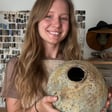
#330 Embracing the Journey of Growth and Self-Kindness with Lyssandra Gallup image

#330 Embracing the Journey of Growth and Self-Kindness with Lyssandra Gallup

Shaping Your Pottery with Nic Torres
Avatar
49 Plays2 years ago

In this episode of the podcast, we dive into the journey of potter Lyssandra Gallup, who shares her story of self-discovery and healing through the craft of pottery. From her early days in high school art class to a transformative period at a community college in Austin, Lysandra discusses the evolution of her skills and the critical role of community in her growth as an artist. We delve into the nuances of pottery creation, from mug design to textural techniques, and explore the moment of realizing one's unique artistic voice. Both Lyssandra and the host reflect on the importance of self-compassion in the creative process, emphasizing the therapeutic joy found in artistic expression. Lyssandra's insights underscore the value of continuous creation, community support, and the courage to be kind to oneself on the artistic journey. You can learn more about Lyssandra by checking out her instagram @lyssandragal

Top 3 Value Bombs:

1. Embrace the Journey of Growth and Self-Kindness: Throughout the episode, Lyssandra emphasizes the importance of self-compassion and kindness as a foundation for both personal and artistic growth. By being gentler with oneself, artists can foster a more enjoyable and productive environment for creation. This mindset also allows for the space and patience necessary to develop technical skills and discover one's unique artistic voice.

2. The Power of Community and Continuous Creation: The episode highlights the significant role a supportive community plays in an artist's development. Lyssandra's experience in a community college setting and subsequent involvement in local markets and pop-ups in Austin illustrate how learning and growing in a communal environment can lead to opportunities, connections, and feedback that propel an artist forward. Additionally, the practice of continuous creation is touted as a way to become less attached to individual pieces and more open to exploration and improvement.

3. Recognizing and Cultivating Your Artistic Voice: A key moment in the episode is the discussion around discovering and acknowledging one's artistic voice. The conversation suggests that artists may struggle to see the cohesiveness in their own work due to being deeply immersed in the creative process. By stepping back to gain perspective, seeking feedback from the community, and embracing platforms like Instagram for showcasing work, artists can better understand and develop their unique style. The advice to not put excessive pressure on oneself and to find joy in the process is a "value bomb" that encourages artists to naturally evolve at their own pace.

Resources:

The Questions we ask will determine how our pottery will look like that's why I created a Free 15 questions to help you discover your voice template go grab it here www.shapingyourpottery.com/questions

 

Recommended
Transcript

Introduction to Lissandra Gallop

00:00:00
Speaker
making something, then analyzing like how it came out, the colors, the textures, how it feels and how it looks and then kind of going from there and making new stuff or trying to replicate that same process.

Exploring Pottery Techniques and Critical Thinking

00:00:13
Speaker
What is up Shaping Nation this is Nick Torres here and on this episode of Shaping Your Pottery I have the great pleasure of interviewing Lissandra Gallop. Lissandra makes some really incredible texture themed pottery. And in this episode you'll learn how Lissandra makes this texture and what tools to use and what slip to use in order to make this texture. You'll also learn about how Lissandra develops some critical thinking skills that help her develop her own pottery style. And finally you'll also learn about how to find a cohesive pattern in your work.
00:00:41
Speaker
by doing one simple thing. There's so much more in this episode. I hope you guys enjoy it. I'll see you guys in it.

The Importance of Kindness in Creativity

00:00:48
Speaker
If you love pottery and want to take your skills to the next level, you're in the right place. Find your own pottery style right here on Shaping Your Pottery with Nick Torres. Let's get started. Sandra, welcome to Shaping Pottery and share with me what is something you believe pottery should be doing to have success in pottery.
00:01:06
Speaker
I think there's two things that have been really important for me is a mixture of having fun and then being kinder to myself. I think that a lot of people, especially creatives, are hypercritical of themselves and
00:01:24
Speaker
By kind of cutting ourselves some slack, we can give ourselves like a bit more room to grow and have fun and foster an environment that is more enjoyable to make art.
00:01:39
Speaker
absolutely great. What is something you're doing to help yourself be a little bit more kind yourself? Personally, for me, therapy's been like the best thing. I don't know if that's like possible for everybody or beneficial to everybody. But that's like the main place that I learned how to learn the tools to become better at being kinder to myself. I think like
00:02:01
Speaker
recently the most helpful thing is when I'm like talking with friends and I notice like specific phrases things that they're saying and I'm like hey you're being really critical and
00:02:13
Speaker
by like recognizing it in other people I'm able to recognize it better within myself. So when I'm like overly apologizing for things or if I'm telling myself like using the word should I think is like a really intense word that puts a lot of pressure on ourselves like oh it should look like this or it should be this or I should be doing this that kind of thing can be
00:02:38
Speaker
not nice to yourself. Love that advice right there. So tell me the story how you got started making pottery.

Lissandra's Early Pottery Experiences

00:02:45
Speaker
I first got to work with clay in high school, which is over like 15 years ago now, which is crazy to think about. I always really enjoyed it, but it never felt like anything. It didn't feel like I was good enough at it, which is
00:03:00
Speaker
part of the journey for me was like learning to be nicer to yourself but I took classes in high school and then in college and then after graduating from with my bachelor's I took some local classes at a community college here in Austin and it was just a way to like get back into a studio and that really like
00:03:26
Speaker
Those specific classes at the community college really I think is where things clicked for me. I saw like major improvement like technically while throwing having more fun with it and feeling like I was actually making work that I liked and
00:03:45
Speaker
from there I just because it's a community college it's like all these local artists or other students that were either just taking it for fun or were it was a great place to have like studio access and so a lot of people were like how did you get you know how would you suggest like getting
00:04:03
Speaker
into ceramics I'm like take classes at your community college because if they have it then that's going to be like I think you're paying less for more time and more access I think and so I learned a lot there and I also met some really amazing people and one of the part-time teachers was looking for a fellow studio mate and that's kind of like by taking that class I met her and
00:04:31
Speaker
then I ended up getting into a studio that I could work at and then kind of just steamrolled from there. I love that.

Impact of Education on Artistic Choices

00:04:39
Speaker
Tell me a story about when you got a BFA in sculpture from Kansas City Art Institute. Yeah, it was overall a really beneficial experience. I learned a lot. I wasn't in the best
00:04:51
Speaker
Headspace, I struggled with a lot of mental illness at that time, but I was still surrounded by like other artists, people who are wanting to become artists. And it really taught me a lot of like, main thing I think I learned from that is my critical thinking skills for decisions about what I wanted to make and the choices that I make within my work.
00:05:19
Speaker
So can you tell me how did this time during, while getting your BFA, how did this help you with developing your own work? I think like something that's really helpful for me and I think can be for other people is just seeing and part of school, you know, you're studying other artists, you're studying other time periods, you're going to museums. There was a local museum that was right across the street. And so being able to see what other people make
00:05:49
Speaker
and what you know has been inspirational for other people and then seeing how that can be inspirational to yourself that that was really huge for me then. I love that and I definitely agree seeing more work definitely makes it a little bit easier to develop your work. I love that. So what is something you learned during this time that you still use today?
00:06:15
Speaker
thinking critically in relation to like the choices that you make with your artwork. I think that some things that are really important is just like getting in it, making and just having fun. But if you're making something that, you know, has a specific purpose, making sure that you're thinking about like, let's say for a mug, thinking about how
00:06:43
Speaker
you know, how thick the walls are in relation to like weight, how heavy it is, if it's really large, how heavy it would be like filled with some kind of liquid, is it thick enough, is it, I'm sure there's a word for it, but like when things are too hot or too cold, you know, it's hard to hold, you know, do you need a mug because it would be too
00:07:04
Speaker
it would be painful to hold this cup while it was like filled with hot tea. Thinking about like if you're adding extra things to the outside like if you go and take a sip like are you gonna poke your eye out with something that's you know kind of sitting on the outside. I definitely use it more I think recently with my sculptural work thinking about like well I want a specific surface to look on on the outside of this.
00:07:34
Speaker
Well, how polished do I want that to be? And paying attention to those little tiny details. I learned that mainly from people being really critical of my own work and like critiques and stuff being like, oh, well you should have done this or you should have done that. Learning that like that's what other people might see if making the decision that you want that surface or you want those things there and having reasoning behind it.
00:08:01
Speaker
I absolutely love that. Shaping Nation, you can definitely just make decisions about your work and have reasoning behind it, and that's gonna make everything flow a little bit easier. I love that. So let's talk about your pottery. Can you tell me the story, how you started making the pottery that you make today?

Influences on Material and Technique

00:08:18
Speaker
Yeah, I think that having access to a studio is key. The space that I ended up renting from another local artist
00:08:29
Speaker
I was very much influenced by what she was making, what clay she was using, the way that she glazed things.
00:08:39
Speaker
made decisions for me about like okay well I'm going to make functional work I'm going to use this clay body because we're sharing a wheel and it's easier to not cross contaminate and she was like you should use this and I was like okay so I started working with mid-fire porcelain she made her own glazes and so I was like okay that's what I should do now and so I kind of just some of those decisions were made for me just because of what I was where I had access but I'm really happy with those decisions and worked for me I
00:09:10
Speaker
I think for because I did take those classes, but I think the most of like my technical learning came from just kind of making, watching YouTube videos, like learning how to make plates. That was a really big like thing that I had to figure out how to do and looking for that information online. I think that I
00:09:36
Speaker
probably didn't learn as fast as some people that might go through like a specific ceramic program at art school because it was a lot of like self-taught things. I think that it took me a while to get to a place where I felt like I had the technical skills down which then opened up space for me to explore
00:09:55
Speaker
what I actually really liked, which ends up being texture and colors and those kinds of things. And knowing that, OK, I can make I can make a cup or a mug, but now I have the canvas. I can do whatever I want on that. It's sort of been like an ongoing growth. I love that. So as you just mentioned, you are inspired by texture and form. Can you tell me how does this impact the way you make your own pottery?
00:10:25
Speaker
Yeah, I think a big part of it is like your experience with it. So obviously you can't really see how it is going to completely be finished until it's finished. So making something, then analyzing like how it came out, the colors, the textures, how it feels and how it looks and then kind of going from there and making new stuff or trying to replicate that same process.
00:10:53
Speaker
You can, so like with clay, it goes through so many steps. So like you can add a handle to a mug, but you can't really actually use that handle until it's like been bisquefired and you won't really know how it feels because you can't hold its weight while it's in the greenware stage. I think there's some textures that really like, you don't know exactly how it's going to feel until it's been glazed. That glossy surface can really like affect that, especially which type of glaze you're using. And so,
00:11:23
Speaker
I think I focus a lot on like how it feels and what it looks like and kind of tweak things from there or you know Instagram is a really great resource to see like what other people are making and kind of play with different ideas there too. Absolutely love that and I definitely agree. You could definitely sometimes be a little surprising when you get it out of the kill and definitely agree with that.
00:11:49
Speaker
So for a good while, you have been focusing on making more functional pottery, but now you are slowly making your way back into sculptural work.

From Functional Pottery to Sculpture

00:11:58
Speaker
Can you tell me more about this? Yeah, I think that a really big aspect of art school that I went to was really focusing on the concept behind your artwork. I was in the sculpture department, so I was really focused more on
00:12:18
Speaker
versus like what material you're using unless a bit related to your concept but instead of like if you were in the ceramic program you were pretty much solely working with clay and kind of didn't have to play around too much with that. It was really drilled in that you like you had to have a concept which is a bit intense and can be disheartening at times but because I
00:12:43
Speaker
I think I was really fixated on that. I was like, I need to have some kind of concept. It was really, it kind of stagnated, I think, my growth and what I was working on. By leaning into the concept of functional wear, that kind of gave me a backdrop that I could work with where I didn't have to put a lot of
00:13:02
Speaker
intellectual thought into what I was making. So I really focused on functional wear as a way to like grow my technical skills and then kind of just learn how to have fun with it. This last fall I got to make, I chose to make a sculpture
00:13:23
Speaker
I was here in Austin we have something called the Austin Studio Tour. It's a local non-profit that kind of like puts on this almost city-wide studio tour which kind of is like a lot of artists opening up their studio and having you know the public go around and it's a really great opportunity and I've been able to participate the last few years. They do a group show at the beginning of it
00:13:49
Speaker
And I had a piece in it last year, but it was just a vase. But this year I was like, I want to make a sculpture, like I have the top, like the space and a place to exhibit it. And so I had been thinking about it and kind of playing around with different ideas. And I ended up just taking the plunge and doing that. And it was a really amazing experience.
00:14:15
Speaker
I don't think I remember the last time I made a sculpture that wasn't a functional piece and that I had fun doing it, I think.
00:14:31
Speaker
ended up not getting to exhibit it at the group show because I didn't pay attention to the size requirements and so I ended up being too big but I ended up getting to show it like with me for the studio tour which like actually ended up being a way better experience because then I got to like talk to the people that came up to my table like about the sculpture instead of it just being like in a museum
00:14:59
Speaker
without me there um so i got like to hear a lot more feedback about it which is really amazing and i sold it actually um which is just i i'm still baffled but um and i don't think i don't know if i would have sold it without you know like me being there and getting to like talk about it with the public and so i do still want to do functional wear i really still enjoy
00:15:27
Speaker
doing that. I also really want to keep making more sculptures and I have an idea for a new one. I'm just waiting for it to not be so cold in my studio. I absolutely love that. Shaping Nation, you don't have to be stuck doing functional or sculptural pottery. You could do both if you want to. Make time to make functional wear. You can also make time to make sculptural wear and do stuff that makes you happy. I love that. So can you give me a brief explanation of how you create the texture onto your pottery?

Techniques for Creating Pottery Textures

00:15:57
Speaker
Yeah, there's two main ones that I that I utilize and that people seem to be like the most interested in. One technique is called chattering. I actually pulled out some of my chattering tools to show you if you haven't seen any. They are just these like thin strips of metal. This one actually has a handle. They are flimsy enough where they can bend but strong enough that it's not like
00:16:26
Speaker
Like it has tension where it can pop back into shape. And so as the piece is moving on the wheel, I bring this edge.
00:16:35
Speaker
to the piece and it causes it to catch and bounce and makes a noise. That's why it's called chattering. And then I just kind of move it over the surface of the bowl or mug or whatever, and it can create a really dynamic surface. And depending on this edge that's kind of squared off, makes really subtle lines repeating. And then I have this side that takes out big chunks
00:17:03
Speaker
can create like even more dynamic surfaces especially with like a glaze that when it's thin it's transparent and when it's thick it's opaque can really accentuate that depth in the texture. I do also use like slip to make different textures so like the chattering tool is a like it takes out clay so I pay attention to how thick the walls are so if I know that I want to make that really dynamic and
00:17:32
Speaker
chattering texture. I want to have walls thick enough that I'm not actually going to like poke through with the tool because I have done that. But if I'm going to use a slip and I want to add clay to the surface.
00:17:46
Speaker
I want to make sure that my walls aren't too thick where I'm just making it a really heavy piece. With the slip work I usually will use like some kind of thick heavy brush and use kind of brush strokes with it. Apply it to the surface with a glob of slip and then use the brush as a way to like create lines.
00:18:06
Speaker
for texture. And then I also do something called, that I call scaled or scales. And it's where I add slip to the outside and I use like a really soft silicone rib. And as it spins on the wheels very slowly, I'll use that rib to kind of create like little divots in the slip and let it dry like that. And then it creates a really, really cool texture.
00:18:33
Speaker
Now where do you get those tools that you were talking about a little bit earlier? Yeah, so this one I recently got at a local clay store here in Austin. It's got pretty sharp edges so it has a really, I'm not sure how much I like it. My favorite tool I actually maybe permanently borrowed from a
00:18:58
Speaker
a teacher at the community college. I later asked her about it and she was like, oh, I don't even use that one. So I was like, okay, that makes me feel a little bit better. It's just some kind of like metal
00:19:10
Speaker
strip and then I just bent the edge and it just I think you can use really anything that has like this like strength. I'm sure that there are like stores that sell them but I think you just get like a piece of scrap metal from like Home Depot or something and make a tool out of anything pretty much. I absolutely love that. So let's talk about discovering your voice. Can you tell me about the moment when you knew you were hitting the right direction with your pottery?
00:19:40
Speaker
So recently, I don't know if I could pinpoint exactly when that was. I think I was very startled to hear that I had an artistic voice because I think that
00:19:55
Speaker
I don't, I didn't realize that I had one, I guess. I was recently having a conversation with another ceramicist friend of mine. She is a teacher at a local school, high school, and she's been teaching for like over 20 years, been making ceramics for that long, like went to school for it and everything. And we were talking about another artist that has a specific, like very cohesive
00:20:23
Speaker
visual look for his work she made this comment like oh I just I don't have I don't have an artistic voice like I don't have this cohesive like thread within my work and I like I look at her and I look at her work which is like right next to us I'm just like that's that's so not true like I can see it within your work the types of forms you use the types of colors and glazes that you use I think are very cohesive
00:20:49
Speaker
Because we are the ones working with our work so intimately, it's really hard to like pull back and look at it all in a way that others might see it and might see an artistic voice within our work or within your work more easily. That was kind of like a really interesting point because you know she made a comment that like hey I can see it within yours and
00:21:13
Speaker
If I look at my stuff, I'm like, I mean, like, I can tell it's mine, but like, I also, it's hard to, I think, feel confident in what you have, probably the hypercritical aspect of, you know.
00:21:26
Speaker
just creative's existence. I'm also really like interested in the idea of like I think that there's a difference between like a visual cohesion or a visual like look to our work and then that that's not
00:21:44
Speaker
immediately equating to an artistic voice. I think that it can really, it's subjective like art is and it doesn't have to, it's not like strict, like it doesn't have to be one thing or the other and it evolves and everything and so that is to say that I don't know when it happened, I think it happened without me knowing and I think
00:22:11
Speaker
by realizing that, okay, I focus on textures and shapes and forms and colors, that I think that that's where my artistic voice comes through for others, even if it's difficult for me to see within my own work. Absolutely agree.
00:22:31
Speaker
Shaperation, a good exercise that you can do to help you maybe find a cohesive unit in your work is to put all your pieces that you recently made in a little bit of a pile, maybe separate a little bit and then take a few steps back maybe towards the end of the room and just look at the pottery and look at the same, the differences and the uniqueness, all the uniqueness in those pots. You could probably find a cohesive unit in those pots that you laid out. That's a really great idea.
00:22:58
Speaker
Yeah, I just kind of came up with it right out. So it was a spot. Yeah. So you contribute your growth as an artist to get a support from other artists and also continuously making more work. Can you tell me more about this?
00:23:13
Speaker
Yeah, I think that a little bit linked like the more I make the more I want to share and the more I share the more other people see it and the more people I meet and it kind of sort of just happens because of the other. A large part of my growth I think is by just continuously making things. The more you make the less attached you are to each piece and the less attached you are the easier it is for like
00:23:43
Speaker
things are gonna go wrong and you just like it hurts but the more it happens I think and the more you feel comfortable like oh I can remake that like that's that's not a challenging thing to remake then it's easier to kind of like let go of those things that that failed and just keep on making more because of just
00:24:10
Speaker
the more I make like I can't store all of that I gotta sell it or gotta try to sell it and buy the there's been a there's a huge like I think at least in Austin a lot of like pop-ups and a lot of markets and like artisan markets here that there's been a good handful that I've been able to participate in and by selling my work there I'm able to really like
00:24:35
Speaker
this is what the public likes and this is what I enjoy talking about and
00:24:42
Speaker
those things will then feed into well okay I want to make more of this thing and that kind of just then growing as an artist just by making but through those markets and and we'll talk about instagram in just a second I've been able to meet other local people and local artists and there's a handful of them that have been like really crucial to me if they've already
00:25:06
Speaker
the first time I ever did like a local market pop-up, it was always so intimidating. You're just like, how am I supposed to talk to people? How am I, you know, knowing that like you need a certain tent set up? Like all these kinds of things. There's so many things that go into it. Having like a specific display, having business cards. I had a few people that were really helpful for all those things. So it's like had done them and really had good feedback. So meeting those people was really huge and
00:25:36
Speaker
then in turn I was able to help other people that hadn't done that yet be like oh you want to get into markets well like this is what I know and this is what I've learned on the other hand Instagram like has been really amazing I didn't have one until I was like I want to I want to put my ceramics out there I want to try selling it I want to I want to do more with this and
00:26:02
Speaker
I think that, I can't imagine what it'd be like going to art school now and Instagram being a thing. You can see so much art online and so much easier and accessible than
00:26:19
Speaker
If you're in New York, you can go to the MoMA or the MET. There's amazing artwork there that you can actually see in person, but not everyone lives somewhere where they can go to those kinds of museums. Having that access to see that work online, I think, is
00:26:37
Speaker
is really inspirational and is a great way to meet other people too. I am a bit of an introvert in like going up to another person like another ceramicist in person is very intimidating but with Instagram it's a bit more removed and so reaching out to somebody or commenting on someone's post like it's a lot
00:27:00
Speaker
less scary for me at least. And I've been able to meet, you know, or meet people online that live elsewhere but are still really like encouraging and really helpful within the art community.
00:27:16
Speaker
Absolutely. I love that shape nation. The easiest thing you could do to be able to grow as an artist is to simply make more work and to keep making more work and also go out there and meet new potters, whether it's on Instagram or in person, go out there and meet new people because that's how your growth is really going to start happening.

Finding Your Voice and Enjoyment in Art

00:27:33
Speaker
Now, what advice would you give to someone looking to discover their own unique voice with their pottery? Don't put too much pressure on yourself because I think that that can just be really
00:27:44
Speaker
like blocking and that there is no time limit. I think that you know like everyone grows at their own pace, everyone finds I think what they enjoy at their own pace and then I think like work towards finding something that you enjoy. The more you enjoy it the more the easier it is to work on it for like
00:28:06
Speaker
longer hours or more often. I am not a fan of drawing. I do not enjoy drawing. I really struggle at it and practice is really the only way that like I would get better at it. If I enjoyed it, it would be easier to practice and I could practice for longer and so on and so on.
00:28:23
Speaker
for ceramics I really enjoy having my hands in the clay and I can do that for hours on end because I enjoy it and therefore I can keep practicing and everything. So finding the things that you enjoy and allowing yourself to grow that way and not putting like really strict guidelines like it doesn't have to be I have to find my artistic voice a year after college or right away like I think I think it is different for everybody and that's okay
00:28:54
Speaker
Absolutely. That was some excellent advice right there. Lissandra, it has been great chatting with you today.

Final Thoughts on Creativity and Kindness

00:28:59
Speaker
And as we're coming to a close here, what is one thing you want to hammer home with my audience today? I'm gonna say again, be kinder to yourself. Life is hard enough as is, and we should just have fun and enjoy it more. And having your hands in clay is just a great way to do that. Absolutely. Some great parting words advice. Lissandra, where can my arms go and learn more about you?
00:29:21
Speaker
Mainly on Instagram, I have my page on there where I share some process videos. I think I'm gonna start doing a bit more educational videos. People seem to be really responsive to that. And then if you live in Austin, I do pop-ups locally and the Austin Studio Tour is a big place too.
00:29:43
Speaker
Thanks for listening to this episode of Shaping Your Pottery with Nick Torres. If you want to start discovering your own unique voice, you must first start with the right questions. That's why I put together a free 15 question booklet for you to start discovering your own unique pottery voice. All you have to do is go to shapingyourpottery.com forward slash questions to get this free booklet.