Introduction to Pottery Workshop with Molly Walter
00:00:00
Speaker
Hey real quick before we get started, I'm doing a very exciting workshop on August 29th with Molly Walter all about mastering the carved pottery. If you are someone that makes carved pottery or wants to get into carved pottery, come join the clay games community where this workshop will be held and you can elevate your carved pottery skills or get into it as well. I hope to see you there. Go to the description to sign up.
Introduction to 'Shaping Your Pottery' Podcast
00:00:24
Speaker
If you love pottery and want to take your skills to the next level, you're in the right place. Find your own pottery style right here on Shaping Your Pottery with Nick Torres. Let's get started.
Debunking Pottery Myths: What Really Causes Explosions?
00:00:36
Speaker
Natalie, welcome, shape your pottery and share with me what's a commonly held belief in the pottery world that you passionately disagree with.
00:00:43
Speaker
Thank you for having me, Nick. I read your questions as soon as you gave them to me, and I've been thinking about this one in particular, and I cannot come up with a good answer for you. I don't know if I'm just not that disagreeable of a person, or if maybe I just don't know enough to know what I what i passionately disagree with, but the only thing I could come up with for you was that air bubbles don't cause explosions, moisture does, and I don't think that you have to clean your bisque ware before you glaze it.
00:01:12
Speaker
I used to do that because I was taught to. And then one time I forgot and then I just kept on forgetting. And then by the time I realized that I hadn't cleaned the last few batches, nothing had gone wrong. So I stopped doing it. So I don't think for the most part we probably need to be doing that. Yep. I definitely agree with you on that one. Unless if there's like a bunch of dust on it, then he might want to wipe it off. Yeah, sure. Yes, I do agree with you on that one. Yeah, in general.
Natalie's Serendipitous Journey into Pottery
00:01:38
Speaker
So tell me the story how you got started making pottery.
00:01:42
Speaker
So I was, um a couple different things happened all at the same time that led to that. I've always wanted to try pottery. I've always been a really artistic person. It was the only thing, like I flunked out of high school but had a 97 in art. It was like all 40s and then this one 97. It's like the only thing I've ever really been good at.
00:02:03
Speaker
and I kind of got away from art for a while and then in my mid-30s all of a sudden I just like needed to make things like I needed to start painting again and i I wanted to do pottery but I couldn't find a place to do it so I started making like molds and pouring cement to make like these little concrete planters and stuff because it was like the closest thing I could get to And then one day I was working at the hair salon that I worked at and I was doing one of my bosses clients because she was busy and we were talking. I was like, oh, where are you off to after this? And she's like, oh, I'm going to pottery class. And I was like, no way. Well, I've been looking for classes. Like where are you taking classes? And she told me at the station gallery in Whitby, which is just two towns over from where I lived. So.
00:02:44
Speaker
I immediately signed up for for classes and I was not as good at it as I thought I would be at first but it was so much fun and I was immediately hooked and my partner even told me there was one night, it was the night before we were doing our glazing and I woke him up because I was talking about glazes and he was kind of pissed at me and then realized that I was fully sleeping and I was talking about glazes in my sleep.
00:03:10
Speaker
That is amazing. So yeah what were you what were you feeling when you took that first pottery class? Just like this is it, this is exactly it. This is everything I thought it would be. um And i i it took over my brain. It was all I could think about. Like, what am I gonna make next? And how am I gonna make it? And what glaze am I gonna use? And what's it gonna look like? And it was just everything I wanted it to be. And it was like this thing that had been missing from my life. I absolutely loved that.
Growth Through Teaching Pottery Techniques
00:03:37
Speaker
Now, how did taking this pottery class help you learning pottery?
00:03:42
Speaker
Well, it gave me the like the chance to actually get my hands on it and physically experience it. And then the teacher obviously gave me instruction and yeah, that was basically like like any class teaches you, by doing and by by being instructed by someone.
00:03:59
Speaker
Absolutely love that. Shaping Nation, sometimes the simplest way to learn something is to actually do the thing or to simply learn from somebody that's already done it. Absolutely love that. So you contribute growth as an artist to teaching. Can you tell me more about this? Yeah. um So.
00:04:17
Speaker
I was really hesitant to start teaching at first because I had no experience teaching and I was still a relatively new potter when the opportunity arose. um But once I got into it, I realized that im I think I'm a pretty good teacher and I i like that it's It forces you to examine how and why you're doing things because if you're going to explain something that you know how to do to somebody else, you have to be able to break it down and like, well, this is how I'm doing it. And I think a lot of the times when we're doing something just quietly on our own, we don't actually think about how we're doing it. We just do it. And so I think that's really helped me grow. and then
00:04:56
Speaker
A cool thing about the students is they have all these ideas of things that they want to do that maybe you wouldn't have thought of. And me being mostly a self-taught potter, sometimes I got to kind of figure out like, oh okay, like I never i've never thought of how we would do that. So now I'm going to have to figure it out so that I can show you how to do it. So it's really forced me to grow in ways that maybe I wouldn't have thought of trying on my own.
00:05:19
Speaker
Which is pretty cool. I definitely agree with that. because since i started Since I started this podcast, a lot of ideas come to my head simply by talking with other people. yeah Yeah, exactly. Or you'll see something a student's working on and you're like, oh, I really like that idea. But in my head, it would look like this. And then you go home and make your like your own version of of something. Yep, definitely agree. Now, can you give me an example of something that where you had to maybe break down the steps to help teach somebody?
00:05:48
Speaker
even to something as basic as centering, sitting down and and trying to think of like the physics and you know, you'll explain it to one person one way and they'll get it and you'll explain it to somebody the same way and they'll stare at you blankly. And so then you have to think of a different way of explaining it and a different way of explaining it. And yeah, I think just being able to think of different ways to explain things to people. Absolutely love that. So let's talk about your
From Painting to Pottery: Natalie’s Artistic Transition
00:06:13
Speaker
pottery. Can you tell me the story how you started making the illustrative pottery that you make today?
00:06:18
Speaker
Yeah, so I remember before I mentioned that I was doing a lot of painting before I started taking the class and I had been painting these, I don't know if you've seen my my mountain mugs, which are like the first illustrative mug that I made, but I'd been making mountain paintings.
00:06:34
Speaker
Uh, and once I heard about underglaze and wax and I was like, Oh, I have this idea. Like, what if I could put my painting on a mug? Like, wouldn't that be groundbreaking? and So cool. Uh, and so that's what I did. I went to Tucker's pottery supply up in in Richmond Hill. And I was asking the guy who worked there at the time, you know, like, how would I go about doing this? How does underglaze work? How does wax work? And he kind of talked me through it and I bought some stuff and went home and made my first illustrated mug.
00:07:05
Speaker
Earlier you mentioned that you used to draw a lot, especially during your high school days. How did that experience help you with what you make today? Well, it helped me because now if I have an idea of something in my head, I'm able to draw it out on paper and then transfer it onto a mug. Do you often find yourself sketching?
00:07:25
Speaker
Yeah, definitely. um Probably not as often as I should, like I should probably force myself to sit down and practice sketching more. um But I'm not good at making myself do things that I don't want to do. So unless I feel like doing it, I don't tend to do it. But yeah, I definitely sketch out ideas a lot and and find it really helpful for like working through the process of making the idea in my head look like what I want it to look like. Do you think more people should sketch or do you think they should just kind of like wing it?
00:07:53
Speaker
I think it depends on the person and how their brain works. like if if I feel like for some people words are better, like writing down your ideas in words maybe works better for your brain and for other people you need to like actually see the shape of of the thing you're trying to make.
00:08:11
Speaker
absolutely love that. Shapingation, you don't have to draw but find something that works for you. Maybe it's writing it out or maybe it's drawing or maybe it's simply breaking down the steps. Whatever works for you try to find that so it helps you make your ideas come to life. Absolutely love that. So something interesting I love about your pottery is you not only make illustrative pots but you also make pots with colorful glazes. Why do you do both?
00:08:36
Speaker
Because it's fun, Nick. That's why. Because I like doing it. I like making the illustrative stuff that like scratches one of my creative itches. And then I just, I love colors. They just, there's something about them that makes my brain happy. I remember saying to another artist about a pot she had make, like it looking at the colors is like,
00:08:57
Speaker
eating ice cream for my eyes. Like it just, it makes my brain happy to see all these bright colors. And it's just so much fun experimenting them and with them and seeing what you're going to get. And one day I'm i'm going to learn about glaze and how glaze chemistry works, but for now I'm just buying the pre-made commercial stuff and and having a great time experimenting with it. When did you start adding colors to your pots?
00:09:21
Speaker
from the beginning yeah From the beginning, starting with like the glazes that they had available at the studio, which were pretty limited. So then you get into like mixing what's there and seeing what these two do together, which is fun for someone who, like in high school, color theory is is such an important part of the only part of high school I was good at. And then I was a hairstylist for, I think, 12 years.
00:09:43
Speaker
and doing color, the color wheel and color theory is super important. And then you get into glazing and no longer is it pigment you're working with. It's like, no, like instead of this color plus this color makes this color, it's now like pink and black makes blue. And it you just got to like relearn all your colors and how they work, which is kind of cool. Absolutely love that. So you are inspired by color, as you just mentioned, but you're also inspired by pop culture. Tell me more about this and how this impacts the way you make your own pottery.
00:10:14
Speaker
Yeah, so I think I wrote it down because I knew I would get stumped on this one. What number are we on? That number is five. You can edit this out, right? Yeah.
00:10:25
Speaker
cool Oh, it was because pop culture makes me happy and it's a big part of my personality and it's, it takes up a lot of space in my brain. Humor is like a really important aspect of my life. I think it's a ah really important coping mechanism for a lot of people. And I think it can help kind of bring like-minded people together when there's this like,
00:10:50
Speaker
Comedy that we all sort of share and we all get the jokes and yeah, so that's that's kind of where pop culture inspires me is helping connect to other people through Something that we all find funny together or it's something that we all kind of remember together And yeah, it just takes up a lot of space in my brain How can somebody add their own humor to their pots?
00:11:12
Speaker
That's a great question. There's so many different ways of of doing it, like anything that's funny to you, things that are funny to like your group of people. It could be like an inside joke with your friends or something, you know, like a quote from a movie or there's I wish I could remember.
00:11:30
Speaker
the name of this person because they're awesome and I follow their account and they're constantly making me laugh but they take like popular memes and they put the quotes from them on their mugs and it's amazing. I'll send you an Instagram I'll send you their account after in case you want to link them but I think that they're really funny as well but yeah there's lots of different ways depending on your humor and what what makes you laugh what you find funny. I absolutely loved it that was some excellent piece of advice right there.
00:11:57
Speaker
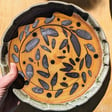
So now can you walk me through the steps you take when adding illustrations to your pots? Yeah, so first I draw the illustration that I'm gonna make and then um I'll take a piece of paper and I'll trace it out of my sketchbook and put it on a mug that's like leather hard and then I take a little those little ball stylist guys and I trace it in with like an indent.
00:12:22
Speaker
and then I will paint it and then I will carve it and then it gets bisque fired and then when I get it back I wax all the parts that I don't want glazed and then I dip it in my trusty go-to bulletproof gloss white glaze from Tucker's and and then I clean it up and that's it. Why do you use a white glaze just for your illustrations?
00:12:45
Speaker
because I think it just looks so nice on the speckled clay and it it doesn't like detract from the illustration itself. It's just like a nice clean canvas for it. Although that being said, there are a couple that I do in colors. I think the only two are actually Simpsons mugs and the one of them is I do it in like a turquoise because it's It's the, I'm a stupid baby mug. And that was a joke from the Simpsons where Maggie got this sticky note on her that says, I'm a stupid baby. And her jumper that she's wearing is like a turquoisey color. So I thought that would be good. And then the other one is also Simpsons, it's blinky, the three eyed fish. And he came from a nuclear pond. So when I first showed my partner, it was his idea. He's like, Oh man, you got to make that mug like a glowing green, which he was totally right. So those two are in color, but the rest of them are white. I absolutely love that.
00:13:36
Speaker
so Let's talk about the business side of
Pivoting Careers: Pottery During the Pandemic
00:13:38
Speaker
pottery. Can you tell me about the moment when you decided to become a full-time potter? Yeah, I don't know if there was like um kind of one defining moment, but it it happened during the pandemic. um As I mentioned, I was a hairstylist and salons were, I think, one of the businesses that was shut down the most during the pandemic, so I wasn't working a whole lot.
00:13:59
Speaker
which gave me lots of time to play with my pottery and get better and practice. And people started reaching out and wanting to buy it. And it got to the point that so many people were wanting to buy it. I thought like, oh, well, maybe I'll make a website. And then that started going so well. I just decided to to give it a try and and transition from my job as a hairstylist into making pottery for a living, which is kind of a random weird jump.
00:14:26
Speaker
What were you feeling when you made that jump into a full-time potter? Um, terror, mostly terror, uh, terror and uncertaintyty uncertainty, because I was leaving, um, a job where I'd like really established a clientele and I was very busy and I was really good at it, uh, to go do something completely different and totally unknown. Um, and I'm, I'm not a business minded person. So like I can do the art and I can make the things, but the business part of it is still, even today is still challenging for me.
00:15:00
Speaker
ah something you wish you knew before becoming a full-time potter? How to do taxes and business taxes and all of the stuff that a lot of it I still don't really know today but yeah mostly just the business side of how to do a business would have been really helpful. I had to kind of learn it on the fly. Now do you think people should try making pottery that sells or make pottery that they want to make?
00:15:26
Speaker
I think the two are kind of the same in a way. I think if you're making stuff that you don't want to be making, it's probably going to show through. And I think if you're making stuff that you love and that brings you joy, I think that'll show through as well in your work and people will probably want to buy it more.
00:15:47
Speaker
um At least that seems to be the case for for me and my pottery. um But I mean, if what you're making people don't want to buy it, then I guess yeah you got to kind of pivot and maybe just do that part for fun and make something that actually sells if you're trying to support yourself. Some excellent advice with their shaping nation. It's important to make what you want to make, and especially Sorry, it's important to make stuff that you enjoy, but if you don't enjoy it and it's not maybe not selling it, then you might want to pivot and try to do something else that maybe will try to sell your pottery if you're going down that route. I absolutely love that. So now, what seems to work well for you with being able to sell your own pottery?
00:16:29
Speaker
Definitely like paying attention to what seems to sell and what doesn't seem to sell and trying to make more of the, like if there's a particular color or a particular glaze or a particular design, that's really helpful. I have a mailing list that's helpful for my website so that people know when I have a shop update coming. I think finding Finding your people, like finding your client base, finding the people that are interested in what you're making. And I've been really lucky to have been able to find like a large group of people who seem to have the same taste as me and find the same things funny and seem to appreciate what I make. So now you mentioned mailing list helps you a lot. What have you done to help promote your mailing list? Honestly, not as much as I should be doing probably.
00:17:23
Speaker
i I mention it we know when people reach out and are like, hey, how can I buy this or where can I buy this? I'll i'll always mention my mailing list. and i've I think I've mentioned it in Instagram posts here and there, but I probably should be doing more to advertise my mailing list. I i like that because you're sending people that are already interested into your work to your mailing list where it's easier to buy your work.
Advice for New Potters: Knowing Your Worth
00:17:51
Speaker
so What advice would you give to someone looking to start selling their own pottery? e I would say don't undervalue and underprice yourself. I feel like a lot of people when they're doing their first show are like you know, unsure of themselves and feeling a bit self-conscious. And, you know, if if you've been accepted to a show and people are interested in your work, charge what your work is worth. And then also don't get discouraged if you do a show and it doesn't go very well.
00:18:26
Speaker
it can be easy to think like oh you know like my work isn't good or I'm not good enough or whatever but like maybe those just weren't your people at that show maybe it was that was a different demographic that just wasn't yours or maybe it was an off time of year and you know people just weren't looking for what you had that time so yeah I would say like don't undervalue yourself and don't don't get discouraged That was an excellent piece of advice. I absolutely love it. So let's talk about discovering your voice. Can you tell me about the moment when you knew you were heading in the right direction with your pottery? Yeah, I think it was when I made my very first mountain mug and I pulled it out of the kiln and I was like, oh my gosh, it looks like what it looked like in my head, which is just such a cool feeling. I think, oh, sorry. No, go ahead.
00:19:14
Speaker
I forget what I was going to say now, but yeah, that was it. Just when I found, when I made my very first mountain mug and saw how the underglaze and the carving really came through and looked like exactly what I was envisioning. And then it opened the door to so many possibilities of like other things I could put on mugs that maybe would look cool. Tell me more about these opportunities that came from that after opening that kiln with the mountain mug. Sorry, that went all row body. Oh.
00:19:42
Speaker
So tell me about the, can you hear me okay? Yeah, it just keeps like your face keeps glitching and your voice keeps going all like a robot. Am I okay now? now Yeah, now you are, yep. Okay, so can you, damn, I forgot what I was gonna say. oh Okay, I got it. So can you tell me about the new opportunities that started happening for your work when after you pulled the mountain mug out of the kiln?
00:20:08
Speaker
Yeah, I started um getting the opportunity to sell my work, which was really cool. um And then that leads to you know meeting um cool people and other artists. Teaching was an opportunity that came up eventually after that, which has been incredible. Yeah, and just the opportunity to continue growing and exploring and and making. Now, what would you say was your biggest obstacle when it came to finding your own voice?
00:20:36
Speaker
I think it was probably my lack of knowledge because I was, I only took a few classes and a lot of the stuff I was kind of self-taught. So a lot of experimenting with what works and what doesn't work. But then I think also it was an obstacle, but also kind of helpful in a way, because I think there's something to be said for learning through experimentation and and through failure.
00:21:02
Speaker
so now what what helped What has helped you the most with getting over failure with your pottery? I think it's how you look at it. And I try to look at it as just learning. It's not a failure if you learn something. I absolutely love that. Shaping Nation, it's okay to fail. But as long as you're learning something, as long as you're trying to improve something, then you're going to get better and you're going to be able to find your voice that much quicker. I love that. So now what advice would you give to someone that can discover their own unique voice with their pottery?
00:21:33
Speaker
I think take notice of what you like and what you don't like and why. So looking at other people's work, looking at your own work, looking at other art in the world, what what do you like about it? What do you not like about it and why? And then just experiment and play around and don't don't be afraid to fail. So now you've mentioned a lot during this interview what you like about your own pot, but what don't you like about some pottery?
00:22:02
Speaker
Like my own pottery? Yeah, or just what you don't like in general in pottery. Oh, I don't like uncomfortable handles. I really dislike them a lot. I think i think it's really important that your handle is comfortable. And I don't mean like, I don't mean necessarily like, oh, this is the comfiest thing I've ever picked up. But like when I pick it up and I feel like I'm going to drop it or I pick it up and I immediately want to put it down. I don't like that.
00:22:27
Speaker
Definitely agree. I can't agree more with that that. I agree. So Natalie, it's been so a great chance today. And as we come into a close here, what is one thing you want to hammer home with my listeners today?
Finding Joy Beyond Expectations in Pottery
00:22:40
Speaker
I thought really long and hard on this question, Nick. And I think the thing I want to hammer home is people always say like about social media that comparison is the thief of joy. And I think in pottery that expectation is the thief of joy. I think it's great to have an idea of what you want something to look like and to try to make it look like that. But I think once it goes in the kiln, you should let go of that expectation because it can really you how you see the finished product. So like, if I, if I see someone's work, and I didn't know what it was supposed to look like, I might think it's incredible. But they have this vision in their head of what it was supposed to look like, and it doesn't look like that. And so they think it's trash. And I think that's a huge bummer, because it's, you know, maybe it's still a really beautiful pot, even though it's not what you thought it was going to look like. How can someone break expectations about their own pottery?
00:23:37
Speaker
Oh, I feel like i feel like it's gonna be like a practice and mindfulness type of idea where you just have to really work on letting go and maybe it's gonna be harder for some people than it is for others, um but probably just a practice of like letting go of a little bit of that control and that like need for it to be exactly this thing.
00:24:00
Speaker
That was some ex imparting words advice. I absolutely love it. Natalie, it was great challenge today. Where can my listeners go and learn more about you? They could check out my Instagram page, which is fledgling studios. And another piece of advice I'd say is if you're going to make like a business or whatever, pick a word that people can say and spell and that they know what it is. So fledgling.
00:24:22
Speaker
is ah it's a baby bird or like the beginning of something and I knew what that was but it turns out that not a lot of people do so that was kind of a bad move on my part but it's F L E D G L I N G and then studios so that's my instagram and then fledglingstudios dot.ca is my website and you can sign up for my mailing list and I'll let you know when when stuff's happening and when I got new work available Hey thanks for listening to this episode of Shaping Your Pottery with Nick Torres. On August 29th I am doing a virtual online demo with Molly Walter all about mastering carved pottery. Molly makes some incredibly detailed carved pottery and she's going to go over the tech two tech different techniques she uses to make her carved pottery and at the end she's going to give a fun little challenge to this
00:25:10
Speaker
Workshop as well. This workshop is only going to be available to those that are in my clay games community So if you would like to join the play games community click the the link in the description to join