Transcript
Speaker: If you look at the top of the where you have the head to
Speaker: you're not looking where you are right now on the rock face. Meet Don Ricardo, a potter who loves to live in the moment and focuses on the journey. In this episode, you will learn about how Don just uses his hand and minimal tools to create his pottery. Using just a stone or just using my hand, pinch pots and stuff like this. And that's kind of really cool. Don goes into great detail into how he creates his ancient minimalistic pottery.
Speaker: So the slam scoot involves slamming blocks of clay against my workbench to create facets, right? One of the last things you'll learn about is Dawn's excellent advice to learning how to discover your own unique voice with your pottery. Really look at the things that you love. Look at the potters you love. And there's so much more in this episode. I hope you guys enjoy it and I'll see you guys in it. Dawn, welcome to Shape Your Pottery and share with me what is something that has helped you so far in your pottery journey.
Speaker: Sure. I think the most thing that's helped me the most is just having fun and experimenting and approaching that clay with that idea of just enjoying it and also being as creative and experimental as possible. It's really, really simple. Like most things in life, you just keep it really simple and it's not important. Things aren't important except for enjoying yourself and exploring and learning. Absolutely.
Speaker: Yeah, sorry. No worries. Okay. So tell me the story, how you got started making pottery. Sure. So I really wanted to make vases and ikibana, stuff for ikibana and what they call kusimona, which are bonsai companion plants. And I wanted to make containers for them because I couldn't find any that I really wanted that I could afford. So I, I was like, like when I was making clothes.
Speaker: I couldn't afford the clothes that I wanted, so I learnt how to make them. I just taught myself how to make things. So when I couldn't find the pots that I wanted for my plants and for, you know, I was trying to, I was collecting a lot of succulents, I just went, okay, I'm just going to make them myself. And that's how it really started.
Speaker: And that was really, it was kind of good. It was a great starting point for me. And I realized that other people felt the same that they couldn't find really cool pots that were affordable, just not your run of the mill pots. So it was kind of good because there was a financial interest in my work immediately, which was that really helped. It was great. Yeah. So you contribute growth as an artist to trusting the journey. Can you tell me more about this?
Speaker: that's correct yeah well i think the journey is the destination you know learning is more important the knowing not knowing something is more interesting and more exciting the knowing stuff so the journey is learning and experimenting and
Speaker: Knowing that you the journey is the interesting part the destination there's well, what's the destination? There's no kind of endgame It's one of those things. I know it's might sound like a bumper sticker I think but it's not if you look where you're going You don't see where you are now all right, so it's one of the things I learned from rock climbing if you look at the top of the where you have to head to and
Speaker: you're not looking where you are right now on the rock face. And that's the most important thing is where you are at this present moment in time, not some sort of end game, whether it's financial or some sort of point of success or something like that. The journey is the destination. The journey is the good bit.
Speaker: So I really just trust that that's the you know, that's the interesting thing. I stay there. Yeah
Speaker: Absolutely great. How did you how did you build up trust in the journey itself? And when did that start for you? Sure. I I've, I've done a lot of different things in my life. A lot of different creative pursuits. I've done everything from like ceramics to clothes, to painting, kinetic sculpture, collaging, everything. So I think having all those years of experience
Speaker: I knew the traps that I set for myself and I knew the things I had to avoid and the things to aim for and what to focus on and want not to pay attention to. It's like if you focus on what sells, you're limiting yourself or you're focusing on what people like or you focus on what's really popular on Instagram.
Speaker: it's just so hard to get it's so easy to get sidetracked by those things that you're kind of you're you'll never do it for yourself you're always doing it for other people so you know if you're making things that sells you're kind of limiting yourself i think it's a just this massive trap that i think society
Speaker: It's built into society that you always hear this thing, you are your brand, you are a brand and you're not. You are an individual, you are an artist, you are not a big brand. We've been sold this idea that everything has to become commercialized and everything has to have
Speaker: you know a monetary figure look here I'm talking about oh yeah I've got this six figure income and seven oh now it's eight figure king income and it's just it's just a lie it's just bullshit it doesn't it's it doesn't mean anything and it doesn't it isn't real half the time anyway it's just
Speaker: People can think that their success is built on that eight -figure income. And it's just completely ridiculous. And it's really, it shouldn't be a part of art. Art should be a part of enjoying yourself and creating. There's this idea that I have, I call it the muffin story, right? So I'll tell you this little story. It's a muffin story.
Speaker: So you bake amazing muffins and you love making muffins and they make you happy. You enjoy making muffins. But everyone tells you, oh, you should open a muffin shop. You should go online and, you know, have a muffin Instagram account and sell your muffins. And, you know, you could be really successful. You could have an eight figure muffin shop business.
Speaker: So you do that. You do branding and marketing, you're selling, but then you've also got taxation. You've also got employees and financial responsibilities and rent and commercial kitchen and all stuff like this. And you're locked into making muffins. If you want to make cakes, you can't make cakes. You've got no time. You have to make muffins. And then eventually you get sick of making muffins and you start hating muffins and you quit and you never want to see muffin again.
Speaker: When in reality, you should be just making muffins for yourself. Because nothing's going to kill your joy of making muffins or doing ceramics or whatever than having a business model. You're not a brand.
Speaker: You're a person, you're a creative person. You just make stuff for yourself. If it sells, great. If it doesn't become a full -time business, it doesn't have to be. It just has to be about enjoying yourself. What makes you happy?
Speaker: So that's my trust in my journey and the trust in myself. I don't get trapped by things like that. That's one of my fun stories. Absolutely love it. Shaping Nation, the most important thing is to make what makes you happy because that's what is most important at the end of the day.
Speaker: That's correct. Yes. Yes. So let's talk about your pottery. Can you tell me the story how you started making the pottery that you make today? I find it easy to get pulled in different directions. All right, not just for pottery, but with life, you know, but I think as life as life's a dirt track, not a train track. You're not locked into these a destination. You
Speaker: allowed to meander and try different things but i try and really drill down on what i want to say or what i want to do in pottery and ceramics so i think i turned the corner with my ceramics when i started making art
Speaker: It was a major step for me because I really did feel like I needed something to say and clay is such an incredible medium and it allowed me to really express my feelings and explore like deeper concepts. So along with pots for succulents and my vases have become vessels
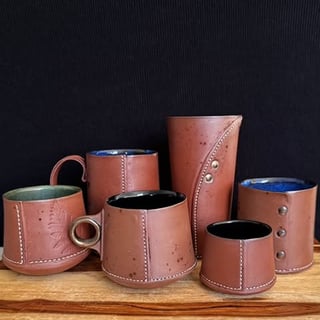
Speaker: And those vessels have become artwork, functional artwork, or sculptural vessels, I'm calling them now. So it's slowly moved to a more really expressive way of using clay. So they're still functional, but they're very much, much more expressive.
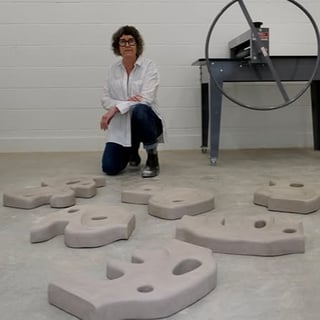
Speaker: Plus now I'm making things that are non -functional pieces. So they purely are art pieces. So yeah, that's what I'm doing today. That's what I'm doing at the moment. Exploring pure art, which is really interesting. It's really exciting for me because I guess I came from quite an artistic background.
Speaker: And at first I didn't want to make art. I wanted to make functional pieces that people can use. But it certainly is fun to explore different avenues. And I guess that's what I mean about the dirt track as opposed to a train track. You're allowed to meander, you're allowed to explore different paths. Yeah. So that was my, that's how really I got started on what I'm doing at the moment.
Speaker: You mentioned exploring meaning behind your own pottery. What do you think is the meaning behind your pottery that you make today? The artwork that I'm doing today, and even the vessels, the abstract vessels, sculptural vessels, I'm really fascinated at the moment with, this may sound depressing, but it's not, is ancient civilizations and mass extinctions.
Speaker: So I can see the planet is not in a good way. I can see society is not in a good way. Just like societies in the past, they imploded. They're no longer with us, whether it's Mayan, Incan, Egyptian, these massive civilizations that are now just, they're rubble. They're ancient, you know, artifacts.
Speaker: There's a part of me that's quite disturbed and very upset with what is going on in the world at the moment. And I do feel that there's a time when what we have in front of us now, the cities that we have, the civilization that we have at the moment, will be dust.
Speaker: will be gone and the pieces that I'm making at the moment I'm trying to express that in a piece of clay. The pieces that I'm making now look like
Speaker: ancient artifacts but in the future they could be the artifacts because I know you could say this about plastics but in a million years time or even 50 ,000 years time or 10 ,000 years time when we are gone there will be objects that people will unearth or someone will unearth
Speaker: And I guess there's, pardon me, it's not like an ego thing, but hey, this could be something that's unearthed in 10 ,000 years' time. And here's someone expressing, oh, they knew that the, you know, that this was all going to end, that this ancient civilization was going to end. So I guess that's what I'm trying to express in a piece of sculpture. That is very interesting. I love hearing about that.
Speaker: So something that I found interesting that you do is that you don't use any type of complex tools and mostly use your hands or tools that you made yourself. Can you tell me more about this?
Speaker: Yeah, sure. It really comes from like a frugal existence. I didn't grow up with a great deal of money, you know, so I had to make toys from boxes. I had to make a, this is a classic, I had to make a lightsaber from a rolled up newspaper, you know, when my friends had the latest, you know, light up lightsabers. I had to make it from a piece of rolled up newspaper. So
Speaker: I guess I've always carried that with me, always carried that kind of make and do kind of way of doing things. And I think it kind of contributes to the whole making ceramics. My girlfriend always last, when I was making clothes, she expected me to start growing the cotton in the backyard, because I'm like that, you know. And it's part of, you know, I dig up my own clay now.
Speaker: I make glazes out of ash and crushed rocks. And the same with the tools. I think something about making your own tool gets you closer to the process of actually making ceramics. So there's not only the pleasure of making the tools, but I think it can actually influence your work. For example, I find sticks or bits of rocks or at the moment bits of rusty old metal.
Speaker: and I use them for creating texture or for trimming my feet or I use scrap metal for carving or bits of wire that I find in laneways in the area. So one of my favorite things at the moment is using old shoe soles.
Speaker: to shape my pots so that i just find on the street you know these old shoes like like the most weirdest material object to make a tool out of but they're just fantastic they're perfect so i save money and i enjoy the process of of make of being really creative with what i use
Speaker: For me it just seems natural and it just seems normal for me to make my own tools. It adds to the adventure. It adds to the whole journey. Anyone could go out and buy tools at a shop. I'm not judging anyone that goes out and buys their own tools. But for me,
Speaker: I really enjoy the process of making things myself. It just adds to the whole adventure. I love that shape nation. You don't need a bunch of tools or a bunch of anything really to start making pottery. You can start making pottery with literally anything. I love that.
Speaker: exactly you can yeah i mean you look at i'd certainly look at lots of uh primitive cultures and i think you know i use stones the other thing i really like really highly polished stones that i find on the beach or something to shape my pots i was like people have been doing that for 10 000 years they've been making pots and vessels using just a stone or just using my hands pinch pots and stuff like this it's just
Speaker: And that's kind of really cool because pottery is so ancient and you're using techniques that were around 10, 12 ,000 years ago or longer, 15 ,000 years ago, using the same techniques. And that's really cool, I really enjoy that. I think it gives you a connection to ancient cultures as well and ancient traditions. You're not using any fancy things, you're just using your hands.
Speaker: Absolutely green. I love that so much. Thank you. So could you give me just a brief explanation on how you create one of your pots? Sure. So I have, I've actually named them. I've got a couple of different techniques that I've been using at the moment. One of them, this is pretty funny. I think it's called one's called the slam scoop and cut.
Speaker: And the other one's called the cut and twist. I know this probably sounded like dances or something from the 50s, but... So the slam and scoop involves slamming blocks of clay against my workbench to create facets, right? So they look like randomly shaped dice. And I create these interesting shapes and I keep on slamming the piece of clay against the table until I get a really cool shape.
Speaker: and I might whack it into the corner of my table or just flat on my table until I get a really kind of interesting shape that I like. When I'm happy with it, I just scoop out the inside, like Kiranuki style. So I scoop it out until I've got a hollow vessel.
Speaker: then I'll kind of refine what the outside look should like. So I'll use old knives, pieces of wire, paint scrapers are my favorite tools. So I use paint scrapers, the older the better, that are kind of rusty and scratched and have, you know, putty all over them. I'll scrape out and shape the outside to just refine it.
Speaker: So that's the slam and scoop and cut method. The other one's the cut and twist. So the cut and twist I use to get a block of clay again and I'll cut with a knife all the way around it and cut it into sections. Kind of quite grid. I'll cut it grids into it almost all the way through the block.
Speaker: Then I use a chair leg that I know chair leg to push into the top of the clay into the block and twist it and as I cut as I've twisted the clay
Speaker: the blocks separate from each other so you distort the blocks and the clay to create these pieces that look like they're made out of big chunks of clay so it's like it looks like it's made out of cubes but a very distorted cube
Speaker: again when I've hollowed it out or stretched it out and I can bend it I usually you know sometimes put my fist inside it and push out from the inside and it looks like
Speaker: a building that's collapsed, which relates to what I'm doing, the message of disintegration of architecture. And then I may be cut into it more to refine the shapes or just keep on bending it out until it looks very collapsed.
Speaker: and disintegrated other than those two methods the other one i use is just i use a pinch pot technique so i just pinch and i use a banding wheel like a simple wheel i don't have an electronic wheel and i use i just pinch and use stones or bits of sticks to shape you know the cup or the bowl that i'm doing
Speaker: So that's really, really low tech and very primitive kind of techniques. So I got these kind of really advanced and very intense, dramatic techniques, but also really simple, traditional, very old school, ancient techniques of just using stones
Speaker: That was a great explanation of those. I loved it. So let's talk about discovering your voice. Can you tell me about the moment when you knew you were heading in the right direction with your pottery? Sure.
Speaker: It may sound ostentatious or something, but it's not. It's not meant to be. But really, from the first week I started doing ceramics, I felt I was in the right direction. And I'm not kidding about that, because before I even bought a block of clay, I really drilled down on what I wanted, what colors I liked, what textures, the forms,
Speaker: It wasn't some vague idea of like, ah, maybe I'll make something. It was really solid. It was a real, I really planned it from the start. I find I've worked really well like this, where I'll research. I'll just research the hell out of something before I buy it or start making it. So I used like a pinboard thing of Pinterest.
Speaker: And I collected images that I really, really liked and I had them on my computer as well. Every time I saw something, whether it was a piece of artwork, a piece of furniture, a building, you know, pot or whatever it was, it didn't have to be ceramics. It was just anything that I liked the color, I liked the texture, I liked the form of it. And I put those all in together into folders and I looked at it and started making a list. Well, I really like,
Speaker: black or really dark clay. I really like using white clay. I didn't like colored glazes. I liked clear glazes or white glazes or occasionally, you know, green glazes. I really liked very heavy, very bold kind of quite masculine pieces. I didn't like really refined porcelain pieces. I like things that look like they were dug up out of the ground.
Speaker: I've still got the list of all those things, all those elements. By the time I went and picked up my first couple of blocks of clay, I was really, really clear about what I wanted to do. It was really, really solid.
Speaker: And it helps for me, it helps really solidify and get started straight away. And I guess by narrowing some of your choices, it makes things easier. So as soon as I started.
Speaker: The pieces that I made in the first week I started doing ceramics look pretty much like what I'm doing now a year later. Like, really they look the same. The same techniques. Most of the techniques are the same. I'm even using the same clay as I did the first week I started.
Speaker: Same sort of glazes the same sort of blocky technique, you know blocky looks Very heavy very thick world pieces. That's just the same as now because I I was really clear about what I wanted to do. I Think that helped that. Yeah, I love that shaping nation shaping nation
Speaker: Doing a little research and writing down what you like the most in pottery can go a long way in helping you find your own unique voice. I love that. Yeah, yeah, I think so. So now, outside of trusting the journey, you also contribute your growth as an artist to winning an opportunity for an exhibit at the end of 2024. Can you tell me more about this?
Speaker: I thought I'd like to just play around with entering some art prizes. So I entered this art prize called Little Things at a gallery. And I was really excited that I actually got in. I got selected to be in it. And for me, that was the great thing. That was really, really cool. I was really excited. And the concept for the art prize was something like comfort and protection.
Speaker: And at that time I was starting to explore using local clay. Now I live in the middle of the city. So it's all houses, it's all roads and stuff like this. But underneath our feet, my feet, are huge clay deposits. And this part of Sydney, up to 150 years ago,
Speaker: they were making all the bricks for the houses out of this clay and I live above these deposits and only you know a walk away from these old old kilns these old Sydney kilns and clay deposits so I made a little what was looked like a house brick
Speaker: So it just looked like a little house brick out of this clay, this local clay. And it was kind of a way to connect with the history of Sydney. And I won. So I won a prize to have a joint exhibition with a painter.
Speaker: so there was in the exhibit in the prize there was painting and there was ceramics so i won the ceramics and this guy called Luke Crouch he won the painting so we were having an exhibition together at the end of the year which was fantastic it was quite a it was very exciting but one of the the main thing about winning that art prize was going from making functional pieces to art pieces
Speaker: So I wasn't just making vases, I was making pieces that told a story. And it kind of gave me, it was funny, it kind of gave me permission to really experiment, to go beyond what I was doing at the moment. And that really, really helped to explore new techniques and new, you know, making glazes out of rocks and being really experimental and things like that. So maybe I may not have got there,
Speaker: doing really experimental art pieces that may not have happened without winning this art prize and going, oh, OK, I've got to do I've got an exhibition coming up. And it's kind of it's pushed me to become to work faster and work harder, which has been really great. So, you know, I'm not just cruising along like I was before. I'm coming. I guess I got I became serious. Yeah.
Speaker: Absolutely love it. Now what advice would you give to someone looking to discover their own unique voice with their pottery? I think the really important thing, as we've touched on before, is to research and really look at the things that you love. Look at the potters you love. Look at the artists that you love. The houses, the furniture, the photography.
Speaker: everything and collect all those images together and then pull them apart. What about this thing that I really, really love? What is it, whether it's a piece of bark or a brutalist Russian building or a painting that's in the lube or whatever, what is it about that piece that I really, really love? Is it the color, the texture,
Speaker: the feeling behind the shape of it and stuff like this and once you get a really clear idea as to what you're drawn to you just pull those together bring them in close to yourself make the list okay I really want to make you know pieces that are like this that reflect this that are these colors and it becomes a really great it's like a like a security blanket and it gives you like a way
Speaker: like a clear path ahead of you, instead of kind of being wishy -washy about what you want to do. And I mean, some people, they're very happy to bounce from one thing to the other, but
Speaker: For me, I find it really important. I think a lot of other people find this really important of finding your voice. And by knowing what you want, it's easier to find your voice and to be able to express yourself straight away. And I think being, this is, I think one of the other thing is being really experimental. There's a photography book that I really love. Why it does not need to be in focus by a woman called Jackie Higgins.
Speaker: And it's a great book for not following rules. And if there was, if I could write a book on ceramics, it was, would be why it does not need to be made on a wheel or why it does not need to be, I don't know.
Speaker: fired, why it does not need to be made of clay even though it's ceramics. I don't know. The book is great because it really examines our preconceived ideas of what the photograph should be and then it destroys it.
Speaker: All right things as a photograph they don't need to be in focus they don't need to have a central focal point they don't need to be you know follow the rule of thirds and stuff like this these are kind of like things that we've good to know the rules but by breaking the rules you create your own vision you create your own thing and so for me for the ceramics to translate that into ceramics
Speaker: Well, what if I added rocks, crushed rocks to the clay that I've already bought? What if I added two different clays together and to see what would happen then? What if I crushed rocks, mixed it with some sand, some clay and some ash that I found in an old barbecue?
Speaker: stuck that on the outside of my piece and fired it. What would happen? And I do this with some, you know, not just completely randomly, as I do test pieces, but it's that kind of idea of experimentation. So I think to find your voice, experiment and go outside kind of the comfort zone or the preconceived ideas of what you should be doing.
Speaker: You should collect all the images and have a clear idea. But you should also look at those rules and then try and break them. Absolutely agree. That was some excellent advice right there. I loved it. Thank you. Don, it has been great chatting with you today. And as we're coming to a close here, what is one thing you want to hammer home with my listeners today? Make muffins for yourself. Absolutely agree. I loved it.
Speaker: Don, it has been great chatting with you today. Where could my listeners go and learn more about you? Sure. I'm unconventional. I don't have a website, but you can go to my Instagram, which is Don underscore Ricardo with one C underscore ceramics Don Ricardo ceramics.
Speaker: And that's where you'll find me. That's my journal. That's my diary. Hey, thanks for listening to this episode of Shaping Your Pottery with Nick Torres. I recently created a newsletter called the Shaping Your Pottery newsletter to give you new and exciting tricks and tips on making pottery. If you would like to join in the Shaping Your Pottery newsletter, go to shapingyourpottery .com forward slash newsletter to join or you click the link in the description. I hope to see you guys in there.