Become a Creator today!Start creating today - Share your story with the world!
Start for free
00:00:00
00:00:01
Values, Culture, Strategy; How do they connect? – a conversation with David Cohen, the Contrarian Executive Management Consultant.   image

Values, Culture, Strategy; How do they connect? – a conversation with David Cohen, the Contrarian Executive Management Consultant.

The Independent Minds
Avatar
13 Plays4 days ago

Values, Culture, Strategy – it’s how we do business.

David Cohen is known as the contrarian executive management consultant for his no-nonsense approach to helping organisations get better using values and culture to drive behaviours that will result in the successful implementation of a strategy.

In this episode of the Abeceder podcast The Independent Minds David and host Michael Millward discuss how values and cultures are formed and how organisations of all kinds can use them to improve employee engagement and performance.

Their conversation covers how

  • Values, culture, and strategy differ
  • Managers and employees get confused about the differences
  • The roles of values, culture and strategy are applied in organisations
  • Values and culture create predictability of decision making and actions
  • And why Values and culture should be a major factor in hiring and promotion decisions

This is the podcast for any business person who wants to build a more effective team

Discover more about David and Michael at Abeceder.co.uk

Audience Offers – listings include links that may create a small commission for The Independent Minds

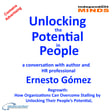
An accomplished author, David has written three books:

The Independent Minds is made on Zencastr, because as the all-in-one podcasting platform, Zencastr really does make creating content so easy.

Travel – With discounted membership of the Ultimate Travel Club, you can travel anywhere at trade prices.

Visit Three for information about business and personal telecom solutions from Three, and the special offers available when you quote my referral code WPFNUQHU.

Fit For Work We recommend The Annual Health Test from York Test; a 39-health marker Annual Health Test conducted by an experienced phlebotomist with hospital standard tests carried out in a UKAS-accredited and CQC-compliant laboratory.

A secure Personal Wellness Hub provides easy-to-understand results and lifestyle guidance. Use our discount code MIND25.

Being a Guest

We recommend the podcasting guest training programmes available from Work Place Learning Centre.

If you are a podcaster looking for interesting guests or if you have something interesting to say Matchmaker.fm is where great guests and great hosts are matched and great podcasts are hatched. Use our offer code MILW10 for a discount on membership.

We appreciate every like, download, and subscriber.

Thank you for listening.
Recommended
Transcript

Introduction to Zencastr and The Independent Minds Podcast

00:00:05
Speaker
Made on Zencastr. Because Zencastr is the all-in-one podcasting platform that makes every stage of the podcast production process so easy. Use the link in the description to zencastr.com. It has a built-in discount.
00:00:21
Speaker
Hello and welcome to The Independent Minds, a series of conversations between Abyssaida and people who think outside the box about how work works. with the aim of creating better workplace experiences for everyone.
00:00:37
Speaker
I am your host, Michael Middleward, the Managing Director of Abusida.

Meet David Cohen: A Contrarian Consultant

00:00:42
Speaker
Today, David Cohen and I are going to be investigating the relationship, the connections, call it what you will, between company strategy and company culture.
00:00:54
Speaker
David is the contrarian executive management consultant and an author. But David is also based in Toronto, in Canada, and we have a connection which goes back many years because we have both worked at the same organization.
00:01:13
Speaker
Toronto is one of those places that I have spent quite a lot of time in. If I ever get to go again, i will make my travel arrangements by the Ultimate Travel Club because that is where I get trade prices on trains, flights, hotels, holidays, all sorts of other travel related purchases.
00:01:31
Speaker
You can do the same by using the link in the description to the Ultimate Travel Club and the link has a built-in discount. Now that I've paid some bills, it is time to make an episode of The Independent Minds that will be well worth listening to, liking, downloading and subscribing to.
00:01:49
Speaker
Very importantly, on The Independent Minds, we don't tell you what to think, but we do hope to make you think and say, hello, David. Hello. are you doing today?
00:01:59
Speaker
Doing very well. Thank you very much. Good. How's Toronto? It's a long time since I've been there. It's changing all the time. It's a city that When I got here 30, 40 years ago was a city that was pretty provincial and now it's world-class. It's got everything and restaurants galore.
00:02:19
Speaker
Oh, I know. I know I've had some very nice meals in Toronto, but I am wondering, you know, David, why is it that you are the contrarian executive management consultant?
00:02:31
Speaker
The story goes back to a linkage conference. Somebody was making a presentation on from Home Depot and nobody was asking questions and the moderator, a friend of mine, i was sitting in the back trying to hide, had known I'd just written an article about why the new leadership at Home Depot was going to fail.
00:02:52
Speaker
And he introduced me as the contrarian consultant because I say what's not popular but say what needs to be said. and am willing to tell leadership the truth about their organization, not necessarily what they want to

Values in Management Consulting

00:03:08
Speaker
hear.
00:03:08
Speaker
So he called me the contrarian consultant because he was, his perspective was too many consultants tell leaders what they want to hear to keep their contract going.
00:03:19
Speaker
The trick is to be able to tell people what they don't want to hear in a way that they like to hear it. Right. I used to be in education, was doing that for about 15 years. And then,
00:03:30
Speaker
I couldn't really deal with parents too much anymore because they always thought if their kids were right, even when their kids were wrong. ye And so I transitioned to management consulting.
00:03:42
Speaker
My doctorate and background is in organizational behavior and human behavior. And so it was a natural segue for me and me to look at. behaviors but it was also a natural segue because of my upbringing and who I am to really focus on values and morals. So about 40 years ago, I really started working on organizational behaviors, taking a look at behaviors before it was even vogue to do so. of That evolved to looking at values, organizational values, what the real values are. I believe there's two sets of values in organizations usually. There's the overt values, the ones on the website, and there's the covert values, the ones that really mean something in the organization for success. I call them the published values and the lived experience values.
00:04:33
Speaker
Yes, same thing. Yeah, same thing. Covert, yeah overt, but published ones, lived ones. It's all down to the employee's experience. And of course, you've been putting all of this learning that you've had and experience into books as well. It's interesting you said thinking outside the box because my second book was called Inside the Box.
00:04:54
Speaker
And it's called Inside the Box because of what we're talking about. When you have a set of values and beliefs, and to me values of strongly held beliefs, emotionally charged, resistance of change, universally applied.
00:05:07
Speaker
And when you have values, they're not going to change. And so if you think outside the box with the values, which means you create new values or act in a way that's not consistent with the values, then you're not going to be successful in the organization. You're going to cause issues. You're going to have resentment. You're going to have animosity towards you for behaving wrong. So as a result of that, I called it Inside the Box. At first, my publisher, Wiley, um didn't like the idea because it was very popular and around 1986 to talk about thinking outside the box. And when Josie Bass got a hold of the book to publish it as one of their first published books in Canada, they really liked Inside the Box.
00:05:55
Speaker
So I had to go back and rewrite all the endings of the chapters to match the original. But that's why i believe that that book is really about corporate values and how when organizations live their values, they're

Culture vs. Strategy: Which Comes First?

00:06:10
Speaker
successful. And I have anecdotal stories as well as academic research to really drive home the point that values, there's a thought that culture eats strategy for breakfast, which is always debated. But I say once they're in place, it's a yin and a yang. But the values define the foundation for what the rest of the organization is. And whether you have defined them or not, you've got them.
00:06:38
Speaker
Yes. and people figure them out really quick. Oh, they do. i think what we'll do in the description is put some links through to the books that you've written. Okay. What you've mentioned there is this link between values and culture and how values create the culture and actually also lead to the display of the culture. And then this The saying that I hear a lot is that culture eats strategy for breakfast.
00:07:03
Speaker
Right. right and And so it's a bit like, you know there is a definite pecking order, isn't there, between culture and strategy? Yeah, i you know, i in one of my presentations, I put up a picture of a chicken and an egg and saying everybody always argues about which came first, culture or strategy. And I said the problem is is that when you whoever started a company comes to that with a set of values.
00:07:27
Speaker
And those values subconsciously guide decision making in the organization. And usually when they hire the first employees, it's people from the family with similar values or friends with similar values, which then get embedded in the organization and the organization is successful. What happens is a new leader comes in who either thinks that things aren't going so well or wants to change the values and people actually turn inward. they They rebel against it quietly. And they become stressful. That's why, you know, i when I work with organizations, we find that to be successful, you got to go back to the values that made you successful in the first place. And that's why i kind of call it a back to the future exercise. Yes. Is what made us successful will make us successful again. Going going back to the Home Depot example, when Nordeli took it over, he
00:08:23
Speaker
wanted to change the values of the way he treated people, the way he hired people, et cetera, et cetera. The organization, which under its founders was a very caring, humanistic organization that did things, paid employees very high salaries, et cetera. And he went away from that.
00:08:44
Speaker
And a lot of employees became disengaged. One day I was at a Home Depot and I was looking for help with something and usually you get help right away. But now I waited like 20 minutes and finally found somebody to help me. And I said, what's going on? There's something different going on here. And even though this is in Toronto and the head office is in Atlanta, she said, we don't bleed orange anymore.
00:09:09
Speaker
And I said, well, what do you mean? And she said, we have a new CEO who doesn't understand who we are and how to treat us. And so we just have responded sort of in a quiet, rebellious way. And that really struck me. yeah The power of how you're treating people tells the whole story.
00:09:30
Speaker
Yes. It's, is that culture? Is that strategy? You know, when you say that an organization has a culture from the start, because it can often be founded by friends and family of the people who are the entrepreneurs. And so people share the same values. And then a new person comes in.
00:09:49
Speaker
And everything can get, the apple cart can get to upturned. But I think there's also a situation where the original people can still be in place, but the organization grows and you take on more

Hiring for Value Fit Over Skills

00:10:04
Speaker
people. And they're not part of that original culture. They don't know the history. They don't know the in-jokes, the anecdotes and all those sorts things. And you' you're creating a different culture. and But most organizations create a culture by accident and they create a strategy on purpose.
00:10:26
Speaker
but the strategy will be driven by the culture. The culture defines how the decisions are made about what goes into the strategy, but it's still something that is done on purpose, whereas culture just sort of happens. We find it a lot of times that we're sitting down with entrepreneurs who are saying, I want this type of organization, I want this type of HR ah support, I want to create this sort of feeling inside the organization. And they don't use necessarily the word culture. They're just like, I want this to be different to the places where I myself have worked.
00:11:02
Speaker
Yeah, that's that's true. But here's the issue. People think that, as you said, even though the leadership might still be in place, they hire people because of skills, knowledge, and experience. And those people might be doing very well for a while.
00:11:19
Speaker
And then they get promoted because of their results. But then... something goes wrong and it's the behavior and people are fired. for their behavior. When I started in this business, I did some research on that with 1500 employees in the Toronto area. The company i was working with, we we called up people three months after they left the organization and we talked to them about why they perceived they were fired. And we also talked to the boss about why they perceived they were fired and everybody was already reemployed. So, and it was all confidential. 87% of the people were fired for behavior.
00:11:57
Speaker
And if you don't hire for fit to values, and that's what my new book, Selecting the Best, Fostering a Workforce Driven by Values for Lasting Success, is about how do you hire for values so people feel good about the organization they're in?
00:12:15
Speaker
Because if people get along with each other, put it this way, if I am working with two people, One has great skill and knowledge, but has the wrong behaviors and they come to me for help and I'm busy. Chances are I'll put them off.
00:12:31
Speaker
On the other hand, if somebody has all the right behaviors, we're getting along really well. They see things in a way that I might not agree with, but we understand each other.
00:12:41
Speaker
And that person comes to me and asks for help. I'll take the time to help them. And so when you have an organization where people understand sort of the, what I call one of my clients, one of the CEOs i work with called the secret sauce of the organization. They're able to overcome differences. They're able to see things different, listen to each other's opinion, grow and understand. and when that happens, organizations flourish.
00:13:13
Speaker
It's when organizations hire people and they don't get along. And that doesn't mean you hire people that are, you know, of the same ilk as you are. You know, there's this misnomer that if you hire for culture fit, you're hiring for somebody from the same school, the same religion, the same neighborhood, the same color skin, et cetera. That's not what culture is about.
00:13:35
Speaker
You know, hiring for culture means hiring for fit the values. And those values are fairly, you often can be anybody from any place in the world, as long as they have that same outlook online.
00:13:48
Speaker
And that's where the diversity comes in and the differences of

Challenges of Changing Organizational Values

00:13:52
Speaker
opinion. But because you have the same values, after you have a heated debate, you would put your arm around each other and say, let's go for lunch. The other way around, you go your separate ways after it's over and say, that person just doesn't get it. And I've seen this all way too often.
00:14:07
Speaker
What I always am concerned about is organizations and consultants who say, we're going to change your culture. Now, here's my issue with that. if culture is based on values and values are strongly held beliefs, emotionally charged, resistant to change, when was the last time somebody changed their values because they woke up one day and said, I'm going to change my values?
00:14:35
Speaker
No, they're not going to. And if their values are violated, they're going to feel it in their gut. So if an organization suddenly changes its values,
00:14:45
Speaker
And I've seen this time and time again, working with long-term frontline employees who say, you know, we change, our board changes our CEO every couple of years. They always come in and say they're going to change the values. And i just duck, wait till the things come down, put up the white flag and go back to work happily because we've gone back to the values we originally had, at least in our workspace.
00:15:11
Speaker
So changing your values is going to be a really difficult thing. You almost have to change the entire organization to do that. The problem is, is people say they're changing the strategy, therefore they're changing the values.
00:15:26
Speaker
But changing the strategy is often changing not who we are. I had one organization that was in the lottery business and they called me up and they said, you have to come out. We had a government report that said, we have to change our culture. we have to change who we are. We have to change the way we do business. And I said to them, so what's your current values? Now, remember, it's a lottery corporation for one of the provinces in Canada.
00:15:51
Speaker
And I said, so what are your values now? So one was respect. The next one was trust. And I said, wait a second, you're no longer respectful or trustworthy. Oh, no, no, we want to keep that.
00:16:02
Speaker
I said, so you're not changing your culture. You're changing the way you do business. And what did that mean? is that In the cross-border, close because most, 90% of the Canadian population lived within an hour, hour and a half of the border. Across the border, there were new casinos.
00:16:20
Speaker
And they were focused on gambling with scratch and win, lottery, et cetera, et cetera, but not building casinos. What they had to do is start building casinos. That's a change in strategy, a change in focus.
00:16:33
Speaker
It wasn't a change in culture. By celebrating their culture and doing things consistent with their culture, they got everybody engaged and they were very successful in making that transition.

Employee Engagement Through Value Alignment

00:16:46
Speaker
The way I look at it is when employees have what I call a line of sight, they are engaged and willing to work in that organization happily and a change in culture is not a threat and that line of sight begins with knowing what your values are who you are it's your ethical code of conduct you said a change of culture is not a threat but actually i think what you meant to say a change in strategy strategy is not a threat yeah sorry right i was glad someone's listening But it's true. The strategy is made.
00:17:19
Speaker
The culture is created. Correct. and And it's, you you can sit down and write down a strategy and then get people to buy into it and work with it. Culture is created by the way in which the founders, the senior managers interact with the people in other parts of the organization, other levels of the organization.
00:17:39
Speaker
Right. You've got to live your values and you've got to be consistent to the values that you've published. Right. as well. The reason is, as human beings, we like predictability.
00:17:50
Speaker
Yes. When she published those values, well, people were using those values as their consciously or subconsciously to predict how you as a manager, an employer, are going to behave in different types of situations. Correct. So if they trust that you are going to apply your values consistently in every situation, you are more likely to hear about the things that aren't necessarily good news or pleasant things to hear because people are confident that you will apply the values when you that you've published when you hear things which aren't particularly pleasant for a manager, an employer, an entrepreneur to hear.
00:18:32
Speaker
So when bringing somebody onto your organization, in my opinion, it is critical that you ask them for an examination of their past behavior in recent times in situations that will reveal, are they aligned with your values or not? And even if they have all the skill and knowledge and experience credentials that you're looking for, and they don't align with your values,
00:19:02
Speaker
hiring them will cause you a problem. You need to keep looking. yeah I need to tell you about Carl. Have I told you about Carl before? No. I like the story Carl. Years ago,
00:19:13
Speaker
I was so head of training and development for a Canadian company in the European, African and Middle East operations. So it was a big region and we had a very talented training department.
00:19:28
Speaker
We decided to add to that department by taking on a young trainee. So somebody straight from school. And one of the people in the department were given the opportunity to do the early stages of the of the recruitment process.
00:19:43
Speaker
And then I went in at the end to so they say, okay, this is the one that we want. And there were two chaps, that two young men that I was

Rethinking Hiring Criteria: Beyond Credentials

00:19:53
Speaker
presented with.
00:19:53
Speaker
One, I said to looking at your CV here, your your application, you've not done particularly well in your exams. Why is that? And his answer was, so his failure at his exams was not his fault. It was down to the fact that the teachers didn't like him.
00:20:11
Speaker
So it was like, okay, well, you know, if something goes wrong, I like to think that we'll add up, you know, we will identify that it's gone wrong and we'll own up to whatever our contribution to the wrong was, and then we'll sort it out.
00:20:25
Speaker
You we've got that transparency and trust within the team that if something goes wrong, we can always say, know, I've done something wrong, help me. And everyone would rally around.
00:20:37
Speaker
So sort of thought he's not part of our team. He doesn't share that particular value. The other chap comes in and he's a little short, skinny bloke and his mother's bought him a suit that he's going to grow into. She's short. He's a really nice kid.
00:20:54
Speaker
really nice guy. And I said to him, why is it that you want to work here? And he says, I have no idea what it is that you do. This is pre-internet.
00:21:04
Speaker
And so finding out about what we did was very difficult. So i said, oh, right. Okay. ive I was in the same boat when I came here. So why is it that you want to work here? And he said, I have traveled to school every day since I was 11 on the school bus going past this car park.
00:21:23
Speaker
And I have looked over the hedge and I've seen all the BMWs and Mercedes that you have in the car park. And we did have a lot. And he said, there must be something really good going on here for you to be able to afford that number of expensive cars.
00:21:39
Speaker
It must be really exciting. And I want to work somewhere that's really exciting. And I thought, how can I not give you the job? It wasn't necessarily his skills or his knowledge. He hadn't worked before, so he didn't have any.
00:21:55
Speaker
What he had, though, was an attitude that said, I am excited about working here. I want to be successful. I want to be part of a successful team and give me the chance.
00:22:08
Speaker
And so we did. And he's had a cracking career. That's great. Really has. yeah I identified a star that day. And most people make a mistake on... thinking that a university degree is going to make somebody successful. I've heard way too often managers say a university degree means they can finish something, means they can start and finish something.
00:22:34
Speaker
And then I say, you know, like, what's the job they're doing? Do they really need that degree? And yeah, for an engineer who has to sign off on on engineering drawings or a physician who obviously has to have certification or an airline pilot. Yeah, you want somebody who obviously has the training, the skill and knowledge.
00:22:54
Speaker
But there are many, many jobs there that you don't have to have that. for you know There's a lot of people in this world that flunked out of school. They're doing very well in the Silicon Valley because of a lot of things other than a university degree.
00:23:11
Speaker
Most of them dropped out. And snow jumps it's, I don't know why people are, there are two things people are hung up on. Years experience and degrees.
00:23:22
Speaker
And I say, you know, you can hire somebody, that has gone through Groundhog Day every year at school, at at work, and they have 10 years experience, which is the equivalent of one year's experience, because like you know it's repeat, repeat, repeat. Or you can hire somebody, perhaps fresh out of school, but with the skill, the knowledge, and the enthusiasm, or the behaviors of 10 years of experience.
00:23:49
Speaker
And you know, get past this experience and degree conundrum that has been embedded in hiring managers and look for who is the person, not what they do, but who they are, how they behave, how they'll they interact, how they bring forward ideas.
00:24:08
Speaker
Do they align with your, the business plan? Do they align with the values?

Roadmap to Value-Aligned Hiring

00:24:13
Speaker
And you're right, that general, you know the young man that, you know, thought maybe he'd buy a BMW one day, had the right attitude, the right behavior, even though he didn't have the skill and knowledge. He learned that on the job.
00:24:27
Speaker
And so I've seen that so many times. It's so important. And that's why, you know, i was talking before about what I call line of sight. And the line of sight is you have your ethical code of conduct, which are your values.
00:24:40
Speaker
You have your purpose and your vision. And then you have strategic plan. The correctness of the strategic plan is Will it move us towards our purpose and cause our people to behave consistent with the values?
00:24:55
Speaker
If the plan, if the strategic plan will violate either of those, change the strategic plan. Because people will act on a very different plan as long as you celebrate your values and they see it fulfills a purpose.
00:25:12
Speaker
So I think there's a direct link between strategy and values. values will give the energy to execute that strategic plan. So that's why I say it eventually becomes a yin and a yang. They feed off of each other.
00:25:28
Speaker
But if you don't get the strategy right to begin with, that our values are aligned with our strategy, our strategies align with our values, you're not going to create that spark that's going to get people to be successful.
00:25:42
Speaker
That's true. But the starting point is having a culture that you can then apply an adaptable strategy to, because the strategy is the tool that allows you to demonstrate your values, which are driven by the culture, which mean that you can adapt and change.
00:26:00
Speaker
And it's a bit like that old saying, know, people buy people. And people buy people because of the person's values and they can see that person aligned with the values. Correct. Yeah.
00:26:13
Speaker
Yeah. It's a complicated subject, isn't it? It's very complicated and it's very hard. And that's why I give a roadmap on how to make that successful in the book, Selecting the Best, because in the beginning I talk about how do you discover the behaviors of your authentic values? Right.
00:26:31
Speaker
And then how do you translate those into questions to ask in an interview? And then how do you score those so you can differentiate objectively between two good candidates?
00:26:46
Speaker
And how do you identify the candidates that just outright don't fit your organization? Like I say, it's hiring is not a dating service. now Hiring is something you might not think the person has the background. You might not associate with that person outside of work, but will that make that person make you look successful because they have the right behaviors and they can execute the job.
00:27:12
Speaker
So yeah getting to understand that foundation and hiring for that foundation is critical to long-term success. Very definitely. and It sounds like there's an awful lot of good information in that book as well. We've put a link in the description.
00:27:28
Speaker
Thank you. Hiring the best. right But for today, David, ah time flies, but I've really enjoyed our conversation and learned a lot. Thank you very much. do appreciate your time today. Thank you for allowing me to join you. Appreciate it.
00:27:42
Speaker
It's been fun. Thank you. Thank you. I am Michael Millward, the Managing Director of Abucida, and I have been having a conversation with the independent mind, David Cohen, the contrarian executive management consultant and author of Hiring the Best.
00:27:59
Speaker
You can find out more about both of us at abucida.co.uk. There is a link in the description. There's no point in being successful at work if you're not healthy enough to enjoy the rewards. So an important part of staying healthy is to know the risks early.
00:28:15
Speaker
That is why we recommend the health tests available from York Test, especially their annual health test. The annual health test from York Test provides an assessment of 39 different health markers, including cholesterol, diabetes, vitamin levels, organ functions, the list goes on.
00:28:33
Speaker
The annual health test is conducted by an experienced phlebotomist who will complete a full blood draw at your home or workplace. Hospital standard tests are carried out in a yeah UKAS accredited and CQC compliant laboratory.
00:28:47
Speaker
You can access easy to understand results and guidance to help you make effective lifestyle changes anytime via your secure Personal Wellness Hub account. There is, as you would expect, a link and a discount code in the description.
00:29:01
Speaker
I'm sure you will have enjoyed this episode of The Independent Minds as much as David and I have enjoyed making it. Please give it a like and download it so you can listen anytime, anywhere.
00:29:12
Speaker
To make sure you don't miss out on future episodes, please subscribe. Remember, the aim of all the podcasts produced by Abbasida is not to tell you what to think, but we do hope to make you think.
00:29:24
Speaker
Until the next episode of The Independent Minds, thank you for listening and goodbye.