Transcript
Speaker: Being able to make something that was like three dimensional and functional and like I'm like just making a cup and bringing it home and then using it. I really love that idea. That was Nicola Moore, aka Nick.
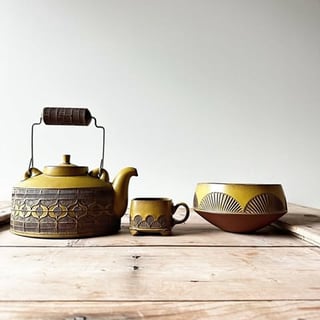
Speaker: Nick loves to make bright colored pottery and even found a way to make pottery in a microwave. In this episode, you will learn how Instagram really helped Nick be able to sell her own pottery and be able to go full time with pottery.
Speaker: I think Instagram has been a huge winner for me. I really enjoyed it and I still enjoy it. Finally, one of the last things you will learn about is how Nick uses intuition in her daily life and her daily pottery techniques to help her create some really amazing stuff. I think it's all about, yeah, just feeling, feeling an answer to something, feeling an answer to a question rather than using your mind.
Speaker: And there's so much more in this episode. I hope you guys enjoy it and I'll see you guys in there. Nicola, welcome to Shape Your Pottery and share with me what is something you believe potters should be doing to have success in pottery. Hi Nick, thank you for having me. Something that potters should be doing to have success in pottery. I think maybe the number one thing is probably just like making for yourself rather than making things that you think you should be making or that you know you think other people might buy or
Speaker: uh, doing all the shoulds. Um, I think if you're doing what inspires you and what you really are drawn to, then that's going to get you a lot further. Or, you know, at least you might burn out so fast. I absolutely agree. I love that advice. Yeah. So tell my story, how you got started making pottery.
Speaker: Okay, so the first class I did, I was actually, I started the class and then I found out that I was pregnant with like baby number three and I was like super nauseous and felt like shit and it was probably, I think I made like three really ugly horrible things and didn't think anything of it, didn't think I was gonna do it again.
Speaker: And then when he had, you know, we went back to Australia, had the baby came back and a friend of mine was doing a pottery class and I was a painter at the time. So I was already sort of doing artistic things, but like I sounded like the idea of making with my hands and doing 3D stuff sounded really cool. So I decided to do this class with her and then
Speaker: Yeah, pretty much immediately fell in love with it. Just the idea of being able to make functional things. And like my brain just filled up with just a thousand different things that I wanted to make. So that was kind of how it all started. And yet it's been a journey, but like it happened pretty quick once I did that second class and I was in a better place. So what is it about pottery that made you want to continue doing it?
Speaker: I think at the beginning just like making because I was I was painting at the time so I was making things that were you know display but being able to make something that was like three -dimensional and functional and like I'm like just making a cup and bringing it home and then using it
Speaker: I really love that idea and then realizing that you can, you know, you can make functional stuff, you can make display pieces, you can make, there is just so many different clays to play with, so many different glazes to play with, different firing techniques. It's just like the whole process of it. There's so much involved and so many little areas that you can explore and experiment in. I think that really drew me in because I could see that it was just never ending. So you mentioned that you were a painter before you were a potter.
Speaker: How did being a painter help you with developing your own pottery? Yes, so I was a painter and I was also a motion graphics artist and then before that I was doing a little bit of graphic design and photography. I did a design degree like visual communications degree to start with and I think
Speaker: all those things all played into or play into now like being a successful like ceramic artist and having a business doing it because you really have to wear when you have a small business like this you really have to wear all the hats right it's like if you want to make the work you can make it and it'll sit there unless you take a photo of it and you know you share it and you have a website or a way of selling it and
Speaker: then you can't do anything with it and it's not going to go anywhere. So, I mean, the motion graphics stuff ends up being that, you know, helping me with content creation and reels and stuff like that. The photography and graphic design, obviously that's super helpful as well for my website and Instagram. And then the painting that
Speaker: kind of came in later. Like I didn't realise how much it was going to influence my work until I really started with playing with glazes and stuff and then I would look back at some of the paintings that I'd done and see the correlation and see how they all kind of tied together and it was quite interesting because it wasn't necessarily conscious.
Speaker: But then I would sort of look back and see how similar they were and that that's what I was choosing. And that's what my soul was kind of wanting to get out of me, if that makes sense. I love that. Shaping Nation, if you have experience in another art form, you can bring that experience and put it into your own pottery. I love that. Yeah.
Speaker: So before we continue here, so you're kind of a little like off centered a little bit. Yeah, about right there. That's perfect. Perfect. Okay. So let's talk about your pottery. Can you tell me the story, how you started making the pottery that you make today?
Speaker: Okay. So how I make the pottery that I made today. So I was working for the first few years. I was working in community studios and basically just learning how to, you know, work with clay. Like there's just so many parts of the process that you need to learn to get good at it. So it was, I was really focused at the beginning on learning, like,
Speaker: sort of how to create functional forms and hand building mainly. Just the process of processes of clay, like all the things that can go wrong. And we all know we have to go through that to get anywhere with ceramics, right? Why things warp, why they explode, like all that stuff. So I feel like the first few years, most of my stuff was honestly like white or gray or light pink. Like there was not a lot of color going on. It was very much sort of utilitarian, just trying to figure this out.
Speaker: and then it wasn't until I got my own kiln and started working from my own studio and buying my own glazes that everything kind of changed because I realized that you know I've been using all the studio glazes and they have like maybe what 10 glazes or something and glazing wasn't really taught so much you just sort of dip and yeah so once I got my own glazes and I started experimenting with that and realizing I could have
Speaker: like every colour of the rainbow and that there were all different types of glazes and that they all interacted in different ways. That's when I think my work really took a turn in the direction of where I am now and where I was supposed to be going. But I had to get through those first years of playing and, you know, learning to get to that point. So it's all, you know, kind of tied in. But yeah, once I had my own kill and I had my own
Speaker: I had control over my own firing schedules and that's when everything got very colourful, all the paintings started to come into it. And yeah, so that's to get to where I am now, that had to happen for sure and was probably the number one turning point. So yeah.
Speaker: What were you feeling when you got your own kiln? It's super excited. It was really great to like, yeah, just to be able to do it all at home and not have to take stuff, flip stuff back and forth in the studio. And, you know, in the studio, I was paying for, I think, I think it was like, I think I was just at that point paying for classes, but not really doing the classes, just paying for the classes just so that I could use the studio space. But we still had to pay per piece, which was like the size of the piece.
Speaker: So I was just suddenly like, oh, I can make anything any size as much as I want. And that was that was super exciting. I love that. I just got my own kiln tune. I'm so excited about it. Congrats. Super cool. Yes, definitely. Definitely been a game changer for sure. Yeah, it just opens up so many possibilities, right?
Speaker: Absolutely. You are inspired by being spontaneous and the exciting evolution of experimental process. Can you tell me more about this and how this impacts your pottery? So I think.
Speaker: basically I get bored really quickly is possibly part of the problem but also I like to just experiment. And I think like you know how I was saying at the beginning, like realizing that there's just so many parts of the process that you can play with and experiment with and just so much to learn and so many directions you can go, that has ended up being
Speaker: becoming like a constant, I want to constantly push the boundaries of my own creativity and like say it's been mainly with glazing over the last few years so just trying to literally with every piece do a different glaze combination and you know just constantly experiment and constantly try and come up with something new.
Speaker: and then that has sort of turned into, I guess I was starting to get a little bit bored with the mid -range glazes and I'd done a lot of experimenting with them and then last year I started doing
Speaker: different firing techniques start experimenting with Raku, pick firing, microwave firing and then you know lots of different clays and then you know a whole range of new glazes with those different cone ranges so it's all sort of building on itself and then from going to the cone six from the cone six glazes to the Raku stuff
Speaker: I got into luster glazes and now I'm kind of combining all the glazing techniques that I was using with my Cone 6 glazing and segueing that into my luster glazing which is really fun. Like that's kind of where I'm at right now but yeah just constantly building on what I'm doing and trying to change it. Not on purpose but that's what's inspiring me. I'm just trying to follow the inspiration and that's where it's led me so yeah.
Speaker: I love that. Shaping Nation, if you follow your inspirations and keep experimenting, your pottery will grow and you will be able to find your own unique pottery place. I love that. So you mentioned that you got into Raku. Can you tell me the story how you started doing more Raku firings?
Speaker: Yeah, so the Raku thing, I had got, okay, so it started out with this little cup that I saw and I ended up buying one, it's this tenmoku cup and it's got all this beautiful luster color, like rainbow luster color and I still have no idea how they make these things and it's very elusive. But that sort of sparked this curiosity in me of trying to
Speaker: maybe figure out how to do some luster glazes. And then I met Natalia Siva who is an amazing raku artist and she ended up coming over and we did a raku session with a couple of other people in the backyard. She has this amazing little raku kiln that she
Speaker: brings around with hair. So we did some Raku. It was so much fun, but we mainly did black and white sort of stuff. We did like horse hair and obvara and naked Raku and that sort of thing. So I was still really interested in doing some glazing because I'd seen these beautiful Raku glazes finishes. So that's when I started getting into the microwave firing because I saw some people online doing Raku in the microwave.
Speaker: And I thought, because I wanted a Raku count but actually couldn't afford one at the time, I thought that would be a good way of trying it out. So I did and it worked and it was awesome. It was super awesome. And it's an amazing way to experiment because it's so quick. And yeah, that's kind of how I got into the microwave firing portion of last year. So how can one do a microwave firing?
Speaker: okay so well it depends on what you want to do right so i started off doing the raku and then i realized and i've seen that done before but then i realized if you can do raku in the microwave why can't you just do regular like low fire like cone six cone 06 sorry cone 06 pottery so i kind of went down a rabbit hole of just seeing how far i could
Speaker: go with that and what I could make, what glazes, what clay to use, you know, what what the timings might be and what are all the factors that go into figuring out what the timing is, all that stuff. Like I went kind of far down it. So and basically in the end it's a lot of information and there was a lot of experimentation and just you know using cones for example to try and figure out if I'm getting actually getting the heat work that I need, like if I want to make a mug that's food safe.
Speaker: and people kind of have this weird idea that you can't make that earthenware isn't food safe. I don't know where that came from but it's like we've been using earthenware for like millennia and it can be food safe. It is more like porous but you can glaze it and you can use liquid quartz and that sort of thing to to make it food safe.
Speaker: but you also have to choose the right clay. You know, you need dinnerware clay, you need food safe glaze, all that sort of thing. So there was just a lot of information. So I ended up putting it all into an online video course just to teach people how to do it because you need, so you need a microwave kiln.
Speaker: which is actually a glass, they're marketed to glass fusing artists. And you can get them on Amazon for like 40 bucks, like they're super accessible. And then you need a microwave and any microwave is fine. You don't want to go too high or wattage or you'll end up just having to decrease the output anyway.
Speaker: but the the microwave size and the and the microwave wattage and the kiln size and the clay and the project and everything all that stuff all affects the firing time so it's not like you can be like okay you need this this and then you need this amount of time and then you're done like you have to kind of from whatever your setup is experiment a little bit and there are some pitfalls and anyway so i made a course just going over all of that because it was a lot of information
Speaker: But to get started really, all you need is a kiln, the microwave kiln off Amazon, and then the microwave. And maybe some safety gloves and some low -fire clay, low -fire glaze. Good to go.
Speaker: I absolutely love it. Yeah. It's really, I mean, it's so accessible and it's like so affordable compared to like getting your own kiln or having this paved to be in the studio or whatever. So I like, you know, I wasn't kind of doing it for myself, although I was, but I was also just like, this needs, everyone needs to know about this. Like how is this not, how do people not know? You know, obviously they've been, these things have been around since the eighties and they've been glass fusing in them forever. So there's just no reason that you can't
Speaker: You know, you are limited by size. They're quite small. But if you put two, I put two lids together and then you can go a little bit bigger, like you can fit a little mug or something like that in there. So it's just great, great fun. And I love that. Yeah, that is such a cool experiment as well.
Speaker: Yeah, I mean, it was it was a lot of like work to figure it all out and figure out all the factors and everything. And I still it's still a work in progress. Like it's it's so it feels really new, but but totally worth worth playing with. And yeah, I absolutely love that. So let's talk about the business side of pottery. Tell me about the moment when you decided to go full time with your pottery.
Speaker: Yes, there wasn't one. There wasn't one. It was so gradual. It was such an organic thing because I had a studio.
Speaker: and I was painting, right? And then slowly the painting stuff kind of got shoved to the side and the clay kind of took over. And then I had stuff, like I had a lot of pottery, you know how this works. Then you have like all these things and you're like, what am I going to do with them? So I started posting stuff on Instagram and I would sell it that way, but it was kind of piecemeal, like one thing at a time. And then I'd have to go back and forth and get the payment and do the shipping and da da da da.
Speaker: And then eventually I realized it was going to be way easier if I just make a website and do like a collection release and put it all on there at once, have all the shipping stuff automated. And that was, I guess, probably, I don't know if it's the point where I went full -time because I was already doing it like constantly, like obsessively for a long time, but that was the turning point as far as business side of things went where I actually had like an online shop and
Speaker: You know, I started sort of doing it a little bit more. I don't know what the word for it is. Just professionally, I guess. Yeah. What do you think helped you the most being able to sell your own pottery?
Speaker: I think Instagram has been a huge winner for me. I've really enjoyed it and I still enjoy it. I think taking photos of your work is really important and sharing them. And then also just having a place, just offering up what you're making. Because people need to know if they can actually buy it or not. So having a website or some sort of market, and you don't have to do it that way. There's just so many different ways you can
Speaker: you can go down this road. You know, I never did markets, but some people do that. There's Etsy, there's, there's just, you know, you can go into your neighborhood, you can just sell stuff to friends. You just have to, I think you just have to make your work known. Yeah. How do you, how do you use Instagram to help you sell your own pottery? So it started out, as I was saying, just with, I would post a photo of something that I'd made and people would be like, and I'd be like DM me and then they would
Speaker: DM me and then I would sell it to them and then after I started making a lot of stuff and I made my own website and had the collection release I actually started an Instagram
Speaker: shop as well. I think it's you do it through Facebook and then you can link the products to your website. So if I post something now on Instagram that I have for sale I can have there's a little button down the bottom and they can click in that takes them directly to the product which is kind of cool. And then also just you know sharing that you're having a release letting people know what's happening and what you have available. That's just been the platform that I've done it on there's there's other ways obviously but
Speaker: That's worked well for me. I love that advice. So outside of selling your pottery, you also do workshops and courses. Can you tell me about the moment when you decided to do these things? Yeah, so I was doing painting and I was teaching a little bit of painting, like mainly acrylic pouring workshops and stuff like that. And then when I got my own kiln, I realized I could also kind of be teaching pottery. And the studios that I was going to, I noticed a lot of people would kind of come in and
Speaker: just get a bit lost. They would be getting taught hand building or whatever but then they weren't getting taught how to glaze or even the whole processes of how the clay needs to dry and how it needs to dry slowly and how to stop warping and how to stop cracking.
Speaker: sort of stuff so i just started off by just teaching people kind of one -on -one or two -on -one just the whole process and i would do it in she really wants to say hi i would do it in a three sessions and just give them a really comprehensive just good start and that was how it started and then i would started doing workshops as well so yeah just like it's always been different now it's been like a spoon making one or a basket making one or i've done like in person microwave firing
Speaker: workshops but I don't do them very often I do it sort of when I feel like it so yeah here and there and then obviously I've got the online microwave firing video which is that's great because I've done it and it's just sitting there now. So when you when you decide to do these workshops or courses how do you get people into them?
Speaker: Well, because I don't do them very frequently, a lot of the time it's like a lot of friends or people on Instagram like texting me and going, can you please do a workshop? And I'm like, oh, fine. Okay. And then I, you know, I'll do it. And then I either do like a shout out on my email list or on Insta or to friends. They often ends up with a lot of friends coming as well. So that's, yeah, that's how it usually works out. I love that. So.
Speaker: Let's talk about discovering your voice. Can you tell me about the moment when you knew you were heading in the right direction with your pottery? Yeah, I think probably that moment when I got the kiln and like and I got the glazes and I could sort of see where like how my all my old work was tying into my new work and like you know what
Speaker: with the glazing that was like super inspiring and super, super exciting to me. And I think then, you know, experimenting a lot with glaze and coming up with my own sort of techniques, developing my own style, that's kind of really, that was the point where I could see where I was going and why I was doing what I was doing. So now, you contribute growth as an artist to developing your ability to trust your intuition. Can you tell me more about this?
Speaker: Yeah, so I think that literally I've gotten to where I am because I've done my damnedest to like not listen to like all the kind of shoulds in my head, like I should be doing this, I should be doing this, should be doing this. I've done my best to listen to kind of my soul, my intuition,
Speaker: like get out of my head, get out of my own way and like each day sort of really check in with myself and say, what do I really actually feel like doing today? Like, cause I might in my head, it might be like, I need to make cups cause I sold a whole lot of cups. So now I need to make more cups.
Speaker: But when I check in with myself and how I feel, it might be that that's like the last thing I feel like doing. Maybe I even feel like cleaning the studio. Like, you know, sometimes you feel like doing things that your head doesn't think you actually feel like doing. And so, yeah, just getting out of my head, getting into like my body and feeling like what I actually want to do and what is inspiring me in the moment and doing that as often as I can. What has one developed as intuition?
Speaker: I think it's all about, yeah, just feeling, feeling an answer to something, feeling an answer to a question rather than using your mind. Like we have so many, like so much subconscious programming that likes to stop us from doing things or, you know, it tries to protect us. So it's like, if you have a question and you don't know what, like, what the answer is, then you're not sure what to do next. I think if you, I like to ask a question and then put my attention like more on my like body.
Speaker: or like on my heart or on my gut or wherever you get your intuition from and then see what the answer is coming from that place and it's often quite different to what my brain has to offer. So you mentioned that you asked yourself a question. Can you tell me what that question is?
Speaker: Yeah. So say I am wondering, you know, should I do this podcast with Nick Torres? And I'm like, you know, my brain might be going, hell no, you don't want to do that. That's going to suck. You know, too nerve wracking. You don't like doing podcasts, whatever it is. Right. But when I actually check in with my intuition, it's like, yes, definitely do it. This is going to be good for you. Or like.
Speaker: you know, putting a glaze on a cup. I'm like, should I put this glaze on a cup or this glaze on a cup? And if I get out of my head and I kind of feel the answer rather than thinking it, then I usually get the right answer. And having done that a lot, I've kind of built up the trust to use it more, if that makes sense.
Speaker: You know what I mean? I love that. It sounds kind of crazy, but the more that you do it and it works out, the more you trust it and then you kind of build up that muscle as well. I love that. Shaping Nation, the more you go out there and trust your intuition, the easier it gets to actually trust your intuition more and start asking better questions so you can actually let your intuition take lead. I love that so much. Yeah. So what advice would you give to someone looking to discover their own unique voice with their pottery?
Speaker: Use your intuition. There you go. Yeah, I mean, honestly, like, yeah, do. So you try and tap into your intuition if you can, because we're all here to do something different, and we're all super unique, and we all have our own path.
Speaker: And I think way too often people try and copy what someone else is doing or think that they have to do A, B, C, D to get to this place because they've seen other people do it that way. And there's just so many different ways to get to where you want to go. And you may not even know where that is. You may think you know where you want to go, but actually if you stop just trying to force yourself into a place and you let things just happen,
Speaker: they often end up working out way better than you could imagine and that's literally a day -by -day thing and trusting your intuition, following your inspiration each day, you know doing what you're inspired by, taking little bits out of the work that you've just done and looking at it and saying well what do I love about this and then taking that one little thing and expanding on that.
Speaker: And I think if you make those, all those small little choices coming from more from a place of intuition and you're like sold, then that's how you're going to end up finding your unique place in, you know, within the sort of artistic world, I guess. Some excellent words of advice. I absolutely love that. Nick, it has been great chat with you today. What is one thing you want to hammer home with my listeners today?
Speaker: Trust your intuition. No, we're going to go there again. Yeah. Just, you know, walk your own path, like make it your own. Don't worry about what the people are doing. Just do what you feel like doing and allow that sort of energy to guide you rather than, you know, thinking what you, you should do this or you should do that. Just, you know, go with, go with your own
Speaker: inspiration and intuition like on a daily basis. I love that advice. I mean it's like a crazy place of doing lustre glazes. I never would have ever thought that like this is not something that a couple of years ago I was like okay well my plan is this this this this you know like I've I've totally come to this place of making what I'm making now by just going with the flow each day and it's all built on itself
Speaker: and it's been very gradual. And now I'm working with, I'm making my own glazes. I'm doing these crazy luster reduction firings in a gas kiln. Like all these things I never would have guessed and I couldn't have planned it. It's happened organically. And I think that that is the thing is not to try and push yourself in a certain direction, but just to allow it to all unfold and just watch what happens.
Speaker: I absolutely agree. Some ex and party words advice. Nick, where can my artist go and learn more about you? So I have a website. I'm on Instagram. It's Nicola Moore Studio. I have a website, Nicola Moore Studio also. And then I am doing a gallery show in May.
Speaker: down in downtown LA at the Neo Gallery, which I'm going to do a lot of my Lustre stuff for. It's called Gathering, and it's sort of functional wares based on the idea of communal gathering and celebratory meals coming together. So that's going to be really fun. And I haven't done that sort of thing before. So it'll be a really good opportunity if anyone's local to come and check that out, especially with the Lustre stuff, because it's really hard to film it. It's much better in person.
Speaker: That'll be fun. If anyone's in LA, come check it out. Hey, thanks for listening to this episode of Shaping Your Pottery with Nick Torres. If you would like to send me your own voicemail and have questions about pottery or finding your voice, don't be afraid to send me that. You can go to shapingyourpottery .com forward slash voicemail to send me your own voice message and I'll do my best to answer the question. You can also look in the show notes and we'll be there. I hope you guys enjoy this episode and I'll see you guys in the next one.