Transcript
Speaker: There are times in leadership that we are going somewhere where we've never been before. And so to be able to say to your team, not exactly sure how we're going to get to this goal. This is the direction we're going. This is where we're going. I'm not exactly sure. I'd love to hear from you. Where do you see this happening?
Speaker: How do you see us getting there? um Or I don't know how we're going there, but I do know how we're going operate. Welcome to the Leaders Commute podcast. I'm Jess Villegas. This podcast considers how the experiences that keep resurfacing over the commute of our lives inform our worldview for how to lead others and, more importantly, how we lead ourselves.
Speaker: Its mission is to assist you to transform those experiences from passive compartmentalized episodes into leveraged connections for better thinking and outcomes. Today's episode is titled Compass Over GPS, Leading Without a Map.
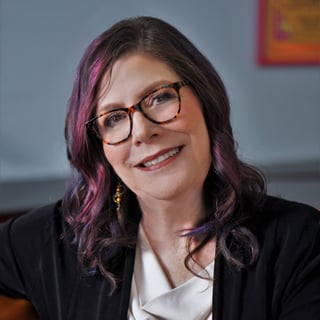
Speaker: We often think leadership requires certainty and of knowing the route, having the answers, and seeing the path clearly. But what if that's not how it actually works? My guest today is Mark A. Pittman, founder and CEO of the Concord Leadership Group.
Speaker: Over the past 20 years, he has trained more than 27,000 leaders across North America, Europe, Mexico, and New Zealand, and personally coached over 130 and senior executives through periods of significant disruption, including the dot-com bust, 9-11, the 2008 recession, pandemic.
Speaker: and the covid nineteen pandemic He is a certified speaking professional, a certified Franklin Covey coach, and the author of The Surprising Gift of Doubt, Using Uncertainty to Become the Exceptional Leader You Are Meant to Be. His work bolsters our efforts at leadership, influence, and real-world application by helping leaders of all stripes to navigate complexity without losing clarity.
Speaker: In this conversation, Mark and I explore the role of doubt, not with the goal of eliminating it, but as something to interpret, because in many of the situations that matter most, there is no GPS, only a direction and how we choose to navigate it.
Speaker: Good afternoon, Mark. How are you doing? Really well, thanks. The work you're doing aligns up really well with the kinds of things I'm very interested in, so I appreciate you giving me some of your time. Thanks for having me here. It's an honor. I like the conversations you have with your guests. I'm going to start out with something that hopefully will be as pretentious as this whole thing gets.
Speaker: I want to set the bar high and then try and devolve from there if we can. This points to a lot of the things that I have in the back of my mind when I'm going through my work, either when someone's trying to help me or when I'm trying to help them.
Speaker: But there's a quote that resonates with me. It's a G.K. Chesterton quote. He's an English writer and essayist. He said, the real trouble with the world of ours is not that it's an unreasonable world or even that it's a reasonable one.
Speaker: The commonest kind of trouble is that it's nearly reasonable but not quite. And I think that that not quite is where a lot of tension exists, right? it Because things seem mostly reasonable that either feeds into an impetus of, I know everything I need to know, or it makes you feel inadequate because you say, well, is the world's so reasonable, how come I'm not getting it? Most people are having to live in that tension between the fact that, yeah, you can arrive at some reasonableness, but there's still work to do, right? That's pretty cool. Yeah. Wow. As I mentioned in some of our previous conversations, so the mission of the podcast is to create conversations that are thoughtful, useful, and grounded in practical insights that that listeners can use for navigating their challenges. i like that word, navigate.
Speaker: So I try and share this by speaking with guests about their lived experience, turning points, change, tension, and uncertainty. And of course, uncertainty is where I think doubt lives. And this is why your book, The Surprising Gift of Doubt, resonated with me so deeply.
Speaker: It just seems like a very fruitful subject that can cover a lot of grong. can go almost anywhere you like with that. particularly when you're talking with leaders. But I also do have a bias to what are things that can be said to the everyday individual, not only at home, but also if they're frontline worker, middle manager, you know church leader, whatever, because everybody has doubt. And there's reasons why sometimes it's grounded in fear versus grounded in other things. And I think you put this an excellent job of outlining that. So I'm looking forward to speaking about it.
Speaker: I'd like to do one more thing before we do that. I just want to share a story with you because I know you're a storyteller because I've seen them in book. I worked for a private equity group who dropped me into a water infrastructure company. And the reason they did that is because they wanted some help and also in this part of their portfolio.
Speaker: It was just one of their private equity companies. And I had an individual there. He was the president. And of course, he didn't really want me to be there. So i was trying to be as respectful as possible.
Speaker: And I spent a lot of time trying to really delve into his expertise. You know it's water the infrastructure. I don't know what torque is. I don't know what pump is. I don't know what any of those things are other than tangentially. And I really poured a lot into having him teach me about it because I needed to understand it.
Speaker: But also to give him a sense that I appreciate the fact that there's a lot of things he knows. And just because I'm there to assist him doesn't mean he's not capable. So I tried to do the best I could, but it didn't go very well. And eventually, he started to fight back, and that's a whole other story. But one thing I do remember thinking, and this is really more my feeling, um I remember him instituting some leadership things that were really under my purview. And he just instituted them. I was traveling in from out of town. It might be a week when I wasn't around, and plenty of time for things to you evolve into something else.
Speaker: And of course, I took something personally in terms why they didn't leave it to me. And as you started explaining, I stopped him because I was angry. And I said, listen, how many times have I told you what you need to do when you're trying to set up a pumping system and water infrastructure? And says, no, what? Because you don't know anything.
Speaker: I said, that's right. So why are you trying to tell me how to understand the leadership part of this stuff? I'm trying to help you. And I thought that was a really pithy comeback. But the real problem with it was the reason leaders who aren't trained to talk about leadership because it's the kind of thing that you can gain without having some expert tell you how to do it.
Speaker: And so I had to admit to myself that it's much easier for him to learn leadership concepts than to me to make sure that a pump doesn't blow up in somebody's water system. So I never apologized to him because I didn't have that realization until a couple of years later. But I want to start there because I had a self-doubt moment, right? I thought I knew it more than him and that made it enough and it's not enough.
Speaker: So, all right, we got the quote. We got the little story, Mark. We got it all. Now I want to honor your presence in the interview here and just open things up and maybe we can come back to some of that later. But if you don't mind, could just tell me a little bit about a book and maybe how you evolved to where you got to? And I'm going to look forward to your conversation Well, if I i could start with your story instead, I like where you said leadership feels like something everybody can do. And there's also that sense that everybody has Everybody else seems to have it all together. And I think that's where a lot of leaders get into the the turmoil of the doubt because they know how much they don't have together.
Speaker: I like that you also ah kind of democratize this. It's not just somebody with a title as a leader, but it's people influencing others. That is leadership. And it's whether you have a a formally recognized title or not, um you can be a leader. And that's what we we work to help people with that. So this gentleman may have had some leadership skills. It doesn't sound like he always had ah good diplomacy or appreciation for why you were there. But... um Yeah. And I do think that sometimes setting boundaries like you did is also good leadership.
Speaker: Maybe it was for the wrong reason. Maybe there was a touch more ego than yeah you were able to see later. But I'm i'm glad you were able to say that because um part of a big part of being a good leader is being a good follower. It's like when I talk to people that are looking for coaching, always say, who else you who else you're looking for at? And then I say, how are you asking them who they're coached by?
Speaker: And people say, what? And then I said, because coaches are only safe if they have coach ah have a coach themselves. And it's just for so it's for seasons. it's not It doesn't have to be ah coaching every week all the time. But um it's like the same thing with leadership. Leaders are only good if they can be led. And they have to trust the person. And there's a lot of different, that changes as you as you mature and grow in and leadership. But you have to be willing to learn some.
Speaker: And also know when to call. a boundary and just say, no, this is the way we're going. Yeah. I think that plays in quite a bit to some of the things I've thought about, you know, being led comes in in different forms, right? Being led is that you can be coached by an individual and you can be coached by an experience and a circumstance. Very good. The whole idea is that you have an openness to all of it, I think.
Speaker: Yeah. no and and And sifting through an an ability to sift through what's worth having an openness to. My wife and I were at a, um, at ah We went to a conference, paid, registered, drove down, were there, and they were going to put us for a whole day in a room of quote unquote masterminds with people that we didn't know and hadn't earned the right to speak into our business.
Speaker: And we we have a very little tolerance for that. If we are prepared that there is going to be discussion groups roundtables, that's fine. But we had gone there to support our business and to have people that may not even have any any experience in what we do.
Speaker: um the The setup was wrong. so So we ended up deciding it was a really expensive co-working space. And so we left. um But so knowing knowing what your guidelines are, what what you need in the moment, what you're knowing a lot about yourself to see what your preferences are and what your tells are. Sometimes when we get irritated, it's actually that we're growing. it's it may There's qualifications of irritation as well.
Speaker: In the the book that spends a lot of time around the idea of doubt, but you have to be ready for what the gift looks like, right? I mean, how do you discern or determine what's the origin of the doubt? So is it more about the origin of the doubt, Mark, or is it more about what your personal perception of how to think about doubt?
Speaker: And maybe those are the same question. Now, I think origin is interesting because it's what it's bringing up to me right now is that that the that I'm intrigued what comes up in different conversations. And right now, this one is not all people are safe to get take feedback from.
Speaker: There are some people that are not don't have your best interests at heart, that have their own personal agenda or ah thing that they're trying to push through. I've had some leaders that have been sincerely hurt because they're trying to be open and collaborative, and they got manipulated and used.
Speaker: um So I think the origin of the doubt um That may vary for each of us. The gift is in realizing it in hindsight. Oh, that's what that is. And what I get to be is sort of ah ah a midwife or a doula for the daughter. I have three kids and was able to be in the in the birthing room for all three. And my wife talks about how there was a point, and which transition, where she knew she couldn't go any further. And that became, for those of us in the room, that became the clue.
Speaker: Okay, she's almost done. And that's how I feel like as a coach, I get to be that with people that are in this season of doubt. There's a lot of things people try to do in doubt that are helpful, but then some people get just kind of get tired of being so critical of themselves.
Speaker: They realize, well, maybe I do have more together. Maybe I'm not all broken. And that's the kind of, that's when you push over and you start learning about how am I different? How do i see things differently? And you don't throw out all the stuff you've learned, but you nuance it and you're able to communicate it in ways that don't feel petulant or whining, but you have objective ways to be able to start communicating your perspective, your wiring, your team's perspective, your team's gift to to the our approach of doing work. That helps other people understand it without it sounding like you're just whining about doing work or doing following a particular procedure.
Speaker: Yeah, I think somewhere in the book or maybe one of our conversations, one thing that really captured me was the idea that there's some types of doubt that we all either want to hold back, most doubt we want to hold back because we don't want to come up that way. Right. and You talk about the fact that there's some doubt that can be public.
Speaker: And that creates trust. it can create trust because someone says, oh, they don't have that all together, but what they do seem to do is they want to do the best for the way the system's operating and how to improve circumstances. but yeah Yeah, and you have to choose it. I had a ah leader in the here in the United States that said, um I have 100 people relying on me for payroll. I can't be vulnerable. I know all the some of the best gurus say be vulnerable. Vulnerability is where it's at for leadership. And I I can't have all of my vulnerability communicated to them because they'd be freaked out about their mortgage payments.
Speaker: But it's selective vulnerability. And I think the best place for many of us to start is the curiosity. i would say humility of not knowing that I don't have the full picture. And if somebody is coming at me just trying to take a more curious stance instead of a defensive stance, if you can, if that, if they've earned that, um, or if it's, it's a relationship that you're just feeling out, but just what makes you say that?
Speaker: and Where did you get that from? And not in a defensive chip on your shoulder, I'm going to beat you in this argument sort of way, but in a, um, In a curious way, which admits that you don't know.
Speaker: that's so That's one area. The other area is um there are times in leadership that we are going somewhere where we've never been before. And so to be able to say to your team, not exactly sure how we're going to get to this goal. This is the direction we're going. This is where we're going. I'm not exactly sure. I'd love to hear from you. Where do you see this happening? How do you see us getting there? um Or I don't know how we're going get there, but I do know how we're going operate.
Speaker: And those are going to inform us as we don't have the exact GPS route to our destination, but we do definitely have the compass and we know where we're going. We were talking at one point about the fact that you are certified, if I get this wrong, will correct me, a Franklin Covey trainer.
Speaker: know that's in the past, it's current, but in any case, I know that in order to get to that point, you have to be pretty heavily influenced by the literature that backs all that up. And I did mention that One of the things that i think was life-changing for me was ah about a week-long workshop for the Seven Habits of Highly Effective People.
Speaker: And I can point to that as one of the five best life-changing books I've ever read, and I go back to it still quite often. while And it's interesting. When you read something that powerful, you assume that everyone around you knows what it is when you start talking about it. But now the book is you know seems like it's 40 years old. Not even short, huh? It's amazing, isn't it? Yeah, when most people can't quote all seven habits, but which is okay. But yeah, I'm with you. It's just where Covey was able to...
Speaker: take a lot of different literature and bring it into a format that made sense to me. And I love that he modeled the and inner work and then built that on top. That is has to be done so you can have the outer leadership as well. And yeah, there's so many concepts.
Speaker: that he has that um because they are based on principles, I really believe are are are timeless and it actually help people. I don't know if we talked about this earlier, but I grew up in a weird family where I had schoolwork because I was a Pittman, because I went to school, but then I had Pittman family work. My parents would assign me reading of Dale Carnegie and Think and Grow Rich and Florence Littauer and Les Brown and listen to motivational speakers.
Speaker: um So there's a lot of, ah have a lot of success literature, a lot of leadership, a lot goal setting in me. ah And not all of it stands the test of time. Some of it is faddish. Some of it is just for that moment. Some of it was just not even real. Some of the motivational speakers, there used to be a a section in the Fast Company magazine called the Consultant Debunking Unit. where they take all these stories that I thought were were literal because they had been presented as so from stage and they were total fabrications.
Speaker: They made a really good point, but it was gutting to realize that, wait, that's not real. um So um one of the things I do appreciate about Cubby's work and the ah body of work that he's that that built around him is that it does feel like it's rooted in principles and it all also gives you a place to make it your own.
Speaker: yeah It's not static and and brittle. Right, and you make a a really great point about the fact that um almost the reason I think I believed it right away is because ah none of it seemed brand new.
Speaker: What I felt like I was absorbing was a very gifted and talented way to organize the material in a way that just a regular guy could read it and then try to and improve. And I would even say that Once it clicked for me, I kept thinking, well, it clicked the very first time I read it and it actually didn't happen. I think I read the book and I thought, huh.
Speaker: And then a year later, someone that thinks I need to be on some leadership track. So they sent me to the um workshop and then it all comes together. I don't i think as speakers, as presenters, as trainers, oftentimes we get into a trap of having to try trying to feel like we have to be original.
Speaker: And the best Hollywood TV shows and best Hollywood movies don't. They're built on on tropes. They're built on and pathways that have been well-trodden for human history.
Speaker: My friend Tamsyn Webster is ah really good at crafting stories and crafting messages so that you're you're taking something that has got your spin on it, but you're also being able to use...
Speaker: the the pathways that we understand and can more easily attach and soak up that like that knowledge. So over 30 years ago, my first speaking ah ah experiences were nonprofit fundraising.
Speaker: I'd grown up in this leadership culture my family. I'd grown up setting goals and learning yeah sales and direct sales and all. Got out of college and realized that my Starbucks paycheck was not providing for my wife. I got married a week after graduating and did not know that 70 to 80% of my check was not supposed to be going to rent.
Speaker: it was It was really tumultuous. Sometimes you can't do anything about that 70%, but it's still not great. well we had to move and we moved again. we moved three times in our first summer, 31 years ago. So she's she's amazing for sticking it out.
Speaker: um But i ended up going into admissions work at the college and loving helping kids figure out where their next stage was, what their life goals were. And that it ended every year because they made a decision and they were either with us or they weren't.
Speaker: But fundraising said, you can come over and you get to work with donors values and skills and dreams and visions forever. There's no end date on those. So anyway, I got good at teaching fundraising and it felt similar to what you were saying before about it. It felt like it was so obvious to me, some of the things I was saying, because I'd grown up in this. I had been to the seminars. I had been doing the doing the things in my family.
Speaker: ay So I actually have to this day, and I usually share it for my long for one of my talks, I have a picture of a basketball player. And hopefully NBA, it's a stock image.
Speaker: And I said, how many people have been doing NBA game? And a few people raised their hand. And I said, what do they do before they play their professional basketball? And invariably, someone will say layups. And I said, yes. And then I go through this whole bit about how My my athletic ability was so bad they had to create a JVB team because there were kids that still needed athletic credit, but we weren't good enough to compete. And so we were like, yeah you may remember the Bad News Bears. We were worse than the Bad News Bears, even though we were in basketball.
Speaker: and But we still did layups. And so it's the setup is there's going to be a lot of things that you're going to hear today and you're hopefully heard most of them before. What I'm hoping to do is make connections that will spark you to realize not only had I not heard it that way before, but oh my goodness, i can do that. that That makes sense. that That's something I can actually do. It doesn't have to be tying myself into a knot or becoming somebody I'm not.
Speaker: If you could do something, I think that is repeatable and sustainable within the culture, like for example, you do layups as, you know there's a warmup going on. There's a sense that maybe it's a good idea to see the ball go through the basket a few times before you actually start playing a game. That's probably true. I hadn't done it. Yeah. And then there's language around, oh, that's a layup, right? Now it works its way into the culture and you say things like, well, this is going to be a layup, but this is something that going do.
Speaker: My primary role for that team was to hold the bench down to the ground, which apparently gravity wasn't sufficient enough on that side of the bench. So I sat out most of the games. It was pretty awful.
Speaker: I wanted to just say, just before leave the Covey stuff, just one more thing about principles, because I think it's important and I know it's pervasive and a lot of work. And principles feels like principles, values, what's right, what's wrong, what's fair. Like it you throw it all in a big pot and then people use it interchangeably. And then you do that until there's a reason for you to think differently. Some clarity comes to mind, hopefully.
Speaker: And the clarity around principles has made the seven habits more important. powerful for me is not only did I get it when it was happening, but I get it every time I apply a new set of circumstances and experiences to it.
Speaker: I can say to myself, well, you know, was I proactive in this situation? Was I in a win-win mindset that I seek first to understand? ah I mean, what's not to live about all those things even today, right?
Speaker: That is really good. And the seeking first to understand is, I also grew up in a family of debaters. Like we would we were nerds and we'd love to learn and we'd love to pile on the knowledge. And then I had years of actual debate experience in high school. And um and so being right was important. So seeking first to understand, then to be understood. yeah I was always glad that to be understood was in there. Yeah. But it took it sometimes still takes a bit to remember, wait, I need to seek first to understand.
Speaker: Think about your reference to your homework at your house. Yeah. The pickman work that had to be done. Certainly I grew up thinking, wow, I'd like my... kids to be bright and have some thought process. And so early on, when they didn't care what I picked to read, they just wanted hear me read to them. I just read all kinds of books to them of all different types. But they tended to be things that I thought there was some moral understanding to be gained.
Speaker: Just various books. One that I read quite often to them was Animal Farm. I'd start using the language. I'd start injecting the culture in our family of four legs good, two legs bad. you know We've got a rote idea I'm just going to keep yelling at you in order to aggravate you because I want you to see I'm not trying to be rational. I'm trying to be right.
Speaker: And I wanted them to recognize what I was writing. So we would do those things. But eventually, i would say, well, let me move off of this book because now they're tired of that book. And then we'd move on.
Speaker: And then pretty soon as they got a little older, and i saw their attention start to wane. I thought, okay, what they really like is for me to read to them, but they don't want to dissect every single thing I've said to them. So I started reading you know, speeches by John F. Kennedy and all these things that I wanted to read.
Speaker: And I thought if they get some out of this, but the premium that trying to set up here is that that falls considerably short of a very intentional thing that you have going on. I'm just wondering, what is it in your family culture that was creating that dynamic? Our family required that we do the following things. That's usually cutting the lawn and taking out the trash. Right, right. Yeah. Can you tell me how you got to that point? Sure. Well, i they're not here anymore, but I can tell you what my perspective on how we got to that point was. my yeah My dad, when I was an infant, newborn, he would read his medical journals while he was I would be sleeping on his shoulder. I have pictures of him reading his, trying to keep up on his continuing ed.
Speaker: um But they were very intentional. They... um had both experienced trauma from their families of origin and didn't want to repeat that. There are kids of the sixties too. They graduated from college and medical school in the sixties.
Speaker: um And they didn't want to have kids. um They wanted to be professionals. And ah so my mom had a dream that before I was born, she had a dream that I came out holding the IUD in my hand, like asking, well what is this? And not such clean language because that was in there and I was in there too. um So I think kids waylaid them. And then they had my sister 11 years or a year and 11 days after me. um And so there was a real shift in their focus of, oh no, we have these two human beings that we're responsible for, what do we do? So that was one of the intentionality things. we are in
Speaker: My sister and I tried to track the different schools we were in. We often moved because the teachers, like one teacher wouldn't make me stop talking wouldn stop me from talking. Whenever I had a desire to talk, I could. She thought I was brilliant. And I became a monster at home because I thought that should be at the dinner table too.
Speaker: I could do a rough shot over everybody. But that was one of the factors that we moved an hour and a half away. My dad still stayed working at the same place, but we moved to another house. ah So there was a lot of intentionality. But um he got into they got also into a direct sales program that um had an intentional ongoing education, which dad had it with his as a radiologist. Mom was always studying. She was she got earned her bachelor's and her master's and her post-grad as we were growing up and would always assign us the homework. So I guess that academic culture was always there, but the actual practical application of reading about, I could set my own goals and I could create my own vision, my own dreams.
Speaker: And I think they were probably in their late thirties, early forties learning that. And there was a a joy of, I have some control over my destiny perhaps. And there was also a, um,
Speaker: sort of a justice motive for them. I think of why why wasn't I told this sooner? Why didn't somebody mention this to me before? So I remember at 16 years old, making a commitment to have multiple streams of income.
Speaker: Probably read Jim Rohn's book at the point that point. um And it was just, that was part of their intentionality as well. So I'm grateful for it. It made us weird kids. It took us weeks and weeks to figure out all the different schools we'd been to ah with my dad a couple of years ago because they were private, public. We did homeschooling for a while. We did all sorts of... But the word that I keep coming out of and people say about my wife and I is we're really intentional about our choices.
Speaker: And so I think that was part of their intentionality was we get them for a short time and let's help them help them grow. obviously everything in our childhood informs the way we do things, right? Of course. yeah And then we're either actively fighting them ah or or employing them or changing them.
Speaker: And just wondering how do you think that whole experience, leadership, setting goals, that's just inherent leadership, besides the obvious of being in the habit of looking ahead and doing inherently second and third or thinking, because that's the nature of goals. How do you think all of that experience shaped very specifically the kinds of work that you care about. Part of that, I think that was also coupled with the faith journey. So I knew I wanted to be a pastor when I was ah i came to faith and as a teenager in the Christian tradition, Christian Protestant. And so I knew I could think about it and impacting people's lives and helping them be all that they could be, all they were created to be, was being a pastor. So I know that was part of it as well.
Speaker: So there's the the faith component. We would sit around doing Bible studies at three five in the morning, even before I came to faith and we were falling asleep over the genealogies, but darn it, we were doing it. You know, we were, we were doing this stuff. And that was because my parents had come to faith a few years before or come back as that they would say.
Speaker: Um, There was also the seeing people on stage, either in small stages or big stages, teaching seminars, teaching and training, or in big coliseums, because my parents would take us to that. So that also presented an image for me of there is a possible way to do this. like I could have this impact on other people too.
Speaker: And the internal, um after we graduated from college, my wife said, you know nobody's going to set up a curriculum for us again. wonder if we should do that ourselves. So to this day, I have ah usually a number of areas of interest that I want to keep reading in. And I read 50 to 75 books a year um that I only set a goal for around 30, but I read 50 to 75. So I'm constantly learning, constantly trying to grow.
Speaker: And we're just reminiscing, my wife and I, that our 26-year-old son is now asking us how are you different? Because you guys keep growing. And we've had some transitions in our family. We've had some um different things that have happened and we continue to grow and expand and meet it with curiosity.
Speaker: or That's our, what's our hope. And he's saying, I'm not seeing all the parents around me do that. Some people get really stodgy or calcified or, or stick in the mud and you guys keep growing and expanding and,
Speaker: and rolling with this. And so I think that's part of the learning that my parents also instilled. And and my sister's also even more voracious reader than I am. She's she's amazing. so And then we found out i about a 23 Emmy sister about eight years ago. So my dear other dear sister that I didn't grow up with has a very similar, so part of its nature, is part of its nurture, but she has a very similar, um not only a similar area of study as the sister I grew up with, but also that innate love of just of learning and and consuming information and sharing it. So it's not just consuming in our family. It's definitely a desire to share it too, which is not always...
Speaker: Welcome, because not everybody wants to hear everything we know about a thing. When I was trying to complete my master's, an advisor had one piece of advice for me, which was really three pieces of advice. and She tried to roll it into one, but fundamentally what she said is, look, if I give you three hours to tell me something, going tell me a lot. You're going to fire hose me.
Speaker: If I give you three days, you're going to speak about everything you know. And if I give you three weeks, you're about everything you know. And it always feels like a firehouse. So what you need to do is be more intentional about your audience. I know you understand what an audience is. You can't be an executive without understanding your audience.
Speaker: And I said, but I feel like you're using this class to get out every idea you ever thought of in in your life. And which is fine. I'm just telling you, be careful going forward. I mentioned that because chinese you said the word calcify, which is a great word. I had never thought about it this way.
Speaker: I had my little back and forth, some of it intentional, some not. I think I mentioned to you that my daughter and my son are professionals and they certainly have their own ideas about things. And I'm going to presume whether they're admitted or not, there's one or two morsels of leadership they took with them.
Speaker: And maybe there's two or three things I wish I'd told them way back when. I say all that to say, I don't think there's anyone saying to me, hey, I want you to slow down. i don't see the reason why you need to go any further. You had a long career, et cetera.
Speaker: well I actually don't think anyone's saying that to me. I think I'm saying it to myself. I'm wondering, okay, am I supposed to slow down? And I just don't want to. You said something very nice. Well, in one of our interactions, I'm going share it with the audience.
Speaker: It's not... you appreciated the care that I wanted to put out for the audience. What you saw as care was care, but it also was an outcropping of the way I did everything it works. I thought, well, why would I do this any different?
Speaker: But I do believe that every detail You do it the best way you can and somehow it comes through at some point. Maybe not obviously, but but in some way it comes through.
Speaker: I think this goes back to the doubt, because I'm going to try and bring us ah to the question of doubt. I do will occasionally, looks like I'm trying to get free leadership therapy session from you, so i hope that's okay for me. But it seems I do exist in a place where have well I think I have a lot to say, and I think it can help 15 people here and there throughout the year if they happen to come across what I'm saying.
Speaker: And wondering if you're seeing in your work or in leadership individuals struggling with what they should be doing in terms of trying to learn more or trying to just utilize what they know already and not add to their...
Speaker: inventory of things that they know because I'm constantly reading things that are expanding me, but i don't know if they're expanding me in the right direction necessarily. That's a great question. Yeah. And we live in an amazing time where there's so much we can do as individuals and so much we can do as small teams, but there's so much coming at us too.
Speaker: um And so that i think that overwhelm is part of what um really bogs leaders down and people. And again, we don't, not just people with titles.
Speaker: um but I'm feeling like Ecclesiastes, I guess. There's a time for everything. There are times for taking in more information and there are times for closing the door to it. I just had a mastermind closed.
Speaker: We had done been together for three years. four other There were four of us that were keynote speakers, working on our businesses and and really being vulnerable in numbers and and meeting regularly twice every other week ah before conferences we'd meet and get set our goals. And we we decided that we'd run its course.
Speaker: um And the my wife wisely said, don't jump into a new one because you'll get it on the rebound. So it's been about eight months, but I've realized in that process that as people were telling me different groups I could be in, I don't need somebody else's framework at this point.
Speaker: i've I've built enough intellectual property. I've done enough life experience that I just need to work in what I'm doing. There will become a season, I'm sure, at some point where I do need somebody else's framework.
Speaker: I am not a person that usually says, it's this step, this step, this step. um I think we're swirling. And that's where, in the book, Quadrant Three Leadership, the 12 tools of helping a leader get that purchase on how did they describe what they do or get a purchase on how their team, how they describe what their team does. I um was happy to have a visual, like we talked about Covey having his his visual. I was happy to have a visual, ah but I wanted it to be three-dimensional and in motion because I think we're so conditioned to say, what's the first chapter of the book or what's the first step I need to do? and What's the second? What's the third?
Speaker: And life that way I guess that goes back to the Chesterton quote too. It seems like life should be that way, and it so invariably isn't. And it's okay to start in the middle of things, in medias race, as they'd say in the literature. um But many of the people that are drawn to leadership want to do it right.
Speaker: And as you go higher in your position, no one's there to tell you what to do, it what right is. They are just trusting you. You get the title, go run, do your thing um when the consequences get even riskier. Because now you get people's payroll, you have implications for your decisions. It's not just like you're you're yeah wondering if you should give a yeah a comp drink for somebody. it's There's real repercussions for this.
Speaker: I yeah do recall a situation where working with a private equity group, I had a lot of trust early on. It just seemed like the nature of the problem, the completeness of the quote of the offering in order to deal with the issue was comprehensive, it was involved, it was variable. that It allowed for lots of variables and things that can pop up and then keep those things from becoming mission creep, but more intentional about how to get things done and not being too afraid of whether we were going a little bit outside the lines.
Speaker: But what was interesting about that, as each success, small or large, was happening, was getting less and less pushback from the board of directors. And for a while, I thought, well, that's nice. i don't have those guys bugging me. They'll leave me alone. I can do what I want.
Speaker: And that sounds, that feels really good until you wish there was someone to brainstorm with. And i've I felt something that I've not felt in a lot of circumstances, which was, I need somebody Not to tell me I'm wrong, but ask me if there's another way to think about things. I actually had an artificially created a situation to add a board member that I knew I would have some conflict with, so they would challenge me. And it was happening not only from the board, but also my team.
Speaker: Everybody just quit challenging me. And that feels good in the moment, but it's not good when you're trying to evolve it. Yeah, and when I shared this, the before the book came out, I was sharing it as as talks and keynotes, and I had a leader come up to me and say exactly that. He said, I now know why I'm burnt out.
Speaker: It's because no one's pushing back. I have a track record I can see behind me and so many leaders are this way. in yeah In the rear view mirror, I can see I've done great things. or Great things have been accomplished by my team, but I don't know what the next step is.
Speaker: i don't know what the next idea is. And part of what made that great in my mind is we had the pushback. And now they're just saying, whatever you want to do, you're a golden leader. You can have carte blanche. We trust you entirely.
Speaker: I don't trust myself entirely. i love to have some of that collaboration. It's the, I think the dynamic of just being open to the feedback. I think you put it out early on that it's got to be the right kind of feedback that's going to be helpful to the circumstances. But if just expressly state the words, well, you have to be open to to new ideas.
Speaker: Again, that sounds like mom and apple pie. it just These things start to fall on deaf ears, right? There's no way to institutionalize or internalize the information until you can hang something on it.
Speaker: you know And finally, the words, I want to be able to feedback became, I need feedback. And if I need it now, then I must have needed it when ah even when I didn't know I needed it That's so true. In the speaking world, we talked about how people don't want to hear the next new keynote. They tend to want to hear the greatest hits like like artists. You don't want to hear that the most recent albums. You want to hear the songs you can sing along to if you go to a concert. And the challenge for those of us that are giving the talks or or the trainings is that it feels like it's this it it could become rote.
Speaker: But um the invitation is to realize I'm not the same person that I was yesterday. I might've given this talk yesterday, but I've changed. I've had different experiences and those people may have heard it eight last week or something. But just like you said, there's a new experience to catch. It's like a Velcro hook. There's another hook and loop. There's another hat rack to put the, oh, I understand where that goes now. Obviously, you've got a lot of rigor in the way you think about things and have had to do that in order to evolve to the deliverables that you put out there.
Speaker: ah Was there a circumstance or a set of circumstances that helped forge or had a big part in the way that forged you? don't think about doubt in the way that you do now. Yes. um Well, it's failing.
Speaker: Trying to set out stuff and failing and then and then trying to, who was it? Who wrote, the people, Scott Peck, Scott Peck wrote a book um that, I don't i remember the name of it, um but it talked about how there are different stages of development. One stage is where we just do whatever we want to do.
Speaker: And then the next stage is where we realize we're not safe, and so we need guardrails and somebody just to tell us what to do. And then we get tired of that. Some people go into a third stage, and they break it all up, and they tear it down. And that's where he said colleges and universities are really good institutions for people like that. But then there are some people that take those broken pieces and the window panes and the stuff that's all shattered, and they piece them together, and they look shockingly like the stage two, but it's their own version. It's their own thing.
Speaker: So I think to me, i think failure is ah is huge. I don't mention it all conversations, but this one I said I wanted to be a pastor. So I went to school and I did lived in Jerusalem, studied Hebrew. like I tried to nerd out because my friends that went to seminary got it came back weird.
Speaker: They went in talking to humans and then graduated talking to manuscripts. And that seemed weird to me. So I tried to do it all in in my undergrad. um But when we had the opportunity to plant a church, we did it for four years. We did the stuff. It was hard. it was it was We were asked to bring our own denomination there. and that Somebody asked us to come, but there wasn't a built-in place. So we were church planting. And after four years, we realized, you know what, this is not what we envisioned it to be. And so we closed the doors.
Speaker: and We had a two-week funeral for the church. We cut the sign in half because the old church's sign was on the other side of the sign whole time and felt very symbolic. And we really wanted to make it demonstrative of this iteration is done.
Speaker: We actually thought we were going to do another iteration. We thought we were going to test it a different way. But um we ended up not. We decided that, no, this was a good run. We had we tried our thing. And it was shocking to me how there was no...
Speaker: no system in this entire denomination, and I find this in other organizations too, for failures. And it wasn't the person that's a failure, but the experience, we failed.
Speaker: The church is not existing. It closed its doors. And it was an 80% failure rate in some of these church planning organizations. So it's sort of like, Surely over the decades, there must have been a system for what do we do now? We've moved from everybody we know to go to this new place to set up this this faith community, and there's nothing here to show for it. um So a few of us got together. that ah Interestingly, two other couples had gone through the same thing in the same four years. So we would get together in Western Massachusetts.
Speaker: and drink bourbon and smoke cigars. And when but one of us would say, we called it Church for Losers, because at that point, CFL bulbs were there, the Curly Q bulbs. And so we're like, still the light of the world. But to to ah really, just really...
Speaker: honor the fact that we experienced failure and there is nobody that was that had up space for us. Because if we go into our old church, people are like, why are you doing here? We're sort of persona non grata. So we ah remember also whenever we would say, well, I'm over this now, everybody would call each other's you know stuff, let's just say stuff. They'd call you and we'd raise a glass. And i was talking to a colleague here in South Carolina and I said, well, we have to fail fast and learn from our failures.
Speaker: And she had never heard that in her life and in her lived experience, in her and ethnic background, she's carrying all of the weight of her her people. her ancestors and all on her. And she's never felt the permission to fail because um the systemic inequities in our country don't allow for that in our culture.
Speaker: ah But it was an eye-opening moment of, oh, that could be learning. My failing it may not be that there's there's anything innately wrong with me. It could be just adding to my learning.
Speaker: For my own personal journey, there's other failures too. The first book I ever wrote was one nobody wanted. It was a classic Zig Ziglar. Nobody wants a drill. They want a hole in the wall. I gave them a drill. and nobody Nobody wanted a goal setting workbook. They just wanted to get the goals done. And so I think part of that personally was helping me with the doubt.
Speaker: The other was the privilege of the last 23 years working with leaders as a coach. And having experience in listening to their stories as a nonprofit fundraiser, but also then um running organizations and coaching where we, you've probably experienced this too, one of the greatest joys is when the person the other on the other side of the call get just lets down their guard and say, I don't know what I'm doing and I think I'm totally, I think I'm going to get fired.
Speaker: And you're able to normalize that and say, yeah, every leader I've talked to has felt that way. Every safe leader go through the periods of this. And so that's where i call that quadrant two in the book. That's where they're they're at that broken point. But to say that this is just part of leadership um and there is a path. There there are things we can do.
Speaker: yeah Maybe you are broken and maybe you do need help. And there's we live in a culture that has a lot of different helps you can have. It could be that you also just need to start trusting yourself. and stop looking outside of yourself for the answers. and here's here's some some building blocks. Here's some Legos that you can play with to see if the are these are the ways that you're going to construct your the way you describe your inner self. You know as I tried to overcome what I thought were things that were limiting me and try to be reflective about those things and all of the the seven habits stuff and all the other things I've read and worked on,
Speaker: and the sort of methodology that I'm not trying to turn into a world-class model. I'm just trying to have steps terms of managing myself and then managing people around me and then consulting with clients.
Speaker: But I do remember very early on in my career, i I think I mentioned that my background goes into three pieces. It's a decade of financial management, operating as a controller, and then a lot of decades as a operations guy, both in distribution, managing operations in Mexico, spending some time over in Western Europe.
Speaker: And then moving on to organizational leadership development, trying to study deeply and all those things evolving into where I am now thinking about systems thinking. And in that, it helps me be reflective about, all right, what I tell other people, you have limitations all the while knowing that they're working for my limitations as well, because I have my own limitations.
Speaker: And one of the things i recall in my financial career is going to a really huge conference as a kind of a low-level general ledger accountant. But I was a highest-ranking accountant in my location, so they sent me.
Speaker: And it was seemed like 300 people somewhere in D.C. And this was all the way back several decades ago. And I remember looking around and thinking, out of these 300 people, there's nobody who looks younger than me.
Speaker: And there's definitely only two people that look like me. the and And I kept thinking, oh no. The first thing I thought was, do I belong here? Which, you know, I was young and I thought that. Second thing I thought when I left is, well, I don't know if i belong there or not, but I'm never going to have anybody wonder.
Speaker: And then I found myself trying to mitigate that feeling by overthinking, overworking, over-processing everything, because I was never going to ask anyone what's wrong, or they might think I was incapable. But that's one of those things I had to overcome.
Speaker: Well, I think we are trained for that too. We're trained in school to have the answers because we get points for having answers on the test. And so there is some people may be a little bit more open to to playing loose, I guess. But I think the people I work with tend to have that similar expectation or story that you have and that I had of, I have to know the answers. I have to be able to show the receipts for where I'm coming from.
Speaker: Up to this point in the conversation, Mark and I have been exploring doubt mostly through lived experience such as leadership pressure, failure, feedback, family influence, intentionality, and the often uncomfortable realization that growth rarely happens in a straight line.
Speaker: It's telling that neither of us seem to describe doubt as the end of something. More often, it sounded like a transition point and a signal that old assumptions, borrowed frameworks, or inherited ways of leading were no longer fully sufficient for the moment we were in.
Speaker: And it's here that Mark begins to introduce the framework he developed to help leaders better understand that process, not as a fixed formula, but as a way of recognizing where they are and what they may be relying on to ground their observations and decisions.
Speaker: Can I talk about the four quadrants of leadership in the pathway? Yes, please. Thank you. So um if for those of you that are listening, if you're not driving, think about or draw on a piece of paper. You could draw four quadrants. The vertical axis is the confidence axis, and um the horizontal axis is the inputs axis. When you start in in the first quadrant of leadership, you're in quadrant one, which is the observed quadrant, which is you're at the highest of your confidence, and whether it's borrowed because you you don't think you've got it, but somebody says, hey, you could lead this project. So that's the highest. Or you feel like, hey, finally, somebody's seen how great I am. I can lead this project. so projects So whatever, however the confidence looks. But you're taking your inputs from the external. So you're you're looking toward the people that you've have led you before, how your parents did it, how your bosses did it, how your coaches, teachers, whoever else.
Speaker: And you try to copy what they've done because that seems to work for them. And for most of us, that doesn't really work well. And our confidence kind of plummets. And that's where we go down to quadrant two, where we wonder, why isn't this working?
Speaker: It seems to be working for other people. um So in my classic example would be more a an introverted person following a more extroverted person. ah where the extroverted person's kind of glad-handing and being, you know management by walking around and and getting energy from interactions that are just spontaneous. And this person, the the new person in that position gets totally drained from that. They need a little, they want a little structure. They want an agenda for each meeting. They want to know kind of what what do you expect of me in this situation, which is perfectly legitimate, but it's not the way the other person did it. Quadrant two is where you start experimenting. What do I need to fix?
Speaker: Is it time management? Is it people skills? Do i need another degree? Do I need another certification? Do I need to go to this conference? Do I need to listen to these podcasts? Great quadrant. Each of the quadrants are good. But the primary thing about quadrant two is that you're lurching from fix to fix and you're trying to run fast enough so that the people don't figure out that you don't really know what you're doing.
Speaker: He's like the Wizard of Oz. you You feel like, pay no attention to the man behind the curtain um because you're feeling like you're about to be found out. um The people that move into quadrant three, which is the analyzed quadrant, are the people that i was I alluded to earlier that are tired of it totally beating up on themselves and feeling like they're just always failing and making it up as they go. And they realize maybe, just maybe, i have something to add to this conversation. Maybe I'm consistently not getting this particular aspect of what everybody else in the sector seems to get because there's an alternative perspective, maybe. And that's where the doubt can push you into this listening to the internal expert x inputs. Instead of looking to other people all the time for answers, you start trying to figure out what are those areas? What are the habits? What are the patterns I have?
Speaker: um what are the Where do i see things differently? And is that valuable? Is that helpful? Because it definitely needs to be an honest discovery of just because I don't like something doesn't mean it's bad.
Speaker: um And just because I don't feel like doing something doesn't mean the external things are good are bad to do. ah you know For salespeople, picking up the phone is still a very good thing to do. and And a lot of people don't want to do it, but they're shocked that they get value when they do do it. Or having six to 12 attempts to reach a ah prospect is still very normal. It's closer 12 attempts now for my clients. But knowing that process, they may not like it internally, but they know that they like the outcome so that they want to, they listen to the research.
Speaker: But you might figure out In quadrant three, oh, I'm more introverted, so I'm gonna send a letter before I make a phone call. Or I'm going to send an email where I kinda script out the expectations of the call, and then I can follow up just i can follow up by just calling, by saying I'm just following up the letter.
Speaker: As you start building on the things that are uniquely you, and you can do this organizationally, uniquely your team organization, your confidence rises. and And it's not a cocky, narcissistic confidence. It's a, you're feeling grounded. You've got this internal gyroscope where you're able to to find your center, even in a tumultuous world that seems to always be shaking and shifting. And you kind of know, this is why I'm doing the things I'm doing.
Speaker: The confidence also comes from having the map. You can see all four quadrants and you know, okay, now that I feel stuck, do I need to find someone to follow quadrant one? Do I need to learn something from somebody else or get a degree or go to a conference quadrant two, or do I need to take some time and figure out how's my wiring infecting this? Where's my growth opportunity internally quadrant three.
Speaker: And you can do that with your team as well. We have this assessment, just a quick, which quadrant are you in and then how to make the best of each quadrant. Because quadrant one, you learn who's safe to copy, who's safe to follow.
Speaker: Quadrant two you learn how you learn. Some people read, some people listen, some people move when they're walking they're learning, whatever. um Quadrant three, you learn all about yourself. And so... You can help your team, if they're just in quadrant one, help them be the best in quadrant one they can be.
Speaker: If they keep following other people, help them to be a little bit more discerning about who they're following and how and how they're fact-checking. Quadrant two, if they tend to not read well, get them in the way of you know recordings and podcasts and TV shows and see if that's something that they catch on to.
Speaker: And likewise, each of the four quadrants has something to offer us. But it's very natural to get that frustration of I'm just, I'm always broken. I'm never going to be fixed. hi Hopefully people, I love it when people get to move over and think, maybe I'm a new voice for the sector.
Speaker: Yeah, I think you're describing a place that I arrived at, however long ago that was, where I realized my job wasn't to fix the world. It was to be really good to the clients that I have that need what I can offer them.
Speaker: Soon I started realizing I knew how I like to learn. I knew how I digested information and assumed that everyone else, that's how they digest information. We both are wearing glasses and that's so, have you ever reached, like gone to wipe your eye and realize your glasses are on? Right. I mean, that's how our learning styles, our communication styles just seem so, of course, everybody's this way. And having some of these, this quadrant three work realizes, ah, there are different ways to approach the world.
Speaker: I may not agree with all of them, but some of them, all right, they may be good to have in the mix. Well, the other thing is I've used the most extreme version of saying things like, it'll be okay. That's way to say it.
Speaker: When my son and daughter were a little earlier in their path, I said, hey, yeah I know that's tough, but they can't kill you and eat you. You're going to be able to do things. And then well when I finally got a little more involved, I said something that was more of a hybrid of those two things, which was, look, it's it's very likely where I am in my life that I've made a lot of mistakes, right?
Speaker: and yet I'm still here, I might not even know half the mistakes I made, ah but the world didn't end the way I thought it was gonna end because it's still here. I think it's getting on the other side and saying it is gonna be okay. you know There are some very specific things that won't be okay. If Armageddon hits,
Speaker: That'll be a problem. But everything else is just having some confidence that you do have something offer. And I think that's what I really like about the quadrant three is it helps build on the way you're wired. And that's really talking about mindset, right? I mean, it's really being aware of how to think about what it is that impacts you and what influences you on how you think about things and how you're influencing others and by the same token.
Speaker: Absolutely. So we look at hardwiring, we look at goals, we look at stories. What are the stories you tell yourself? And what are the stories you tell about yourself to others? So those are the three big areas. And then values, mission. There's the easiest entrees I find for people in this is and personality assessments or values assessments.
Speaker: Both of them give they the understanding of, oh, I never knew. Like for for me, it was a values assessment. Doing a values assessment helped me to articulate, oh, that's why this is important to me.
Speaker: um And apparently it's not, there's a lot of words on this sheet. Apparently it's not to everybody else. I led one one breakout during the pandemic through this um on Zoom, but the woman, I said, so what's your experience? Because it was your own personal values and then your organizations.
Speaker: And one woman bravely said, you know what? I have mine pretty clear. i have no clue what to put in for the organizations. well I wonder if that's why I'm so stressed. and But then it's also the assessment assessments are just in our Western culture and easier, and it feels a little bit more objective and verifiable.
Speaker: So what were some things that helped you to figure out how you were wired or how you interacted with others? Well, because I tended to be reflective, I think even when I was younger, I was reflective about much more mundane things. But it just seemed to me that um things would strike me if they felt like they needed be thought more deeply. They didn't have to be good or bad. I just found myself in that realm.
Speaker: ah And early on in my career, that I could see the direct result of maybe not putting the work in somewhere. And knowing in my heart I wasn't putting the work in, and then the result was I didn't get what I wanted.
Speaker: And it was a lot of trial and error that way. I think a big turning point was the seven habits stuff. It helped me construct some thinking around what I was and was not doing. gave me a way to start to grade myself.
Speaker: And then I started moving more into some of the assessments. I think you cover in your book, you talk about, is it DISC? want sure I get that. Yeah, that's a behavioral one. So you can see that in others and in yourself. yeah And I did DISC. It's been a while. I was looking back at my files. It looks like I did something back in 2010 or 11. It seems like the words of collaborator and dominant were in there and I don't know how both of those coexist, but maybe they do in some way that I haven't quite understood.
Speaker: Task oriented introvert and extrovert. Yeah, I could see that. But the most recent one, which has also been about six or seven years was the, ah was the Myers-Briggs. Okay, cool. and I remember those letters just because they usually remember. So I'm an INTJ. Okay. So do you know enough about to know whether that makes some sense for the way we've been interacting? Yeah, absolutely. Yeah. I'm an ENFJ. Yeah. Yeah.
Speaker: I think one of the things that's important with these assessments and is also, and it sounds like you've done this, is that unfortunately you've done the right way. Unfortunately, some organizations will do this and make it a a box to fit you in. And the purpose of the assessment is not to to encase you in a box and tell you, you can't possibly do this thing or be this way because you're these numbers or these letters or these colors.
Speaker: um But it's it's to help, just like you were saying, just discover, oh, this is a perspective I have on the world. um So i did i don't use Myers-Briggs a lot. I have a master's, so I'm allowed to use it according to their rules. And a faculty group had me come in to do a training What I usually do with disk, because disk is the easiest to understand. So the the way I work it is there are behavioral hardwiring. You can see me. I'm talking quickly. My hands are moving. I'm a fast thinker.
Speaker: um There are also things that you're just naturally good at The high lens ability battery puts you into doing ridiculous tasks under time pressure. And you just see what comes naturally to you and easily to you.
Speaker: And then there's also motivational, which I call about i use the Enneagram for that, which is why do I do the things I do? It's not just what do I do or what or how do i how well do I do them, but what what is motivating me?
Speaker: But with this faculty, I had them stand in each of the letters. We did each pair of letters and had them ease on one side of the room, eyes on the other, and I talked about the differences. And we worked through all the letters. It was in Maine, and there was a woman from Chile that was there.
Speaker: And it disrupted the training in a good way. I'm not in Maine anymore, but we grew up in Maine. Our comfort zone in New England is is about a yard or two outside of us. If you get into a circle that close to us, you're impeding our space. Get back off.
Speaker: Well, in Chile, it's not. There's a much more touchy-feely, much more close, proximally close. um So they interpreted her behavior as extrovert because she was touching more.
Speaker: um And people were really upset with her because she'd close her door. She wouldn't eat with them at lunch. She didn't want to carpool to work. She drove on her own. And to have her on the introvert side was an incredibly healing moment for this entire team because they were able to see, oh, that was cultural.
Speaker: Culturally, you're... your comfort zone is about six inches from you as opposed to six feet. um But we were misinterpreting that as extrovert and wanting to hang out with us where you need to recharge.
Speaker: So you're taking care of yourself by closing the door. You're taking care of yourself by creating moments of being able to be alone and and take care of your needs. So I love that. I love that that freeing moment that had is this instead of putting her in a box, labeling or something.
Speaker: I had something not quite as dramatic. Let me go back to the high context versus low context cultures. So she comes from a high context culture and that's personal space. My grandparents who were born and in Mexico. My parents were born in California.
Speaker: And so I certainly had a lot of people I didn't recognize, you know, hugged me and kissed me throughout the years when I was younger. And so I got fairly comfortable. you came to our family, we would have done that. We were weird New Englanders. We were really three hugs a day. My parents said, you need three hugs a day to stay it say average. And who wants to be mediocre?
Speaker: The more hugs, the better you are. But I do recall with the disc, I've had the foresight to not use it as a way to label people, but to understand what could be inhibiting the team in aggregate. And I realized that two of my most influential individuals were very heavy stability type guys, guys that were, and I don't know if I'm using the language right. Yeah, it works. But no matter what our one-on-one conversations were, you know, whether someone tried to be more dynamic or less dynamic or more intellectual or less reserved,
Speaker: What I did realize is what was impeding us is that we just didn't have a structure that um that allowed us to get further than than the lid that these two, they weren't imposing because they're not responsible right neith responsible. But the lid that was being shaped predominantly by individuals who like things to stay the way they are, they're a little adverse to change. And and of course, I'm a little adverse to change too.
Speaker: Whatever happiness I can get on changes because I've become comfortable with ambiguity. I know good things can come if you just stay at it. And so it helped me say, all right, well, I'm not going to hire three more people who aren't S's. I'm going to have to either manage them differently or I'm going to have to help encourage them to manage themselves differently. But now I had a direction as opposed to label.
Speaker: Where I learned to put people on different sides of the room is I do disk. That's how I do desk. When I brought in, and I've even done it with a group of almost 800 people in a keynote. I have the introverts come forward because that's where they want to be anyway. And the extroverts go to the back because it's safer. And then i talk about them. And the extroverts are always talking at me. They're always like trying to talk over me because they want the microphone anyway. And so we have fun with it. And we and I try to honor all of all the quadrants and all the the perspectives because they are important and were fearfully wonderfully made. So we have the front and back and then I say, okay, now if you're more people centered, I explain what that is. Go to this side of the room and if you're more task centered, go to this other side. So now I have the group into four different corners.
Speaker: i was doing this with Lucille Packer Children's Hospital um years ago and we did the four quadrants. It was only a team of maybe eight. there was nobody in the D quadrant at all.
Speaker: And usually I'll say, so you know yeah as a team, I'll usually ask for some feedback, what are some things you notice? Because people are realizing, oh, yeah invariably people realize, you're not trying to irritate me. that's just That's your superpower, asking all those questions. Oh, I had no idea. I thought you yeah i thought you didn't trust me. Well, in this one,
Speaker: I didn't get that. I didn't get to call that because the head of the department said to her team, do you guys realize there's nobody in that quarter, that that quadrant? There's no D here. Do you think, do you wonder, could that be why we don't get anything done? We're always starting committees to start committees and studying tasks because I'm not a D, my boss is not a D, and the boss above them is not a D either. So we're perpetually in process and not accomplishing.
Speaker: why It was fascinating insight. Yeah. And so I don't know that we can hire exactly to that, but you can look for how do we complement our team so that we can get to where we need to go, which is really smart.
Speaker: I do have a question. I may have asked this when I got the result. Again, this is probably back in 2011 or 2012. ah And it seemed like there was a section that was talking about my managerial style versus my personal style and and adaptive versus, i can't remember the language.
Speaker: Does that sound like I'm referring to the right thing? Because I have a question. The one I use has an adaptive and a natural or something like that. Okay. I've never determined whether this was good or bad or not either, but I'm not sure how to leverage it if there was something to be leveraged. I found that my adaptive and my actual performative was almost on top of each other.
Speaker: So my very first time when i in that admissions job I talked about in college, um I took the disc and i was high I, high D, way off the charts, not surprising to anybody that knows me. But my adaptive style was high C, high S. So In my natural style, i was really fast paced, really out there and and leading and and ideating and all. um In my work environment, I was really reserved and paying attention to detail and are expressing that I was paying attention to detail in people. um
Speaker: And the coach was able to say, this is probably a stress point for you because you're adapting so much. It's wonderful if we can live in an and work in an environment where where we don't have to adapt. But I think as leaders, we need to learn that we do need to adapt. And so whether it's the four quadrants, whether it's the four leadership styles that ah the universities have studied, transactional, transformational, servant, and ah charismatic, or whether it's the different ah you know personality profiles, that stuff, um learning that we can flex. And there are times where we need to change our style.
Speaker: And that's where for the people that, hopefully people that are have like your team, the S's, it's not that they're stuck. S's are wonderful for stability and and doing the unseen work and getting stuff done that is not flashier on stage and holding the team together. They're very aware of where people are.
Speaker: But all of us need to also flex out of that. We need to know at times I need to be on stage or I need to be more assertive, right? I may have these questions, but it's not, this is not the right place for the questions.
Speaker: um And so I think that's where i love if anybody, at for DISC, people doing DISC, having the two graphs can be an incredible aha moment for people because they can see, oh, there's there's dynamism in here, there's flexing.
Speaker: The way I rationalized it in my head, since I really didn't get coached on it, was that I presume there some level of authenticity that was coming through my leadership. On the other hand, it may be that it was limiting me because I wasn't creating environments that would force me to be adaptive. Maybe i wasn't creating initiatives that made me uncomfortable because I didn't want to force myself to become adaptive to it. Well, that's where you're good reflective. Yeah. I don't know. I don't know. Yeah. I think most of us would like to work in environments where we get to be our strengths. And this is where it goes back to what we said earlier. You said um you said something about not only your strengths, but your limits. So I went to a Covey personal mission statement session in the day back in the day, and it helped me write my personal mission statement. I've been reading about it. I've been doing the online tool, but I finally was able to actually do it and when in the group of people. And
Speaker: it was And it's my personal mission statement to this day. I've had minor tweaks along the way, but it's worked for the last 30 years. But ah one of the things that I did add about five years in was I talk about my strengths and my abilities and all this. And I added, and my limitations.
Speaker: Because i had some so some pretty um important and experiences early in my career where the stuff I didn't like to do, other people like to do.
Speaker: It was mind-blowing. Group projects in school, I never liked because I always felt like people weren't pulling their weight. And so I didn't want to be the person that wasn't pulling their weight. So asking them to do something um that you know didn't seem exciting to me seemed like... i I was always told you have to be able to willing to do the thing that you're asking someone else to do.
Speaker: And there are some things that I was willing to, but I would not enjoy. And to find out that my colleagues loved that and they didn't want to do what I did at all. They didn't want to be traveling around the country, not knowing what each day was going to bring, you know talking to alum and talking to other people that are interested in supporting the school.
Speaker: They wanted to be in their classroom where they knew the lesson plan and they knew where their parameters for flexing were. So I added the limitations because I want to honor the fact that I can't be everything and I shouldn't be everything.
Speaker: And I create room for other people to come in and be excellent and show their brilliance by not trying to, as a solopreneur, there's a lot of things I've had to do where I'm not great at, but also being able to try to bring others in and let them flourish too.
Speaker: I wonder if this might be too much of a stretch to maybe extend your thought there to the following. I recently re-read a book called The Friction Project, and I'm going to torture the subtitle, but it's a really good one.
Speaker: And it goes along the lines of how to make the the right things easier and the hard things harder in an organization. And the fundamental premise is that there's a friction around what is ah inherently slowing down movement to an organization. In the most traditional sense, it would be things like constraints, you know whatever are of constraints.
Speaker: where are the critical path items, how to figure out what those things are. And then there's the kind of constraints that are around personal, like maybe the organization has all the resources, everything it needs, but I don't understand how much work is involved in setting up a new operation in the Netherlands. You know, these are all kinds of things that come up.
Speaker: And the whole idea with the friction book, and it's primarily talking about organizations. It can very well be that I know what some of my limitations are, and I think that it's a good thing I have that limitation because I would really be very difficult is if I was better at this.
Speaker: So it's almost like putting something out there that doesn't work well for the circumstances. And so now maybe that's just a rationalization of a limitation, but I think there's just some things that you don't need to be better at than you are.
Speaker: And I don't if that's good thought at all. Yeah, and I think there takes a great awareness to know that. There's a book by two professors at Harvard Business School, and it's got a big elephant on the cover. I think it's called Relentless, but I know there's one by a coach that's named that too. Yeah.
Speaker: But what they talk about in this book on leadership is becoming intentionally incompetent at some things. And I see this in founder-led organizations a lot where the friction for them is the people that they thought were freeing them up.
Speaker: They're fast-paced, they're doers, they're possibility seers, they're problem solvers, and they hire this team so that they can stay in that fast-paced situation. problem solving space, but their team keeps asking them for questions and keeps looking for them for guidance and slows them down and doesn't just move on a dime. They actually have plans outside of work. um And so that's where um ah that can be very frustrating. So it's it's fun with some of the CEOs I've worked with to help them to become.
Speaker: So what area in the next two weeks are you're going to choose to be incompetent and see that your team can rise up to this and you won't have the answers for them. You'll teach them to think for themselves. So, Mark, I want to get back to the question of reading books. You'd mentioned that you set an intention of reading 30 or so books every year and then you end up with closer to 75.
Speaker: I probably have the opposite problem. I think I set an intention of reading 75 books and I read, you know, 20. But um I have gotten better over the last several years. I've gotten little more disciplined. But one of the guests I was speaking to brought up an interesting idea about having more of a liberal arts background in education and how it participates in in management style and maybe takes a little bit of the emphasis around specialization. There's certainly good things about specialization, but that generalist idea of seeing the connectivity and of seeing the patterns evolve, those are difficult things to see if you don't acknowledge there aren't other people thinking differently about it than you want. Sure. One of the things he said, which I thought was interesting, is that they try to make some percentage of the books always fiction.
Speaker: With fiction, oh yeah the author has a lot more opportunity create insight and meaning and nuance that someone who's writing a book for a specific end can't really create. And I'm just wondering,
Speaker: yeah Is there some element of your reading that allows for that? Is that something that you think makes some sense? to Oh, absolutely. So as you can imagine, the family I grew up in did not value fiction very much. They they like nonfiction and science. And my mom was, you know, communication studies and giving us communication theory and sociology. As kids in middle school, she was sending, she was copying her textbooks and sending them to us or sharing them with us and wanting to have conversations. um So it unlocked for me where I married a woman who loves children's books and she loves reading them and reading them to groups. And that there was something that really spoke to me in that. So I set a goal to include some of my books to be fiction books and that unlocked it for me. It's like, oh, it's a goal. I have to read the fiction book. And now I have learned a lot. There's, um,
Speaker: Ursula Le Guin and N.K. Jemisin and their fiction books really helped me to understand a lot about systems and power structures and inequity in a way that um I might have been able to read textbooks on, but the way they told the story really brought it to life to me.
Speaker: And right now I'm just about to start a new, it turns out to be a new detective series, but it's from a Maori author. ah So from New Zealand and our Atria. And, and I'm excited to see, like, I know what my I'm a straight white guy. I know what my kind of movies and stuff are. And i i can't wait to hear how murder mysteries or detective mysteries get done in an indigenous, from an indigenous perspective, which is really exciting. So yeah, fiction is...
Speaker: um a lifeblood. And for over 10 years, I helped run the nonprofit storytelling conference where we actually were teaching leaders how to tell stories better. Because for a race that built built itself on stories and the first technology was telling stories, that was our first shared hard drive. It was, here's how we do the thing. And we write pictures and we tell stories. um We really stink at doing stories well.
Speaker: I know you like to tell stories. One of the things that drives me is I'll take a ah story that I might recite. And it's not generally a story about what made me smarter. It's a story about what helped me have some growth. And I enjoy doing that because it feels like it's easier to help people internalize the message. And I really enjoy the process. It helps you to understand. It gives you that stickiness. I have a story that I'm trying to work on right now where I do at least four miles of walking a day, most days. And I've done it hundreds of times and around this neighborhood, and then a dog came out and attacked me.
Speaker: I stood in the road, and I had all the adrenaline rush and all the defensiveness, and I stood my ground because i my family also raised dogs. So I tried to be that you know the one in control, and I didn't get bit.
Speaker: But for the next months walking, as I would approach that place, I'd get all the adrenaline, all the defensiveness. And i so i want to I want to have a talk called, Who's Your Murphy? Because I later met the owner of the house and talked about his dog. And Murphy was the dog. And um we've now made it more normal.
Speaker: But there was still that defensiveness that's there. And I think a lot of people go through life having been hurt once. And so they are wisely protective again and the next time, but overly protective.
Speaker: yeah And so how do you have that wisdom that you grow with, but also how do you keep walking because it was easy to make for me to think i I'm going to stop walking, which would have been detrimental to my mental, social, and emotional, as well as physical health. It's interesting how when you stood your ground on with the adrenaline, I had a solar example many, many years ago, and it almost felt like it was easier to stand your ground in that moment, maybe because you're too tired to run, too tired to fight. It's like, okay, let's do this. Let's go ahead and do this Well, and I lean very easily into conflict. i don't know how that is, but there's a comfort in me having a hard conversation. i don't have, I don't look for it. I don't attract it. But if there's a hard conversation that needs to be had, I'll have it. And so I felt like I was leaning into that part of me too, with this dog of just sort of like, I might be going to the hospital after this, but I know I'm the biped here, you
Speaker: That goes back to the, don't know, far with starters, like two legs good, four legs bad kind of thing. That's true. All Mark, I've really enjoyed the conversation. I think we were at a good point to wrap things up, and I'd move into a question here that I'm always asking myself, but since you're the expert on how to think about doubt, I'm going to ask you this question. um Given where you're at, and again, with the rigor or that you put into the work that you've distributed in your deliverables,
Speaker: Is there anything that's still out there unresolved? and What's out there for you, either personally or professionally, that you wouldn't mind sharing about where you're trying to apply these learnings that you have to that next thing? Is there something like that you could share?
Speaker: Yeah, definitely. When I was 45, I felt like I was playing ah ah the game and somebody had changed the board. um So i was I've been doing email marketing since the late 90s. I'm an early adopter in a lot of this stuff. And um I was running my business as well, but I was doing good checkers moves and somebody had put a Settlers of Catan board underneath.
Speaker: So the checkers move, the double the double jump I just did had no meaning, even though, man, it was a good one. It looked really good. um I feel like, again, ah a decade later, that there's another shift that's happening.
Speaker: And so there's the way we communicate um to other people. it people keep growing and changing and generations keep changing. And so some of my cultural references and some of my other things, I just need to learn the dialect. I always need to learn the dialect. And right now it feels like a bigger dialect, but it's also because of all the pressures.
Speaker: um So I had moved into personally in my own business, I had moved into a human, becoming all the human you can be the best you can be. And right now people don't need that. They just need to figure out how to get along with others. They need to figure out how to get the the next sale done. They need to figure out how to get the next donation to the nonprofit.
Speaker: And those are all things that are inherent in what I teach, but to re-communicate that, um, is causing me to reflect back on who am I, who is our company, who who do we approach, whatever have our clients said. A fun way that we're working that out is um my wife and i have started a podcast called Still Figuring It Out because we had been married 31 years next month at the time of this recording. And realized we don't have this figured out. We're still we're still learning new things about our each other that we'd never known before. And people loved hearing us talk. So we now just entertain our ourselves with, what so what are we still figuring out? And we invite guests on that. um
Speaker: It's to normalize the they always becoming, always growing. It's not always fun. I'll admit there are times I wish that some of this stuff would just be on autopilot and normal. yeah But there's still constant growth and I have to keep going back. we've I've been told that most authors write the book they need to read themselves. And I take that seriously. So I keep revisiting this. Well, that certainly makes it easier that if it doesn't sell, least you don't feel too bad about it. It has some benefit to it.
Speaker: Well, before the podcast, before I even get on is, look, this needs to mean something. It doesn't have to mean something day everybody, but it just needs to mean something. Guests like yourself really makes that possible. So I appreciate you and your participation.
Speaker: Is there anything you want to get out there into the universe in terms of contact information or it just things you're about to leave the listener with? And then also anything you tell me, we'll get into the show notes. Definitely. the To find me, I hope I made myself ridiculously easy to find online. Mark with the C, Pittman, P as in Peter, I-T-M-A-N. Concord Leadership Group is where the the kind of universe of brands is held. ah If people just want to have fun, they can go to concordleadershipgroup.com slash zapper. I just created, I've coded a game, a first person shooter where you can doubt yours, you can zap your leadership doubt. The words that people have told me float across and you can you can blow up the bubbles and get points. um
Speaker: If you want add a little bit more serious, that there are four styles of leadership that I talked about that are based in university study is at conqueredleadershipgroup.com slash style. It's a two minute quiz that you can just take and start seeing, oh, that's how I orient myself.
Speaker: And I'm always available to connect on LinkedIn, especially if you leave a note saying that you heard me on the leader's commute. That would be helpful. But um the message I'd like to leave people with is that um leading is really hard. And particularly the times there of this recording, there's just tremendous change that is really destabilizing a lot of the things that we thought were were normal or so stable.
Speaker: And so the ah need to create, to not a create space, but to, as Roland May say said, to to stand between stimulus and response.
Speaker: to to acknowledge that space between stimulus and response. I think for leaders, that could be having a half hour of just thinking and giving yourself permission to not take calls and not let people into your office or into your Zoom room or or space. And it could look any number of ways for you ah for you as a leader, but but honoring the fact that you do need space to do some thinking, visioning, dreaming, breathing,
Speaker: um That's something I'd like to to leave your listeners with because you're worth the space and you're worth the time and you're not shirking your responsibilities. You're actually becoming a better leader doing it.
Speaker: Mark, I'll look forward to our future conversations and maybe when you get the next book done, we can get back on and do this again. Sounds great.
Speaker: What struck me listening back to this conversation was how often doubt appeared not as weakness, but as transition, a signal that something in a leader's understanding was evolving. Throughout this discussion, Mark returned often to the idea that thoughtful leadership is not built through certainty alone, but through the willingness to remain open to feedback, to failure, to recalibration, and sometimes even to the possibility that what once worked no longer does.
Speaker: The absence of certainty doesn't necessarily mean you're lost. It may mean you're paying attention. It also may mean you're still learning. And in those moments, leadership isn't about having the map. It's about trusting the compass enough to keep moving while the picture is still incomplete.
Speaker: The Leaders Commute podcast was produced by Acuity Business Consulting. Acuity demystifies the challenge of transforming talent and resources into exceptional and sustainable organizational performance by surfacing actionable clarity in the areas of strategic design, financial management, operational excellence, and leadership development.
Speaker: You can catch a new episode every couple of weeks wherever you enjoy your favorite podcast. Thank you for your thoughtful engagement. And until next time, I'm Jess Villegas, and you have been listening to the Leaders Commute podcast.