Introduction to the Podcast and Episode
00:00:05
Speaker
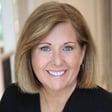
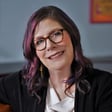
Welcome the Leaders Commute podcast. I'm Jess Villegas. Today's episode is titled Walking Monsters, Navigating Unfair Systems We Didn't Choose. It's a conversation about what happens when the challenge in front of you isn't a person, a mistake, and isn't something you can fix, but a system that still has to be navigated with clarity, dignity, and care.
Lisa's Career in Healthcare Advocacy
00:00:28
Speaker
My guest today, Lisa Berry Blackstock, is one of the earliest and best-known internationally independent patient advocates thriving in the healthcare advocacy field. A Stanford graduate, she practices worldwide, offering services utilizing her national political public policy insight afforded from her journalistic and communications work on Capitol Hill.
00:00:50
Speaker
This experience, combined with Lisa's legal background as an estate administrator in Los Angeles and her healthcare navigation savvy gleaned from her work as a private healthcare advocate, has afforded her hard-earned insight from inside one of the most complex systems many of us will ever face.
Lisa's Personal Health Journey and Career Shift
00:01:10
Speaker
Lisa's delayed diagnosis of trigeminal neuralgia in early 2007 and her corrective brain surgery resulted in a deliberate redirection of her professional work into healthcare advocacy.
00:01:23
Speaker
Before we begin, I want to explain what I mean by the phrase walking monsters. When I use the word monster, I'm not talking about bad people or malicious intent. I'm talking about systems that are large, impersonal, and often indifferent to the human beings moving through them.
00:01:39
Speaker
Healthcare, bureaucracy, and institutions are forces that generally don't wake up trying to harm any anyone, but still shape real outcomes. These are systems that tend to walk into the room whether we're ready or not.
00:01:52
Speaker
Most of us don't get to choose the systems that define our hardest moments.
Navigating Impersonal Systems with Dignity
00:01:56
Speaker
What we do choose is how we move through them, how we stay grounded, attentive, and human inside something that wasn't designed with us in mind.
00:02:05
Speaker
This conversation isn't about blame or outrage. It's about learning to see the system clearly so that we don't lose ourselves inside of it. With that, let's begin and please enjoy.
00:02:22
Speaker
Hi, Lisa, how are you doing? Not too bad. It's a Friday and I'm still standing, which is always a good sign because the weeks are busy, so I'll take that. All right. You mentioned you had a really big day yesterday, so you're going use the state of relapse, which is perfectly fine for me.
00:02:37
Speaker
yeah Yesterday was a big day. Involved some travel to Stanford. That is one of the medical centers that is a go-to for my clients.
00:02:49
Speaker
for specialty problems. So I have a client who's got an upcoming brain surgery next week there. So just needed to head up there for the day. So traveled in the morning, flew back at night, but the return was delayed a little bit. So it was a full day, 16 hours.
00:03:09
Speaker
Wow. So 16 hours all in the state of California? Yes. well That was all in the state. It's a big state. Yeah. That's hard. seems hard to do, but you did it. It's a big state. It really helps with my body as I get older that I don't have to change time zones. So same time zone is good.
Impact of Lisa's Advocacy on Jess's Family
00:03:29
Speaker
tell the way we'll start here is I'm just going to set the audience up, to let them know a little bit about our relationship here and how we have come to this point. And then we'll just go from wherever we want to go. So let me just say to the audience, Lisa and I met in early 2022.
00:03:43
Speaker
My brother, Mike, was having some chronic issues with his lungs, and they were becoming fairly serious in 2021. And so by early things were looking pretty bleak.
00:03:54
Speaker
We started considering things like lung transplants, really without even having any sense about what's involved in any of that. I don't think you just say, gee, it's probably going to a lung transplant. Let's just get started.
00:04:05
Speaker
But we went on a search. We had three different people on two different coasts. ah rise to the challenge that I gave to them, which was, let's find someone that maybe we can use as an advocate. that Back then, I was pretty naive as to what level or what type of advocate we would need. We just knew that we didn't know what we were doing.
00:04:25
Speaker
So when we got back to our search results, it turned out that we had some really nice people that we could consider. But it also turned out that Lisa's name showed up on all three searches, which made me think, okay, well, this looks like a really good place to start. So we did. There was a lot of cross-affirmation of the ability to connect with Lisa, who initiated business called SolSherpa.
00:04:47
Speaker
I wanted to, again, thank you, Lisa, for that. You know, my brother finally did pass, and it was difficult time, but you helped ease us through a lot of the difficult time of that. So I thank you for that. We've had a chance to talk quite often about the thing that has really animated you throughout your life. And I imagine you've gotten many things that have driven you to become the type of advocate that you are. But one particular area of note was that you contributed material to the Caregiver's Advocate book. Volume 2. Volume 2. Thank you.
00:05:15
Speaker
And the particular chapter that you authored was called, did someone say brain surgery? Now, when I read that title, I knew what that was about because I had heard the story. But maybe you can just take us through that journey because I know it's going to undergird much of what we talk about today.
Lisa's Role as an Advocate and SolSherpa
00:05:31
Speaker
I guess this started in November of 2006 when I was 46. Everything was going great in my life. My husband and I were busy living in Southern California, enjoying our careers, enjoying everything that Southern California had to offer.
00:05:50
Speaker
i was strong. I was healthy. And I had another business at that time as an estate administrator. and had been doing that work for almost 20 years, really enjoyed working with seniors.
00:06:05
Speaker
At that point in people's lives, what I find is they are very realistic about the latter part of their life, the last chapter, and regardless of their accomplishments and their socioeconomic status,
00:06:24
Speaker
People tend to be extremely genuine and very forthright in dealing with them. And I really enjoy that aspect of working with anyone.
00:06:36
Speaker
I'm not very good at corporate politics. I don't really like it. So I enjoyed working one-on-one, helping people. And this was going on. My husband and i were doing lots of high altitude hikes at that time, um really in the best shape of my life. And one night in the middle of November of 2006, I woke up with electric shocks on the left side of my face.
00:07:10
Speaker
which was highly unusual for me. I'm a person who doesn't get headaches and I did not know what it was, but it was enough to jolt me out of a deep sleep.
00:07:23
Speaker
I thought initially that there was something wrong with my mouth, so called my dentist the next day. Dentist said, come on in, we'll take a look. This was a dentist located in Westlake Village, California, which is pretty high quality service area for Southern California.
00:07:45
Speaker
And I was told that I needed a root canal. So i went to see an antedontist also in Westlake Village who said, well, we can't really see anything on your x-ray, but what you described is definitely something that warrants a root canal. I'd never had a root canal before.
00:08:05
Speaker
never had any kind of oral pain. And I thought that two doctors giving me the same recommendation was reason enough to proceed with the root canal. So I had the root canal and my pain still persisted. These intermittent, literal electric shocks in my face that were centered primarily in my upper and lower left jaw kept continuing.
00:08:36
Speaker
And the antidontist told me, well, sometimes when when this
Misdiagnosis and Discovery of Condition
00:08:41
Speaker
happens, people just end up and it turns out that what they need is a cluster of root canals. And as I said, I had never had a root canal before. So I i really didn't know any better.
00:08:53
Speaker
i proceeded to have four additional root canals for a total of five within a six week period. The pain did not get any better. It actually got worse.
00:09:06
Speaker
And i was basically told by my treating professionals in Westlake Village that there was nothing wrong with me and I needed to go talk to someone about my pain.
00:09:17
Speaker
Now, keep in mind, I've got a pretty high pain tolerance. Being able to hike Mount Whitney up and down in a single day, that's almost 14,500-foot mountain. It's pretty strenuous, and it just did not ring true to me.
00:09:36
Speaker
um So instead of going to find someone to talk to, What I did, which is what I learned I should have done from the very beginning, was I sought a professional opinion at a teaching and research hospital.
00:09:52
Speaker
And in my case, UCLA was the closest teaching and research hospital. I was directed to their school of dentistry.
00:10:02
Speaker
He has now passed away, but there was a teaching professor who was also a dentist at UCLA School of Dentistry, Dr. Robert Merrill, who pretty much diagnosed me over the phone, but said, you need to come in.
00:10:20
Speaker
and have an exam. But what I think you have is a nerve disorder called trigeminal neuralgia, which I had never heard of, couldn't even pronounce.
00:10:32
Speaker
My mom was working as a registered nurse at that time, had never heard of the condition. But it turns out I did go see Dr. Merrill. He did confirm his diagnosis and the trigeminal nerve um happens to be one of the cranial nerves that lies horizontally at your brainstem. Your cranial nerves are divided into halves. So you have right side and left side.
00:11:02
Speaker
The fifth cranial nerve is the trigeminal nerve, which feeds into three places on your face, your forehead, upper jaw and lower jaw.
00:11:14
Speaker
And I was diagnosed with trigeminal neuralgia on of the left trigeminal nerve in my upper and lower jaw. And what was happening was my nerve, which these cranial nerves lie horizontally, and there is a major artery that pumps blood up to the brain that passes through the nerve stem area. And that is a vertical path because it's pumping up.
00:11:48
Speaker
And every time this artery compressed my left trigeminal nerve, which was just a fluke, that it became tangled up in it, with every compression, it wore away the protective coating of my left trigeminal nerve, which is called the myelin sheath.
00:12:06
Speaker
And once my myelin sheath had disintegrated, there was nothing but a raw nerve, which is pretty much like a wire without the rubber coating around it that we would plug into an outlet. So that was the explanation of my electric shocks. They were real.
00:12:27
Speaker
They were continuing in intensity. They were debilitating. And the only way that it could be corrected was through major brain and surgery, where a neurosurgeon needed to perform a craniotomy behind my left ear, drill a hole about the size of a quarter,
00:12:49
Speaker
in that area and then under a microscope manually work his way down to my brain stem and physically separate the artery off of the damaged nerve, wrap the damaged nerve in shredded Teflon so nothing could touch it.
00:13:09
Speaker
And so the myelin sheath could regenerate. And my neurosurgeon who was able to perform that miraculous procedure in March of 2007 at Cedars-Sinai Medical Center, his name is Wesley King, and he is still practicing.
00:13:30
Speaker
He is a miracle worker who literally restored my life. I was debilitated by chronic pain. I became clinically depressed.
00:13:40
Speaker
um And for people who don't know what true depression is, it is a lot more than having a bad day. I was so lucky.
00:13:52
Speaker
If this had to happen, I was very lucky that it occurred before the passage of the Affordable Care Act. Despite that, I still had to fight my insurance company for approval of my neurosurgeon because he was out of network. At that time, there were not any other
Insurance Appeals and Advocacy Inspiration
00:14:09
Speaker
neurosurgeons in the Los Angeles area that had performed this procedure as frequently as Dr. King did. And he was specifically recommended to me by Dr. Merrill.
00:14:21
Speaker
So i desperately needed the surgery. i could not function in any capacity, let alone fighting with my insurance company. So I pulled the money to pay for my neurosurgeon out of my retirement account, thinking that was five figures. You know how many people...
00:14:41
Speaker
or able to pull five figures out of a retirement account. And I just decided that if I was lucky enough to have a successful surgery, I had up to six months to file an appeal with my insurer, and that's what I would do.
00:14:55
Speaker
So thankfully, my surgery went well. The recovery, despite the fact that I was young and very strong and healthy, still took about nine months before i felt completely back to normal.
00:15:10
Speaker
And when I filed an appeal with my PPO insurance plan, they ruled favorably on my behalf the first time around. They reversed their denial. They refunded me the five figures that I had withdrawn from my retirement account, as well as paid me interest, which...
00:15:32
Speaker
more than covered my penalty for early withdrawal, Dr. King told me that he had never had a patient who was able to successfully appeal with their insurer for his services and wondered if I'd be willing to help some of his other patients And it it just was a no-brainer that I would be willing to guide them.
00:15:58
Speaker
I think and a big advantage that I had was as an estate administrator at that time, I had become very accustomed to working with very...
00:16:09
Speaker
high quality, very well-practiced attorneys. And I learned a lot of skills from them that have helped me in my life professionally and personally. One is that everything can be negotiated regardless of whether or not a contract exists. um And the other is that A denial should never be the final acceptance that a person takes on the receiving end, especially if they have a truly legitimate reason.
00:16:44
Speaker
I ended up getting so many people calling me for help through Dr. King and their family members and friends who found out about me that they By the time 2009 rolled around, I really had to make a decision if I was going to stay in practice as an estate administrator or if I was going to venture into this new world of healthcare advocacy, which I didn't even realize had a name. It's my understanding that patient advocates really became an organized force with the implementation of the Affordable Care Act. And it was only after I had been practicing as an advocate for a few years that I did discover that there were other patient advocates, although not many, in the country. And I was able to join those associations
00:17:45
Speaker
get to know other colleagues and share war stories because healthcare care access for patients is a daily ongoing war story today.
00:17:59
Speaker
i never thought that I would end up with a practice that would keep me so busy that I would have to close my other business, but that's exactly what has happened. And I've been privileged enough to help people not only throughout this country, but also internationally. People who have either come to the United States
Thriving Advocacy Practice
00:18:23
Speaker
because they're not able to get the excellent type of care that they need in their native country, or people from foreign countries who have been here in the U.S. on business or on pleasure and unexpectedly have found themselves in an emergency room
00:18:41
Speaker
and possibly hospitalized without insurance, needing medical care, and ending up with medical bills in five and six figures. So it's been very unplanned, but very well received,
00:18:58
Speaker
No matter what the economy is doing, people are in demand of healthcare advocacy that can look like different things for different people.
00:19:08
Speaker
And I'm very grateful that I've been able to establish a professional career that is thriving in an uncertain economy that truly helps people. And i deal with them one-on-one and it's incredibly rewarding.
00:19:27
Speaker
People who are dealing with their health and their finances, much like my estate administration clients, they are very genuine. There's nothing to have to decipher. Everything is on the table.
00:19:43
Speaker
Either people trust you or they don't. That's an incredible thing to have in this world today, ah how personally and professionally. And I'm just incredibly grateful that, you know, that was in 2010 that I established my full-time practice. And here we are in 2026 and it's still rolling strong.
00:20:14
Speaker
I want to pause here just to highlight a point. When systems fail us or feel slow, rigid, or unresponsive, the instinct is to look for someone to blame. And sometimes individuals do make poor choices.
00:20:27
Speaker
But more often, what we're running up against is structure of incentives, rules, and feedback loops that weren't built for this particular human reality. That doesn't make the experience any less painful, but it does change how we respond.
00:20:42
Speaker
If we treat the system as a villain, we usually exhaust ourselves. If we learn to read it and notice where it listens and where it doesn't, and where small actions actually matter, we give ourselves a better chance of navigating it without losing perspective or compassion.
00:20:58
Speaker
This isn't about excusing the system. It's about choosing a response that keeps us whole.
00:21:10
Speaker
So the business is called Soul Sherpa, is that correct? Correct. um Which is an unusual name for any kind of business. But prior to going into business as as an advocate, I was certified as a volunteer hospice and palliative care coordinator.
00:21:33
Speaker
And I did that work in memory of my father who passed away from metastasized lung cancer when he was only 62 in 2002, which had an incredibly devastating effect on me, my three younger sisters and my mom.
00:21:53
Speaker
And I decided a few years after I was able to fully come to terms with my father's untimely death, that I really wanted to take that experience to try to be strong for other people.
00:22:10
Speaker
i was not in a position to be strong for my dad, which I regretted, but I just couldn't do it. And i really wanted to be able to be strong for other people. So i I had to go through training, had to pass psychological profiling to make sure that I had the mindset that could be an effective hospice and palliative care
Origin of SolSherpa and Philosophies
00:22:37
Speaker
counselor. And I began doing that work in 2005 on a volunteer basis.
00:22:44
Speaker
So i never had any idea that I would need brain surgery later on in my life and would become a patient advocate. But I liked the name so much. it meant so much to me being a high altitude hiker and knowing that the Sherpas that guide people high mountains, they are predominantly of the Buddhist faith.
00:23:11
Speaker
And for them, it's very important that the intention with which they undergo any hike, any endeavor has to be pure. ah Otherwise, they believe that they're not going to have the blessing of higher forces to help them. So I've always liked that.
00:23:34
Speaker
that story. I've always followed high altitude hiking stories. And when it came to hospice and palliative care, it wasn't really a denominational religious reason that I used the word soul, S-O-U-L.
00:23:52
Speaker
I think that everyone regardless of their faith or lack of or questioning of, everyone has a spirit or a soul. And I really liked the name SolSherpa. So that's the name that I adopted for my practice. And SolSherpa is a registered trademark and the full name is SolSherpa Healthcare care Advocacy Services.
00:24:19
Speaker
Yeah, I love that to name. I think in another conversation, i had made the statement that it seemed like you were brave to go out there with a name that back in 2006 would have sounded quite odd to a lot of people. This is kind of pre-Google, pre-having all these interesting company names out there, but you picked a name that really spoke to what you were trying to communicate with your business.
00:24:39
Speaker
ah Interestingly, half of the population doesn't know what a Sherpa is, but the other half that do, um it's amazing that when I get a call from a prospective client, I always ask them how they found out about me because I'm curious, you know especially if I hear from someone 3000 miles away on the other side of the country or someone in London or Paris or Australia,
00:25:07
Speaker
And about half of them say, i love the name of your company. I don't know that that's a valid reason to to select an advocate, but it certainly doesn't hurt.
00:25:20
Speaker
And because it is so unusual and I've been able to take advantage of A lot of creative marketing ideas um using the concept of a Sherpa. It really has set my practice apart from most other advocates in the country.
00:25:37
Speaker
And it's nice to have your own unique little niche and be known because I am known personally. as an advocate who will sometimes approach things from a rather creative and sometimes unorthodox standpoint, but those skills and those methods have proven overall very successful for my clients. And I'm not afraid to think outside the box.
00:26:05
Speaker
And it doesn't really matter to me whether it's standard practice. All I want is the best possible outcome for my clients that's possible.
00:26:17
Speaker
Thank you for such a thorough recounting of your journey. But the thing I want to underscore here is your ability to communicate your message and to have individuals feel comfortable about what trying to communicate. There were four or five different things that had to conspire, if that's the right phraseology.
00:26:34
Speaker
to move you to this place, right? So I heard the situations you had leading to the brain surgery, the fact that you were an estate administrator, the fact that you had interaction with extraordinary doctors were able to not only take care of you, but then also advocate for you in terms of when you started your business, putting you in front of individuals that could benefit from your background.
00:26:55
Speaker
And there are probably other things, right? But if you just take all those things together, what you are portraying there is what most individuals, if they're aware, would come to appreciate that where you got to is a result of a lot of different things.
00:27:09
Speaker
That's exactly accurate. The meeting of different extraordinary circumstances that I did not deliberately pursue. I mean, who in their right mind would pursue ah wanting to suffer chronic debilitating pain and have to undergo a craniotomy? To describe it as unpleasant is an understatement. But the prospect of living in the kind of chronic pain that I was in at that point in my life was so...
00:27:44
Speaker
impossible to to conceive of. I just had no life. I mean, my life as I knew it was gone and I was not able to contribute anything to anyone personally or professionally for people who have suffered from debilitating pain. And I've dealt with many of those people in my practice. It's a very difficult thing to be believed.
00:28:10
Speaker
A lot of people are thought of much too commonly, and in my experience, unfairly, as people who are drug-theking.
00:28:21
Speaker
But I can tell you that in my case of nerve pain, there is no opioid that can treat nerve pain. I don't even take aspirin. I just don't get headaches. I have really been led to this path.
00:28:37
Speaker
I am not... superstitious or particularly religious, but I do believe that something outside of myself, beginning really with my father's death, which was also incredibly painful,
00:28:55
Speaker
I've learned that you can't control what happens to you, but you really do have control over how you react to it. And i can see where I could have become like very bitter and just angry and resentful that my father, who was a force of nature, I mentioned my three younger sisters and i if you ever wanted to talk about a girl dad, he was a girl dad,
00:29:21
Speaker
long, long, long before the phrase came around. And my mom used to worry that he would roughhouse with us too much and he would coach our softball teams and he would be the dad in the neighborhood who would pile all the neighborhood kids into his station wagon and take us to Shea Stadium in New York to watch the Mets. I i grew up in Connecticut.
00:29:48
Speaker
but that was devastating. And choosing to to deal with grief, you have a choice. It's very painful, but I did choose ultimately at the right time that I wanted to see if I could help other people who were in my dad's position who needed support. And I was very lucky that I had great training and When you're assigned to hospice and palliative care for a patient, it's a random assignment as a volunteer. And to think about being randomly assigned a person and you walk into their lives and meet them for an initial meet and greet, again, it's just another example of being able to meet people and the loved ones surrounding them, whether they're friends or family or both,
00:30:40
Speaker
in such an incredibly genuine way. I've just been very spoiled and I'm so grateful for the opportunity that I have been able to carry that theme throughout my personal life and my professional life that we don't have to worry. in Interactions are completely to the point and there's nothing to get out of the way. And so beginning with my father's death and me becoming certified as a hospice and palliative care counselor, learning a lot from people of of all different ages.
00:31:18
Speaker
And then my experience so with brain surgery and fighting with an insurance company and going through grueling corrective surgery and recovery. Once I got to the point where I was strong enough to get a favorable response from my insurance company.
00:31:37
Speaker
I just naturally went to the point of, you know, what kind of work is possible to do with this experience that will allow me to deal with people in a very authentic way, not have to deal with a corporate bureaucracy and and do something that benefits, in addition to myself, really benefits someone else. So,
00:32:02
Speaker
Over you know these last two and a half decades, there have been ongoing opportunities that I certainly don't plan for. the the worst thing that I can do, what I've learned, is to plan a major decision in my life.
00:32:18
Speaker
Because if I plan it and try to implement it, it's not going to happen the way that I want to. And what usually happens is I'll get a little invisible tap on my shoulder,
00:32:28
Speaker
And I'll be trying to push through a door, pound it down in front of me that won't open. But the tap on the shoulder makes me turn around or to my side. And there's an open door. And I have no idea what it is. It never entered into my mind that it would be a door that I would walk through. But consistently in my adult life, that's what's happened. I i don't know how...
00:32:54
Speaker
You can explain it. Some people call it serendipity. Some people call it synchronicity. Some people call it, you know, it's your path in life that's been dictated by the universe or a higher power or God.
00:33:10
Speaker
To me, that doesn't really matter. I'm just so incredibly grateful that I continually have these doors that open for me and allow me to stretch myself and in different ways and grow and learn while I'm helping people in very significant ways.
Systemic Healthcare Issues and Advocacy Approach
00:33:30
Speaker
You mentioned a very stoic idea of you can't control everything that happens to you, but you can control how you react to it. and Instead of trying to figure how to defend, you start looking at how to proceed.
00:33:41
Speaker
And I think that seems to come through at least in a lot of the various conversations we've had, but just to expand on that, but I gave the obligatory note at the beginning saying, this is how we met. You know, we looked on the internet.
00:33:54
Speaker
It looked like Lisa was a good person to talk to. We all agreed and we went forward, but it's really more compelling than that. And that comes in the form of realizing that You were in a field where most individuals like myself don't have a good sense of how to navigate these large systems. They're overwhelming.
00:34:13
Speaker
They're difficult to understand. ah Some constraints are institutionalized and some are not, but there's constraints nonetheless. But one of the things that you exuded, which really flipped the switch for us to want to proceed, it at least for me,
00:34:29
Speaker
is that it was easy for you to articulate your challenges, but not only that, the challenges within in the system. And then most people would gravitate towards a recitation of everything thing that's bothering them about the system without ever engaging what could be done differently.
00:34:45
Speaker
And when you exude the confidence of understanding that it's a big thing, knowing that you can't fix everything at once, but knowing that you can incrementally advocate for an individual, that recognition, I think, is what really helped me decide that we needed to move forward. And I wanted to make that note because it was a very significant situation for us. Well, it is true that the healthcare system has become, and despite what lip service ah we get from politicians and the healthcare care lobby, who in my opinion, control politicians of all parties,
00:35:27
Speaker
including independent. You know, but and another accidental thing that happened in my life was when I graduated from college, I had a liberal arts degree. i didn't really know what I wanted to do.
00:35:39
Speaker
And i ended up majoring in journalism and political science and had an opportunity out of college to go to Capitol Hill and work on the Hill in a journalistic capacity as an editorial assistant.
00:35:56
Speaker
I was there for three years. And what you learn as an observer, not necessarily doing your job, but observing goings on on Capitol Hill and in the national political field in general, is invaluable.
00:36:15
Speaker
I saw with my own eyes how effective the different lobby organizations are, how much influenced they literally buy with their donations to politicians.
00:36:31
Speaker
um It takes a special breed of person to want to be a politician, in my opinion. And having been exposed to how the system really works, seeing lobbyists with the, what they call, administrative assistants who are similar to the chief of staff for legislators, seeing after hours at bars and restaurants the kind of interactions that would go on, talking to people who worked in different offices and in different government organizations,
00:37:06
Speaker
That gave me, long before the Affordable Care Act ever came onto the scene, a really good understanding of knowing that you cannot believe sound bites from any politician.
00:37:22
Speaker
Most people, unfortunately, are in survival mode. And I've learned from my experience as an estate administrator, which was also quite accidental,
00:37:34
Speaker
I hung out my own shingle beginning in 1990 as a private for hire executive assistant by the hour because I did not want to work in a company. I knew that in my life, I just needed more flexibility.
00:37:52
Speaker
I wanted to work. I wanted to be really good at what I did, but I've just been too independent my entire life to conform to any kind of a role. So when I was 30, I went out on my own and that very first year, I got a client, this was pre-internet. ah This was an ad that I saw in the Los Angeles Times that said, part-time assistant needed for elderly dignified gentlemen and a phone number.
00:38:28
Speaker
And I was desperate for any work that I could get. And it turned out initially that this man, who was 80 years old at that time and retired, but still maintain a private office in Los Angeles,
00:38:46
Speaker
was looking for an executive assistant just to handle basic executive assistant duties. But within that first year, I learned that he was very affluent, had a large estate, and was continually frustrated by one of the large estate owners law practices in downtown Los Angeles, because he really wanted personalized treatment. And in general, what I have found is that ah law practices that handle state planning matters, my experience is limited and there are always exceptions to the rule, but the the big push
00:39:31
Speaker
for those attorneys is to get business through the door, especially if those attorneys are not partners and want to become partners. Their billables has a huge bearing on whether or not they're offered partnership.
00:39:46
Speaker
And what my client at 80, who was... Lifetime exerciser, didn't smoke, didn't drink, ah just very healthy, very engaging. He offered me the opportunity to become his estate administrator on an hourly basis if I was agreeable to him training me because his background was an attorney.
00:40:12
Speaker
And i at 31 years old, had no idea what that meant. Said, sure, I'll try it. ah Turned out that I had the skill set being organized and methodical and good on follow through. and that was my experience and how I became an estate administrator for other people. So that experience combined with the the political understanding,
00:40:42
Speaker
the extent that people will go to to concentrate wealth, and that certainly exists in the healthcare field. I do not believe any form of socialism.
00:40:54
Speaker
I know in my case, I came from a family where my father was a high school dropout. My mom had me about 10 months after she graduated from high school when she was still 18. My parents were married and parents of four children by the time they were 25 and 26, respectively. um i wanted to succeed. I didn't want to struggle, but I have learned that Through my observation of the healthcare businesses and the extent that people and organizations go to to concentrate wealth, I think that there is nothing wrong with being financially secure. But when it becomes an obsession that a certain amount of wealth is not enough and that drive persists,
00:41:44
Speaker
um I think it's very unhealthy. i think it's very unnecessary. i think 99% of people do not know how to handle immense wealth.
00:41:55
Speaker
I think it has a very negative effect on people's personal relationships. that the government would control that I think is wrong. People need to have an internal compass where they are able to definitely want to fulfill their lives and do something meaningful and be successful. But if you do that alone and cannot see that we live in a world with literally hundreds of millions of other people, most of whom
00:42:30
Speaker
will never have the luxury of being financially comfortable, let alone immensely wealthy. I just don't understand that mindset.
00:42:42
Speaker
The bigger something is, the more wasteful it is. i don't trust government enough, but I don't know what is wrong with the psyche of people that they cannot keep wealth in perspective. Most of my estate clients, they would talk about,
00:43:00
Speaker
on a Friday, they would want to know what my husband and I were doing. And it was always something completely different from what they were doing. And in large part, they would personally express envy that I didn't have a schedule that my assistant had set for me. I didn't have to have brunch with a financial advisor. or play golf with an estate attorney or someone interested in getting a loan from me for investment purposes.
00:43:32
Speaker
I can honestly say that I never met anyone immensely wealthy who I wanted to trade places with. I want to ask you a question here that I'm trying to figure out the best way to frame it. We've talked about essentially the emergence of how things evolved to get you to this place. And you identified some very discrete things, you know, five or six or seven discrete things, including serendipity, your experience in D.C.
00:43:58
Speaker
And with all that at your disposal, with all those experiences, You still have to go out there and do the work and advocate and run into the challenges that are posed by clients, not because they want to be difficult, well but because clients don't know everything. And when you don't know everything, you can be challenging. you know, I'm one of those types of individuals.
00:44:16
Speaker
The reason that I'm laying all that out is because with all that at your back, and with all the best intentions in the world. Is there any particular belief or set of beliefs or ideas that you've had to release that maybe carried you quite a long way, but at some point in time you decided, hmm, maybe that's not really the right way to think about this? Anything that you just had to let go of in order to advance your mission?
00:44:40
Speaker
Well, first of all, while I always strive to have a successful outcome for my clients, that has not happened 100% of the time.
00:44:51
Speaker
It's disappointing when it doesn't happen, but I am upfront with my clients, whether they need me to be with them in person with a doctor, whether they are in the hospital and they want to be accompanied by me because they don't want to be in the hospital alone, if they want me to oversee their discharge, if they want me to help them them with their advanced health care.
00:45:17
Speaker
planning, if they need medical billing negotiation, if they need to fight denial from an insurance company like I did. I try to be very upfront with them from the beginning.
00:45:30
Speaker
One thing in general, though, that i I can tell you, Jess, is most of them are so emotionally exhausted. by the time they reach out to me, because they almost always come to me after a crisis evolved.
00:45:45
Speaker
They are exhausted and they they don't really put up that much of a fight. um But in the case that's that some of them do, they don't really understand my strategy. And it has become ah a challenge sometimes to explain to them I know because I know how this healthcare care system works as a business.
00:46:08
Speaker
And when I refer to that, I'm talking about healthcare care organizations, whether those are hospital systems or physician practice systems or insurance companies, whether they're public or private.
00:46:23
Speaker
I understand there is, whether it will be admitted or not, there is a business plan in place. And those business plans are either for profit or if they are nonprofit,
00:46:39
Speaker
All that means is the organization doesn't pay tax on their income. When it comes to government programs like Medicare and Medicaid, obviously there is no profit.
00:46:54
Speaker
But understanding how the business of health care works, which is only allowed ah to the extent that federal and state legislation permits that behavior.
00:47:09
Speaker
To me, that is the key to understanding
Emotional Exhaustion and Healthcare as a Business
00:47:14
Speaker
how to help a client navigate whatever healthcare challenge they're navigating.
00:47:20
Speaker
A lot of people think that you have to have a medical background in order to do this work. um That has never been a problem for me, and I don't think it hurts to have a medical background at all. I have some wonderful colleagues who do have medical backgrounds who do great work, but there seems to be, ah in my profession, a huge challenge in understanding how the politics and business of healthcare works.
00:47:50
Speaker
ah continue to evolve and have gotten us to this place. My battles are not with my clients or with doctors or nurses
00:48:03
Speaker
respiratory or physical therapists or psychological therapists, these people, for the most part, the frontline workers, these people do not have the independence, especially physicians, that they used to have.
00:48:20
Speaker
um When I had my brain surgery, for example, I never heard the word hospitalist. which is a very common occurrence now. If a doctor wants to have practicing privileges at a hospital, they must become an employee or a subcontractor to that hospital. They are known as hospitalists.
00:48:44
Speaker
They are not allowed to establish private practices. Those doctors that do, who we commonly know as concierge physicians today, where people pay a monthly or an annual subscription fee, these doctors do not have hospital privileges in 99% of cases. And a lot of people don't understand that.
00:49:08
Speaker
My battles are not with people practicing health care who became trained because they really did want to help people heal and make their quality of life better.
00:49:22
Speaker
My battle is with the system and the people who are leaders. architects and the administrators of that system. I have seen countless times people in the hospital, whether they're patients or their loved ones, lose it at the nurse's station or with a doctor.
00:49:43
Speaker
or case manager and scream and yell and berate. And they just don't understand that these professional people are doing as they are instructed behind the scenes.
00:49:55
Speaker
It is a very unfortunate fact, but it is a fact that the type of insurance that a patient has is going to directly affect what kind of care you get.
00:50:08
Speaker
Insurances like HMOs and Medicare Advantage and Medicaid, which is known as Medi-Cal in the state of California, these are the lowest reimbursing insurance plans.
00:50:23
Speaker
And the administrators of health systems, which include hospitals, And insurance companies know this. This is deliberate. Most people never look at their insurance plan.
00:50:37
Speaker
Insurance companies a long time ago stopped mailing hard copies of your insurance policy. I know as being independently employed since 1990, and carrying my own insurance. Every year without fail, I received in the mail a 100 plus page copy of my policy. Now what people typically get, whether they're going through the ACA marketplace or whether they're going through their employer or even an insurance broker is something called a summary of benefits, which is not the legal contract that defines your policy.
00:51:17
Speaker
My fight is with the people that set these policies. i i can never see them, but I know who they are. And they hear from me never in a phone call because that is something you can't document. And in my opinion, the hardworking people who answer the phone for insurance membership services or hospital billing departments, these are not the people that have any control over the policy of the employer that they work for. So my method has always been to document in writing and use FedEx or UPS. They have very reasonable two-day flat rates.
00:52:02
Speaker
less expensive than certified mail and much more reliable, you receive a signature confirmation guarantee. And once you have your client's written release to contact that entity, um attorneys have taught me so much about how to word things. and how to understand what my client's legal coverage is under their policy. And as far as understanding healthcare legislation, understanding what their patient rights are, not only in terms of the Affordable Care Act, which affects about 50% of the population. But unfortunately, that is likely to drop this year because the subsidies to so many people with ACA policies were not renewed as of the 1st of January in 2026. I would imagine a lot of people are going to have to drop their policies just due to the premium cost.
00:53:00
Speaker
But being able to analyze from a business perspective what the problem is from a business point of view that is standing in the way of one of my clients getting the health care that is truly medically necessary that will harm them if they don't receive it, that to me has been a skill that has evolved literally from being around politicians and politicians learning how to read very boring legislation, understanding it, working around attorneys as an estate administrator, and being able to understand how to identify the law and put into words for someone at the CEO or head legal counsel or held head risk management officer level.
00:53:53
Speaker
um Trying to plead your case and fight with a doctor or a nurse or a case manager is, in my experience, a waste of time. And you are using that energy with a person who is accountable to someone who we will never see.
00:54:14
Speaker
It's very important to me that I have good relationships with administrative staff to healthcare care professionals because they are overwhelmed.
Advocacy Strategies for Energy Management
00:54:27
Speaker
Hospitals are typically increasing the workload on doctors and nurses. This has a direct impact on the number and type of medical errors that occur. It's not because these professionals are not medically qualified. It's because they're being asked to do more and more for less and less money.
00:54:51
Speaker
And I have to say that when a patient advocate like myself can earn more money in a year than a medical doctor who is a hospitalist for a healthcare system.
00:55:05
Speaker
I think that is terribly wrong. And i do offer pro bono work. I have worked with homeless people. who don't have a place to live, who have been in their cars.
00:55:17
Speaker
I have worked with people. Right now, i have a young girl at Children's Hospital in Los Angeles who is from out of state, but was playing in the water with her friends and family and took a dive and unfortunately suffered a traumatic brain injury, as well as a spinal cord injury.
00:55:40
Speaker
Her parents cannot afford my services and I am operating through their GoFundMe donations at a rate of charging one hour for every dozen hours provided. I strongly believe in giving back. I have no desire to live in a huge house and have a domestic staff.
00:56:04
Speaker
I've had to oversee those houses and those staff people um when I was an estate administrator. And that's just not the kind of life my husband and I want.
00:56:14
Speaker
But As a patient advocate, you have to be so careful with the energy that you expend because it is tremendous and burnout is a great threat.
00:56:27
Speaker
You've got to take care of yourself and you have got to know how to keep your life balanced and still have the maximum impact of good in your work. And for me, I i make it very clear initially with a client, before I take someone on, it's Situations are such that I will always have what's called an initial assessment and intake. And during that two to three hour period, we get to know each other as advocate and potential client. And we know pretty soon within that period, whether or not we're a good match for each other. And I've been very lucky with my clients because
00:57:13
Speaker
Almost all of them, not all, because my approach to some people doesn't make them comfortable or it's just not a right match for them. I do want people to be matched with the advocate who is best suited to help them. And sometimes it's someone else. In which case, for the most part, among my colleagues and myself, we're very happy to refer each other because we do want patients' help. But I reserve my energy. My biggest battle is, as I said, with the architects and the people that spend the money that allow this system to continue to exist and evolve very negatively the way it does.
00:57:55
Speaker
I think it's an excellent message. I'm always amazed how the prospect of giving within the types of occupations that are covered by people like advocates it just seems so natural, right? It just seems like that has to be part of the thing that drives the energy, and it just seems like that's something that drives you.
00:58:11
Speaker
I want to make sure that we get a little bit of time to talk about a project you were working on. We haven't spoken recently, so I don't know of the status and I don't want to put you on the spot. But I did have the opportunity to participate in a test that you were doing with an AI entity. And I'm just wondering how that was progressing and maybe if you'd like to talk a little bit about that.
SolSherpa Solutions and Educational Programs
00:58:29
Speaker
Yeah, thank you for bringing that up. I launched an online educational program last September 1st called Soul Sherpa Solutions.
00:58:41
Speaker
And it is comprised right now of nine introductory videos that are geared toward the public and caregivers and other advocates on that explains where we are in healthcare, care how we got here, and tips that can help the average person understand what it is that they're dealing with. You know, healthcare operates behind a curtain, and the patient is on the other side of the curtain and sees their healthcare care providers, but they don't see
00:59:18
Speaker
who the C-suite people are for the insurance industry. They don't know who comprises the healthcare lobby. They don't know who hospital administrators are.
00:59:31
Speaker
I try to demystify that process in this introductory process what I call module set, which also comes with a, I believe it's a 13 page companion guide that people can download.
00:59:47
Speaker
After I launched this project in September, I was approached by an AI company who was interested in the project and thought they would be a good match for me as a teaching tool available to the public because they could take my videos and my companion guide and make that compatible with their system, which unlike other AI systems where they all have access to each other, like chat GPT has a license with Gemini and vice versa. That's pretty much the standard model.
01:00:29
Speaker
in AI, but this particular company does not license out their intellectual property, which makes it a very unique AI source. So that has developed and continues to develop. Another interesting development is after launching SolSherpa Solutions, I've been approached by many business schools about the possibility of creating curriculum for a new major um in healthcare care advocacy, which to me is incredibly exciting because approaching advocacy as a business from a very ah high education graduate school of business mindset to me incredible.
01:01:18
Speaker
very exciting and very promising. And these universities range from high-level elite institutions to state universities to private liberal arts programs to community colleges. It's been, again, very unexpected.
01:01:40
Speaker
hope opened a door to SolSherpa Solutions, thinking I was targeting patients, caregivers, and other advocates. And I ended up getting the tap on the shoulder was, hi we're an AI company that our model is proprietary.
01:01:58
Speaker
And other colleges and business schools saying, we'd we'd like to know more about this because our students are interested and we don't have a program. So that's where SolSherpa Solutions stands. And my biggest challenge right now is not lack of information. It's privacy.
01:02:18
Speaker
The ability that I know I cannot work endless amount of hours in a day. I have to have time to decompress while I'm awake and I can't compromise my sleep because if I'm sleep deprived, I can't be effective. So it's exciting. And, you know, the need for advocacy continues to grow.
01:02:38
Speaker
The fact that I can compliment my direct client advocacy, whether it's in person or remotely, negotiating a medical bill or helping them choose a policy, um being able to balance that out with working on educational outreach and AI, which is something a liberal arts major like me never anticipated,
01:03:05
Speaker
I think it speaks to the tremendous ongoing need that's only going to increase as the longevity of people becomes longer and longer. Healthcare is becoming more and more expensive.
01:03:19
Speaker
I think the the dirty secret in healthcare care that I understand that most of the public don't is that despite all the legislation that exists concerning healthcare, there is nothing that oversees how healthcare costs can increase. There is no restraint on what's called the charge master, which is the independent and individual price list that each healthcare care entity uses. And the charge master from one hospital doesn't match the charge master from another.
01:04:00
Speaker
And the charge master from one physician practice doesn't match another physician practice. And I talk about this in SolSherpa Solutions. It's a very understandable, a step-by-step guide. So before people even select an insurance policy or a doctor, before they or a loved one gets a diagnosis, it's a roadmap of understanding this system before they find themselves or somebody who they care about thrown in it and they don't understand things like premature discharges from hospitals, what their rights are, they don't have to be discharged. Having an account sent to a collection agency does not mean it immediately ruins your credit. They don't understand that they have legally under the Consumer Fair Protection Act. I think I have those words wrong, but they are allowed 30 days from the time they are notified that a collection agency has a debt to dispute that in writing before it can ever legally be passed on to a collection agency. they They don't know what a hospitalist is. They don't understand why it's so important to understand their insurance policy before they go to the emergency room, because it really determines what your rights are.
01:05:31
Speaker
So I'm hoping people will become more proactive. My profession is only going to continue to grow. I've never met anyone in my profession that doesn't want to help people, but I can't ever... see myself not doing this work in some capacity for as long as I'm able.
01:05:51
Speaker
It's a driving force in a big part of my life. I want to make sure that you get a chance to communicate any way individuals
Contact Information and Services
01:06:01
Speaker
can stay up to date on the progress of the project and in the event that they want to be able to access it, however you're planning to do that, and also maybe contact information that you'd like to communicate.
01:06:11
Speaker
So I have two websites. my My business website is soul sherpa, all lowercase, all one word, S-O-U-L-S-H-E-R-P-A dot net or dot com. We'll take you to my business website.
01:06:31
Speaker
And SolSherpaSolutions.com, also all one word, all lowercase, that provides the information about my educational program.
01:06:46
Speaker
It provides detailed information, contact information with my email and my telephone number. I do monitor my email and my phone seven days a week because healthcare... care doesn't fall into convenient Monday through Friday, nine to five limitations. And if anybody ever Googled my name, Lisa Berry Blackstock, no hyphen, there's lots of information, lots of press interviews. I've been fortunate enough to be contacted by a lot of journalists who are also very helpful.
01:07:26
Speaker
They provide me with leverage, which is a concept we haven't talked about, but that is a very big part of how I practice advocacy. Using leverage is very powerful. I learned that from politicians as well as attorneys. And there's nothing like well-placed leverage that can magically change the decision of a hospital or an insurance company. and there is a specific module in SolSherpa Solutions that deals with emotional intelligence and leverage.
01:08:03
Speaker
So many people are exhausted by a system because they do not know who holds the power and they don't know how to push the power holders button.
Reflecting on Navigating Complex Systems
01:08:22
Speaker
As we start to bring this conversation to a close, I want to zoom out for a moment. What you've heard here isn't only a story about health care or advocacy. It's a story about what happens anytime a human being is asked to move through a system that doesn't bend easily or at all.
01:08:39
Speaker
Most of us will face something like this eventually, whether it's illness, aging, bureaucracy, or institutions that don't quite see us. The work in those moments isn't to master the system or to defeat it.
01:08:52
Speaker
It's to stay attentive and notice where we still have agency and where our choices shape the experience, even if they don't change the outcome.
01:09:06
Speaker
I'll let you take us to the end of the podcast here. ah You have a tremendous capacity, not only in terms of your knowledge and competence, but just in terms of what you deliver now at the level you deliver it. But looking forward, is there anything in your considerations about how you might help develop other advocates in the mold that you're trying to operate. I know it's an industry and I know there's plenty of people learning how to be advocates, but particularly in the way that you look at advocacy, is there anything that you're involved with that helps to promote that particular type of mission?
01:09:39
Speaker
I am a mentor. I don't know. There are probably a dozen, 12 18 people who are well-known mentors. And i do get calls from other advocates to be mentored on a one-on-one basis.
01:09:54
Speaker
And I do that remotely, but also in person because so much of what I've learned is just by doing it. So other advocates would like to shadow other advocates in a hospital or a skilled nursing facility or even a home setting. So I continue to offer my mentoring services.
01:10:15
Speaker
I continue to be known in my profession as someone who is working on educational outreach. not only for my colleagues, but also now for business school students.
01:10:31
Speaker
And I don't think it's going to stop there. I've done some writing. I'm published in The Caregiver's Advocate, Volume 2, which is spearheaded by a woman named Debbie Compton, who is based in Oklahoma City.
01:10:48
Speaker
Debbie is devoted to the entire concept of caregiving, which is another very underserved community. We're all going to be caregivers at one point in our life. Debbie invited me to contribute to volume two. She had a volume one that was issued in 2024. think she has plans to issue a volume three in But every day looks different, and I'm interested in one-on-one advocacy, in mentoring, in teaching on a larger scale, and continuing in writing. So those are my interests, and those are my plans for the future.
01:11:32
Speaker
I've really enjoyed the conversation. i've been looking forward to this for quite a long time, and I'm glad you made yourself available on a Friday after a 16 hour of travel day. Yep. My dogs and i are going to go out now and really decompress.
01:11:46
Speaker
ah One of them heard the mention, so just kind of perked up. I'm glad neither of them have barked during our call, but I really appreciate the invitation. So many people don't know what patient advocacy is, and it's also important that they know how to be proactive before a crisis comes up, because the way the system is designed, you can count on it coming up. And I'm just grateful for your time and interest, and big thank you to your listeners. Well, my pleasure. Thanks very much.
01:12:24
Speaker
Most of the hardest challenges we face aren't monsters because they're malicious. They're monsters because they are impersonal, complex, and indifferent. Lisa's story reminds us that navigating unfair systems isn't about winning or fixing everything. It's about paying attention, choosing how we respond, and protecting what matters most, even when the system doesn't make it easy.
01:12:48
Speaker
The Leaders Commute podcast was produced and distributed by Acuity Business Consulting. We partner with executive teams who recognize their most important and persistent challenges are rarely technical alone.
01:13:00
Speaker
Strategy, structure, and execution matter, but lasting performance is shaped by how leaders think, how they interpret feedback, and how they respond when conditions change.
01:13:11
Speaker
My role is to help teams slow their thinking just enough to see the forces at work beneath the surface so that they can act with greater intention and alignment. You can catch a new episode every month wherever you enjoy your favorite podcast.
01:13:25
Speaker
Until next time, I'm Jess Villegas and you have been listening to the Leaders Commute podcast.