Transcript
Speaker: Depending on how you handle your retirement and how you plan for it, you could just be kind of dumped off the working world truck. They slow down to five miles an hour, they throw you out and you're kind of tumbling and rolling and and then trying to get on your feet and figure out, okay, well, where am I?
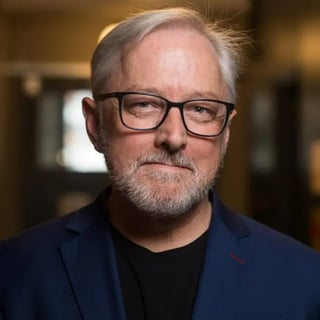
Speaker: Welcome to the Leaders Commute podcast. I'm Jess Viegas. Today's episode is titled Racing, Rainbows, and Recalibrations, Aligning for the Second Half of Life. My guest today is Chris Cabrera.
Speaker: Chris and I met during a very stressful time when my brother Javier passed away after a long illness. Almost immediately thereafter, Javier's daughter and my niece, Jessica, married Chris's son, Ian.
Speaker: They have since had three beautiful children. It was an emotional rollercoaster that has fostered a unique basis for our relationship. Chris is a self-proclaimed communications master.
Speaker: His career spanned more than 35 years in corporate America. For the majority of that time, he focused on employee communications, providing big picture messages to employee and customer audiences.
Speaker: Although he has a business degree, all he ever wanted to be when he grew up was a creative person and an artist. In fact, it was in elementary school when he first knew if he wanted to work in advertising, and he spent his early career in marketing and advertising.
Speaker: He originally retired after nearly 25 years working in corporate communications for one of the largest electric utilities in the country. He now spends his unlimited time traveling, staying active, and experiencing and creating as much art as possible.
Speaker: Before we get into today's conversation, i want to take a minute to connect it back to an episode I did in season one called Running on Empty. I'm not going to retell that entire story, but I want to borrow its core idea.
Speaker: Because in hindsight, it wasn't really about running, it was about racing. And by racing, I don't mean competition. I mean the posture of always moving forward, chasing the next accomplishment, and measuring progress by output and momentum.
Speaker: What made that posture so persistent was feedback that remained immediate and constant. There were miles logged, work completed, problems solved, and people counting on me.
Speaker: Each small signal reinforced the idea that things were working and if that loop stayed intact, there was little reason to question it. But what that system didn't do very well was allow for recovery.
Speaker: I understood at least intellectually that effort without recovery has limits and that sustained performance eventually exacts a cost. Balance and restoration matter, but I assume that those things live somewhere later, after the race slowed down.
Speaker: That's where the idea of the rainbow comes in. The rainbow was a soft landing, the place where things would even out and where rust happened naturally once the striving stopped.
Speaker: It was hopeful, but it was also vague and more imagined than designed. I didn't plan for recovery. I postponed it. When feedback is immediate, you rarely ask whether it's complete.
Speaker: You optimize for speed and results while quietly borrowing from a future version of yourself that you assume will somehow be fine, but eventually the system responds. In running on empty, that response showed up physically and emotionally.
Speaker: What I did not fully appreciate back then was that this same pattern shows up in life transitions, especially as we enter the second half of our lives. Chris and I are not experts in this process.
Speaker: We are colleagues who have tried to be thoughtful about what happens when racing slows down, when the feedback changes and the scoreboard disappears. In that sense, slowing down isn't the opposite of racing, it's what comes after it.
Speaker: And the rainbow isn't something you automatically arrive at, it must be examined, reinterpreted, and sometimes completely reimagined. One of the reference points that helped us think about this was the book Strength to Strength, Finding Success, Happiness, and Deep Purpose in the Second Half of Life by Arthur C. Brooks.
Speaker: Its intent is not to offer a formula for the second half of life, but a language for changing forms of contribution and redefining accomplishments in the later season of our lives.
Speaker: So what follows isn't a conversation about how to retire well. It's a conversation about what happens when people who spent a long time racing begin to notice the cost of deferred recovery and start asking, sometimes imperfectly, what presence, meaning, and contribution might look like now.
Speaker: If this feels unfinished, that's intentional because this isn't about arriving anywhere. It's about slowing down just enough to notice that the second half of our lives gives us opportunity to redefine meaning and happiness.
Speaker: Please enjoy.
Speaker: Hey, Chris, how are you doing today? I'm doing great. Really excited about this conversation. Yeah, thanks so very much for joining me. I just want to set the listener up a little bit for what we're trying to do today.
Speaker: You and I have reflected quite often on our lives in terms of our work history versus moving into either a slowdown phase or retirement. What I want to do is continue to reflect on some of our conversations. If we could have bottled them up in the past, it would have been good for this podcast, but we'll be able to recreate some of that now.
Speaker: You and I have agreed in the past that your worldview is shaped by a lot of your circumstances and life lessons and highs and lows and trials and tribulation and that we're sometimes below the conscious level significantly impacted by the way our lives have gone and it shapes our worldview so of course it's going to shape our respective worldviews about how to ease from one part of our life to the next part of our life ah what are the implications for that so i think that's where we'll start uh and given that premise, um I think it'd be a good idea to hear a little bit about your career and about how you saw yourself evolving from when you first got the idea in your head that it was important for you to do what you're doing and where you moved to. So I'm looking forward to the conversation.
Speaker: Well, great. um Yeah, I'm going to tell you a little bit about my career history, and I'm going to start from the very beginning with childhood and elementary school. And I'm not going to go into crushing detail, of course, but that was ah the time when somebody, one of the teachers gave us a piece of paper and some crayons. I think I was third, fourth, maybe fifth grade.
Speaker: And they said, draw a picture of what you want your job to be when you grow up, basically. And for some reason, well, actually, i know the reason I drew the world of advertising because I was a huge fan of the TV show. Bewitched was about this witch who married this guy who was in advertising. Love that show it was a sitcom early days of television. And I really liked that show because this guy's job as an advertising executive and a creative person was fascinating to me. And I really, really just found it super interesting as a kid.
Speaker: And um I'm glad to say that I actually knew what I wanted to do when I was younger. I never really pursued it much when I was really young and and in school, but I did go to school for marketing and eventually got a career in advertising. So not everybody has their childhood dream job come to reality, but I was fortunate to have that happen.
Speaker: So I did many years in advertising, in the advertising world, marketing and advertising. I eventually specialized in healthcare because a lot of the agencies I worked with were focused on healthcare care clients, hospitals, physicians, dentists. So I had that kind of specialty within the advertising world.
Speaker: world. And I did that for many years, bounced around a lot like people do in advertising. It's a great early career industry because it's really dynamic. It's very high energy. It can be a grind, but you really learn a lot in a really quick timeframe.
Speaker: So I went from advertising to healthcare. I worked at a hospital as creative director at a hospital in a corporate communications department. And that ultimately led me to my last job and my final career, formal career job, which was in corporate communications for a large utility in Southern California.
Speaker: and I was there for 24 and a half years and I did employee communications, not telecommunications, but employee communications like employee meetings and executive talking points and LinkedIn articles and speeches and keynote addresses. and so My background is in communications, which started out with that advertising marketing um early, early days. and That's kind of how I got to where I am today. Now I'm retired. It's been a little over a year and I'm still in the honeymoon stages of retirement.
Speaker: And then we'll talk more about how that's going. But that's where I started and where I am now. So, Chris, I'm going to jump ahead a little bit to a question I was probably going to ask 10 minutes from now.
Speaker: to this moment because I'm i'm thinking this could be informative. What do you think are the maybe three to five strengths that you exhibited throughout your career and maybe specifically at your long career at the utility that are likely, maybe haven't figured out completely, but likely to be shaping about how you're thinking about retirement?
Speaker: Wow, that's a really good question. i can only give you three to five, huh? I think the first thing that springs to mind is I am really patient. I'm a long-term, forward-looking type of person. I'm not ah much of a future planner, but I look at the big picture of things. And in my career, I was able to be patient when it came to like career jumps.
Speaker: I knew I had to pay my dues. I looked for opportunities, but I was also willing to put in my time and learn and be on that learning curve before I could just... I wasn't super impatient about demanding to be promoted or I didn't demand the keys to the Ferrari before I even had my driver's license. and So I was willing to be patient.
Speaker: And that allowed me to grow and develop in my career and get get more skills, work on more projects. So patience is really good, especially in corporate America, in that world. You have to have, in my opinion, a long-term view. I was willing to wait people out. If I had somebody that I didn't get along with or didn't like the way they managed or was a coworker that i didn't necessarily see to eye with, I was willing to be patient, tolerant, wait it out.
Speaker: Probably one of my biggest strengths, I think, is creativity. I'm an artist and a creative person. And it took me a long time to be able to make that claim without feeling like that's insecurity of an artist or not having really produced or all that that entails in terms of calling yourself an artist, but I definitely own it now.
Speaker: And when it comes to being patient and being creative, It's helping me in my retirement now because, number one I have not figured out all the answers. And there's so many question marks and so many unknowns with retirement that I feel like I have to really be patient and be in the moment and enjoy every day about it because I'm not going to know what the future is going to bring. I'm not going to know what the ultimate destination is going to be.
Speaker: I don't know how long I'm going to live. So I'm not somebody who's impatient and has to know what the future holds and what the landscape is going to look like. and how it's all going to play out because life is so uncertain that I'm pretty comfortable in that gray zone of of not knowing. And I actually find it exciting not knowing where it's going to take me because I know I'll be in a totally different place that I possibly couldn't even imagine today if I was to think about it.
Speaker: So patience, and then as far as creativity goes, um that provides me the ability to really shape my retirement, how I use my time, and really my my life and who I am as a person.
Speaker: So when I was in the working world for many years, it was really difficult. I had a lot of deep thoughts. I was a deep thinker, a thoughtful person. I thought about a lot of things, looked ahead, looked at the big picture, tried to determine my life and then take the action to build that life.
Speaker: But you don't have a whole lot of extra time to do that. It's almost like a nice to have because when you're working, at least when we were working, raising kids, had a family, trying to build career, you're kind of on the hamster wheel and you don't have a lot of extra time for other things because life just throws so much at you that you're just, you're spinning plates very often. you don't have time to just sit and ponder and contemplate life's direction.
Speaker: But now that I'm at that point where I have a lot of free time, I feel like I have unlimited free time actually. It's a chance to really think about how I want to shape my life, what I want to do with my time, where I want to go, where I want to travel to in the world, which is like such a big question because there's so many great places to see.
Speaker: And those skills, patience, creativity, helped figure out in just the short time what my life is all about and so how to get there, really, which is really difficult, but really glorious part of where I'm at.
Speaker: When you look at those characteristics that you outlined, it's interesting when someone says, what do you think your three to five major strengths are? And I think about how I would likely answer that question without writing my list down, but thinking about your list.
Speaker: it's Give me one of yours. Well, I think I'm dogged and persistent. Oh, that's a good one. Yeah, it's good for some and poor for others. But I'm thinking about what you outlined in terms of long-term thinking, planning, willing to pay your dues, patient, and think about how those all integrate, right? They all sort of speak to similar type things. They're not wildly divergent, right? And I just think that when individuals are wanting to be authentic, they're generally going to describe characteristics that are going to be pretty compatible each other.
Speaker: Can I have one more real quick? Sure. This one just occurred to creep me and i think it's and I'm sorry to interrupt you, but I think it's a really important one. I, and I'm not bragging or anything, and I'm not sure how I am this way, but I don't have a lot of fear.
Speaker: I really don't have a lot of fear, especially when it comes to the work environment, corporate America, working with executives, working with people that are smarter than me, or understanding like where the company's going or being fearful about the stock price or for some reason, or even my own ability to deliver.
Speaker: I don't have a lot of fear about that. I have other fears, but when it comes to that, but I'm not afraid. And that has served me so well in my past career because when, and this is just in in life, right? There's so much fear. a lot of times and as human beings, I feel like sometimes we're fear-based and there's a lot of reasons for that. There's a lot of psychology, the way we were born or raised, our background, there's all kinds of things.
Speaker: And it's a it's a fearful world, especially today. So I understand that that's a reality. But for some reason, when it came to work, i was I was pretty bold and able to talk to people as human beings. I wasn't intimidated by titles.
Speaker: I wasn't intimidated by hard work and a big project, or I wasn't afraid. I didn't have doubts about, are we going to be able to get this done? I had a lot of lot of confidence in the ability and my ability and the ability of the people that I work with, the the brain power that we had, and the company's history and things like that. worked for a lot of quality companies and that gave me a lot of confidence. To be able to set aside fear or move past the fear or not have a be a big factor in in life, it was such a huge thing for me because it allowed me to go after opportunities
Speaker: make bold decisions when it comes to taking career risks, talk to people that are at the upper levels and just talk them like a human being, get to know them, build relationships. It was such a huge thing. So that kind of fearlessness is is really big.
Speaker: and It's interesting ah just to just give you a little bit of a contrast to that. um i I wouldn't say I'm a fearful person, but I would say I do have fear. But the way I process it or manage it is I'm going to topple it. I'm going to eat spiders and I'm going to quarrel tarantulas. It was fear around some fairly mundane things. But then I also complemented it with what I thought was a characteristic of being unafraid of ambiguity.
Speaker: because I thought ambiguity was good for being receptive to other ideas of perspectives. Is comfort with ambiguity the same as lack of fear? I don't i don't know, but it seems like my workaround for it is more exhaustive than probably yours. I think it's better just be fearless and and to move forward. and listen, I wanted to insert something here for a second, just for the audience, because I think it's important.
Speaker: Just full disclosure, we have a closer relationship than just colleagues and friends because the Cabreras and the Villegases share a lot of joy and in having grandkids and being a product of our respective families.
Speaker: I mention that. One is because it's contributed to our camaraderie. The other is that It allowed us to start really forming a relationship well before we started ever thinking about retirement. And I'm making that point because you think of all these we could talk about, for example, I've done work as a consultant. I'm always fascinated with the way big companies engage with their employees. What are they communicating? What are they doing in terms of culture?
Speaker: And then you might ask me some work about how I might work with individuals in terms of you know eliminating cycle time in their products. Who knows? But I could think of about 30 subjects that would have been important to us well before this subject today. And I'm thinking, well...
Speaker: So why today? What's the issue? And I think I wanted to share with the audience just to set the table a little bit is what prompted this discussion is the fact that we were talking a little bit about retirement and our respective challenges and how we were managing it.
Speaker: And then we started talking and discussing some tenets around the book called Strength to Strength by Albert C. Brooks. I think he's an excellent writer and has a ah contention, which I'll share in a moment.
Speaker: But the idea was when we started talking about the book, that conversation oriented more towards the retirement, what your strengths are in the first part of your life versus the last part of your life.
Speaker: So we're not talking about logistics and distribution. we're talking about retirement. I just want to let the audience know how we got there. That book that you mentioned was really pivotal for me, I think. The fact that you recommended it so early in my retirement road, because i don't know for other people who are retired and how it affects them or how they handled it. You hear so many different things about retirement. And you have so at least for me, I have so many visions of what it would be like or I didn't even really think about it much. I was just going to kind of figure it out when I got there. And then before I knew it, I was there but before I really thought I would be.
Speaker: And so to be able to have a book like that, that helps you. you know, sort of navigate some of those big questions that come about. And really the the biggest question of like, well, what do you do with the rest of your life?
Speaker: I mean, that's a massive question. And depending on how you handle your retirement and how you plan for it, you could just be kind of dumped off the working world truck. They slow down to five miles an hour, they throw you out and you're kind of tumbling and rolling and and then trying to get on your feet and figure out, okay, well, where am I and where am I going?
Speaker: And so to be able to have a resource like that, that talks about good research about like where people are and some historical background and just different concepts that was really eye-opening for me.
Speaker: It really helped crystallize a lot of things that I was kind of experiencing but wasn't quite sure how to articulate. It was so new and fresh that i didn't really know what was happening, but I knew something was happening, but that that book helped me sort it out.
Speaker: We can imagine the countless things that are out there to tell you about retirement, where should do, should do, and all them are right or all of them are wrong, who knows. but sometimes it's hard to get a maybe not a unique perspective, but kind of a fresh perspective, one that we might not be considering by default.
Speaker: And the thing I like up about this book is it doesn't necessarily say this is what you should be doing in retirement. What it's really saying is these were your strengths when you were doing this type of thing, namely a career, trying to advance, or trying to do more things, trying to get promotions, trying to leverage your strengths within the business.
Speaker: And there's a sort of strengths that individuals have that are common to that part of your life. And that isn't just, we're not special, they're common to everybody's life. And then there's some normal degradation is my word, that wouldn't be, here's where I wouldn't think.
Speaker: But then there's a normal transition to the second half of your life where your ability, your knowledge or your wisdom, the way you connect things, your perceptions all change because they're based on a different sets of strengths. And the book outlines things like crystallized intelligence versus fluid intelligence. And so i think the book does a nice job of saying, look, I'm not trying to tell you what to do.
Speaker: I'm telling you what you likely thought your strengths were in the first half of your life versus what they are now. And then what is it that you're doing to reconcile those things? And how are you creating harmony and peace with that? That's the big thing i drew from the book. I'm wondering if that's how maybe you felt about it.
Speaker: um Yeah, but one thing that stood out to me about the book was really, it's actually kind of humbling, was the idea that at some point in your career, you were gonna have, it's kind of like ah maybe a law of diminishing returns. Like you talked about, you called it, you know your your skills are gonna degrade, your brain power is gonna degrade, your ability to stay current is gonna be reduced, let's call it.
Speaker: And you're not gonna be at the the height of your powers like you are maybe mid-career or early in your career when you have more energy, more, and let's say idealism, you're you're just in a totally different state of mind.
Speaker: When you're near the end of your career, maybe you've gotten more complacent, maybe you've gotten more comfortable, maybe you feel like you've gained all the knowledge you can get and you stop going to conferences, maybe you don't network as much, maybe you don't feel like you need to read as many articles.
Speaker: And so when that happens, and plus you're older, your brain is ah shrinking or whatever happens to our brains, And so the fact that there's a point where you're climbing and you're expanding and you're growing in your abilities and your career and your job world, and then there's a point where it starts to go down. And that decline can be over a period of years.
Speaker: So it really was humbling to me because I thought I left my career at the height of my ability and at the height. I was working at very high levels of the company, worked with a lot of high level executives and people. And And I'm thinking like I was at the top of my game. But the reality after but introduced to this concept from the book was I had been on the decline for probably years.
Speaker: And it didn't mean I was not able to function or do my job or be effective or be capable and competent and even excel. I like to think I was. But the fact that I probably wasn't as on top of it or on the ball or had as much mastery as I thought I did was pretty eye opening.
Speaker: It's not the same thing, right? It's really only been in the last couple of years where I actually could admit to myself, I'm not thinking as sharply and as quickly as I have before, but that's that was just two years ago. You know, the premise in the book is that, again, it's not trying to be judgmental. just that there's certain facts. A stated premise is that you're peaking in your 30s and 40s, and peaking is not the right word. Let's just say at the top of the game, if the game is achievement and creativity. What is your focus? If you're focused on... growing your career, living your life at the level that you want to live it, how you want to live it, building a family, helping them and helping them develop and grow and the responsibility that you have there.
Speaker: That's a big focus. That's so much on somebody's plate that they can take your whole focus, right? Just getting to you know daily life. But then the other concept of the book that I really found fascinating, too, was, OK, once that's done, once you're done with all that and that big push, OK, you get the chance to have a totally different, go in a totally different direction.
Speaker: And you draw on different skills and you can grow in different ways. And that concept was really exciting, especially for For me, who's trying to figure out what I'm gonna do with my life and my time and this freedom that I have and where I'm gonna go and how I'm gonna do it, that's really exciting because a lot of people we see, they are, talk about fear factor, they're afraid to retire because they don't know what they're gonna do with their time.
Speaker: They don't know how how it's gonna be being with their spouse cooped up in the house or they don't know if they're gonna be able to afford to do the things they wanna do. So there's a lot of hesitation and resistance. But the good news is it's an opportunity, you know, depending on people's circumstances to like completely reinvent yourself or completely reinvent your life in a way that is like beyond your dreams if you can make it happen. But you have to be thoughtful about how you do it to be able to get there. It's not just going to happen automatically.
Speaker: Yeah, and I think one of those things that would be, at least in the book, outlined as the seeding of the ground or how your environment interacts with you, not just in the second half of your life, you have the ability to do something different, but you'd be better at doing something different because in the second half of your life, you're more into what they call crystallized intelligence, which is more a facilitator of things like wisdom.
Speaker: And but even if you just distilled the most amateurish version of the word, it would be, you know, more later life than you do earlier in life. Now, the question is, can you leverage what it is that you learn later in life and do another thing that the book asks, which is to try and help and mentor others because they're not there yet.
Speaker: They're where you were, but they're not where you are now. Where you are now is more helpful to them than what you were back in the day. That's such an important piece of it too, because a lot of times when you're in your career, you want to mentor people, you might share your skills or volunteer or do things ah that you have time for, but chances are you don't have as much time to be able to do that, and so it's minimized.
Speaker: But when you have that retirement freedom, you can really focus on giving back to either your industry or your people that are younger in their career or people at your school, work with alumni and give back to future students that went to your same school.
Speaker: There's so much opportunity to really give of yourself. For example, I gave blood last week. And, you know, people give blood all the time. And that's the greatest thing you can do. You can really save lives.
Speaker: And i gave blood off and on. It was hit and miss in the past. But now I'm compelled because there's no reason why I can't give blood or volunteer or mentor somebody or join the Big Brothers Club or where you help by somebody who's underserved or young people.
Speaker: There's so many things that that can be done, and the chance to be able to do it is it's so enriching and gratifying, and you're helping people. So it's a win-win all around. Earlier, I made a statement. and I said something like, degrade is my word. i don't think it's the author's word.
Speaker: And I said it because it was reflexive, but I knew it was based on something that I'd read in the book. And now I'm very specifically remembering what that point was. It was the idea that the decline is not the problem, because if you think decline is the problem,
Speaker: then what we were saying is we're all built in with problems because that decline is inevitable. And so rather than looking at decline as this thing that's happening to you, it's something to understand. And so the words in the book aren't that the decline is a problem, it's the resistance to the decline.
Speaker: Because now we're organizing strategies and pushbacks and fights around how to fight decline as opposed to how to accept it, which is... opposite of resistance, right? So the resistance is a problem, not the decline.
Speaker: I know for a fact that that's been a lot of my fight is the resistance. I would say it's a hybrid problem because i accept the decline. I'm humble enough to at least do that.
Speaker: But it's not very easy for me to be in that situation. I find myself ah feeling better when I've worked out my resistance as opposed to trying to stay as sharp as I thought it was 10 years ago or 20 years ago.
Speaker: I'm wondering if that's maybe something you might have gotten out of that message. Well, I think for me, the way it hits me is when it comes to ego and pride. Like i'm I'm a very confident person. i feel like I have a lot of, I've been given a lot of skills and intelligence and able to be pretty effective in things that I pursue.
Speaker: And i would never say that I was not in decline because I'm getting older. I mean, when look at yourself in the mirror from year to year or day to day or whenever, you can tell that there's something going on that's, you're not getting any younger.
Speaker: And chances are other things are declining as well. But for me, i I'm the kind of person that doesn't necessarily focus on that. I want to focus on the skills and things I am able to do. And it can get in the way of having a realistic perception of myself, right? I might be more in denial of my decline or like, for example, and when it comes to doing something physically, like i I play tennis and my skills in tennis have definitely been waning since I've been playing as somebody who's older compared to how I was when I played in high school or throughout my life.
Speaker: And there's just no denying that. But the pride and the ego sometimes make me want to go on the court and maybe hit the ball a little harder than maybe I should after years of the shoulder movement or run or go after a ball that maybe is there's more of a risk of me taking a spill or something. So I tend to be somebody who wants to deny the decline probably more than ah I want to embrace it. But I think the key is...
Speaker: and what we're talking about overall is just kind of accepting those natural rhythms of life. So let me, going to be a little bold. I don't want to speak for you, but I guess I'm going to because I'm hosting the podcast. Yeah. I'm only going to speak for you to make a point.
Speaker: So as reflective and interesting as I think we are, and as a mature take as we're trying to take on this part of our lives, we're still pretty much in the middle of the bell curve in terms of really being someone saying, look, don't be afraid your retirement. There's a better way to do it.
Speaker: But then you say to yourself, okay, what's that way? I heard Chris, I heard Jess, I see what they're doing and that's good for them. You know, I'm happy for them. But it still begs the question, well, what are the strategies? Not that they should use, because the whole point is that people have to reconcile with the way they've lived their lives and how they're gonna be able to accept whether you call it decline or resistance.
Speaker: And so oftentimes, and which is what I also do in consulting, I'm trying to give people ways to think about things so they can organize those strategies for themselves as opposed to giving them the hit list. But then sometimes all you have is a hit list. So I guess I'll put you on the spot a little bit. I mean, you and i have talked a little bit about some of the things you're engaged in and you referenced them.
Speaker: But if I said to you, Chris, I need three new ideas. I'm struggling. Tell me three things that you're doing that maybe I'd interested doing that are helping you navigate the retirement sort of process.
Speaker: oh Yeah, I'm going to answer that. But I'm going to step back and look at it from a bigger picture perspective. Based on what I've realized fairly recently, actually, um I would start with talking about time.
Speaker: So I guess one suggestion to your question is I would really suggest that people think about time, how you use your time, even just the concept of time. I took a class in college where i remember this to this day. This was a million years ago. But the one of the concepts, and even remember what class it was, but there was this line where the professor said, time is illusory.
Speaker: it's almost like a a man-made concept. And the fact that there's 24 hours in the day or 365 days in the year, why isn't 340 days? I mean, it's, you know, it's somebody made it up and this is what we we live by. and And now the way we operate is like, it's just like set in stone, which it's not. So that's important for retirement because when you, at least for me, when I retired, time became a whole different thing. It almost was like, it almost became a non-issue.
Speaker: because I had freedom and time, as much time as I wanted, because I didn't have any obligations, didn't have to be anywhere. Kids are are grown and having kids of their own. I didn't have a job. I didn't have to punch a clock. I didn't have to put on pants if I didn't want to. I had total freedom and total time to do whatever I wanted, which is fantastic.
Speaker: But my caution about it is... for people to think about how they're going to spend their time and how they're going to think about time. Because you can say, well, umm andnna I've got my whole calendar plan for the next 10 years of my retirement and it's all mapped out and I'm good.
Speaker: Okay, great. but But how are you going to think about time? Are you going to make sure you don't want to waste it? Are you going to luxuriate in the free time that you have? So the concept of time is one that's really important to at least spend some time thinking about. Also,
Speaker: I would encourage people, and what I try to do is I'm predisposed to like taking action, getting out, doing something, even if it's going to the local coffee place and reading my New Yorker magazine in a crowd.
Speaker: My life has been so active. I've done so many things. I've traveled. I've gone to a lot of concerts, not just a big kind of events, but even small things like I went out to dinner and had a great meal, or I went to see a movie and just really enjoyed that enjoyed Now I get in the habit of seeing movies and I'm a person that is all about studying film and watching movies and really enjoying it.
Speaker: Doing the things that I not only enjoy but always said that I wanted to do. I really think it's important to do those things that you say you want to do. If you say you want to always want to do watercolor, someday I'll do that.
Speaker: Boy, don't wait when you have the time. You got to do it because life is so short and it goes by so fast and you'd never know how it's going to change and twist and turn and anything can happen. And so that's why I try to be predisposed to having an urgency on making the most of my time. That's kind of how I try to tackle it.
Speaker: So let's continue on that concept of time because it would be easy just to kind of leave it and say, well, you know, it's just one of those things that that people experience. and it's kind of thing where intuitively you say that time, you don't want to be a slave to it, but to think about it abstractly, the way you've described it sounds unimportant and it isn't unimportant. I think it's critically important.
Speaker: And the reason i say that is because I relate it to how I think about the consulting roles I've been in. And so there's lots of executives that don't want me to talk to them about time, but they do want to talk about how to be better in their roles or how to be better in their businesses.
Speaker: But one thing i have said more often than I think a lot of people is that you want to understand the difference between effectiveness and efficiency. And of course, sometimes you just gotta to be efficient.
Speaker: There's just some things there, I call them low leverage, not jugular issues. this They just require some speed and don't require 100% accuracy in their pursuit.
Speaker: um But you gotta have them. you know If your kid falls down and breaks their arm, you just better do something about it in that moment. But I like to talk a lot about effectiveness. This is actually a concept that's played up in a lot of leadership books. ah The one I'm thinking about particularly is the seven habits of highly effective people, outlining the difference between efficiency and effectiveness, not trying to demonize one or the other.
Speaker: But I have thought more deeply about time in this respect. When I have said to executives or managers, you know, you need to be more effective. And here's a difference between being effective and efficient. Effective is that you're integrating lots of perspectives. You're courteous of other people and how they have to interact with you.
Speaker: You have to be a little more patient. one of the things that you've called out as one of your questions. characteristics. And if you don't use the words that time is illusory and you use the words, sometimes you to be effective, you've got to be patient.
Speaker: You've got to let it play out. I remember talking in one of my podcasts about the fact that I was working as a CEO for a company and I had one year working for a private equity guy. They said, Jess, we hope you can help us. We're going to drop you into this company. where We want to sell it.
Speaker: But it's negative cash, we need you to go in there and you know you don't have to turn it around, but it's gotta be break even within a year or we're gonna shut it down. I said, okay, that's a big challenge. So we went after it and by the end of the first year, it was a better team, but we're actually losing more money than when I got there for different reasons. reasons, you know ah whatever, the market, my you know my mistakes, whatever they were.
Speaker: But it was undeniable that I was bringing some leadership there that they just hadn't experienced before. And the private equity group said, well, you know what, Jess, we kind of like where things are going. We're gonna give you a little more cash. Let's go another six months, see where it goes.
Speaker: And it was those next six months, the team gelled and and it kind of turned around and it didn't become an overnight success, but it definitely went in the right direction. And one of the things that fascinated me is that if you were just looking at executive on the metrics, I was a failure at the end 365 days, but at the end of 365 days plus 180, I was a genius.
Speaker: hu And the only thing that really changed was more time for the thing to evolve. And that's because we tried to be effective. And so, okay, I don't want to talk about the quantum physics properties of time and what it means, but you're talking about time where you're trying to be effective because patience is endemic to the process. And that's one of the reasons why I wanted to at least honor that concept of not saying, well, you know, you've got to think about time differently. And you do, you've mastered that. We've talked about that because it's something that we struggle with.
Speaker: But for the every sort of good day listener, guys who are just coming off of the one... one part of their life and then going to the next, they really do need to think fundamentally differently. And I think time is absolutely one of those things.
Speaker: So I appreciate you bringing that up. I want to point to a couple of other maybe benefits that the book pointed out. I'd like to get your perspective on this. Ultimately, if you frame a discussion around, well, listen, here's how the first half of your life goes and the second half, and how do you think about retirement? how do you think about time? And all these things are are wonderful. They're all pointing to the North Star. The North Star is a discussion that we're having.
Speaker: But fundamentally, the reason we're having it is because presumably people wanted to be happy in the first half of their life and the second half of their life. So then you're going to think differently about time, or you're also going to think differently about happiness.
Speaker: So now... is the idea, or at least the book idea, is that happiness really should shift from achievement to meaning. So maybe in the first half, there's the things that you can take off that get you down the path.
Speaker: In the second half, if you don't have those things to take off, what are you going to claim? And it sounds like meaning is at least what this author would have said. I think for me, the line is a little blurred because I've always tried to find a meaning in pretty much everything I did. And And early on, it was even a little debilitating because, you know, sometimes you don't have time. Sometimes there's it's just do the thing, right? It was debilitating to me. And it was funny. I almost grew into the, if you would have called it at the time, a weakness. I've grown into the weakness and now it's a strength.
Speaker: It's not debilitating for me to think that happiness is about meaning because that's my bias and aptitude. I feel pretty content. So just thinking that that's maybe a mind shift that would be a important to have. but What do you think?
Speaker: You're talking about meaning and it makes a a simple event, something that goes beyond just the event itself. And you can see like a bigger perspective. Let's say, for example, and we both have grandkids and and spending time with our grandkids. That is enjoyable in itself. It's amazing. but Usually you're just having a great time and it and then you give the kids back and that's that's the beauty of being a grandparent.
Speaker: But if you look at the deeper meaning of it, you can think about, wow, I had my son and how he, you know, I raised him a certain way and he was young and now I have a grandson, i have two grandsons, and now seeing them and be able to experience similar circumstances and similar events, but with a whole new perspective.
Speaker: And I think about how my son, how he is as a father and how what that means. And I think about my father. I mean, I can just look at something and see so many just ripples and different ideas and impacts. And and it's fascinating to ponder just how life works and how but get where we are and how all the things kind of fit together.
Speaker: And you can do that looking back when you have time to reflect on it. And you can see the meanings that... might be there, but we might not always have time to to to see it, or we might not take the time to really think about it.
Speaker: I want to talk a little bit about the relationships. i um I think it's pretty normal to think that as you get older, you've got to put more importance on relationships because you're getting towards the end. And of course, people who've been dear to you your whole life, they continue to be dear. But I will say that my friendships, which were certainly long, I mean, i some of my closest friends I've known for 50 years,
Speaker: But I thought, well, it's a good quality relationship. In year 20, I thought, wow, this is a good friendship. And I just thought the same thing at year 30. But at year 40, I found it's a better friendship than it used to be. And I'm thinking, why do I think that? I'm not sure what the reason is. It could have been maybe i put more effort. Maybe I'm appreciating things I didn't appreciate before.
Speaker: But however I got to that point, one one thing I did realize is that I'm appreciating the richness more of those types of things. And it gives us a little bit of ah a sad note to this. But in the last five years, I've lost...
Speaker: friends who are both related to me and unrelated to me that I used to talk to and spend time with, and then they've passed to the next life. And now I'm down to four or five people that I talk to ongoing, and there's a couple of them I really spend the time with.
Speaker: And so I guess ah my point on this is just that the friendships were rich to begin with, and that they had good grounding, and they continue to have good grounding. And now I even am more intentional about them now in terms of calling people back, checking in on people than I ever was before, even though I don't necessarily think they were going to go anywhere.
Speaker: I have a trust that those relationships are going to see me through whatever time I have left on this earth. So I have found that relationships been critical in my life. And then for the opportunity to form new ones, you know, we met relatively late in our lives. Now, we certainly had some compelling reasons to to connect because of our families.
Speaker: But, you know, that just because people meet that way doesn't mean they keep talking. We kept talking because we found some continuity in our thought process and some camaraderie and kinship. And so I'm thankful for that, right?
Speaker: So maybe I haven't known you for 50 years, but I'm not talking to people for the hell of it, right? I mean, if they're in my life and I find them important to the way I do my mental health and I want to continue to cultivate that.
Speaker: I'm just curious how how you have thought about relationships over time and what kind of perspective you have on that. Yeah, that's a huge one, especially when you have time to cultivate relationships and contribute to them and connect with people. I really love people. i really love connecting with people, whether it's somebody I've known all my life or somebody that I just met at the supermarket or at the bar or on a walk just randomly. I really love those kind of random connections, even though they're brief and they're fleeting.
Speaker: It's really pretty fun. So I find that relationships are super important and now there's more time to benefit from them and to contribute to them. But I'm in a place right now where you talked about long-term relationships. I have several long-term relationships.
Speaker: But to be really honest with you, I'm kind of looking for, don't want to say I want to swap out all my friends, but I'm really open and really looking for new relationships.
Speaker: and this is something that I'm just kind of really sorting through and I haven't really figured it out yet. All I know is I'm looking for these days people that are more like my tribe, I'll call it.
Speaker: For example, I'm artistic. I am not like a black and white kind of in the box type of person. Totally like everything is all planned out and really structured. I do not like structure. i like, you talked about liking the ambiguity.
Speaker: I like change. I like life being really dynamic. I get bored easily if it's just routine. And and when you're retired and you have to cycle through the laundry and get the dishwasher dishes going and you have to clean your house and just keeping your house, your infrastructure together is relentless and it can be very mundane and constant and relentless. And it just goes on and on and on and on.
Speaker: And so I try to avoid getting stuck into that kind of structured, okay, well, it's Tuesday, so I guess I'm going cut the lawn today. i have to have life be much more open-ended and spontaneous.
Speaker: But the lawn has to get cut and the dishes have to be washed. So it would you have to balance that out. But I find that I like people that are not structured, people that are artistic. I really resonate and really love talking to people who are artistic, creative types, really open-ended, positive kind of people.
Speaker: Even people who are a little edgy. right I try to live on the edge a little bit of life and I'm not going out at midnight looking to a score or anything, but I want to make the most out of life and take all that it has to offer. And that to me requires a certain boldness.
Speaker: a certain amount of practical risk taking, but risk taking, and really putting yourself out there to really experience that sort of, that aspect of life that I find really exciting. So in terms to relationships, I am trying to travel in new circles, meet more people, be new people, develop relationships with these people, because these days, and life moves so fast, and people are a little bit more closed off these days, depending on the situation and circumstances, that it's sometimes hard to make a friend, make a new friend,
Speaker: or to really develop a deep relationship or friendship with somebody because it's hard. People have their lives, they're busy, they don't have time or they're not open to it. And so that's something that I'm really open to.
Speaker: And when I find somebody that I connect with that way, or we start off slow, meet somewhere spontaneously, randomly, and then we get together again. And then pretty soon we're taking walks and things and go into a movie or whatever.
Speaker: It's really exciting. And it's rare these days, but, It's so new and fresh and interesting, getting a new relationship, getting to a new human being. I find that fascinating. And that's really what I'm after these days.
Speaker: Okay, Chris, well, I think it's time to wrap things up. I was thinking about what might be the right way to end this discussion, which I've really enjoyed. And I just kind of want to remind the audience, you and I don't purport to be counselors or experts in retirement. We're just a couple of guys who are relatively thoughtful, but we're trying to figure things out also. And we think we have some strategies, but we also have misgivings about how to proceed with certain things.
Speaker: But generally, you get to this point, and maybe there's one or two things that we can share that aren't specifically tips, or you should do this because we're saying it, but something we can share that maybe someone just can walk away with and think about more deeply, you know having invested some time to listen to us, and then we'll just finish things up right after that. So let me ask you, you if you were going to identify some things that you'd want to do a wrap-up with, what might those things be?
Speaker: Thanks, Jess. This has been such a great opportunity because, like you just mentioned, we're still fairly new. I feel like I'm still in the honeymoon phase of my retirement, and it's been fantastic. And hopefully it'll continue to be so.
Speaker: um I think there's a little bit of... kind of deprogramming I feel is necessary from, you know, there's corporate America is great. It has has its place. There's a lot of great things about it. There's a lot of really sort of not great things about it. But when you're in corporate America, you are just, I wouldn't say you're programmed. It's not a, you know, cult of corporate America. But there is a certain structure, a certain flow, there's certain requirements that you're kind of bound by and it's easy to go on autopilot. I know for me, it was easy to just kind of go through the routine. So one thing I would say is if you can get out of that cycle, the sooner the better, of course, obviously, although that's very difficult.
Speaker: because jobs are so demanding and the world is so tricky these days. But for me, I feel like I'm kind of deprogramming myself in terms of my thought process, the way I think, the things I do, the time I have, the way I look at things.
Speaker: And so that's one aspect that I think is really important to be conscious of. You can't just like retire and then just see what happens and go with the flow because you'll just drift and who knows where you'll end up. That's one suggestion.
Speaker: I think another thing is that whole fear factor. One thing I'm finding really interesting these days, and I'm starting to have a better understanding of why people who are probably fully capable of retiring financially or time-wise or with place in life,
Speaker: why they don't. Part of it is fear. And I think to me, I'm realizing that fear might be the fact that when you're left to your own devices, where you don't have a boss, where you're um able to make the decisions about your life and the things you do and how you spend your time, that's kind of daunting.
Speaker: Because that is a huge responsibility that we have because number one, are we going to make the right decisions? You know, we could go awry, we could waste our time or time could slip to our fingers or we could have feelings of we're not doing what we should be doing. And there's that kind of back and forth and that pressure and guilt that we're really putting on ourselves. So there's a lot to face in terms of like when you're retired and you're starting out with it and the things you have to kind of figure out.
Speaker: And I'm finding something that's really kind of exciting. It is scary. I'll be honest. It is scary to think like, shoot, I got to figure out what going to do today and next week and for the rest of the year or whatever.
Speaker: So, you know, I don't i always have all the answers with that. And I don't want to give myself a giant to-do list and a big laundry list of tasks because that's not how I want to spend my retirement, just checking boxes.
Speaker: But what I'm finding exciting these days is looking at that prospect of taking on that responsibility, taking on that um that opportunity to like decide what am I gonna do?
Speaker: And there is some doubts that come in, self doubt of like, um should I be doing this or should I be doing that? Or I could probably be exercising twice a day instead of once a day or couple times a week. There's a lot of choices to be made.
Speaker: And then there's a lot of pressure of like, I gotta make sure we make the right choice. But the great thing about retirement is there's always tomorrow. You know what mean? there's And there's not always tomorrow, it's not gonna go on forever. But in a lot of decisions I make when it comes to like doing some task or folding the mountain of laundry that keeps piling up on my couch, I just sit there, i look and I go, you know what? There's always tomorrow. And so that's a really great luxury to have.
Speaker: For example, I went to the beach this past Saturday and we had some really great 80 degree weather. And I knew that you know everybody, once that happened here in in Los Angeles and California, everybody was going to be at the beach. But it didn't really matter because I was not on the same timeline as a lot of people.
Speaker: For me, I could take my time. I could just not have to spend the whole day and get all the maximized value out of it and squeeze every second out of it. I could take my time. And even though it was a weekend for me, it's like every day is a Saturday. So I would focus on that, the opportunity, not the fear so much, not ignoring the fear, but the opportunity, which is so huge that it's really quite unbelievable.
Speaker: That every day is a Saturday, man. That rings true almost no matter what you're thinking about, right? So let me just dovetail on that a little bit. I thought pretty long about what could I say that maybe could be helpful, and i decided I was going to take the easy way out. I was going to borrow some of what Arthur Brooks did in his book, which he didn't give you all the tips. He gave you the way to think about retirement. Yeah. and so There's so many articles and there's advice and people all the time saying, well, how do you prepare for retirement? And of course, 80% of those are, you know, how much money do you have in the bank and how are you going to get more?
Speaker: And then 20% are the acknowledgement that when you get to retirement, you're going to have to think differently. You're going to act differently. You're going to have to have it different expectations. And then I'm thinking, well, where's the 10% that maybe I can fit in where I don't have to be held too accountable if I'm really wrong?
Speaker: And I think that 10% sits in that space where I'm saying, look, I don't know if when you're 40, you should be upping your 401k contribution by 7%. I just don't know.
Speaker: And I don't know if you have the particular mindset for how to navigate retirement once you get there. I know I'd struggle with my own issues. But I do know this, it seems to me that when you're 40 or 50, that at the very least you could be thinking about what you're gonna do in retirement.
Speaker: And if you can think about what you're gonna do, even if it's 20 years from now, there's a lot of thinking out there says if you can orient yourself towards a goal, you tend to make decisions consciously and subconsciously towards that goal.
Speaker: And you know maybe in the next 20 years, you'll figure out if you need to up your 401k, you'll figure out if you'll be mentally strong enough. But you won't do either one of those if you haven't thought about it at all. So I guess my big message would be at least think about it, sketch it out,
Speaker: put it in a drawer. And then every year when you do stuff at the end of the year to get ready for the following year, just look at it and say, does it doesn't work? I think that's where I would leave it. I will say one last thing though.
Speaker: I liked the conversation we had around fear because I've never thought of myself as a fearful person, but I do realize that I do have some fear around some things. they're not particularly rational, but just the awareness of it, I think is really going to be an important thing for me to take forward. Yeah.
Speaker: So, all right, Chris, I think it's going to do it for us. I want to say again, I really enjoyed the conversation very much. And I feel like we're kind of at the start of our relationship, even though we've known each other for a while. So I'm looking forward to keep engaging on this subject and in any other subjects outside of retirement, maybe we'll get closer the subject that we're actually experts on. That sounds great. You take care and we'll catch up soon. Thanks. Thanks, Jess.
Speaker: Chris and I didn't set out to solve retirement in this conversation. What we tried to do was slow down long enough to notice what happens when the racing begins to fade and the rainbow we imagined starts to look different than what we expected.
Speaker: And in that space, between achievement and meaning, we begin the work of recalibrating what the second half of our life might ask of us. The Leaders Commute podcast was produced and distributed by Acuity Business Consulting.
Speaker: We partner with executive teams who recognize that their most persistent challenges are rarely technical alone. Strategy, structure, and execution matter, but lasting performance is shaped by how leaders think, how they interpret feedback, and how they respond when conditions change.
Speaker: My role is to help teams slow their thinking enough to see the forces at work beneath the surface so they can act with greater intention and alignment. You can catch a new episode every month wherever you enjoy your favorite podcast.
Speaker: Until next time, I'm Jess Vegas, and you have been listening to the Leaders Commute podcast.