Transcript
Speaker: And so I think it's interesting because the two books that sold the best, and and not just that I'm measuring the sales numbers, but the ones that people write me emails about, that come back and talk to me, that say this one meant a lot to me, I think are the two books where I could very clearly codify what our hearts want versus what we end up measuring and adhering to on a daily basis and why and what that disconnect is costing us.
Speaker: Welcome to the Leaders Commute podcast. I'm Jess Villegas This podcast considers how the experiences that keep resurfacing over the commute of our lives inform our worldview for how to lead others and, more importantly, how we lead ourselves.
Speaker: Its mission is to assist you to transform those experiences from passive, compartmentalized episodes into leveraged connections for better thinking and outcomes. Today's episode is titled, The Measure of a Life.
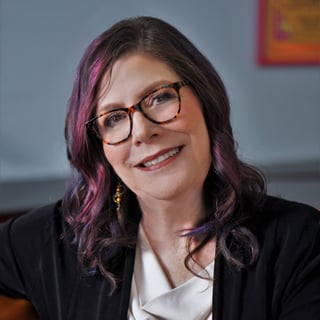
Speaker: Part one, what are we measuring? My guest today is Lisa Earle McLeod She is a writer, executive coach, and keynote speaker who has worked with clients such as Hilton, Roche, LinkedIn, Hootsuite, Volvo, and Dave & Busters.
Speaker: She is a regular contributor for the Harvard Business Review, and over two million learners have taken her LinkedIn learning courses. She has authored five books, including the global bestseller, Selling with Noble Purpose.
Speaker: Lisa and I have known each other for well over a decade. We don't speak frequently, but this conversation reminded me that when we do, we rarely stay in one lane for very long. We might begin with leadership, drift into purpose, find ourselves discussing screenwriting, systems thinking, or the stories we tell ourselves about the lives we're trying to build.
Speaker: As we prepared for this conversation, one idea kept resurfacing. Jim Collins, in his recent book, What to Make of a Life, introduces the idea of encodings, those durable capacities within us that gradually come into frame over the course of a lifetime.
Speaker: The more I thought about it, the more I realized that many of Lisa's books have really been exploring a similar question all along. Not simply how to build better organizations, but how to build lives and organizations that remain aligned with what matters most.
Speaker: What follows is the first of a two-part conversation. We begin with Lisa's work around noble purpose, leadership, and the systems that shape our behavior. But underneath all of those topics is a larger question, one that I suspect all of us wrestle with from time to time.
Speaker: What are we measuring? And perhaps more importantly, what is that costing us?
Speaker: Well, good afternoon, Lisa. are you doing? I am doing as well as a person living in an insane world could possibly be doing. Yeah, that's two of us. So we need a critical mass. We need more people doing well in the insane world so it doesn't feel so much difficult.
Speaker: but Exactly. Tell your friends, I'll tell my friends. It's good to see you, and I really am pleased that we're going to get a chance to talk about anything that we like. We've had a nice relationship, and I've admired your work in the past, so this is just an extension of all that, so I appreciate your time very much. I want to put some context to what we want to do today.
Speaker: So Lisa and have been colleagues, and our interactions have included some coaching in one of my fractional CEO roles, and then years later, an an exchange of ideas as I was prepared to launch this podcast.
Speaker: She's been consistently thoughtful and generous with her time, and I'm really pleased that she's agreed to give me more of that time today. So, Lisa, before we jump into a conversation, please bear with me for a couple of minutes. i want to relay a short story that I told another one of my podcast episodes. It was titled The River Rules.
Speaker: It involved my daughter, Nicolle guiding our family down a Whitewater River trip after taking a summer job at the Nantahala Outdoor Center in North Carolina. What made the experience memorable was not simply the rafting itself, but the fact that I was quietly horrified that she would be our guide.
Speaker: To that point in her young life, Nicolle had never presented as particularly athletic or outdoors-oriented, so despite all my outward attempts at appearing supportive, I spent much of the trip rationalizing why this seemed like a terrible idea.
Speaker: So when the time came to get in the rap, Nicolle calmly began giving us instructions on things like reading the river, weight distribution, and what to do if someone fell overboard. But instead of listening carefully, I was mostly trapped in my own head.
Speaker: overthinking the risk, second-guessing the situation, and privately convinced that if anything went wrong, I would somehow have to take control of things myself. So naturally, i was the only person who fell out on a raft that day.
Speaker: I still remember cleaning to the side of the boat in very cold water, suddenly trying to recall the one instruction I barely paid attention to at the beginning of the trip, which was, if you fall out, don't panic. grab the handle end of the oar, point it towards the boat, and we'll pull you back in.
Speaker: Meanwhile, Nicolle managed a situation with total calm while I was squuttering around trying not to drown in three feet of water. Over the years and somewhere through the fog of embarrassment was a realization that I had unconsciously frozen Nicole in an outdated frame constructed from scattered snapshots of who she used to be.
Speaker: I had mistaken familiarity for understanding. I was recently exposed to the idea of encodings in the Jim Collins book, What to Make of a Life, Its premise is that people carry durable, intrinsic capacities that gradually come into frame over the course of a life.
Speaker: It makes me think that part of leadership and part of living well is learning not only to discover our own encodings, but resisting the urge to prematurely define the encoding of others.
Speaker: So I realized that there are 10 year intervals where between each 10 years, I reinterpret the story differently. And so it's like an evolving context, you know, I get smarter a little bit, but the story never really changes. It's just my experience and context.
Speaker: And that sticks with me because I think a part of the idea of the encodings or just being open to learning is that you never start thinking differently if you haven't figured that you're still searching for ways to do things differently and try things differently. So there's a longer version of that, a lot more flowery, but if anyone's interested. But it still involves you freezing in the water because you ignored your daughter's advice. That's right. The the headline is, I fell out of the raft. That's the only thing everybody reminds me of.
Speaker: Right. So particularly my wife, because my contention was I was trying to keep her from falling out. So you can imagine how rich that was. Anyway, so Lisa, that's where I wanted to start. I think both of our respective backgrounds can find plenty of ways to speak to not only this subject, but any number of subjects. So I think I'd just like to start, if you're okay, with what you're in the middle of, what's a bit important to you. Also, please, you can talk about any of the books that you've written, all of which I've read, by the way.
Speaker: So don't we just go ahead? Yeah. So it's, I do love a story about your daughter because my daughter has been intricately involved in my business.
Speaker: And I would say over the years and you've talked about my books around purpose, I've written some other books around conflict resolution. And I think my whole life has been a quest.
Speaker: to integrate the two sides of me. The side of me that is this loving and kind person that wants to make the world a better place, that sees the possibility in the world and sees the possibility in people.
Speaker: And then this other side of me, which is commercially minded, which is kind of competitive sometimes, honestly, to a petty degree. And so as I've matured,
Speaker: I can see that my best work has been when I was able to bring those two things together. The vision for what is possible. My first book was called Forget Perfect, and i think it was a little bit of ahead of its time. I may come back to that. I wrote it in 2001. I still do own the rights to it. And it was the first thing that I spotted and felt strongly enough to write a book about and and And I'll tell you, since you told the story, I'll tell you where this first started, my my writing career, because I was a sales leader in a company.
Speaker: And then I was a sales consultant and I was running a sales training program for a pharmaceutical company. And it was a three day long program.
Speaker: And at night we would go out to dinner. You know, there's like 20, 25 people. And I did several of these programs for this company. And a lot of people that sell pharmaceuticals are women And these women were the women that looked like back in the day, there was this magazine called Working Mother Magazine. This is back in the 90s. That was a real magazine.
Speaker: And they look like the cover of that magazine, you know, baby on the hip, briefcase in hand, you know, looking corporate, doing it, doing it all. But they were all complaining.
Speaker: And they weren't complaining about other people. They were complaining about themselves. And they were saying, I'm just, they were just, the the sense was, I'm not doing it right at every level. I'm not enough. I'm not doing enough at work. I'm not doing enough in my personal life. Oh, and I got 10 pounds on me, blah, blah, blah, blah. blah And i thought, these are the women that I wanted to grow up and be.
Speaker: And I was also, if I'd looked at the outside of my life when I was 15, if I'd flash forward 20 years, I'd have gone, man, I made it. But from the inside, it felt like just not measuring up to expectations.
Speaker: And so I thought, I wonder if there's a book to help you with that. And so I went, as one did back in the day, to the bookstore. For those of you that don't know, they were these places that held a bunch of printed materials and you could peruse the self-help section.
Speaker: And not only did I not find a book to help me with it, I found a whole bunch of books to make it worse, like how to be better at this, better at that, better at that. And I thought, well, somebody should write a book about this.
Speaker: And, um, I had written at that point, next to nothing. I'd written two wildly successful holiday letters that all my friends told me they liked. So based on that, I decided, well, maybe I should write a book.
Speaker: And i was very naive. I had to learn a lot, but that was my first book, Forget Perfect. I've written many other books since. That was my only book that I wrote for women. Probably I felt a little more qualified back then to write a book for women.
Speaker: But what I came to see in the subsequent books that I wrote, I wrote The Triangle of Truth, which was a conflict resolution. I wrote Selling with Nobel I wrote Leading with Nobel
Speaker: They were all about marrying the internal dialogue that we have with some true north, some higher purpose that's bigger than ourselves that enables us to perform better in the moment and enjoy it more.
Speaker: That's the lifetime thread of my work. It reminds you me of something that I think I've mentioned to you in other conversations. that One of the things that drew me to your work is when I would read it, it resonated with me on a level, not just like, oh, she thinks how I think. It was really of, I had done a lot of reading in college. I was amateur a philosophy major for a while. i read a lot of literature.
Speaker: I realized that you were doing what I would try and do here and there on a very informal basis, was try and base my thinking in some more timeless type principles. We were trying to find a way to translate them. And I didn't know how purposeful that was. And I don't recall specifically if you said, yes, that's what I'm trying to do. Thank you. Or if you said that was a side benefit of how you particularly thought. I don't recall specifically. And maybe if you could tell me that and I'll you the question I have.
Speaker: The short answer is yes, that's what I was trying to do. The longer answer is you named it better than I could for myself. Mm-hmm. And it what I saw was when I read things from another time, another place, when I thought about the big thinking of Thomas Jefferson and John Adams, and yes, they had slaves, and yes, they were problematic and all that. They also had some really good ideas. When I look back at...
Speaker: movies and novels and things like that, there were these timeless human themes that really resonated with me, but I felt them lost. in I've written about the the places that I was, which was in the throes of working motherhood, in the throes of a country that I thought was divided back when I wrote the Triangle of Truth, naive little thing that I was, I thought we were divided back then. um when I was in the throes of coaching leaders and running big sales teams, it was how do I bring this timeless, not just human wisdom, but this sense that we're more than what's happening today.
Speaker: And there is a bigger purpose to this. How do I infuse this into the mundane? Because it's always been my challenge. And I think it's a lot of our challenges. Yeah, it's interesting I think when we get an opportunity, I have a thought about that. I know we're going evolve into it just because we tend to cover these subjects but in that way.
Speaker: But now want go back and make it admission. I said I read every one of your books. I did not read Forget Perfect, so maybe it's marketing to me because the men have the whole thing figured out. Don't worry about doing anything at home, just work.
Speaker: Right? Isn't that what we're doing? Yeah. There's... There's a male version, the female version that I was living inside at the time was the the checklist that was developed by someone who was not you.
Speaker: So now the question specifically about the book and the title is when I think about Forget Perfect, I think about it in two ways. now So I'll be curious to see how you were trying to portray it.
Speaker: And since I didn't read it, I don't know. But one way is I hear it as, listen, forget perfect. Sounds to me almost like just forget eating dessert every day if you want to lose 10 pounds. It's a very practical idea.
Speaker: It's soothing to someone to say, listen, if I could just quit being trying to be perfect, why things will improve. But then there's also, I believe, there's a fundamental underpinning around the idea of the reason you forget perfect is because it's ah it's an unreasonable thing to be trying to achieve.
Speaker: It's almost more of a philosophical reason you forget perfect. It's a good idea, but it's also the way the world works is I want to relay a quote from G.K. Chesterton. And the idea is that the real problem of the world is it seems reasonable, but it's not quite reasonable. And the whole idea is to try and navigate yeah within that unreasonableness. That's where the tension is.
Speaker: So I guess the question is, was this a practical way to say, listen, just forget perfect. You can't do it any anyway and you'll feel better or it doesn't make sense because the world just doesn't fundamentally operate that way. And I think those are two different things. They are two different things.
Speaker: And I think it was more the first one than the second one. And the reason I say that is A lot of people would say, so just don't clean your house. You know, it's talking to women. So just don't care about how you look. And it's like, no, it is develop an internal compass about what matters to you.
Speaker: And it is not about lowering your standards. It is about raising your standards for the things that matter to you. And what I found in my research for the book was when people talked about the happiest times of their life, and this later became not due to me, but a class at Harvard where they they called it the happiness class. When they talked about the happiest times in their life, they weren't absent of effort.
Speaker: So they weren't laying on a beach in Tahiti and they weren't, you know, dieted down to their goal weight. They were two things. They were when they knew.
Speaker: that what they were doing was part of something bigger than themselves, contributing to something meaningful bigger than themselves, that first part. And the second part was when they knew that their individual role mattered.
Speaker: And so in the book, I called it connection and meaning. And so what happens is a lot of times, and I'll use just one of the examples from the book, and this is pre-Pinterest, pre-Instagram.
Speaker: A woman wants to be a good mother. A woman wants to create a happy family. um Most women instinctively know that they are the emotional center of the family and that they're going to decide how the family lives. Even if you're a brain surgeon, you're still the one that decides how the family lives and sets the tones and the rhythms for the family.
Speaker: So you see this picture of a beautiful home and it looks like my family could live well in there. My family could really love, you know like look at that big table, look at that big counter, look at how light and air it is. And so you're drawn to that visually as a human being.
Speaker: And then you shortcut. You don't realize that your instinct was that would be great for my family and it wasn't materialistic and it wasn't capitalism. It was just like envisioning your family there.
Speaker: you don't realize it's your very good instincts drawing into that photo. Then what happens is you try and create the photo and the photo becomes the end game instead of the feeling that you had when you looked at it.
Speaker: And this is true in so many human endeavors. There was even an article in Harvard Business Review, ah one of my favorite ones, about is your metric undermining your business? And it was called strategy surrogation. And it's when the metric...
Speaker: like say number of customers added, which is indicative that we're doing a good job, that we have a good brand, that we're serving our customers. But instead of the metric being the measure of the thing that we wanted, the metric becomes the only thing that we wanted.
Speaker: It's called strategy surrogation. When the measure of the thing becomes the thing. 25 years ago, I saw that with Forget Perfect because I realized the measure of the thing.
Speaker: the home, the way it looked, the way the children were dressed, the way my job looks on paper, the way I look when I go to my job, the measure of the thing started to replace the thing, which was I'm prosperous, my family's happy, I feel healthy.
Speaker: I'm gonna use a word here that's not correct, but there's some things that in life are almost sinister. And what I mean by that is on the face of it, about 80% of the face of it, what you're doing seems reasonable and the right thing to do for the moment. So for example, if someone says, here's 10 different metrics you can use, and I say, I'm a smart guy, and these are the two most sub important ones.
Speaker: And then I start working at those metrics, and the metric is what you described, where that becomes the issue, I still felt like, well, i was doing some really good work there. I mean, I could used any other metrics. I'm using these. And then you're reinforcing the wrong thing.
Speaker: And I think sinister is maybe a little too rough. um In some cases, it's not too rough. One need look no further than all the world's religions to see when people wanted to enforce the rules rather than the spirit in which they were developed.
Speaker: Yeah, it never ends well. It never ends well. And that's one of the things that I saw women aided and abetted by capitalism um doing to themselves, this belief that if I can make it all look right, we'll be happy.
Speaker: And the truth is, and if you just look at a simple example, in a clean, well-organized home, you are happier than in a messy, sloppy, disorganized. Like that there is a truth in that, but we get so obsessed with the metric of the thing and the look of the thing.
Speaker: And it's interesting to me anyhow, because I saw the same problem showing up in corporate. So probably my two best selling books, my most popular books were that first one I wrote, Forget Perfect, which did really well.
Speaker: And then of the business books I've written, Selling with Noble Purpose was the most popular. And I think it's for the same reason is that I saw we want to have a good company. we want customers to love our stuff. We want to grow. but then the metric sales growth,
Speaker: took the place of all that stuff, and the company winds up being incredibly transactional and not creating real value for customers. And it just strips the whole organization of the meaning and the purpose.
Speaker: And they ultimately suffer. And so I think it's interesting because the two books that sold the best and and not just that I'm measuring the sales numbers, but the ones that people write me emails about that come back and talk to me that say this one meant a lot to me, I think are the two books where I could very clearly codify what our hearts want versus what we end up measuring and adhering to on a daily basis and why and what that disconnect is costing us. So you can tell me if I'm making too much of a stretch on this, but if you had said to me, Jess, I'm gonna tell you my two bestselling books, and since I'm not a woman and I didn't read the first book, I wanna say it was selling with noble purpose and leading with noble purpose. um
Speaker: And then you've just said one of those was more popular than the other, which was the selling. Is it reasonable to think that everything you outline in the book is not just specifically about selling, but about values that the organization is trying to espouse.
Speaker: And when you're selling, that's the best opportunity. You're either selling internally or selling externally, right? That's the biggest opportunity to organize into a culture. And that book probably took care of a lot of that for you.
Speaker: It did, and I wrote leading after that. And um leading did well, don't get me wrong. Selling was more differentiated because there have been other books written about leadership and character and values and things like that in leadership. But I think the juxtaposition that sales could be something more than a money grab, that's what really took off.
Speaker: And it also spoke to the heart of the research for that book revealed that the top sales performers are actually driven more by a sense of purpose than money.
Speaker: And again, they're like me in that the money matters. I mean, I didn't become a social worker now, did I? you know So to think that humans have only one motivation is very naive. But a lot of top performers read that book and went, this is me.
Speaker: This is me. I've been trying to tell this to people. This is who I am. And this is this explains some things I haven't even given voice to myself. And so because then top performers read it and it spoke to them, they took it back to their bosses. A lot of the ways that book got traction was some top performer reading it and taking it back to the VP of sales and said, do you asked me why I'm outperforming everybody, this is it.
Speaker: And then the VP sales reads it and goes, okay, but we're getting in for everybody and getting to her in here. That literally is how I got. A lot of very good business and by good business, I mean people that were great to work with that really believed that really executed well, probably the biggest client I've ever had was a global implementation from Hilton.
Speaker: And it was a guy and he was the head of sales for Hilton. Someone mentioned I was on a podcast and a week later, this guy was on Frank Passanante and the host said, well, you know, Lisa McLeod, because what you're talking about here is selling with noble purpose. When Frank was talking about.
Speaker: how he wanted Hilton to sell. And he said, I've never heard of her. And all live on the podcast, the host, this guy Fred Diamond goes, well, you need to read her book selling on the whole purpose. And then like literally that is how I ended up getting this three within three years Every single employee of Hilton was in with Hilton's noble purpose. If you look back in aggregate, is there something about the experience of those books and then the way they were received and then how you think about things now?
Speaker: Like, I don't mean, is there a third book out there? I guess what I mean is if you want to write a third book, is it largely going to be anchored in a lot of the same principles that but that anchors those books because they're still working for you? Or is there a different point of view you have on that? Those are still anchors for me.
Speaker: Having said that, I said what I needed to say about that. um I don't need to write another book about that. I mean, could I make them 5% better with new examples? Yes, but why do I want to bother with that?
Speaker: um What i am starting to do now is one thing that I am realizing in my work that some people might be surprised at is how much my life, my thinking, my books were infused by fiction, by fiction that I read around people's interior lives.
Speaker: And so my next writing is going to be fiction. I had a conversation with one of my guests about the idea that a lot of business people get wrapped up and I'm one of them. I'm reading a lot of business books and thinking it's almost a sin to read anything different.
Speaker: yeah And he said that he reserves 10 or 20% of his time for reading fiction. And that's the angle I was starting to take. I thought, oh, well, the reason you most like that is because when you read fiction, you tend to associate more with more a liberal type of education, perhaps because they have a course on read fiction.
Speaker: But what he finally said to me is it's actually the nuance that you can create within that, which isn't constrained by some methodology or some maxims that you can stick to.
Speaker: and And I had never thought about that way. And so is that something that you're actually working on now or you're thinking? am, I'm working on a fiction piece. And what I, one of things I debated about this and one of the things I did was I went back and reread some of my favorite novels and I'm glad that this is a podcast and not a TV interview because it's going to take a minute to explain here and I don't want to get myself in trouble with this. Okay. so a novel that had a profound impact on my life was Gone with the Wind and I read it when I was nine years old and
Speaker: It's a big lift for a nine-year-old to complete the better part of a year. And my mother always thought I liked it because the main character, it's an American novel about an antebellum young woman and she's beautiful and she has all these you know these suitors and she lives in this fancy house and the Civil War columns, blah, blah, blah, blah.
Speaker: And it's super problematic because it romanticizes the old South. and the slaves and all of that. So it's problematic from that way. But I recently reread it and and it is beautifully written.
Speaker: But there were two things in the reread that really got me. One was Pat Conroy wrote the introduction and he said his mother would not have been his mother without that book.
Speaker: And Pat Conroy is older than me, so his mother probably read the book when it first came out in like 1938 or something. And he said that Margaret Mitchell said she wanted to write a book about people with gumption.
Speaker: What old timey word. But I realized, so I said there were two things, I realized reading that book, and I had just graduated from, you know, see Dick run.
Speaker: Jane watches Dickron, you know. Reading that book, I got exposure to an ambitious woman's internal dialogue, and that changed my entire life.
Speaker: My entire life, reading a smart, ambitious woman's inner dialogue. And I realized there was lots of stuff written about women that were pretty. There was other stuff written about the old South romanticizing it in these stupid ways, but there was only one book.
Speaker: that's had a steely-eyed, ambitious survivor woman's internal dialogue. And so I'm now back where I talk about that book and I'm not embarrassed. But then the other thing is, so number one, it introduces you to the internal world of someone that can be really important to you. And the other thing I realized when on the reread,
Speaker: There are several scenes in the book and they introduce it early on as one of her sort of signatures. The author doesn't say, gonna tell your signature move, but you read it the first time and something really bad has happened.
Speaker: And this person, the the guy she thinks gonna help her is not gonna help her. And she realizes I'm my own and she shrugs her shoulders. and straightens her shoulders and marches forward. And he watches her from behind and he sees her just like, I'm doing this thing. And I did not realize until the reread that I embodied that physical behavior my whole life to the point, I didn't even know I'd gotten it from that book, to the point where I told my children,
Speaker: trained my daughters. When something bad happens, you take it in, you settle in, and then you just square your shoulders and you walk right into it. You just square your shoulders and you decide how you're gonna respond.
Speaker: And I didn't even know that I'd gotten that from that book when I was nine. And it really, i when I read that gesture in the book, that's, I was on the fence, am I going to try and write fiction? I'm still using the word try because we'll see how it's turning out. But when I read that, I thought fiction matters.
Speaker: It matters a lot to people. And that' that embodiment of her, helped me more than been all the how to be a woman of confidence classes.
Speaker: It did something for me. it get It comes into us in a different way. You know, kind of put my two cents on how to think about some of these works like Gone the Wind or other books that are controversial. But how about other people that are controversial? How about anything that I'm sure is multifaceted, right? Martin Luther King, not the best husband. That's right. That's right. So I'm thinking- What are you going to do?
Speaker: If you and I could say to each other, Martin Luther King, not to his husband, that doesn't denigrate him at all. And if you can pull out the nuance and realize the effects on you from the book, there's nothing controversial about that. If there's nothing controversial there, then what's a problem? and the problem, I think, is that, and this is works on both sides, people who attack something and people who defend something.
Speaker: They take the, I'm going to call it the lazy person's view of saying, these are the three things that I'm going to defend about the book that are, they might be dramatic, they might not, about that book or any book, or this individual or any individual.
Speaker: And now what you're really doing is you're talking about half a percent of a human, a half percent of a book, a half percent of a difficult situation. And now you make a whole life just debating the smallest thing you can debate on a substantive thing.
Speaker: And it usually is a small piece of a substantive thing. Now, would I have wanted to be married to Martin Luther King Jr.? Probably not. But if I had the choice, be married to this person and he's going to do what he does for the world and your life's going to be kind of sucky from a wife perspective, maybe I would do it anyway. You know, I don't know. But when you talk about the small, I don't want to imply that cheating on your wife is a small thing and undermining women as a woman, you know, and just using them is not a small thing.
Speaker: But that is not having the global ripple effect. that his work did. And so I look at something like Gone with the Wind and what I'm taking from it is the meaning, the deep meaning of the characters and the one character in particular, Scarlett O'Hara. What I'm not taking from it is the glorification of the Old South because I'm smart enough to read that and go, no.
Speaker: I think that if the black people had written this, they might've written this little different, honey. They did not, this was not their point of view. Well, that's why different people write different books, right? Right. The sort of back to fiction, I also have tried my hand at television script writing.
Speaker: And I've written a couple of TV scripts because that was also something that influenced me profoundly. Again, between Scarlett O'Hara and Mary Tyler Moore, I had a career plan. Man, those those two fictional people catapulted me.
Speaker: into a career. And it's not in insane that they did because who else was going to? I mean, I didn't, you know, my mother was a teacher, a fine and noble profession. I didn't know any women that did anything beyond that.
Speaker: I mean, it had to be fiction, because it didn't exist. You know, the idea of trying to look at something with more of an abundance thinking or a wholeness thinking, which allows you to take in multiple things at one time, the simplest expression that I can think of of that is is my circumstance, right? So I moved out to Atlanta. well 30 years ago, I grew up in Los Angeles, right? You know, I watched a lot of the same programs that you did. And some of the programs that were trying to tell me how to think about the, the Northeast, the Northwest and the South.
Speaker: And, and all the people I talked to who are really highly provincial about, well, why would anyone want to leave Los Angeles? And I'm saying, well, I don't know, but I want to go. I've been on business and um I enjoyed it and it's time for a change and I'm going to make a move and I made a move.
Speaker: And it's interesting is, you get the regular homesickness stuff for a couple of years, but I've never looked back. I love. living here. I love it. I love the weather. or I love the talking about the humidity.
Speaker: i love the beauty of it. I love it all. And I'm just not in the mood to have someone point out what somebody did 200 years ago. I'm not saying it's not important. What I'm saying is you can love something and accept that they you don't get to separate the things you want. its Yeah, it's interesting. Years ago, i was a big follower of Miriam Williamson when she was early in her day. And she later ran for president and um a lot of people were introduced to her in that way.
Speaker: And I think it was a bit of a surprise to her because she was used to people coming to her lectures, kind of knowing something about her. And she talks about how there's only, she didn't make this up, but she talks about it very eloquently. There's only two emotions, love and fear, and all our other emotions radiate out off of that. And a lot of people have said that she's one of the ones that I like the way she talks about it. and she was talking about years ago, she was leading this group that was going to go to the Jefferson Memorial and one of the young women, African-American woman, didn't want to go because, you know, we know that legacy of Thomas Jefferson, the young slaves and all that. And Marianne said, well, we're going to pray on this. And the woman did that. And she came back to her the next day and said, he made a mistake.
Speaker: Oh, he made a mistake. He was wrong about that. like in this calm way. And we're in a spot now where I think it's emblematic of a lot of what I see in business where a leader, and they don't come to this completely on their own, this very, this stock market that rewards not actual performance, but perceived perceptions. you know Some of these companies are not as valuable as we think they are, but the perception is. And so we get leaders that are afraid to say, oh, we got that wrong last year because the stock price will drop and it affects real people's lives. But I think we ah have
Speaker: in this TikTok polarized place that we're in to think that it doesn't have a ripple effect on the way we lead companies and the way we manage our personal relationships is very naive because we're in a situation where we are looking to create a character of other people and not a character in a good way, like a good fiction writer would do with lots of nuance, more like a caricature of people.
Speaker: And we can't see the multiple motivations and nuances that people have. And it harms us in a variety of ways. Before I leave the subject of the books, and I appreciate you articulating the intentions behind those things. and while I enjoyed all the books, as I said, except the one I didn't read. I didn't have a chance to enjoy that. It's out of print now. For now, I may bring it back. Before I set up my next question here, anything else about any of the books that you wrote? Anything else that you want to mention?
Speaker: One of the things that I really hope that I did with the purpose books, with the noble purpose books, I wrote the first one about 12 years ago. So I was not the first person to talk about purpose in business. The first people I ever heard talk about it were Jim Collins in Good to Great and um Roy Spence, a director.
Speaker: genius ad guy wrote a book, It's Not What You Sell, It's What You Stand For. So they were certainly ahead of me. But I like to think that I was one of the people that made that more common language in business and contributed to the shared understanding that business has to be about something more than just money.
Speaker: and And there's a lot of misconceptions about purpose. I believe the purpose of a business, I take Peter Drucker's definition, the purpose of a business is to improve life for customers.
Speaker: That's the intent. Money is the trailing indicator. Do it right, do it well, you'll get paid. But I like to think that I'm one of the people that contributed in a meaningful way to that larger conversation. I think that's very likely the case, but now you've given me a nice segue to the next iteration of what I want to try to do here. You mentioned two things there that made it easy for me. It's almost like I paid you to do what you just said. One of them mentioned Jim Collins and the other thing is you mentioned money.
Speaker: And to look at those separately. But the question want to pose to you within the the encoding stuff that we've mentioned a little bit at the beginning of this, you're doing screenwriting. And I've known this for a little while that you've been doing this. And I came thinking, I'm not surprised.
Speaker: And then I'm thinking, well, I kind of am surprised. Not because I don't think you know how to do screenwriting. But now I was trying to draw the connection between... why screenwriting versus something else? Maybe the screenwriting is just an extension of the book writing, if it's a different way to get your message out. And I'm wondering, in the context of encodings, is this just another expression of kind of the same thing? you see it that way?
Speaker: Up to this point, Lisa has been helping us understand what she spent her career trying to contribute. I elected to divide this conversation into two parts because it naturally became two different conversations.
Speaker: In this first half, Lisa challenged us to think differently about purpose, about the metrics we choose, and about the subtle ways organizations and perhaps all of us learn to measure the wrong things.
Speaker: One idea that stayed with me, it's that money, recognition, and performance are often important, but they're trailing indicators. They tell us something about what has happened. They don't necessarily tell us whether we're pursuing what matters most.
Speaker: But another question began to emerge. What happens after you've found your voice? What happens when the work you've spent years doing asks us to find other ways of expressing it?
Speaker: That's where we'll begin next time. The Leaders Community Podcast was produced by Acuity Business Consulting. Acuity demystifies the challenge of transforming talent and resources into exceptional and sustainable organizational performance by surfacing actionable clarity in the areas of strategic design, financial management, operational excellence, and leadership development.
Speaker: You can catch a new episode every couple of weeks wherever you enjoy your favorite podcasts. Thank you for your thoughtful engagement. And until next time, I am Jess Villegas, and you have been listening to the Leaders Commute podcast.