Transcript
Speaker: Welcome the Leaders Commute podcast. I'm Jess Villegas. This podcast considers how the experiences that keep resurfacing over the commute of our lives inform our worldview for how to lead others and, more importantly, how we lead ourselves.
Speaker: Its mission is to assist you to transform those experiences from passive, compartmentalized episodes into leveraged connections for better thinking and outcomes. Today's episode is titled, Open Water, Inner Ground, Identity Beyond Achievement.
Speaker: Sometimes the most dangerous disruptions in life are the ones nobody else can see. My guest today, Steve Moby-Leach, knows something about disruption. After the collapse of his business, marriage, health, and identity, he began rebuilding his life, not just externally, but internally.
Speaker: What followed eventually led him into the world of ultra-distance open water swimming and the Ocean 7 Challenge. But beneath those achievements is a deeper story about surrender, purpose, discipline, and learning how to build a life on something more durable than performance.
Speaker: This conversation explores what happens when success stops being enough and what it takes to become aligned again after life breaks apart.
Speaker: Well, hi, Steve. How are you doing today? and absolutely fantastic. Thanks, Jess. Really fantastic to have you here. I'm excited to have this conversation with you. And think the audience is really going to be interested in all the things that you have to talk about.
Speaker: I just want to set some context for our listeners. Steve reached out to me after listening to one of my podcasts, The Seven Year Glitch. It was about a long, unexpected caregiving chapter in my home, which involved seven years of living alongside my mother-in-law's dementia.
Speaker: What looked for a long time like a disruption and a postponement of the life that my wife and I thought we'd be living slowly revealed itself as something else entirely. It was a reframing of purpose and a shift in awareness and a reminder that meaning emerges over time.
Speaker: Steve was gracious enough to give me some other perspectives on these types of challenges, and I'm looking forward to exploring some of those today. So Steve, as I mentioned in our previous conversations, the mission of the podcast is to create conversations that are thoughtful, useful, and grounded in practical insights that listeners can use for navigating their challenges. So navigating is a word I love, and i imagine just important to everything that you're doing.
Speaker: I try to ensure this mission by speaking with guests about their lived experience, turning points, change, tension, and uncertainty. And having said that, I'll refer back to the word navigating within the context of your book, Against the Current, and in your production Beyond the Shoreline, The Channel of the Bones, and in some of your other varied works.
Speaker: One of the prospects for discussion you raised was the important concept of why high achievers are often the most fragile. and how to build true resilience from inside out. But first, please spend some time recounting your journey, which not only focuses on your tackling of the Ocean 7 Marathon Swimming Challenge, but on the circumstances that brought you to even a place of attempting it.
Speaker: So again, looking forward to it, Steve. Yeah, thank you so much. So how did I get to Ocean 7? First of all, let me just say, what is Ocean 7, right? So it's seven channel swims worldwide that were designed by Steven Munitones back in 2007. They include the most popular one, which is the Mount Everest of swimming, the English Channel.
Speaker: But there's other ones that are unheard of. how like the Sigurur Strait in Japan from northern Japan to Hokkaido, which is incredible swim. There's ah the Cook Strait in New Zealand from North Island, South Island.
Speaker: There's the North Channel from Northern Ireland to Scotland, which is my home country, Scotland. Then we also have what I did 15 days ago. I did the Strait of Gibraltar from Spain to Morocco, Tarifa, Spain to Morocco. And then the very first one I did, Molokai or the Kawahi Channel in Hawaii, going from Molokai 28 miles to Oahu. And the last one, which I'm going to be doing July 19th, is Catalina Island, California to LA, to the kind San Pedro, somewhere in there.
Speaker: Seal Beach, I don't know. I'm not actually sure where we're going to land, but we'll land somewhere around there. That's hole seven. And I would like to say when I got into channel swimming, I knew these existed, but I didn't. i i got into a hospitality career. um And I was really pushing the workload limits.
Speaker: but also pushing the boundaries of a very bohemian kind of lifestyle. There's just alcohol everywhere in the hospitality industry, drugs are everywhere. There's some people who that handle it very well and pull away and treat it like a business. And then there's some people who just treat it like a lifestyle, not treat like a lifestyle.
Speaker: So for years and years, working in kitchens like all day, every day, working in restaurants, getting very little time off, I was basically just a ticking time bomb to ground zero, if you will.
Speaker: But I opened up a restaurant in 2008. A doctor, so I used to cook for out in Vail, had come to the upstate area and very kindly got some investors together. And we opened up a restaurant in 2008. And my identity was all wrapped up.
Speaker: And I was a chef. our was getting to cook for celebrities. I was getting flowing places. I was making good money for the restaurant industry. And I was leading the high life, like kind of a little bit untouchable.
Speaker: Then right after we opened the restaurant, does everybody remember what happened in 2008? Yeah. The economy crashed. And i it it was funny because I remember like Oprah coming on TV and telling everyone, hey, we just need to kind of buckle down and I'll eat at home and not go out to eat so we can save money in this. And I'm thinking, I'm trying to blame Oprah for my restaurant because I'm like, well, you've got a private chef. Who cares if you go out? You know, a like, Oprah, you've got money. You should be going out and supporting your restaurants. But that was where I was in my stage of life.
Speaker: When everything was stripped away, um I was a very insecure person who blamed others and didn't take responsibility, even though looked like I was a high achiever in the restaurant industry.
Speaker: So in 2010, we had shuttered the restaurant. I had found myself not in uncommon grounds with a lot of business owners that I coach and CEOs that, you know, gone through divorce, got dependency issues, addiction issues, physically not doing well, and spiritually have no idea why you're on earth. And i just found myself at the rock bottom and i went, okay, Lord.
Speaker: I can't do this anymore. ah yeah I've got to do something different. And, you know I heard the words, trust me. So that, I would like to say, started the progression into a different life.
Speaker: But when you've got 20 years chasing you in a certain direction, and you make a turnaround, and you make a POC, a point of critical decision to turn a life around, when you're spiritually, physically, relationally, and financially bankrupt, you're just like,
Speaker: okay, where'd I go from here? Yeah, it was a really interesting time. So 2010, 11, really started leaning into faith, understanding who I was, why I was, what I was.
Speaker: And then started working on physical, you know, 20 years of not taking care of myself and I hadn't swum. since 1992 at Clemson.
Speaker: So I started getting fit, working out, going for walks. I was up in Michigan and I would get in the lake and would kind of panel around, but I wouldn't really swim. But I started working on being healthy. You know, what am I eating? What am I doing?
Speaker: um And then I realized, hey, I'm going to need to work in relationships. I had a really great, I had a celebrity that cooked for and he hired me to consult on his casino for a little bit. And his best friend had said, hey, Steve, if you'll do anything for anyone that will help you And I was like, yeah, that's a good thing. and he goes, no, you're neglecting all the people that can't do anything for you.
Speaker: She'd do things for everyone. I was like, huh. it was a foreign concept in 2003 when he told me that. But in 2012, 2013, a decade later, I'm going, ah, you know, because when you get stripped of your identity,
Speaker: If your identity is in your job, in your career, your finances, in your status, if all that gets taken away, who are you at the core? That was where I was like, oh, my core is not good.
Speaker: So I started working on relationships, although I wasn't married at that point. what What does it mean to be a husband? You know, what does that look like to be a good husband? What does it mean to be a good father?
Speaker: What does it mean to be a good friend? Like to actually good to care for people as a friend. What does it mean to be a good employee or or peer and and ah as a professional? And I really kind of started studying that. And that was all, wow. It was...
Speaker: ended up running a couple food and beverage for a couple of hotels up Michigan with a business owner who ran them, who is actually was just texting with him yesterday. He allowed me the space to see how you can treat the hospitality industry as a business.
Speaker: and be a business person in it and have a great life without the extra. know And I'll always thank him for that because I was able to go out of the restaurant business on a high, like a not a high on drugs, on a high note where I have fond memories of that that time.
Speaker: What followed wasn't a sudden transformation. It was a gradual reconstruction. Steve began rebuilding his life in layers, physically through discipline and health, relationally by learning how to care for others without making himself the focal point, and professionally by stepping into environments that required structure, consistency, and service, not identity.
Speaker: From the outside, it looked like a life rebuilt. It was structured and productive and even meaningful. But as we often talk about on this podcast, systems can function long before they're fully aligned. And in Steve's case, something underneath still hadn't fully surfaced.
Speaker: Fast forward to 2022, and two of my biggest cheerleaders in life, two my biggest confidence in life, my non-biological sister, she passed the nail last event. and at the beginning of April 2022, and then my dad passed on Father's Day.
Speaker: And he sent me into a tailspin mentally. I really, really struggled. The grief reminded me of my last couple years of addiction.
Speaker: Like I was just, I was scrambled in my brain. But what was scarier was I had built myself on routines and habits and disciplines. So I was going through all the motions, doing everything. And for three three months, four months, and I turned my wife, my bride, Kelly, and I said, hey, I am been really struggling. I feel like I'm dark and empty on the inside.
Speaker: And she goes, and this is the scariest thing she's ever said to me. She goes, I cannot tell. And I'm not even trying to fake it, but I was so disciplined in routines and achieving and doing everything.
Speaker: Um, cause I'm also swimming at this point. Again, I'm training. I'm, we've got six kids, blended family that we're working with, but you know, a mentoring man in addiction recovery, you know, like I'm doing a lot of things and she couldn't tell.
Speaker: So that was like, that was a big wake up for me. And that got me back into, um, some biblical-based therapy counseling just to kind of work through what what was going on, which was great.
Speaker: That's a different kind of disruption, and in many ways, a more quietly dangerous one, because when what's happening inside us isn't visible to others, no signal goes out. And without that signal, even the people who care don't know how to reach in, leaving us to navigate it largely on our own.
Speaker: What followed wasn't just a continuation of rebuilding. It was a period of searching. Steve moved through different environments, each one adding structure, discipline, and perspective, but more importantly, each one creating space to ask a deeper question, what is all this actually for?
Speaker: But ended up leaving healthcare industry and getting its real estate investment for a few years. we bought and sold, I think, 27 homes, rehabbed them, flipped them. We held some for rentals, then sold them. But really, that was kind of a stepping stone for me, finding my purpose, which was it led me to taking one of the rentals.
Speaker: and making that into a home where three men could move in after going through biblical rehab with overcomers, Neckle Hill here in Greenville, South Carolina. And we furnished the home. They have everything we need. It's a set bill every week.
Speaker: So the power bill goes up. They don't feel it. It goes down. They don't feel it, but it's one set bill. And that way they can budget. But it gives them a safe place, their own room. It's not a halfway house. You've got to share a bedroom and anything like that.
Speaker: They have their own room. They can stay as long as they want. But I mentor them every week. So we spend a couple hours every week with mentorship. And the thing that we worked on the most was relationships.
Speaker: authentic relationships. i thought I thought it would be like completely just spiritual and physical all the time. i was like, no, there's so many things that you've got to address in life that work. And when you move in your past from always trying to take care of your needs to now you're living a different life, trying to take care of other people's needs, there's a cognitive change that needs to happen in the thought process. So in summer 2021,
Speaker: I went out and I was going to swim across Lake Michigan, but my boat fell through because of COVID. So we grabbed a kayak and I swam up and down the coast, like 28 miles. No formal training for this, no anything. I'd been building up over a few years, but it was really fun day. It was filled with just crazy things that went wrong.
Speaker: but we realized that that was eight miles longer than the English Channel. So i'm like, hey, I'm going go sign up for the English Channel. Two months before that, I did a 21-mile swim in Lake Huey here in South Carolina and did it from top to bottom and did a raise money for Cancer Awareness for Swim Across America.
Speaker: And I just remember thinking on these swims, I was like, hey, if I can raise money for people I'm really good at swimming a long distance. And then it would kind of make this worth it where it's not just about swimming.
Speaker: Because if it's just about swimming, I don't really want to do it. But I love swimming. So if I can do it and raise money to help other people, Then it becomes worth it. We raised a whole bunch of money for Swim Across America. And like nobody ever knew the money was coming from me to help them.
Speaker: That's great. That's perfect. you know i I don't need the recognition. So I really enjoyed that aspect of it. um But when I signed up for the English Channel, it was a two and a half year waiting list. And I contacted my boat captain in Hawaii and said, hey, Kel, we're going to go swim the Kauai Channel next year while we're waiting on the English Channel. So 2023, April,
Speaker: to that That's when I started finding out there's like seven of these swims. I just went down the rabbit hole and I was like, hey, this is really cool. Maybe we should try this. And it originally started off as an idea where we would do seven swims in seven months, trying to raise $7 million dollars for a Miracle Hill for transitional housing or foster families to get counseling.
Speaker: There's a real problem with after transitional housing, men coming back through addiction because they don't have a safe place to go or they're living by themselves or they don't have ah the right community around them. And so that kind fostered idea, which was what about long-term housing? There's a home where they can stay as long as they want, as long as they're clean.
Speaker: Cause I started thinking, how can we reduce these guys nervous systems to not always being in survival mode? So we did the first couple of swims raising money for Miracle Hill for actually foster families to get counseling and it' started to fund and people matched. and And that was great. At the same point, my dad's um right hand man, who's now running my dad's ministry.
Speaker: We had done a movie showing because we did a documentary on the Hawaii swim, which is on Amazon. um And we did a movie showing in Scotland. And he just said, hey, what you're doing with your ministry home, you need to get a board put together. You need to really run with this.
Speaker: This is your purpose. I can see it. And that was confirmation for Callie and I, because we had been talking about it and praying about it. You kind of feel like Alice in Wonderland a little bit. One door, at least another door, at least a downward spiral, another door. think for me, it was like I was finding a new path that was like, oh, I can help someone here. And it got me closer and closer to my purpose. I was going to mention, Steve, just listen to your story. it yeah was trying to listen for...
Speaker: some inflection points, right? And it's easy for a guy like me to be on the outside and say, oh, that seems like an inflection point. So I'm probably get this wrong, maybe in your mind, but if you don't mind, if I just maybe communicate a couple those. Yeah, absolutely. It seemed like there was a couple of spots where you realized that you became more empathic to individuals who were struggling because once you started struggling, you realized, oh, other people also have challenges. And that felt like one of the first inflection points. Does that sound accurate?
Speaker: Yeah, that's pretty good. But I wouldn't say I was empathetic. I was aware. I was constantly focused on myself. So my wife is super empathetic. She cares for people. Me, I have to do the opposite of what I'm actually thinking.
Speaker: And that was the change for me. It was like... I was constantly lay out for Steve. ah steve could get how could Steve could make it work. This was more a shift. I wouldn't say my empathy grew.
Speaker: This way of living did not work for me because this is where ended up spiritually, physically, racially, and financially bankrupt. Then what if I do the opposite of that?
Speaker: and go the other way. and and And what you find is it's just way more fulfilling, right? Well, let me go back to the word empathy. It's not that I don't care about individuals, but I do find myself thinking not so deeply about any individual person, but generally sort of mankind and the people around you that we have to coexist with. And so maybe it's more of a worldview of the greater good versus identifying one individual. Again, that's just my take on it. But the other inflection I think I caught was when you started describing the assistance of gentlemen who needed a place to live and someone to counsel them and they helped them and maybe see world a little differently.
Speaker: And I think that's a whole nother shift in mindset, right? We can get to that point. Would you say that when that happened, the genesis was still in doing the opposite of what you wanted to do? Or did you find that that was truly something that helped you get to a better place personally? was very fortunate. I landed in a great place with great support systems, okay? Because I had been helping out in transitional housing, doing men's studies, things like that.
Speaker: And then hearing where these guys are going and what they've got to do and they can't get the background checks or the deposits together or whatever it may be. I think the cord was safe. How do we help men get safe places to live? I think that was my first instinct.
Speaker: That's how I wanted to help them. Let's get you safe. This this is how much you're going to pay. For anybody listening, don't think that we did it for money because the first year we lost $7,000 on the home, but we learned a few things. And that's why we started the nonprofit to help subsidize.
Speaker: the man Well, i think the saying there is no margin, no mission. you you can be passionate about something. You got to have a way to finance it, even if you're not trying to get a mission. That's right. So now that you said mission, that was something that became really strong in my heart was like, my mess is my mission.
Speaker: So what I had gone through, and now I'm talking to other guys who have gone through it. So I never went through rehab or anything like that. I was very blessed, Lord bless me not, that I didn't go through that. So my path was slightly different, but I had this real drive to know that I couldn't save anybody, but I could at least help them with a fighting chance, you know? but The other thing I just took away from your story, and I wanted to get this in front of you so you can comment on it. or I'm stealing some of your words in order to say back to you, but when you would say, I started doing the following things, you know i went for some slams, I started paddling around the lake, I started walking,
Speaker: That is very different than a strategy. It almost seems like you may have set out to do this, but I don't think you said, well, I've got to walk, I'm going to this, I'm going to do these 15 things. And that's a strategy. That's what a business does.
Speaker: But that's different than saying, I need to head north. North maybe starts out with me getting out and walking every day. And then it also starts out by getting a three-mile swim in before I do the five-mile swim. And there isn't a time frame on it. There isn't a limit. It's just you start with the habits that work, and then you get a compounding effect of building on top of that. And I've seen personal growth, nothing dramatic, but you start doing something in the right direction. Typically, those involve several things.
Speaker: And what they all have in common is they are just exercising a personal integrity and personal discipline, and I think you've used those words quite often in your book and in your other storytelling that you've done. Does that sound right?
Speaker: oh Yeah, that is right. I was looking for a healthy lifestyle. I ended up being in the lake, walking, surfing, weights with bodybuilders. So, you know, they're really into it. And I'm like, well I'm not going to be a bodybuilder, but I'll lift with them. We're not lift properly. I do this in coaching. I talk about the baby to toddler approach, okay?
Speaker: And a baby does not come out and start walking. Baby learns to get some tummy time. Then baby gets some trash rolling on his back. Then a baby learns how to sit up.
Speaker: Then he learns how to pull his or herself up. Then kind of walks around like a literal orangutan for a little bit with arms up in there. Falls over, gets back up again. But it's this process of like taking small micro decisions and habits and just like I said, compounding. So I wasn't trying to lose weight.
Speaker: I wasn't trying to be a certain number on the scale. I was trying to live a fit and healthy lifestyle. So whatever fit in the box for that, you know, okay, I get enough sleep.
Speaker: I go, just I have a bedtime. You know, for 20 years, I went to bed at like four in the morning. So now I'm going to bed at nine o'clock at night. I'm making sure I'm trying to get enough sleep. I'm eating right. I'm drinking water.
Speaker: It was that. it was exactly what he said. It was compounding effect. When I started swimming, started with a 2.4 mile swim, then a five mile swim, then a 12 mile swim, and the 12 jumped to 28. So that was quite a jump. But it was a compound effect. It was like, man, I really enjoy just being with myself and being in my thoughts. And I love that peace and quiet. But I think along the way, the one thing I didn't touch on enough was like, I had an incredible accountability partner.
Speaker: And i had a credible mentor and I had incredible support systems. People who believed in me, who gave me incredible nuggets of like, hey, don't speak about your change. Let your actions speak about your change. So speak people will speak about your change for you.
Speaker: Things like that. Or like just being able to be still, sit out in the woods by myself in my own thoughts and really understand who I am at the core. And I think that that created this like over the years, the self-leadership model that I work on, which is you cannot lead others until you're leading yourself. And you cannot lead yourself until you know who you are.
Speaker: You've said a couple times already, unfortunately, you were to have the right support system, which of course is is critical. And there's a partnership there, right? I mean, you have a support system, but they don't just show up just for no reason. They show up because you've given them the reason to believe. You may not be at your best, but you know you want to be your best. And it's people around that, I think, get that sense and they want to help you.
Speaker: That's right. probably to be your best And then and you in turn do the same same thing for others. So think it's ah it's a partnership as opposed to just waiting. I think this is the other side of, this is my word, victimhood. When you were talking about wanting to blame someone else for the loss of your restaurant, the other side of that is waiting for someone else to save you.
Speaker: I mean, these are all, it's waiting for something journal to you to come to your rescue and you need that. But what you need, first of all, is some personal resilience. And I know you talked about resilience to get to a point where people then will trust their gift to give you some of that time. And I think that's just another...
Speaker: version of waiting for something to get better or worse without taking any personal responsibility for it, I think. That's right. That's right. When your support is there for you and you are accountable to them, you have to put things in place.
Speaker: So like one thing for me, was like, I would travel down from Michigan to South Carolina, i to see my kids, but I would maybe stop to on the way down so you know if i was getting off work late or whatever but everybody had my phone number everybody knew to tell the room number everything like i mean my my network i was checking in all the time so that i made sure they didn't have to worry i'm thinking of them meanwhile they're like well i'm glad he's being accountable because he's showing me the steps that he's doing That's the great part about coaching and leadership is like when you can get your team and your culture and your people to handle their own accountability because they believe so much in where you're going, that's where things get really exciting. You're not having to drive them.
Speaker: know Nobody was having to drive me. I had got to the point where i was like, okay, i I really want a different life. Well, if someone else is driving you, it's it's somewhat coercive, right? And then it only lasts as long as that person's there. And then when they go away, the the drive goes away with them if you don't generate internally. So Steve, if you don't mind, I'd like to move back to one of the questions that was raised in the beginning. And it had to do with why high achievers are often the most fragile and how to build true resilience from the inside out.
Speaker: But maybe to frame that a little bit, I wanted to tell you about a couple of things that in the past had stuck in my mind. And I don't know if this connects with what you're going to talk about, but maybe let me just throw it out. um My daughter's going to go to the Kentucky Derby this so weekend, right? and So she's looking forward to that. But I might say, hey, i have a good time. But what I really want to say is, you know, all of the regimens that these forces go through to get highly specialized and as fast as they can, as lean as they can, and that that very skill that helps them push and be that high achiever is also the thing that becomes a downfall because you're so finely tuned.
Speaker: to one thing that they don't have a resilience to do anything else. And so then when that one thing they're good at fails, doesn't work well. And then a parallel story would be early on in some of the old time cultures, part of their social network was to go around and have boat races on weekends. And anybody that hadd had a boat or had anything that could float in the water, and he's just gotten it and they just raised and they had fun and picnics and you know family and that's what it was.
Speaker: And then someone got the great idea that their boat would be faster if they could streamline it this way versus that way. And then pretty soon people thought, well, maybe I shouldn't be using my tow boat to race. I should go buy me or whatever.
Speaker: And then pretty soon there's an intense effort to streamline that. And now the boat doesn't help you fish. It doesn't help you relax. It just has to go fast. And if it doesn't go fast, it's failed.
Speaker: And I'm just wondering if that is an element of why sometimes it's difficult to build resilience when individuals are so highly tuned to high achievement, maybe just don't have other strategies for how to work themselves out of whatever challenges come to mind. well That might be a little bit of stretch, but what think?
Speaker: No, it's no strange to I call that being single day dimensional. Basic is very ingrained the American culture is work, grind, hustle, work, grind, hustle, work, grind, hustle.
Speaker: Everything's towards your job. Your job is your life. And along the way, as you're learning this, coming out of college and things like that, you're doing everything you can for this career. And that's your identity. And that identity, you know, usually gets met up with somebody else and then get married and you have kids and you have all this. But you've been so focused on the career that you haven't been focused on the person that can handle the career. So how many guys between 40 60
Speaker: or going to rehab, or out of shape, or or going through a divorce. I mean, if you look at the top CEOs in America in the last decade and look to see how many have been through rehab, I think you'd be shocked. And it's because you finally tuned the horse to run the race instead of having a multidimensional horse that can run the race, take the kids to where they need to go, go on a date with your wife. All these things that go into life so that you're actually creating the person who doesn't end up burning down what they've been building.
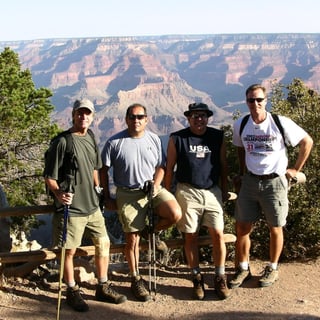
Speaker: You just see a lot of people burning stuff down because they they get to that 20, 30, sometimes 40, you know, however many years in the business going, where does it all go? So what I really struggled with, the high achievers, and it wasn't struggled with them power or It was more I wanted to say there's a multi-dimensional way to live as a person. You can be really spiritually grounded in a strong community. You can be physically fit and healthy. You don't have to go swim oceans. You know, oh we talked about your hiking. I mean, that's awesome. Rim to rim. You're like, you know, I do slow, long hikes. Okay, well, you know what? You've done more slow, long hikes than I have.
Speaker: I mean, the longest thing I've done is in the Tongariya Pass in New Zealand. now And let me tell you, my legs hurt so bad for two days after that hike. And I i think I swam the the Cook Strait like maybe five days later. But, you know, my muscles weren't used to it. That's another thing. Like I can be really fit as a swimmer, but I'm not really tuned for hiking. So you're absolutely spot on.
Speaker: Being a multidimensional person is really coming down to like having a full lifestyle, a connected lifestyle, and a purpose-driven lifestyle where you're not trying to escape it three, four times a year with one-week vacation.
Speaker: And that's what I see a lot, and it's really unfortunate. um I see guys getting to the end of their careers going, yeah, just I'm just going to drink and play golf all day long. You know, it's interesting, the more I talk to you individuals who are trying to be thoughtful about their journey, much along the lines of what you're talking about, even if they're not talking about extraordinary physical feats, there's commonality around that they have found ways to be reflective. I used to say to people, I hike because I'm a tough guy and I'm a stud and i want to hike. But the reason I hike is ah it's miles and miles and miles of uninterrupted
Speaker: Thinking. I can think about things. Nobody's waiting for me to go faster. I did have a ah joke I used to tell one of my friends. I have a friend that is a lot leaner and meaner than I am, but he doesn't take off and leave me alone. He wants to make sure that I'm safe. But sometimes we'll lap each other because we're resting. He's waiting for me. He's really waiting for me, but he'll let me pass him. He'll catch me and let me pass him.
Speaker: And it's a really, ah really gracious thing he does. But every once while, someone will catch us doing that, especially on a long hike. And I said, are guys doing? Why don't you hike together? i said, well, because he's too hard to talk to and I'm too hard to talk to. We're only here for the solitude.
Speaker: And he besides, I'm drafting him. And then I you get a little bit of a lap and then it goes from there. But I have found that All of them have some strategy where they're be reflective. Many people talk to me about the walks they take, the hikes, just I think your swims. I would imagine it has to have an element of of a lot of meditative work, right? Because it's just difficult to build a mental toughness over a long period of time.
Speaker: Well, it's getting comfortable with being in your own skin, inside your own brain, and and really learning how to control your thought process. Because the worst thing you can do is let your brain be in control of what's going on.
Speaker: your Your brain is always either going, danger, danger, or yeah, let's say, I was like, no, well, let's actually sit and look at this and determine what this is. Yeah, the Buddhists call it the monkey mind, right? It just keeps going. It doesn't stop. It's just out of control, and it takes you places don't necessarily want to go.
Speaker: And even when you say, I don't want to go there, your brain says it's too late. You already thought it. This is where we're going. This is why the thoughts are so powerful, I think. But then you can train it. Right. And so I look at guys, we call it the Goggins effect, you know, like in in my realms.
Speaker: where you've got a guy like David Goggins who can go out and run He can do all these incredible 100-mile, 200-mile runs. He doesn't seem to quit ever. He's really great at that. Then we're like, I don't know what his relationships are like. I don't know what his faith's like. And he kept telling that off camera, you know, because I just don't know. But what's perceived is like he's this one-dimensional guy. so our thought process has always been hey what if we start sharing all four aspects of our life our spiritual physical rational and financial like and when i say financial what are we learning how do we share it with others so you start getting this different view of what a career person can look like you know um what i love about your story in the hikes is the solitude like you said gives you time to think and deep think really work through
Speaker: is Is this thing that I've been thinking for 20 years, is this really true? You know? Some of the things that I want to make sure that I don't miss in terms of takeaways from the things that you talked about, you mentioned something along the lines of public victories or or integrity around things personally without necessarily having to have the accolades.
Speaker: ah The accolades kind of feed your mission. what What drives you is not necessarily the accolades. It's going to be something around your personal mission and personal integrity, and you touched on some of that. But I like that term of having a private victory or a private success that helps to set up the success external to yourself. i was wondering if you could talk about that.
Speaker: I don't know that I'm working on celebration of things, but if you remember what I said is I started working on, can I make a physical and emotional and relational environment better than ah when I found it?
Speaker: So like getting into the Ocean 7, can I bring more awareness to a whole group of people who nobody's heard about? Nobody's heard of the Ocean 7. I was like, okay, well, these are really incredible people. They're like...
Speaker: You could be completely trained up and to be in the the best shape of your life and not make cross the swim channel because the current suddenly changes these two hours before or a tide changes an hour early or the wind kicks out for no reason.
Speaker: And all of a sudden you're stuck swimming in place for four hours and there's just no way you can get across. It's not because they've not done the work. So I was like, okay, so how do we really bring light onto this sport? Which think is incredible. Like it is incredible.
Speaker: Like we're going into intense bodies of water. So that then that also coupled with how do I raise money for others to make their situations better? This was the one I don't talk about a lot. It was, how do I make the mindsets of our kids and grandkids a better environment?
Speaker: I felt like this was God calling me to do this. This was like a purpose-driven thing because I didn't come up with it myself. It kept growing out of prayer and thought. You know, it didn't make sense to anybody three years ago when I started this.
Speaker: Not many people, but now there's a lot of people on board, a lot of people as we come up on the final swim of seven going, this is incredible. We've been watching this. We're into this. They actually watch other swimmers do their channels now. But our kids are going, you know, if God calls us to do something, then anything's possible. And that's where I celebrate because I'm like, okay, we're not going to be boxed in by the world and we are going to be open to the possibility. And that's a celebration for me.
Speaker: So Steve, I don't want to put you on the spot, but I think this is something that that I personally like to understand. Whenever we hear about these extraordinary physical things, they inspire me, right? Because I've done what I think is extraordinary, but listen, if what you've done is a 10, what I've done is a half a one.
Speaker: I mean, it's just the kind of personal... physical resilience that I'd like to participate in because I know that it helps me in many other ways. But I know you have a mission and you have the humility of having your extraordinary accomplishments inspire you to help others in the way that you can. And I always wonder if there's a danger of the individual saying, well, God, I love what Steve did.
Speaker: But, you know, I can't swim seven oceans and I'm not quite sure, you know, if he's the guy that's going to help me get to the next level. However, I'm i'm saying that very sloppily. But the real point is, how do you translate for that individual the fact that maybe it's not so much about what you've done, that's inspiring, it's about what they maybe have the capability to do, is really what you're after here. And if I didn't word that properly, you can clean that up for me. But let me ask you how do you feel about that process?
Speaker: Yeah, so I think that the capability comes over trying new things and people are like, well, I could never swim the ocean like that. That's just the hardest thing I've ever heard. And I'm like, well, no, it's not the hardest thing I've gone through.
Speaker: But beating addiction was super hard. So if you're listening to this and you're on the verge of saying, hey, I want to beat addiction, that is this own mountaintop that you can start climbing and figure out how to conquer.
Speaker: You know, that's your own ocean that you've got to swim. if you If you've gone through divorce, you you've gone through something very traumatic. you so You split up something that was joint, perhaps with kids, and you're living that.
Speaker: That is a channel swim in itself. That is incredibly hard. So you take that and say, hey, if I can go through this and I'm still living and breathing, then how about maybe i want to get really good at yoga or I want to get really good at how i'm juggling.
Speaker: You know, it doesn't have to be channeled. just like, what's something that you want to do that you could learn? The most inspiring person to me. Okay, this is this is interesting.
Speaker: She popped into my mind so fast. So we were swimming in Northern Ireland and i i there's this charity group of retirees and they raise money for local charities and they're called the Chunky Dumpers. And in channel swimming,
Speaker: Everybody knows about the Chunky Junkers, okay? Because anyone who comes to do the North Channel swim, they give a woolly cap for a beanie. And these are company, let me tell you. okay who People like you're like, I signed up to swim from Northern Ireland, Scotland, just so I could get a beanie. But there's a lady there, her legs didn't work properly, and I can't remember the whole ins and outs of it or whatever, but she would get her crutches and she would get down to the water's ends and then she would shuffle into the water.
Speaker: She would only go out so deep because she said me, she's like, Steve, i if my arms go out, my legs don't work. So I'll just sink. but but she's getting in the water every day. And let me tell it's cold water. so It's not warm water. And to me, that was like, that was a channel swim. That was somebody refusing to let their circumstance dictate their outcome. no and And that to me is like, if you look at your life, if you're listening to this, we keep letting our circumstances dictate our outcomes, we're kind of missing the point, you know because we're all going through stuff.
Speaker: the hardest thing I ever went through was dropping my kids off after visitation. It was harder than any channels, but I still joke up. It was harder than any visitation, any channels.
Speaker: Harder than any addiction I went through. Harder than the failed business. It was just harder than grief. It was harder than grief, but that is the hardest thing. So you go through a divorce and you had to drop off your kids,
Speaker: after visitation, then you've already done something that's incredibly hard. So what's stopping you from doing that thing, whatever that thing is that you're like, I've always wanted to fill in the blank. Take the chance.
Speaker: Start taking the smallest step towards it and see just how far you can get into it. you know But it does help when you do it for someone else. You know, that's that's the big crux of it.
Speaker: So I don't want people to go man, I could never do what he does. Well, you know what? I don't know that I'm ever going to do whatever, how many rims to rims in the Grand Canyon. Like, I already know how bad my legs hurt from my Tongaria pass hike.
Speaker: I don't think I'm doing that. it's up doing that Well, I was thinking ah a little bit, it leads me to another question because obviously you can take a really good message from your story and then you can talk about how to translate it and have it be helpful beneficial for those that hear it. um But people in human nature being what it is, you know all all the troubles don't go away after you complete seven swims, right? You still got life to live and you just got more people to meet. And if I think about highs and lows and just think about waves and fighting the waves and some of them push you along and some keep, hold you back.
Speaker: And again, this may just be my idea, but if I said, all right, you've done seven swims, which were difficult, but you have said quite ah honestly that harder than any of those was just overcoming the life that you've gotten yourself to and how to get past that.
Speaker: And so in one respect, that's seven major items, right? It's six plus one. It'll be seven plus one when you finish the Catalina. Sure. ah And in thinking about that, I'm saying, okay, in between there, there's some semblance of some normalcy. You know you have to eat, you have to maintain your house, you've got to do things.
Speaker: What are some of the ways you're managing your time and and preparation in between some of those high and low moments that you're navigating? Yeah, so we do a lot with you know our our kids, our grandkids, my wife gets the two granddaughters every Friday at 1230, they come over. It's great. I come down from the upstairs office around four or 430 and then we usually have dinner with our kids that night. We're involved in a community group, with church, we've gone through a lot of teaching.
Speaker: discipleship classes with her church. Here's a really boring one that I've gone into, really gone into the last couple years. Kelly always wanted a really nice grass. She wants to edge. And I was like, I was never really into edging or whatever.
Speaker: so I went out and I got a weed whacker and I kind of started like edging and I'm like, well, I really like it. then was like, I'm tired of these weeds. So I was like researching you know, the right fertilizers and everything to get for our grass type, you know.
Speaker: And so like the last three years I've got really into mowing and edging. And it takes me about two hours, just two hours and 15 minutes. And I do that every, every Monday night instead of going to the gym. So Monday I just, I do a gym workout in the morning, no swimming. It's kind of a lower day of recovery day, but I do two, just over two hours in the yard. And so that's something I enjoy doing.
Speaker: And then, you know, there's there's times to read, to research things. I like to watch movies every now and again. But what I did with training, so I think you can respect this, it goes back to the multidimensional man concept.
Speaker: What I did with training was when we were first married, I wanted to go work out. Well, I couldn't take awake time from or our kids. We were finding a family, were newly married.
Speaker: So I had to get up before the family got up. So I started at like 5.30. I'm all the way up to 4.30. I get up at 4.30 every morning. So that I'm really leaning into my spiritual and physical and relational habits from 4.30 till 8.30 in the morning, and then going into the day, working on the hoda businesses.
Speaker: Because we have but on the shoreline, rising tides, and then I also do coaching and speaking. um So that kind framework of the training cannot take away from the family.
Speaker: Having that in my mind really made me go get very good at scheduling, but also working out the right ways to train. So I worked really hard in that. and between each swim on how to perfect that kind of process for my body and maximize time with our family.
Speaker: Of course. So like I teach myself how to change alternators, change brake pads, change rotors. I like solving problems. And one of my really close friends, actually a couple of them, we always talk about Don't just solve the problems at work.
Speaker: Solve the problems, the little of problems around the house, around all the things that keep your life going. Don't just pay someone to do it because if you're constantly learning or teaching yourself how to solve problems, how to fix things and do things, then it just becomes a lifestyle, right?
Speaker: Right. There's a problem solving around the swims and there's a problem solving around right way to manage manage life. Yes. I think that that makes a lot of sense. Yeah. oh We're going to get ready to wrap things up. so Steve, ah I've got maybe one question to close with and I want to let you speak to any projects you're working on, anything that you want to communicate to the audience. But the ah the Catalina race just catches my hair just because I grew up in Los Angeles area and I grew up knowing where Seal Beach was and Long Beach and Huntington Beach and all those places and thinking, wow, isn't that interesting? You got that island out there and you can barely see it, but it seems very choppy and the water's cold. And what's what's the challenge with that particular race? Is it the distance or is it the currents or the water? What's particularly challenging about that race? So the the big first hurdle for most swimmers is you start at 1130, 12 o'clock at night.
Speaker: So your first six hours are in the dark. Oh, okay. And what's the reason for that? Why do you have to start at night? Calmer winds, lower currents, um and less active of marine life.
Speaker: Let's just call that. um yeah So so that's that's a big mental hurdle for a lot of people. i actually don't mind swimming in the dark in the night. It's never really bothered me. I don't know why.
Speaker: I find it pretty relaxing. But depending on the water temperature, that means you don't have any sun to warn you. So you're starting the first six hours like with no no heat other than what you're generating. If the water's down 62, 60, 58, somewhere in there, you you can get cold pretty quick, so you've keep moving.
Speaker: You know, what's interesting is about the ocean is all when we moved out from California, this was many years ago, 30 years ago, I guess we were going to the Atlantic Ocean, I don't know. But in any case, it was six hours to get to wherever, to an ocean.
Speaker: And it was just a big big day when we decided we're going to relive some of our California lifestyle. And you get in the water, it felt like it was a bathtub. And it was like nobody... ever told me that water could get that hot. Just didn't mention it. But by the same token, think a lot of people are surprised that when you go to the Pacific Ocean, it's always 62 degrees.
Speaker: And a lot of people would think, wow, this is this is freezing because no one told anyone on this side of the country the ocean is always 62 degrees. Right. And I was fascinated sort of by by the things that you don't know because there's no reason to know them until you get yourself in those situations. That's right.
Speaker: Yeah, so going to do that swim in July, you said? Yeah, July 19th. We'll leave the harbor at 7 o'clock at night and... I would like to be landing by, don't know, eight o'clock in the morning. It'd be great. Is ah is the beach going to land at a function of the currents or just you're not quite, you haven't planned it out yet?
Speaker: So I just started diving into this one, no pun intended. We came up with a saying that that the next swim is always the hardest one. So, you know, if what I've been focusing on is the training for all the swims. And then we start getting into the the details of the swim. Where can we possibly land, you know,
Speaker: making sure we've got the right time. So, you what are our feeding schedules? Like we've got the right nutrition. Are we going to warm feeds versus cold feeds to keep my internal body temperature up? Those kinds of things. And we really started dialing in as we get closer. But this is for Kelly has been incredible because she's, you know, created lists and we've always done debriefs after every swim, what works, what hasn't worked.
Speaker: Sunday, we went through our list and repacked the swim bag. So it's already packed, ready to go to California. That means I don't have to, it takes away having to worry about it because we've we've followed the checklist. We've got everything. Now we just have to take it to the airport and fly with it to to either John Wayne or LAX.
Speaker: You know, so these are the kind of processes that we go through of, you know, just as you get closer, then you start to dial in a little bit more and more and more. Yeah. I think that's the right approach, right? Otherwise, you're spending mental energy on something that's just not time for you to spend that energy.
Speaker: ah that's That's what I feel like. I've got friends who are like, you know, and they're funny. They're like, We say we're five days away from a swim because sometimes you get to swim windows that are five to seven days long and they're yeah, you're going to be swimming on Wednesday. And I'm like, how?
Speaker: How'd you know that? They're like, well, we've been checking the weather and this and that for you. And i'm like, yeah, I checked the weather the first time. I never did it again because I was like, I was, I did try and check it for Spain, but I wasn't very good it. Well, listen, I wish a lot of luck on that. I think it was really ah a revelation, right? You can prepare, you can do a lot of things.
Speaker: And then circumstances that you just don't get to control can change those things. And that's not failure, right? That's just a recalibration. I'm hoping that anyone that gets a chance to hear this so will we'll tune into that. I don't know exactly how you communicate how that swim goes. do you end up filming it for a future project or are there other ways that that people can stay on top of what the progress is?
Speaker: Yeah, that's a great question. So you can find me as Steve Moby Leach, L-E-I-T-C-H, stevemobyleach.net. Moby's my grandpa name. Thankfully, they called me Moby. And that's pretty cool.
Speaker: That's a great name. Yeah, it is. It's better than the alternative, right? I know. We always joke about that. oh And what we've had for the last swims is a WhatsApp group, because we've been traveling internationally for a lot of them. And And there's a lot of videos come through and Herschel does updates. Herschel's our filmmaker, film producer. And here's the one that really decided to do a documentary about our first swim in Hawaii, which is on Amazon. It's Beyond the Shoreline, the channel of bones. So you can watch that on an Amazon. But yeah, we've been filming for the last three years, every swim, interviews, pre-swim, post-swim, all the ups and downs, the travel adventures, people in the community, other swimmers. And we have what we believe is the most comprehensive cinematic capture of the Ocean 7. that we're pitching to work on either how people get us funded to post-production and then get a distributor help us distribute it or we're looking for somebody to pick it up, buy it and produce it.
Speaker: But yeah, we filmed eight episodes of a 10 episode docuseries on the Ocean 7 and it's all about you know the three things I love talking about, which is redemption, recovery and resilience.
Speaker: And that's the exact stuff. But look me up, Steve Moby Leach. Super easy to find. My website again, stevemobyleach.net. Beyond the shoreline.org is our media for the the company. Rising Tides Ministry is our nonprofit for mentorship ministry for the recovery homes. And i think we're still trying to figure out how to live stream the swim because we have six hours out of a nine hour or 10 hour swim this in the dark.
Speaker: But I don't want a spotlight on me while swimming because spotlights bring little fish and little fish bring big fish, right? Well, it's really exciting. And I've seen some of your materials and some your media and it's fantastic. I got some ketchup to do and I'm going do that.
Speaker: I think this is a good place for us to wrap up. Do you have any final thoughts? Anything else you want to share? No, I'm going to wrap up a little differently. My question to you, what was your big takeaway from our conversation?
Speaker: Like most human beings, you start to frame what you hear in the context of what you know, your assumptions, your scripting. But um you may recall that in one of our conversations, I said you I'd read a passage somewhere, some individual was talking about people who are in extraordinary circumstances, not just physical.
Speaker: Right. I mean, physical for sure, but not of their own choosing. You know things like people that have to endure physical stress and people that have to go off to war. And maybe aside from all the the terrible things that happen war, you also have a feeling of you're protecting something, you're doing something for the greater good, but you're in a horrific situation. And then you have to have some level of personal heroism rise to the occasion.
Speaker: on that one of the big challenges for people that were coming home from say world war ii is that they came home heroes but they were going back to their jobs as car mechanics and just jobs that they had to run their lives and this commentator said something very provocative is like these individuals the reason had such a hard time is they went to war they were heroes and now they come home and just live in a mundane life and so it's all that people can go through their whole life without knowing if they're cowards, which I thought it was kind of a rough word to use, but that was the word he used, little indelicate.
Speaker: And then it made me think, well, what is it that people can do to test themselves? Now, you don't have to find out if you're a coward, but I will say that I've hiked a lot of very slow backpack hiking miles, very slow.
Speaker: But a good bit of them felt a little bit scary, a little dangerous. There was slight canyons and there's just all different things that can go wrong just because things can go wrong. And then you get through the hike and then you realize it didn't go wrong. And so what drove me wasn't necessarily an extraordinary challenge that you face.
Speaker: And if you don't have that, can you still find ways to create exertion in yourself, whether it's physical or mental? And that's kind of what I was doing without knowing. It's almost like a ah form of self-medicating. I just thought if I could do this and then not hope a flash flood gets me, ah it's just another thing I can mark off the list. But I always go with a little bit of fear and then I think about the quote.
Speaker: All right, is this my way of just making sure that I'm not afraid? And I think when I listen to you, it helps me see there's a rationale for living in a way that where you've got to challenge yourself to some point, because I think it just brings out the best to you, hopefully.
Speaker: So that was the big takeaway. And I really appreciate you asking me. I was very nice you to that. All right. Steve, wonderful talking to you. And i hope that we'll stay connected. And hopefully we'll get a chance to talk some more, either off mic or maybe back on mic. know, we might have to talk about Catalina or something. and Yeah, absolutely. And I wish you to the best of luck. And thanks so much for your time.
Speaker: Hey, thank you. i appreciate you.
Speaker: I think this conversation was important because it spoke to the distinction between structure and alignment. Steve described a period in his life where, externally, everything appeared to be disciplined and stable, but internally, something was still unresolved, and that tension feels increasingly familiar in modern leadership culture, where performance can often mask disconnection.
Speaker: What I appreciated about this discussion was that it moved beyond the language of achievement and into the harder work of examining identity itself, what we build our lives on, what happens when those foundations fail, and how purpose sometimes emerges not through strategy but through disruption.
Speaker: Steve's story may involve extraordinary swims, but the deeper current running underneath it is one many people quietly navigate every day. The Leaders Commute podcast was produced by Acuity Business Consulting.
Speaker: Acuity demystifies the challenge of transforming talent and resources into exceptional and sustainable organizational performance by surfacing actionable clarity in the areas of strategic design, financial management, operational excellence, and leadership development.
Speaker: You can catch a new episode every couple of weeks wherever you enjoy your favorite podcast. Thank you for your thoughtful engagement. And until next time, I am Jess Villegas, and you have been listening to the Leaders Commute podcast.