Transcript
Speaker: Hey, real quick before we get started and get into the episode, if you want to figure out how close you are to discovering your own unique voice, I put together a free little quiz for you to see how close you are to finding your own unique voice. If you would like to take this quiz, go to shapingyourpottery .com forward slash quiz, or you can just go to shapingyourpottery .com and it'll be right there. I'll see you guys in there.
Speaker: If you love pottery and want to take your skills to the next level, you're in the right place. Find your own pottery style right here on Shaping Your Pottery with Nick Torres. Let's get started.
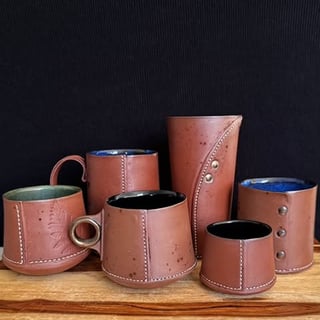
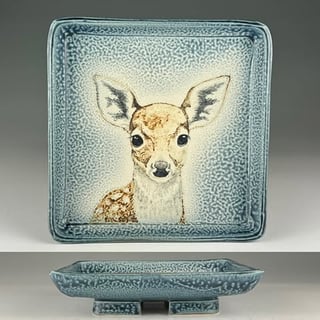
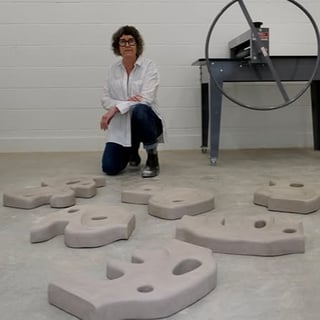
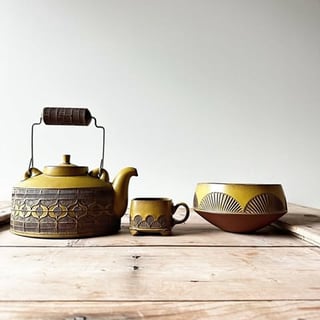
Speaker: What is up, Shaping Nation? This is Nick Torres here, and on this episode of Shaping a Pottery, I got to interview Heidi Fehrenmacher. Heidi makes some really incredible bright colored pottery. In this episode, you will learn how Heidi makes her bright colored pottery. You'll also learn how you can start incorporating color into your own pottery. Finally, you will learn about
Speaker: allowing yourself to get bored so that you can come up with new ideas. I'll see you guys in there. Heidi, welcome to Shaping Your Pottery and share with me what is something you believe potters should be doing to make the best possible pottery they can. Experimentation. I think like when you're starting out, you want to try everything, which is great. But as you keep making work, you kind of lose that, especially if you have, if you're making something and it's selling well.
Speaker: you might be a little scared to try something new, but I think that's important too. You put a lot of emphasis on finding your voice and I think that's part of how you find your voice. Absolutely agree. Experimenting is like, that's how you not only keep things interesting for yourself, that's how you're gonna evolve your voice further and even find your voice. I love that tip right there. Tell me the story about when your dad sat you down and told you to do what you love.
Speaker: Okay, so it was two weeks before my sophomore year of college and where I went to, I think this is pretty normal. Like you have to declare your major. They want you to declare your major your sophomore year. And so I was a biology major and my dad at the time was a hospital CEO. I don't even remember how it started, but he was just like, you know,
Speaker: I think if you were to become an art major, you would be happier. I was like, oh. And I think I had internalized a lot of thinking artists were dumb in high school, because I remember telling a group of friends I wanted to be an artist. And one of the girls at my lunch table said to me, well, why would you waste your brain?
Speaker: And I was like, I don't know, because you're young and your friends really influence you. So when my dad told me that it was kind of like permission to do what I wanted. And so I was like, okay. And so I remember I went down to the registrar's office and changed to an art major. That's really amazing. I love hearing about that. What impact would you say this had on you, pursuing Clay further and helping you find your own voice? It's really funny because
Speaker: Years later, my dad and I were like reliving this conversation and he was like, you know, I always thought you'd be a painter. And I was like, a painter? Why would I be a painter? He's like, I didn't think you liked pottery that much. Pottery was always going to be, you know, a potter after we had that conversation. So, I mean, it was good. I think a lot of times parents can like discourage their children from pursuing a career in the arts.
Speaker: So, I mean, that was good. That was beneficial. My mom always was really into crafting and that, so that helped a lot. I think the thing is, though, as much as you can have a support group around you, if you don't believe in yourself, you can have the most supportive parents in the world. But if you don't think you're good enough, it's still going to be a hard obstacle to overcome.
Speaker: Absolutely agree. Shaping Nation, the most supportive thing for you is to believe in yourself. It doesn't matter what anybody else says, even if they're supporting you or not, if you don't believe in yourself, then you can't really pursue pottery further. I love that statement right there. Yeah. Let's talk about your pottery. In one sentence, can you tell me what you make? I make flip cast stoneware vessels in a production line and a one of a kind line.
Speaker: Boom done. That was a very excellent description. Something about color, but that was on the spot. So that's as good as it's going to get. So tell me the story, how you started making this pottery that you make today. So it's kind of a two part story. So I started slip casting 10 years ago. I had to have hip surgery and it was, I had to go in and like reshape the head of my femur.
Speaker: Prepare the cartilage in my hip. So it's kind of like, you know, you hear about people carrying the rotate rotator cuff in their shoulder. It was the same thing, but in my hip. And with that kind of, I don't know how they do it now, but back then it was like, it was a pretty long recovery. I couldn't walk. I think I was on crutches for like six to eight weeks and I couldn't put any weight on it. And then it, you know, I had, I was in PT for a long time after that, just like rebuilding the strength.
Speaker: And so I couldn't sit at a 90 -degree angle. I couldn't throw. And before the surgery, I was throwing, standing up, because a lot of people say, well, just throw standing up. I was like, well, I was doing that. But the muscles in my legs were so weak, I couldn't even stand. So I was like, well, I'm either going to have to quit doing pottery or I'm going to have to come up with another way to do this. So I knew that I had the surgery scheduled. And so I bought The Essential Guide to Mold Making and Slip Casting by Andrew Martin.
Speaker: And I was like, well, I'll just teach myself how to slip cast. And it's kind of hard to teach yourself how to slip cast, but I was like, well, I'll just do this. And so I did it. And I was originally slip casting with porcelain. And I don't know if you've ever worked with porcelain, but porcelain is kind of finicky. And a couple years ago, it was like three years ago, still working with porcelain. And I just bought a box of like speckled stoneware. It's Laguna 608, just to try it.
Speaker: Because I hadn't used a portion like, or I'm sorry, I hadn't used stoneware in about 20 years. And so I bought it and I threw with it and was like, oh, wow, this is, this is nice. And like, it's so much easier. And so I was like, well, I wonder if I could convert this to a casting slip, which is,
Speaker: This is going to get a little technical and probably a little boring. But making porcelain casting slip is relatively easy. Making a stoneware casting slip is a little more difficult because it's got a lot of iron in it. But I was able to figure it out. And so I just started doing it. And I feel like it was also a transition in my own life where I had always been kind of really hard on myself and down on myself. And the porcelain was kind of embodying that.
Speaker: And like with the stoneware, it was more forgiving, which is kind of like how I was starting to become just like in general. And so it's kind of funny how my work changed as I changed. And so that's how it really came to be. I love that story. So when you said that you couldn't sit at a 90 degree angle, I kind of felt that a little bit because I injured my knee playing baseball and I couldn't, I couldn't even go to the bathroom properly. I had to literally poop at an angle. It was bad.
Speaker: i felt that i felt that a lot down on the toilet be like yeah i yeah i felt that like personally right there so yeah you are inspired by color what is it about color that inspires you i feel like the most beautiful parts of your life there's always like a really beautiful color attached to it i also feel like there's also music attached to it but like color like you know you see like a beautiful sunset or like
Speaker: You're out to dinner with friends you love. And there's like a lighting is just so, you know, just a certain way. And like the color on the wall, like even a lot of times I say like black is my favorite color. And I say that because I really like the way color interacts with black. Like it really popped kind of, you know, I remember as a kid.
Speaker: Driving, I wasn't driving, but like being in the car as a kid and it was dark out and rainy and like the headlights from the cars and the tail lights, they just seem to shine even brighter. So I like, I like that. And I like how color, you know, they say a lot of times like scent can take you back to places. I think color can do that too. I feel like I just keep repeating the same colors that I used as a kid, like that I liked as a kid.
Speaker: Absolutely, I think that makes perfect sense. If you look at a clock, oh, that reminds me of this thing over here. I like that a lot. Now, can you give me a simplified explanation on how you make your pottery? Yes, I can. OK, so I make clay and or plaster prototypes to make working molds from that I can then slip cast, which are then bisquired and then glazed.
Speaker: But then sometimes I also screen parent and when I do a lot of surface decoration and that's usually that's done before the best. And after just depending on what I'm working on. So when you are doing this surface decoration, how do you come up with ideas and how do you make your ideas kind of come to life?
Speaker: So I really like just like repetitive patterns, but I like repetitive patterns that are imperfect. I feel like that goes back to what I was talking about earlier, the stoneware clay and how it's more forgiving. Like I know a lot of people do repetitive patterns that are very symmetrical and precise.
Speaker: And, you know, I tried that. I tried doing that. Like, I feel like the porcelain part of my life, I tried to do that. You know, I did a lot of decal work that they were very precise. It just didn't seem like it was me. Like, I feel like I was trying to be someone that I wasn't. And it's not that I don't enjoy that kind of work. Like, I can appreciate it. I think I actually can appreciate it more because I've tried and I'm like, wow, that's really hard. I can't do that. So now it's just like, my work has been described as like whimsical.
Speaker: And I think that that's like a really great description because it is just kind of playful and fun and lighthearted. And I think also like going back to how we were talking about like when I was younger, when I started doing ceramics like color was kind of looked down on.
Speaker: It was more like the more prestigious pottery was like the, I'm not saying this in a derogatory way. This is what people used to say. They'd say like round and brown, like wood fired pots, you know, and like reduction pots, which were beautiful, but like, I just love color. So I always kind of felt like the odd person out. And like, I just wanted to make pottery that looked like a little kid made it. So yeah.
Speaker: Absolutely love that shaping nation. How can you add things that you truly love into your own pottery? Maybe it's your own personality or just experiences from your own life and add that into your own pottery. I like that a lot. So what advice would you give to someone trying to add some some of their own colors into their pottery? Well, you know, it's I read you say gave me the questions beforehand and I read that question and I giggled because
Speaker: I have heard people have asked me that before and they've said they're scared to use color, which I find so fascinating because like I'm scared to not use color. Like I love color so much that if something's kind of bland, I'm like, oh, you know. So I think like a good, a gateway color, if we'll call it that, he uses like blue because I think
Speaker: Blue is not my favorite color, but I know a lot of people really like blue. And so if you're interested in adding more color to your work, I would start with blue and then start doing like derivatives of blue, you know, because I feel like blue is kind of safe. And if you're, you know, feeling unsure about how to use color, I think blue is a good way to start.
Speaker: That is some excellent advice. Shaping Nation, you don't have to get all complicated about trying to use color. Just narrow it down to maybe your favorite color or a color that has lots of shades in it. And that way it makes it easier on yourself. You're not so overwhelmed. Excellent advice right there. Right. I don't expect you to just start putting rainbows on everything. You can start small. It's fine. Start as small as where it is at. That's how you grow in the title. You learn what you like to make.
Speaker: Let's talk about finding your voice. You contribute your growth as an artist to failing. How has failing helped you get closer to your own voice? Well, I feel like I learn better from failing. Like when things go well, sometimes it's hard to know what worked. But when things go wrong, you're like, oh, well, this didn't work and this didn't work. It's kind of like,
Speaker: I don't know if you've ever heard people say like, you know what you want by what you don't want. And I feel it's kind of similar to that. So, I mean, I've blown so many things up in the kiln, like so many.
Speaker: And if people, I always say like, if you don't blow something up in the kiln, you're not like a real potter as a joke. But that's how you learn. And like, you know, I've had blazes run and pot sticks to kiln shelf. I've over -fired my kiln once. Like I got it up, I think it was like up to cone 12. Like I warped the shelves.
Speaker: You name it, I have probably done it. I've messed up my casting slip so bad. I've had to like call Laguna and had them on the phone trying to troubleshoot with me. But I think that is how I've learned. And I think you also, when I was younger, I used to be like really hard on myself when these things would happen and like just get really down and like cry and just act like it was the end of the world. And the older I've gotten, I'm like, it's just part of the process. Like I've just come to accept it, so.
Speaker: Definitely grief failing. That's how you grow and that's how you're gonna learn and that's how you can find your voice, right? Now, can you tell me about a failure or a parent failure that led you to future success? Well, I think it's really like this This stoneware casting slip I've been having a lot of trouble with it. So Casting slip is different than just like regular clay. You don't want as much water But you also want it to flow
Speaker: and so I wasn't using the right deflocculent and so I couldn't get it to actually flow like I would have to I would go to dump out the mold and like have to shake the mold out which is not good it's not good I was like I don't know what's happening like I just you know I was naive and thinking that making like porcelain casting slip was similar to stoneware and it's not it's totally different but like by doing that like now I know like I can tell
Speaker: oh this isn't right you know and by failing like if i would have just bought it from laguna pre -made i don't you know i wouldn't have known i would have just you know kept using it and hoping that you know and called them but now like i know how to make castings live better and like now i know so much about different deflocculent and how they do different things which i don't and how they expire
Speaker: Which is also another problem so that that's helped a lot. And then also like with surface decoration and I started doing a lot of slip and like underglaze work and screen printing. Like I flip applications a whole nother and I'm not talking about casting slip. I'm talking about like decorating slip. Like you have to apply it at just the right time or it'll flake off. I didn't know that.
Speaker: And sometimes you don't even know until you like glaze fire the pot and I'd have these pots come out. And I'm like, why is this falling off? You know, I didn't know. Absolutely. Re -shape nation. Sometimes you just don't know until you try it. You have to go try it in order to really figure these things out. Go fail a couple of times. Go fail a thousand times if you have to. Go figure it out though. You have to figure that stuff out to find your voice.
Speaker: What is something you are currently doing to evolve your voice even further? So I currently, I'm trying to deal more with like screen printing. I've only been really doing one color, just black and then adding glazes afterwards, like after it's best. But I just, I was just dead in Sika. I just got back from in Sika and I went and saw a Paul Wanless
Speaker: demonstration. He has a really great book Paul Andrew Wanless image transfer on clay like I think that's the best image transfer book out there because it goes over so many different techniques and how you can do it yourself. And so it was just so interesting like all the things he was I mean I have his book and he was doing all these different things like
Speaker: I don't know how familiar you are with screen printing. So you put the underglaze down and you squeegee it and you are trying to push it through a stencil, basically a screen, which is a stencil. But he was using the sponge and he was putting the underglaze down with a sponge and he was getting like, it was thicker because I've been running into the problem where my underglaze isn't thick enough. And when I pull the paper away, the color isn't sticking. I'm like, what is happening?
Speaker: It was just like really interesting to see that and then so now I'm coming I'm home and I'm really interested to try that his techniques that I learned. Very, very interesting. That is, I'm excited to see your progress with that. That is interesting. Yeah.
Speaker: Boredom is a big reason people don't find their voice. What is something you do to prevent boredom? Well, like I mentioned before, I agree with that. But boredom. But I feel like that's also, I think it's like a double edged sword. Like as a creative person, you have to allow yourself to get bored so you can come up with new ideas. You're not like overly distracted.
Speaker: also like if you're doing the same thing over and over and over and over again you kind of like dull your senses so I think it goes back to experimentation and so what I try and do is the first half an hour I get into the studio is just for me and I just do whatever and so like I've been working on I've never made like a huge pot like a just like a huge huge pot and I was like you know what I want to make a pot that's as big as my kiln
Speaker: So I've been working on that. And then, you know, I just like, I've been casting different colored clay bodies, just like, well, I don't know. Let's see what happens. And you just have to kind of go into it. Like the results, it's not really the results that matter. It's just the process and like getting your brain to think differently. So that really helps me that half an hour first thing I get to the studio. Sometimes I'll do it in the afternoon, but I really like to do it in the morning.
Speaker: I love that you said the first 30 minutes is just for you. Because I recommend that as well. The first part of it, because that's when you're more refreshed. And that's when you can, if you do it towards the end of the day, then you're going to not be as refreshed and it's going to be a lot harder to actually play. I love that you said it at the beginning. Yeah. So as we're coming to a close here, what advice would you give to someone trying to find their own unique voice? So that's a good question.
Speaker: So I like to read books. I really like to read books. I don't know if you've heard of the Lisa Condon book. Find your, I'm trying to read it off my bookshelf, Find Your Artistic Voice. I think that's a really good book. It actually like gives you some techniques to try and find your own. I think a lot of times too, people
Speaker: are afraid they're copying other people. And so they're like, well, I don't want to go down this path because I'm copying so and so and you really, you really can't copy people. Because you're not the same person, right? Like your DNA is different, your life experience is different. So why not try and do what they're like, if you see a pot that you like that someone's making, try and copy it because I mean, it's an experiment and you might learn something that takes you on a totally different path. Absolutely agreed.
Speaker: 100 % agree with that. It was really great. Go ahead, go ahead. Oh, no, I was just gonna say, I think sometimes people get scared that they're afraid, you know, especially because of social media, if they try something, someone's gonna try and call them out, you know,
Speaker: It's like saying I'm not going to make mugs because everyone makes mugs. That's silly. You're just trying it. And if you're using it as an experiment, as an exercise to find your own artistic voice, I say go for it.
Speaker: 100 % agree. That's how you are going to learn. And that's how you're going to learn what you like to make. Love that advice right there. Heidi, it was really great chatting with you today. Where can my audience go and learn more about you? My website is BellaJoyPottery .com. And I'm also on Instagram at BellaJoyPottery .com. And my name is not Bella, nor Joy, nor Pottery.
Speaker: Hey, thanks for listening to this episode of Shaping Your Pottery with Nick Torres. If you want to discover how close you are to actually discovering your own unique voice with your pottery, I put together a free four question quiz. It's very short. It takes 30 seconds for you to take. If you want to know how close you are to finding your own unique voice, go to shapingyourpottery .com forward slash quiz, or you could simply go to shapingyourpottery .com and it'll be right there at the top.
Speaker: I hope you guys enjoyed this episode and I'll see you guys next time.