Become a Creator today!Start creating today - Share your story with the world!
Start for free
00:00:00
00:00:01

YHM 077 - Osteopathy: Exploring the Body's Blueprint

48 Plays1 year ago
Welcome to "Osteopathy 101," your go-to podcast episode for understanding the body's natural healing process.
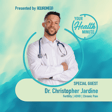
In this episode, we dive deep into the world of osteopathy with our special guest, Anesto Charles. Discover the principles behind osteopathic treatment, the mechanics of how it works, and what patients can expect during a session.
We'll also compare osteopathy with other modalities and explore its unique aspects, all while gaining insights into the life of a new osteopath. J
oin us for an informative and inspiring discussion that will leave you with a newfound appreciation for holistic healthcare. Listen now and unlock the secrets to better health!
Recommended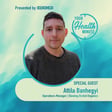














Transcript
Meet the Hosts and Guest
00:00:10
Speaker
Hello and welcome to another episode of Your Health Minute, brought to you by Aqua Omega. I will be your host today, Calvin Morrow, and with me moderating is Mark Saccard and Alana. And today we are going to be talking to an osteopath. I am very happy to introduce our guest, Ernesto Charles. Thank you so much for being on the show.
00:00:29
Speaker
Thanks for having me. I'm excited. Absolutely. So we always like to start the show by giving our guests an opportunity to introduce themselves as well as let our listeners know exactly what it was that had them get involved in the health and wellness space to begin with.
Understanding Osteopathy
00:00:47
Speaker
Yeah. So yeah, like I'm an Esto and I've been a well, so quick clarification as well. Osteopath is actually a protected title for DOs and in Canada it's not regulated nor am I a DO. So the actual term for what I do is an osteopathic manual practitioner.
00:01:04
Speaker
Just to clarify, make sure it's all cleared out. But yeah, when it comes to doing osteopathy, something that it was something I didn't really get introduced to until during my undergrad. But for the most part, I've always been an advocate for health and I've always been fascinated by the human body.
00:01:22
Speaker
And as I was learning more about the common pillars when it comes to health like physio, chiro, massage, all of those, I was introduced to osteopathy spontaneously. And I realized that was the approach that was different that I was passionate about because of how they approach treatment very differently.
Holistic Approach of Osteopathy
00:01:44
Speaker
But
00:01:45
Speaker
they approach it in a way that is able to take care of that 1% rather than 99% because there's definitely times where things get complex and you know some other disciplines it's like there's a bit of like a there's like a missing link and I've noticed through other cases and other people how
00:02:02
Speaker
osteopathy provides that different lens that sometimes can also create that solution. So as I dove deeper into osteopathy, and in just learn more about the human body, it's like healthcare, manual therapy that just became my go to thing. And I just I love every second of it. Yeah, just hooked you guys. I liked that.
00:02:22
Speaker
That is great for, um, our listeners who are maybe hearing this term for the first time, uh, you know, osteopathic, uh, sorry, what was the title of the exact title? He said an osteopathic. So yeah, the exact title is, uh, an osteopathic manual practitioner, or you can say therapists as well. I just can't say osteopath. That's that's the main one. Yeah. Okay. Okay. An osteopathic manual practitioner. Yeah. Love it. So what is that for everyone who has never heard of it before?
00:02:50
Speaker
Yeah, so an osteopathic manual practitioner or manual therapist really is an individual that uses an osteopathic philosophy in their approach to treatment. So just to bring it down, like osteopathy in itself is characterized as an alternative medicine that uses holistic manual therapy approaches to align the body and optimize health across all the systems.
00:03:14
Speaker
And what I mean by that is we pretty much use our understanding of collective mechanics and functional anatomy to produce positive changes across all systems. So like digestive, you know, cardiopulmonary, even having a positive influence to like hormone health. And we do that by manual therapy head to toe in restoring balance and harmony within that body. So it's kind of cool because
00:03:40
Speaker
With the work that we do, it's based upon seeing everything as related. That's one of the key things that we always advocate for and also try to educate our patients that we might have of how connected every part of the body really is.
Stages and Processes in Osteopathy Treatment
00:03:57
Speaker
And all we're simply trying to do is provide a treatment that helps to enhance the body's ability to self-heal and self-regulate and thus promote more of a long-term relief and overall wellness.
00:04:10
Speaker
simply through principles, which is again making it more unique in its own way. So when would someone know that they should go see someone like yourself?
00:04:21
Speaker
A person would know when, honestly, you could see an osteo at any point in one's health and wellness journey. There's three different stages. There's that preventative care, and then there's that rehab care, and then that post-rehab care, that continual maintenance, or just to continue that work.
00:04:43
Speaker
when it comes to the work that we do, it's it's pure manual therapy. And what ends up happening is we try to cater our approaches to treatment according to where they are in that wellness journey. You know, so like I said before, all we're trying to do is help the body be in a better position to self heal and self regulate. So if I'm doing it in that preventative stage, I'm just trying to make sure that you know,
00:05:05
Speaker
Blood is able to flow. All parts of the body can move and able to go from there. If they're in that rehab stage, I'm making sure that the mechanisms in the body already in play can help them in healing, not necessarily faster, but create a better environment for their own healing. Like an example is we've all probably got an injury of some sort, right? I have like several knee injuries and a shoulder injury from pickleball of all sports.
00:05:29
Speaker
I look like a ball. I want to see a ball. But what happened is like we've all experienced it where you hurt yourself and you could do nothing and you'll see that the body will get better. Right. But that's because, you know, blood flow is going to constantly try to allow a distribution of things to help with the healing, but also help with the drainage, taking things out. We also have nerves in play, providing those signals to help in that communication to get things better. All I'm trying to do is make sure that these communication pathways are in a better environment.
00:05:58
Speaker
so that the body can do what it was already designed to do, which is again, that self heal, self regulated. It was all just to do pure manual therapy, which makes it kind of fun on my end at least because I'm a very hands on person. That's really interesting because as you mentioned injuries, the one time that I have seen an osteopath was I
00:06:17
Speaker
I'm a retired Olympic weightlifter and I had a recurring injury in my left wrist, like just incessant. No matter what I did, I saw physio, I did shockwave therapy, all kinds of things. And it was a friend of mine who suggested an osteopath friend of his. When I went to see her, I was shocked because she didn't do hardly anything on the wrist. It was all upstream, looking at my shoulder, looking at the balance between both shoulders.
00:06:42
Speaker
how I'm holding the weight overhead of my overcompensating circulation. And that combined with the shockwave is really what healed my wrist. And that's actually like, that was what was so fascinating to me as I was studying it and just doing it on the table myself. There's so many contributing factors to everything in the body. It sounds like a simple statement, but also it's very complex because I've had individuals where
00:07:08
Speaker
They're coming in for a shoulder injury, similar to with your hand. And it is true. If you, if you, with, with an osteo, because they take this holistic approach, you might be saying this hurts, but we are going to approach the body for the body. And that's, that's what adds that extra element, you know, like.
00:07:25
Speaker
How your loading of your pelvis is on your knees and your ankle is going to determine the leveling of your pelvis. Next thing you know, how that alignment is down the spine is going to change up. Next thing you know, that changes the pull acting on the shoulder. So maybe your shoulder problem is not really a shoulder, it's somewhere from below. But you wouldn't know that until you take that holistic head to toe approach and find the, I guess you could say, the true cause, right?
00:07:48
Speaker
That's something that with osteos they like to advocate for, finding the root cause, not treating symptoms, and helping in overall wellness because of that approach. It's cool because it goes beyond the MSK realm of wrist, hands, bones, ligaments, joints. When you go into the complex cases, when it's an obstructed nerve somewhere along the path creating some other dysfunction you didn't even know of,
00:08:13
Speaker
that's when it gets kind of interesting. And I've actually had some, some cool experiences myself with some mentors I have. That's awesome. It's very cool. So I'm curious, like, as a patient, what their experiences can be. So let's say I walk in and I got my pickleball injury or his wrist is hurting. Are you using any tools or
00:08:32
Speaker
Is it just your hands or what's it look like? What's the experience like?
Session Dynamics and Collaboration
00:08:36
Speaker
When a person comes to me for a session, like 95%, they don't even know what Ostia is. So what I like to do as well is give them the full rundown before we get even right into it. But for the most part, it's just like with any other practice, you're going to start off with that initial intake, that discussion, conversation, get as much information as you can.
00:08:57
Speaker
Um, but then after having that talk, I like to, to give them that understanding of what osteo is, you know, given that definition, how we work. Um, like my, my typical, uh, I guess you could say elevator pitch is just telling them, like it's a gentle holistic manual therapy approach. It's kind of like massage, kind of like Cairo. It's a bit of everything, but it's because we use gentle.
00:09:20
Speaker
manual approaches. And it's kind of like me putting your body in different positions to create a force to create a change. Right. And when I'm doing that, I tell them like, Hey,
00:09:32
Speaker
We work together. This isn't unfortunately like massages where you can just lay there, fall asleep. Like I tell them, we're working together here. And sometimes I'll be like, hey, can you breathe? Can you press this against this? We work together to get the changes. But when they come in for that assessment, it's a lot of, it is, as you said, just pure manual work. There's no tools involved. There's no modalities that we really use. What we do use instead are different principles.
00:10:00
Speaker
for the treatment. And that's actually what makes OSTU even more unique is that understanding of principles. So when I'm talking about principles, it's understanding that you don't need to necessarily know what technique per se, but behind every technique, there's principles in play. And with those principles, we're able to get the change.
00:10:20
Speaker
Right? So for example, the principles of just the anatomy, like, you know, the elbow can flex an extent. It's literally, you could see it in how the joint is functioned. You know, that's its ability. And we use the principles of manual therapy to create a correction to the joint. The principles of manual therapy is
00:10:41
Speaker
leverage, fixed point, the direction in which you're going. So we use these understandings of principles to create these changes. So what ends up happening is during a session, we go through the assessment head to toe. I tell them you are pretty much like everybody has a story and I'm just the narrator. That's that's as simple as it is. I'm trying to help you understand the lesion pattern as we call it.
00:11:04
Speaker
And after having developed all those assessments and this picture of what's going on, I treat accordingly. And that's what makes the session very different, whether it's between different individuals or across different treatments. I treat the body in that moment. So there's always something new. And there's a lot of, I guess, freedom in how we approach. Because we're just using principles, right? The body is the body. The arm will always be an arm. The neck will always be a neck.
00:11:33
Speaker
it's how I work with it that becomes different. So in that session, they're just, you know, working alongside me. And it's very chill. So it gets to a point where, you know, I'll just have casual conversations, like I'll put them in a position. And like, as I'm waiting for the tissues to respond, I'll be like, so like, how's your weekend, you know, like, no, like, just very casual.
00:11:53
Speaker
Um, the other thing that I also like to do is I, I am one of those therapists that treats with music, but I don't listen to like waterfalls or, you know, wind. I'm not one of those therapists. I actually like have a playlist that is a lo-fi covers of popular songs. So for, for when you're not tuning in, it's just chill beats. Great. Great. But when, uh, when you do tune in, it's like, Oh wait, I like this song. So now it's like another conversation, another kind of
00:12:20
Speaker
environment that's created during that approach to treatment. But again, there's so much going on with the work that I do as this session continues to unfold. How long is the typical session? It depends on the case.
00:12:34
Speaker
For people who have more acute kind of injuries, I like to start off with a 45, more so to take my time when working with the tissues. Because there are some times where if you go too fast, you can accidentally stimulate a pain response, right? Or you don't get fully through that treatment process that you would hope for.
00:13:00
Speaker
So when it's an acute stage, allowing me to take my time, that's what I typically do for the first follow up, if not just in general, acute cases. If there's an individual that's more on the maintenance phase where
00:13:11
Speaker
Look, they came in, no pain. They're just here for a general tune up, getting that holistic work done, improving their overall wellbeing. For them, just a quick 30 minute because quick fine tuning. And it's very rare that I would do the 60 unless it's, again, those serious cases where I got to really take the time to think things through. I've had only
00:13:33
Speaker
a few of those, but that's also because of the individual, what they were experiencing. Like they couldn't sit, they couldn't stand. They could only be in one position. Any movement hurt. So I had to really like, okay, like think outside the box. What can I do to create these changes to give them relief? So it really depends on who I'm working with. I like that. It's like perfect for lunchtime for me. If I hear to 30, 45 minutes, I'm like, perfect. I can go in at my lunch, get it. And then are you sending patients home with like homework, whether it's like,
00:14:03
Speaker
food or supplements or stretches or exercises. Yeah. So no, the, uh, the, the, in terms of what happens, it's
00:14:11
Speaker
I don't do any of those things. You can think of it as like, I'm just a mechanic as well. We know when your car needs maintenance, you just bring the car to the mechanic, mechanic does his stuff and then you just take the car home and he tells you to come back again. It's as simple as that. I don't do any of exercise prescriptions or providing any supplements and all that. Although I have some knowledge of it, it's actually outside the scope of an osteopathic manual therapist.
00:14:35
Speaker
to actually give those things. And like I also do some training in the background. So even when it comes to exercise, I really could, but I just obviously want to stay safe, stay within the scope. But at least that creates now the benefit for collaboration, collaborating with other practitioners, especially like physios, chirals, because you can easily relay what you found as an osteo and be like, Hey, I noticed this person has this, this and that.
00:14:58
Speaker
They could really benefit with these kinds of things. Can you can, can you create a plan that would help them in? Oh, I love that. Okay. So it's not like chiropractic care or seeing your osteo. It's like, it's both, right? They compliment each other. Yeah.
00:15:13
Speaker
Yeah, like it's cool because when it comes to osteo, as I've learned more about the practice as well as other practices, every practice has a hole that fills the other, which is really cool, right? Like with with Kairos,
00:15:32
Speaker
Um, they're focusing on that, on the alignment of the spine, right? As well as the neuromuscular flow and also being able to attend to other joints, but they also do so at that, like that focal adjustment level. Right. And they are also able to provide that exercise prescription. Contrasting it with osteo. If someone wants to go right to that focal level, then they can go right ahead and seeing an Austin, uh, seeing a Cairo.
00:15:57
Speaker
And if they want that exercise as well, you know, that could help with the osteo putting everything at all together. Um, whereas if you see like a physio, same thing goes, they have a more, a local approach. You know, if you hurt your ankle, they're going to focus on just the limb, you know, but.
00:16:12
Speaker
putting that with an osteo is great because not only will the physio help them in what's happening locally, but it's the osteo that will be able to put it all together holistically and making sure that the healing, I guess, approaches that the physio did is not only at a local level, but it's at a holistic level. So we're able to work together in that standpoint. And even when it comes to like naturopaths, their work is really cool because they work
00:16:39
Speaker
through the physiology to change the anatomy. That's why they have such elaborate tests. They do blood work. They look into hormones. They do a full in-depth intakes, looking into diets. But that's because they use this knowledge to change the physiology, the internal environment, to also reflect on a change in the external environment. And with osteo, we're just the reverse.
Integrative Healthcare and Osteopathy
00:17:01
Speaker
We do so very naturally. I mean, I'm just pure magnotherapy. With NDs, they obviously use natural remedies as well, but they're doctors.
00:17:09
Speaker
the end of the day. And an osteo, all we do is change the structure, understanding that would reciprocate into a change of the function. You know, one of the cooler examples is blood flow, right? Something happens to maybe the toxicity of the quality of the blood. The naturopath will
00:17:28
Speaker
likely provide a treatment that'll help in changing the quality of the blood. Hence why they do diet plans, modifications, all that stuff. And that will allow their systems to become better, right? Whereas an osteo, they would do something to help in encouraging proper filtering of the blood
00:17:44
Speaker
proper liver activity, making sure the kidneys are functioning optimally to help with that filtering process as well. Understanding that by changing the structure, creating better system activity, it would reciprocate into a better blood quality. And it's just the reverse. But they all do the same thing, which is why it's kind of cool. And it's understanding what each practice does that allows other people as well to just know what's available to them.
00:18:11
Speaker
Um, and that's something I like to try to be an advocate for. Cause unfortunately I've, I've met some therapists that just don't know what other people do. It's like, Oh, like, you know, you're kind of like. Sopping people from getting a lot more help, you know, like everyone has something to offer. They're almost competing sometimes. And it's like, yeah. Oh, your goal at the end of the day is to get people into better health, health as possible. And it's like, come on, let's work together to get that down. Yeah. So I just, I thought so I did my part before leaving school of just like learning a lot more and being alongside so many other therapists.
00:18:40
Speaker
so that not only am I able to take care of them, but like I can take care of them even if it's not me. You know, like I would hope that when people come to see me, they understand like, Hey, this therapist, he knows quite a bit. He's really good with his hands, but he's also someone I trust that if I'm not getting better based on his treatment plan, he also knows people that will take care of me. So it's like, I can be that third, that third, third line, I think it's called learning. Well, yeah, I'm that, I'm that guy for them pretty much. Yeah, I like that.
00:19:09
Speaker
Um, so one thing we've noticed a lot of is as we've done these shows, people are like, Oh, this is great. Like now I want to go see my, you know, a naturopath or an osteo or a chiropractor. But then we also get a lot of people asking, Hey, how can I get into that line of
Journey and Career in Osteopathy
00:19:22
Speaker
work? So I thought maybe we could like talk a little bit of like what's involved in becoming an osteo if you're open to it. Yeah. Uh, so with osteo, there's, uh, there's only so many schools in Canada. And one of the school that I actually went to is the Canadian Academy of Osteopathy. Um, and,
00:19:38
Speaker
Back when I was in, when I, when I first entered, I thought it was really cool because they were one of the only master's post grad programs where you actually don't need an undergrad background in healthcare. Um, nor do you, yeah, yeah. You just, you didn't need that, that undergrad background. Like they were the school that really advocated for anyone can be an osteo. And it was true throughout history. You can have people who are just plumbers if they have a passion.
00:20:07
Speaker
This is like in the 1800s or so people who just have that passion for the body, healing and just understanding and wanting to work through manual work. Anyone can do anything. So they were very unique in that approach, but they were pretty successful because there's a lot of really great practitioners coming out of that school because of their passion, because of their drive. Now the school in itself was very intensive. I,
00:20:34
Speaker
It was very intensive, but it really did prepare. It really did prepare everyone that came out of it, but it was four years, four and a half years. And then once you're done there, you would end up with a whole bunch of credentials. Like you get like more than 4,000 hours of clinical experience and also supervised clinic experience. The schooling in itself, you know how like most educational institutions like McMaster,
00:21:03
Speaker
Waterloo, all those schools, like they have reading week, right? They have time off. Even when I was talking to people who did like Cairo school, like they have a reading week or time off as well between semesters. Yeah, my school, it's a private institute. So like they can choose how to make the curriculum go. And that actually involved not having that break. Like we could we could create a break.
00:21:26
Speaker
but it's at your own risk. Like you still got to keep up and it was four years straight. So, um, that was exactly it. Like I remember having to study a lot on the holidays or like, you know, during times when, you know, when your friends are like, Oh, let's do this. Let's do that.
00:21:46
Speaker
Oh, we're doing a trip. It's like, okay, but like, is there a plug because I got a plug in my laptop. I was that friend, but it was it was a very, very
00:21:58
Speaker
I was very proud after having gone through that school because again, they prepare you very well inside and out of the textbooks and they give you a different lens to health. It's a long process, but anyone can truly do it if they just have that passion and are looking to explore what osteo can do and how they work and want to provide that alternative approach to healthcare.
00:22:25
Speaker
Okay, I like that. And then what do you do after you graduate? Where like, where do you hand in your resume? Or do you open up? So when it comes to being finished school, it's it is a matter of choosing the approach to the business side that you would want.
00:22:40
Speaker
Right? So after school, you get your practice license and all that stuff. And they even tell you while you're in your last year, like, Hey, get the setup, find an accountant, know where you're going, have things in mind so that once you're done, like you just go right into it. So for myself, I plan, I plan life like a year or two in advance. That's just how I am.
00:23:01
Speaker
And while I was in my last couple of years of school, I began to plant my seeds in different clinics. And it got to a point where once I was done school, they already knew like, okay, we have an osteo ready. Once he's done school, he's ours kind of thing, right? So you were like campaigning for positions before you graduated. Yeah, yeah, pretty much. Because it's like, you know, it is, it is a competitive market out there. But it's also not because again, there's not too many osteos out there.
00:23:27
Speaker
And at the same time, one thing I've learned is not only finding a clinic that was looking for an osteo, but another big factor is finding a clinic that knows what osteo even is. And I was thankful and blessed enough to be a part of two clinics that have a lot of value and know what osteo does rather than just, ah, we just need an osteo on the team. Can we look for someone?
00:23:50
Speaker
And then they don't even know what to say to their own patients. So that was one of the biggest things, just choosing that approach you want to take. Like, do you want to be a sole proprietor, work with a partner, or go corporate? Do you want to go straight away working from your basement? Or do you want to work with a clinic? The possibilities are endless. But because I've just started, it's a matter of, OK, let's stick to one, go towards it, and we learn as we go.
00:24:19
Speaker
And then it's also great that you're coming on shows like this one to help kind of like spread the word and get, and get awareness out there. Yeah, I know. I appreciate you guys again, like having me like, this is, this is fun. I'm liking this. We're really happy
Connecting with Ernesto
00:24:30
Speaker
to have you. If someone wanted to work with you, how would they get ahold of you?
00:24:34
Speaker
Uh, so right now the main way of contact is through just through my Instagram. I mean, I, I took a different approach when it comes to even like social media, like a lot of people like to keep the professional away from their personal, but I'm actually advocating for just, just being me, you know, like I love osteo, but I'm in the end of the day, just another person like everyone else. Right. So, um, for the most part, anyone who wants to reach out to me, I, I felt like I'm a private either is like, you could reach out to me.
00:25:04
Speaker
DM me and from there if ever you want to reach out get like my phone number or just get that way of contact I'm very transparent. I'm very open and as you can already see like I love talking about osteo and just the body and health and just finding ways to help people so Again, luckily there's only like one anesto in the world I've learned other than my uncle that I've been named after so it's easy to find me if you just type an esto you'll find
00:25:31
Speaker
We'll have your Instagram in the description of this as well. And then are you at a clinic? You're in the GTA or Mississauga? So currently I'm in two different clinics and they're on two different ends of Mississauga, but they border with other suburbs. So my first clinic that I'm at right now is called Revibe. They are in Queensway in Dixie.
00:25:51
Speaker
right off the KW, so closer to Etobicoke and like Sherway Gardens. So if people from like downtown Toronto or from that end of the city want to come try to reach out to me, they can go to there. But I'm also located at another clinic called Muscle and Joint, which is a clinic on 10th line in Britannia. So it's closer to Milton. It's on that Milton and Mississauga border line. So if people on the West End now maybe want to reach out to me.
00:26:17
Speaker
I'm right there as well. You're making yourself available. I love it. Exactly. And like my, my personal strategy was to really just like have that, I guess, geographic strategy, I guess you can say, because like where I am is like perfectly in the middle. So it's like everyone within this vicinity, I want to try my best to reach out and take care of and just, you know, get acquainted with them and just introduce to them what Osseo is.
00:26:40
Speaker
Yeah, I like it. You've been like such a great presence on the show. I feel like anyone who goes in to see you is, is going to want to see you again, right? Because it's just, I try to make it known that, you know, I'm just, you can think of me as like a buddy or like a friend that just actually knows how to take care of you.
00:26:55
Speaker
That's the improve your quality of life on this podcast is also how I am with my homies, which is also the same when I'm in the patient room. It's like, Hey, like I, I know my things and I want to take care of you. And because of that, it actually creates a better response through the treatment process too. And I've noticed it. I've had some people that, you know, in general, they're more.
00:27:13
Speaker
up tight, you know, they don't know how to let go. And as the relationship becomes more established, and they get more comfortable with me, like I feel it through my assessment and treatment. It's like, oh, that tone, I can feel it reducing as you're just like talking to me. Great, because like, osteo goes more than just the physical health.
00:27:30
Speaker
When you have the proper practitioner and the way and the gentle approaches, combine them all together, it creates this mental, emotional, physical, every realm all together in this one session. And that's what I really try to tap into. Hence why I play the music. I crack jokes. I smile. You must really feel if a patient is tense or whatever. They mean the quality of the contraction of the muscles.
00:27:54
Speaker
the fascia and stuff trying to manually work in and have them also you know like you said if you're just laying on your stomach getting a nice relaxing back massage sure even if they're tense then makes the massage a little less functional but you know if they're actually actively having to work with you and you know apply pressure. It's very noticeable and it's it's cool too because
00:28:19
Speaker
I like to educate a lot of the people that come to see me because no one, even myself, I don't fully know what's going on in my body, but it's nice to have that extra objective lens. And when I'm doing my assessments, I will tell them, hey, can you breathe for a second? And when they breathe, it's like suddenly the tissues go soft. I'm like, did you feel that? And they're like, yeah. I'm like, yeah, that's because you're not breathing. All you got to do is breathe and things will let go. Or I'll be working on an area and I'll tell them, hey, do you feel this? They're like, oh, yeah.
00:28:49
Speaker
is that I'm like, something's not level. So we got to work through it. So it's like, I try my best to create that awareness for them. Because that's as much take home as I do. But that's also one of the most effective things any person can have that self awareness of the proprioception understanding like, oh, wait, yeah, you're right. Like, I do lean a lot more on my left. And like, it's remember when I said in the beginning, like everybody is a story. That is so true to the T where I can find out what's going on with you without you telling me or I could
00:29:19
Speaker
understand more of like just your day to day habits. Like I, as an example, I had a friend who is a server, you know, there's a certain stance that a lot of servers or hosts of people that work at restaurants have where they lean on one side, you know, kind of a little tilted and all that. And as I was going through the assessment, I'm like, Hey, did you work today? And do you lean on this side? And do you do this? And how's your neck? And they're like, Oh, I didn't even tell you about that. I'm like, yeah, it's okay. We'll work through it. Don't worry. But like, that's the, that's, that's the success.
00:29:49
Speaker
That's exactly the experience I had too, is the assessment after going back to my wrist experience. First of all, I was shocked when she didn't even look at my wrist, she looked at my shoulder, she looked at other things.
00:30:01
Speaker
I'm thinking that of course this injury is caused by lifting hundreds of pounds over my head for several hours a week. It turns out it was just how I would sit and hold my mouse working a desk job. So the whole time I'm thinking, what am I doing in training? How did I hurt this in weightlifting? And then all to find out that it was just the way I was sitting for hours on end, how I'd hold my mouse.
00:30:25
Speaker
Yeah. And by addressing, so you would never think to resolve a weightlifting injury. You just got to hold your mouth a little differently. And that's why it's like, it's cool. Cause with Osteo, we're one of the few people that actually takes that whole approach, right? So we can find these things. And as a joke for every now and then I, I bring it up to some people that are seeing me out there for an initial or when it's early in the relationship, I'll throw the joke, but I'm kind of being serious.
00:30:51
Speaker
of like, Hey, you know, is there anything else that I should know of before I find it out myself? You know, like, you know, like, I've also had people who would say like, Oh, yeah, like I would say, Oh, this is this is different. And they're like, Oh, yeah, I forgot to tell you I got surgery. I'm like, something that's pretty important to tell me, but I mean, but like, tell me, please. That's great. I want to thank you again for being on the show.
00:31:17
Speaker
It's been awesome having you. Yeah, for sure. And for all our listeners, if you made it to this part, and you like the podcast, be sure to actually like the podcast, give it five stars and share with your friends. And that's why I want to thank you again. It's been fantastic. And if you're in the GTA, guys, I encourage you to go check them out and improve your quality of life today for real. Thanks for having me guys.