Become a Creator today!Start creating today - Share your story with the world!
Start for free
00:00:00
00:00:01
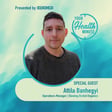
YHM 069 - Living on the Spectrum with Dr. Christopher Jardine image

YHM 069 - Living on the Spectrum with Dr. Christopher Jardine

Your Health Minute
Avatar
48 Plays2 years ago

Tune in to the latest episode of Your Health Minute as we explore the intricacies of living on the spectrum with special guest Dr. Christopher Jardine. 

Join hosts Max Marion and Calvin Morrow as they delve into crucial topics impacting individuals on the autism spectrum. From the role of omega-3 fatty acids in supporting social and behavioural aspects to understanding inflammation of the brain, Dr. Jardine provides insightful perspectives backed by research and expertise. 

Discover the importance of addressing nutrient deficiencies, supporting liver health, and understanding the significance of fat building blocks for brain development. 

Learn practical tips for creating a nourishing lifestyle tailored to unique needs, and explore the role of methylation in autism spectrum disorders. 

Follow Dr. Chris
@dr.jardine.nd
Recommended
Transcript

Introduction and Guest Introduction

00:00:10
Speaker
Hello, everyone. Welcome to another episode of Your Health Minute, brought to you by Aqua Omega. I am your host, Max Marion, and with me, as always, is my co-host and moderator, Calvin Morrow. Hello, everybody. And so today we have a very special guest with us, Dr. Jardin, and we are going to be talking about living on the spectrum. Dr. Jardin, welcome to the show. Hi, everybody. My name is Dr. Jardin, and nice to meet you all.
00:00:40
Speaker
Thank you so much for being on the show. This is a great topic. We have never covered this before on the podcast. And I think we're going to be able to provide a lot of great insights for our listeners and a lot of valuable

Childhood and ADHD Diagnosis

00:00:52
Speaker
information. But before we dive into all that, Dr. Jardin, I'd love to love you to tell our listeners a little more about yourself and about your story and how you got into naturopathic medicine. Yeah, definitely.
00:01:08
Speaker
First of all, my name is Christopher Scott Jardine. Growing up, everybody called me Scott. My dad's name is Christopher. That's why. So yeah, just growing up, I was that typical child, pretty much like
00:01:26
Speaker
couldn't sit down and you couldn't speak to. Basically how I used to think of my mind, it was just like I was stuck in traffic and all that noise, that honking. When you think of traffic, you just say like,
00:01:41
Speaker
all that noise, the city noise, the honking of the cars and so on. And it was like that every day. But no one really understood how my mind was. And there were times where I was just like, there'll be peace where I guess it's like dopamine, where I'll be hyper-focused in one thing. I was always hyper-focused because
00:02:01
Speaker
It was constant noise. I had just had to deal with it. I didn't really understand why. I thought everybody's head felt like that. It was always this constant noise. I was always focusing on life and nature. That's where I found my piece. In the classroom, I was always looking outside, just thinking of everything other than what was going in class.
00:02:23
Speaker
unless it was science or math. And this is like basically kind of like the hyper focus like aspect of what I would definitely kind of like show basically was the diagnosis in the later of my life. But yeah, I definitely
00:02:44
Speaker
never was able to sit down. I would get put out of class constantly. If there was seven hours of class time, I was probably in class for two hours of the day, just science and math and maybe fiscal education. Definitely. It was really interesting how everything from my
00:03:06
Speaker
beginning, just like kind of like structured and pinnacled into naturopathic medicine, but again, did not know much.

Effects of ADHD Medication

00:03:17
Speaker
Yeah, so as a kid, definitely, you know, my first diagnosis,
00:03:26
Speaker
was around when I was 10 years old, I was taken to the doctor and I was like, yeah, this kid has ADHD. And they thought I actually couldn't hair either. So they, I remember having to do hearing tests and he's like, no, he could actually hair really well. He's just like selective hearing, let's just say, but to be honest, like, um, it didn't really answer anything. They put me on medication and I was taken off of medication within,
00:03:54
Speaker
one or two weeks just because they don't really tell you that how like the medication can help you focus but focus on what and when I was actually focusing was on the emotion that I was different. How angry I was to not be accepted for who I was like, I really was just like, I don't know. I didn't even know that I was on the medication. All I know is just focusing on on
00:04:20
Speaker
the negative emotions of like, something's wrong with me. I'm not being so you're so you're so young at that point, too, right? You don't you don't really know what's going on. You don't have a full understanding of what's happening. No, like I'm just being like, I'm just like, why? Why can't I do this? Like, do I actually is this how I'm supposed to behave? My body is like telling me it's like run and jump and sing and make people smile and laugh. And you're saying that's wrong. Right. I'm just like, but that's what I get
00:04:49
Speaker
I'm entertained by I want to like bring life and smiles to people like the first thing I wanted to be when I was a child was a dentist. I wanted to make people smile and confidence because I thought that how like confidence was in your smile but that later learned that how like people just smile just like brush things off they're not really
00:05:10
Speaker
happy and confident and that was a really odd thing because I was just like I was always real with what you get is what you get like I had no I couldn't I couldn't decipher certain like this is how you behave in this time and place like I was just like I'm me and I'm just going like go where I feel the highest elevation of joy and dopamine I'm just using dopamine because like
00:05:37
Speaker
I guess in the science realm, you're just like, where's the dopamine at? And you just hyper focus on that every individual. But I was very a high risk person. I definitely did a lot of things that I learned in life. Like, even though that makes you feel really good, you should not do it. I would definitely say I was like a scientist in just the beginning, just like having to learn
00:06:08
Speaker
through trials and error. Maybe you should not do this. You actually only have one life as well. But I would speak on that aspect later.
00:06:21
Speaker
Yeah, so after the medication, it didn't work. It didn't work for me. I had gone in and out of it multiple times in my life, but definitely it didn't work for me. It was just playing the band-aid. Yeah, it helped me focus on maybe
00:06:43
Speaker
the other subjects, but realistically, I was focusing on everything other than what I should have been focusing on.
00:06:57
Speaker
I think it was like really my mom. My mom just like she would always bring home like cod liver oil capsules and I think like my body always knew what it wanted.

Dietary Impacts on ADHD

00:07:09
Speaker
I can't explain it to be honest. Like I didn't speak much growing up. I had like
00:07:19
Speaker
pretty much like delay. Like if I saw myself as a young kid, I'd be like, yeah, you definitely like had delay. Like I was in remedial. I couldn't read for a very long time. And like, it was very hard to read. It was like, I was constantly distracted. The words were like spin. I remember like my younger cousins, we went to get the Harry Potter book. And
00:07:43
Speaker
they were able to read it within like a week. And I remember they gave me like the book that came with it like it was like a dragon book that had like images and I was just like, like even that was like too much for me to read. But why I realized that I can read
00:08:02
Speaker
nonfiction with science and I was like focusing like science. And that was like the only thing I could like actually read and turn the page, turn the page. But like that, that took some time. That took some time. It was very, teachers had to learn that how it took time with me, with what was actually going to grasp my attention and where I will actually be able to show
00:08:32
Speaker
But back to those cod liver oils, because that was something that my mom didn't really put out for me. I would just go in the cabinets and I would just eat all. I would just eat a couple, right? And that comes back into the story because aqua megafish oil kind of pulls into that. But I want to talk about just what life was and
00:09:00
Speaker
There was a point in time, I was always like, not a point in time, a very long time, I was always vomiting out food.
00:09:09
Speaker
I would be that child that I would want either chicken tenders and fries if I went out all the time, or I would be climbing a tree eating fruits. I was always in trees, everybody's trees in the neighborhood eating their fruit. I'm actually from Trinidad, so fruits are everywhere, and your nature is everywhere, and you're just like... The world is like...
00:09:35
Speaker
grounding, right? In that in that realm, and just like you're able to be barefoot, bareback in trees in the nature. That is something that how like, definitely, I would say helps a lot in the in the realm of like, stimulus, because like you will learn that how children with autism, and on the spectrum, they're very hypersimilated, and sometimes, either you have to
00:10:05
Speaker
desensitize them like you see them wear gloves, hats, it'll be warm. They're still wearing that full sweater. They're wearing the full pants. They're wearing socks. That was something that I always did. I'll be in like hot weather and I was just with that because like, I felt safe and I felt like I was being hugged at all time. It's really interesting in that aspect because like, people don't know why
00:10:30
Speaker
It's just like the world is very loud and they're feeling it all the time. So if they're desensitized, they can actually like focus a little bit. It's like everything is like you need to like get their focus hair and hair is very inch approach, very inch approach because it's going to take time.
00:10:51
Speaker
I'm just going to give it back to you all just to help the guidance because I'm just going to speak about the life. I think it's great. My mind where I was going with that was like when you were in school, I think maybe there's a lack of education or lack of understanding when it comes to conditions like ADHD or people that are living on the spectrum. It sounds like there would have been a completely different way that you could have been stimulated and that you could have been educated, which would have fit perfectly with you.
00:11:20
Speaker
You know, and I think like, even I think about my nephews and like, you know, they're feral boys, like they're busy, like they barely sit down, they're up, they're moving. Compared to my girls, like my girl's like, my oldest will sit, she loves to read, she loves to draw, both of them do. The youngest is a slightly more active, but like I looked at differences in it too. And I can imagine like how painful it must be to have to try to force someone to sit there and focus
00:11:49
Speaker
on something that's like, you know, of non interest to you, like, and I even remember myself, like, in school, like I was a busy kid, too. But like, and I math, math, science, music, no problem. I could focus on that all day. I hated language. God, I hated language. That was it was so difficult for me to kind of get interested in that.
00:12:07
Speaker
Um, but ask me math, like even now, like I can spit out numbers. Like, no, it's just, it's, it's off the top of my head. It's, it's just, it's just the way my brain works. And I think our educational system tries to put everybody into this little box and it doesn't work for everybody. It just really doesn't. And that's, that's all I could think about. And I was empathizing with you as you were telling your story. Cause I was like, this is, it's kind of sad that we're trying to force people into this very specific box that doesn't work for everyone.
00:12:37
Speaker
Yeah. And the thing is like, you know, as humanity grows, we learn and I never held, I used to hold a lot of grudges. I used to hold a lot of grudges in a weird way, not with the person, but against myself for not being able to
00:13:00
Speaker
be compatible with everybody else because I was like, I'm the problem. I'm wrong. And I used to just like fuel my, I'm going to like figure this out. I'm going to figure out this problem because

Journey to Self-Acceptance

00:13:13
Speaker
I was so good at solving problems in like math and science. I'm going to figure out this problem. I was so angry at myself. I was like, you're not
00:13:23
Speaker
you're not accepted because of you and I would just like burn this rage like I'm going to be, I only competed with myself. I didn't compete with anybody else. I was just like, everybody else was my friend and I was like trying to figure out what were they doing to succeed because you bring up the girls and it's an actually interesting thing because at a young age
00:13:45
Speaker
I was always in trouble. I was always in trouble. I could not not get in trouble. I was just like, it's just me. And I remember looking at girls, I'm like, they're so smart. They don't get in trouble at all. And I just thought how that was. Like from a young age, like four, five, six, seven, eight, I was just like, girls are so smart, they never get in trouble. And that was like my, if you don't get in trouble, you're smart.
00:14:15
Speaker
You made that connection. I did not think I was smart until I was in med school. It was actually crazy because I would tell that story and they're like, you didn't think you were smart? I was like, no, because the story is just like, I would come in the top of my class
00:14:36
Speaker
in science and math and sometimes in class general. I would play, I used to play like either varsity or like almost varsity in four different sports. I was track and field, soccer, field hockey and rugby. And I played varsity to many of those levels. But again, I would get medals, but all those things were removed from me.
00:15:06
Speaker
Um, growing up, like if I didn't get my discipline and my conduct high, I would just get no, it sounds like that was counterproductive because you almost need those things, right? Like that's like that, that hyper stimulus, hyper focus that helps you kind of get in the zone and blow off some of that energy so that you can focus on other things. Yeah. Yeah. It's very interesting because like at the end of the day, I was kind of brought up like, uh, like
00:15:36
Speaker
negative criticism. Like, okay, you always have to like prove yourself. And, and there was no excuses, like, because remember, I come from Trinidad. And to be honest, like, we were like, I feel like we're kind of way back in the emotional, we were way back in the emotional intelligence of like seeing children for like these disorders and stuff like that. And to be honest, I don't really like to tell people my, my disorder, like,
00:16:06
Speaker
And it's more the how like, I'm Christopher. And I tell this to my patients, I'm like, you're so-and-so. Your condition does not make you. Your condition is living with you. You still choose. And you make these choices. And as you gain consciousness through life, the people that actually like spent that time with you be like,
00:16:36
Speaker
You're not a problem. There are factors to this equation that you're just missing. And I'm going to help you find those. Those are the people that really helped me. But on the opposite side, the people that didn't give me that just reminded me the realism of life. Not everybody's going to like,
00:17:00
Speaker
give you handouts. You're going to have to not make excuses and you're going to actually have to overcome these obstacles because not every day your parents are going to help you get over them even though my parents were there to help me but
00:17:17
Speaker
Majority of times, I found myself learning by myself how to fix this problem because some people don't even think you have a problem. The second part to my diagnosis wasn't diagnosed until my later 20s, where they were like, you're on the spectrum.
00:17:39
Speaker
you possibly have Asperger's, but we can't diagnose you. They couldn't give me a diagnosis. They're like, you have Asperger's, but we're going to say you're on the spectrum. And you have to figure it out because you're smart enough to figure it out, is what my guy just said. And I was just like, you don't have the answer? He's like, you're defying.
00:18:05
Speaker
they sometimes they only have medication and CBT, cognitive behavioral therapy. But if you have a defiance, like ability, like you're like, you say no, this is not the answer, then certain people can help you. But there are other ways to help you. And this is why naturopathic medicine started coming into the situation, where like you have this whole tool belt, and we can help each individual the way that they want to be treated.
00:18:35
Speaker
And that's the way that it's not only one way. So you took it upon yourself then to kind of find what solutions you could in order to help with your situation. Am I understanding that correctly at this point? Yes, because
00:18:52
Speaker
Like you either sink or swim and I wasn't going to sink. So what did you start to do at that point? I'm curious. I realized like, what was my base foundation? I was like, okay, sports. Sports is my base foundation. I know when I go to the gym, I feel better. I think better about myself, my life. When I eat well, so nutrition was the next thing. When I eat well,
00:19:20
Speaker
I think better, I feel better about myself. I started eating as like, if I eat these rainbow vegetables, I'm going to start encompassing more nutrients because of my science background. I feel happy that I'm eating this way.
00:19:42
Speaker
But to be honest, when I ate the way that I should, I would feel sick. And it was not something that I did to myself. I was a person that vomited if I ate certain foods.
00:19:55
Speaker
And we didn't understand why. Your body was trying to tell you it was rejecting it, right? And it's so crazy that how like, if you listen to your gut, your gut is already telling you, don't put that in your mouth, right? Or we need citrus. We need more citrus. And you're like, what? Or you like, it'll come to you. Why am I craving salt? Why am I craving? Yeah. Why am I craving protein? Why am I craving? Yeah.
00:20:20
Speaker
And it's so important because I remember, and why I will say this is because like, there was once upon a time, right? And I'm a little embarrassed by this, right? But I had...
00:20:33
Speaker
these like lumps in my nipples, right? And this is actually the crazy story about like me and the medical assistant. Me and the aliphatic conventional side, just because of like something just didn't sit right. And I still love that side. It's a base foundation, but I had lumps in my nipples and it's called like gynecomastia, right? I had this when I was like going through, when I was like 13, 14, 15. And
00:21:02
Speaker
something told me stop drinking soy milk. Stop drinking soy milk because I was actually raised on soy milk instead of milk because my sister was, we thought my sister was allergic to milk.
00:21:18
Speaker
I went through- Jacking up your estrogen and that's who gave you the issues. Yeah. Right? So this was actually one of the first things, like this was the first thing that I was just like, I removed out of my diet. But I went to the doctor first and I was like, I have these
00:21:36
Speaker
lumps of my nipples and I don't know why he's like oh that's puberty and then someone said just remove the soy and I was like okay and I removed it and they went away like they went away substantially and then
00:21:53
Speaker
When I was in my 20s, I went back to him around 23. I went back to the medical doctor because I had eczema all over my face. I was having eczema all over my face. I was like, I think I'm intolerant to gluten. And he was like, that's a myth. And I was just like, OK, I remove gluten.
00:22:18
Speaker
my eczema went away. Not only my eczema went away, I was a person that recalled it, itis, you ate food and you passed out. Like I was just like, I'll always eat food and pass out, right? I would just like fall asleep in class or I would not be able to like think straight. And I was always like, what is this? What is, what is occurring here? And I remember I was just like, well, after that,
00:22:44
Speaker
I was like, okay, certain foods are fueling me and not getting me to my distance. What foods are getting me my distance? What food is making me think better? I need to feel myself just like a car takes unleaded diesel, which one is necessary, which one's going to guck up the

Sensitivity to Food Impact

00:23:04
Speaker
engine, which one's going to
00:23:07
Speaker
we have engines and we're going to fuel ourselves on certain foods and oils and water. I wonder if you had that intuition built in with you because of how your brain works, because not everybody works that way. Not everybody has that level of intuition or that level of connection with their body, right? Like where I feel like I have a lot of that too, where it's I can take something and I can feel it like reacting with me like super quickly, almost to the point where I know what it's doing. But I think most people,
00:23:34
Speaker
There's no connection between their body and their food. It's just, it's almost like robotic. They just eat. It feels like you have this really unique strength and talent that you've kind of like discovered because of your perspective on the, on the spectrum, honestly. Yeah. I would actually say I'm a canary. Or maybe because of that hyper-focus because you can focus like really, really well into that and kind of see and feel it. Yeah. You ever heard about the story about the canaries in the coal mines?
00:24:03
Speaker
Right. So my system seems to be like not the, not the best, right. In terms of with toxins, like it would just accumulate toxins to a high level. Um, and basically if I continue to eat a certain way, I'm going to pay the worst, like I'm going to have like a price. Like I don't, I don't know what's the exact level, but like there was a point in time. I did not talk like this. Right. I did not talk.
00:24:32
Speaker
There was a point in time where I was like, how do I create sentences? Like I'll be in my 20s, 21, 22, 23. And I'm like, I will watch my sister communicate and everybody gets, should get everybody's attention. But I was not able to like put multiple words into a sentence. I would be thinking like, and this after, during my undergrad. You would never tell today. No, I would never guess that. Never.
00:25:00
Speaker
That's incredible. Good for you. That's really cool. The communication aspect. And it's like it had to do with removing all of the guck, all of the mucus, because in Chinese medicine, we actually look at people with autism and on the ADHD as a lack of flow because of there's an accumulation of mucus, a phlegm. Right. And I always had what is called like a post nasal drip.
00:25:29
Speaker
And different foods would increase my mucus. If I ate dairy, I would get acne with pus. I would get sinus congestion. I'll get diarrhea. All that is mucus. If I ate gluten, I'll have eczema, bloating, and gas. If I ate eggs, I'll get cystic acne on my forehead. I'll get eczema, and I'll get a lethargy and a sedation behind my eyes of inflammation.
00:25:58
Speaker
And if I ate refined sugars, I would have these like small pimples on the side of my face that didn't have pus. And I will have these sugar highs and sugar crashes. Like you want chaos, give a child different color dyes with sugar. They would just start to create havoc. Their personality, their behaviors,
00:26:26
Speaker
Which is how most that's how most of them are starting their days, right? Like with those like sugary cereals or or treats or pop darts or whatever. It's all full of dyes and sugars. And that's how a lot of kids are starting their day. I couldn't I can't eat anything that is considered like breakfast food. Basically, if it, right, close butter, eggs,
00:26:50
Speaker
Um, and those like type of meats or like the sugary cereals, I can't, I can't eat that. If I want to actually perform, I'm going to feel sick. I'm going to actually clog up and I would not be able to like communicate. I will not, I will basically either fall asleep or be too hyperactive. I can't even control a way of thought. That's really cool. So what was like the big turning point for you? Like, what was like your moment where.
00:27:19
Speaker
It was like, okay, I'm taking control of this. And like, what were the steps you took to really start making progress to be able to take control of your condition? Well, when I started to see the correlation between my symptoms, because clearly no one likes acne. No one likes to be clearing their throat all the time with science congestion. No one likes, I thought diarrhea was normal throughout my whole life. I thought diarrhea was like normal.
00:27:48
Speaker
No, because no one talks about food, right? And as national doctors, we talk about food. We're like, what is your product? What are you producing? You are actually producing, you know, like urine, stew, mucus. These are all production. Like you are a factory. What are you producing? Is it good quality or is it poor quality? And
00:28:14
Speaker
It's such a taboo topic, but the thing is, we can tell so much by why you're in discomfort. You're not supposed to be living your body in discomfort. Basically, I had a dream.
00:28:39
Speaker
I was told, in this dream, I was told to put physical medicine, what we know as allopathic and mental medicine, with medical medicine and nutrients. And it was a very
00:28:56
Speaker
big dream in my eyes. And I woke up and I was just like, okay, I went to talk to my priests. And I was just like, I had this dream. And he's like, you follow that dream. And I was like, okay, I'm gonna follow this dream. And I didn't know how to play together. I did not know anything in Trinidad. No one knows about what naturopathic medicine is. I remember I
00:29:23
Speaker
wanted to do, I learned about acupuncture and the Chinese medicine. I was like, okay, this is something I want to do. And then someone, someone like just one of my friends just called me one day. I was just like, I feel like you'd be good at naturopathic medicine.
00:29:39
Speaker
And I was like, okay, I looked into that. And I was like, this is exactly what I want to do. You've got to learn all about medicine. That's a good friend. I know. Because I was talking, I was like talking around the subject and she was just like, have you ever heard about nashbethic medicine? And I was just like, no. And then basically that was when I was 25 and I was 25. And then three months later I had applied, I got in and I
00:30:07
Speaker
was living my passion every day, that how all I knew I was figuring out answers I could help others with. And it's hard. Could we, um, sorry to interrupt, could we let our listeners know where you applied? Cause you were living in Trinidad at the time, correct? Yeah. Um, I applied to Canadian college of naturopathic medicine. Yeah. So much work with such a great school. So that's a, that's a life changing moment for you getting into that school, right? You're going to be moving.
00:30:38
Speaker
It was, it was one of the best moments of my life because every day, I think at that point, everything was dope with me for me. I would be the kid, the heavy kid. I would be that person. I would take no books to class.
00:31:04
Speaker
I'm just there putting up my hand talking with the prof because like we learned different, right? And hands-on, I was just like, because we all have backgrounds at this point in like pre-med in science and biomedicine was my undergrad. And I was just like, I'm going to apply my information. Like every year we're applying this information. So I'll just like be talking,
00:31:32
Speaker
like life it's just life like oh I can't have this okay but I if I don't have this I have this I have these benefits and this is one thing that you have to talk to your patients about it's just like are you do you want to not be able to communicate do you want to have no control of your attention and do you not want to have
00:31:56
Speaker
Do you want to have anxiety because you're nutrient deficient, there's a malabsorption, there's a mucus production? Because this is what it really is. You have inflammation, then you have mucus production, then you have malabsorption and nutrients. And because you don't have these nutrients, you can't perform.
00:32:20
Speaker
my patients with this, like, we're like, what can you do today? What can you give up and what can we give you today to help better

Benefits of Omega-3 Supplements

00:32:28
Speaker
you? And one of the things is Omega's to help with decreasing the inflammation. So usually I will start with a high EPA because these, these children, patients, people, they are,
00:32:49
Speaker
having increased inflammatory markers, right, from the foods that are inflammatory. They don't know which ones is yet. So we're going to give them a high EPA to decrease their inflammation so that how their brain is not, their brain is inflamed. They don't know that. And one of the things is that how the brain is 60% fat.
00:33:12
Speaker
Right? We need 35% fat. What type of fats are you putting into your diet that's going to be feeding this main organ of fat? And well, it should be the best. Is it butter or is it olive oil? Is it coconut oil? Like, so these, these, these things, like from just a simple experiment, right? So I have a couple of shot glasses on my side, right?
00:33:42
Speaker
And I had them out last night. I put a melted butter in one. And this was the, this will happen, right? You can see like fatty streaks, right? Through it. And there's a hard substance to the top. Yeah. You're putting your finger on there. It's not breaking through just for everyone who's just listening and not, uh, and not seeing this. I want to describe it. Yeah. And the glass is actually like,
00:34:13
Speaker
Cloudy. Cloudy, right? And fatty cheeks. Now we're not even talking about atherosclerosis. We're just talking about, we're just talking about the brain. I'm just saying like, do you want a cloudy brain in a way? And now this is water. What was in the first one? Sorry. So that was butter. That was butter. Okay. This is, this is water. This is butter.
00:34:42
Speaker
And this is olive oil. Now both, everything is just put, this was all happened last night, right? So like, again, the sides are not, there's no streaks. When you have that mucus in the back of your throat and you're trying to clear it, that's like the butter on the sides.
00:35:04
Speaker
Right now I'm not trying to downplay butter, right? I'm just saying I can't have butter. If I was without butter, I'm getting acne, I'm getting diarrhea, I'm getting science congestion, right? And now this is, this is coconut oil. Now coconut oil does not have the fatty streaks on the side. It is hard on the top, but again, this is without the other factors of the body, right? Like salts that help multiply fats and so on.
00:35:34
Speaker
So I don't want to downplay cooking oil. Cooking oil is one of the, it is a very good fat fatty acid. Now this is, this is fish oil, right? I, this is something that I take daily. So that's something I take daily and that helps with the inflammation.
00:36:00
Speaker
So usually I start with a high EPA to bring down the inflammation. And then I go high DHA to help with the neuronal development that has not, because of the deficiency, the neurons have not been building as best as they could. So after we bring down the inflammation, we want to help support the neurons. And then we would like just find a balance, a standard balance is what I will put them on. So we go high EPA and high DHA, then a standard.
00:36:29
Speaker
And I usually don't take off patients off of the only supplement is fish oil, just because no one eats fish. And the fish that we get these days, that's another story. It's not necessarily safe to consume fish more than once, once, maybe twice a week because of all the environmental contaminants, PCBs, dioxins, heavy metals, even though microplastics they're finding in some of these fish.
00:36:53
Speaker
It's really unique. You're right in the sense that Omega-3 is a unique situation where supplementation cannot weigh the benefits of diet. And the fact that, like you were mentioning, all the inflammatory foods that are mostly in everybody's diet are consuming Omega-6 to Omega-3s at a ratio of 25, 30 to 1. It's crazy. And so no wonder that the inflammation is living in the brain. When I was listening to you talk about when you started to take Omega-3s, I was thinking about
00:37:22
Speaker
There was a study that was done in Japan and it was a little controversial at the time, but they started giving kids, um, I think it was 40 grams of fish oil daily. And, and then they tapered that down to like 10, 15, but they had such incredible results with, with the kids on, on their focus primarily. And it had to do with speech and calligraphy.
00:37:45
Speaker
And, and they had done tests initially at the beginning when they weren't supplementing. And then there was two control groups and the one that was actually taking the high dose fish oil. There was drastic improvements in what they had done. And I'm like, I'm looking at this and I'm going, why, why aren't we looking at this more? Right? It's like, it's, it's so, you know, you mentioned putting kids on, on medication or even anybody getting put on, on medication.
00:38:11
Speaker
Um, but if you don't have the high level of intuition that you had, or maybe the support from your parents, they just kind of power through that. And then they're focusing on the wrong things. And it sounds like it could make somebody really angry. You know, so it's there's, there's so much opportunity for advancement in these types of things and understanding education. And I think if people understand that there's a more direct correlation to inflammation and how that inflammation ties into the brain health, we could be far better off.
00:38:40
Speaker
We can, but it takes a collective and we have to be very, I don't want to say fragile. We're dealing with a lot of people that are trying their best. Yeah, absolutely. There was a lot of anger in my life growing up and I learned how to
00:39:08
Speaker
find love and let go. I think you're a pretty special case though. I don't think everybody gets to that same level or that same kind of intuition to get to where you've gotten. Yeah. I don't want to say I'm the only one because I know that how there are some and there will be many
00:39:37
Speaker
I like that thought process. We're not as I am. I don't like to say that how I have, I'm on the spectrum and I have autism and I have ADHD.

Redefining Conditions

00:39:54
Speaker
I'm like ADHD has me to live with.
00:40:03
Speaker
So it is just, because I do know the struggles that a lot of parents go through with. And I see these good kids and they're just like, I love kids. Yeah, speak to them. Speak to them. I think maybe it'll help give some insight to the parents that are listening today. I love kids and I see them for how special each one of them can be.
00:40:30
Speaker
And they have so much to offer. They're going to be great in something, right? They just need to be fueled with good food and good love. And we can help remove the toxins. We could help remove the toxins that are there. We could help decrease the inflammation, the pain, the anger, the tantrums, and then we can feed them
00:41:00
Speaker
what they need to survive, to thrive. We can give, we can understand and reason with them. They're willing. If you're like, oh, they only eat this, well, out of sight, out of mind is a huge thing. They are seeing these foods.
00:41:23
Speaker
Get rid of it. Get rid of it. It's going to be hard in the beginning, but you can. You just have to find those substitutions. You just have to find those substitutions and it will eventually happen. I like that. Just some practical tips. Just leave out a plate of veggies and dip. Get the chicken nuggets out of the house. What about screen time? I think a lot of times,
00:41:46
Speaker
It's become a crutch, right? Where parents are just like, I just need a break. Just go on your tablet. And then kids just go on their tablet for, you know, an hour, but then it turns into two or three or a whole day. Like it's, it's, it's crazy. Like sometimes even my, my kids friends come over and they bring their tablets and I'm like, go put that in the house. You guys are playing today. Not a, not a chance. You guys are jumping on those tablets.
00:42:08
Speaker
Yeah. Well, you need to get mad at me. They get mad at me when I do that too. It's like your dad's so hard. I'm like, no, like you're not bringing that in my house to play with you. I came here to play, go swimming, go play in the tree house, do whatever you do.
00:42:23
Speaker
You have to be able to entertain those kids. You have to have the same energy to match it. It's hard to match their energy sometimes, right? Exactly. Especially when there's a ball of energy. And sometimes the parents themselves, they have not been fueling themselves to have that energy too. Because it is an environmental thing as well. It's not only a genetic thing. It's an environmental thing. And that's what epigenetics is. It's how we have a keyboard. But we don't have to press every button. These symptoms don't have to show.
00:42:53
Speaker
And the environment is what presses the buttons on the keyboard, and we get what we get from pressing that. So if you use the right food to fuel these children, they will have less and less of these negative behaviors. To match the energy, though, to be honest,
00:43:16
Speaker
My mom and dad, my mom and dad, like my mom, she is an angel. I don't even know if she knew where I was majority of the time. I would be everywhere and anywhere in the forest. Like I would come home with lights out and she'd be like, oh, you're covered in mud.
00:43:40
Speaker
where were you? And I was just like, I was having fun. She's like, okay, you're here. But that is not the actual situation for many, right? I was, I was here, I was very lucky or I had definitely someone watching over me. Because I turned out very different lifestyle. But in Canada, you can have that. It's just like,
00:44:03
Speaker
how you have to have that community. Community is so important, you know, like stimulus from other children to like, get your kids together with other kids, let them play like in and let the, because it's a different kind of stimulus. Like I sit down, I play with my kids, I go in the back, you build a snow fort, you know, this weekend, we spent the whole day outside because it snowed. But it's like, then
00:44:24
Speaker
one of Adora's friends comes over and play and I watch her play and she plays differently with them than she would with me, right? So it's a whole different kind of stimulus for her and for that other kid. And I think they need that. It's like, don't just keep them in the house watching movies, TV, whatever, like are on the tile. Let's get them outside, let them play with their friends. I think for everybody, even kids that are not, don't have ADHD or on the spectrum, I think there's going to be,
00:44:53
Speaker
a tremendous amount of benefit there. What kind of tips would you give parents that suspect that they might have a child that could potentially have ADHD or be on the spectrum? What would be the first step in a diagnosis? I know you mentioned your initial diagnosis was ADHD and then much later in life, they said, you might actually be on the spectrum or have Asperger's, but
00:45:22
Speaker
Like what was the distinction between those two diagnosis and like just any kind of information or advice you can provide, I think would be hugely helpful. So with ADHD, like when I was a kid, I definitely couldn't sit down. I couldn't, I didn't communicate, which actually might play on the spectrum side. Like I was like, you're speaking to a wall. Like I was just like, eye opened, just like,
00:45:50
Speaker
I'm like, I'm here, the Charlie Brown, wah, wah, wah, wah, wah. I'm like, anything. You say something with ball. I'm like, ball. Let's go play with a ball. Let's go.
00:46:04
Speaker
So if it was more sport-oriented, certain foods like mango, mangoes, find the healthy food options that they do like and just reinforce that. The sports that they like to play, what do they like to play as an activity? Reinforce that. But if you're saying, okay, what are the signs? Are they responding?
00:46:32
Speaker
are they responding to you? How long does it take them to actually do a task? When you actually give them the task, what do they do? Do they walk around and forget? And then, you know, so like, again, it's like, at what age do you expect this? And you want to like learn at the different learning developments, ages, and see, I'm just like, you're not competing. Like the person's going to finish the race. The race is life and life is,
00:47:02
Speaker
They're needed for something else. You may want something for them, but they're going to participate in life differently. And they're going to do it great if they are able to beat them. And that's one thing. That's how I really wish I was told more growing up. You're going to do life in your way the best. And once you
00:47:31
Speaker
Once you stay, good. I like that. I like that too.

Contact Information and Conclusion

00:47:37
Speaker
For all of our listeners who have been listening to you today and maybe want to continue this conversation, what would be the best way for them to get ahold of you? So right now I'm at Gerard Square, Circle Care Physiotherapy Group. So that's where I'm located. You can find me on my Instagram at Dr. Jardine N.D.
00:47:59
Speaker
Um, you can book on, you can book through there or you can go through the circle care, um, Gerard square and book through there as well. Um, so I'm just, I'm the naturopathic doctor there and I focus in. Well, ADHD, an autism, uh, chronic pain, which is again, inflammation of the body and fertility, which is.
00:48:24
Speaker
inflammation, malabsorption, nutrient deficiency, and how our body is actually running to be able to produce life and what life is truly.
00:48:36
Speaker
Perfect. I want to thank you again for coming on our show and telling us your story and also educating our listeners and giving them an insight into what it's like. So thank you. Thank you again. And if you made it this far. Yeah, I love the story. It was so great. It was so wonderful having you on our show. We'll have you on our show again, if you'll do it and we can talk about other things. Yeah, definitely. We can get more into the security of the science. I think that's how today I just want to give you like just life in a whole. I love it.
00:49:05
Speaker
So thank you, Calvin. Thank you, Max. It was very, very insightful. Just friends talking, right? That's it. Be sure to give our podcast a five star rating and we'll be sure to see you guys next week.