Transcript
Speaker: You are listening to something rather than nothing. Creator and host, Ken Valente. Editor and producer, Peter Howard. That's kind of like something. What's going on there? It's New Dutch. New Dutch. All right.
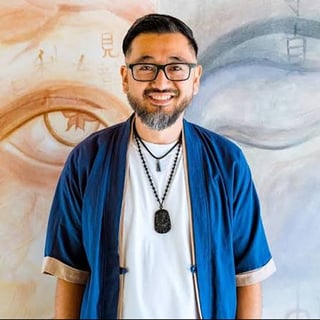
Speaker: We're recording something rather than nothing, and we have, as a guest tonight, BK Tuan, a poet, professor, teacher,
Speaker: And somebody who I met a long time ago, we actually have kept in touch more or less, maybe online for a little bit amount of time, but certainly been forever since we talked. So this is a great, really excited to talk with you, BK, and reconnect, but also
Speaker: ask you some questions so I can learn more about what you create and what you do, but also, of course, you as a human being. And the first question I have is, going back as a younger child, what were you like? How did you see your personality when you were younger, or how do you see it now?
Speaker: Yeah, I'll answer that question. But first, it's a pleasure and honor to be on this podcast. And yeah, it's been a long time. I think it was 2000 or 2001. We were in Lucien Miller's Buddhism in America seminar, graduate school, UMass Amherst. Is that right? Absolutely. My daughter, to put it in a timeframe, my daughter had just
Speaker: been born, she's going to the University of Oregon this fall, just to put it in context. Wow. Wow. So what, 18, 19 years ago. That's incredible. Absolutely. Yeah. And I was just, you know, I didn't know what graduate school was like. But I, you know, in terms of responding, answering your question. Yeah, I mean, I came here to America when I was very young. And
Speaker: We, we first lived in Revere, Massachusetts, then we bought a home in Malden, which is another city over. And there were a lot of Cambodians in Malden at that time. And, you know, going through the various school systems in that area, I was pretty miserable. I was a loner and outsider.
Speaker: It just did not fit in. I was very much alienated. In terms of what kind of a young person I was, I was an outsider. And I think that shaped the way I see the world. And I was looking for something to help me, to give me a sense of anchor, a sense of stability, a sense of a way of making sense of the world.
Speaker: And that was through reading, through reading. And as other writers have talked about them sure many times before, you know, you get excited by a writer, then you read and read and you, you exhaust the, the novels and the poetry, and then you start reading interviews. And then you start reading other writers from that. And then you start emulating. You want it to be Bikovsky, you want it to be,
Speaker: Carver you want to be Hemingway and then you get tired of those guys because they're sort of Super March show You know you you know you you gravity to other writers and the contemporary stuff now They're they're pretty amazing and all over the place, and it's quite fascinating But yeah being being being very different you know Visibly different you know my name is different from my peers names
Speaker: everything, it definitely, yeah, it shaped me in a way that, you know, some good and bad in terms of good stuff is without it, I don't think I would have turned into into the world literature.
Speaker: But it was a lot of pain, a lot of suffering. So literature, music, you know, those two art forms, they helped me, they sustained me, they kept me going. So I'm really a product of that and the library to the local library. But anyway, then
Speaker: Did that sort of answer your question a little bit? Yeah, yeah, absolutely. And we had talked before and you had mentioned about how that has really impacted what you create. And one of the things that I've found, maybe a supposition that I have is that some folks are really just compelled to throw themselves into those art forms and identifying as an outsider for whatever reason that that is.
Speaker: It provides possibly a different vantage point or a different approach to create an art. At a certain point in your life, do you have a need where you needed to create what you created? Like you didn't have a choice or did you step aside and say, you know, I need to, I want to write some things. I want to create this in order to process. I mean, did you feel compelled to do it? I guess is the main question.
Speaker: Yeah, it's a, it started as sort of a kind of a psychological emotional need. You know, I, I wanted to talk about, you know, how I came to be. And the experience of the refugee experience have shaped me. And also being an orphan has shaped me.
Speaker: And I've been carrying all these stories, these feelings, and I really didn't know how to express them, how to release them. So at first, it was really much about
Speaker: the need to tell, to write about my experience. You know, then in the process of thinking about my life, I also started to think about my family and just amazed in terms of what they went through and survived the Cambodian genocide and refugee camps and also
Speaker: the culture and racism of America. And so I started knowing to write about myself, I started to write about my family, especially my grandmother. She was a mother to me.
Speaker: When my mother died, my grandmother took care of me and became my mother. So I write as a way to honor her memory, as a way to pay homage to her. And also, I write about my uncles and aunts. Again, as a way to document what they went through. So in addition to that honoring and paying homage, but also
Speaker: to give them a voice to tell their stories because they can't tell their stories. Their English isn't good enough. They didn't have the kind of education that I have had. So there's that sense of obligation to family and people in terms of Cambodian Americans.
Speaker: And then once I get through that, there's other sort of reasons for writing about compulsion, obsession, all of those things sort of seem to drive me. Like even now I still think about things and I still write, I still put them down. Now I write about my daughter, about being a father for the first time. I'm working on my third book of poetry and that's all dedicated to my daughter.
Speaker: the experience of being a father to a girl during this new America, this America that is in a state of turmoil, this Me Too movement, this time out sort of movement, and then this anti -immigration sort of sentiment that's been happening for quite some time, but it has exploded, especially in the past two key months.
Speaker: So there's that sense of moving away from myself and family to the social political realm. There's pleasure, man. There's the pleasure of reading and the pleasure of writing, of making something beautiful. So there's all kinds of, in terms of the need to write,
Speaker: It's and the reasons why I write, there's all kinds there. Yeah, and I've read both collections or poetry. Yeah, it's really incredible writing and what I took from it,
Speaker: uh... the word family was was was was big because you did the enemy i mean i i think you know what when you're saying about you know trying to give voice uh... we hear that a lot but it's very important and i think you really do that consistently like the two right in such a way where the reader connects with like what this person was like or or what they said but um... both the
Speaker: when family is working well in passing along wisdom or just basically the ability to survive or what do we do or sharing resources or sharing food.
Speaker: But also when that is threatened, I think that the threat of a diaspora or being in a vulnerable state, in a war -torn area, all those are attacks on that value and that's what's important. So I see that continually in your writing. You really get a sense of it. And I think it was, and so I was blessed
Speaker: at the beginning where you're waiting for your daughter. And I think it was an homage to the, she's on her way. So it's kind of like in time and in place. And yeah, it's really powerful. So again, a sense of like, you know,
Speaker: You know your creative process you know, you're you're a professor and teacher as well as far as how those interrelate do you see Do you see yourself operating smooth in in the fashion of teaching, you know writing in literature? But also doing it for yourself Yeah, you know, I'm a very shy and quiet person and
Speaker: in public. So my job is to stand in front of the classroom and ask questions, listen to students' views and perspectives and opinions, and engage in discussion. So I'm not a, what do you call it, a charismatic teacher. And I think that that has to do with sort of my own early
Speaker: background that I mentioned earlier. But also, but once you are teaching materials that are very personal and real to you, my sort of the key to overcoming that shyness is finding something that you're really passionate about. So there's a wonderful correlation between my scholarly work, which is
Speaker: looking at Southeast Asian narratives, poetry, autobiography, memoir, fiction, oral narratives through the lens of war and immigration and home and identity and trauma and recovery and writing. It's all related to what I do in terms of my own creative work. So, you know, I kind of lucked out whether I was smart or just really fortunate.
Speaker: to figure a way where the teaching, the scholarly work, and the creative writing, they're pretty much the same thing. Or at least they're in different mediums. They're in different media, right? Each one of them is in different medium. But at the same time, they're tackling similar issues and concerns. So for me,
Speaker: Yeah, you know, I talked about the same thing in the classroom as I explore in my own writing. So there's their staff, and I think students, even though they're really, I work at Yale in college, and it's a kind of place where when I first arrived, I experienced a kind of
Speaker: culture shock. A liberal arts college, a private college, that seems so foreign to me. I didn't know such a thing existed before I arrived at Union.
Speaker: where students are, you know, some of them are very, very privileged. They came from a very good background, economic background. So it's not just an issue of, you know, racial differences, ethnic differences, but class differences that I experienced. But I think once you sort of teach in a way where
Speaker: where the students in spite or of their differences can relate to you on a human level, can relate and see that these things are very personal to you. I think that that barrier is broken and you can connect. So I don't know if that answers your question, but I mean, that's how I go about writing and teaching and different kinds of writings that I do.
Speaker: Yeah, and it was interesting you mentioned the piece about you know with the with the private college and some of those things right before I had gone to the University of Massachusetts before we met I'd gone to Marquette University Jesuit school you know very
Speaker: a lot of like you know class and all that class issues and and just being around a private institution like prior to that i thought i would never actually attend a private school it's actually still a strange concept to me and um it was a great experience um but it was a difficult experience you know at the time with with with those adjustments but it was one that was um
Speaker: It was like being in a different world. And I'd imagine starting out and being on staff over there at Union. Of course, me being a Union labor movement guy. I love that. What town is that in, BK, I forget? In Schenectady, New York. We're in Albany, at the capital region, not far from Albany.
Speaker: Yeah, yeah. So a couple questions very specifically about art as a concept. What is art? That's a really big question, and I still don't really know what it is. I know that it's beautiful and pleasurable. I know that it connects me
Speaker: to the community and also connects me to something more, something transcending, something eternal, something just transcending, something before culture and language.
Speaker: you know, sometime I read the poem and a good one would sort of put me in a kind of a good mental state, you know, there's a sense of finding myself in a kind of still point in my life and that's good stuff, you know, so it's not just the social, political, cultural aspect of art but
Speaker: there's also something that transcends that too. And, and yeah, I don't have a definition. I know that it's just, it has to do with the beauty has to do with something that is transcending, but also connects me to, you know, to the, the world. And then to,
Speaker: the world that's beyond this world. I don't know if that makes sense, but... Well, there's a lot that does. I mean, there's aspects of like how it impacts you emotionally, the sense of well -being that it gives you, the experience of the sublime or spiritual. I mean, there are aspects, you know, that you were talking about with the eternal, those components are there.
Speaker: Yeah, well, I took a course. I took a course with Dr. Cheryl Foster at the University of Rhode Island. I actually will be a guest on this show. Oh, great. Yeah, and she taught a class called the philosophy of art. So, you know, I'm asking you one question in an interview. I got four months to try to
Speaker: to try to tackle it, but it's a great question and one of which not all philosophers have grappled with. There's certain philosophical questions like if you consider yourself a philosopher in history, kind of like have to have an opinion on each subject and
Speaker: Artists, you know, the philosophers haven't always, not each philosopher has had strong opinions on that, but if you go back all the way to the Greeks, you know, and think about Plato's view of poetry, I mean, he had very bad things to say about poets that they created.
Speaker: you know kind of bad reflections of what was good and pure so there's you know it once you interrogate um the question of art in a philosophical way it becomes a lot of a lot of fun um but uh yeah so uh future episode um it will have her and uh it's a great question um there's one actually related related to you there's a there's um joanna valente who you've worked
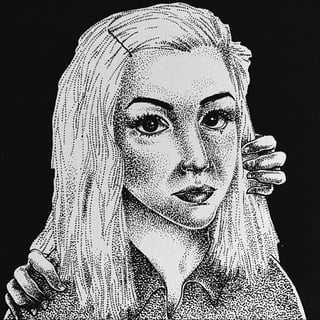
Speaker: Yes, she is a future guest as well. And my understanding now that you had done some poetry, but also she had done some drawings or sketchings that went along with that. Could you talk about that process and what your intent and what you're trying to do with that? Yeah, I would like to actually send her
Speaker: via email, a list of questions about the process. I was really interested in how she would, this is, I'm just sort of, and I haven't thought about this very clearly, so the words might not be right, but how does she translate from one medium to another? What does she notice? What does she pick up?
Speaker: How can she relate my experience of being a refugee Cambodian orphan in America? How does she relate to that otherness? So those are some questions that I really want her to tackle. Once she is done with her sketching, with her artwork,
Speaker: So, you know, I kind of really I kind of sort of sent her an email and see if she's interested.
Speaker: And I just sent her the poem. So it's not a situation where it goes back and forth, where there is a dialogue. Unfortunately, she's the one who's still responding to my poetry. It would be interesting if she were to sort of send me some of her artwork and I could write poems out of that. Joanna is also a poet herself. So it would be very, very interesting for her
Speaker: to do that. But I am interested in that kind of conversation in terms of how do you move from one medium to another? What do you notice? What do you emphasize? What speaks to you? So those are questions that I like to ask her.
Speaker: Once she's done with the project, what does she learn about me as a poet and how does that shape her as an artist? Those are questions that
Speaker: uh that i've been thinking about but have not sent her that have not formulated them until now until you ask me yeah she's probably going to be asked them twice once by once by you and once by me and i think you even your idea of uh you know if if if you take you know um you know a picture or a sketching and then say okay we're you know let me try to create a poem out of this it's it's that kind of trying to translate um
Speaker: you know, it's a process of translation of sorts. I mean, would a poem have a color? Would a poem have a, would it be the images? And if so, if it has an image, like, you know, is it the most powerful one? So yeah, yeah, that's good. Yes, let me know when that's on too. I'll let you know when that's on because we certainly have that. And so
Speaker: We got into kind of why you create and some of the processes. And I think in part of the discussion around your teaching, but also writing poetry and creating art at the same time, I think it connects to my question is, do you think that there's a duty, if you have an artistic inclination to work or to help create other artists, if that's what you're doing?
Speaker: absolutely not create other artists, but to support to encourage. I mean, you know, it's a very lonely world as a brutal world. The process itself is a lonely experience of thinking and writing and creating art. And then of course, the rejection, you know, the
Speaker: not getting this publication or this award or that. And now, you know, we have, in a good way, and also in a bad way, so many poets out there. And, you know, my job as a teacher, and also as a friend, is to encourage other writers and poets and artists
Speaker: because it's such a very lonely and brutal world that we just need to let each other know that we're there for each other. And that's what I try to do on social media, whether it's Twitter or Facebook or what have you. And also what I try to do as a teacher at my college.
Speaker: I don't think I create them, but I like to push them. I like to encourage them. I like to expose them to different kind of poetic forms and voices and ways of presenting, ways of telling stories, ways of beginning and ways of ending, and what do you do with the middle part and so on. So my job has really helped
Speaker: feel confident, help them show the different ways of doing, of writing and thinking and acting in the world. And also, you know, I have friends, Clint Margrave and Donnie Glocher and Alan Catlin, Alexa Rohn Fancher.
Speaker: And what we do is, you know, we are nice to each other. We support each other by, hey, you know, sending an email out saying, I have to strap. You look it over. Where are your thoughts? Ted Jonathan's another poet. All these people. Anyway, the point is there is an obligation.
Speaker: If we don't support each other, who will? And the world doesn't see art, poetry, literature, humanities as that significant. And that's just the way it is and the way it has been. But we are who we are. Whatever happened, you know,
Speaker: early in our life, whatever happened, this is who we are. And what we can do, instead of being petty and jealous, we are encouraging, we are kind, we are generous. You know, that's, that's, that's what I want to do. And that's what I've been trying to do with writers, friends and poet friends and students. Do what I can. And I lucked out, I have a lot of help from
Speaker: and other poets and writers too. So I'm just passing a baton. I'm just passing it forward. Absolutely, yeah. And an obligation, a duty to help other writers and poets. Absolutely.
Speaker: Yeah, and poetry as a particular place for me as I mean, as the years go by, I mean, I had a heavy period of poetry, which which can happen, you know, in reading and writing it when I was younger, probably from, you know, say 16 to, you know, probably early to mid 20s. And then, you know, other things happen or other art forms. And I didn't really pick up those volumes. And I think it was about two or three years ago.
Speaker: I was reading Bukowski's poetry. I was reading your stuff. There was a breakbeat poets. I got the poetry magazine and there's just this incredible vibrancy that I just like electricity like that just jolted me jolted me again and and of course where we were at a time where we shared the same patch of earth over there at Amherst with Emily Dickinson
Speaker: I didn't quite know as much about her. I've read enough of her poetry back then, but of course that's where we met back then. So right now, when it comes to poetry itself, all the power that it had, or kind of I had moved away from or not connected myself with,
Speaker: A lot of that's back, and in particular, that this form of art poetry is a big reason why I want to talk to a variety of artists, but of course poets and of course you.
Speaker: When it comes to, you know, I mentioned some names of some past poets in past history. One of the questions I ask my guests, which leads to the, you know, why is there something rather than nothing, is a little bit more connected to the process.
Speaker: Do you view what you create as coming from nothing that you've created, you've pulled it from wherever it was and created something, or do you view it a different way? I would sort of, instead of like that either or dichotomy, I would see that there's a complementary relation between the two.
Speaker: you know, from nothingness, and, and I guess, from something, you know, I, yeah, I, I think the, the stuff that happens, the earlier sort of work, it, it came out from the real world,
Speaker: from war and genocide, from this historical rupture where my family and other Cambodians are torn away from the land. We had to find refuge somewhere else. So it came out from that.
Speaker: But the creation of it, there's certain memories, but you have to construct that memory by stringing up words together.
Speaker: So there's that I think is, you know, the creative process. I think, I think at the moment, I'm moving away from narrative poetry, not completely, but also, you know, but at the same time, I am sort of trying to figure out ways to write. There's a wonderful book by Gregory for I think that came out maybe two years ago, something called like a primer for
Speaker: poets and readers of poetry And he talks about like the two strands of poetry one is narrative another one's lyrical The lyric is you know, it's the way It's much more abstract and it sort of exemplify the way the mind works the creative mind so I think that that in that sense is you know, we're talking about the
Speaker: the subconscious, we're talking about how we associate things, the way our mind sort of moves. So I think in that sense, there is that movement from something to nothingness, to the subconscious. I don't know what is the subconscious.
Speaker: You know, is that a nothingness or is that also something that is repressed because society said that, you know, you can't think this way, you can't act this way. So it's all repressed and pushed further down into the subconscious. I don't know. But I think the creation itself is it is you are putting words together in a way that is new. So in that sense, it's a kind of nothingness.
Speaker: Yeah, and I think BK, you probably are a trained philosopher because you're asking me questions off the question. You got the whole, you got it down. Yeah, it's just teaching us what we do. Yeah, absolutely. And I love what I have always liked to ask questions and I like to ask them in this format because one of the things I've discovered in doing the podcast is that
Speaker: It just creates the extra avenues. I'm a verbal processor and when those avenues open up I I kind of like to explore them with who who I'm talking to so the questions are just they're really the the prompt and you know kind of keep things Keep things moving you had mentioned the importance of music and obviously an overlap between music and poetry and that connection and
Speaker: Is is you know is powerful right you listen to that song? And you know the songs that save your life the songs that you hold you hold on to and I know you've had that experience I have to and I've talked to other music fans and and they they talk they talk about that and
Speaker: And we had, I think, in general, a lot of similar musical tastes and one of them was the Smiths and the kind of like, you know, that darker kind of lonelier outsider and
Speaker: which of course was inhabited by Morrissey and I've been asking Morrissey fans lately because I think it's such a complicated question is you know you got somebody who is an artist who's you know outspoken vegan who's beloved within the Mexican and Mexican -American
Speaker: community with with tribute bands in Español and you know kind of Irish English and had identified more with his maybe part of his Irish part of his heritage of you know being the outsider and then you have you have all these phenomenal songs that I and you and I love you know both Smith's and then the Morrissey and we talk about them and quote them and
Speaker: And so you have all this art and you have all these things that he produced and then he has troubling is the most charitable way to put it, you know, comments around.
Speaker: those of the Islamic faith in Asians and other groups that are at the least simply provocative or cryptic and or at worse some would say that an indictment is being erased. So the one
Speaker: The two questions I have is one is, you know, what's your view on all this? And second, how does that view impact your connection to the music, to the music that you love? Yeah. Yeah, that's a difficult question to answer.
Speaker: I remember some time ago, there was a record store that decided to stop selling Morrissey's albums because of his right -wing anti -immigrant, anti -Islam publics, rhetorics, right?
Speaker: And I'm against censorship. Let him sell his albums. I understand that he's fanning the flames. I understand that he's, as a public figure, for him to say something like that, that people see that as a kind of validation of their views.
Speaker: I understand all of that. And being a person of color myself, you know, representation is political, is loaded. And to have that negative portrayal in public, you know, has not only a legal ramifications, but also psychological in terms of how we feel about ourselves. With that said,
Speaker: And I do think that the Morrissey that I experienced was the Smith and the early Morrissey in the 1990s. And those were mine. Those songs were, I felt like they were speaking to me. And I can't, I can't sort of, it doesn't taint me. It doesn't, that was sort of, there's a wonderful block respond that Nick Cave Road
Speaker: regarding this issue. And I think his sort of position is something like, you know, you have to separate the art from the artist. And once the artist has his artwork out in public, it's no longer his. It's the audience who will make it theirs. And I feel that's very true from my perspective.
Speaker: uh you know that uh you know that um you know that that morrissey the morrissey that i knew that was uh and and yeah they you know his his music his songs uh saved my life really and um and um you know i yeah i think the best way to to sort of think about it is this uh you know separating
Speaker: that artwork from the artist. And you don't want to censor and say the artist and say, you can't do this, you can't do that. So for me, it's just very complicated as a person of color, but also as a writer, this is a challenging
Speaker: I don't have easy answers, but I know that I do not want to go and cross over the line of censorship. That I don't want to.
Speaker: But I also think that as representation, other people can't speak against Morrissey. Other artists, other writers and poets, musicians, and the public, they can speak in response. But I don't think they should ever say, I'm going to take your record off.
Speaker: So that's sort of there there's a line there that I wouldn't cross Does that make sense Ken? Yeah, that does make sense and it's actually an active question, you know I mean it's not the first time the questions been asked, you know Pete, you know, it's the Roman Polanski's films Woody Allen's movies, you know, there's a is Annie Hall the same movie now that it was then is the youth of Mario Hemingway and you know Manhattan Problematic, you know, I mean, so yeah, I mean I think it's a great
Speaker: It's a great engaged question. And I also think that both, not to speak for you, but I think as far as some of the artists that you and I are intrigued by, you're going to encounter some very powerful
Speaker: You know very powerful reactions to what they do. Um, you know, I think a Bukowski and you know the in this you know, I say Bukowski because you know, you have to deal with his drinking you have to deal with his relationships and In and what and what that means but when you when you read a
Speaker: If you get Bukowski, you get Bukowski, and it's this kind of like jolt, this kind of quick access to, I don't know whether it's anguish, joy, way of living, way of not living. Yeah, again, that's another, you know, I wrote an essay about my relationship with Bukowski,
Speaker: I think it's something called Unfather's Losses and Influences, and it's published on this website, this online magazine called Numero Cenk, a Numero Cenk edited by Douglas Glover, a wonderful, smart Canadian writer. Mikowski, for me, as someone who's an outsider,
Speaker: to his stories and I couldn't understand. I felt like I'm at home because I was never at home when I was growing up in Malden. I was at home with Bukowski's Whirl. And I didn't have a father figure, so Bukowski became a kind of a literary father figure for me.
Speaker: And I did find a sense of comfort, a sense of familiarity, like, oh, those are outsiders too, just like me. So I couldn't relate. But I know that his, you know, his relationships with women, the way he writes, the way he wrote about women, and his attitudes about immigrants, you know, those were problematic. But I can't
Speaker: I can't sort of denied and erase that moment when I encountered Bukowski and said, Oh, I could relate. And because of Bukowski, I read other writers because of Bukowski, I knew of other writers because of Bukowski, I became a writer. So I can't really, you know, even though he's controversial, he's Bukowski. The same thing with Morrissey, you know, that those people
Speaker: shaped me and influenced me. They gave me another life. I can't deny that. You know, I'm sure other people would, you know, disagree. And there are bigger ways to, you know, counter argue that. But at the moment, you know, very spontaneous response. I mean, that's, that's really
Speaker: You know how I look at it how you know and I it would be it would be false I would be lying if I kind of denied because key and you know and said oh He's just a male white writer. Oh Morrissey the same thing. It's just a racist you know a Brit or an Irishman And that I think you know
Speaker: I would be untrue to myself to say that I do see the problems, but also have to recognize that they were important to me, absolutely important to me. I don't remember the last time I bought a Morrissey album, probably in 2000 or something. But I can't deny that Morrissey was very important to me and the Smith was.
Speaker: And I responded to the words, the lyrics of Morrissey over the guitar of Johnny Marr. And that's the initial moment. And the music, you know, came in after. And that's how I listened to music back then. Yeah, and that's how that comes through. And I think it's always come through, I think, when we would talk is
Speaker: It hits you, and it's the power, it's that feeling.
Speaker: You know, there is a paucity of words sometimes when you are trying to explain, like, how did that song make you feel? Or after reading that poem, what person were you after reading that poem? It's not, it's not, there's no quick answer. And about poetry, and I asked this question,
Speaker: because of just sheer interest and maybe an anecdotal impression, but is poetry becoming more popular? Is there a revival or is poetry just kind of always been there just in its space? What's going on with poetry right now? I think there's an exciting, wonderful, frightening explosion with especially
Speaker: with social media, with Instagram and Twitter. And you have these young poets creating their own magazines and journals and publishing. And the old guard, they're gone. They're insignificant. Now you have these young kids doing it. And I think that's pretty exciting.
Speaker: And I've been reading this summer with a student, Nick Slurry, contemporary poets. And some of them are wonderful and very good. So yeah, there's definitely this explosion
Speaker: of wonderful stuff, but also there's, you know, because there's so many poets out there and writing all kinds of stuff that is, the market is, you know, it's flooded. We're inundated with poetry all over. So, you know, I don't know what's going to happen, you know, in the future in terms of, you know,
Speaker: hopefully the good stuff will rise. And what does that mean anyway, in terms of the good stuff? I guess what it means is what I like. But I think at the moment, it's just pretty all over the place. And you know, there's some good and there's some stuff where like, why is this poetry? You can just write it in prose paragraph form and it's fine.
Speaker: And then there's other writers, young poets who just, the way they phrase things, the way they see the world and so on. Anyway, I think it's very new. I think social media, Facebook and Twitter and Instagram, I think those, yeah, those,
Speaker: forms are, you know, so really challenging traditional print, traditional, you know, it's de -centered, so the world publishing. So we'll see what's going to happen to it, you know, I'm going to just keep on writing, I write what I need to write, and I write what I love to write, and I just keep on going.
Speaker: And I've lucked out in terms of getting publications out there. I've been happy with that. But I have a lot to learn as a writer, as a poet. And teaching is a great way to do that, a wonderful way to do that, to learn new things. And of course, you said a third volume coming out. Your first volume was called Gruul.
Speaker: And the next one, and so I was blessed. And of course I've been calling you BK, but that's not what the name is on the book. Can you tell us how Wunkang became BK? Yeah, yeah. Well, you know, I assume people, you know, think that, you know, that I was trying to, or that it came out of a place where, you know,
Speaker: People who don't speak Khmer, who can't pronounce Wenkong,
Speaker: sort of, you know, kind of give me that, that nickname, that initials. But that wasn't the case. Back in the 1990s, I was an undergraduate at Cal State Long Beach. And I was also a kind of an assistant editor to this wonderful friend for this journal called My Voice in Poetry.
Speaker: The friend's name, his name is Tivit Bunkasan, and he's Khmer, and we were working, the two of us were working together, creating this journal where we publish Cambodian -American writings, poetry, song, stories, anything, because we felt like
Speaker: there was a need. Number one, there was an absent of Khmer Americans interested in the arts and humanities. They wanted to create a space for that where anyone who's interested in it can submit their work and re -edit and publish it. Anyway, Tevred,
Speaker: you know, he calls me BK. And it's just it got stuck. And and now my daughter, she knows me as BK. I haven't told her my my real name yet. You know, so it came out of this sort of friendship, really. It didn't come out of like, you know, like, you know, some non Cambodian speakers call me this and get stuck. It was a Khmer person.
Speaker: So I really wanted to emphasize that it came out of friendship, really. And phonetically, after the K in the first name, it sounded more or less a W sound there. Bunkwung. Bunkwung, yeah. Bunkwung. Yeah, yeah, anyway.
Speaker: It's all, you know, it's all good. But when I do write, I like my name, my name to be printed next to the work. But I think, you know, everybody knows me at BK now. I think I'm good with that because it was my choice to keep that out of that sort of honor for that friend. So
Speaker: It just sticks. It didn't come out of any negative sort of moment there. Thanks for asking that as an opportunity for me to clarify that narrative. Yeah, absolutely. And so
Speaker: So what about the next collection of poetry? Anything you want to say about that, when that's coming? Yeah, it's going to be the end of this year. And it's a book of poems that trace the beginning of being a father to
Speaker: Now my daughter is about four years old, so it's like from zero to three or so. These poems that document the anxiety of being a father, the anxiety of being a father to a girl and not a boy. Being a father is political.
Speaker: And you pay attention to the way the world is now in terms of how women are treated.
Speaker: and are expected to do this, to do that, the inequalities, the oppression. So I'm all worried about this. And as a father yourself, you have a daughter. I think you know what I'm talking about. So the poems, I'll have to deal with my daughter and with Trump America, to put it bluntly.
Speaker: So there's social political elements in addition to just raising a daughter. Does that make sense there? Yeah, absolutely. It does sound great. And yeah, like I said, you can you can connect that through the specific poems in the past. And I know some that that you post
Speaker: and they are incredible. But what I actually, the piece that I like most about them is not any, you know, just kind of like easy sense that, you know, that puts you at ease. And there are aspects of many of your poems that do that. I think it has to do with
Speaker: the questions that you're asking in there, the things you're trying to interrogate in order to understand experience and to pull what you can from. And I think that's a huge, you know, huge motivation between art. And I think that's why the conversations that I've recorded thus far on the podcast, you know, yes, it's philosophy. Yeah, it's art.
Speaker: And then there's a ton of psychology, right? There just is in questioning and trying to figure out.
Speaker: There's some very similar processes that are going on, and I definitely look forward to that. Before I let you go, the question in the podcast in general, and I know I asked them in a different way, but BK, why is there something rather than nothing? Why is there anything? Well, nothing is me, Nirvana.
Speaker: no attachment. But we're alive. This is the way life is. There's something and there's something is good, even though at times painful. But I think overall, it's good. And I like the something. I like it now. I like, you know,
Speaker: the stuff that's happening in terms of being a father and having a daughter and and all that stuff and being a teacher being something is good at the moment. And I hope to hold on to that view. It is good. Okay. I don't know if that answers the title of your. It is good. Nothing is really I don't know what it is. I think we came out of nothingness maybe. And we're gonna go back
Speaker: But I like what we have now. I suffered early on. But then, you know, I was saved. I was rescued. And I just want to continue doing what I do and also help others as best as I can.
Speaker: Yeah, and I really appreciate that. And I just want to tell you, BK, it's been a great pleasure for me to be able to catch up with you, but also to be involved in this podcast and these questions that I'm asking.
Speaker: part of the reason why i'm doing it is in asking the questions i'm just like generally interested in in where it leads and um you know i i've always considered you a good friend it's good to reconnect um with you and um
Speaker: I just want to thank you for your time and very much look forward to the next, you know, your next volume. But I also know you do some intermittent publishing, you know, get some of the poems out there. I look forward to that as well. But best of luck with everything. And thank you so much being on the podcast.
Speaker: It's quite a pleasure, Ken. I really wish we could do more of this, not just for the podcast, but just to catch up. And how far are you from Portland?
Speaker: About 10 minutes just outside of Portland. Oh, man Happy happy. Yeah, there's a conference or writing Conference or scholarly conference that I could go to and meet you. It's been a long time Absolutely, that'd be yes, that'd be just absolutely absolutely fantastic and Yeah, Portland and you know some of Portland be yeah, it'll be a
Speaker: Great to see you again and a real thrill to connect back with you, BK, and enjoy the rest of your vacation, too. I know you work hard. It's well deserved. Oh, thank you, man. Thank you. All right, you take good care. Thanks, brother. Yeah, bye -bye.
Speaker: You are listening to something rather than nothing.