Become a Creator today!Start creating today - Share your story with the world!
Start for free
00:00:00
00:00:01

E6: Rain King Book, with author Geoff Harkness (Part I)

549 Plays2 years ago
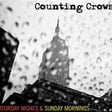
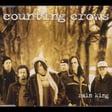
A few months ago, author Geoff Harkness released the book "Rain King: The Life and Music of Adam Duritz and Counting Crows".
https://www.amazon.com/Rain-King-Music-Duritz-Counting/dp/B0C5241RM4
We review the book (not-so-spoiler alert: it's an absolute necessity for CC fans), interview Geoff, and have fun conversations about a number of CC topics.
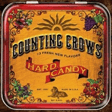
In this first hour (of two), topics include: Geoff's motivation behind this labor of love, the early/official CC message boards, what kind of fans go to the shows nowadays, the 2000-ish strategy of CD "hidden tracks", the Coke commercial/Pearl Jam "rivalry", how Adam balances his dual-motivations of fame and artistic vision, and whether CC fans really do have the highest IQ.
Recommended






Transcript
Introduction and Guest Appearance
00:00:17
Speaker
Welcome to Sullivan Street, where we have special guest Jeff Harkness today. But first, let's say hi to Chris. Chris, how are you today? Hey, I'm good. I'm good. A lot of good crochets in the last couple of weeks has been listened to. So it's been
Counting Crows Updates
00:00:32
Speaker
good.
00:00:32
Speaker
I know it's funny, partly because I guess we're doing the podcast, but it seems like there's all sorts of Counting Crows news, right? There's our podcast, we've been going to the concerts, the Banshee tour is in full effect, and there's been news there. And in the last couple months, a Counting Crows book was released. And that's what we're going to talk about today with Jeff Harkness.
Jeff's Journey with Counting Crows
00:00:52
Speaker
Jeff, how are you? Thanks for joining us. Doing great. Thanks so much for having me. I really appreciate it.
00:00:58
Speaker
So the one question we ask all of our guests the first time they appear on our podcast is before we get into the book, how did you become a big Counting Crows fan? I mean, if you even want to delineate a regular fan or a hardcore fan, and what has kept you coming back even before this book?
00:01:18
Speaker
Sure. Well, I heard Mr. Jones when it was released as a single to college radio. So prior to them playing on Saturday Night Live, I think I heard it in November or December of 1993.
00:01:33
Speaker
And just that song really hooked me. I got it on like a promotional CD. Didn't know anything about the band, but I just remember playing the song over and over that night. This was a time when you couldn't just go to the internet and look them up and find out everything about the group. So it wasn't right away that I discovered August and everything after. I don't remember seeing them on Saturday Night Live, but I certainly eventually found the album
00:01:58
Speaker
and fell in love with it just like everybody else. And I was listening to it and at some point Mr. Jones came on and I'm like, that's this band. So I've been a fan of theirs ever since. It was unfortunately not until 1999 that I saw them for the first time live.
00:02:17
Speaker
And but I did a little catching up because I saw I want to say maybe three times that in that first year after seeing them for the first time. And one
Discovering Music and Literary Influences
00:02:28
Speaker
of those shows, the show that I saw in 2000 in Omaha was just absolutely transformative. One of the best live shows I've ever seen.
00:02:36
Speaker
And I think that was, you know, those types of shows were what really caught me as a fan. How amazing this band is live has kept me coming back and seeing them over and over again. I certainly think that anybody who's a fan of theirs would share that sentiment. So you were spinning, Mr. Jones, like were you doing radio at the time?
00:02:55
Speaker
No, I was working in a bookstore and CMJ College Music Journal featured Mr. Jones in the November 93 issue because it was just released to college radio. So it's the second song on that promotional sort of giveaway CD that came with the magazine. Working at the bookstore, we got all of the free copies that didn't sell at the end of the month. So a huge music fan. I always took that CD home with me.
00:03:20
Speaker
And that was just on there that month. And that particular song, I mean, it was. It was like a lightning bolt. I know I played it 20 times that night, just over and over and over again. I thought this is like one of the most incredible songs I've ever heard. I had no idea who the band was or anything about them. That also sounds like one of those. Everyone has like those teenage dream jobs and you're like free music magazines. Tremendous. What more could it be for an employment?
00:03:46
Speaker
Yes, yes. And some of those like the imports, we it was a borders, we had all the imports, like the British music magazines, NME and Q and stuff. These are like $15, $20, even back then. So it was heaven for a big music fan like me. So we didn't mention it by title yet.
Jeff's Book 'Rain King' and Band History
00:04:05
Speaker
But the book that you wrote is called Rain King, the life and music of Adam Duritz and Cannon Crows. And I think
00:04:13
Speaker
The title's great. In a way, I was glad then that we named our podcast Sullivan Street, not Rain King, so we didn't get confused. Because I almost did. I almost said the Rain Kings or something. But also, like you said, that Adam Duritz and Kenneth, because a lot of it does focus on Adam, especially, I guess, the first half of the book. But you do talk about the group as well. Both of us have a lot of questions about what you said or in the book. And by the way, it was released, was it? I think it was May? Yeah, May 11th of 2023, right?
00:04:43
Speaker
Yeah, it basically just came out a couple of months ago. And we'll plug it again at the end, but I know it's available on Amazon by Kindle. That's how I bought it. And it looks now you can actually buy paperback and hardcover. Yeah, it's available in all three of those formats and eventually won't be long. We should have an audio book pretty soon as well.
00:05:02
Speaker
Fantastic. And spoiler alert, I recommend it. We both like it. Let's start with there. I highly recommend the book. I devoured it. And in fact, it's part of me that thinks that any hardcore Cruise fan that's listening to our podcast might have already bought the book, but just in case, and to remind them or new listeners to the podcast. I do want to ask though, before we get into the detail,
00:05:27
Speaker
Kind of like the first episode of our podcast, we said, oh, why did we want to start a podcast? I mean, what made you decide to write a book? I mean, even I knew that maybe there was an open space in the market for it, but I certainly wasn't going to have the energy to do it. Uh, and then how long did it actually, if you want to talk about maybe the process a little bit, how long did it take you to write it, et cetera?
Journalism Background and Writing Motivation
00:05:47
Speaker
So I mean, I've been writing for a really long time. I got my first job as a journalist in 1999, and I've been writing regularly ever since then. And I was a music journalist for five or six years. After that, I got into really scholarly and academic writing, writing like peer-reviewed journal articles. That's a particular type of writing. It's different and challenging, but also
00:06:13
Speaker
you know, has its limitations to and sort of structural things. And then I got into the last frontier, which was books. And so over the last 10 years, I wrote three scholarly academic monographs published with university presses. But
00:06:29
Speaker
You know, for me, so writing is just it's almost like breathing to me. It's just what I do and have always done. These types of books, these books about bands and rock bands, to me, like probably one of the greatest joys in my life since I was a child, really, was sitting down and reading an amazing book about an incredible musical artist or band and then also listening to their music as I read the book.
00:06:55
Speaker
And today I still think that that's one of my great joys in life and I love these books I always have I've read them since I was probably seven or eight years old and I've read them all and I'm a huge fan of the genre and to me it was just always Absolutely stunning that there wasn't a book about counting crowds I've been honestly just waiting for this book to be published by someone for like 20 years because I read these these books and it's like how could there be you know, so many books about Bruce Springsteen or the Rolling Stones or Prince and
00:07:23
Speaker
wonderful artists, REM, so many great books and great artists, but how is there not a book detailing Counting Crows?
Challenges in Band Biography Writing
00:07:31
Speaker
I always wondered that. So finally, I just decided kind of...
00:07:34
Speaker
that I would write. They say that writers should write the books that they want to read. And this is the exact book that I've always wanted to read, I guess. That's great. And I know what you said about the academic writing being very different. I do want to mention, I did at least briefly look at your other books. You had at least one other book on music, right, on hip hop, even though it was more of an academic, I guess, book.
00:07:59
Speaker
So you have, and you said your journalism background, you have written about music before. Oh, yeah. Now I have a deep background in music. And in fact, my dissertation research in Chicago was a six year study of the underground rap music scene. And my first book is about the relationship between gangs and rap music in Chicago.
00:08:18
Speaker
So that was a very sort of in-depth project, totally different genre. And my third book is a 20-year study of a rap group from the middle of Kansas that almost made it but didn't make it. And usually we hear the stories like Counting Crows are the famous artists. And so I wrote a book about a band no one's ever heard of, and I spent 20 years doing it.
00:08:41
Speaker
But taking a brief aside from your book for a second, I just wanted to have a couple lines in here to make all of us and our listeners feel better about themselves, which is that all three of us, for example, have dabbled in academia. And I say that because I only found out this like two weeks ago that someone did, and I don't know how good the study was, but somebody in 2014 tried to do some kind of quantitative study about the average IQ of people that like certain bands.
00:09:10
Speaker
And Counting Crows was, it was Beethoven, Counting Crows, and someone I never
Eddie Vedder Controversy
00:09:16
Speaker
heard of about, which you probably all, who I guess was very popular, what is it? Sufjan Stevens? You know Sufjan Stevens? Right. So those three, fans of Beethoven, Counting Crows, and Sufjan Stevens had the highest IQ. And you know what made me feel really good? That Pearl Jam fans were very average intelligence.
00:09:33
Speaker
Which, by the way, ties into the fight that's in your book about Pearl Jam criticizing Counting Crows on the Coke commercial. And I respect Pearl Jam, but something about them, and Eddie always kind of got on my nerves, and I was on Team Adam. And so I'm glad that we all have superior intellect, everybody that listens to this podcast, to Pearl Jam fans. And we don't want to exclude any of the Goire fans out there, either, because we know that you are very well-dead, too.
00:10:01
Speaker
Shout out to the Guar fans as well. No, it's not a great study. I mean, it's basically like looks at like most popular at certain colleges and translates like SAT scores too. It's not great. Oh, right, right, right. Yeah. Did you see that so interesting though? For all the purposes, we accept it as brilliant because it proves that we are very smart people for liking counting classes.
00:10:29
Speaker
And I saw that Ben Folds was also in the top like five or six, which made me laugh because we have two of their ex-band members with The Cannon Crows, right? So that made me laugh too. So yeah, let's focus on the book and Chris and I can take turns. And if you just, there's something you want to talk about, you know, either from the book or things you didn't talk about in the book. One thing I guess I just want to say, I appreciate that not
00:10:50
Speaker
content wise, but I guess format wise, I really like that, you know, you focus a bit on him growing up, but not too much, right? It's not just about his childhood. And then you talked about early days with the band, and that was great. And I thought it was
00:11:05
Speaker
the best way in the latter part of the book to separate it by album title. I thought that was the best way to do it. Chris, any other thoughts? One of the interesting things was that the in terms of like a discussion of Adam sort of pre
00:11:21
Speaker
counting crows life i feel like i heard a lot of those stories in pieces in general i feel like you did a really good job of kind of tying it through and going let's create a coherent story here because. I feel like we've been hearing all these things and bits and pieces over the years and you kinda put all the things together and go okay now i have.
00:11:40
Speaker
a little bit better picture of this journey as opposed to just hearing the snippets, and particularly the snippets that come out a lot, right? I mean, traveled across the country, yes, that we know that, that he was moving around a lot as a kid. That comes back a lot. But then the actual sort of some of the details within there I thought were really interesting. What did you pick up on? Is there anything that surprised you as you were kind of pulling that together?
00:12:05
Speaker
Well, I mean, the same way it was sort of a synthesis of things that I was sort of familiar with the overall trajectory of the story, but there were so many details that came out in doing the research and looking into it that many things sort of surprised me. And also, I wanted to sort of show, I was very interested in focusing on the music, and so this is why
00:12:28
Speaker
the chapters are built around the making of each one of their albums and really sort of focused on what was going on in Adam's life, what was going on in the life of the band, who was the producer, where was it recorded, how were the songs written, how did they change once they went on the road. I was sort of really interested in that part of the story, which I feel is often absent from these types of books.
00:12:52
Speaker
You'll really like, I mean, I'll just give you an example that many people have probably read The Dirt, which is that fun book about Motley Crue. You won't get almost anything about their music in that book though. And I thought, don't you guys respect your music enough to write about it? So I really wanted to, maybe not. But you would just think that the music is more central to the story. So I really wanted to foreground the music in the writing of the story and build it around there.
Early Fan Engagement Online
00:13:22
Speaker
then in coming in going through it there was so many parts of that story that did surprise me so even something like that the skirmish with eddy better i knew about the coat commercial but i had no idea about the eddy better thing and there were so many pieces like that along the way um that was one of the more interesting things for me too as someone who's like been following and reading about the band a lot like i'm like
00:13:43
Speaker
Maybe I heard a sentence about this, but at the details of them going kind of back and forth with it, I thought were very interesting about how annoyed Eddie Vedder seemed to get about this and how annoyed Adam got back for him getting annoyed.
00:13:58
Speaker
Right, right. I mean, it is so 90s, right? Because Eddie Vedder is literally the poster child of the word, you shouldn't be a sellout. And it's funny, because most kind of gross fans would say that Adam Duritz is also one of those people, right? Very, you know, that he's very idealistic and does things his own way and not a sellout. And I think that was part of this tension. Because Adam was probably like, are you kidding me about this, right? And for those who don't know the story, I don't want to spoil anything in the book, right? But
00:14:25
Speaker
Counting Crows did do a Coke commercial in 2002, around the time of the release of Hard Candy with the song American Girls. And what prompted Eddie, did Eddie Vedder just make a comment? Was it that he, on something and Adam kind of shot back? Yeah, I think he, there was a quote that came out, Eddie Vedder sort of putting down Counting Crows and some other artists who had done commercials and sort of saying, you know, they're out of the club now.
00:14:53
Speaker
And then Duritz also fired back in the press. In the book, one of the things that I did was I sourced everything so you megafans could go in and find the actual source of it, because there's often a lot more. I can quote everything that Adam Duritz, for example, said about this situation. There's even more. So the superfans can track down the original sources and read up even more.
00:15:16
Speaker
But there was some back and forth in the press and then the interesting part is that I have no ideas that Eddie Vedder shows up backstage at a who concert where kind of crows are opening and leaves this book for Adam Duritz about the evils of the Coca Cola Corporation and.
00:15:32
Speaker
Adam then gets it and has a quote in the press saying, yeah, I read the book and you can sort of read about it there. But it was. There was just more to those. I had no idea about any of that stuff until I was doing the research and writing the book. So to me, somebody who was always a big fan and had followed the story, there were many times where I was just surprised to hear or to find out the details or also to be reminded like the thing where Matt Malley wrote the letter to Rolling Stone.
00:16:01
Speaker
I remember that when it happened, but I also around the same time. Yeah, yeah, I've forgotten about that. And so reading, I was like, Oh, yeah, yeah, I remember. I remember. So some things were were just had been lost to the sands of time. But you know what those two things have in common? It's funny, I was just about to say this, and this almost ties with what Chris's comment was, which is that you
00:16:23
Speaker
The one great thing about this book for hardcore fans is that you might have heard you're gonna find out new things but you're also there's things that you know it or the bits and pieces were everywhere and then jeff synthesizes it and also don't forget kind of crows when they started was.
00:16:40
Speaker
I guess you can say arguably pre-internet, you know, early forms of the internet, what, we're starting 95-ish. And then, but a lot of this, of like the Coke, even some fans, Counting Crows fans, of course, didn't like that Counting Crows were on a Coke commercial. And also the Matt Malley thing. But where the news was about this was like on the Counting Crows message boards,
00:17:06
Speaker
But all that's gone now, right? So like, right, right. So almost like to find out. And as you said, it's even was even tough to find the Matt Malley editorial or letter now. So so I guess what I'm saying is that that's one nice thing, especially for newer fans. You're like, oh, because some of this stuff isn't even online, partly because it predated, you know, online documentation.
Documenting Band History Pre-Internet
00:17:28
Speaker
Yeah, absolutely. And it was very important to me that even hardcore fans find some new things in this book that they didn't know. And hopefully like, oh, wow, I had no idea or didn't know that story. So I hope even the super fans will find some things that are new to them. That was my hope. I certainly learned a lot of new things and I consider myself at least a reasonably big fan.
00:17:53
Speaker
Yeah, I'm curious, were you able to dig up much of the sort of message? Because I know Adam has been involved in different Counting Crow's official message boards for a walk. I mean, really going back even, I think, to AOL. And I remember that period in 2003, 2004, where he was posting a lot. But all of that seems basically gone, unless I was, I assume there's ways to do deep dives on maybe archive.org or something, the Wayback Machine. But were you able to find much of that or just sort of bits and pieces?
00:18:22
Speaker
So it's hard to say how much of it I found, because I don't know how much content there is. But I was able to try. Yeah, I mean, a lot of it is out there. You would be surprised that you can track down some of his old writings like that. Once you find one, you can start to Google those sentences and passages from those to find others. So I was able to track down some of that now, how much of it, I don't know. And also, one of the things I would have loved to have written more about in the book was,
00:18:52
Speaker
how innovative the band was around the internet, especially Adam getting on the internet so early interacting with his fans. I wish that more of that had been in the book or giving them credit for that because they were very early at pioneering some of this stuff. I think some of the arguments they had with Geffen were around the band wanting to just give away their music for free and Geffen being like,
00:19:15
Speaker
This is the one thing that we sell, and so we're not so sure about that, but the arguments with the record companies, I think they were very pioneering in that sense. And I was one of those fans who was around during that time. I mean, I remember when Adam was calling us all unpleasant people on the message boards back in the day. So I remember reading some of that too. And him, it was always very interesting to me as a fan that he would come on there and interact with us. I mean, it was kind of incredible.
00:19:42
Speaker
that this artist who was a huge rock star but also that you were a fan of would actually come on there. It wasn't like he answered questions, but he was certainly clearly a reader of it and weighed in from time to time.
00:19:54
Speaker
but you're right. It's kind of was a sign of things to come, right? Look what happened to the internet, you know, what happened to the internet since then. And you can go on any celebrity, Instagram or whatever. And every celebrity could say, you are all miserable, snarky, evil people, right? 60% of the comments are usually, yeah, he was right about that.
00:20:14
Speaker
I don't want to talk about it too much, but what I laugh now is I go back and look to that Coke commercial and I say, how cool was it that they were so in the mainstream that Coke said, we want to have you? And I was like, look, and it's not just Adam, it's the whole band. There's Charlie and there's Dave and Matt and they're all on national TV. I don't know. I thought looking back to me, it's kind of cool actually.
00:20:36
Speaker
That time people kind of forget the context of that time period which is like Willie Nelson's doing a gap ad like almost that exact same time with interestingly Ryan Adams friend Ryan Adams. You know, there's all sorts of that. I don't know. There's just some things that are of the time where you feel like well, again, it's literally Willie Nelson and freaking Bob Dylan are doing gap ads like
00:21:00
Speaker
who am I to sit like I have to be have to be a real miserable person to be like no to you know coke yeah right I mean is that is it really the worst you know
00:21:09
Speaker
So one thing I do want to also compliment you on that's
Album Stories and Research Insights
00:21:13
Speaker
more general, such as the organization of the book, I did want to say, now I actually, I don't want to say, could criticize, but it wasn't comprehensive, which, which actually is good because you could write about in future books, or maybe some of you couldn't find information. But one thing I did really like is that when you talked about the albums, maybe were possible, you would
00:21:34
Speaker
put a sentence or two about particular songs, particularly if you found like a fun fact about that song, or maybe if a fan didn't know what that song was about. As I said, the only thing bad is when you started doing it, then I was like, well, you didn't talk about this particular song. Why didn't you do that? Where's the info inside info on carriage or something, but but like for just a random example and not something
00:21:57
Speaker
I even knew or even care about, but I just took this right now that, like, I wish I was a girl was either some sort of tribute or inspired by a song. I wish I was your mother, but what was it? Matt, the whoople or something, which I didn't even know you had that.
00:22:12
Speaker
Yeah, but I'm just saying I didn't like that and because there were certain songs that I actually didn't know maybe either the inspiration or the origins or what the main so that those little nuggets even though they were brief I really appreciated that any anything you want to share about a particular song that maybe I guess is a hard question that maybe people don't realize what the actual inspiration was or something interesting you found when researching that and
00:22:36
Speaker
Well, you know, I mean, you were just saying, you know, I just literally in listening to these New Orleans shows that that you sent me, Adam talks about carriage in one of those shows and what it means. And I had not heard that. You know, like maybe I've obviously heard it when I was in New Orleans, but I certainly didn't remember it.
00:22:54
Speaker
And so I didn't realize it was a song about a miscarriage. And that's what the title refers to. I absolutely would have included something like about that in the book. You know, this is the problem with a book like this. You can't listen to every single show, every track down every little fact.
00:23:09
Speaker
I wish I could. Fortunately with technology today, sometimes you can make some adjustments and things like that. Maybe I'll sneak that in there. Or for the follow-up in 10 years, you'll have other things to talk about. Christy, you have a- Part of what's interesting is that, because I've listened to, again, I've always loved the tapes. Surprised sometimes when you go back and listen to something you haven't listened to in a while and you're like, I definitely listened to the show. I did not remember that.
00:23:38
Speaker
You know what I mean? That kind of stuff. We were like, I guess that left my brain at some point. I thought I was carrying all of this around with me, but apparently occasionally I do forget things.
00:23:50
Speaker
So Chris, I don't know if you have any particular, I guess I'm going to mention either some things I want his thoughts on or just certain observations that I don't think are major revelations, but just things that for me as a hardcore fan or things that I didn't really know for sure for whatever reason. So one of it was, okay, I'll just pick this one.
00:24:13
Speaker
how Saturday night Sunday, and I don't know why I didn't know this maybe because I was overseas doing things and just busy, how Saturday night Sunday mornings, how almost half the songs were
00:24:26
Speaker
kind of older songs that they, I mean, I knew that 1492 was an older song that, but you let me know that like, come around was written before. And there's a couple of songs, I mean, about a handful, right? From Saturday night, Sunday mornings. And you also- Sundays. Yeah, Sundays. And you also- Los Angeles is old. Los Angeles. I've thought for sure that they were all new. And you also explained one thing I didn't really know and was always wondering, why didn't they rent a house on the Hill?
00:24:57
Speaker
for that one because that's a major change, right? Because Adam basically said when he recorded recovering the satellites, we're never not going to record a studio LP unless we run a house. And they did that for four of their six major releases, but the last two, they did not.
00:25:12
Speaker
And I guess you didn't get into why they didn't do it for the most recent, except for maybe hinting about family, a lot of them are older, maybe family. But anyway, any thoughts on that? And I guess you were just saying that mentally, he wouldn't be able to maybe handle. But anyway, just your thoughts on that.
00:25:31
Speaker
So Saturday Night Sunday Mornings was an album that I kind of rediscovered in some ways or listened to anew when I was writing this book and enjoyed it a lot. One of the reasons I think I enjoyed it more was discovering that songs like Sundays in Los Angeles in 1492 had been recorded during the sessions for prior albums. So like
00:25:54
Speaker
You know, do you like this desert life? Well, then you should go listen to Sundays because you might hear it a little bit differently. If you realize it was recorded with that band by those producers in the, you know, during that time, you, it'll cause me to hear the songs differently and appreciate them in different ways. And that was true for Los Angeles and even 1492 as well. So.
00:26:14
Speaker
I think that just knowing that about the albums made me understand it differently, hear it differently, and come to appreciate some of those tracks a little bit more, or at least hear them differently. So that was part of it. And then what was the second part?
00:26:29
Speaker
Well, I don't remember, but doesn't that even put more emphasis on then possible, whatever they call either lack of either, you know, either writing block or maybe doesn't want to do albums. Right. So if that was the largest gap, right, that was with the six years since Hard Candy. And then, right, they haven't been releasing a lot of albums, but then you say, wow, half of that album was actually formally written. Right. And even recovering the satellites we were saying recently when we reviewed
00:26:59
Speaker
one of the 1994 shows that a lot of Recovering the Satellites was written before they got in the studio. So it's interesting. I was listening to one again, one of the shows this week when they played Recovering the Satellites, he talked about how he found that the song Recovering the Satellites is from the cassette, some cassette demo that was the back half of someone that he asked for someone to send him a cassette of August and everything after the song. And the back he's like, ah, that that song still sucks.
00:27:27
Speaker
And but the back half the the second side was recovering the satellites and he was like, oh shoot This is a perfect song to sum up the feelings that I'm having he wrote it several years before Satellites. Oh, I had no idea. Yeah. No, I don't think I'd ever heard that story before and he was just casually telling this on a Wednesday night in Providence or something and it was really interesting that
00:27:51
Speaker
But yeah, that that a lot of times he's used some of that older stuff. But Saturday to Sunday mornings is the most because even if you look at the stuff that's new that hadn't been recorded before, a lot of it by that point was older. Right. That Washington Square is 2003 on a Tuesday in Amsterdam is 2004. It's written like the same week is accidentally in love. Right. So there's a lot of stuff that was kind of pulled together.
00:28:18
Speaker
And even something like Los Angeles, which is interesting because there's so much stuff that's so much of that time, right? Because it's written with Ryan Adams and Dave Gibbs.
Band's Recording Evolution
00:28:29
Speaker
And literally, he's like, I think he pointed out, he's like, oh, this is my verse. This is Ryan's verse. This is Dave's verse. And you're like, oh, if you weren't thinking about that contextually, you're like, what the hell does Boston have to do with this song?
00:28:41
Speaker
Nashville, yeah, right. Yeah, for sure. Yeah, and also I think just going back, Eric, to your earlier point or question about the house versus the studio, I agree with you that that was a significant change in terms of just for the whole band. And also part of this, it kind of in some ways it goes back to the same thing with the Coke commercial, which was they were so staunch early on in certain positions.
00:29:06
Speaker
And one of which was, we will never record in a studio because they're too sterile. I don't want to spend the whole session sitting by the Coke machine in the lobby. There are all these, I mean, so many quotes. And about this group collaboration, that everyone's there when they're finally putting it together. And that's not exactly the case anymore, right? It seems to be a couple of states. For somewhere in their wonderland, I guess you kind of hinted, or if you look in the liner notes, I might be wrong here. But Adam did a lot by himself, and then later brought in
00:29:32
Speaker
Emmy, Dan and Millard. And then that was the next stage. And then the third stage was bringing in whatever, maybe Dave and Jim and stuff. So yeah. Yeah. So I think that just that their change in position is something that gets captured in the book because you see their sort of earlier stance. And as we go chronologically, you see how that changes and how that adjusts. And I think in the same way that they were sort of taken to task for
00:30:03
Speaker
coke commercial in light of their earlier anti-commercial stance, you know, the people talk, you know, the same thing, like, well, you sort of say that you're going to, you know, record only in houses, and this is how it's done, and this is how it's organic, and this is how we capture the vibe, and it's so important to us. And then you sort of just discard that and go in a different direction. So I think, I think in some ways, it hits at that same thing, you know, where they kind of get knocked for those
00:30:28
Speaker
This choice is based upon taking such a harsh stance on it earlier on. I do understand the mental health struggles and I like that you really emphasized some of the prescription medicine issues that he was fighting with in addition to depression and all sorts of understandable maybe why Saturday night, Sunday mornings.
00:30:51
Speaker
I guess he never commented on why they haven't returned to houses, right? Like, I guess the only other studio would be somewhere under Wonderland, but I guess there was never any comment about why that wasn't recording in a house. Does he need to now? Because it's like a bunch of people do it and they all live on different coasts. Although I was thinking about that, and then my other response was, well, they do tour for months.
00:31:15
Speaker
Sure. So why couldn't they rent a house for six weeks instead of touring for what? I don't know. That was just a thought. I want to point out in the context of the sort of early that their
00:31:29
Speaker
anti-commercial positions. I do think Jeff, you kind of bring out some details about the development of the band and in particular the marketing of the band that I think do kind of get lost to time, right? I think we all sometimes forget a little bit like they were on a major level.
00:31:46
Speaker
label with a heavy hitter manager and they were doing, and again, I don't think this cheapens anything, but they were doing a lot of work to get
Navigating the Music Industry
00:31:54
Speaker
noticed. Like I feel like in the story, it kind of always goes, you know, we did round here on SNL. We were never supposed to be anything. And that sort of shoots us into the moon. And it's like, well, they were supposed to get somewhere. They were on a major that was pushing them with somewhat hard. Maybe they weren't meant to sell 10 million records, right? They certainly overshot the moon there.
00:32:16
Speaker
even for the standards of the time, but they were not, it's an underdog story, but maybe not as much of an underdog as one sort of looks back on and thinks of them at the time. You're exactly right, because just the fact that all those record labels were bidding for them shows you that they weren't, and all of them were gonna promote
00:32:37
Speaker
Cannon crows very heavily so yeah i didn't get that too that there is more of a corporate influence that doesn't mean it was a you know an artificial band but but but there's more of a corporate influence to help their success in the beginning then maybe crows fans realize. Yeah but all i think partially.
00:32:55
Speaker
When we're fans of any band out there, we don't often see what goes on behind the scenes. We don't see sort of how the sausage is made. To me, it was very important to show that in this book, not because I think Counting Crows is unusual in this regard. I think this is how it works. I don't care if you're REM or Stone Temple Pilots or U2 or Counting Crows. When you're on a major label, this is how it works. There's everything from stylists to photographers to producers to executives like Gary Gersh.
00:33:25
Speaker
And, you know, Counting Crows were very lucky to have somebody like Gary Gersh, who loved their music, who understood the band and who wanted to see them do well. So he was a powerful person who took personal interest in them. This is often how it works. This is how somebody gets to be, you know, Taylor Swift or Counting Crows or one of those groups. It's not, I mean, yes, they're incredibly talented, but also they have somebody in the industry. And in this case, there were several people who just went, you know, we are such fans of what you're doing here.
00:33:53
Speaker
And we can see it that we're going to put you into the sort of star making machine. But again, I don't think that that means it kind of crosses some corporate band or was put together. I think this is how it works. Well, it's part of, I think, the.
00:34:08
Speaker
Part of it's not just how you get there, but what you do once you get there. Right. I think one of the reasons why this band is endured so long is that they got really popular and then took those chips and said, no, no, we want to keep, we don't want to get more popular. We want to get more freedom. Right. Even if we're going to piss off part of the beauty of what they've been able to do comes in part from the idea that, you know, they sold 10 million copies of that first record. So if you piss off half the people, there's still 5 million people. And if you piss off half the people the next time, there's still 2 million in a certain level where
00:34:38
Speaker
you can kind of keep going. And that's part of the attitude I think they've had, you know, for 30 years. I mean, a band not playing Mr. Jones in concert as frequently as they did over the years, that's ballsy, right? That's a pretty big thing to take one of your biggest hits and say, I'm willingly going to piss people off because I believe that I'm going to make a bunch of other people happy and they'll keep coming to see me. The person that was going to come see Mr. Jones once, screw them. They weren't going to come back anyway, kind of thing.
00:35:08
Speaker
That's kind of where I think they've kind of made that interesting distinction. And I think that is the one decision I give the most credit to Adam outside of a market, right? Is the idea to be different as a live band every night. That to me is always kind of like, that's part of what sustained him. And that's him, right? No record executive told them, you should start changing up the songs every night.
00:35:30
Speaker
Yeah, that's really well, well stated, Chris. And I think those artistic choices that, you know, Adam made and accounting crows made
00:35:41
Speaker
are why we love them so much. And because they did continually, I think, change their sound. They never retreated back to August and everything after. They never went and rehired T-Bone Burnett to try to recreate the magic. And they easily could have done that. Every single person on Geffen wanted them to do that. And they said, no. And they said, we're here to create art, not commercial hits. And I was one of the reasons I'm a fan of the band. I respect those decisions a lot.
00:36:09
Speaker
You know what's so funny though, I was thinking about this recently when watching some of the live, the
Reflecting on Band's Success
00:36:15
Speaker
Banshee tour on YouTube, which is that of course the hardcore fans are there, like the three of us will probably go every tour at each one show. But ironically, despite even some people saying that, oh, they didn't play Mr. Jones when I went in 2001, I'll never see them again. What's so interesting is because they were such an iconic 90s band,
00:36:35
Speaker
is that they do still have a lot of, probably more casual fans are going now than, I don't wanna say in the beginning, but then like 15 years ago, right? Now there's all of these fans that maybe do only know the hits and maybe they did see them once 20 years ago, but they're like, oh, Counting Crows, they had a bunch of songs, that'll be a good concert, right? So that's kind of interesting that they came back anyway, even though maybe they didn't play a mystery. And of course now they are playing Mr. Jones mostly every night, so.
00:37:03
Speaker
I'm sorry, I was just going to say they have hits. This is a band with a deep catalog of great songs that people know. Even people who aren't fans of them know their songs and not just the ones from their first album. My eight-year-old daughter loves accidentally in love. Love that song. She doesn't know what kind of crows are. They have lots of fans out there who don't care if they play Rain King or not in the set list tonight.
00:37:32
Speaker
Well, I guess I was trying to have different points I want to make, but I guess this will transition to one that, as you hinted to in the book, and I kind of knew this, but I'm so happy that they are still playing, right? I was thinking about this when I saw them at the Troubadour last year, you know, hey, we're all not going to live forever. The band's not going to be around forever. And it's so nice that my favorite band is still playing and even though they're playing
00:37:53
Speaker
Some people would say more hit or more predictable set list. They still do play deep cuts. They will play the suite. Now are some fans sick of the suite, maybe, but others all the time. Right. Not only in recent over the last couple of weeks, they've they've written set list without the suite in it, which is interesting. And the first time they'd done that since they came back, but that they're trading out, say, no, we'll do, you know, if we're doing Potter's and Elizabeth and round here, we're going to leave out the suite to leave room for other songs, which is cool that
00:38:22
Speaker
Again, I'm not, as we've talked about it greatly, not against the suite, just maybe the problem is the suite in the same place every night, all stayed together.
00:38:33
Speaker
That kind of hurts the flow of the shows, but you know, if they're not going to put it there every night, that kind of changes the game a little bit. And when it was released, I do appreciate that they did play the entire thing because I mean, there's nothing worse, I think, than being a hardcore fan of a band and they release something new and then you see them in concert and they maybe play one song off the new album, right? Because they only play the greatest hit. So I actually love that they do that. But what I was kind of hinting at was
00:38:58
Speaker
You know i guess and you really get to this if you look at their career and chris i think you even said this in one of the earlier shows. They're primarily a touring band. If you look at their career and it's hard for me to admit that sometimes because i'm more of a of a diehard obsessed with their studio albums i guess then even though i finally did the calculation i have seen them nineteen times i think you were like fifty.
00:39:22
Speaker
Could be something. Jeff, what about you? Do you know? I finally calculated. It's not that many. I've seen them ten times.
00:39:29
Speaker
Okay, Ted, right. So, and mine, it was a couple short bursts. I had, you know, five, one year, three, another. Yeah. Cause I also, cause I living in New York, there were some stretches where I did not have to go very far to see the band a lot. And they were playing very well such that it was like, well, if they're playing again, I'm going to go see them. But, you know, when they're playing three nights in a row in a place that's like just over the river, it's not, it's not a heroic act on my part. I've seen them so many times in certain ways.
00:39:59
Speaker
Yes, so anyway, so I got you kind of I think into this and then and I'll go to you but you can talk about again them versus out because
00:40:07
Speaker
I did the math because my math background is that they have six studio albums if you don't count Underwater Sunshine and you don't count the EP. Four of them were released in a span of 10 years, the first four, nine years really. Since then, they've had three albums, one of those being a cover albums in 20 years.
00:40:29
Speaker
Right, so now instead of every three years they're released every seven years. So Yeah, anyway, it's interesting and I know that I guess a lot of bands this happens right the production the output goes a little low but Yeah, right, right
00:40:43
Speaker
Well, I was going to just say, Chris, that I thought they're playing the the EP every night was another example of one of those artistic decisions where they say we have a new piece.
Favorite Concerts and Performances
00:40:55
Speaker
We know you'd rather hear the hits, but we're going to come out and play our new thing that you're unfamiliar with. And it's 20 minutes of the show. And that's because it's an artistic decision. We're not doing it to please you. We're doing it to please ourselves as artists. And I absolutely respect them for doing that. And I would rather see them play that than see them play around here one more time.
00:41:13
Speaker
You know for sure just because I know you know that they're absolutely committed to it I was just gonna ask the two of you though having seen all these shows. What was your favorite show? The two that spring to mind
00:41:29
Speaker
uh one is the the August and Everything After show at Town Hall that the one that ended up being the DVD um is a spectacular and that's actually it's interesting because that DVD is essentially the first half of the show they played all of August and Everything After then a bunch of uh a bunch of new songs which would be on Saturday and Sunday mornings and then a bunch of covers and stuff including one with Chris Carabbo who of course they're touring with uh
00:41:54
Speaker
this summer. And then also the one that I always go to that is it's not one show but they did three nights at the Wellmont Theatre in 2008 and with the exception of Long December and two different versions of Rain King didn't repeat a song. And so those three nights in a row are sort of burned in my mind of like the peak of like this band is just giving me everything and all sorts of
00:42:20
Speaker
wild surprises and different things where it was like, oh, yeah, I'll follow this band. You tell me where they're playing. I'm going. If it's anywhere near me, because who knows what might happen next, right? It's kind of the thing, again, I think that's they've lost a little bit over the last decade is that sense of what might happen next. Things are dropping out of the sky recently, like they played accidentally in love and angels, the silences, they started playing again.
00:42:45
Speaker
But in the overall scheme of things, they're a little bit more of a predictable band than they were 10 years ago. And that's okay, but that's part of what I think sometimes these things that keep you going is like, this band really was. And then again, you look at those shows, those New Orleans shows in 2001, they're playing, interestingly, they're playing two nights in a row, a lot of the songs are repeats, but the repeats are not the popular songs, they're brand new songs at the time. And I should mention, I bet you,
00:43:15
Speaker
We were talking about shows we went to as you were preparing to record this. And Jeff said, you said you drove how long to see them in New Orleans in 2001? It's like a thousand miles, basically. What got you to do that? Because that's a pretty amazing dedication.
00:43:31
Speaker
Well, that they were playing new songs, you know. It was like the cat and crows are on the road and they're playing new songs from their unreleased album, you know. And they're going to be playing at a small club two nights in a row in New Orleans, you know. You know, I was somebody who spent a considerable amount of time in my 20s shutting it down in New Orleans myself.
00:43:54
Speaker
A good friend of mine was a bartender at the French Quarter there, which was a good person to know, who also happened to have a kind of weird long story, but a spare apartment that friends could use. So anytime I wanted, I could drive down to New Orleans with friends of mine.
00:44:10
Speaker
I had a free apartment to stay and a friend who was a bartender in the French Quarter. So I, needless to say, made that trip a number of times. And when Counting Crows announced those shows, the tickets were like $25, $30 back then. I called one of my oldest friends and said, you want to drive to New Orleans and see Counting Crows two nights in a row? He said, absolutely. So off we went.
00:44:33
Speaker
But that's awesome. And that's the beauty of them doing two nights is you're not like, well, there's going to be two different evenings. So now I guess I've got to go to both. Right. And that's a whole, was it like a whole weekend in New Orleans, essentially? Like a Friday and a Saturday or something? I don't think it was. I mean, I could, you know, I have the tickets here. Let me see if it tells. I actually found the old ticket stubs. Here we go. Yeah. This was on a Monday and Tuesday in August.
00:45:02
Speaker
You know, I remember, yeah, there you go. Something I always remember about it looking back was this was August 27th and 28th, 2001. So this is just before 9-11. It's like, you know, I'm driving off to New Orleans to see Counting Crows. It's like, man, remember life before 9-11, you know, back when...
00:45:21
Speaker
world was totally different. Yeah. Well, it's so funny, of course, when he tells me talks, and it's a year before, right? But that when he's when he sings Miami and tells the story, it's always about I could go up to the gate and greet my girlfriend, right? Cause it was before 9 11. And that's, yeah, is that this is I will say this does Miami is Miami kind of one of your favorites because of that, evoking that sort of feeling of that time in your life.
00:45:46
Speaker
Let's go shut it down in New Orleans. Yeah, I mean, I remember, I remember, because they opened both of those shows with Miami. And I remember hearing those, you know, hearing Miami for the first time ever, which was at those shows. And it's still one of my favorite songs. But you know how it is with a song, sometimes you go to see a band in San Diego, and they start singing, then the song becomes about San Diego, they just put it into the lyrics. So at the time, you didn't know that like, okay, this is an actual lyric from this song.
00:46:14
Speaker
Maybe he's going to shut it down in Boulder when he's playing in Boulder. I don't know. So when I finally heard that album come out a year later, I still just love Hard Candy, that album. And I think part of it was from seeing those shows and just such a great experience. That was the same thing, Chris, back when you were talking about there was a sense of
00:46:38
Speaker
you know the unknown with those shows so you would go two nights because you didn't know what you were going to get on that second night the shows would be very different the set list would be very different Adam's mood would be different it would all be different and it was it was very much worth going because you weren't sort of seeing that the movie a second time
00:46:54
Speaker
Chris, I'm sorry, Eric, you still got to tell us your favorite show. Oh, yeah. And I've talked about this a little bit. And by the way, it's funny, because when Chris mentions those shows and he did it on a prior podcast, I said, I knew those shows because I remember looking at the set lists of I think I was overseas and I said, wow, they're playing some incredible deep cuts. I said, and I was thinking in my mind, like, how great would it be to go to multiple, like all three of those shows or whatever? And you said you went to all three, right? Oh, yeah. Yeah. So that's amazing.
00:47:23
Speaker
Yeah, just just to say, and I think again, this might have been something we mentioned before. I think I did. But when you said about Miami that and I appreciate you and I'll plug your book again, you actually what I said, I saw them 19 times. A lot of them were for the hard candy college tour.
00:47:40
Speaker
reference. And I haven't heard anybody else mention this because people almost forget about that tour. Because literally it was like, I think, let's see, was that 2002? I mean, I was in my late 20s, I guess, but I felt like an uncle at those shows. Some of them were at like, one was at Messiah College in Pennsylvania. I mean, there's not a lot of locals there. And I went to the one in Morgantown, West Virginia, that had a lot of locals. That's, that's a pretty big town.
00:48:08
Speaker
especially for West Virginia, but Messiah College, it was a lot of undergraduates and me who they're like, oh, who's the professor or the graduate student? But I couldn't believe that Counting Crows was playing there. Now it's funny, you even kind of hint at it, the book, and there might've been some reasons to kind of capture, maybe that's just,
00:48:23
Speaker
where they thought they could get booked. I think it was also to capture younger fans. I think that was part of it too with Hard Candy, which is a little poppy compared to some of the other albums. I'm not sure. What was the reason you said in the book that they played a lot of those college shows, if you remember?
00:48:41
Speaker
Well, I think part of it was that because they tour so much and they would play New York, you know, three times in a year, that they were trying to look for ways to, you know, to keep playing a lot, but not just, you know, do the same thing over and over. So they did the college tour, they started adding wineries and sort of alternative venues. And I think also pairing, you know, doing these sort of co-headlining tours, as they did so many times and have done so many times, was another strategy to sort of
00:49:09
Speaker
you know, not just do the same thing, you know, not just be the headline or playing the show again. And so I just the reason I say that too, is that on one of the first colleges I went to is they played Miami, they were testing or either testing it out or about to release. I guess that was an old one. I was just making a list. And I also like you, I said to Chris last time, like I went to me and my friend looked at each other were like,
00:49:29
Speaker
That's going to be an amazing song on the album because that's the first time we heard it. It was just a great live song. The best show I went to was actually just last year, Jeff. I think I mentioned it before, the Manchester United Kingdom.
Memorable Concert Experiences
00:49:43
Speaker
I just thought
00:49:44
Speaker
The band was playing as a whole the best I've ever seen them. I was also second row in the middle, so that obviously has something to do with it. I snuck up. And then the set list was really good. Of course, it was mostly set. The set list was set. But the kind of rotating songs that they put in were some of my favorites, which were, I Wish I Was a Girl, 1492, Recovering the Satellites, and their own Come Around.
00:50:12
Speaker
then playing those four songs was big to me. And guess what? You know what also made it great? The fans, I hate to say it, are so much better than the American fans. And then that got Adam to play even better. I swear when he was doing Bobby and the Rat Kings and the crowd was into it near the end, I thought he was going to cry.
00:50:30
Speaker
because he was just having and even Jim, you know, drummer Jim Bojic, he even mentioned something about that show on his Facebook. And I think he showed showed the crowd at a certain part of one of the songs, because they feed off that they know if everybody is drunk and talking to their neighbors and not paying attention to the show and only being respectful during the big hits. So. So anyway, there's that. And it's a shame, though, we talked about that, actually, that show is not available on
00:50:57
Speaker
On nugs cuz it's overseas well i don't know if there's a you know bootleg but there are some a few of you to videos about it. Yeah wait what do you want to say i didn't meet them in one of the songs of summer on the wonderland that's the only time i did the meet and greet and one thing that you said in the book without which actually hit home to me is as i've known from adams interviews that.
00:51:21
Speaker
And clearly, even if you didn't listen to the interviews, if you listen to Somewhere Under Wonderland, of course, musically, it had a certain sound. But clearly, it was one of the first times that
00:51:32
Speaker
As you say in the book, he does talk about personal things. I mean, some of the things in Somewhere in the Wonderland are clearly based upon personal experiences, yet he tries to write more from a third person. Okay. So a little bit of me was a little bit critical of that because I guess at the time I thought,
00:51:52
Speaker
Well, he's almost just trying to challenge himself a little bit. And that's good. And I'm sure he's excited about that. But then is he doing it just for the sake of challenging themselves and taking away a little bit what we love. And I also want to hear his insights at age.
00:52:10
Speaker
maybe at the time he was in his 50s, I guess, like I want to kind of hear his reflections on life. And he does this in Possibility Days and some other ones. But I was like, is he doing that? But one thing that you mentioned in the book, which I did not know, is even though it was clearly deliberate, part of it is that he's like, I don't, I'm kind of sick of sharing some of my personal stories. So that, and I understood that. So that kind of hit home and I appreciated that.
00:52:34
Speaker
Yeah, oversharing. I think in some ways it's interesting how this band's entire career has been a reaction to their first album in some ways. It really has, and I think that's true somewhere under Wonderland too. It's always like, we know we have to respond to this. We know what you want or the fans or whatever.
00:52:55
Speaker
We know what we're willing to do and we know what we're not willing to do. And so each album for them has created a challenge. And I do think Adam challenged himself to, you know, after Saturday nights and Sunday mornings, he said, I'm I'm overshared. I'm done. I've shared everything that I feel like sharing. And I want to write about other people now. And, you know,
00:53:15
Speaker
try a different strategy as a writer. That's cool. And it puts things into perspective. Clearly, because I mean, I'm guessing both of you know this, but for years if people asked him his favorite, sorry, not his favorite song, what he thought his best song was, which I always disagreed, is he said Long December,
Songwriting Process and Storytelling
00:53:31
Speaker
clearly. And he said that for decades. And then he replaced that with Palisades Park because that he had a challenge that he wanted these different shifts in music throughout the course of that. Because probably it is the most
00:53:45
Speaker
up until most sophisticated, I guess, song or probably one of the most difficult to write and still be a great song. So I get that. But then he said he kind of wanted to do the same thing in the suite, right? He wanted to take that idea of shifting the different parts of putting it together in one song for Palisades Park and then doing it with the suite. So anyway, it's good. But it is interesting that maybe this is one of, not one of the last things, but one thing I did want to touch upon
00:54:12
Speaker
that I don't want it to be, I guess, negative, because we all know I somewhat worship Adam and the rest of the band that he would hate to hear that. But but but
00:54:22
Speaker
When we talk about touring versus studio albums, and again, mental issues and different setbacks, and of course, dealing with fame. But could he have written more, right? We even said a lot of his, and you even mentioned this in the book, you have a line that like, oh, Adam doesn't like writing on the road, which by the way, I totally get. That part I 100% get. And I also appreciate that he likes the structure of being on the road, and that forces him to do something.
00:54:54
Speaker
But how do I phrase this? Could he have written more, and I guess there's part of me that thinks like when he is under the gun and when he has to, and I think of course people are different in their 20s and 30s, and there's even some academic research that says creative output
00:55:15
Speaker
peaks at 35 or something like that. I've read that somewhere. But when he got pressure to write Accidentally in Love, he suddenly could do it. And when he decided to write the suite, so this part of me, I don't want to say, I just think it's just mentally difficult for him. It takes so much work that he has to get the internal energy to do it.
00:55:41
Speaker
But when he actually forces himself to do it, he probably could have been more productive. But it makes me think about philosophic issues like, do you just want to have as much output as possible? Or if you get rich off a couple albums, should you just enjoy the rest of your life?
Artistic Output and Career Longevity
00:55:56
Speaker
Because I get that too. And sometimes he did talk about that, that he just wants to relax and enjoy his life a little more.
00:56:03
Speaker
I remember him writing about going to Broadway more, and he's like, I just want to enjoy New York. I live in New York. I have funds. I don't have kids. I don't know. It just gets me thinking about these issues. What do both of you think about that? Go ahead. Yeah, Chris, go ahead. No, I mean, I think it is part of, I think, the story that there's he's someone who
00:56:30
Speaker
forced himself I think at times to be creative. I think Jeffy did a good job of describing the process of writing, even like recovering the satellites and how sort of arduous that was for him. That even at that early stage, he's really fighting and trying to get stuff out and like throwing stuff away that a lot of other people would say were good songs.
00:56:53
Speaker
And so there's that thing where it's always kind of been a struggle. And then you do get to that certain point where, yeah, as things start to decline, and again, if 35, right, he would have hit that somewhere in the late 90s. And maybe, yeah, that he's kind of been up against that.
00:57:14
Speaker
going back a ways. And we've seen that over the last 20 years and what we've actually gotten in terms of recorded output. It doesn't make what's less good, but that there's just less new stuff coming out of him over that time period.
00:57:29
Speaker
I find that Adam is someone that generally I mean everybody contradicts themselves a little bit I think creative people tend to write because they're thinking different things and generally I find that Adam is someone that does not contradict himself which which I appreciate maybe one exception to that which I got from the book is
00:57:46
Speaker
whether maybe this comes back to do I want to be a rock and roll star but but part of it is like what you said hey I'm just gonna create a suite if people like it they like it it's I just want to do what I want to do and then there are times that he referenced maybe well we're not in the zeitgeist anymore we're not but there's part of that a little bit he kind of still wanted to be because he also said about somewhere under wonderland that he was actually
00:58:12
Speaker
Like it kind of turned him off from writing albums because it didn't sell. Like he's like, this is some of my best stuff and people, not enough people appreciated that. That kind of contradicts, you know, the fact of just doing it for doing it. So, but I get both sides and probably he has both opinions. So I understand that. But anyway, I just found it to be interesting.
00:58:31
Speaker
There's also like, he doesn't have a, he's a McCartney without a Lennon. He's a Mick Jagger without a Keith Richards. There is no counterpart to him in the band as there are in some of the great bands, not all of them. He's much more of like a Tom Petty or a Bruce Springsteen where he's kind of at the center of things and everyone's there to support his artistic vision. But I think as a writer that creates a new set of challenges because you don't have that counterpart who's maybe
00:59:00
Speaker
They're having a hot moment with their writing. They bring you in. I think those collaborations are always interesting. He is the real center of musical gravity in that group. He writes all the lyrics and most of the music. There's a unique pressure on him, I think. I will say that that study found that writer's peak much later. As a writer, he should be able to go, I think it's into his 80s or 90s,
00:59:28
Speaker
and continue to improve but also I was very impressed in writing the book how he was able to at various junctures sort of write to you know spec or you know when they said okay you're going to do accidentally in love
00:59:42
Speaker
He nailed it. He nailed that song. I think he was kind of deliberate about writing hanging around, which is maybe not one of my favorite songs, but I think he had a goal with that song that he accomplished. He had a home run in terms of what he wanted to do strategically as a writer,
01:00:01
Speaker
he accomplished. And I really respect that about him too, because I think you see, I saw that as a continual thread that I didn't pick up on until I wrote the book. But it impressed me, his ability to do that.
01:00:14
Speaker
Yeah. And he did set goals, right? I mean, that's for each record you hear, you can find the quotes where he's like, hard candy is going to be a pop record. I'm going to write it like this. These songs are going to sound like
Songwriting Goals and Achievements
01:00:25
Speaker
this. And there's a lot of wonderful songs in that record that are, that do fit that theme. You know, I mean, there is a real theme to that record and to a lot of the records, if you kind of look back and go, Oh yeah, that's why they sound different. It's in part because he was trying to write a different kind of record and succeeded in large part.
01:00:42
Speaker
Jeff, what I was talking about, it reminds me, for those listening to the podcast, I'll probably say it a lot. It's definitely a distant number two, but my number two band is the Smashing Pumpkins. I see a lot of similarities, not in the music necessarily, a little bit that they want to mix the guitar rock with some softer things and experimentation, but more about
01:01:02
Speaker
their personalities. I think they're kind of different sides of the same coin. And I don't know if either of them would appreciate that. And I always wanted to know what they thought of each other's music. But it was Broadway. Billy Corgan loves professional wrestling. That's right. I really mean that. But that's Yeah, no, you're right. And somebody who's just willing to go to the ends of the earth, you know, to adhere to his artistic vision in a way exactly.
01:01:29
Speaker
I mean, it's insane. Like, he doesn't care if there's one person or nobody left in the audience that night at the end of the show. He's still playing the songs he wanted to play. Yeah. Recently, in the last couple years, same with Adam, a little more of their greatest hits.
01:01:45
Speaker
that he has pivoted a little bit in the last like four years, which is interesting to me. And maybe he thinks that's also a way to get people in the stands and then show it some music. But what got me thinking is he's the opposite in some ways too, where he just produces, he just
01:02:00
Speaker
he releases as much as possible. They have like 15, I forget to count now, but he just, so Smashing Pumpkins just released a triple album. So he's released more in the last like five years. I want to say like, if you count that as three and then another one was like a double, he's released like more and less than Cannon Crows have forever.
01:02:18
Speaker
And he also has put a ton in the band. But you know, the line that gets me is when, which I understand, Adam, and it's kind of changed when he said about the no children, about why he doesn't have children. I know in the past he said he was kind of worried about passing off his mental illness to children. But he also said he put it all on the band. Now,
01:02:36
Speaker
Billy kind of did the same thing and just in the last couple of years had two children. Now he's still on tour all the time. Now he waited until he was close to 50 or whatever, but he had to, but anyway, it just got me, I don't know. I just made the comparison.
01:02:51
Speaker
Just one last, totally, not gonna say last, but one random thing I wanted to ask, and because I've taken this from your book and Adam's interviews, were how, and it's such a, something that was very decade specific, or I guess it crosses on two decades, which is that this desert life and kid things, sorry, well, on this desert life, kid things on the desert life and Big Yellow Taxi on Hard Candy were both hidden tracks. And Adam talks about how those hidden, and that was such a thing of that decade, right?
Impact of Hidden Tracks
01:03:19
Speaker
To have a hidden track,
01:03:20
Speaker
I know Dave Matthew, I know a bunch of bands did it. But it got me thinking that, I think Adam has also hinted that they were both like major decisions in a way like, because, okay, so kid things as a, I think the thing with kid drink, maybe you can correct me, having kid things as a bonus track,
01:03:39
Speaker
Made it so I think it was baby I'm a big star now was then totally omitted because that also might have been a hidden track but they already had one and then big yellow taxi they threw on as a fun hidden track but then in retrospect Adam said I would probably sold a million more albums if we had it as a regular track so that and then later they issued it reissued it with a regular track but it kind of missed that opportunity I don't any thoughts about hidden tracks Jeff with your research or
01:04:06
Speaker
And when they replaced it, Big Yellow Taxi, it was with the Vanessa Carlton version. Oh, right, the different version, yes. Literally, they took their song, had to add her vocals to it, and then put it on their album. You had to wonder what they thought about it. Yeah, it did pretty much of the era. The REM had hidden tracks. Sorry, Chris. Although I was saying that with the Vanessa Carlton thing, they met at some point.
01:04:32
Speaker
in New York. And we're just like, they were just like, Oh, we sing together. Right? Like just met each other. She showed up to one of the I think it's the San Francisco shows in 2003. And they did that song together and I think did 1000 miles together as well with Adam singing backing vocals. And it's quite good.
01:04:51
Speaker
but that never happened again. But yeah, they literally met and were like, hi, we're on a very popular record together. Nice to meet you. Yeah, right. And the video, yeah, it is interesting how that happens. You're reminding me, Chris, right, on Hard Candy, actually, the Hidden Track version is not the Vanessa Carlton version, right?
01:05:13
Speaker
Right. Exactly. The hidden track version is sort of from when they were doing a bunch of covers. Right. Because I hadn't listened to that. I've listened to Hard Candy recently, but I actually haven't made it all the way to the hidden track recently. I forgot about that. Yeah.
01:05:26
Speaker
Yeah, so initially when the album came out, it was the Counting Crows cover of that song. Later, the producer, you know, Vanessa Carlton's producer had her add her vocals to it, and they released it on a soundtrack and it became Counting Crows with Vanessa Carlton, which they hadn't really collaborated, but they put it out.
01:05:46
Speaker
Then Geffen, when it became a hit, reissued Hard Candy with the new version on Hard Candy. So they replaced the original version of Counting Pros only with the new version of Vanessa Carlton, and I believe listed it on the album after that. So it became no longer a hidden track. Uncovered track.
01:06:09
Speaker
Alright, so that wraps up the first hour of our conversation with Jeff Harkness. The second hour coming up in just a few short weeks on episode 7 of Sullivan Street. See you down there.