Transcript
Speaker: So then I just got moved into making just functional one -of -a -kind tableware, which is really how I started my business, was based on that. That just struck a nerve in a lot of people. What is up, Shaped Nation? This is Nick Torres here. And on this episode, I had the great pleasure of interviewing Lisa Nieman. Lisa makes some really incredible plates and functional pottery that she used to make sculptural pottery, but now she makes functional pottery.
Speaker: In this episode, you'll learn how Lisa made the switch from more sculptural work to more functional work. You'll also learn about how travel has really inspired Lisa to make the party that she makes today. You'll also learn about whether or not if going to retail stores to sell your pottery is a good idea. And there is so much more in this episode. I hope you guys enjoy it. See you guys in there.
Speaker: If you love pottery and want to take your skills to the next level, you're in the right place. Find your own pottery style right here on Shaping Your Pottery with Nick Torres. Let's get started.
Speaker: I think that it's really important to figure out what aspect of it you like and what you like doing and to really find something that's original because I feel like especially with ceramics being so popular now and like everybody is getting into it. I see a lot of people just kind of copying other people's work and I think you have to really figure out your own
Speaker: place and what you want to do with it. And, you know, something that's unique and that just speaks to you and how you want to deal with, you know, with all the aspects of clay, basically. I absolutely agree. I love that. Shape Nation, the more you can find out what you find is unique and make more make towards that, the more your voice is going to show up. I love that. So tell me the story how you got started making partner.
Speaker: I took a ceramics class in college and I immediately fell in love with it. I just, I loved working with clay. I liked just how just, you could do so much with it and you didn't necessarily need to like be able to draw really well and all that. Like you can manipulate the clay and you can just come up with your own things. And it just, I just immediately fell in love with it and it just stuck with me and I just kept at it over the years.
Speaker: What is it about Potter that you really enjoy? I like that it's so versatile that you can make anything out of clay. I love that clay has been around for thousands and thousands of years.
Speaker: It's the thing that people find when they're looking at ancient cultures and it's still alive. You still find it buried in the dirt places. It doesn't ever go away. And also just that so many different cultures use clay. I mean, it's a part of pretty much every single culture and civilization for functional reasons, for artistic reasons.
Speaker: that it's a medium that you can find everywhere. There's clay exists everywhere, so it's very accessible. It's fun. Anybody can work with clay. You just don't have to have a special talent. At least just fool around with it and play around with it. It's super accessible, and I really like that.
Speaker: Definitely great. So I'm very meditative too. It's super meditative for me. I mean working with clay. It's like It really does kind of knock out a lot of the the cobwebs in your head sitting there working with it Absolutely. I love that. So tell me a story about when you were doing community service outside when you outside of college in New York and San Francisco, but you still found yourself being drawn back into clay and
Speaker: Yeah, so, as I said, I started studying clay in college, but. I have a very deep passion for social work and community development work. So that's what I chose to go into right after college is.
Speaker: starting in New York City. And I always kept going with clay, though. And I just found these little private studios in Manhattan and Brooklyn and started working with individual artists. And I just always kept it going. I'd go in there at night after work. And it was always something that was in the background of my life. I just kept it going all throughout that whole period of time in my life. What kept drawing you back to it?
Speaker: I think that especially working with the communities I was working with in New York and San Francisco, which were pretty rough neighborhoods and people who were really struggling and it's work that I loved and I still do it now.
Speaker: I needed a balance. I needed something to counter a lot of the intensity that I was seeing and working with. And as I said, like clay was just so meditative for me. And I also really loved the creative outlet of it. And when I started my clay practice, it was
Speaker: always based on observations. So being a social worker, you're trained to observe. So it was also just like another good outlet for me to use that training, but in a completely different way than working with communities that were struggling and individuals that were. I love that so much. So let's talk about your pottery. Can you tell me the story how you started making the pottery that you make today?
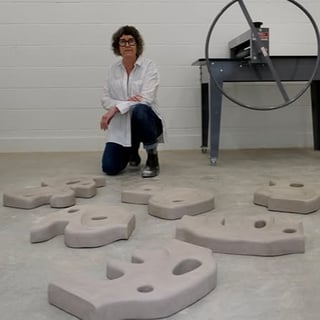
Speaker: So I started out doing more sculptural work. And I just was working with clay and allowing the shape of the clay the way it would tear. And I was always doing hand building. I was not ever a big wheel person because I liked having a little bit more control over it.
Speaker: So I was doing sculptural work, but I was always a big collector. And I just scrounged and found lots of things like just found objects and vintage objects and just anything that kind of pulled my eye. And I would take those objects and I would physically put them into the sculpture that I was making and just have them be, you know, combining the found objects and the clay and the glazes that I would use.
Speaker: And then I this was after I was living in New York and I was moving to San Francisco and I went to a restaurant that was serving all of their food on handmade plates. And this was quite a while ago. This is kind of before that became. And I thought, you know, this I love this. You know, I loved eating off of handmade work. So I just slowly moved to my work to being more functional from sculptural.
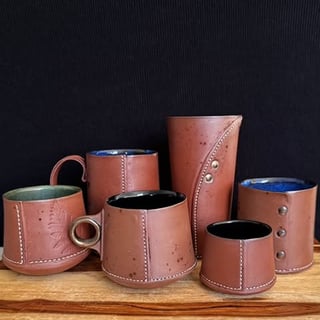
Speaker: So instead of taking the objects that I was finding and actually fixing them to the clay, I started just impressing them into the clay. And so then I would get a completely opposite kind of just feel from it. And it would also make it so that the piece could be actually used and functional as dinnerware. So then I just got moved into making just functional one -of -a -kind tableware, which
Speaker: It's really how I started my my business was based on that. Like that just struck a nerve in a lot of people. And again, this was a while ago. So it was before you sort of saw handmade ceramics everywhere and in restaurants. So it was yeah, I certainly did not pioneer it, but it was certainly in there from an early time. So so why did you just want to make a switch from more sculptural work into making more functional work?
Speaker: Because I think I liked the idea of the practicality of it. And I mean, I love making art that is just decorative and enjoyable for its own right. But I was feeling very practical maybe because I had just had two babies and I was feeling like everything. I just wanted things to be more practical and usable.
Speaker: And I also felt like if you gifted somebody a plate or a bowl that even if they didn't like it, they could still use it. So it would always be something that could get used or traded or whatever. And I liked combining the handmade and the what I call functional art with real use.
Speaker: And again, I think I just was feeling like practical, functional, like I like that whole idea, but I wanted it to be unique and different. So it drove me into that whole mode of work. Absolutely love that. Shaping Nation, you don't have to be stuck doing one thing. If you want to do sculpture work, you do that, but you also switch and do functional work as well. You don't have to be stuck doing the same thing. I love that.
Speaker: So you are inspired by travel and lots of other things. How does this impact the way you make your own pottery?
Speaker: Yeah, I traveled a lot to Mexico and Central and South America. And obviously, the tradition of clays is huge in those areas, as well as folk art, which I really love. I love a lot of Latin American folk art. And that was always very inspiring to me. So just from those travels and, again, the observing of different cultures and going to just small areas,
Speaker: It just, it really imprinted on me. So, I mean, my work, I, you know, some might call it kind of folk art because I do use a lot of figural images and in just hand -drawn other effects. So it just, it was an aesthetic that really stuck with me and that I really loved. And just not only representing the cultures, but just, you know, again, I go back to that whole concept of observation and
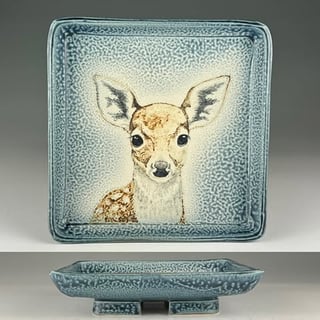
Speaker: In my mind, my work is like little photographs and I do photograph a lot and then often transfer that image of what I see onto a plate or a bowl. So a lot of the images that I kind of banked from my years traveling have made it onto a lot of my tableware. What are some of the places you have traveled to that have impacted your pottery the most?
Speaker: I would say Mexico and Guatemala were really big influences for me. When I was living in New York, I started traveling a lot to the American Southwest, which is where I live now. I live in Santa Fe.
Speaker: The culture here in clay is huge. It's, you know, the Native American traditions of clay and how they work with clay and just the spirituality of it was a really big influence. And I early on started coming out here and doing clay workshops with different teachers here and raccoon workshops, which I love. And so this area also just became very much a part of my
Speaker: inspirations and, and just, you know, encouraged me to keep going because I just always fell in love with it more and more. I absolutely love it. That's so, so amazing. So can you walk me through how you create one of your plates?
Speaker: Yeah, so as I said before, all my work is hand built. It's slab built. I don't use a wheel. I use other forms that I make or just sometimes even old discarded plates and bowls that I might pick up at a flea market or something that if I like the shape
Speaker: and I use a slab roller and I flatten it out and I make the shape and then the design as I said will often come from just an image I saw like when I was living in San Francisco I used to go to the beach every morning and there were so many strange things to observe there like people sitting feeding the birds and waving at the birds and
Speaker: So I would often do a plate based on whatever I might see that week. And as I said, I would photograph a lot of things. So then I'll use a lot of the objects that I've collected over the years, as I said, and impress them into the clay. And then draw around it and keep that image going of whatever I observed or photographed that day.
Speaker: So that's the design process for me. And sometimes I have it in my mind before I sit down. And other times, I make the shape. And something just comes to me that I want to make on that shape. And it either can come from the objects that I've collected or, as I said, kind of a predetermined design idea. But a lot of times, the objects that I use really determine
Speaker: the design. Like if I find a very strange stick or a rock or often a lot of old tools and metal items and then once I press that into the clay it will it'll just inspire me to do something around that on the plate. I absolutely love that. That was a great explanation. So can you tell me what type of clay do you use
Speaker: I'm using some different plays I had been using for a very long time, a brown clay that is from Northern California, like near Sacramento. And I still am using that, but I'm also experimenting with a lot of New Mexico clades too, because I do like to work with clay from wherever I am.
Speaker: And because it really does tell the stories, the region and the area. And it's what people have been doing for centuries is just digging up the clays around them where they lived. And then that feeds the whole process of making it. So love it. So let's talk about the business side of pottery. Tell me about the moment when you decided to go full time with your pottery.
Speaker: So as I mentioned, I had two small kids. So I wanted to not work full time outside the house. I wanted to be closer to home. So I was able to create a studio behind my house so I could work late at night or anything. And I started to do open studios in San Francisco and just put it out there slowly while I was just developing my work and my practice.
Speaker: And when I started making the functional wear, I noticed that one of the open studios, it got a lot of attention and it sold out really quickly. And I was like, you know, I think I have something here and I think it's different and unique.
Speaker: And so I just started to put it out there a little bit more via open studios or I would, I just would slowly approach a couple of stores that I thought shared a similar aesthetic and just said, Hey, are you interested in seeing some new work? And most people were.
Speaker: So they would buy it and then I just was like slowly building up to it being much more of a full -time business. And I think the thing that really launched me was when I started doing the big wholesale shows in New York. And that was in about 2000, I think 2007.
Speaker: And I did the handmade section and that was like going from like, you know, 50 to like a thousand. It was like getting you have your booth and I just people just I had a ton like way more orders than I could pretty much handle. But again, and this was wholesale. So these were just, you know, finding retail partners. But again, it just confirms for me that, OK, this is
Speaker: This is good. People like this. People want this. It's different than what they've seen. And that's what everybody said. And it just, that really launched me. It was like, OK, boom, you are in it. You're full on in it now. And you've got to fill all these orders that you just got. It's not just fun to get those orders, but you've got to now actually do the work. So that, I would say, absolutely, that was a real turning point.
Speaker: And the other one was that I was asked around that time to do all of the tableware for a restaurant that was opening in
Speaker: in the Bay Area. And that was a huge order, you know, and I had to really think through each piece and they wanted every piece to be different. And this was all for everything they were going to use in the restaurant. So that was a big task and definitely trained me in doing like big, big orders. And that too just got a lot of attention, a lot of progress.
Speaker: did a lot of other opportunities for me. So all of that together just was like, boom, all right, you're this is it. Now this is your full time business, which was great, because it was it was just exactly what I had wanted to do. So I love that. Now, would you recommend for people nowadays to do wholesale themselves?
Speaker: You know, a lot of people ask me this. I have pared back on that a bit recently because I have my core group of retailers that I've been working with for a long time now. I think it's good to have a mix. I think it's really important to have a few stores that you really love that you think represent your work and know how to sell your work.
Speaker: but then be able to sell on your own as well. Because obviously with wholesale, you're not going to be making as much for each piece than you would if you were selling it directly. But it does give you a broader audience, a bigger stage. It gives you credibility, I think, when a legitimate retail operation is carrying your work.
Speaker: And I mean, I do it all the time. I walk into a store and if I buy somebody's work, I always go look up who they are and their Instagram and their website. And then I might then order directly from them after that. And that's happened a lot for me. But I really do. And I really do try and appreciate and maintain those retail partners because I do think it's really important because they can get your work to places that you really couldn't on your own.
Speaker: I absolutely love that advice. Now, what advice would you give to someone that is looking to start selling their own pottery? You mean just like direct from their own, their own site or I would start selling it in general.
Speaker: Just in general, yeah, okay. Again, I would say identify some stores that you really like and that you think match your aesthetic and your philosophy and just approach them. I mean, I think a lot of places appreciate seeing new work. You know, everybody wants to find something new and unique and different and they're not always gonna be able to find it on their own.
Speaker: So if you just go in and approach a store and just show them your work and just retail partners that you work with. And then while you're doing that, I would say continue to develop your direct work, your Instagram, which is really a great way to sell work at this point and just combine the two.
Speaker: just put yourself out there, basically. You gotta just keep putting yourself out there. Don't be embarrassed about approaching people. Not everybody's gonna be friendly or willing to look at your work, but in my experience, most people are.
Speaker: everybody wants to find something really cool and different and unique and so I think that that remains to me a good way of getting your work out there as well as just getting some some press if you can just just to start to draw attention to your work so that people slowly come and see you and Instagram of course
Speaker: has been a great launchpad for a lot of artists. And that's a newer thing, obviously. But I think it's combined. Have a little piece of everything. Have your retail partner. Have your own direct channel to sell. And just find all the platforms that you're comfortable with and that show your work well.
Speaker: I love that advice. That was some excellent advice right there. So let's talk about discovering your voice. Can you tell me about the moment when you knew you were heading the right direction with your pottery? Yeah, you know, as I said, I think it was just the reaction that I was getting from people. And when I did those first open studios and people just scooped up the work and it was just great feedback. And I it just.
Speaker: encouraged me to keep going with that whole idea. But the concepts for me, as I said, came from just my experiences over the years of travel, of collecting, of the community work I was doing. So it just
Speaker: For me, it was just a culmination of so many different aspects of my life that just seemed to beautifully come together on a plate. It just really represented a lot of what I was interested in and what motivated me so that I was passionate about it and it wasn't just like wrote or copying somebody else's
Speaker: And so I would just say really understand yourself, your passions, what drives you every day. And it doesn't have to necessarily be ceramic -based or art -based. For me, it came out of social work and travel that just observing and then transferring all of those observations into clay.
Speaker: is really what gave me my work, which I think and have been told, you know, is different than other things that are out there. So. I love that. Shaping Nation, if you could find what drives you, then finding your voice is going to be that much easier. I love that. What new opportunities started coming your way once you found your own unique voice with your work?
Speaker: You know, as I said, having that the restaurant work was a big opportunity and just created a lot of other connections and orders. And then in doing the shows, you know, going to New York and doing that.
Speaker: and just connecting with people. Early on, and there aren't as many magazines and things out there anymore, but I always had a lot of fun trying to get press coverage because I always thought, again, people want stories, they want content, and now that exists as well online. I think
Speaker: the work that I was doing yielded those opportunities that gave me a good press coverage and inclusion in books and things like that, so that that just propelled me and my practice, you know, even further into another area. Now, what would you say was your biggest obstacle when it came to discover your own voice? You know, I'd say time, honestly, just, you know, ceramics is very time
Speaker: intensive and you really need a lot of space and time to create and so you know if you either have another job or you have young children like I did when I was starting
Speaker: You know, that was, that would have been the obstacle for me. It was just finding enough time to really devote to completing orders and also just progressing and, you know, figuring out new ways of doing things. But I think that you have to just carve that out. You have to just figure that schedule out for yourself, you know. Absolutely agree. Now, what advice would you give to someone that's looking to discover their own unique voice with their partner?
Speaker: Again, I would say look at what you love to do. What moves you and what is it in ceramics that moves you? Is it just that you want to experiment with it or do you really want to take it to another level? You have to devote a lot of time, again, not just time to figure it all out, but just
Speaker: learning and practicing and having a lot of mistakes, having blowups in the kiln or forgetting to do something that you need to do so that everything's sticking to the shelves. Like yesterday, I unloaded my kiln and I stupidly had somebody else's piece in there and it blew up and ruined a lot of my stuff. Just all the things you have to keep
Speaker: Keep doing, keep learning from, reminding yourself. I'll say it again, I think if you understand your passion and what motivates you, it's going to translate to your work and it will come out through that. I feel that way with the people whose work that I love.
Speaker: Absolutely, I love that advice. Lisa, it was really great sharing today and as we're coming to a close here, what is one thing you want to hammer home with my audience today?
Speaker: You know, be original. There's a lot. I mean, I love all ceramics, but I feel like, especially right now, I see a lot of work that really does look the same. And I think it's a really easy trap to get into because people see what sells and then they decide, well, I'm going to make that too. And I think you can really find your own original
Speaker: place in ceramics and you know it doesn't have to be like super different or unusual but just you know something that somebody will pick it up and they'll know it's your work you know and I think that that's an important thing to do in any area of your life but I feel like with social media
Speaker: It it's more people are more likely to just want to be like doing what other people are doing So I just say like stay focused and figure out, you know What what really moves you and what's going to make your work stand out from other people's work? That was some excellent parting words of advice shaping nation Don't focus on trying to sell your work all the time make for yourself and your voice will start truly coming out. I love that Lisa It was really great channel today. Where can my arts go and learn more about you?
Speaker: Instagram is great. And that's just at Lisa Nemeth ceramics. Um, do you have a website that desperately needs to be updated like everybody else these days? So I would say, you know, both of those places are good spots to just see more of my work. Hey, thanks for listening to this episode of shaping your pottery with Nick Torres. If you want to discover how close you are to actually discovering your own unique voice with your pottery
Speaker: I put together a free four question quiz. It's very short. It takes 30 seconds for you to take. If you want to know how close you are to finding your own unique voice, go to shapingyourpodtery .com forward slash quiz, or you could simply go to shapingyourpodtery .com and it'll be right there at the top. I hope you guys enjoyed this episode and I'll see you guys next time.