Transcript
Speaker: You are listening to something rather than nothing. Creator and host, Jan Valenti. Editor and producer, Peter Bauer. I want to start with the music, Ania. I wanted to hear about the music that you've done in talking about art and expressing yourself.
Speaker: I'm a music lover, adore music, and it's been so helpful for me almost to be at times. And Ken, can I interrupt you for a quick second? Yeah. The pronunciation of my name's a little different. OK. So it's just Anya. Anya. It's just easier that way for people. Anya. Then they try to phonetically go Anya. Anya's really my birth name, but it's just so much easier to say Anya than Ania. You know what I mean?
Speaker: on you. Thank you for doing that. I was actually had that written in my notes and I skipped over that. That's okay. I just know that people have an issue with it. And I don't want you to feel uncomfortable as you're saying it going, shit, I should have asked. I don't know how I think I'm doing it right. You know, it's like it's I always because it's a weird name. It's got four vowels of one. You know,
Speaker: Anya, it is a lovely name and you might actually catch some of that with my East Coast accent, so it might be a slight derivation of Anya. But about music, did I hear correctly that you had been involved into industrial music? Can you talk about that? Yeah, it's funny that you bring that up. I just kind of revisited this recently this week with a
Speaker: with a young artist who's getting herself out there. And so I sat down with her and showed her kind of some of the stuff that I had done and that, you know, I ran a very small record label, you know, back in the day and she was kind of shocked. And I've been really thinking about, you know, going back in and, you know, making more music again. I quit.
Speaker: doing it because I couldn't actually sing anymore due to a medical issue that I was dealing with that really screwed up my vocal cords. So it kind of took away my creative liberties to be able to do what I want to do. So I shifted. But music has been my life. I absolutely am inspired by music. I live by music. I love all genres of music. It's really
Speaker: a large place where I actually get a lot of my inspiration when I'm even creating. I mean, music is just like a very, very large part of my soul. So I created a band. I thereafter created a record, a small independent record label, which then was sold and went under because iTunes came about. So this is how long ago it was. It was when iTunes first emerged in the artists, you know, they were only taking on Sony and all these big,
Speaker: you know, big record labels, they weren't leaving a space for indie artists, so it kind of killed the small record industry. I mean, obviously that shifted now and they are more supportive of that, you know, 10 plus years later.
Speaker: But yeah, I wrote all my own music, created all my own beats, wrote all my own synth lines, recorded all my own vocals, wrote all the lyrics. And then I did mix and master myself, but then I had a professional go over my mix and mastering just to make sure that it was done well. And yeah, so I did that for a period of time until, you know, my life kind of shifted. And then I had to metamorphose into doing something else.
Speaker: I really like that style of music. I've been a fan of industrial for a long time and a lot of different styles of music. I think it's great that you're looking at that again.
Speaker: What about the vocals? If you explore something, are you going to try a different vocal style or are you going to see if you maybe have a different singer? Is that what you're thinking about? Well, with getting back into it, it's kind of like a testing situation after dealing with my medical issues and dealing with them for like 17, 18 years before I got a diagnosis very recently.
Speaker: Um, I didn't have anything to support my system. And so now medically, I have things that have supported my system, um, pharmacologically. And I'm not really big into pharmaceuticals at all, but for me, I wouldn't be here if I didn't have them. And with being on them, it's actually really shifted, um, my body's ability to be able to do more things. So my hope is, um, to be able to still sing, cause that's really what I like to do.
Speaker: And then be able to kind of temper it, like, okay, I can do only so much and not, you know, try to record a whole CD at one go, you know, or, you know, a whole song, maybe, you know, work on it piece by piece, and then build up my ability to see if I can go back into it. And, you know, if I can't go back into it and I find that it doesn't, it's not advantageous for me and it causes me more harm than good, then, you know, it's not where I'm supposed to be. But I would really.
Speaker: like to be a part of that again, even if it's not really something that's going to be like a huge public thing or like, hey, look, I'm back making music. It's more just, I enjoy the process and it feels good to me. And whether other people hear it or not, it's not really important. It's just, it's a piece of my soul. You know, it's what I like to do of the 150 other things that I like to do. So I,
Speaker: Well, our executive producer for the program does live in Eugene, and he does have a studio. So I'm sure we can figure out, even if at any point you want to dabble. That's really exciting. Yeah, cool. That's awesome. Always a nice network. And I love industrial. Really got out a lot of rage in my late teens, and I don't think I've ever stopped listening to ministry or the revolting cocks.
Speaker: Um, yeah, that's never gone away. It is. Um, one of the, one of the questions I want to ask you, um, is about, uh, your, your work, I think with, you know, graphite as far as drawing eyes. Um, can you, can you mention, uh,
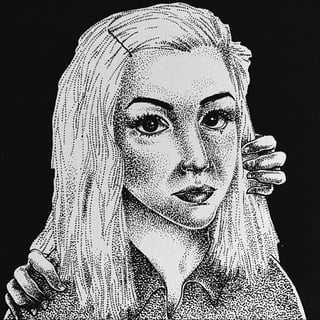
Speaker: Well, let me say this. I mean, the the detail eyes are fascinating, you know, they start, you know, poets write about them, they draw you in. What pulled you into almost studying and in detailing and creating artwork of eyes? Well, it's it's interesting, actually. So years ago,
Speaker: I used to acrylic paint and then with my disease being allergic to everything, I had to shift into digital, which wasn't actually too far away from what I was already doing because I was a graphic designer already. So I was able to kind of go into that and go, well, I can maybe learn how to paint on the computer.
Speaker: And over years, when I started exhibiting back in 2005, there was a huge like, no, no for digital art. Like, I would submit my stuff to shows. And I mean, it was like, no, it wasn't even like, it was like, no. And I remember, you know, talking to people about this saying, you know, there was a time that photography was considered not an art form, you know, like, they're not real artists, people who take photos. And I'm not talking today, people who
Speaker: you know, take photos with their phone all the time and call themselves photographers. I'm saying like legitimately professional, successful, talented photographers were totally knocked down by, you know, these painters. And now we are in the 21st century and we have museums dedicated to this medium. And now after what, 2005, now we're sitting at 2019,
Speaker: digital is an open book, you know galleries are showing it museums are showing it it's it's more of an open kind of platform, but I had a lot of kickback to being a digital person, so I thought what medium can I get into that's not going to make me sick I can't paint.
Speaker: You know, I can't do it with acrylic. I can't, you know, do it with watercolor. I can't do this. So what I need also the tangibility of it. I was missing that. I mean, as much as I love the computer, I want to feel things with my hands. You know, I am a creator in that, in that fashion, you know, I'm the kid that was out like digging in the dirt. Like I want, it made me feel like I wasn't really touching my work anymore. And if you look at my pieces in the digital realm,
Speaker: It is a huge focus on the eyes, you know, how the woman has, you know, focus on the eyes are huge parts. I thought, well, that's where I should go. I should pick up some graphite, get back into drawing like I used to, and just start pinning that down and working in something that felt good to me. And again, kind of like music and my feeling about it coming up is
Speaker: It wasn't really like I thought, oh, this is going to be a thing. People are going to like it. It's like, no, this is just really studying. And this is fun. And I'm enjoying, like, you know, using an eraser and taking my fingers and smudging things and breaking up the graph by using little paint brushes. It
Speaker: just really organically brought me back to a space that a computer doesn't actually do for me. And not that I, again, I'm a tech person. I love computers. Don't get me wrong. I love to create on them. I mean, they're amazing. You know, I wouldn't have the music that I've done. I wouldn't have the art that I've done. I wouldn't have 20 years of graphic design without a computer, but there's something organic that lives in me.
Speaker: And so that's one of the main reasons why I started doing that. And then of course, different facial features like noses and mouse, but the eye is like one eye to another. It's just so different and they really are the soul. I mean, I don't know. They just, they're captivating to me. That's one of the first things I look at when I look at a human being, when I meet them is their eyes and then also their hands. So, you know, it's a, it's a, it's this sense of where the most expression comes in.
Speaker: Yeah. And you would have incorporated both the hands and eyes by the drawing itself of the eyes. And I was I was I was wondering about that because, you know, as part of at least how I've heard you process describe of almost like a catharsis healing or striving in and there's a tactile piece to that. And do you find yourself just trying to connect to the I think you said like you can't kind of like touch and feel
Speaker: what's behind the screen or what's on the screen. So I think it sounds to me like you're looking for more of like, how do I feel, you know, what I'm creating a little bit more, is that true? You know, that's 100 % true. And I will also kind of swing back to psychology and trauma. With that, if we think about, you know, people who have dealt with heavy amounts of trauma in their life, people will go to therapy, they'll do talk therapy, you know, they'll do
Speaker: DBT, they'll do CBT, they'll do all these things. And it's really a matter of them kind of working it out verbally. But we store things in the body, right? I mean, we store trauma in the body. I mean, that's scientifically proven that we take a hit. We're holding that. And now therapies have come up like EMDR.
Speaker: where they're processing it more viscerally as opposed to like i'm going to talk about it let's figure out why why I feel this way. These other kind of therapies are going from behind into the subconscious and helping the body kind of process it this really and I kind of feel like that might have happened with the art it's like okay.
Speaker: I'm doing this digitally. I'm thinking about it. I'm working it out. I don't really know what I'm doing. I'm just making, and then of course later I analyze it. I go, Oh, that makes sense. You know, I get where this is coming from, but the tactile nature of graphite does give me more of that physical, visceral involvement that I think one needs to process because it's only recently in psychology. Well, actually last 20 years. I mean, that's recent in psychology that,
Speaker: People are starting to understand that this will need to process things more tactile like through movement through you know, like emdr where they're dealing with the subconscious and almost like. Is it gamma I don't know don't quote me like gamma patterns of almost sleeping but you're awake.
Speaker: And so it's cool that the world is kind of noticing that, you know, we can't just always talk things out, that our body actually stores things that need to be processed in ways that we can't think out of it. Your will isn't going to change that for you. You can will yourself and work and do everything you can, but your body is still holding that, that tension. Um, so yeah, that's, I think one of the main reasons why is really getting in there and being able to,
Speaker: process that in a different manner, a more visceral, tactile manner, and mixing those two together, which makes a process of art as a catharsis, right? I think even more advantageous to the growth of the human that's being a part of it. Yeah, I mean, that's quite wonderful how you express that.
Speaker: Um, you know that it seems like there's just this direct connection. Um, I think the part about the, the body is what's most, most interesting to me is cause I think, uh, I think you're right. I think folks have tried to win in dealing with stuff in an American kind of like, you know, willpower and like, I'm going to do more and I'm going to work harder and, you know, grinding yourself down when
Speaker: kind of that trauma or the negativity is kind of stored within them and they're never touching it. And at least the way you describe it is like a way to get at it. And actually that's really helpful, which for me is kind of hopefully one of the outcomes of art or philosophy or asking questions or any of that is to evolve and to create some healing within that. That makes a lot of sense to me.
Speaker: So this is a very different question, and I just want you to answer how you see fit. I saw an interview of yours, and you mentioned about hauntings and ghosts, and within the world that I see, particularly within a lot of your paintings,
Speaker: It's a familiar, the world seems like familiar, you know, kind of like it seems like maybe something that I've seen or been, but it seems otherworldly at the same time. And it also seems in some of the images that, that they're haunted. And I don't view that as like having any sort of negative or positive connotations around it, but just that the images are haunted by something is.
Speaker: Do you see your work in that way? Do you see any of those echoes or haunting in your work, or is that something I'm bringing to it?
Speaker: in art in general, you know, I mean, people who view it are going to view it how they want to view it, as you know, it's it I love hearing that, you know, plenty, plenty of times people said, I see this, I'm like, No, I don't know what you're talking about, but run with it, go, you know, that's with it. That's fantastic. Because that's the whole thing of art, right? It's, you know, it's great to hear what artists interpretations are, but it's also really good to have our own feelings around it. For me, what you're saying, I mean, it is a truth. I feel
Speaker: I can't think of what interview that must have been that was talking about hauntings. I know, like, you know, I like to, I used to go, you know, urban exploring and go into these old houses and there was always energies and I've always been really attached to this otherworldly energy. I mean, ever since I was a kid, it's part of the reason why I had this other side of me and this more heavy spiritually driven practices of astrology or tarot or, you know, whatever over there.
Speaker: But I've always kind of been like in and out. It's a, it's a strange thing. I've always kind of felt like I was a cat kind of like in and out. I'm here. I'm very right. Right brain, left brain. So I'm very equally both. It can be a little confusing because I'm like, you know, you know, very logical. And then I'm like rainbows and unicorns and light, you know, it's, it's, it's like, and then the logical brain is like, you don't see unicorns, Anya. That's ridiculous.
Speaker: So it's just like inner dialogue that's like fighting. But the hauntings, I feel, I really do feel that the things that are being seen and whether or not it wants to be called a haunting or there's a mark on the human being or there is a bit of baggage or there is a sense of something there. It's absolutely, I mean, I lived for so many years, definitely sick.
Speaker: without anybody actually taking a serious interest in my disease. Really just put it over there and said, well, you're a woman, and you probably are hormonal. And that's kind of what it was. Or you have anxiety. I'm like, I know that. You don't have to tell me. Right, right. Tapping. Okay, I know I have anxiety. But it was really kind of put, I felt
Speaker: very disconnected because when you know there's something intrinsically wrong in your body, you feel really disconnected from your human being. You know, it's, it's a very disconnected feeling. Like your body's betraying you on a regular basis, extreme, in extreme manners. And then you go to somebody you're like, my body's betraying me. And they're like, we don't see it. And then start to feel crazy. You know, you start to feel like, you know,
Speaker: I feel like I'm decently self -aware enough, you know, that at one point I was like, okay, if I'm crazy, then let's sign me in somewhere. And I literally did that. I was like, I'm willing to realize that maybe I don't know. Maybe I'm so screwed up that maybe there is something psychologically extremely wrong with me, not just normally psychological, cause we're all normally psychologically interesting in our own ways, right? We all have something special, but I'm talking more of an extreme
Speaker: you know, an extreme. And through that process of having to kind of fight for my life for, you know, 17, 18 years, there was a lot of haunting and a lot of energy that went into this sense of survival and this sense of kind of putting my soul out there through this creative process to kind of just hold me here because I was barely able to kind of hold myself here.
Speaker: You know, it was, I'm surprised I'm living right now. So that's kind of where you see a bit of this kind of haunting kind of thing that goes on. And then it's funny because when you look at my work at like 2012, 2013, it completely shifts. The colors change, you know, and this is when I got on a feeding tube formula and started to have a progress in 2012. And then I didn't get diagnosed till 2017.
Speaker: But during that time, the art really shifted. It became more bright. It became a little less dark. Not that there won't always be dark with my work, because I believe in the relationship between darkness and light. I think it's extremely important. We can't live in this optimistic world all the time. We have to cry. We have to have our feelings. We have to vacillate between these things. Not drive our family and friends crazy, but we need to experience emotions. There's nothing wrong with anger.
Speaker: There's nothing wrong with sadness or there's nothing, there's toxic positivity. You can't not live your life 100%. That's just ridiculous to think that that's even a thing. It's like, we were given tear ducts for a reason. We were given adrenaline for a reason. I had never heard toxic positivity, those two words put together. It makes inherent sense to me. I think it's a great thing just to think about it, to challenge yourself.
Speaker: Yeah, I read it in some article. I read a lot. It was an amazing thing. I was like, wow, yeah, because I'm super optimist. I really am. I mean, to get through what I got through with my disease, I've had to be very tenacious, that I've had to be very optimistic. But I do, when I read that article, I love to quote where it came from, but I read so much, I don't know.
Speaker: I got 16 books sitting on my table right now. I really don't know where it came from. I get it. Um, but yeah, it's, it's a thing. And, you know, so as things progress and things started, I'm going to go back yet, you know, get, get brighter and things look better. Um, I think that the hauntingness of it, I don't even know if that's a word, the haunting of that word. Okay. Um, start to kind of shift.
Speaker: And then there's another change in my life, you know, a couple of years ago, and then the work kind of shifts a little bit more. And so when I put my book out last year, I was looking through the years and I can literally watch through the years, the progress of my disease, the progress of my healing, the progress of life is shifted from color to subjects and.
Speaker: At a point I was doing so, so well that I couldn't even like bring myself to create because I was like, I'm not, you know, a tortured person anymore. What, what, where am I going to pull? Where am I going to pull my energy from? Because my energy came from, um, such a dark place for me. It's such a horrible disease and it was just rough. And then of course, I think, you know, from other interviews, you know, I had a,
Speaker: A quite interesting childhood background as well to kind of add on to the the the haunting artwork that I did. yeah it's kind of you know kind of where things have shifted and changed and kind of grown and then I moved past that now I'm at a good space where you know work is being created.
Speaker: Um, but it's not created through trauma, you know, it's not created, but it was a big shift to do, to change that, you know, to use that as a therapy completely. And like, that's my lifeline to the world to, Hey, I think I'm going to be okay. I'm feeling better. I'm getting better. Oh, look, I got a diagnosis. Oh my God. You know, I have these answers. You know, what am I going to do? Well,
Speaker: But we all have life things, so that's when I was able to shift, right? You go through other life, normal dramas in your life, and then those things kind of shift and bring back into. That's a very long answer, but that's my answer. No, I think each individual, if they are creating things,
Speaker: There can be different radical departures. I was listening to him probably reading in the past the process of David Lynch, a surrealist painter and filmmaker who I just adore. And what was one of the most striking things about his process, which I don't think anybody would anticipated prior to hearing about it, was that he just disavowed
Speaker: the kind of the picture of the suffering artist, the suffering, you know, Russian writer, you know, like the kind of Dostoevsky. And like, obviously, there's a tremendous element of suffering that, you know, artists can exhibit with their sensitivity. But he disavowed all that as a starting point. He said, yes, all that exists
Speaker: Um, but he talked about his meditation practice to clear out the mind and arrive on the other side. So his ideas, his ideas that were remaining, whatever they were, he said was like having a net and catching a fish. And that's what he was doing. He wasn't, it wasn't through all that. It was on the other side after the meditation where yes, there was strange fish and strange objects in strange humans and bizarre behavior.
Speaker: But those were the fish that was swimming around. He captured them and tried to tie them together in a narrative. And I was like, OK, wow. That's it. That's very interesting. And I agree and I agree with that. I think I've heard, especially, you know, my art being darker and kind of being within. I don't like to put a genre around my work, but if people want to put my art in a genre, the genre in which they would put it in, you know, it's a little bit darker and.
Speaker: You know, I think that there is this constant, it's kind of like the toxic positivity. It's just like, you must be this like traumatized artist. You must be, you know, this tortured artist throwing yourself on the floor, you know, whatever. You're not getting your best work. And I agree with what you're saying with David Lynch. It's like, I did that for survival. And of course it fit into the narrative of the typical, you know, artists that suffering.
Speaker: But once I started to have a healing progress with my disease and an answer, which is huge after almost 20 years, the process has shifted in a way that I almost feel like the work is cleaner, like the energy is cleaner. It's still dark. It still speaks to my feelings and my emotions and not even positive ones, sometimes negative ones, but it feels like it's coming from a bit of a, I don't want to sound, you know,
Speaker: I don't even know what the what i'm looking for is, but it coming from a higher place, you know, coming from a different kind of higher energy that I actually feel. A little bit more connected as opposed to i'm creating this art and putting out there i'm cutting this piece off of me i'm done right like okay now i'm going to process something else. Because I get really disconnected from my work when i'm done with it it's like i'm done, you know that non to the next, because, to me, it is like working through things and now.
Speaker: Over the last like two years, the work that i've been creating I feel more akin to it being closer to me i'm like okay. I can still look at this and not be like I don't want to see that anymore, I can look at it, I can still feel it and maybe any year from now that won't be the same because we all evolve right and a year from now, I could be like that's the stupidest shit i've ever produced in my life. yeah. Right now.
Speaker: Um, being able to be at a better, you know, spiritual place. I meditate, you know, I do yoga. I do a lot of things prep prepping myself, um, to do work as opposed to before it was just like, I'm so sick. I just need to like get my mind and do something else because I'm don't know how long I'm going to, I'm going to be able to last on this planet. Do I'm feeling really inspired.
Speaker: And I'm going to think about this summit and play with it and kind of feel centered when I go to do it. And like I told you, it could change a year from now. I could go back into needing to be more visceral and more intense with my work. And I don't need to think about it. I'm just going to do it. And then I'm going to cut it off again. But I think that that's why creativity is such a beautiful thing is because everybody has these processes. And I think that
Speaker: it's important for people to be open to their process and there's a lot of people who feel like they should do it a certain way. I should do it this way, you know, an artist should look like this. It's like, no, there's so many different ways to be a creative person and you don't have to be a tragic artist. You can be a happy, you know, donkey riding.
Speaker: tiara wearing artists, I mean you could be crazy like that, or you could be somebody who's crying in a little room and with all the blinds down different some vodka and just smoking a cigarette and writing some NASA. You know there's all these ways, but I do think that creatives it would be really good for them to be able to find in themselves.
Speaker: what really works for them and know that they can one day be in that room, but then the next day they could be riding a donkey. It doesn't matter. Yeah. And I think, uh, one of, one, one of the things is that even talking about, you know, your experience or when you see those who go through this, I mean, others who might not initially view themselves or artists are looking at that and seeing that there's permission to do certain type of things. And I think that was one of the most powerful elements of it. So like,
Speaker: You talk about your own appraisal of the work or how you respond to it, which is completely legitimate. It's yours. You have total control over that. But in on the outside, too, that that folks see different ways. Wow, she's expressing herself different ways or I'm by myself expressing myself more different ways. And while this is permissible and I'm allowed to do this and maybe I'll keep going because I don't see anybody telling I'm going to not listen to those who are telling me no, or I'm just going to keep on to keep doing it. And it can really be
Speaker: I think it can really help you evolve. As somebody who has studied artists, has read novels, and kind of just adored artists in general, I never understood for the longest time
Speaker: you know, when you're reading a novel and a writer like Nikolai Gogol and Russia would destroy his greatest work and all the rest would be burnt. And prior to creating, I didn't understand any of that. I'm like, how dare you take that away from the rest of us? And now I kind of like really understood much more in trying to create the emotional responses to what you create that are crazy powerful.
Speaker: crazy powerful. Yeah, for sure. I had a really good friend of mine do a 10 -year anniversary. Her name is Jennifer Weigel. Fantastic artist. She's a performing artist. She does lots. She does lots of great stuff. And I've been friends with her for years. And I remember she had a 10 -year anniversary, and she's like, I'm going to have this exhibition. It's going to be for my 10 -year anniversary. Whatever doesn't sell, I'm going to be burning it outside. And I was like, no! Right?
Speaker: You know, and things burned, you know, and then I had to really think about like, what does that mean? You know, it's not about me. You know, it never was. It's not about anybody else in that room that came. It's about, you know, the artists need to be done with something and then move on.
Speaker: You know, whatever, whatever that does for them. But yes, I, I have pieces in my house from that. And I still think about it every day. I was like, I wish I was rich. I had bought it all, you know, but then you have to respect the artist, you know, you have to be able to respect the person for what it's going to do for them. Like, okay, well, you know, she burns 20 pieces and this feels great.
Speaker: Right. Right. Go into another life and move into another part of their world. Then, you know, but yeah, I get you. There's a lot of people destroy their work and it's, it's hard, especially I'm like you. I love art. I have tons of it. I've traded over the years. Um, yeah, my house, there's like no space on my wall anywhere. There's like, if I get a little trinket or something, like where do I put it? There's like no tabletop room. There's nothing. Cause I have tons of.
Speaker: things from artists and things that I've rescued, partially because I find them at the Goodwill, right? I rescue art from the Goodwill. Because I'm like, you can't just be throwing your work away. I don't understand it. I have to save it. It's innate in me to save people's art. Stop it. I like the rescue. I haven't quite thought of it in that way. You're out there rescuing these pieces.
Speaker: Yeah, so I wanted to just just quickly just a note on the haunting bed I remember the the interview that I it was a written interview just to let you know that I read and I think the person asked the question It was like that they had asked you if you had experienced haunting and then it kind of moved on right from there and I'm like, I'm a
Speaker: I'm a kind of dark art. My favorite genre movie is horror movies. So if I hear anybody perk up and start talking about that type of stuff, I'm like, OK, I want to talk about that, too. So that that's that that was my hook. One of the questions that I've been really interested in, particularly in talking to those creative artists is, you know,
Speaker: Is there is there any duty when you see all the things that that art has been able to do for you or help you breathe and move ahead? Do you think there's a duty for artists themselves to help other people become artists? Is there any duty on the artist side to do that? I mean, I think that's a really that's a really valid question. I don't believe
Speaker: You know, I believe that we all have free agency and I don't believe that anybody is required to do anything for other people. But on a more moral standing, I feel that if people have helped you along the way, that it would be a really good thing to turn around and be willing to help someone else. But I feel like that goes across from art to just, you know,
Speaker: somebody opening the door for you at a store, and then you get inspired to open the door for somebody else. I mean, I think that's just really how the world should operate. But of course, I'm not God, and I don't get to tell everybody how they get to act in the world, which I wish I could, which would be amazing. Be nice to people. Stop being dicks. But I think that, you know,
Speaker: It is really important to be able to turn around and help other people in any aspect of whatever you do, and if people have given you a leg up if people have given you opportunities. Then you really should see how you can turn around and make someone else's life better as well, so.
Speaker: You know, my answer is a very strong yes to that. Um, whether or not someone that has the ability to do that, no, that's a whole other story. There's plenty of artists out there that are shut -ins and that have no social skills and have no real ability to turn around and maybe help someone else because of, you know, their own introverted. Um, personality, which there's nothing wrong with that. There's absolutely nothing wrong with, you know, somebody being more introverted and not being able to communicate as well.
Speaker: And that's just kind of who they are. But if you're more extroverted or you have the ability to, to do something for somebody to help them out. I mean, I just, I think you should, but there's also the other part of this where, and this is kind of a rough thing. This, and this is what I've noticed in the industry of arts, it is very similar to an entertainment industry. And people will say it now. And I'm like, no, really it is.
Speaker: It clearly is people will climb you to get over top of you. They will use you to get where they need to. They will turn around and they'll shit on you because people it's self art is really about what we're doing. It's so ego driven, right? And I'm not saying ego is a negative. It's like people are processing trauma. People are expressing political.
Speaker: opinions. Um, you know, whatever the case may be, art has so many functions in the world, but it comes from a very personal, you have to create it. You're doing it. This is your baby. This is why people say like, for instance, lady Gaga as a, as a musician, someone joke with and said, Oh, you're pregnant. She's like, yeah, I'm pregnant with my next album. We're birthing these creations and we're so attached to them. Right. And so people will,
Speaker: At any not everybody, but you know there's people who will do anything to get to the top, and if you reach down to help somebody out, you have to be willing that they're going to step on your face and be okay with that. And that's probably one of the biggest things that I teach artists like if you want to turn around you want to help somebody you have to really be able to say I did this for myself.
Speaker: And I'm willing to have this person appreciate what I've done for them, or I'm willing for them to cut my throat off and then that's it. So you, you can't just say, Oh, I want to help somebody and I need a good outcome from that, you know, and you want it. Of course you shouldn't want a good outcome. You should help somebody and expect that they appreciate it and maybe tell you thank you and you know, give you a little accolades for that. But it's like with anything when we do something nice for somebody or
Speaker: We do something nice or we do a favor. If we're expecting a reward from that, then we're not coming from the right place. And so that's kind of what I feel. I don't feel that people should walk into helping other people expecting that they're going to get a pattern in the back because they could get it, get, get just kicked in the face on the way out. But they have to be willing to accept like I did what I felt was right.
Speaker: I know if I help this person, that's good enough for me. If somebody wants to step on my face, that's their karma. They, they get to go ahead and eat that karma. So I, you know, I'd imagine in, in description herself of, you know, uh, both sides of your brain and having those working. Um, and from what I see is, is as far as your, you know, focus on like,
Speaker: the business and how you navigate the art world, how you create as well. I mean, I'd imagine those two elements really have to be combined. And I'm assuming in this type of economic 21st century, American capitalist, there's that whole element where you do need to navigate and also understand that
Speaker: This is based on transactions and what that brings to the process. I know you've developed both skills and you probably have to drop back and forth between those pretty consistently then. Yeah, you do. I just did a panel discussion at the Holt Center here with an involvement with Lane Arts Council with four other artists. This is one of the things we really talked about.
Speaker: is a conversation that is difficult for creative people. You know, you really do to be successful. You really do have to have like a 50 -50 attitude. 50 % business and 50 % creativity. You can't just paint away in a basement and expect that someone's going to see it. And just because you're good at social media doesn't mean that you're good at business. You know, there's a completely different side to that. Are you able to actually articulate yourself and write a good letter to a gallery?
Speaker: you know, things like that. Um, and there's different versions of success and all that. And that's, you know, another thing, but you do really need to have like a 50, 50 kind of situation because if you're only business, then you're not creating the good work because there's plenty of people out there. If you look at the internet and even prior to people having a hundred thousand people on Instagram, for example, right?
Speaker: And they're like, I'm super successful. And not that they're not super successful because that is a form of success. But the thing is, is they could have subpar art, you know, like not even really good work, but they're really good at social media. But then there's people out there. I mean, I'm sure you've seen this Ken, where they've just magnificent, like super talented people that they don't have a strong following.
Speaker: or they don't have a good business sense and no one's paying attention to them. So there's people that are making success that have subpar work because they're working it, they're fighting it, they got a business sense, they're doing it. And then you have this other group of people who like have count rate, great work, you know, and they're not really getting it out there or getting it seen or getting it, and they might not want to, you know, I'm not saying that also true. Yeah, sure. You know, you don't need to necessarily be in a gallery, but
Speaker: It's very imperative to be doing, to be willing to do the work and social media isn't all the work. You know, plenty of other places, social media can go away in a day. I mean, I saw some woman on the internet recently and this is, you know, to put this out there for people. She had whatever thousand, you know, 300 ,000 followers, whatever. And she lived off of what she did. It wasn't art. I don't remember what it was.
Speaker: Um, but Instagram totally deleted her account and won't give it back to her. And she lost her ability to have an income. And she was crying all over the internet. She's making a bit of a, you know, it was like kind of drama ish. And I kind of rolled my eyes at it, like really lady. But then of course the other side of my brain's like, this woman worked for this. And I understand that it's, it's Instagram, but this is how this person became successful, how they have money and one
Speaker: swoop and it's gone everybody's telling her to go get a job, you know don't do this great I agree with that it's not working go get a job, but somebody's whole entire business you can't go out in the public. And just go knock down a physical business like that and just go okay we're done now go do something else people have built their lives on YouTube or built their life son.
Speaker: different platforms where they're able to make a living. And there's nothing absolutely wrong with that, but you have to have other eggs in different baskets and other ways to deal because one minute is so temporary. It can be gone forever. Well, and that's, you know, the, the question of where it exists. And I've thought about a lot of your comments and even like looking at your work and thinking about the, um,
Speaker: you know, the connection to technology, the connection to the computer versus the tactile. And the fact is, where does, you know, where did that woman's life exist? And I'm not making it a judgment. I'm saying, where did it exist? Where did the job exist? Like, and is there any control over that? And the ultimate answer for her is she actually had absolutely no control because that was
Speaker: Controlled by something she had signed off when she created the account that it wasn't that it actually wasn't hers and it never it never was In part of the thing is behind this like I use it as a catch -all behind the the podcast of the the question of why is there something rather than nothing and It's one of those philosophical questions where I think there's usually a giggle haven't studied philosophy and haven't taught philosophy
Speaker: I like how philosophy makes us giggle because the question seems stupid or like why you're asking it or like why are people looking at it in this way? And so there's this disruptive quality to questions, but historically it's like, why are we dealing with anything in the world? Why are we dealing with something being here? Why is there anything? So it's like this profound question in the back.
Speaker: One of the ways I ask it of artists and here is the question is, you know, when you create, are you creating, are you creating art from, from something that was there or are you really creating something, um, out of nothing? Hmm. That's a, that's complicated. And I know you can handle it. Oh, did the chicken come before the egg or did the egg come before the chicken?
Speaker: Oh, that's why it's why the chickens ever exist in the first place. That's right. Because I'm God, remember earlier? I do remember that. So now you can answer that. So. I think not to tell you what the answer, a lot of people tend to be humbles, like I'm creating something from something, but that object did not exist before, before you did it, before it showed up on the screen that I'm looking at right here. It did not exist before. It wasn't there. It was nothing. So.
Speaker: But I can let you answer influenced by people. And I think that that's the one thing that people want to pretend to say that they're completely avoided inspiration from other outside influences. And they're like, I'm a hundred percent original. You know, I'm a hundred percent, you know, I'm creating this out of nothing. And it's like, if you came out of the womb and you were able to create, I guarantee you wouldn't be making what you're making right now.
Speaker: You know, you are going to be influenced by your life. You're going to be influenced by artists, by music, by things you see, all of these things. And so as a creative, I feel like it does come from something. I feel like it comes from a lot of some things. You know, I wouldn't be making what I'm doing if I didn't take in all these outside elements. And then I put them through my filter system and then I put out something that's a product of myself.
Speaker: And then another, it's kind of like this interconnection where everything is intertwined, right? Like everything, you know, is like woven like a web. It's the same kind of premise. I put something out there and then there's someone over here that looks at my thing, looked at this, looked at that, listens to the song, goes through a breakup, and then they go through their brain. They process something and then they put out something.
Speaker: You know, so we're all interconnected. I do believe that it comes from me. It comes from something. I don't think it comes from nothing. It's definitely a product of my environment. The things that I'm inspired by the people in my life, my feelings, you know, which are something they're, they're things, you know? Yeah. Uh, and thank you. I have, um, one.
Speaker: quite different question remain quite different questions. Yeah, there's a quite different question. That's good. I'm glad you receptive to um tarot decks. There's obviously you've created some I'm familiar with some aspects of tarot. My question which I was like, Oh, if I could just ask her this just so like I can understand this is what I would ask. What
Speaker: There are different types of decks, and by that I'm saying that the art that's depicted on each card, what makes one deck that's created different than others? Why isn't there just one tarot deck? Why are there different ones? Well, I mean, it's an iconography thing. So there's so much symbolism in one card. So tarot decks,
Speaker: have, they believe, and of course, this is speculation because there isn't 100 % proof. They really believe that it came from Egypt, initially, and it's transferred over time. There's a bunch of history on it. But obviously, I won't go into that. And then later in life, Rider Waite, Rider Waite, and then Pamela Coleman Smith, they created this deck
Speaker: that was completely filled with imagery as opposed to the European version, which was more had like in the suits of like wands, they would have like four wands and that was it. There wasn't people. So the Rider Waite Smith then shifted to, you know, people and kind of like an iconography, like a story within the cards. And so if you take a deck and you look at just one card, the amount I could sit there
Speaker: and teach on one card alone out of 78 for hours upon hours of how things interlock, how it, how it attaches itself to the Kabbalah to astrology, to numerology. I mean, it goes into all of these realms and then from, you know, intuitive nature, you know, so when somebody looks at a card, they're getting their own feelings from that.
Speaker: they're getting their own interpretation, whether or not it's they read a book and they feel like they can interpret it because they read a book, which is really not what you're that's not really how you're supposed to use tarot but. Using all these things it's just it's I think people feel like I want to make something I want to get into that I want to create something now now I feel like we're at a point now i'm talking years ago, like in the last couple you know couple I would say like maybe.
Speaker: in the last four years it's become a fad. People are creating tarot decks because it's cool now. It's a cool thing. But go, you know, five years ago, I want to say it's been at least, you know, about five years prior, if not maybe 10, I think it's more like five. It was a different kind of thing. People that were creating decks understood the decks or wanted to read the decks or had inspiration from the decks. It wasn't like a fad. And one card
Speaker: You know you can follow the rider weight Smith. I know a lot of people will follow the rider rates myth and do it their own way so let's say you have the magician i've created a certain way another artist creates a magician in the same way. But they keep the same things in the thing, the one the magician typically has one arm up in the air and one down to the ground as above as below, as the for.
Speaker: The wands, the cups, the pentacles and the swords, the four suits, it's sitting on its table. And people will continue to produce that image over and over again in their own interpretation. And then there's people who completely go outside of the box and do something that is not like that.
Speaker: Often readers themselves will say most of those decks aren't really readable. Not that you can't read them and not that people don't love them too, but the tarot community as a whole as readers and people who spiritually intuitively do tarot often really gravitate towards the rider weight because that's the tradition. It's a traditional deck and that's where a lot of things kind of stem from.
Speaker: Does that answer your question? I know there's so much about Tarot to talk about. I hope that's even worse. No, it absolutely did. I mean, and that's what I've always done is like I asked the question because I think I understood it, but I need it described to me. And I think part of it was like even when I've looked at those images, I mean, you can connect the certain images or maybe not or things could seem convoluted.
Speaker: or so there's this whole interactive process, which I assumed was part of it. But that definitely really helps me understand, because I've been fascinated by seeing them as they are. And I think when you look at them, I'm always amazed by things I simply do not see at first, and I might see later on. And I think that's part of it.
Speaker: Images emerge when I started painting I never knew that when I would look outside and at the world and look at colors that my My mind was being just basically remapped. I would notice different things I didn't notice things that I used to notice and so I was like how there's some rewiring going on there and it's fantastic. I Didn't like the color
Speaker: I never was really into the color yellow, but it's my favorite color to paint with. I adore that color and I'm like, how can I have a color that I'm not so interested in seeing in person compared to others be my absolute favorite that I want to paint with? Yeah, for sure. It has interacted from the outside to the inside and I like those transformative aspects. Anya, I'm so
Speaker: happy that you've given your time to chat. I think it's been such a pleasure for me and just kind of learn. I view this as really kind of a learning process for me and an exploration. And that's actually the intent of what I'm trying to do is just
Speaker: you know, have a curious mind and connect. I try to connect with curious, you know, creative minds. And, um, and, uh, but I really wanted to thank you for your time and, uh, I hope we can chat again, uh, soon. Of course. Thank you so much. I appreciate the opportunity. Thanks Sonia. We'll talk to you soon. Okay. Bye. Bye -bye. You are listening to something rather than nothing.